
-
The Forgotten Warrior: Reclaiming Vrishasena’s Valor Beyond Abhimanyu’s Shadow

This essay re-examines the Kurukshetra War to recover Vrishasena’s overlooked valor alongside Abhimanyu’s celebrated martyrdom. It explains how narrative framing and cultural pedagogy can elevate certain episodes and obscure others in the Mahabharata. Readers gain a clearer view of kshatra-dharma by recognizing courage across both Kaurava and Pandava camps. The piece outlines Vrishasena’s disciplined role…
-
Kumara Vyasa (Naranappa): Architect of the Kannada Mahabharata and a Beacon of Dharma

Kumara Vyasa (Naranappa) crafted the iconic Kannada Mahabharata, the Karnata Bharata Kathamanjari, blending poetic elegance with moral inquiry. Situated in the cultural radiance of the Vijayanagara era, his work remains central to Kannada literature and living performance traditions like Gamaka and Yakshagana. The narrative’s Bhamini Shatpadi meter and nuanced characterizations of Krishna, Arjuna, Karna, and…
-
Ravana’s Arrogance and the Brahmin’s Curse: How Kartavirya Arjuna Humbled a Titan

This retelling of Ravana’s imprisonment by Kartavirya Arjuna presents a clear, scriptural lesson on karma, humility, and the impartiality of dharma. It frames the Brahmin’s curse as a literary device expressing moral causality rather than superstition. Readers encounter Kartavirya Arjuna (Sahasrabahu) as the disciplined ruler of Mahishmati whose strength is guided by reverence for sages.…
-
Bhishma’s Fall in the Mahabharata: Strategy, Dharma, and Leadership Lessons from Kurukshetra

Bhishma’s fall marks a decisive shift in the Kurukshetra War, blending strategy with dharma in a way few epic moments achieve. The account clarifies why Bhishma’s vows shaped both the tactics and ethics of the Mahabharata. Readers gain context for Arjuna’s role, Krishna’s guidance, and the use of Shikhandi in preserving Dharma-Yuddha. The narrative shows…
-
Mahabharat Stories: 10 Iconic Moments That Shaped Dharma, Destiny, and the Kurukshetra War

This academically grounded overview presents ten iconic moments from the Mahabharata that continue to shape ethical thought, leadership, and social harmony. It explores Dyutakrida and the dignity of justice, Bhishma’s vow and the cost of rigid duty, and Krishna’s Udyoga Parva diplomacy as a model of principled peace. The Bhagavad Gita reframes action through svadharma…
-
Krishna–Arjuna’s Sacred Friendship: Choosing Companions Who Challenge and Elevate the Soul

The Krishna–Arjuna friendship in the Mahabharata showcases how authentic companionship challenges, clarifies, and elevates. It models truth with empathy, accountability without humiliation, and steadfast alignment with dharma. The same ideal appears across dharmic traditions: kalyāṇa-mitra in Buddhism, sādhu-saṅgha in Jainism, and sangat in Sikhism, alongside Hinduism’s satsang and Bhakti Tradition. Readers gain practical criteria for…
-
Bhagavad Gita Leadership Lessons: Timeless Strategies for Ethical, Resilient Decision-Making
The Bhagavad Gita articulates a clear, practical framework for ethical leadership and resilient decision-making. Grounded in Dharma and Karma Yoga, it strengthens self-leadership, reduces anxiety through non-attachment, and aligns choices with long-term social good. The dialogue between Sri Krishna and Arjuna models calm, courageous action under uncertainty. Compassion, dialogue, and Lokasangraha reposition leadership as stewardship…
-
When Duty Meets Divine Will: Arjuna’s Tapas to Shiva and the Blessing of Astras

Arjuna’s tapas at Mount Indrakeel reveals how inner discipline aligns human duty with divine will in the Mahabharata. Guided by Veda Vyasa, Arjuna seeks Shiva’s grace and receives the Pashupatastra, exemplifying power entrusted only to ethical hands. The episode illustrates Kshatra Dharma as measured protection rather than aggression, echoing cross-dharmic ideals from Hinduism, Buddhism, Jainism,…
-
Arjuna’s Misplaced Compassion: How the Gita Transforms Confusion into Dharmic Clarity

Arjuna’s crisis on the Kurukshetra battlefield shows how compassion, when clouded by attachment, can become confusion. The Bhagavad Gita reframes his hesitation as a failure of clarity (viveka), not a triumph of sensitivity. Krishna’s counsel aligns compassion with duty through equanimity and non-attached action, preserving justice and social welfare (loka-sangraha). The analysis highlights a unifying…
-
Beyond Fashion: Recognize the True Guru and Surrender with Discernment for Inner Clarity

In dharmic traditions, a guru is not a trend but the principle of authentic guidance shaping a seeker’s life. Surrender means practicing the guru’s counsel with integrity, not passive or blind obedience. The Bhagavad Gita’s example of Arjuna and Sri Krishna illustrates how discerned acceptance refines agency and aligns action with dharma. Across Hinduism, Buddhism,…
-
Arjuna’s Path of Mastery: Harmonizing Effort and Grace for Transformative Learning
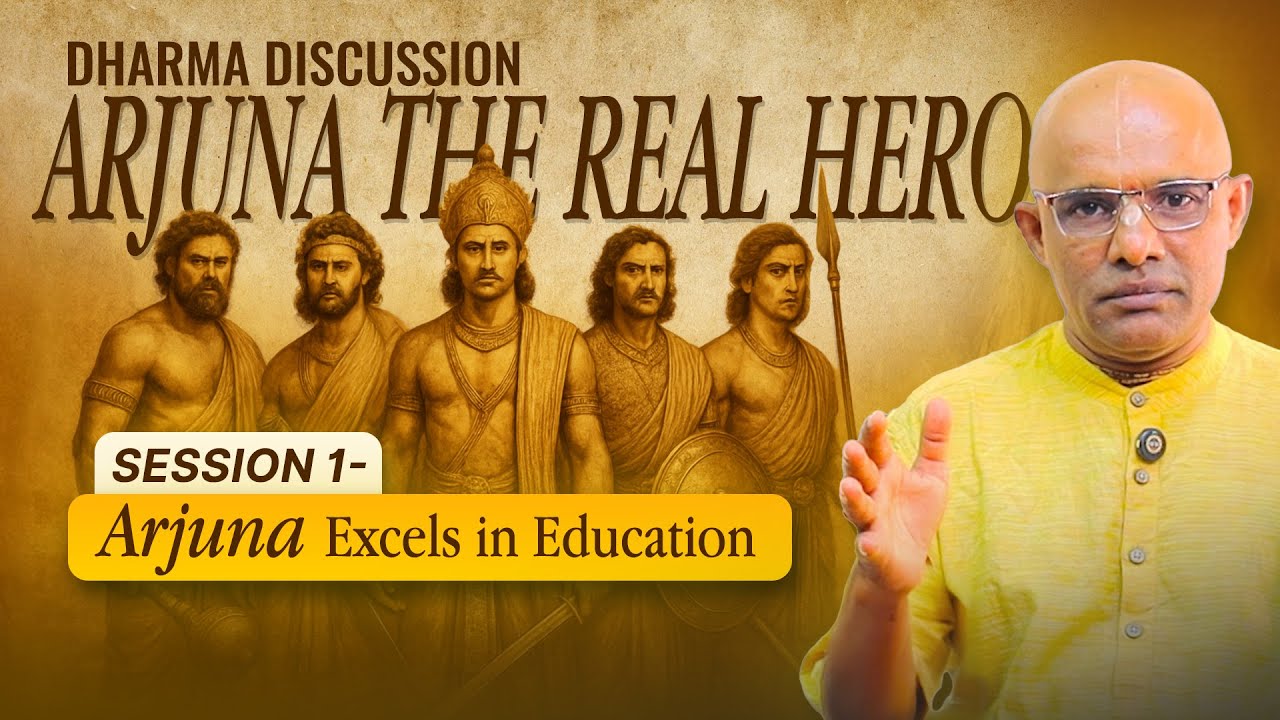
Arjuna exemplifies the union of disciplined effort and divine dependence, offering a powerful model of transformative learning. Drawing on the Mahabharata and the Bhagavad Gita, this discussion shows how mastery requires both rigorous practice and humility. Educationally, Arjuna’s formation reflects the guru–shishya tradition, integrating attentive study, reflection, and internalization. Practically, readers can translate these principles…
-
Bhagavad Gita’s Battlefield Wisdom: Practical Guidance for Modern Life’s Daily Conflicts

The Bhagavad Gita was taught on a battlefield, signaling that wisdom belongs in the most demanding spaces of life. Its guidance on dharma reframes everyday dilemmas—from work pressures to family responsibilities—as opportunities for ethical clarity. Karma Yoga encourages action with excellence while reducing anxiety through non-attachment to outcomes. Equanimity (samatva) and disciplined focus provide stability…
-
Unveiling Mama Dharma in the Bhagavad Gita: A Blueprint for Duty, Identity, and Unity

Mama Dharma—“my dharma”—is a concise, thematic key to the Bhagavad Gita’s message: align personal identity and responsibility with the larger moral order. The Gita frames this insight from 1.1’s dharma-kṣetre and māmakaḥ to 18.78’s assurance of prosperity, victory, well-being, and sound policy when wisdom and action unite. Rather than imposing a single path, it honors…
-
Arjuna’s Daring Abduction of Subhadrā: Dharma, Devotion, and Unity in SB 10.86.10
SB 10.86.10 preserves a vivid scene of Arjuna’s daring rescue of Subhadrā, a moment that tradition situates within consent and dharma. The narrative’s poetic simile—“like a lion with its prey”—is reframed by commentaries that emphasize bhakti, reconciliation, and familial acceptance. Readers find emotional resonance in the urgency of love guided by wisdom, a theme often…
-
Utpatti (Utpanna) Ekadashi Vrat Katha: Bhavishyottara Purana Origin, Significance, Benefits

Utpatti (Utpanna) Ekadashi is described in the Bhavishyottara Purana as the origin of the Ekadashi vrata, revealed when Ekadashi Devi emerged from Vishnu’s energy to vanquish the asura Mura. In response to Arjuna’s inquiry, Sri Krishna extols the vrata as a disciplined path to purification, steadiness, and grace. Observed on Margashirsha Krishna Paksha Ekadashi (regional…
-
Babruvahana and Arjuna: A Powerful Mahabharata Tale of Duty, Defeat, and Redemption in Manipur

This retelling of the Babruvahana Katha presents a clear, academically grounded account of how Babruvahana defeated Arjuna during the Ashvamedha Yajna in Manipur. It explains the roles of Chitrangada and Ulupi, the ethical framework of Kshatra-dharma, and why the confrontation was necessary in certain recensions. Readers gain clarity on the specific question, “How did Babruvahana…
-
Arjuna’s Battlefield Anxiety: A Timeless Guide to Dharma, Mental Resilience, and Action
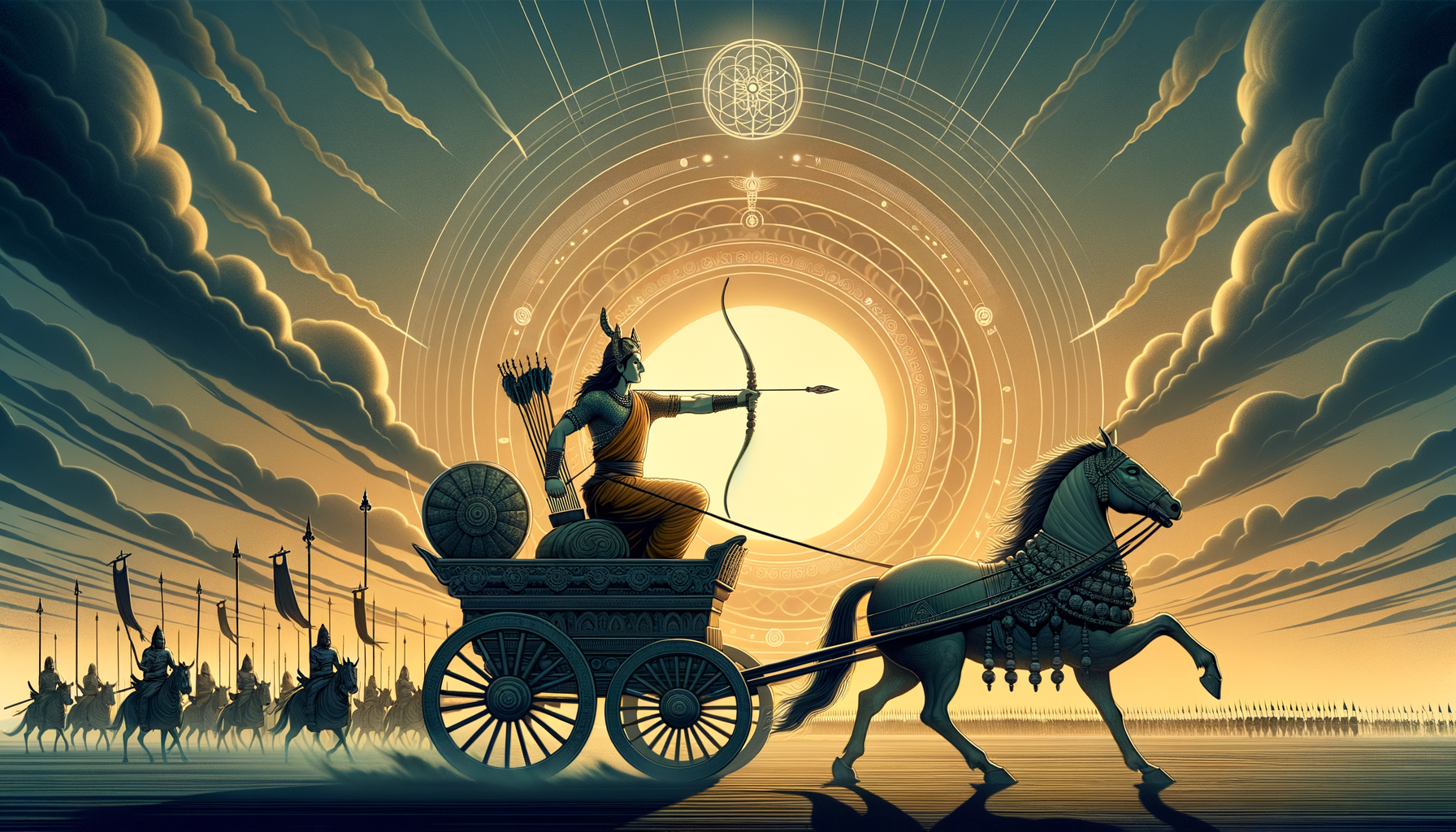
The Bhagavad Gita’s opening presents Arjuna in acute distress—trembling, disoriented, and morally torn—offering a precise portrait of battlefield anxiety. Rather than pathologizing, the text frames his vishada as the starting point for ethical clarity and inner steadiness. Krishna’s counsel models a pragmatic sequence: reframing, values-based duty, equanimity, breath regulation, and focused attention. These principles map…
-
Bhishma and Drona Stood Ready—Why Arjuna Faltered: Ego, Dharma, and the Inner War

Arjuna’s hesitation at Kurukshetra was not cowardice but a collision of compassion and duty, distorted by ego’s self-referential lens. The Bhagavad Gita reframes this confusion through Atman-centered understanding and Nishkama Karma, showing how to act without attachment to outcomes. Readers gain a practical framework: steady the mind, examine attachments, discern contextual dharma, and act with…
-
Abhimanyu’s Final Stand: Why His Death in the Mahabharata Became an Unyielding Victory
Abhimanyu’s stand on the thirteenth day of the Kurukshetra War illustrates how a life can be “killed but not defeated” when Dharma is upheld. This analysis explains why his death represents an ethical victory that transcends the battlefield. It clarifies the tactical context of the Chakravyuha and the violation of Dharma-Yuddha that led to his…
-
Dhritarashtra’s Strategic Gamble: Sending Sanjaya to Arjuna before Kurukshetra
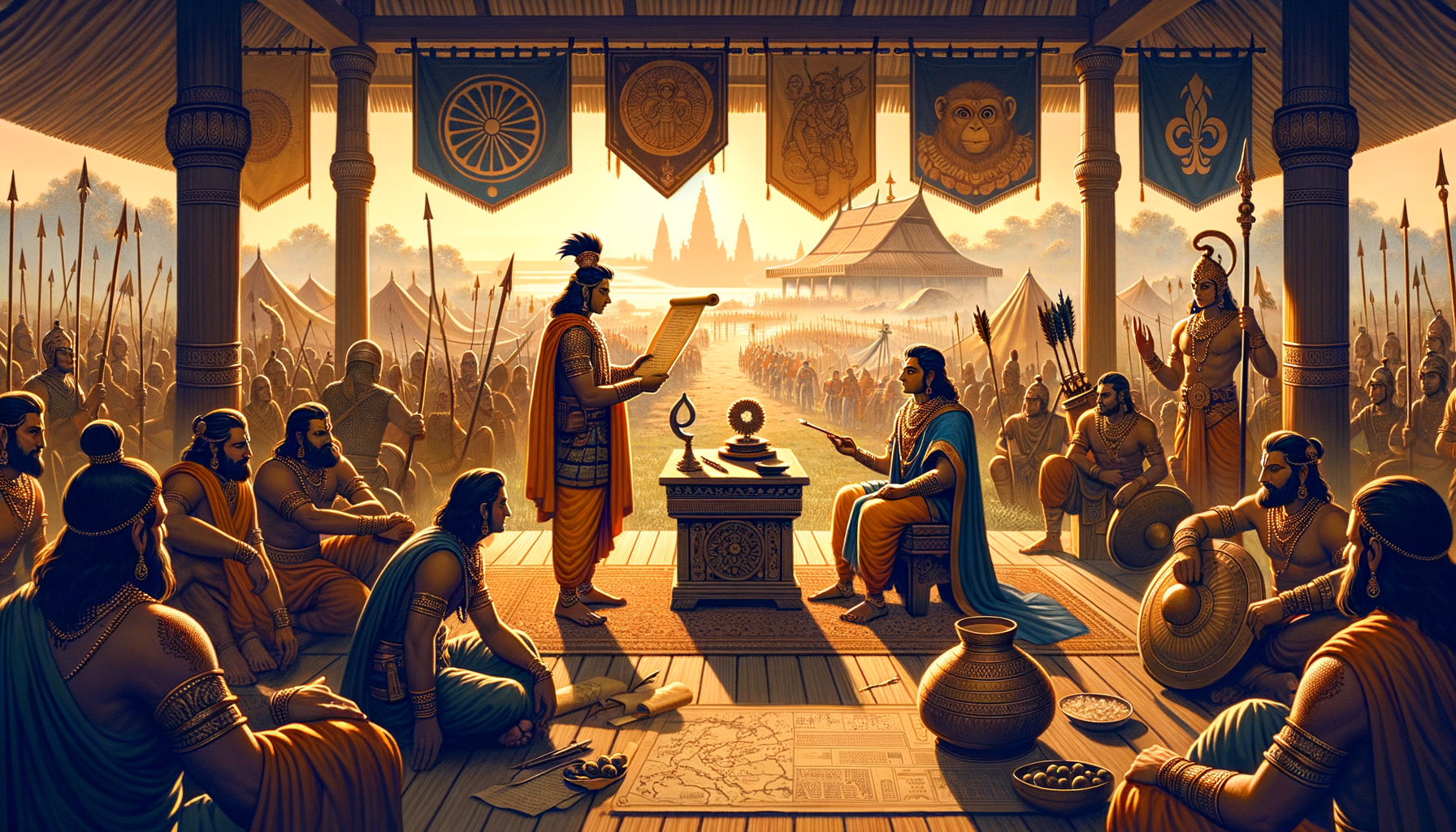
Dhritarashtra’s embassy through Sanjaya in the Udyoga Parva was far more than a perfunctory peace gesture. It legitimized Kuru policy under dharma, gathered intelligence on Pandava readiness, and probed Arjuna’s psychology at the nerve center of their war effort. Addressing Arjuna directly tested resolve, Krishna’s influence, and the possibilities of accommodation without ceding moral ground.…