-
Maa Durga’s Transformative Grace: Conquer the Inner Fortress, Heal Shadows, Find Clarity

This reflection presents the “inner fortress” (Durgam) as a structure built from fear, greed, anger, and falsehood, and explains how Maa Durga’s symbolism provides a practical map for dismantling it. Drawing on Navadurga, the piece outlines a stepwise ascent from stability to grace and shows how meditation, pranayama, svadhyaya, truthfulness, and seva weaken entrenched patterns.…
-
Banadurga of Bengal: Sacred Forest Daughter of Durga and Guardian of Rural Devotion

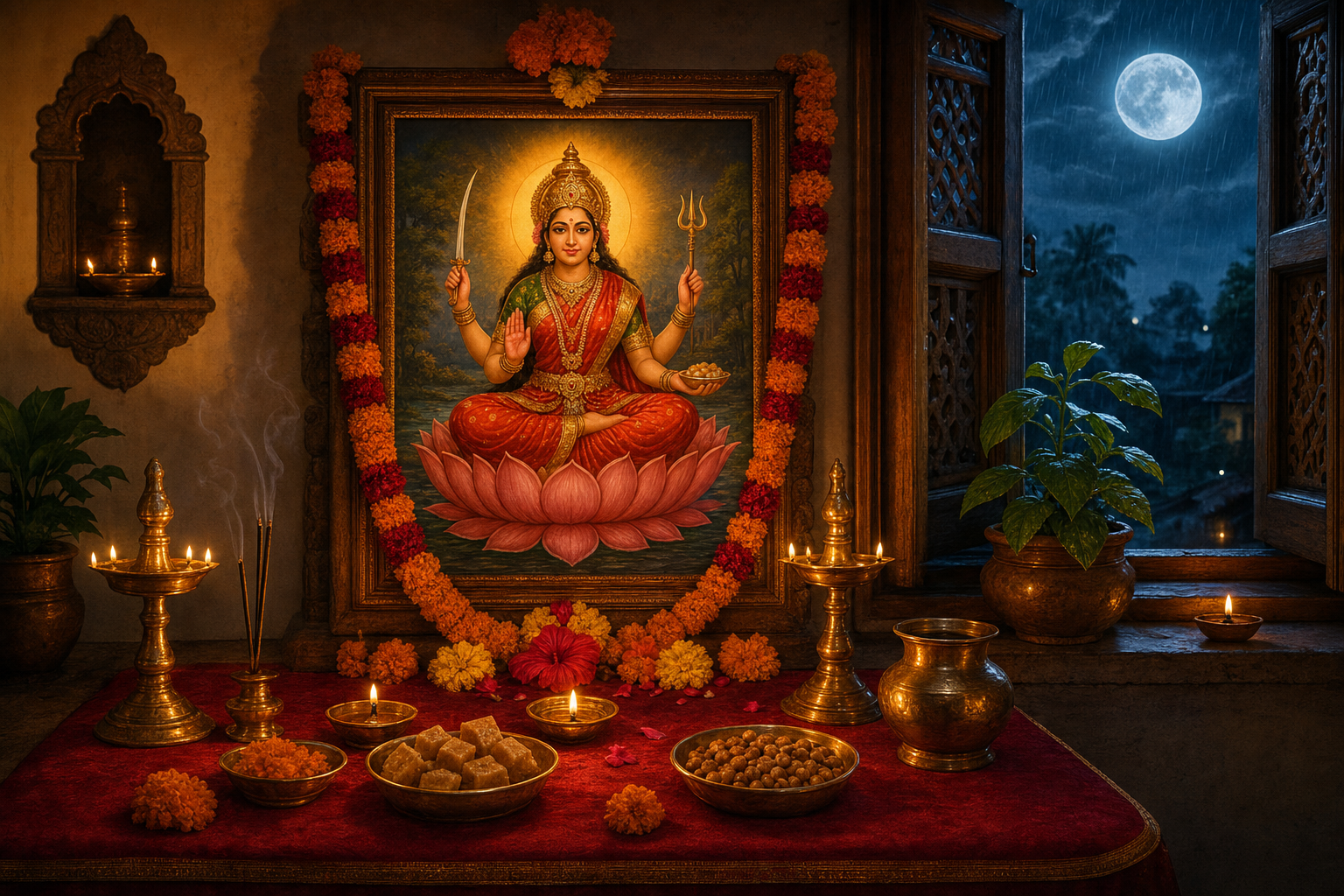
Goddess Banadurga (Banadebi) endures in Bengal’s folk spirituality as the compassionate Forest Daughter of Durga and a vigilant guardian of rural life. This post explores her approachable identity, simple iconography in clay and terracotta, and community-centered worship aligned with monsoon and harvest cycles. It highlights lived village memories, from lamps beneath sacred trees to songs…
-
February 17, 2026 Amavasya Panchang: Sacred Timing Guide and Shukla Pratipada Onset

February 17, 2026 marks Amavasya (no-moon day) in the Hindu Panchang until 5:23 PM IST, after which Shukla Paksha Pratipada begins and continues until 5:05 PM IST on February 18. The timing is presented in Indian Standard Time and broadly suits most regions. Amavasya invites quiet reflection, while the transition to the waxing phase supports…
-
Payo Vrata 2026: Sacred 12-Day Vishnu Vow in Phalguna Masam—Dates, Origin, Rituals

Payo Vratham is a twelve-day Vishnu vow observed in Phalguna masam, beginning in 2026 on 18 February (Phalguna Shukla Padyami) and concluding on Dwadashi per the local Telugu panchangam. Rooted in Shri Bhagavatham/Srimad-Bhagavatam, it highlights disciplined devotion and purity through a milk-centered, sattvic regimen. Households in Andhra Pradesh often enrich the observance with daily puja,…
-
Putra Ganapati Vratam 2026: Auspicious vow for blessings of children in Andhra–Telangana

Putra Ganapati Vratam in 2026 is an auspicious Hindu observance centered on Lord Ganapathi (Lord Ganesh), widely practiced in Andhra Pradesh and Telangana. Married couples—especially those seeking the blessings of children—undertake this disciplined vow with devotion, ethical living, and acts of charity. The vrata’s core practices typically include purity, simple fasting, offerings to Ganesh, and…
-
Chardi Kala and Bhana: Sikh Ideals for Unshakable Joy, Resilience, and Surrender to Hukam

“Chardi Kala and Bhana” distills a Sikh way of life into two powerful ideals: resilient optimism and loving acceptance of hukam. Chardi Kala sustains an ever-rising spirit through simran, seva, and sangat, transforming adversity into purposeful compassion. Bhana aligns the heart with Divine Will, encouraging ethical action without attachment to outcomes. Together, they balance courage…
-
Ravana Anugrahamurti: Shiva’s Compassionate Power and the Transformative Lesson of Humility

Ravana Anugrahamurti reveals Lord Shiva’s grace transforming Ravana’s pride into devotion, offering a clear ethical lesson for modern life. The narrative emphasizes humility, restraint, and responsibility—core values in Hindu philosophy and resonant across Buddhism, Jainism, and Sikhism. Readers gain practical insights for daily practice, from reflective chanting to mindful leadership. The iconography highlights compassion over…
-
Uma (Gauri) Tandava: Shiva’s Cosmic Dance of Grace – Symbolism, Yogic Balance, Compassion

Uma or Gauri Tandava portrays Shiva’s cosmic dance in its most compassionate register, emphasizing balance, disciplined energy, and grace. This gentle form highlights Shiva’s unity with Uma (Shakti), showing how strength is refined by tenderness and moral clarity. Iconography—such as abhaya and varada gestures—invites assurance and generosity, while yogic readings link the dance to calm…
-
When Motives Turn Impure: Why Restlessness Rises—A Dharmic Insight from Kamsa’s Tale

This essay examines why impure motives generate mental restlessness, drawing on Hindu scriptures and the cautionary tale of Kamsa (Kansa). It explains how fear, greed, and hatred disturb the mind, aligning classical insights with contemporary psychology. The discussion highlights shared dharmic wisdom across Hinduism, Buddhism, Jainism, and Sikhism—emphasizing Right Intention, Ahimsa, Aparigraha, seva, and living…
-
Maa Durga’s Shankha: Sacred Sound of Liberation, Dharma, and Victory Over Evil

The Shankh (Shankha) in Maa Durga’s hand symbolizes the sacred sound that restores dharma and proclaims victory over adharma. Gifted by Lord Varuna, it links purity, water, and cosmic order to Durga’s restorative power in the Devi Mahatmyam. As a manifestation of nāda and the primordial Om, the conch dispels fear, clarifies intent, and anchors…
-
Putra Ganapati Vratam 2026: Auspicious Ritual for Child Blessings in Andhra & Telangana

Putra Ganapati Vratam is a deeply cherished observance in Andhra Pradesh and Telangana, undertaken by married and childless couples seeking the blessings of children and household harmony. In 2026, families are encouraged to follow a reliable regional Panchang to select the appropriate Chaturthi tithi and local muhurta. The vrata centers on devotion to Putra Ganapati…
-
ISKCON GBC AGM 2026: Global Online Maha Istagosthi Inspiring Unity—8 Feb, 6 PM IST

ISKCON’s GBC AGM 2026 features a global Online Maha Istagosthi on 8 February at 6:00 PM IST (7:30 AM New York EST, 9:30 AM Buenos Aires, 12:30 PM London GMT), enabling devotees and well‑wishers worldwide to participate via live webcast. The Istagosthi functions as a structured, devotional consultation that advances transparent governance and collective problem‑solving…
-
When ‘Failure’ Becomes Success: Transforming Painful Chanting Doubts into Growth

Acknowledging chanting as central to spiritual practice can feel painful because it exposes gaps between ideals and daily effort. This reflection reframes that discomfort as diagnostic feedback, turning apparent failure into a catalyst for growth. Instead of avoiding conversations about quality chanting, compassionate accountability and mindful attention help align intention, technique, and devotion. The same…
-
Awe and Revelation: Early Miracles of Caitanya Mahaprabhu and the Transforming Power of Nama

Early narratives of Caitanya Mahaprabhu recount how, after Sarvabhauma Bhattacarya sought refuge, the Lord revealed a four-armed Visnu form and then the original two-armed Krsna form. This sequence communicates both transcendence and intimacy, guiding readers toward humility and sustained remembrance through chanting. The episode clarifies a core bhakti principle: mercy opens understanding, and understanding ripens…
-
Vishnupathi Punyakalam on 13 February 2026: Auspicious Timings, Meaning, and Devotional Guidance

Vishnupathi Punyakalam occurs on 13 February 2026, with the auspicious muhurta from 01:30 to 10:30 IST. Rooted in the Sun’s transit and aligned with Kumbha Sankranti, this sacred window is ideal for Lord Vishnu worship, mantra-japa, and charitable acts. Families can observe at home or in temples through simple practices like Vishnu Sahasranama recitation, tulasi…
-
Bhagavatha Anugraha Moorthy: Vishnu’s Boundless Grace, Hope, and Protection for Devotees

Bhagavatha Anugraha Moorthy presents Lord Vishnu as the embodiment of unconditional grace responsive to sincere devotion. Classical Puranic narratives of Dhruva, Prahalada, and Narada illustrate how steadfast bhakti invites protection, guidance, and spiritual elevation. The concept emphasizes that divine compassion is inclusive and accessible, not transactional or exclusive. In daily life, practices such as japa,…
-
Vishwakarma’s Timeless Creations: How the Celestial Architect Shaped Hindu Cosmos and Culture

Vishwakarma emerges in Hindu scriptures as the celestial architect (Devashilpi) who shapes sacred cities, divine weapons, and ritual spaces that uphold cosmic order. Drawing on Rigvedic and Puranic traditions, the narrative highlights creations such as Amaravati, the Vajra, Lanka, Dwaraka, and the Pushpaka Vimana. It explains how sacred craftsmanship becomes sadhana—ethical work aligned with dharma—and…
-
Kamala Kamini Durga: Compassionate Two-Armed Mother—Iconography, Symbolism, Story

Kamala Kamini Durga presents a compassionate, two-armed manifestation of Goddess Durga that emphasizes rescue, reassurance, and inner restoration over outward conquest. The lotus symbolism of Kamala conveys purity and auspicious resilience, while the two hands often reflect abhaya and varada mudras. This form aligns naturally with shared dharmic values of daya, ahimsa, karuna, and seva,…
-
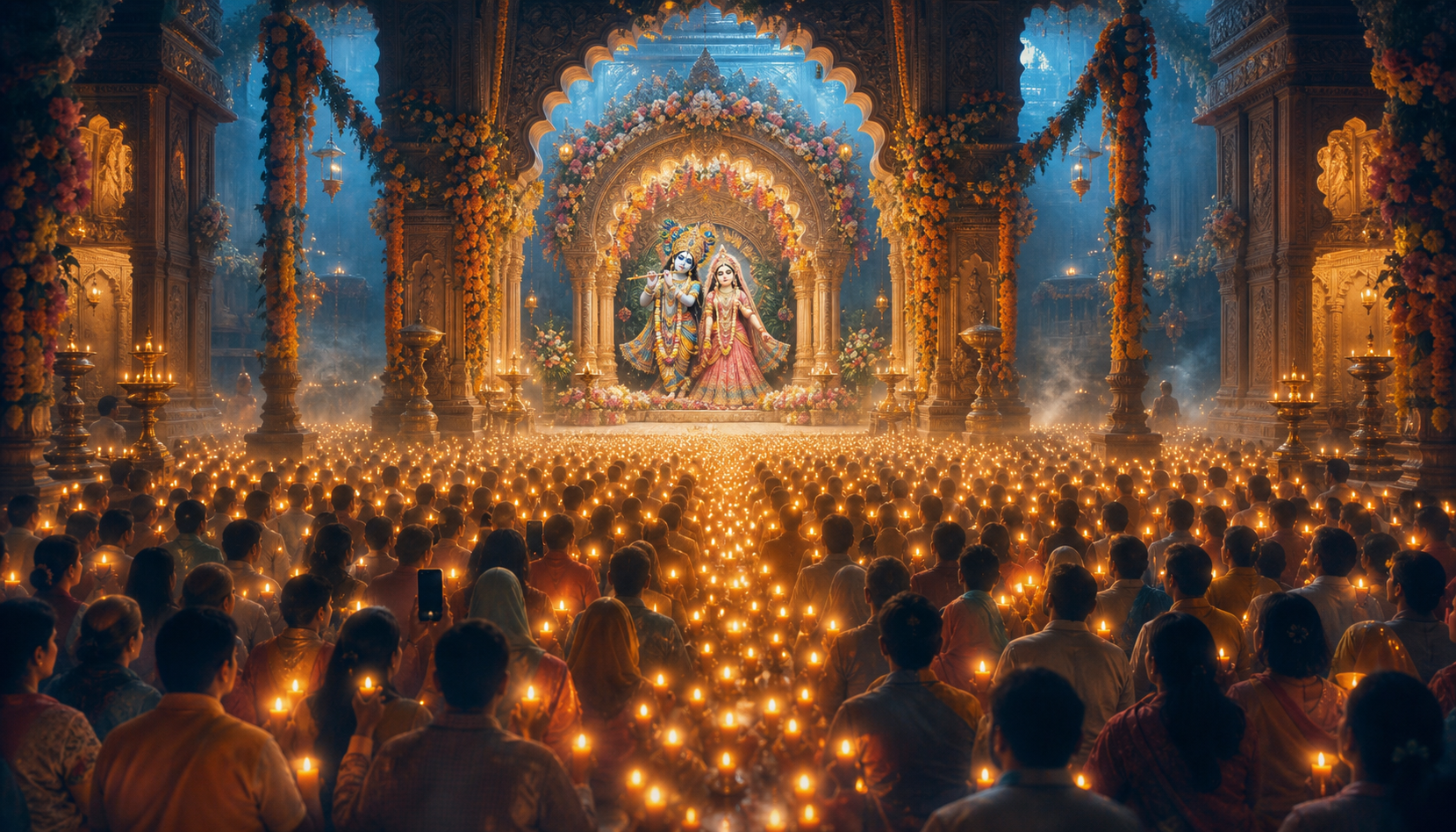
ISKCON Mayapur Sankirtan Welcome: Joyous Homecoming and Dharmic Unity (Feb 7, 2026)

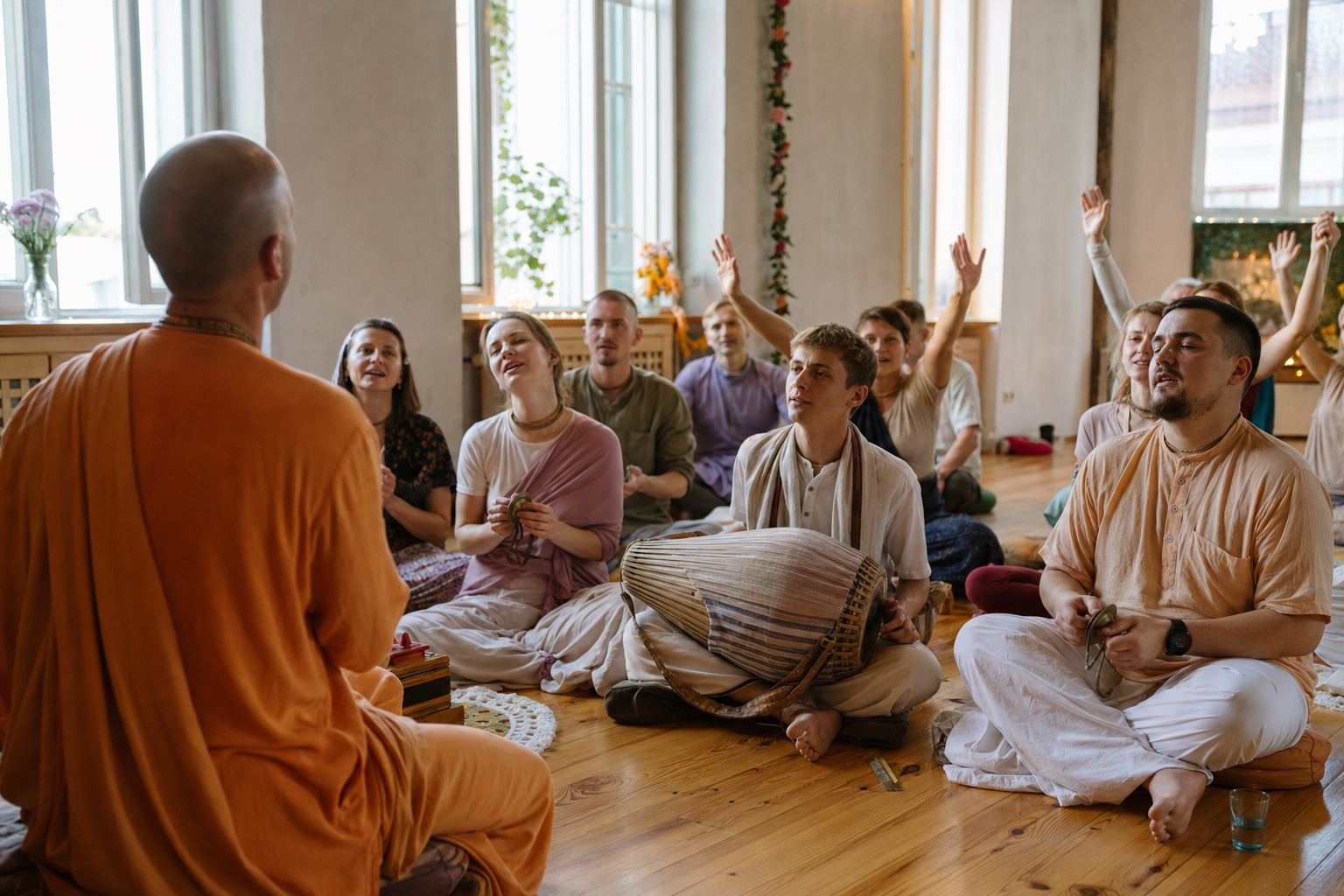
On February 7, 2026, ISKCON Mayapur hosted a Sankirtan Devotees’ welcome ceremony that celebrated collective devotion and community service. The gathering highlighted Krishna-bhakti while reflecting values shared across Hinduism, Buddhism, Jainism, and Sikhism. With congregational chanting and a reverent atmosphere, the ceremony emphasized gratitude, seva, and social cohesion. Framed by living tradition, it functioned as…
-
February 14, 2026 Panchang: Krishna Paksha Dwadashi to Trayodashi, Auspicious Hours & Rashi

February 14, 2026 features Krishna Paksha Dwadashi until 3:10 PM, followed by Krishna Paksha Trayodashi, according to the Hindu Panchang. The day’s cadence supports reflective practice in the waning moon phase while accommodating everyday duties. Dwadashi is apt for parana and charity, whereas post-3:10 PM activities may be organized under Trayodashi’s transition. Readers are encouraged…