
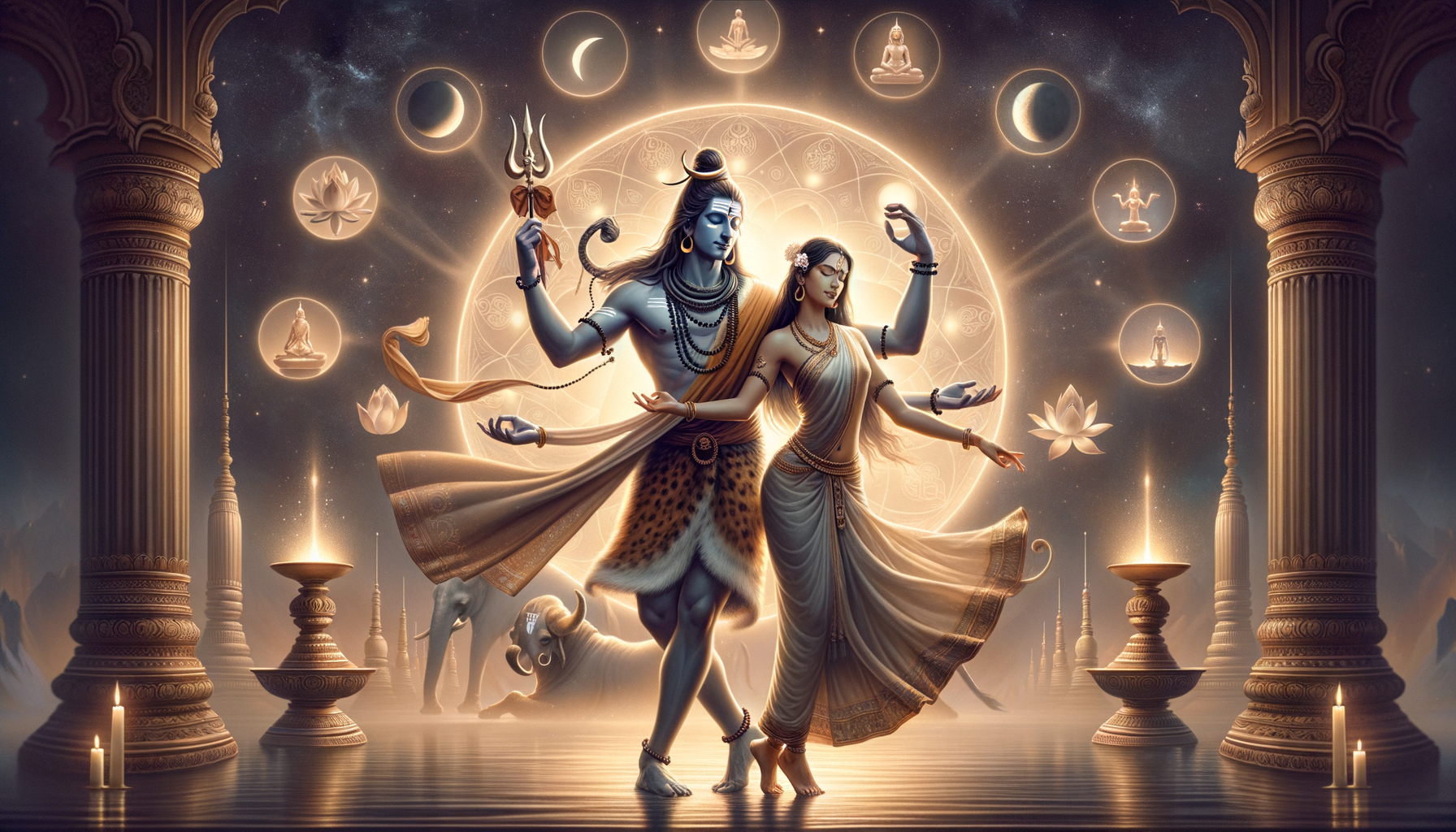
Uma or Gauri Tandava is described in Shaiva traditions as a gentle, auspicious mode of Shiva’s Tandava that embodies balance, compassion, and disciplined cosmic energy. Rather than emphasizing destruction or ferocity, this form presents Shiva as the supreme yogi moving in consonance with Shakti, represented by Uma or Gauri. The dance communicates harmony between dynamism and repose, suggesting that true power is realized through inner equilibrium and benevolence.
In contrast with the more fearsome depictions of Tandava, Uma Tandava draws attention to Shiva’s anugraha (grace) and dayā (compassion). The shared presence of Uma signals the inseparability of consciousness (Shiva) and energy (Shakti). This interdependence resonates with the Dharmic emphasis on complementaritywhere creation and dissolution, motion and stillness, and strength and tenderness are not opposites but mutually sustaining forces within a single, integrated reality.
Iconographically, the form is often understood through motifs where Shiva’s dynamic posture is softened by signs of reassurancesuch as abhaya (gesture of protection) and varada (gesture of blessing)while Uma’s calm presence conveys steadiness and nurturing strength. Attributes like the ḍamaru (sound of becoming) and triśūla (discernment and order) retain their meaning, yet in Uma Tandava their expression is refined by restraint and moral clarity. In South Indian visual culture, the Somaskanda grouping (Śiva-Uma-Skanda) further echoes the theme of familial harmony, even when not explicitly depicted as a dance.
The symbolism of Uma Tandava aligns with the five cosmic functions often associated with Nataraja: sṛṣṭi (emanation), sthiti (sustenance), saṁhāra (reabsorption), tirobhāva (veiling), and anugraha (grace). In this gentle register, anugraha comes to the fore. The dance thus becomes a contemplative image of controlled energyshakti guided by wisdomaffirming that creation flourishes when strength is tempered by compassion and responsibility.
Yogic readings view Uma Tandava as an emblem of balanced prāṇa, aligning the subtle channels in ways that nourish clarity and empathy. Practitioners frequently report a felt sense of calm alertness when meditating on this form: breath stabilizes, attention gathers at the heart space (anāhata), and emotional reactivity yields to steady awareness. The dance becomes a mirror for inner practiceencouraging disciplined action without agitation, and serenity without withdrawal.
Classical dance lineages and temple arts draw on these themes by blending Tandava’s vigor with Lasya’s grace, reflecting the reciprocal rhythms of Shiva and Uma. While textual lineages vary in terminology, aesthetic practice consistently highlights softness within strengthan interpretive choice that has helped devotees, dancers, and scholars recognize the ethical dimension of beauty: power refined by tenderness leads to restoration rather than rupture.
Devotional literature across regions often praises Shiva in intimate relation with Uma, underscoring companionship, guardianship, and shared purpose. In lived tradition, families recount festival darśans, hymns, and temple processions where the serene radiance of Uma amplifies the protective assurance of Shiva. Such community memories illustrate why Uma Tandava is remembered not merely as iconography but as a felt presenceinviting steadiness in households, humility in leadership, and compassion in public life.
Uma Tandava also illuminates shared Dharmic values. Its ethic of disciplined energy and compassionate balance resonates with Buddhist insights on mindful action, Jain commitments to ahiṁsā and self-restraint, and Sikh emphasis on courage guided by grace and service. By foregrounding harmony over domination, Uma Tandava offers a common language of reverence and responsibilitystrength employed for the welfare of all.
A short contemplation practice inspired by this form can be approached stepwise: sit comfortably; let breath become even; visualize Shiva in poised movement and Uma in serene accompaniment; notice the rise of energy with the breath in and the settling of attention with the breath out; inwardly affirm protection (abhaya) and generosity (varada) for self and others. Many practitioners find that this brief practice softens reactivity, clarifies intention, and prepares ethical action.
Ultimately, Uma or Gauri Tandava presents Shiva’s cosmic dance as a pathway to luminous composure: vigor without aggression, devotion without fanaticism, and clarity without harshness. It invites contemplation of power as stewardshipwhere Shakti’s radiance is guided by wisdom and mercy. In remembering this dance, communities recover an embodied philosophy of balance, anchoring spiritual aspiration in compassion and shared flourishing.
Inspired by this post on Hindu Blog.
