-
Manana in Vedanta: Harnessing Constant Reflection to Realize Atman–Brahman Unity

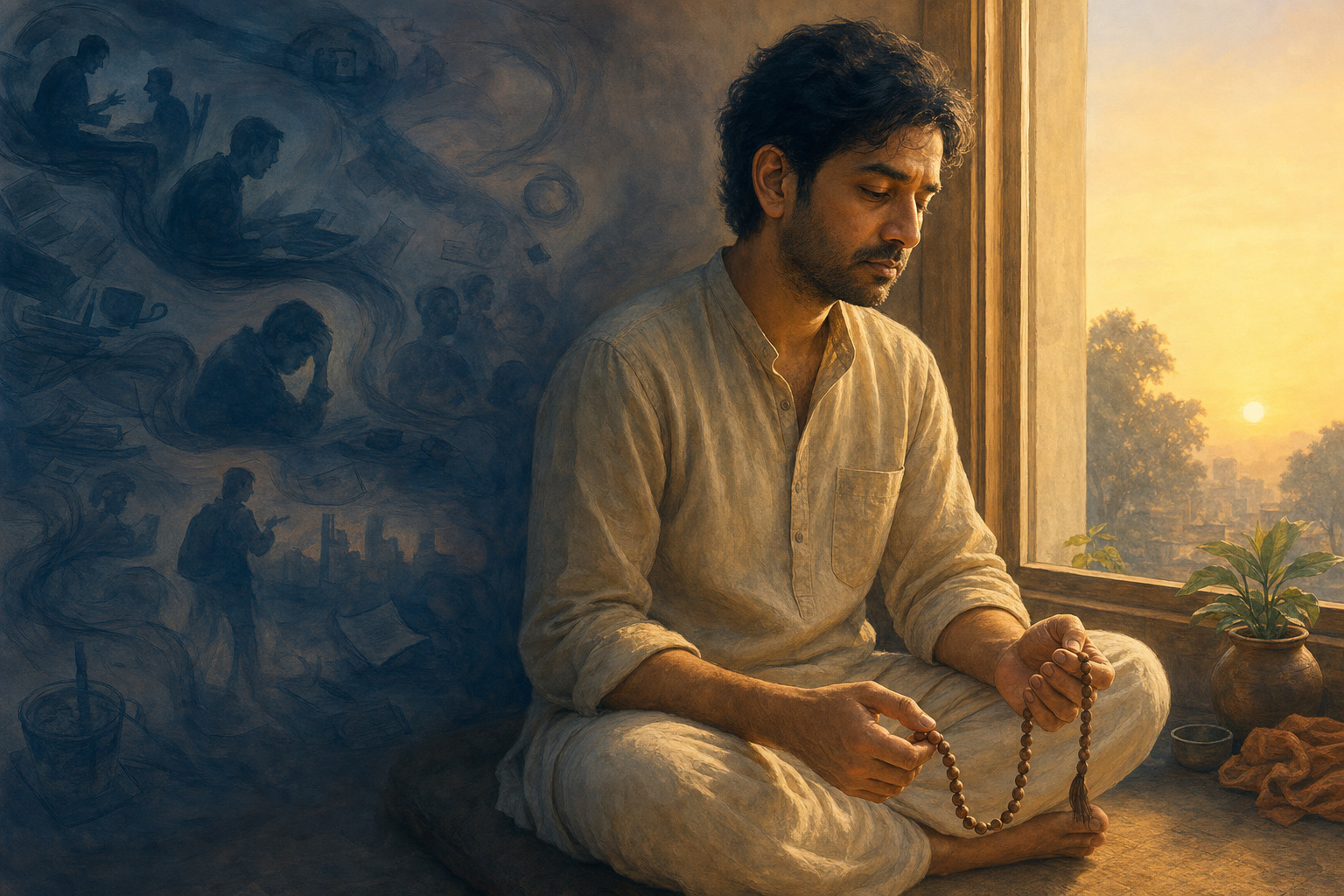
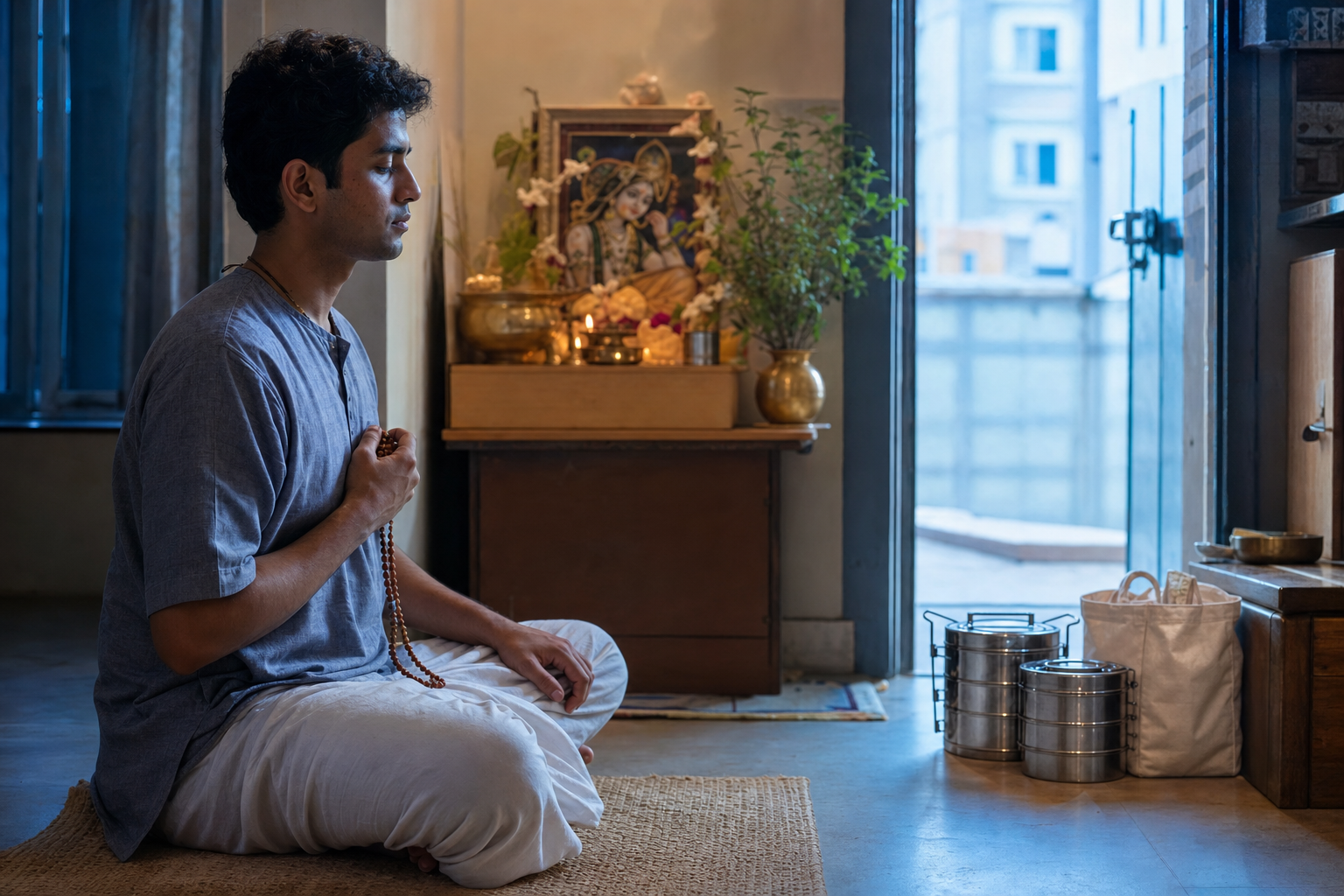
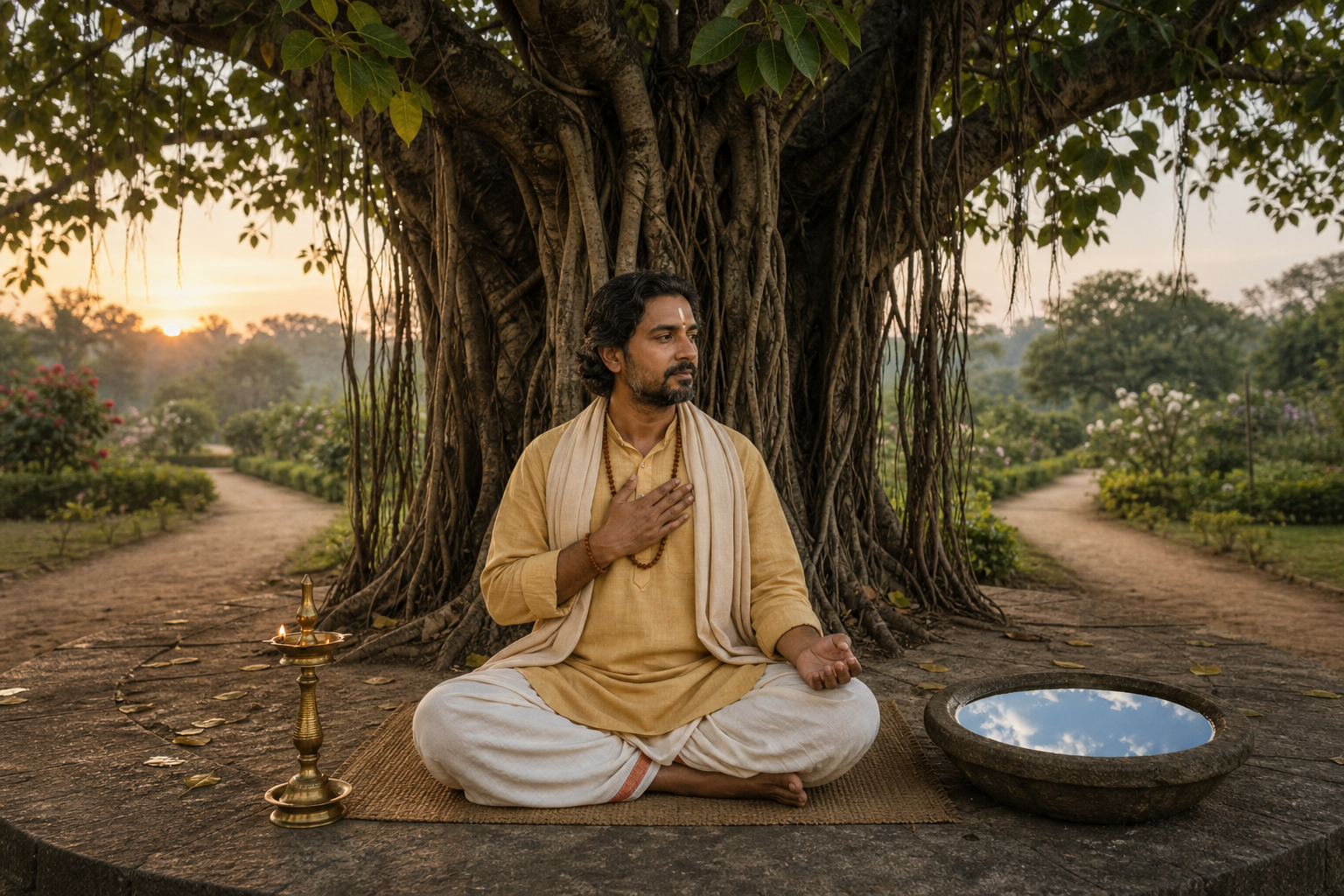
“Manana” in Vedanta means disciplined, constant reflection that converts scriptural listening into firm understanding. As the second step in the sadhana traya—following “sravana” and preceding “nididhyasana”—it resolves doubts through reasoned contemplation. This practice deepens clarity about the unity of Atman and Brahman and anchors insight in everyday conduct. Structured routines, journaling, and guidance from a…
-
From Doubt to Serenity: Vedic Wisdom, Mantra Chanting, and the Assurance of Divine Order

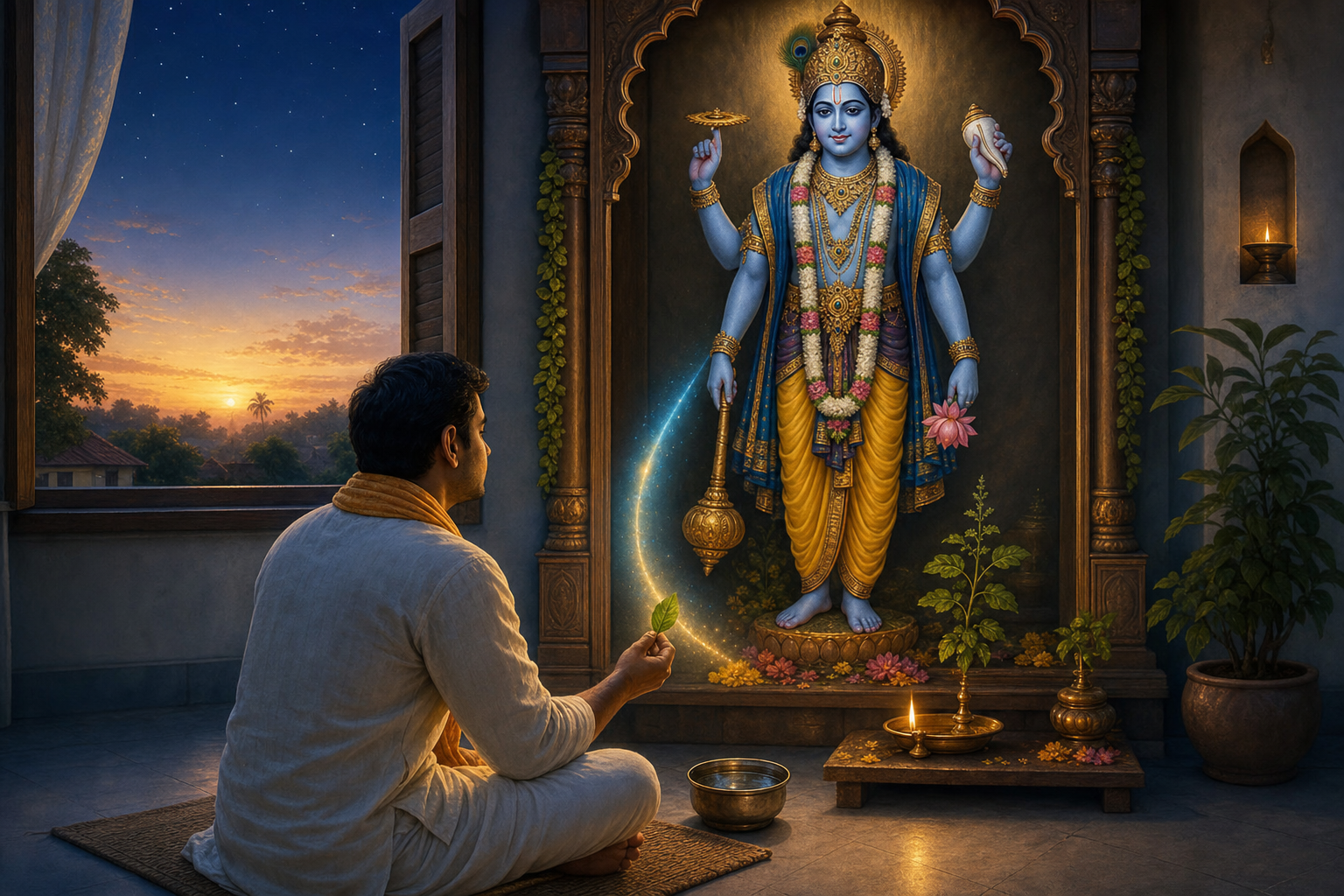
A short visit became a deeper exploration as Vedic wisdom revealed a structured and meaningful view of reality. The ancient Vedas ground practices like chanting the Hare Krishna mantra and deity worship in a disciplined, philosophical context. Vedic cosmology’s cycles of creation and dissolution offer a reasoned framework that replaces anxiety with intellectual clarity. The…
-
Systematic Management as Seva: Discipline, Accountability, and Unity in Dharmic Life

Management in dharmic life is not merely material; it is a spiritual discipline when aligned with seva, responsibility, and humility. Building on Srila Prabhupada’s guidance, effective service includes satisfying one’s immediate supervisor to preserve purpose and prevent chaos. Across Hinduism, Buddhism, Jainism, and Sikhism, systematic management safeguards unity in spiritual diversity and enables kirtan, langar,…
-
Culturally Sensitive Sharing: Inclusive Paths to Krishna Consciousness and Dharmic Harmony

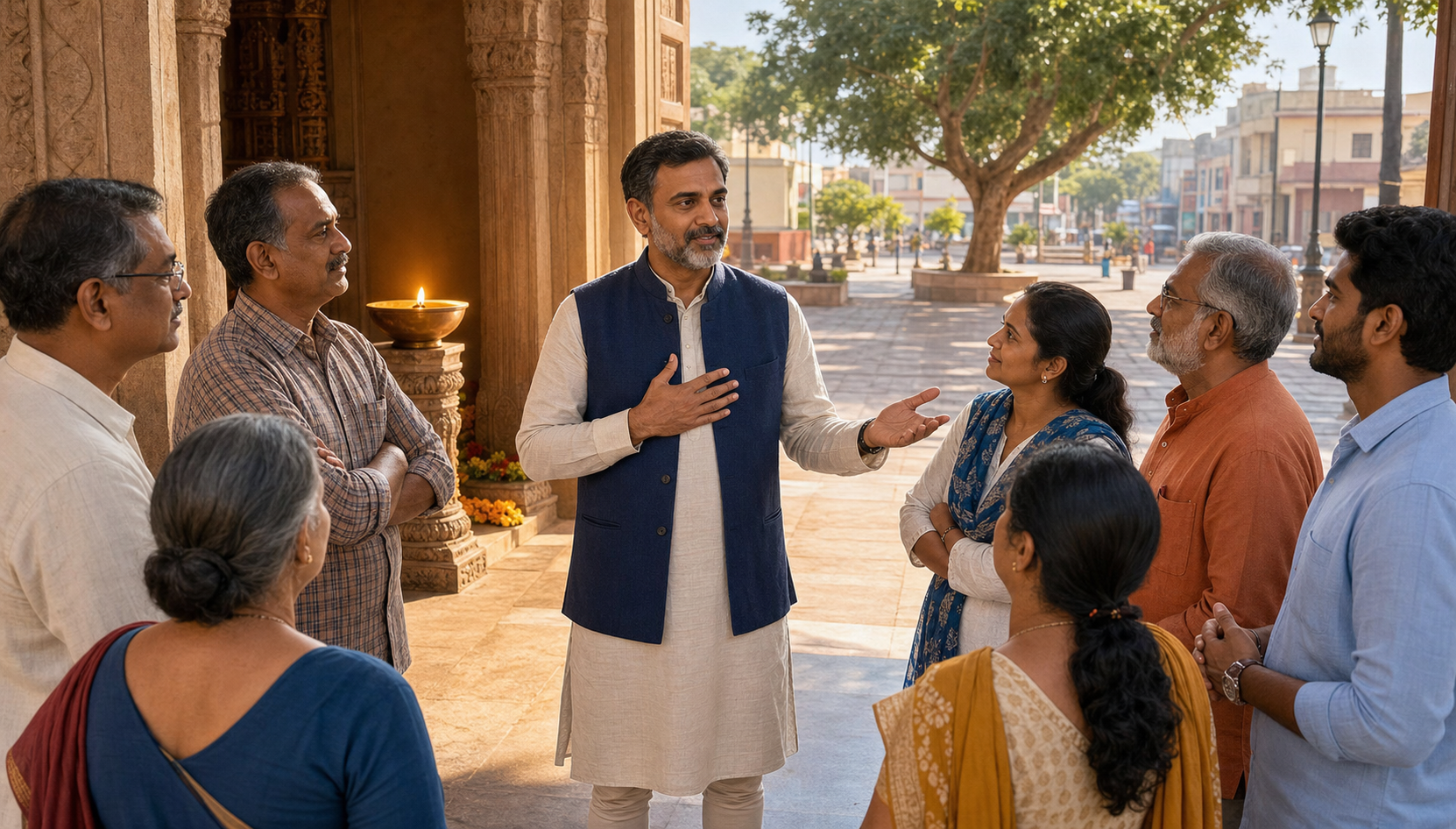
This article presents a culturally sensitive framework for sharing Krishna Consciousness in harmony with the wider dharmic family. It explains why no single method suits every seeker and how understanding culture and counter-culture guides effective outreach. Readers learn how Harinam, Book Distribution, Bhagvad Gita study groups, and Home Programs can be adapted to local contexts…
-
Bhagavan Sri Rama the Bridge-Builder: Powerful Symbolism Uniting Culture, Heart, and Spirit

This article explores the symbolism of Bhagavan Sri Rama as a bridge-builder, extending beyond Ram Setu into cultural, emotional, and spiritual realms. It highlights how the Ramayana’s bridge motif fosters unity in diversity and preserves the cultural fabric of society. Readers gain insights into ethical leadership, collective effort, and practical compassion as contemporary forms of…
-
January 30, 2026 Panchang: Dwadashi to Trayodashi Transition, Auspicious Timings Guide

On Friday, January 30, 2026, the Panchang notes Shukla Paksha Dwadashi until 9:21 AM, followed by Shukla Paksha Trayodashi for the remainder of the day. This clear tithi transition helps devotees complete Ekadashi parana in the morning and align subsequent worship with Trayodashi. Good Time or Shubh Muhurat depends on regional Nakshatra, Rashi, sunrise, and…
-
Nityalila in Vallabhacharya’s Vision: Eternal Divine Play, Grace, and the Soul’s Path

This article explores “Nityalila”—the eternal divine play—in Vallabhacharya’s Pushtimarg, explaining how grace-filled “bhakti” leads the soul toward intimate participation in Shri Krishna’s leela. It clarifies the three types of souls—Pravaha, Maryada, and Pushti—without assigning hierarchy, showing how each reflects a distinct spiritual orientation. Readers gain practical insight into how seva, nama-smarana, and ethical living cultivate…
-
Thirteen Radiant Forms of Goddess Kali in Tantraloka: Abhinava Gupta’s Kashmiri Vision

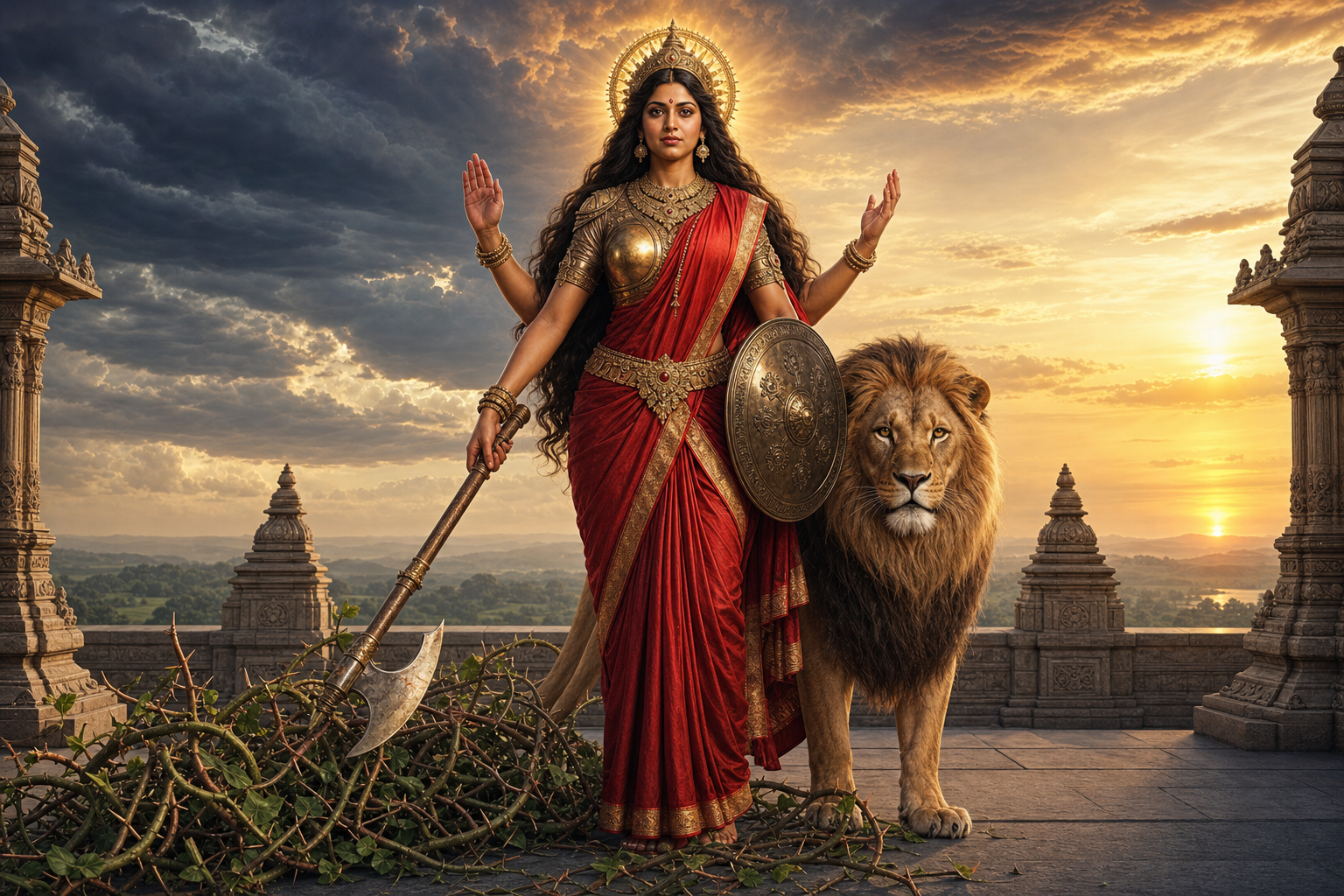
This exploration presents the thirteen forms of Goddess Kali in Abhinava Gupta’s Tantraloka as a living contemplative map within Kashmir Shaivism. Rather than a fixed list, these forms serve as dynamic lenses that refine attention, transmute fear, and reveal the liberating vastness of Shakti. The discussion situates Kali within Trika and Kaula streams while acknowledging…
-
Adhi Gajanathar in Tamil Nadu: Discover the Primordial Power and Timeless Grace of Ganesha

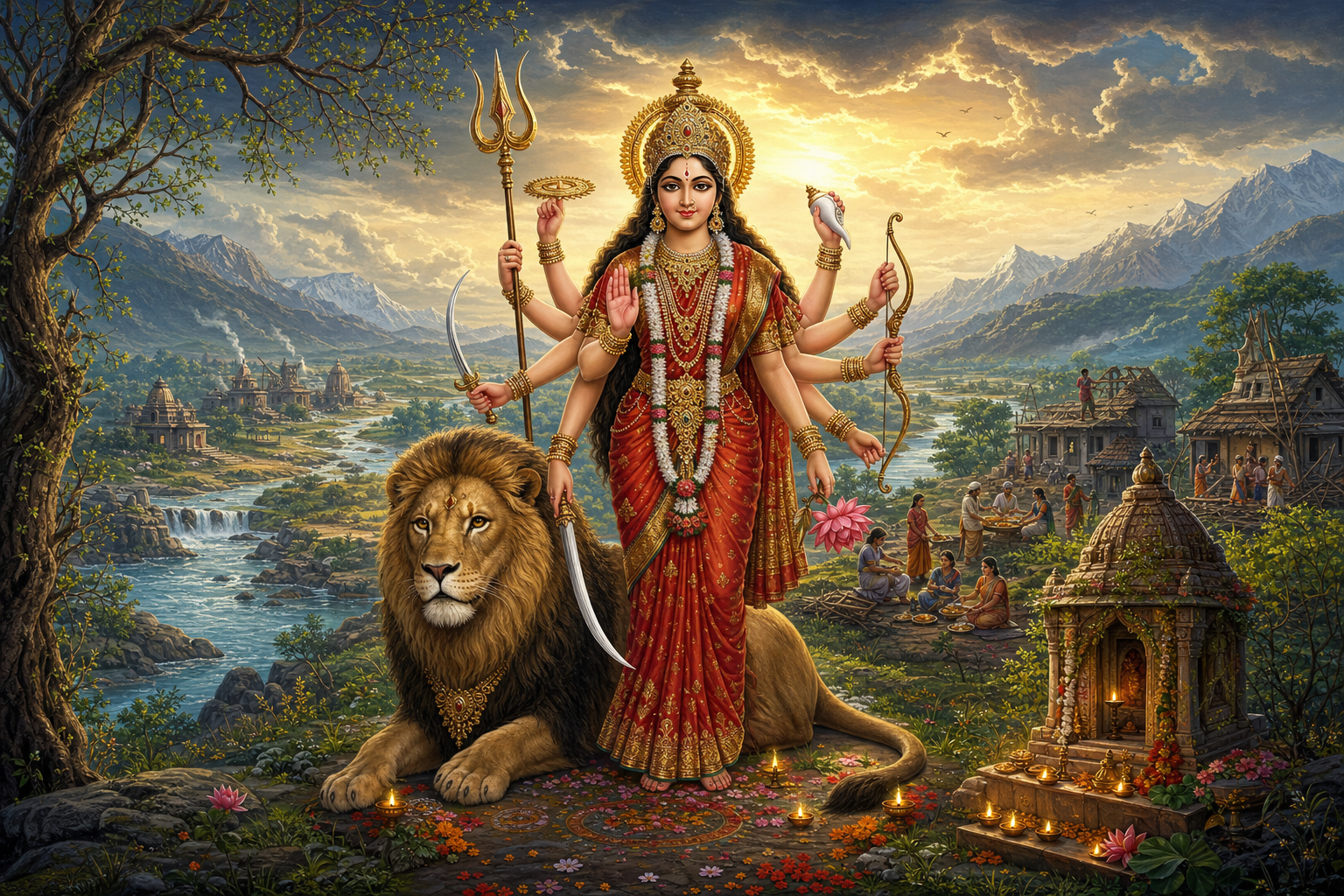
Adhi Gajanathar, revered as the primordial form of Lord Ganesha in Tamil Nadu temples, embodies the principle of auspicious beginnings woven through South Indian worship. This form’s placement near thresholds and prakaras reflects a theology of commencement that aligns space, ritual, and meaning. Iconography—noose, goad, modaka, and the protective gesture—communicates wisdom, protection, and inner sweetness.…
-
Vṛkāsura at Kedāranātha: Śiva’s Saving Compassion and the Ethics of Despair (SB 10.88.17–26)

Srimad-Bhāgavatam (SB 10.88.17–26) depicts Vṛkāsura at Kedāranātha, poised for self-harm after severe austerities, when Lord Śiva intervenes with decisive compassion. The episode distinguishes steadfast tapasya from destructive extremity, re-centering devotion within the life-affirming ethics of Sanatana Dharma. Read alongside the Puranas and the Bhakti Tradition, it reveals how grace protects the devotee from inner turmoil…
-
From Saint Louis to Spiritual Inquiry: HG Sravaniya dasi’s Lifelong Quest for Truth

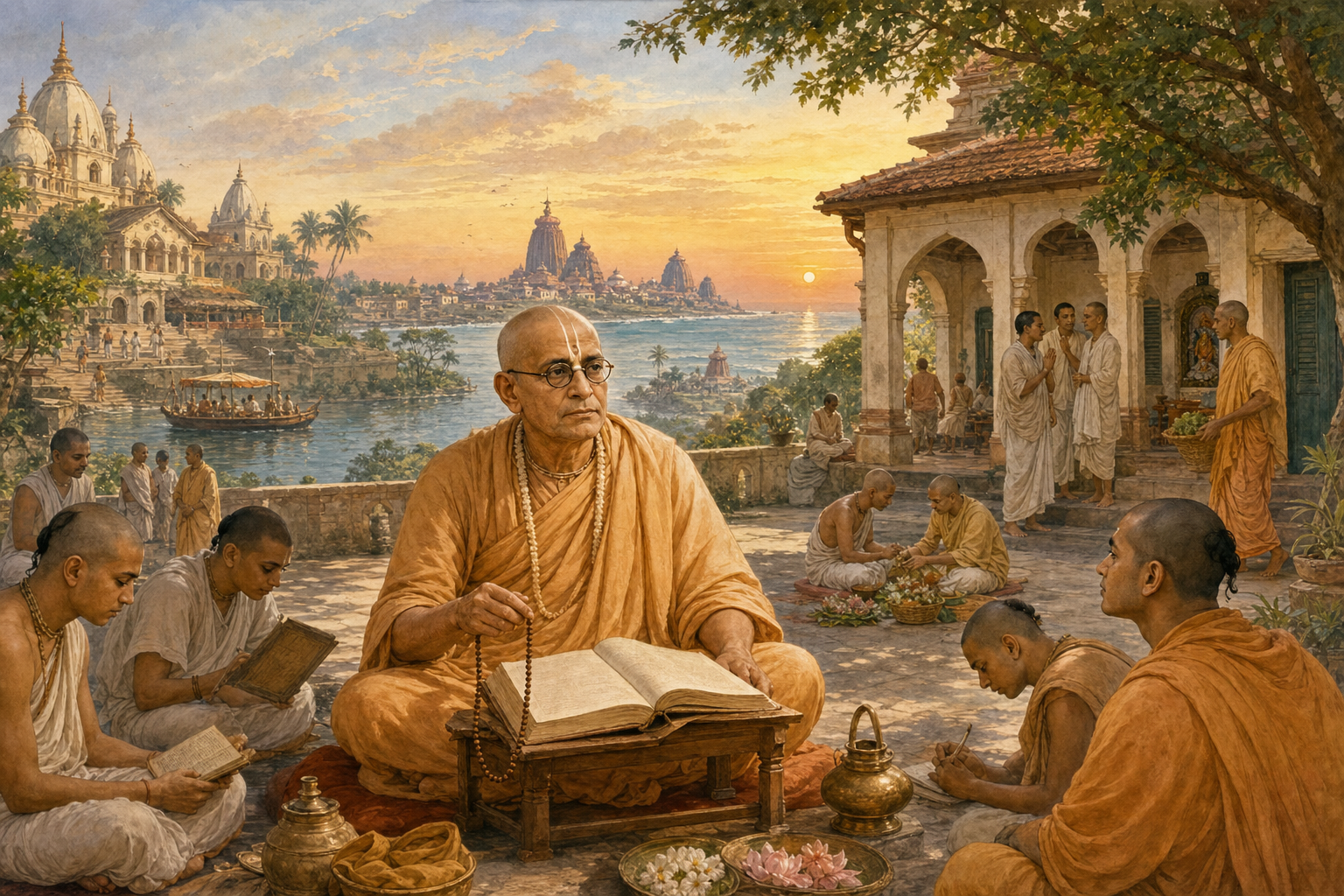
Her Grace Sravaniya dasi, born in Saint Louis, exemplifies a principled journey grounded in metaphysics, spirituality, and ethical living. Choosing vegetarianism at seventeen, she aligned her life with ahimsa and mindful compassion. Her study of eastern classics reflects a focused search into consciousness and reality, prioritizing inner transformation over external acclaim. Consistently drawn to non-commercial…
-
Srimad Bhagavatam Reverberations: Devahūti’s Nine Daughters and the Sacred Feminine

This article explores a luminous passage from the Srimad Bhagavatam, where Devahūti gives birth to nine daughters, each described with lotus-like fragrance and grace. It examines the episode’s symbolic affirmation of the sacred feminine and its alignment with dharmic virtues. The discussion integrates theological and physiological lenses, reflecting classical smṛti-śāstra perspectives while maintaining a respectful,…
-
Wealth of the Heart: Hinduism’s Abundance Through Simplicity, Devotion, and Dharma

Hinduism redefines wealth as an inner abundance nurtured by love, devotion, and dharma rather than by material accumulation. Across dharmic traditions, simplicity and service—bhakti, dana, aparigraha, and seva—create shared dignity and social cohesion. The Bhagavad Gita and the Upanishads frame purposeful action and mindful restraint as pathways to enduring fulfillment. Everyday experiences like bhajan, langar,…
-
Panchagavya vs Panchamakara: Unveiling Sacred Purity and Esoteric Power for Seekers

This comparative guide explores Panchagavya in Vaishnavism and Panchamakara in Shaktism, showing how both systems aim at inner transformation within Sanatana Dharma. Readers gain clear definitions, historical context, and lived meanings of these fivefold practices. The analysis highlights Panchagavya’s emphasis on ritual purity and bhakti, and Panchamakara’s symbolic, ethically guided approach to integrating Shakti. Practical…
-
Santan Gopal Stotra: Hope-Filled Japa Vidhi for Santan Prapti, Prosperity, and Inner Peace

Santan Gopal Stotra (संतान गोपाल स्तोत्र) is revered for nurturing hope, steadiness, and unity during the journey to parenthood. Within Hindu traditions, Santan Gopal Stotra Japa Vidhi offers a disciplined contemplative practice that strengthens intention, patience, and gratitude. Families often observe calmer communication and a supportive environment as regular recitation deepens devotion. Traditional claims regarding…
-
क्या सच में हनुमान जी के ‘पांच सगे भाई’ थे? प्रामाणिक ग्रंथ, लोककथा और भक्तिपरक दृष्टि

यह लेख “हनुमान जी के भी है पांच सगे भाई” जैसे लोकप्रिय दावे को शास्त्रीय प्रमाण और लोककथा—दोनों मानकों से स्पष्ट करता है। Valmiki Ramayana और Ramcharitmanas में हनुमान के भाइयों का उल्लेख नहीं मिलता, अतः मूल शास्त्र इस दावे की पुष्टि नहीं करते। साथ ही, क्षेत्रीय लोककथाएँ और उत्तरवर्ती आख्यान समय-समय पर ऐसे विचार…
-
Angaraka Loka Unveiled: Mangala’s Sacred Realm and the Red Planet in Dharmic Wisdom

Angaraka Loka, the subtle realm of Mangala (Mars), illuminates how Vedic cosmology unites symbolism, ethics, and lived practice. Puranic narratives variously present Mangala as the son of Varaha and Bhudevi or as Bhauma born of Bhudevi, converging on a vision of disciplined courage in service of dharma. The association with Lord Muruga underscores protection, clarity,…