-
Ratha Saptami 2026 Vrat Katha: Surya Jayanti Blessings, Rituals, and King Yashovarma’s Legacy

Ratha Saptami (Surya Jayanti) in 2026 falls on January 25, aligning devotion to Surya with the renewal of body, mind, and nature. The Ratha Saptami vrata katha linked to King Yashovarma of the Kamboj Empire underscores how repentance, discipline, and charity restore harmony. Clear, step-by-step puja guidance—sunrise arghya, arka-leaf snana, Aditya Hridayam, naivedya, and dana—helps…
-
Ratha Saptami Puja Vidhi: Time-Honored Surya Pooja Steps, Meanings, and Practical Tips

Ratha Saptami, observed on Magha Shukla Saptami, is a revered Surya Pooja that aligns devotion with nature’s rhythm. This guide presents a clear Ratha Saptami Puja vidhi rooted in Shodashopachara Puja, with each step explained for home practice. It highlights sunrise snanam with Arka leaves, offering arghya facing east, reciting Aditya Hridayam, and performing Surya…
-
Ratha Saptami (Radha Saptami) Guide: Sacred Snan Mantra, Sunrise Rituals, and Surya Jayanti

Ratha Saptami (Radha Saptami) celebrates Surya Jayanti with a sunrise ritual bath, sacred mantras, and offerings to Surya Bhagwan. The observance emphasizes gratitude, clarity, and discipline rooted in Vedic tradition, with the ceremonial snana considered especially auspicious at rivers like Ganga, Godavari, Yamuna, Narmada, Cauvery, and Krishna. Devotees commonly offer arghya facing the east and…
-
Majestic Legacy of Kubera: Guardian of the North and Lord of Wealth Revealed

Kubera—Lord of Wealth, King of the Yakshas, and guardian of the northern direction—embodies prosperity grounded in dharma. Rooted in Hindu scriptures and echoed across Buddhist and Jain traditions (as Vaisravana and through Yaksha guardianship), his story aligns material abundance with ethical responsibility. The Mahabharata acclaims him as radiant and exemplary, while Puranic lineages present a…
-
Ekajata’s Single Braid: Powerful Symbolism of Focus, Protection, and Supreme Consciousness

Goddess Ekajata’s single braid is a concentrated teaching in Hindu Tantra: a symbol of supreme consciousness, one-pointed focus (ekagrata), and vigilant spiritual protection. Read as Tantric anatomy, it reflects the unification of ida and pingala within the sushumna nadi, supporting sustained dhyana and the ascent of Kundalini. The braid’s tightly bound form evokes vows, secrecy,…
-
Virat Purusha Awakens: Srimad Bhagavatam 3.26 Reveals the Power of the Supersoul

Srimad Bhagavatam 3.26.62–71 presents a clear philosophical insight: the senses, mind, and intelligence remain inert until the Supersoul (Paramatma) enters and animates the Virat Purusha. Mukunda Goswami’s exposition clarifies that all faculties are instruments requiring the integrative power of consciousness to become meaningful. Readers gain a practical framework for aligning speech, thought, and action through…
-
Vasant Panchami’s Sacred Radiance: Vishnu Priya, Pundarika, and Raghunatha’s Renunciation

This Vasant Panchami reflection, drawn from a class by His Grace Atul Krishna Prabhu, clarifies why the day is considered uniquely auspicious in Gaudiya Vaishnavism. It highlights the appearance of Srimati Vishnu Priya Devi and Pundarika Vidyanidhi, illustrating how humility, learning, and devotion converge in living practice. The life of Raghunatha Dasa Goswami exemplifies actionable…
-
From Sadhu-Sanga to Perfection: SB 3.25.25-37’s Transformative Map of Krishna Bhakti

This analysis of SB 3.25.25–37 with Kalakantha Prabhu presents a precise roadmap of Krishna consciousness grounded in the Srimad-Bhagavatam. It explains why sadhu-sanga is the essential catalyst that turns knowledge into lived devotion. The discussion clarifies how śravaṇa and kīrtana function as the heart’s medicine, steadily cultivating śraddhā, rati, and bhakti. Listeners will recognize the…
-
Fearlessness and Detachment in Hinduism: Powerful Practices for Inner Freedom and Growth

Fearlessness (abhaya) and detachment (vairagya) are central to Hindu philosophy, shaping a confident, ethical, and compassionate way of life. Fearlessness stabilizes decision-making under uncertainty, while detachment clarifies judgment by releasing attachment to outcomes. Practical disciplines—Yoga, meditation, pranayama, japa, svadhyaya, and seva—help integrate these virtues into daily interactions at home, work, and online. The approach strengthens…
-
Nine Sacred Powers of Goddess Lakshmi: A Profound Guide to Prosperity and Inner Grace

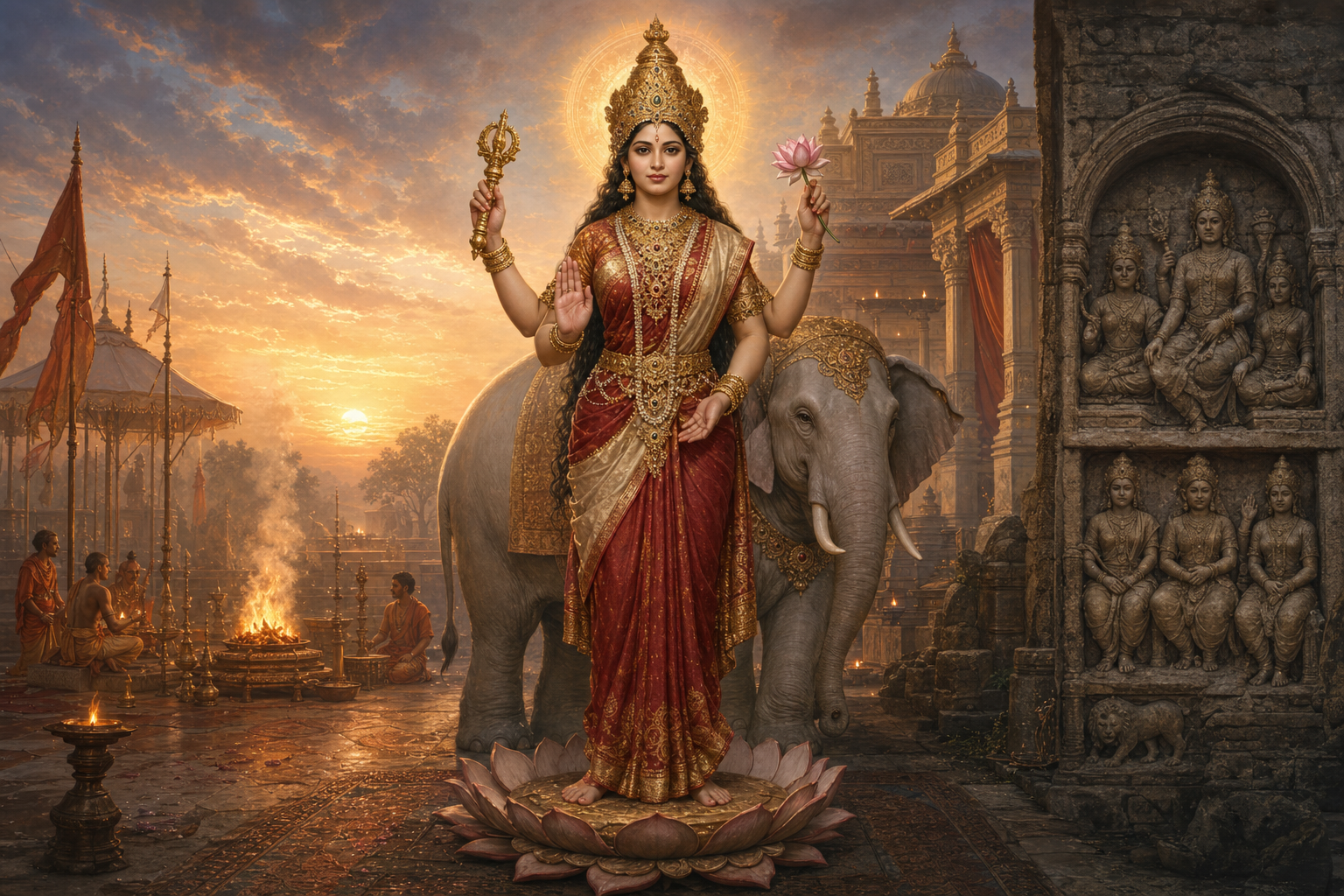
Goddess Lakshmi is revered not only as the deity of prosperity but as the source of nine sacred powers that integrate material abundance with inner grace. This guide presents a concise, academically grounded overview of a widely referenced enumeration—the Ashta Lakshmi plus Aishwarya Lakshmi—while honoring regional and textual diversity. Each manifestation illuminates a virtue: from…
-
Ratha Saptami’s Seven Erukkai Leaves: Ritual Symbolism, Inner Purification, Surya’s Grace
Ratha Saptami honors Surya’s northward journey in Magha with a unique sunrise bath using seven erukkai (arka) leaves. Each placement—head, shoulders, chest, back, and knees—maps to clarity, duty, devotion, release, and humility, turning a simple act into contemplative purification. The number seven echoes sapta rishi, sapta dhatu, and sapta lokas, adding depth to the ritual’s…
-
Ravana vs Mahabali: Unraveling Lineage, Dharma, and Legacy Across Dharmic Traditions

Ravana and Mahabali occupy contrasting roles in Hindu mythology that illuminate dharma, humility, and righteous leadership. Ravana, the learned yet pride-driven king of Lanka, confronts Sri Rama and falls for violating ethical boundaries. Mahabali, the generous asura king and grandson of Prahlada, surrenders to Vamana and receives enduring grace—honored each year during Onam. Comparing lineage,…
-
Magh Purnima 2026 (Feb 1): Auspicious Bathing, Rituals, and Dharmic Unity Guide

Magh Purnima 2026 falls on February 1 and is revered as the Full Moon of Magha month, concluding the season’s observances in North India. The day is especially auspicious for Magh Snan, quiet japa, and generous daana, and carries added significance during the Magh Mela and Kumbh Mela cycle. Families across regions mark the dawn…
-
Guru Pratipada 2026: Celebrate Guru Parampara and Sri Nrusimha Saraswati with Devotion

Guru Pratipada 2026 falls on February 2 and honors the Guru Parampara within the Datta Sampradaya, commemorating the sacred legacy of Sri Nrusimha Saraswati. Celebrated with devotion across Karnataka, Andhra Pradesh, Maharashtra, and parts of Western and Northern India, the day highlights the unifying power of the guru–shishya tradition. Observances include Guru Puja, devotional chanting,…
-
Break Free from Chronic Stress: Powerful Micro-Practices to Reclaim Presence and Peace

Chronic stress often locks attention into past regrets and future worries, obscuring the only place life actually happens: the present moment. This evidence-informed reflection shows how thirty seconds of breath awareness, practiced repeatedly, can restore clarity, regulate the nervous system, and improve communication, decision-making, and creativity. Practical micro-practices—anchors before routine tasks, nonjudgmental noticing, body scans,…
-
Why Liquor Appears in Kali Worship: Tantric Symbolism, Sacred History, Dharmic Unity

Goddess Kali’s worship historically includes offerings of karanbari (liquor), especially within Tantric frameworks that emphasize transformation through the pañcamakāra: madya, mamsa, matsya, mudra, and maithuna. In this symbolic logic, madya represents ego-surrender and fearlessness rather than indulgence. Communities have adapted the practice across contexts—from cremation-ground rites to household pujas—often opting for symbolic substitutes like coconut…
-
Jishnu: Krishna’s Ever-Victorious Name — Sanskrit Meaning, Origins, and Living Significance

Jishnu, a sacred epithet of Bhagavan Sri Krishna, means the ever-victorious and derives from the Sanskrit root √ji, “to conquer.” Classical sources, including the Vishnu Sahasranama, affirm its scope as the triumph of dharma rather than mere domination. In the Mahabharata and Bhagavad Gita, Krishna’s counsel frames victory as dharma-yuddha—ethical struggle grounded in inner mastery…
-
Hamsa Kshira Nyaya: Vedic Wisdom on Discernment for Unity Across Dharmic Paths

“Hamsa Kshira Nyaya” conveys a Vedic principle of discerning the essential from the incidental, symbolized by the hamsa separating milk from water. Rooted in Hindu philosophy and evoked in the Shukla Yajur Veda (19.73), it becomes a practical guide to viveka—clear discrimination grounded in dharma. The teaching resonates across dharmic traditions: Buddhism’s prajñā, Jainism’s viveka…
-
Manana in Vedanta: Harnessing Constant Reflection to Realize Atman–Brahman Unity

“Manana” in Vedanta means disciplined, constant reflection that converts scriptural listening into firm understanding. As the second step in the sadhana traya—following “sravana” and preceding “nididhyasana”—it resolves doubts through reasoned contemplation. This practice deepens clarity about the unity of Atman and Brahman and anchors insight in everyday conduct. Structured routines, journaling, and guidance from a…