-
Who Was Madhava Dasar? A Profound Bhakti Legacy Across Vedas, Vedanta, and Vaiseshika

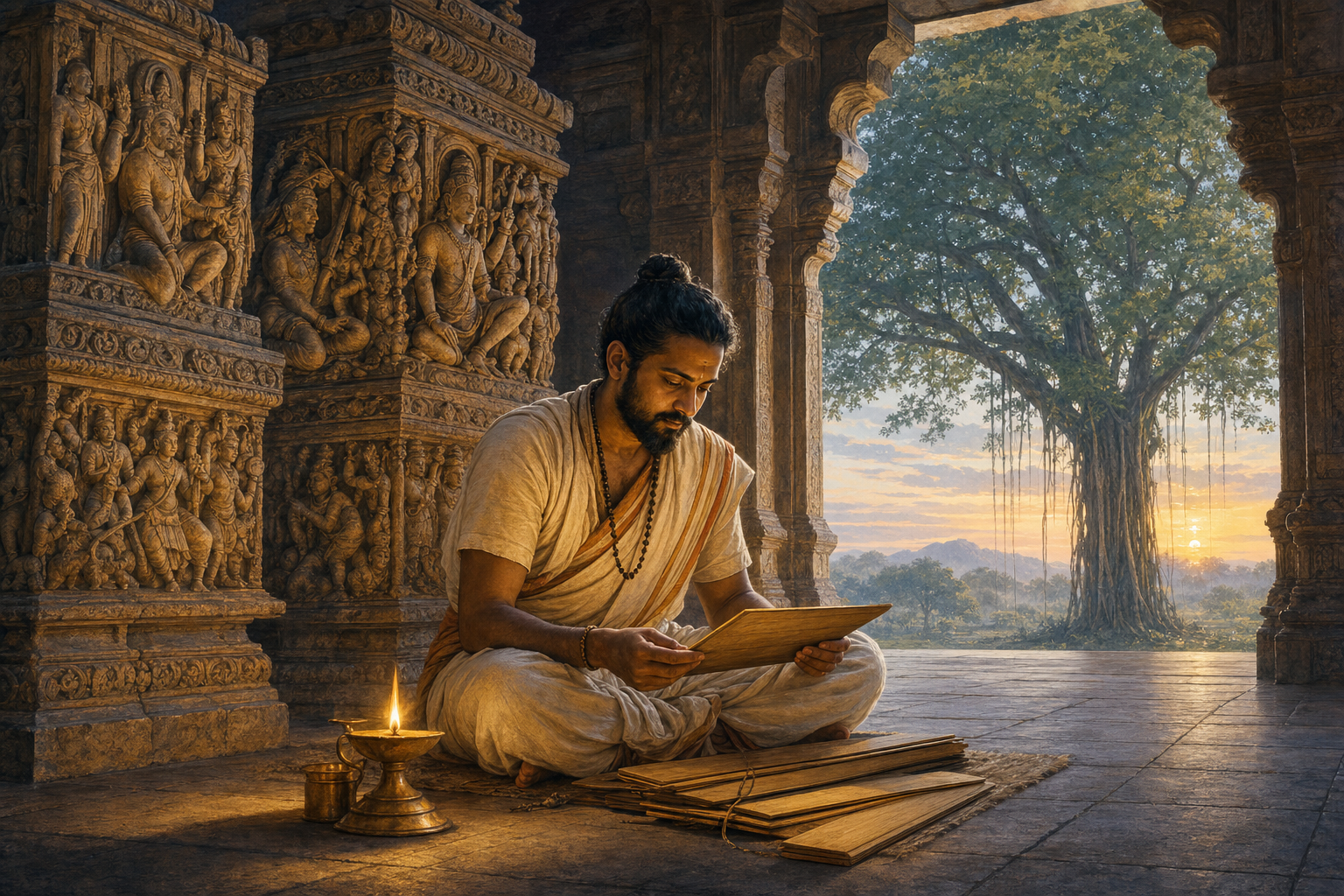
Madhava Dasar is remembered as a Brahmin exemplar who harmonized Vedic learning, Vedanta, and Vaiseshika with an accessible Bhakti ethos. Hagiographic accounts compare his householder ideal to Janaka, signaling ethical engagement in the world without attachment. His devotional legacy—evoked in searches for “who is Madhava Dasar,” “Madhava Dasar Katha,” and “Madhava Dasar bhakti songs”—illustrates how…
-
Sri Hanuman Das: A 1st-century Devotee-Poet of Rama and Hanuman—History, Poetics, Legacy

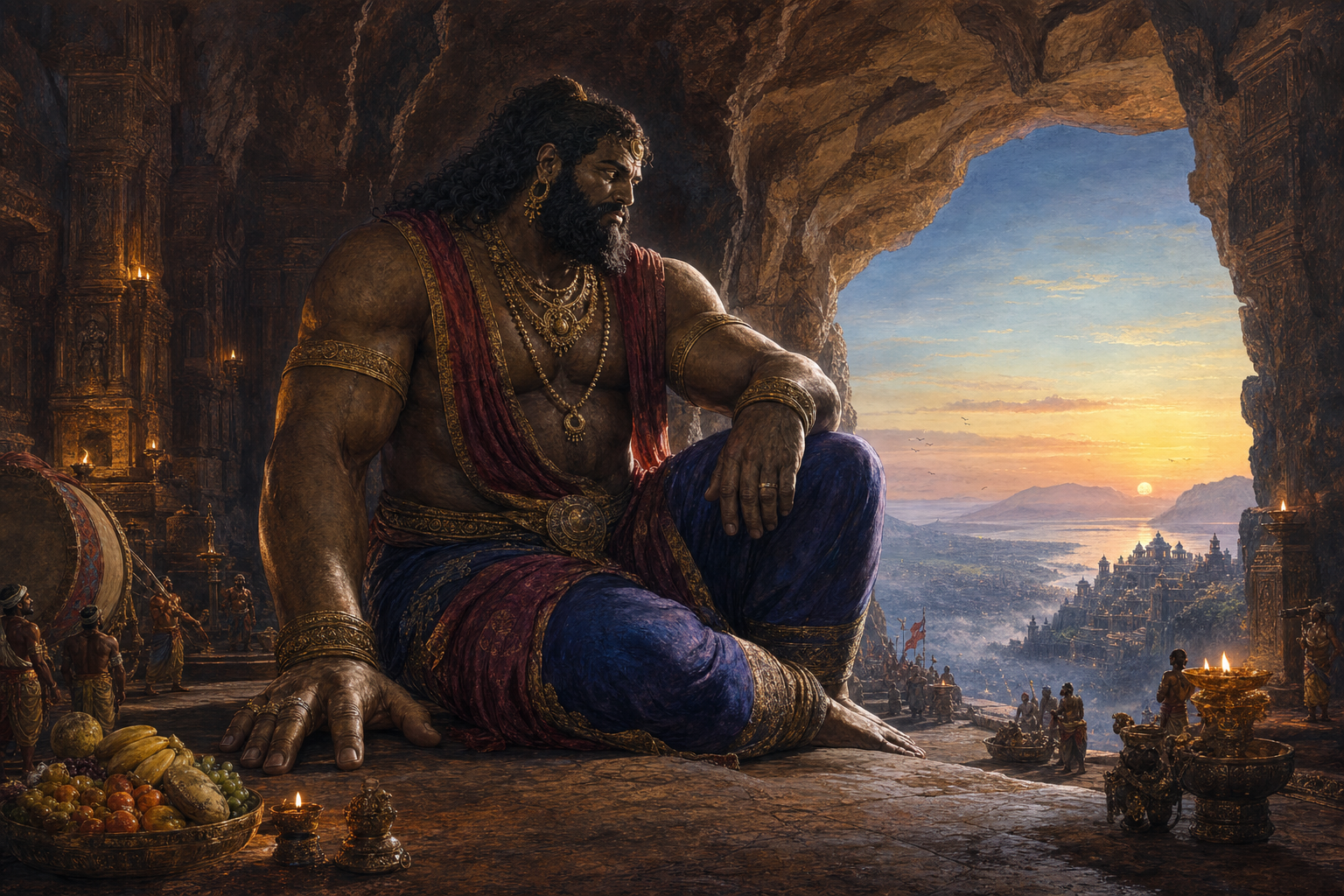
Sri Hanuman Das is remembered as a Hindu saint and Sanskrit poet from present-day Uttar Pradesh, traditionally dated to the 1st century CE and celebrated for deep devotion to Lord Rama and Lord Hanuman. The devotional name “Hanuman Das” reflects dāsya-bhāva—service as a spiritual path—linking Hanuman’s exemplary loyalty to Rama-bhakti. While the precise chronology remains…
-
Narottama Dasa Thakura: Unifying Gaudiya Bhakti Through Timeless Kirtana and Scholarship

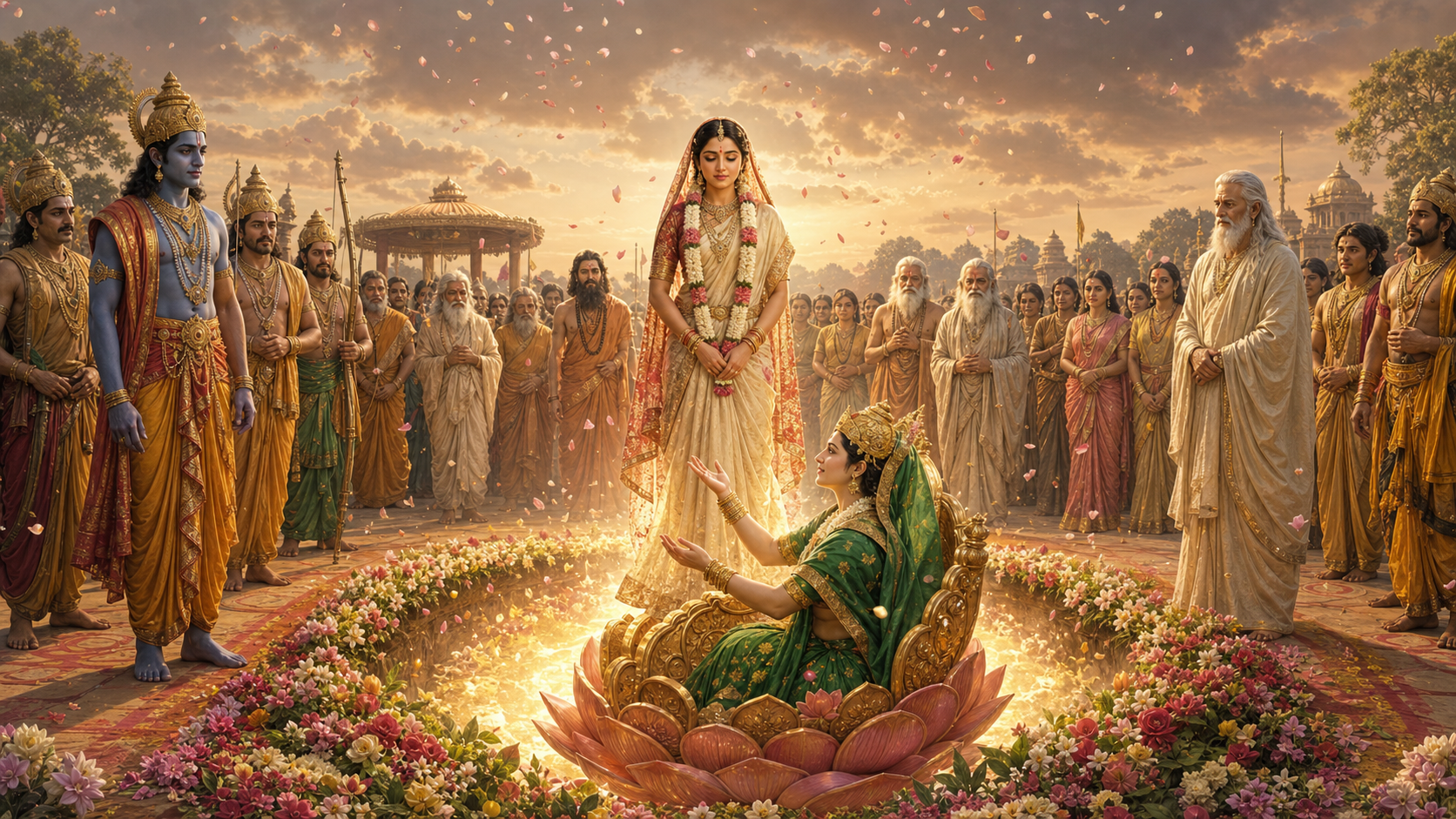
Narottama Dasa Thakura (16th–17th century) helped translate Shri Chaitanya’s vision into enduring practice by uniting theology, kirtana, and community-building across Bengal and present-day Bangladesh. Born into an aristocratic family in Kheturi, he received advanced training in scripture and music, studied in Vrindavan under Jiva Goswami, and accepted initiation from Lokanatha Goswami, remaining celibate throughout life.…
-
Sankalpa to Samadhi: How Focused Intention Forges Divine Union Across Dharmic Paths

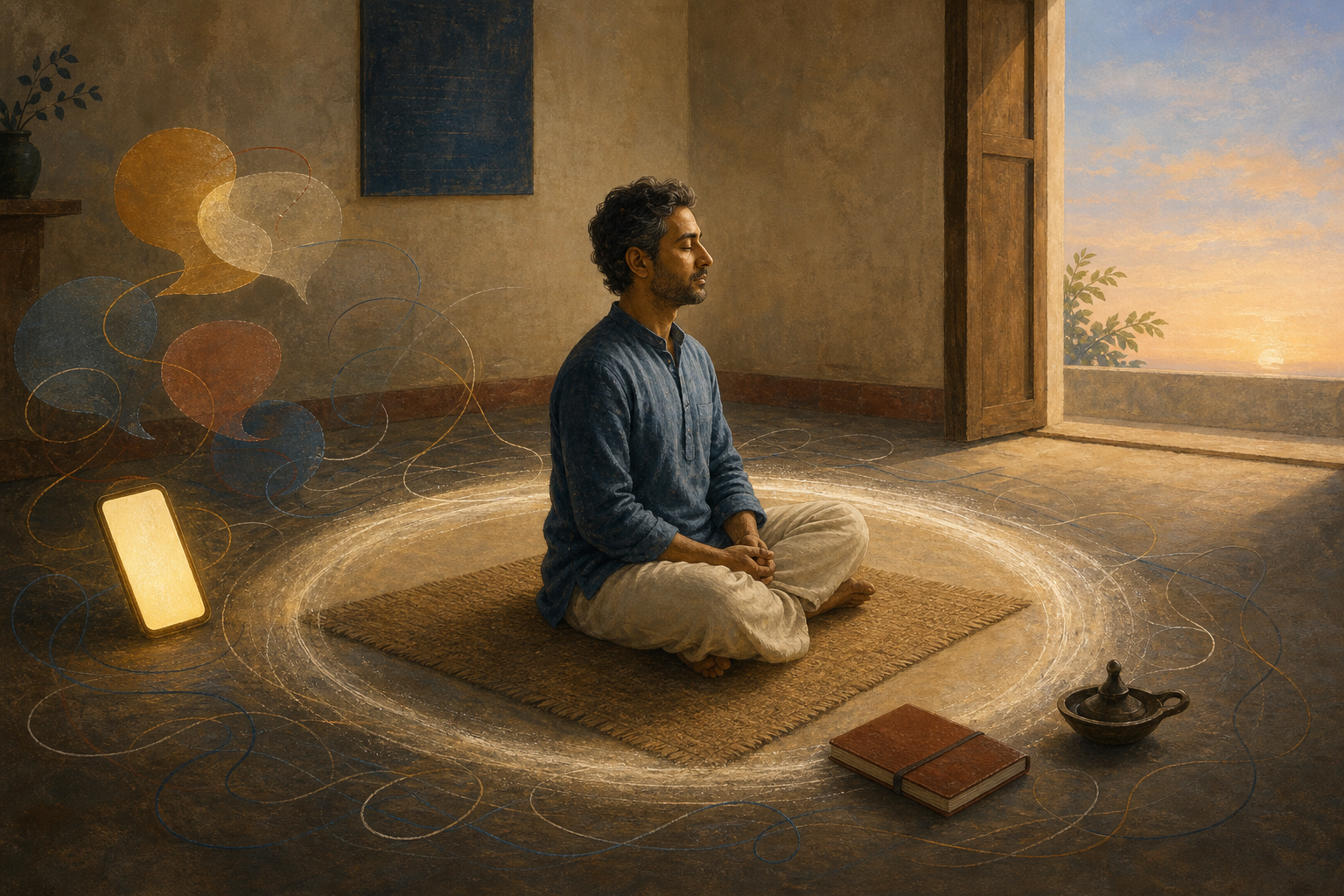
This article examines how strong intention—saṅkalpa, cetanā, bhāvanā, or alignment with Hukam—becomes the central engine of transformation across Hinduism, Buddhism, Jainism, and Sikhism. It explains the shared architecture that links ethics, attention training, contemplative absorption, and compassionate action, showing how these elements cohere into divine union or ultimate realization. Drawing on the Bhagavad Gita, the…
-
The World as a Roadside Inn: A Dharmic Guide to Impermanence, Detachment, and Freedom

This essay explores the classic dharmic metaphor of the world as a roadside inn to clarify impermanence, detachment, and ethical action. A teaching story of a mendicant and a king introduces the theme, which is then examined through the Bhagavad Gita, Upanishads, Patanjali’s Yoga Sutra, and Jain, Buddhist, and Sikh perspectives. Readers learn how anitya…
-
Break Free from Fragmentation: Seeking the Whole in Vedanta and Dharmic Paths for Inner Peace

This article unpacks the insight that suffering arises from fragmentation and shows how Vedanta and the broader dharmic traditions offer a precise remedy by seeking the whole. It explains avidya through the Upanishads and the Bhagavad Gita, connects Yoga’s kleshas and eightfold discipline to integration, and brings in Buddhist, Jain, and Sikh perspectives that converge…
-
February 27, 2026 Panchang: Auspicious Shukla Paksha Ekadashi Timing, Rituals, Nakshatra & Rashi

Friday, February 27, 2026 marks Shukla Paksha Ekadashi in most Indian regions, beginning at 12:06 AM IST and prevailing at sunrise—making it the principal day for Ekadashi vrata. Commonly known as Amalaki Ekadashi, the observance emphasizes sattva, Tulasi and āmalakī offerings, and Vishnu-centered worship. The post explains how tithi is computed in the Panchang, why…
-
Mahabharata Made Clear: A Comprehensive, Soul-Stirring Summary of Dharma, War, and Wisdom

This academically grounded summary presents the Mahabharata’s eighteen parvas with clarity, linking narrative, statecraft, and spirituality into a single, coherent guide. Readers gain a concise understanding of the Kuru lineage, the Kurukshetra War, and the Bhagavad Gita’s integrated path of action, knowledge, and devotion. The overview highlights Vidura-niti and Bhishma’s lectures on just governance, ethical…
-
Escaping the ‘Good Enough’ Trap: Why Fitting In Breeds Emptiness and How to Reclaim Self‑Worth

This long-form reflection analyzes how a lifelong drive to be “good enough” evolved into approval-seeking, identity foreclosure, and inner emptiness—and how reframing belonging versus fitting in changed the trajectory. It traces a concrete journey through shifting personas, numbing cycles, therapy, relationship stress, and collapse, culminating in a pivotal realization: life had been optimized for an…
-
The Divine Voice Within: How Conscience Elevates Human Life across Dharmic Traditions

Conscience in Hindu philosophy is an inner compass cultivated through viveka, buddhi, and alignment with dharma. Anchored in the Upanishads and the Bhagavad Gita, it is clarified by sattva and refined by yoga, devotion, service, and self-study. This academic overview integrates Hindu insights with parallel concepts in Buddhism (hiri–ottappa), Jainism (samyak-darshana, pratikraman), and Sikhism (hukam,…
-
Khandana Khanda Khadya: Shriharsha’s Razor and a Masterclass in Defending Advaita Vedanta

Khandana Khanda Khadya stands as a luminous 12th-century masterpiece of Advaita Vedanta, using elegant refutation to unsettle rigid categories and clear a contemplative path to nondual insight. Shriharsha’s method exposes circularities in definitions and limits in pramana theory, challenging naive realism while honoring the self-luminous nature of consciousness. The analysis reveals deep resonances with Buddhist…
-
Vedanta’s Call to Inquiry: A Rigorous, Transformative Journey through the Upanishads to Self

This essay presents Vedanta as a disciplined path of inquiry grounded in the Upanishads and guided by rigorous methods of knowledge. It explains pramana, and the classical triad of shravana–manana–nididhyasana, showing how contemplative assimilation transforms insight into lived clarity. It outlines practical qualifications (sadhana-chatushtaya) and core analyses such as pancha-kosha viveka, drg-drshya viveka, and avastha-traya…
-
Omkareshwar’s Living Deity: Shiva’s Nightly ‘Chausar’ Legend, Shayana Aarti, and the Sacred Narmada

This research-grounded essay explores the Omkareshwar Temple legend that Lord Shiva arrives nightly, plays Chausar (Pachisi), and rests in the sanctum, situating it within the Hindu concepts of living deity (prana-pratishtha), lila (divine play), and shayana aarti (ritual repose). It maps Omkareshwar’s sacred geography on Mandhata Island in the Narmada River, its Jyotirlinga status, and…
-
Sharabha Jayanti 2026 (Vaishakh Purnima): Sacred Date, Puja Guide, Symbolism, Temple Insights

Sharabha Jayanti 2026, also known as Sharabheshwara Swamy Jayanti, falls on 1 May and coincides with Vaishakh Purnima in the traditional Hindu calendar. The festival honors Lord Sharabha as a protective, pacifying manifestation of Shiva and emphasizes transforming fierce energy into compassionate guardianship. Regional calendars index the observance differently, with Tamil and Malayalam solar months…
-
Complete Panchang for February 26, 2026: Shukla Navami to Dashami, Good Time, Nakshatra & Rashi

On Thursday, February 26, 2026, the Hindu Panchang records a tithi transition: Shukla Paksha Navami ends at 2:24 AM and Shukla Paksha Dashami then prevails. The overview explains how tithi is calculated from solar–lunar angular separation and why exact end times vary by location. It outlines how to choose “Good Time” (Shubh Muhurat) using Abhijit…
-
Timeless Tirumala Tirupati: History, Architecture, Ritual Science, and Venkateswara’s Grace

Tirumala’s Sri Venkateswara Temple is revered as Kaliyuga Vaikuntha and celebrated for its unbroken lineage of worship in Andhra Pradesh’s Seshachalam Hills. Historical inscriptions document centuries of royal patronage by Pallava, Chola, Pandya, and Vijayanagara rulers, including queens, who endowed land, lamps, and resources for ritual continuity. Architecturally Dravidian, the temple centers on the gold-crowned…
-
Moksha Without Martyrdom: Why Hinduism Teaches Liberation Through Knowledge, Not Pain

The notion that God desires human suffering for spiritual realization conflicts with Hindu philosophy. Across the Upanishads, the Bhagavad Gita, and Vedanta, moksha arises through knowledge, devotion, selfless action, and meditation—not by glorifying pain. The Gita even censures self-mortification, framing tapas as disciplined refinement rather than injury. Hindu ethics centers ahimsa, while jnana, bhakti, karma…
-
Srimad Bhagvatam 4.14.34–37: Sacred Sound, Just Rule, and the Fall of King Vena

Srimad Bhagvatam 4.14.34–37 narrates how sages countered a tyrant’s denial of dharma using sanctified speech rather than weapons, offering a profound study in political theology, sacred sound, and ethical governance. The background of King Anga’s departure and King Vena’s misrule clarifies why authority without transcendence self-destructs. The episode is read not as praise of violence…
-
Beyond Temple Worship: Kapila on Seeing the Supersoul in All (Bhagavatam 3.29.21–27)

Srimad-Bhagavatam 3.29.21–27 defines authentic devotion as seeing the Lord (Paramātman) in every being, not only in the temple Deity. The discussion clarifies why ritual worship, though essential, remains incomplete without ahiṃsā and dayā. Drawing on the Bhagavad-Gita and the Upanishads, it shows how arcā-vigraha trains perception to recognize the indwelling Lord everywhere. Practical guidance translates…