-
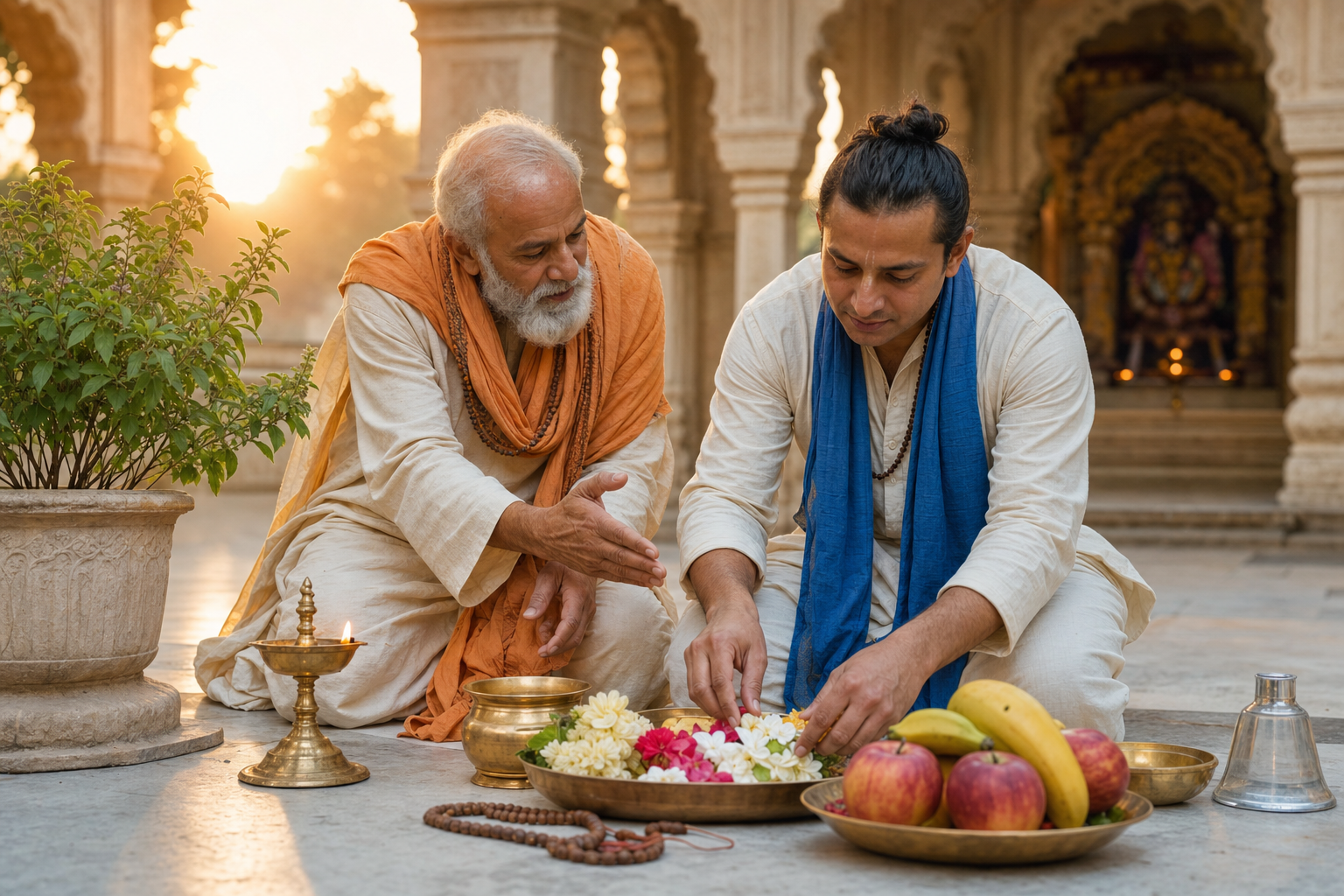
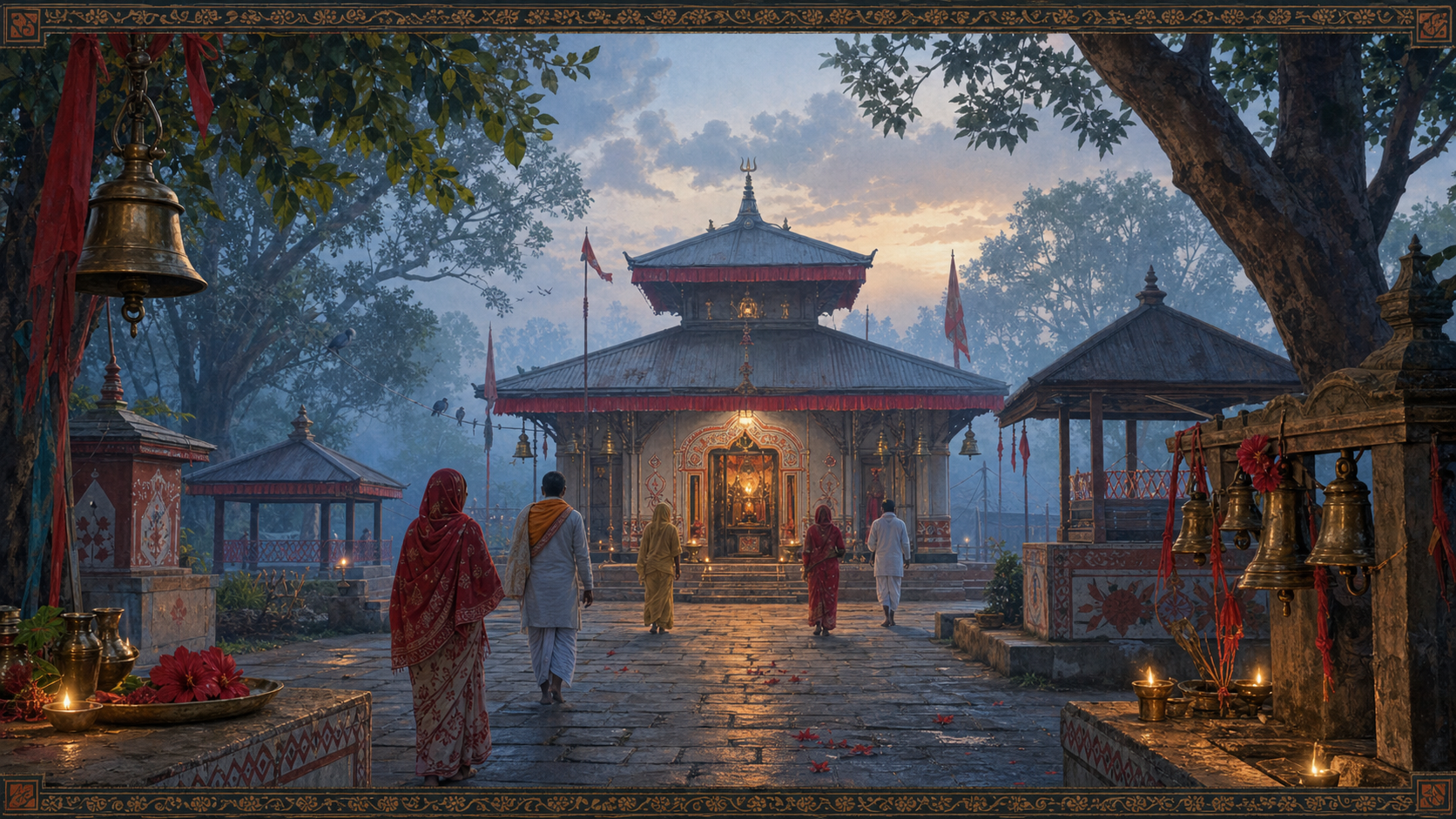
Dhyan Badri Temple: Uttarakhand’s Sacred Sapta Badri Haven Where Urvarishi Saw Vishnu

Dhyan Badri Temple in Uttarakhand’s Urgam Valley is a serene Vishnu shrine in the Sapta Badri circuit, renowned for its meditative ethos and village-based custodianship. Set at roughly 2,135 meters, it anchors a local tradition in which Urvarishi attained a divine vision of Lord Vishnu, aligning legend with the site’s contemplative character. The temple’s understated…
-
Empathy as the Mark of Divinity: Dharmic Teachings on Karuṇa, Dayā, and Universal Compassion

Empathy is presented as the defining mark of divinity across Hinduism and the broader dharmic family, where compassion (karuṇa/dayā) is both spiritual practice and social ethic. Grounded in scriptural foundations such as Bhagavad Gita 6.32 and 12.13, the article links inner realization with the welfare of all beings. It highlights convergences with Buddhism’s Brahmavihāras, Jainism’s…
-
Bhagwan Parshvanatha: Life, Four Vows, and the Enduring Legacy of Jainism’s Compassionate Reformer

Bhagwan Parshvanatha, the 23rd Tirthankara, helped shape Jain ethics through a clear fourfold discipline—ahimsa, satya, asteya, and aparigraha—later integrated with Mahavira’s expanded code. Born in Varanasi and widely regarded as historical, Parshvanatha’s legacy is visible in sacred sites like Sammed Shikharji and in distinctive serpent-canopied iconography. Texts such as the Kalpa Sūtra and the Uttarādhyayana…
-
Evil Eye (Nazar) Demystified: Dharmic Perspectives, Science of Envy, and Safe Remedies

This analysis clarifies what people mean by the evil eye, or nazar and drishti dosha, and explains why belief can sometimes shape experience through expectancy and stress. It situates the topic within Hindu, Buddhist, Jain, and Sikh perspectives that emphasize intention, compassion, and ethical living over fear. Readers discover how protective customs function psychologically and…
-
Karna’s Final Charity: Unbreakable Dāna, Dharma, and Lessons from Kurukshetra

This long-form analysis examines the widely remembered motif of Karna’s final charity on the battlefield of Kurukshetra and situates it within the Mahabharata’s ethical universe. It distinguishes between the critical Sanskrit text and later regional and oral retellings that amplify Karna’s identity as Dāna-vīra. Through the lens of the Bhagavad Gita’s typology of dāna, the…
-
Rama Navami 2026: HH Chandramauli Swami’s Deep-Dive on Rama, Rajadharma, and Living Bhakti

Rama Navami 2026 features a special evening class on 26 March with HH Chandramauli Swami Maharaja, exploring Śrī Rāmacandra as Maryada Purushottama through scripture, ethics, and lived practice. The session situates Rama within avatāra-tattva, citing sources such as the Brahma-samhita and Śrīmad-Bhāgavatam, and translates festive devotion into sustainable sādhanā. Attendees gain a nuanced understanding of…
-
From Survival Mode to Flourishing: Evidence‑Based Healing After Family Abandonment

This long-form analysis follows one person’s progression from childhood abandonment and emotional neglect to adult flourishing, detailing how survival mode forms and how it can be updated. It explains why disclosure felt unsafe, how chosen family efforts initially replicated trauma patterns, and why grief for the family that never existed must be named rather than…
-
How We Treat the Powerless: Dharma’s Uncompromising Measure—from Gita to Guru Granth Sahib

True character is revealed most clearly in how people treat those with little power. Drawing on Hinduism, Buddhism, Jainism, and Sikhism, this essay shows how Dharma, Ahimsa, Seva, and Karuna converge on a single ethical yardstick: dignity for the vulnerable. It synthesizes sources from the Bhagavad Gita, Mahabharata (Vidura-niti), Dharmasastra, and Arthasastra alongside Sikh langar…
-
Sri Rama’s Virtue and Valor: A Timeless Dharma Blueprint for Courageous, Just Leadership

Sri Rama’s portrayal in the Ramayana unites virtue (dharma) with valor (kshatra), forming the ideal of Maryada Purushottama. This synthesis grounds strength in compassion and binds power to law, offering a reliable template for just leadership and community protection. The epic narratively encodes principles akin to just war ethics: just cause, right intention, last resort,…
-
April 3, 2026 Panchang: Pratipada to Dwitiya, Shubh Muhurat, Nakshatra & Rashi

Friday, April 3, 2026 observes Krishna Paksha Pratipada until 7:16 AM, then Krishna Paksha Dwitiya for the remainder of the day. The post explains what a tithi is in precise astronomical terms and clarifies why tithi boundaries seldom match clock hours. It outlines practical, research-backed guidance for identifying Shubh Muhurat, including Abhijit Muhurta near local…
-
Mahabrahmana’s Monumental Preface: Viswamitra, Gayatri, and the Atma of Bharatavarsha

This long-form exploration examines the preface to Devudu Narasimha Sastri’s Mahabrahmana as a self-standing literary and philosophical achievement. It situates the preface within the broader history of prefaces, from Sanskritic invocations to modern print culture, and reads it as a Vedantic manual for attentive reading. Drawing on references to the Rg Veda, Brahmanas, Upanishads, the…
-
From Escape to Empowerment: Evidence-Based Lessons on Healing After Abuse and Compassionate Parenting

A rigorously trauma-informed narrative traces how a mother of four left an abusive relationship, navigated complex post-separation dynamics, and transformed pain into durable wisdom. The analysis integrates evidence-based insights on coercive control, adolescent autonomy, grief processing, and autonomy-supportive parenting. It demonstrates why attempts to control outcomes often backfire and how steady, compassionate presence promotes intrinsic…
-
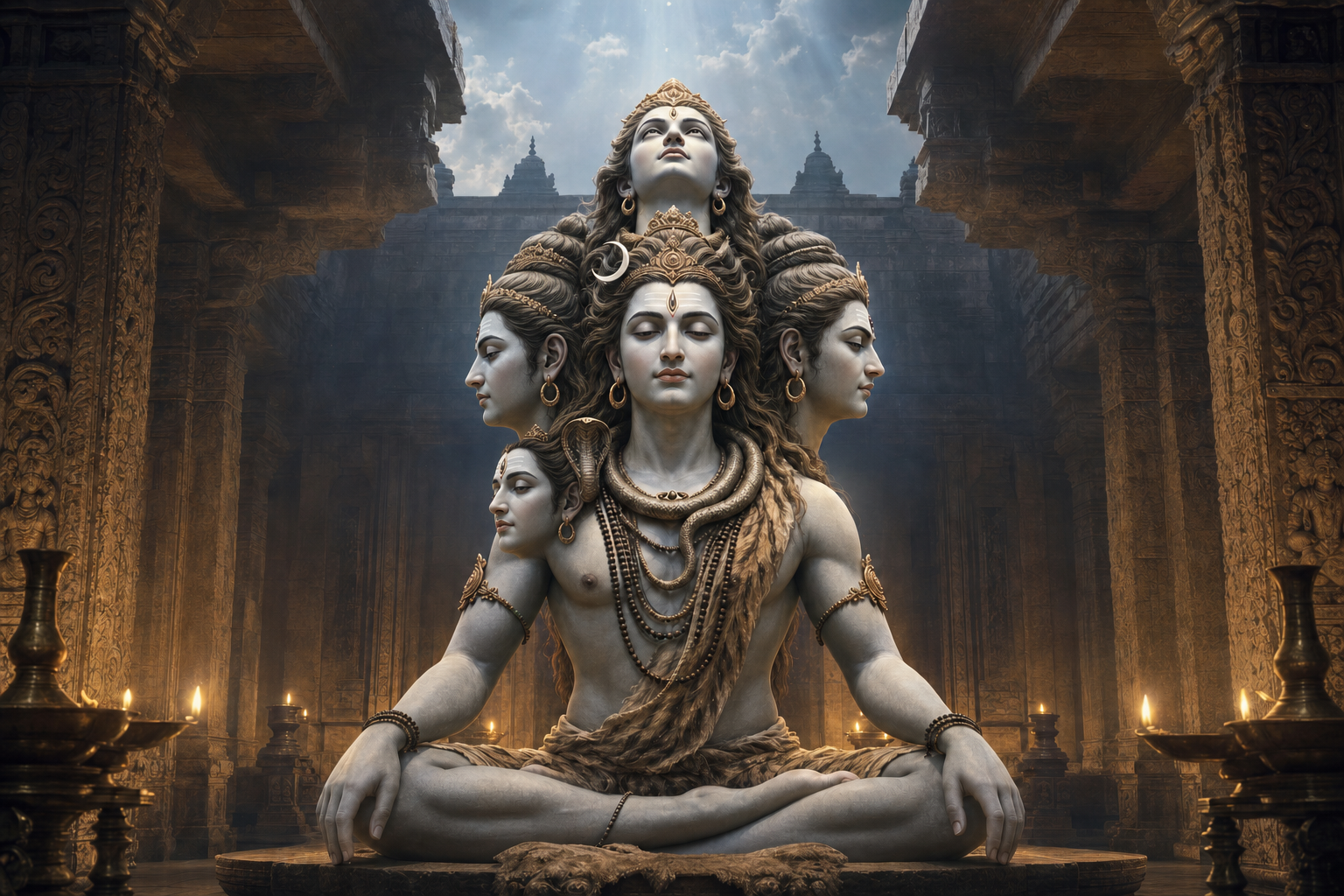
Shiva’s Playful Forms (lilamurtis): Deep Symbolism, Agamic Iconography, Living Tradition

This essay decodes Shiva’s lilamurtis—playful sacred forms that translate the formless into transformative encounter—through the lenses of Agamic iconography, Purāṇic narrative, and living ritual. It explains the aniconic meaning of the Linga and shows how iconic forms like Nataraja, Ardhanarishvara, and Dakshinamurti encode philosophy as gesture and posture. Readers learn how temple architecture and ritual…
-
Pranavopasana: Mastering Om for Self‑Realization, Inner Calm, and Dharmic Unity

Pranavopasana—meditation on the Pranava (ॐ)—is a disciplined path in Hinduism and Advaita Vedanta that moves attention from sound to silence and from symbol to the Ultimate Reality. Drawing on the Upanishads, Bhagavad Gita, and Patanjali, it unites devotion, meditation, and inquiry into a coherent practice for Self-realization. The article explains the A–U–M arc, the turiya…
-
ISKCON’s Ramayana at Prabhupada’s Palace of Gold: An Immersive 78‑Minute Devotional Epic

Captured inside Prabhupada’s Palace of Gold, this 78‑minute ISKCON Ramayana offers a lucid, devotional retelling of the epic in a single sitting. The performance blends narrative clarity with bhakti aesthetics—kirtan, traditional instrumentation, and expressive movement—to make the ethical architecture of the Ramayana emotionally intelligible. Staged within an iconic Gaudiya Vaishnava shrine, it functions as cultural…
-
Timeless Life Lessons from the Ramayana: Integrity in Action and Devotion with Patience

The Ramayana offers enduring guidance on ethics and spiritual discipline through two luminous episodes: Jatayu’s defense of Sita and Shabari’s patient, joyful preparation for Sri Rama. Read as a practical framework, Jatayu models courage that privileges dharma over short-term gain, while Shabari models disciplined readiness that turns daily tasks into sacred practice. Together, they show…
-
Manomayakosha Decoded: The Mind’s Sheath in Hindu Philosophy and Modern Life

Manomayakosha—the mind-sheath of Vedanta—explains how sensations, emotions, and thoughts organize experience between breath (prana) and discernment (buddhi). Rooted in the Taittiriya Upanishad’s Panchakosha model, it clarifies why attention, ethics, and breath regulate mental clarity. The piece distinguishes Manomayakosha from vijnanamaya-kosha and shows how the gunas (sattva, rajas, tamas) color mental states. It highlights dharmic consonance…
-
Saptatori on Kojagari: Bengal’s Banana-Boat (Kolar Nouko) Ritual to Honor Lakshmi

Kojagari Lakshmi Puja in Bengal features the Saptatori tradition—seven miniature Kolar Nouko (banana-boats) floated under the Sharad Purnima moon as offerings to Goddess Lakshmi. Each eco-friendly boat, crafted from banana trunk and leaves, carries grains, turmeric, vermilion, a coin, and a diya, symbolizing ethical prosperity and household well-being. The ritual’s timing aligns with cultural astronomy…
-
Eternal Paradox of Being: Nothing Is Lost, Yet Everything Changes in Hindu-Dharmic Thought

This essay decodes the paradox “Nothing can be wiped out; but nothing remains same” through the lens of Hindu philosophy and the wider dharmic traditions. It shows how the Upanishads, the Bhagavad Gita, Advaita, Samkhya, Nyaya-Vaisheshika, Buddhism, Jainism, and Sikhism converge on a coherent view: being persists while forms transform. Readers gain clear definitions (sat,…