-
Mauni Amavasya 2026: Sacred Silence, Auspicious Snan and Magh Mela at Triveni Sangam

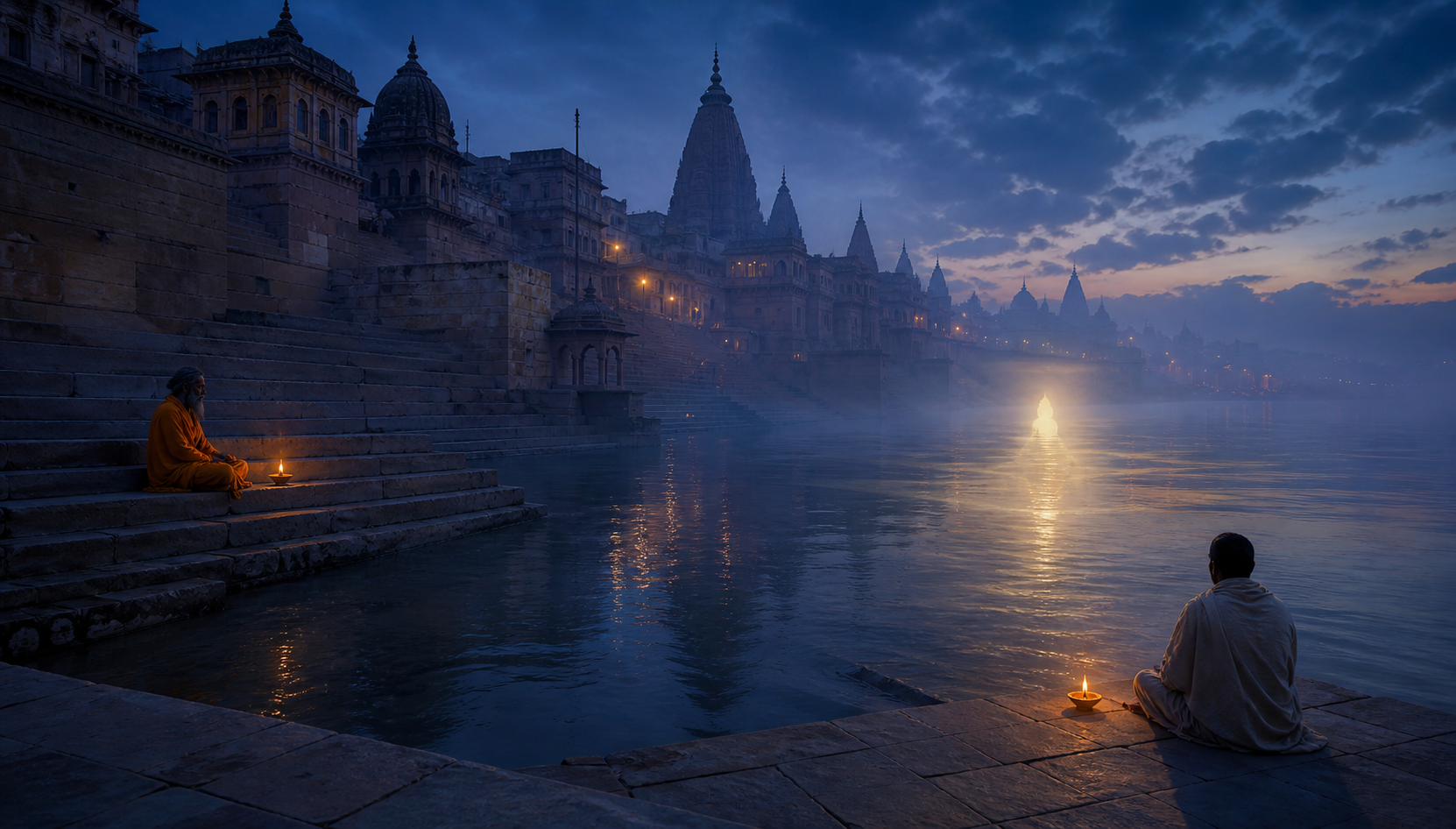
Mauni Amavasya 2026 (January 18) invites a day of sacred silence, fasting, and inner reflection rooted in the Hindu calendar’s Magha Amavasya. It is especially auspicious for ritual bathing (punya snan) at the Triveni Sangam in Prayag during the Magh Mela. Devotees practice mauna, japa, charity, and ancestral remembrance to purify mind and heart. The…
-
Magh Snan Mahatmya: Transformative Power of Magha Snanam and the Sacred Pre‑Dawn Holy Dip

Magh Snan (Magha Snana) during Magh month is honored for its capacity to purify, calm the mind, and align daily conduct with dharma. Performed ideally before sunrise during Brahma Muhurta, the snana is complemented by japa, vrata, and daana for deeper spiritual impact. Traditionally undertaken in sacred rivers like Ganga, Yamuna, Brahmaputra, Narmada, and Godavari,…
-
Supreme Knowledge vs Worldly Wisdom: Decoding Para–Apara Vidyā for a Balanced Life

Hindu philosophy distinguishes para vidyā (supreme knowledge) from apara vidyā (worldly wisdom) and treats them as complementary pathways. Apara vidyā equips people to fulfill dharma through practical skills, ethics, and social responsibility. Para vidyā delivers direct insight into ātman–brahman, resolving existential anxiety and orienting life toward moksha. Integrated, they transform everyday work into karma yoga…
-
Mohini and the Mirage of Desire: Samudra Manthan’s Timeless Lesson on Maya and Dharma

The Mohini episode from the Samudra Manthan offers a precise exploration of desire, distraction, and discernment within the Bhagavata Purana (8.8–9). It reframes the so-called divine deception as a protective strategy aimed at preserving dharmic balance rather than advancing partiality. Read through a dharmic lens, the narrative converges with Buddhist, Jain, and Sikh teachings on…
-
Devprayag’s Soul-Stirring Confluence: Where Alaknanda and Bhagirathi Become the Ganga

Devprayag in Tehri Garhwal, Uttarakhand, is the culminating confluence of the Panch Prayag, where Alaknanda and Bhagirathi merge and the river takes the sacred name Maa Ganga. This sangam is both a hydrological landmark and a spiritual tirtha that embodies ethical living and ecological reverence. The visible meeting of currents offers a compelling symbol of…
-
Magnanimous Devotion: How Exemplary Bhakti Inspires and Unites Dharmic Traditions

A magnanimous devotee, praised throughout the Bhakti Tradition and Hindu scriptures, is described as purifying, inspiring, and transformative in the lives of others. Even brief association with saintly persons—sadhu-sanga—often catalyzes ethical clarity, devotion, and renewed purpose. Comparable ideals appear across Buddhism, Jainism, and Sikhism, underscoring unity in spiritual diversity. The “ornaments” of the devotee—humility, compassion,…
-
Bhakti Beyond Reason: When the Bhagavad-gita Unites Head and Heart in Devotion to Krishna

Bhakti becomes transformative when the head’s clarity and the heart’s devotion work together. The Bhagavad-gita serves as a trustworthy map for this integration, revealing Krishna as the source of all attractiveness (10.08, 10.41). With that insight, choosing devotion does not mean losing joy; it means connecting with its origin. Through bhakti-yoga—kirtan, japa, and seva—practitioners often…
-
Deep, Insightful Stillness: Ancient Hindu Wisdom for Clarity, Compassion, and Courage

This exploration shows why “Wisdom Emerges From Moments Of Deep, Insightful Stillness” is central to ancient Hindu wisdom and the broader dharmic ethos. Stillness is presented as a cultivated mental and spiritual composure that clarifies perception and supports ethical action. The Bhagavad Gita and Upanishads ground this view, while dhyana translates it into trainable attention.…
-
Hanuman and Surya: Aspiration, Guru-Śiṣya Dharma, and the Path to Self-Realization

Hanuman’s pursuit of learning from Surya illustrates how aspiration, disciplined practice, and the guru’s guidance shape self-realization. The narrative of a “moving classroom,” in which Hanuman adapts to Surya’s constant motion, models ekāgratā and tapas under real-world constraints. Later traditions emphasize that humility and seva transform knowledge into wisdom and social responsibility. The core lesson—one…
-
Jagadakhila and the Cosmic Triangle: Unveiling Shakti’s Universal Play in Tantra

Jagadakhila presents the universe as the sacred field of Shakti’s lila—an ever-unfolding play of consciousness and energy. The Cosmic Triangle, embodying iccha, jnana, and kriya shakti, serves as a contemplative key for understanding how intention, insight, and action cohere in daily life. This Tantric vision is both metaphysical and practical, offering guidance for ethical living…
-
January 3, 2026 Panchang: Sacred Purnima End Time and Krishna Paksha Pratipada Start

January 3, 2026 features Purnima tithi until 4:03 PM IST, followed by the start of Krishna Paksha Pratipada through 2:08 PM IST on January 4. These precise Panchang timings help families plan puja, vrata, and meditation with confidence. The note highlights how full moon observances encourage reflection and ethical living across Hinduism, Buddhism, Jainism, and…
-
Unlocking Life’s Mission: Clear-Mind Meditation and Dharmic Wisdom for Enduring Purpose

How does one find a life’s mission? Sri Sri Ravishankar Guruji’s insight places clarity of mind at the center, using Hollow and Empty meditation to dissolve mental noise. The result is a lucid awareness where genuine strengths, values, and dharma-aligned purpose become visible. Practical steps—breath awareness, pranayama, mindfulness, and regular sessions—build consistency and confidence. Signs…
-
Overcome Overwhelming Negative Thoughts with Dharmic Mind-Body Practices for Clarity

Negative thoughts often intensify when digestion is irregular or constipated; Dharmic traditions and modern insights into the gut–brain axis both highlight this body–mind connection. Simple steps—hydration, sattvic meals, regular sleep, and gentle movement—support healthy elimination and mental clarity. Breath awareness and Pranayama calm the nervous system, reducing the momentum behind negative thought spirals. Meditation practices…
-
Mind, Body, and Soul in Balance: Practical Strategies to Build Inner Strength and Harmony

Asking whether mind, body, or soul is strongest creates a false contest; each holds a distinct role that becomes powerful in balance. The body anchors vitality, the mind refines attention and choice, and the soul aligns life with dharma and meaning. Practical routines—movement, breath awareness, and meditation—integrate these dimensions to cultivate emotional resilience and holistic…
-
Beyond Differences: Dharmic Wisdom on Unity, Empathy, and the Illusion of Separation

Modern life often magnifies difference while obscuring shared humanity. Drawing on dharmic wisdom, this reflection shows how Hinduism, Buddhism, Jainism, and Sikhism converge on a vision of unity that honors diversity without erasing conviction. It highlights how concepts like Tat Tvam Asi, Anekāntavāda, pratītya-samutpāda, and Ik Onkar ground compassion and interfaith harmony in a coherent…
-
Two Transformative Encounters with the Bhagavad Gita: Polish Youth and a Coventry Minister

Two real-world encounters reveal the Bhagavad Gita’s cross-cultural appeal and its role in advancing interfaith dialogue. In Coventry, a councillor and Corinthian Minister named Christine—married to a Hindu Punjabi and fluent in Hindi—finds ethical guidance in the Gita for civic service and compassionate leadership. A Polish incident involving three boys who took copies of the…
-
Kandarishi in the Vedas: Sages of Karmakanda and Jnanakanda and Their Timeless Legacy

This article clarifies the meaning of Kandarishi in the Vedas as sages associated with specific sections (kanda) who articulate the balance of Karmakanda and Jnanakanda. It explains how ritual action (Samhita–Brahmana) and transcendent knowledge (Aranyaka–Upanishad) form a complementary continuum in Vedic tradition. Readers gain a clear map of Vedic structure alongside the roles rishis play…