-
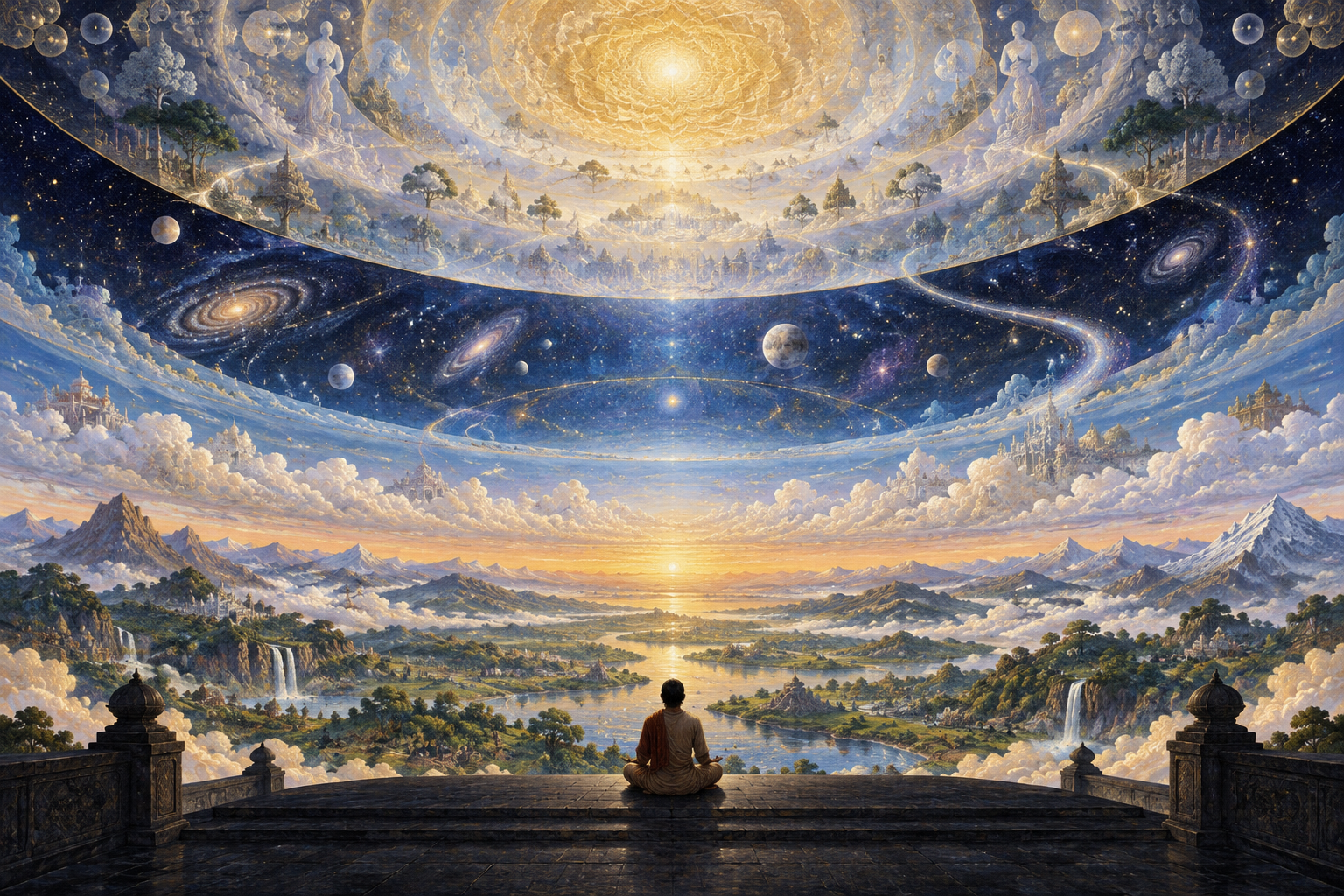
Ripples on the Cosmic Ocean: Turn Life’s Fleeting Moments into Dharma, Wisdom, Oneness

Hinduism likens each life to a ripple on a boundless ocean, a metaphor that dignifies impermanence and intensifies responsibility. Read how Advaita Vedānta, Sāṅkhya-Yoga, and the Bhagavad Gita converge on ethical action, contemplation, and realization of unity. Discover parallel insights in Buddhism’s anicca and dependent arising, Jainism’s anekāntavāda, and Sikhism’s Ik Onkār—diverse paths that affirm…
-
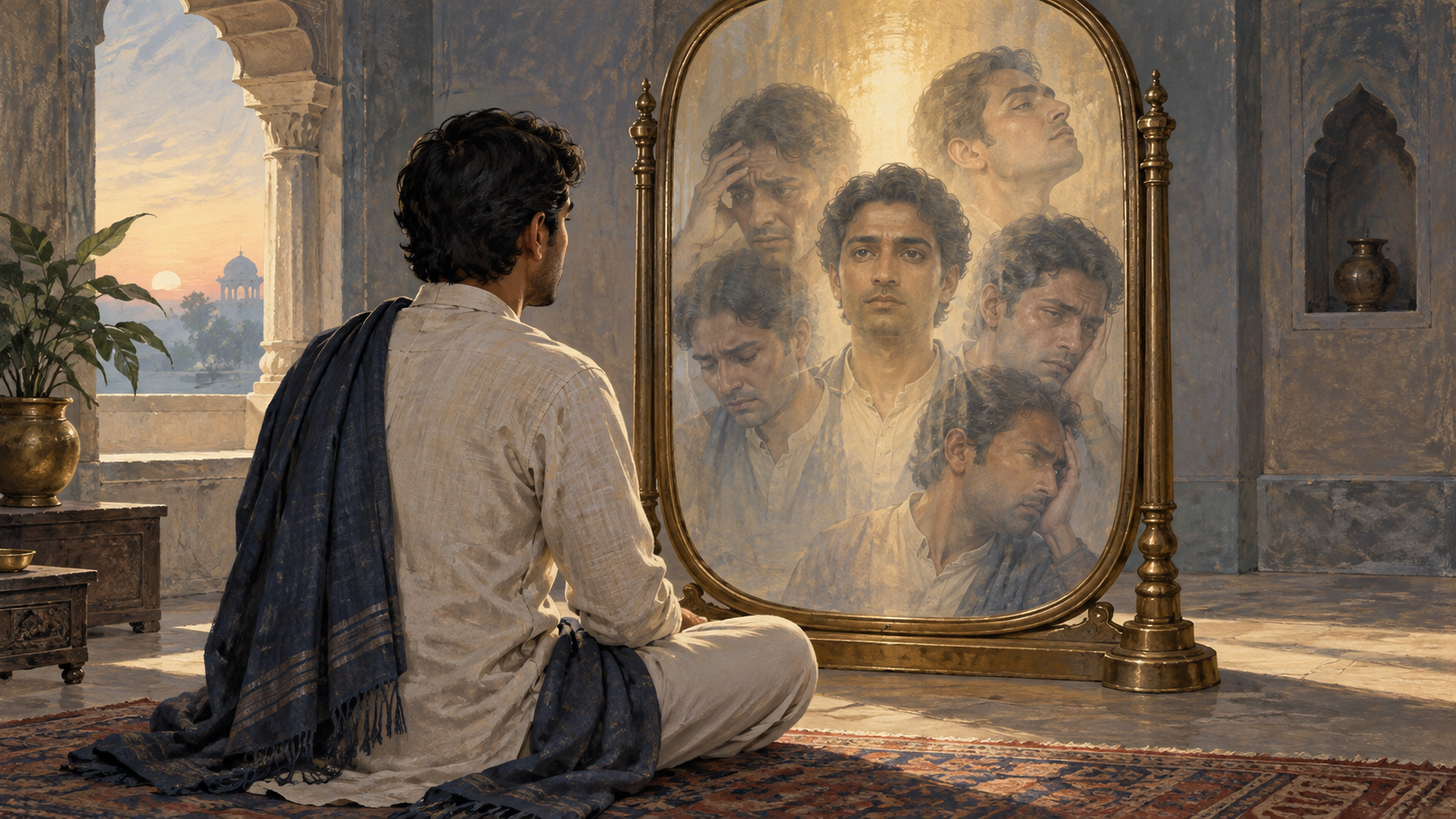
Hindu Wisdom Beyond Pride: Shattering Ego’s Illusion to Reveal the Sacred in All Creation

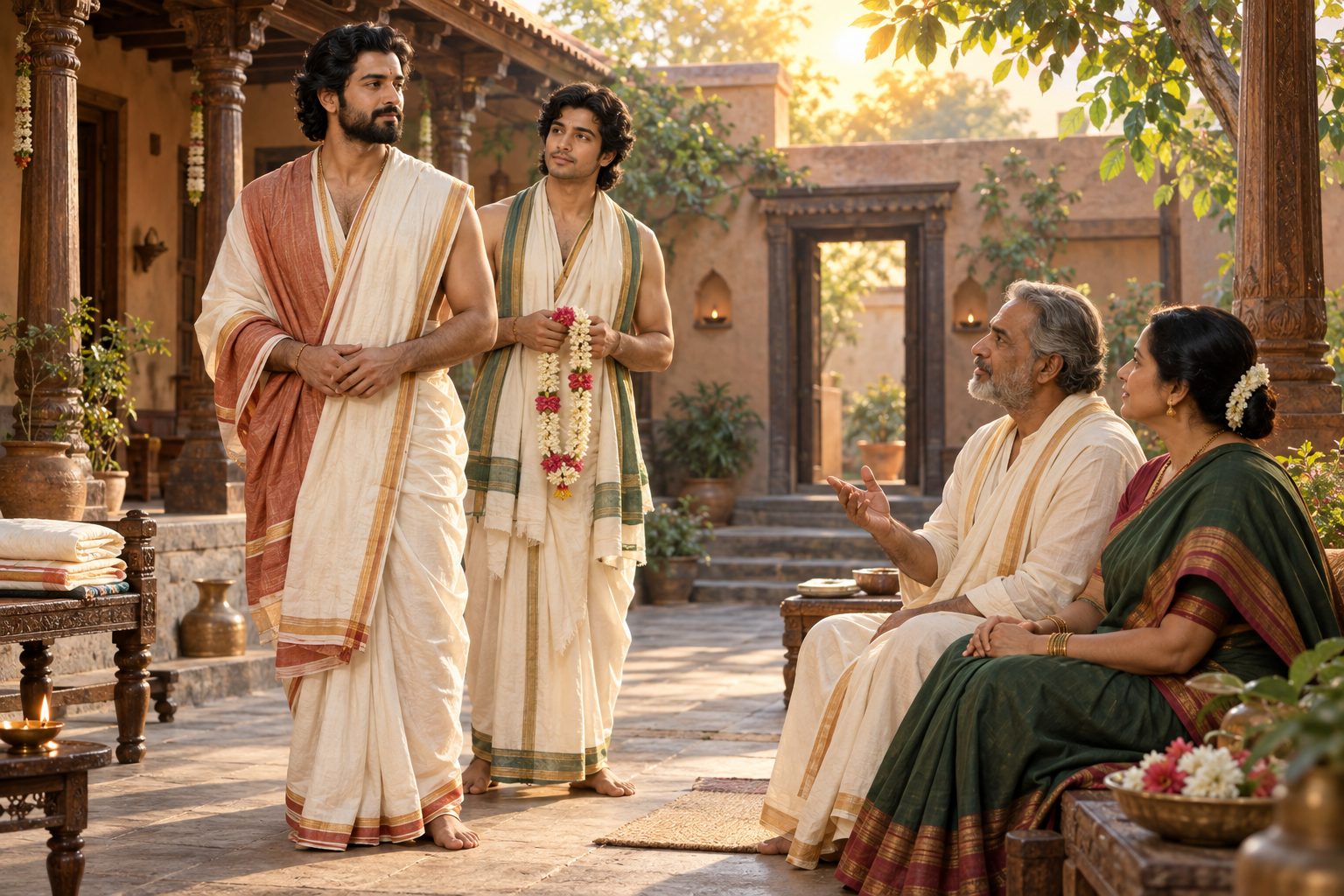
This essay examines the illusion of worthlessness through Hindu philosophy and a classic teaching tale, The Search for the Void. It explains how ahaṃkāra (ego) and avidyā (misapprehension) distort judgment, while the Upaniṣadic vision—īśāvāsyam idaṁ sarvam and sarvaṁ khalvidaṁ brahma—reveals intrinsic, relational value. A detailed retelling of the Guru–Śiṣya narrative shows how “void” becomes a…
-
Bhagavan Alone Is Real: Timeless Vedanta, Living Bhakti, and the Joy of Dharmic Unity

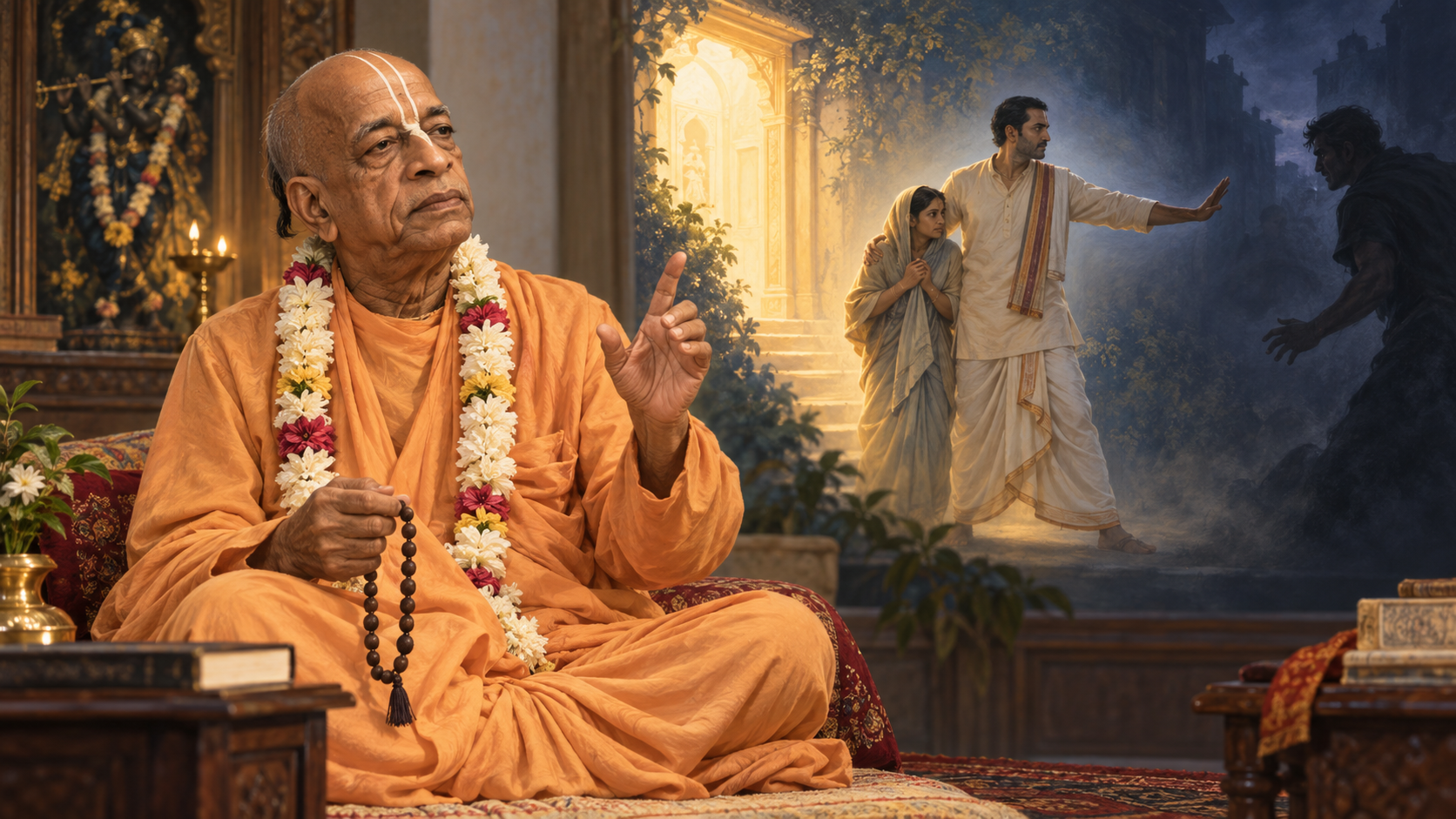
This article unpacks the aphorism “Know that Bhagavan alone is real. Nothing else matters” through the lenses of the Upanishads, Bhagavad Gita, and major Vedanta schools (Advaita, Vishishtadvaita, Dvaita). It clarifies Bhagavan as the sat-chit-ananda ground of being and explains why the phrase does not deny ethical life but re-centers it in the Real. Readers…
-
Toxic Counsel and Fallen Crowns: Leadership Lessons from Shakuni–Duryodhana in the Mahabharata

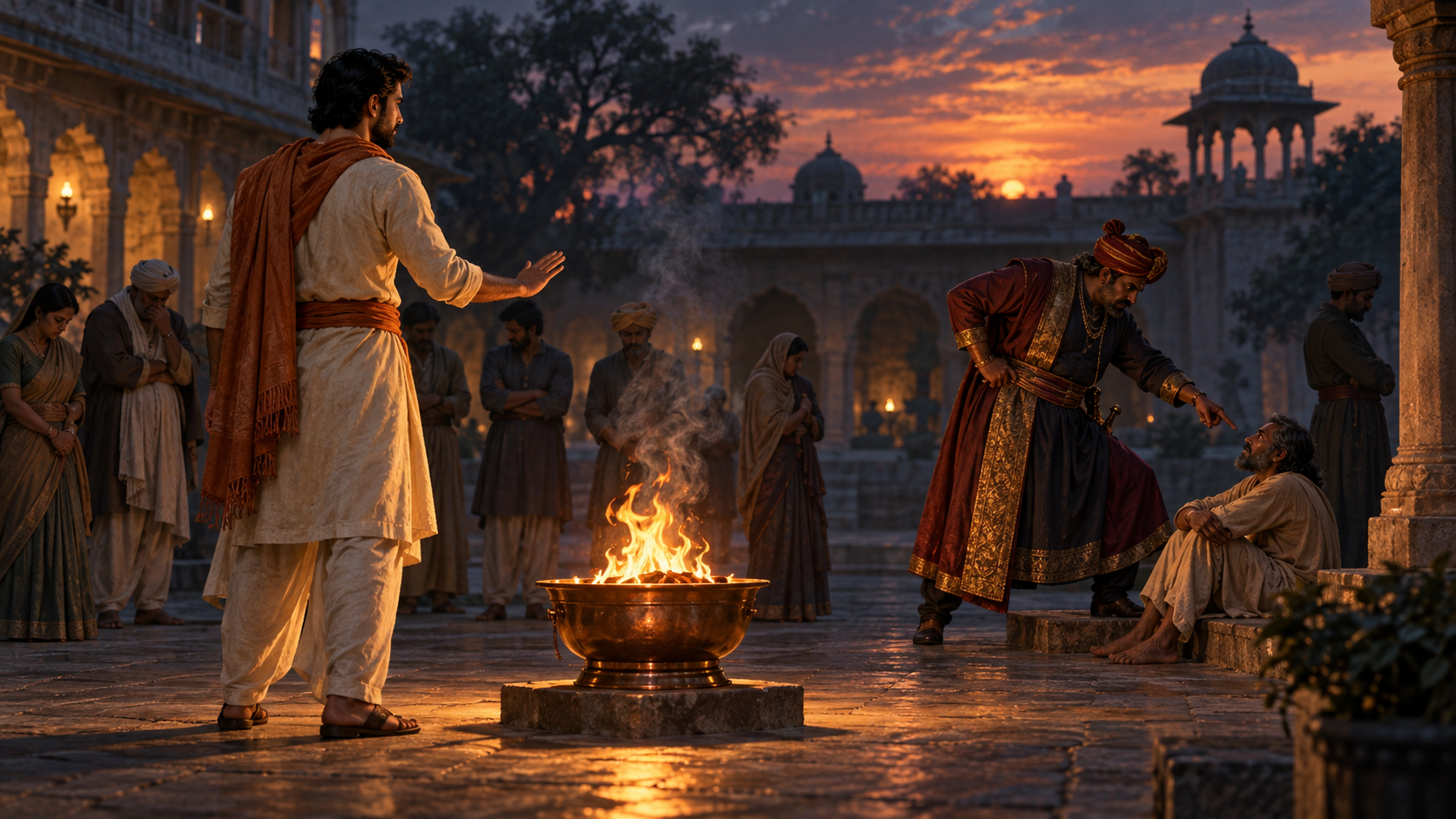
The Mahabharata’s Shakuni–Duryodhana alliance is a precise study of toxic counsel, ego-driven decision-making, and the predictable collapse that follows when dharma yields to manipulation. By tracing key episodes—from the rigged dice game in Sabha Parva to the failed peace in Udyoga Parva and ethical breaches during the Kurukshetra War—the analysis shows how short-term spectacle corrodes…
-
Many Paths, One Dharma: How the Ramayana Maps Righteous Action Across Conflicting Duties

This long-form, scholarly exploration reads the Ramayana as a rigorous map of dharma where competing duties are weighed rather than simplified. It clarifies crucial categories—sādhāraṇa-dharma, svadharma, āpad-dharma, maryādā, and rājadharma—and shows how they animate choices made by Rāma, Sītā, Bharata, Lakṣmaṇa, Hanumān, Vibhīṣaṇa, and others. Multiple retellings (Valmiki, Kamban, Tulsidas, Adhyatma Ramayana, Jain Paumachariya) are…
-
No Destination, Only Awakening: Timeless Hindu Wisdom on the Transformative Spiritual Journey

Hindu wisdom reframes the spiritual path as unveiling rather than arrival: there is nowhere to go, nothing to acquire, and everything to recognize. Drawing on the Upanishads, the Bhagavad Gita, Advaita (advait), and the Yoga Sutra, this exploration clarifies the paradox of “no destination” as a disciplined return to presence. It outlines core methods—Jnana, Bhakti,…
-
Pancharatra Demystified: Vishnu’s Chaturvyuha and the Four Divine Manifestations Explained

The Pancharatra–Bhagavata tradition presents a clear fourfold framework for how Vishnu–Narayana manifests: Para (transcendent Supreme), Vyuha (emanational expansions), Vibhava (incarnations), and Antaryāmin (indwelling presence). Within Vyuha, the famed Chaturvyuha—Vāsudeva, Saṅkarṣaṇa, Pradyumna, and Aniruddha—organizes divine functions, qualities, and cosmology with remarkable precision. This guide explains how the six perfections (jñāna, aiśvarya, śakti, bala, vīrya, tejas) are…
-
Lakuti Dakshinamurti Unveiled: Tantric Iconography, Sacred Symbols, and Living Wisdom

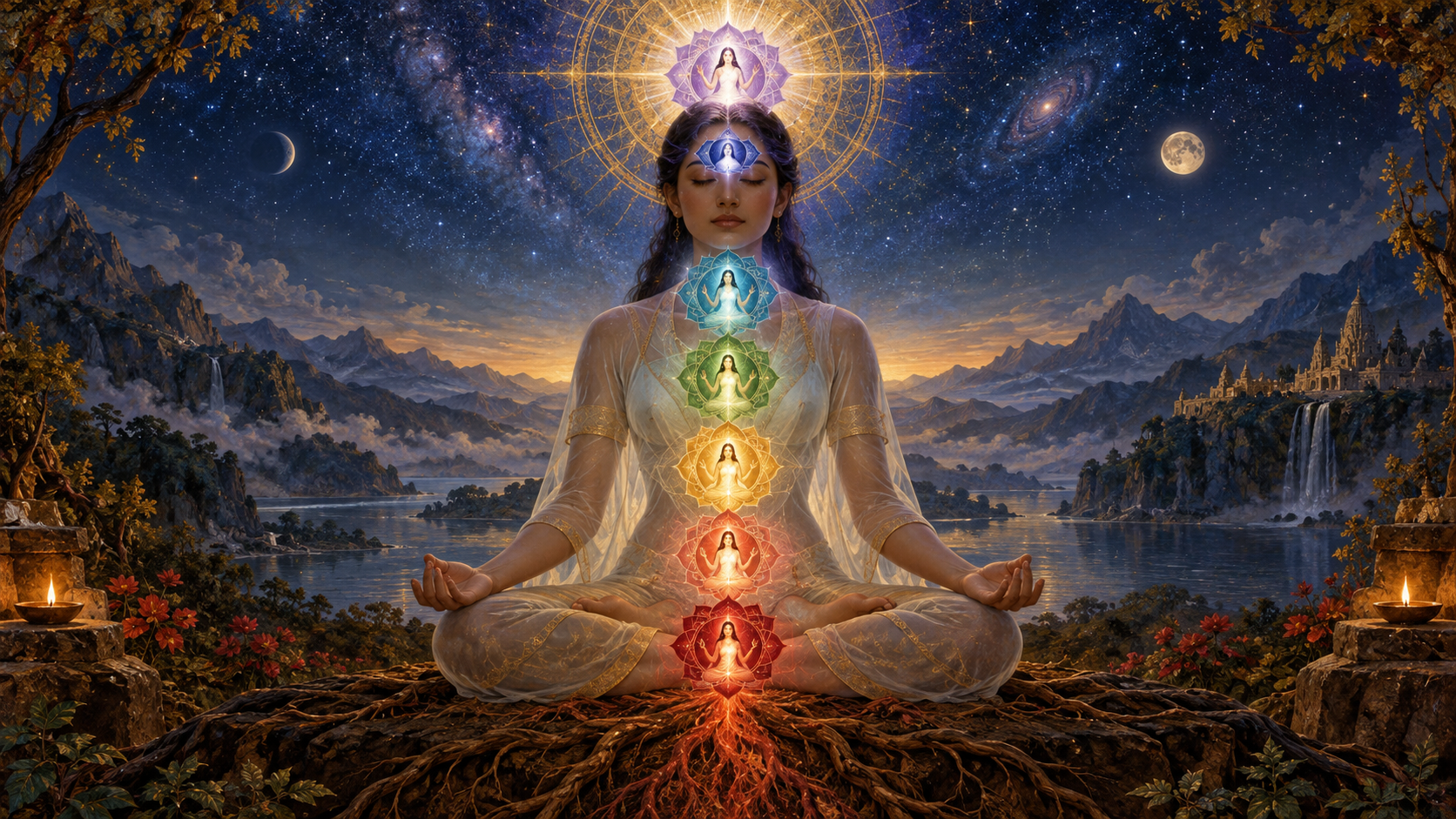
This in-depth exploration unveils Lakuti (Lagudi) Dakshinamurti as the south-facing Adi Guru whose staff encodes sovereignty, discipline, and the subtle spinal axis of awareness. Readers gain a clear, textually grounded understanding of how this staff-bearing variant fits within the broader Dakshinamurti quartet set out in Agamas and Shilpa Shastra. The article decodes each attribute—chinmudra, akshamala,…
-
Kalachakra in Hindu Tantra: Decoding the Wheel of Time, Consciousness, and Dharmic Unity

Kalachakra in Hindu Tantra presents time as a living cycle that unifies microcosm and macrocosm, offering a precise path to the timeless ground of awareness. Drawing on the Maitri Upanishad and the Bhagavad Gita, it treats time as both measurable rhythm and doorway to the Akāla, the unconditioned. The framework integrates Vedic cosmology, pañcāṅga timing,…
-
The Eternal Joy Within: Dharmic Wisdom on True Happiness, Ananda, and Freedom from Suffering

Modern culture often ties happiness to external milestones, yet Hindu wisdom distinguishes this conditional pleasure from intrinsic ananda—the steady joy of awareness. Drawing on the Upanishads, the Bhagavad Gita, and Yoga philosophy, this essay maps how attention becomes entangled in craving and how disciplined living restores clarity. It outlines four complementary yogas—karma, bhakti, jñāna, and…
-
Reviving Sacred Questioning: Vedic, Buddhist, Jain, and Sikh Paths to Intellectual Freedom

Sacred questioning sits at the heart of the dharmic heritage. This long-form analysis traces how Vedic dialogues, Nyāya–Mīmāṃsā logic, Buddhist pramāṇa theory, Jain anekāntavāda, and Sikh vichar cultivated disciplined inquiry as a path to truth and social harmony. It explains the technical tools of reasoning—pramāṇas, syllogisms, hermeneutic canons, and fallacy-detection—and shows how classical śāstrārtha fostered…
-
Piercing the Veil of Avidya: How Ignorance Blocks Spiritual Growth—and How to End It

Avidya—misapprehension rather than mere lack of information—sits at the root of suffering and obstructs spiritual progress. This analysis synthesizes Hindu philosophy with allied insights from Buddhism, Jainism, and Sikhism to show how ethics, meditation, devotion, and knowledge converge to dispel ignorance. Drawing on the Upanishads, the Bhagavad Gita, Vedanta, and the Yoga Sutra, it clarifies…
-
Kumbhakarna vs Karna: Loyalty’s Tragic Valor and Vibhishana’s Dharma in the Ramayana

The crisis in Lanka dramatizes a timeless ethical conflict: should loyalty to kin outrank allegiance to universal righteousness? Through Vibhishana’s principled dissent and Kumbhakarna’s tragic loyalty, the Ramayana clarifies how Dharma-Yuddha prioritizes justice over faction. A comparative glance at the Mahabharata’s Karna sharpens this lesson, showing that valor cannot redeem complicity in adharma. Read alongside…
-
Pratyaksha in Nyaya Darshana: Mastering Direct Perception as the Bedrock of True Knowledge

This long-form, research-driven overview presents pratyaksha (direct perception) in Nyaya Darshana as the foundational pramana that grounds inference, analogy, and testimony in Indian epistemology. It clarifies Nyaya’s definition of valid perception, its two-stage phenomenology (nirvikalpa and savikalpa), and its fine-grained analysis of sense–object contact and extraordinary forms such as samanyalakshana, jnanalakshana, and yogaja pratyaksha. Readers…
-
Nyaya Darshana’s Four Pramanas: A Practical Guide to Valid Knowledge and Clear Reasoning

Nyaya Darshana locates the pursuit of truth in four reliable pramanas—perception, inference, analogy, and trustworthy testimony—offering a rigorous, practical method for valid knowledge. It clarifies how accurate observation is secured, how reasons genuinely support conclusions, how analogies bridge the known and the unfamiliar, and how credible sources can be identified without cynicism. The framework diagnoses…
-
Already Enough: Dharmic Wisdom on Love, Self-Acceptance, and Living Authentically Today

The post argues that love and acceptance are not earned through perfection but revealed through authentic living, aligning with core insights of Hinduism, Buddhism, Jainism, and Sikhism. It explains Atman, anatta, anekantavada, and Ik Onkar as complementary lenses for intrinsic worth and compassionate action. Drawing on the Bhagavad Gita and Upanishads, it reframes perfectionism as…
-
Beyond the Senses’ Trap: Dharmic Science of Lasting Joy across Hindu, Buddhist, Jain, Sikh

Modern restlessness around pleasure and possession is precisely mapped in the shared wisdom of Hinduism, Buddhism, Jainism, and Sikhism. Each tradition explains how untrained senses agitate the mind and how disciplined attention—through pratyahara, mindfulness, aparigraha, Seva, and devotion—transforms agitation into equanimity. The piece integrates Hindu models of the indriyas, Gita psychology of desire, Buddhist dependent…
-
Krishna as Paramananda: Unlocking the Highest Pleasure and Enduring Inner Bliss

The proposition that ‘Krishna means the highest pleasure’ is a technical statement of Vedic philosophy that distinguishes fleeting stimulation from enduring bliss (ānanda). Drawing on the Upanishads and the Bhagavad Gita, it locates true happiness in alignment with the Infinite and explains why inner joy is ‘beyond the senses’ yet discernible by a refined intellect.…
-
Harnessing Austerity as a Stepping Stone: Build Sattva, Fortify Bhakti, Realize Transcendence

Dharmic scriptures praise austerity (tapas), yet Gaudiya Vaishnava theology clarifies that it is not itself a limb of bhakti. Instead, austerity serves as a preparatory discipline that cultivates sattva and strengthens determination for the sixty-four devotional practices that directly generate love of the Divine. Drawing on Srimad Bhagavatam 5.5.1 and the Bhagavad Gita, this analysis…
-
Timeless Union: The Transformative Power of Jnana and Yoga for Moksha in Hindu Philosophy

This long-form exploration shows how Jnana and Yoga converge in Hindu philosophy to deliver both liberating knowledge and lived stability. It clarifies Vedantic epistemology alongside Patanjali’s practical method, demonstrating why insight requires disciplined cultivation. It maps ethical foundations shared across Hinduism, Buddhism, Jainism, and Sikhism, highlighting a profound unity among dharmic traditions. It offers a…