-
Beyond Binary: Shiva–Shakti Wisdom on Gender Harmony for Wholeness in Hindu Thought

Hindu philosophy portrays masculine and feminine energies as complementary, not oppositional, using Shiva and Shakti to symbolize the unity beneath apparent differences. The image of Ardhanarishvara embodies this synthesis, while Sāṅkhya, Advaita, and Tantra offer converging metaphysical accounts of wholeness. Scriptural sources such as the Bhagavad Gita and Devi Mahatmyam affirm an inclusive theology where…
-
The Sacred Pace: Dharmic Wisdom on Slow, Mindful Progress for Lasting Inner Peace

Modern speed often delivers exhaustion rather than fulfillment. Dharmic wisdom across Hinduism, Buddhism, Jainism, and Sikhism converges on a practical remedy: slow, steady, mindful progress. Hindu philosophy and Patanjali’s principle of nairantarya abhyase emphasize continuity over haste, cultivating resilience and clarity. Mindfulness, seva, and patient inquiry align personal growth with Dharma. The result is less…
-
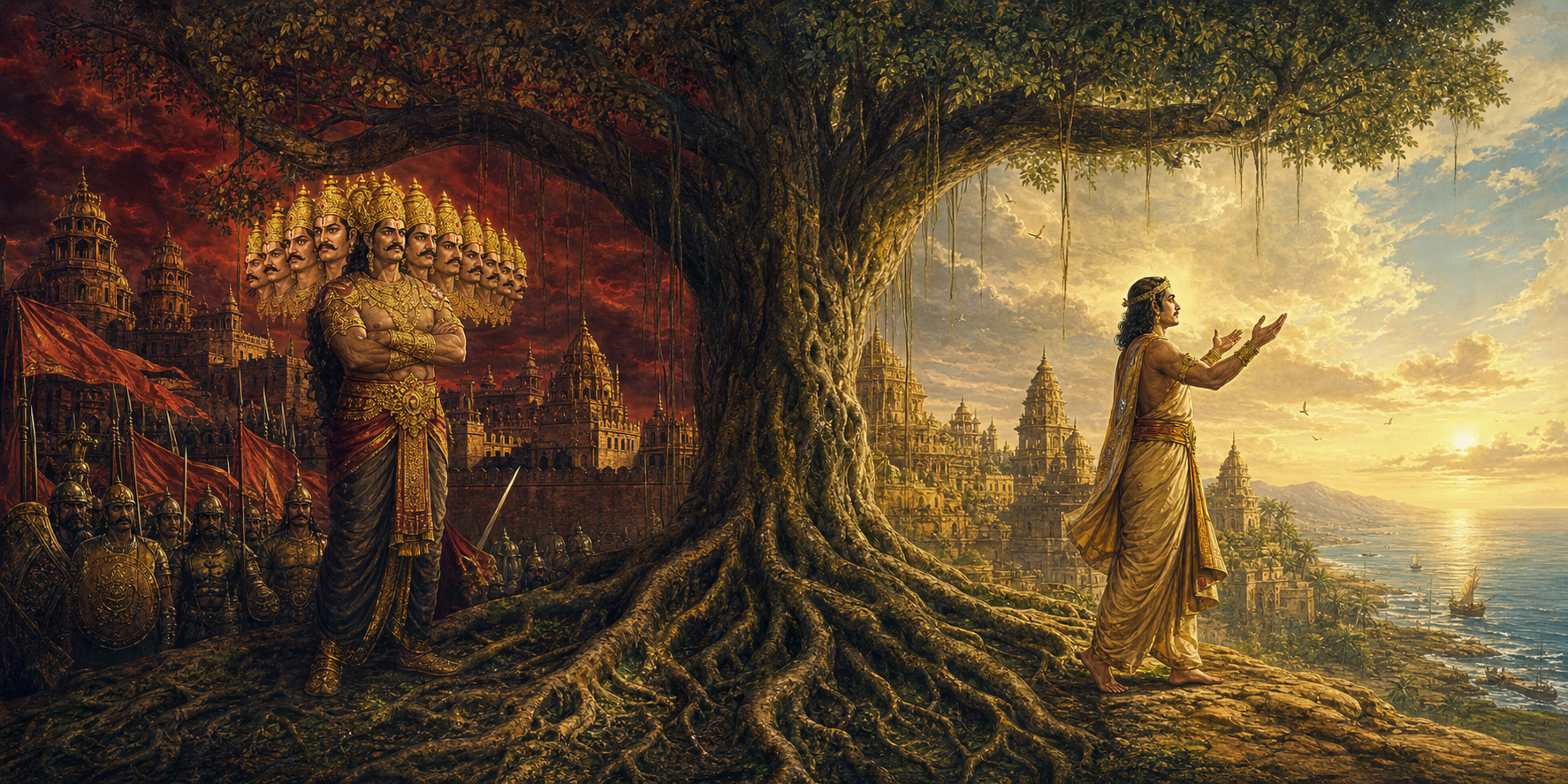
Dharma vs Adharma: The Inner Battle Shaping Life—Practical Wisdom from Dharmic Traditions

Dharma and Adharma describe an inner moral struggle that shapes choices, character, and destiny. Drawing on the Bhagavad Gita, the Upanishads, and allied Dharmic wisdom, this piece explains how clarity (buddhi), the gunas, and steady practice (abhyasa) tip the balance toward ethical action. It shows how Hindu, Buddhist, Jain, and Sikh traditions converge on shared…
-
Empty the Cup to Fill the Soul: Hindu Wisdom on Ego, Learning, and Spiritual Growth

This article explores the Hindu metaphor of the “empty vessel,” showing how releasing ego creates the space necessary for continuous learning and spiritual growth. It explains the paradox that genuine wisdom requires inner emptiness, contrasting avidyā (illusion of knowledge) with jñāna (true insight). Drawing on the Bhagavad Gita and Upanishadic methods, it highlights humility, contemplation,…
-
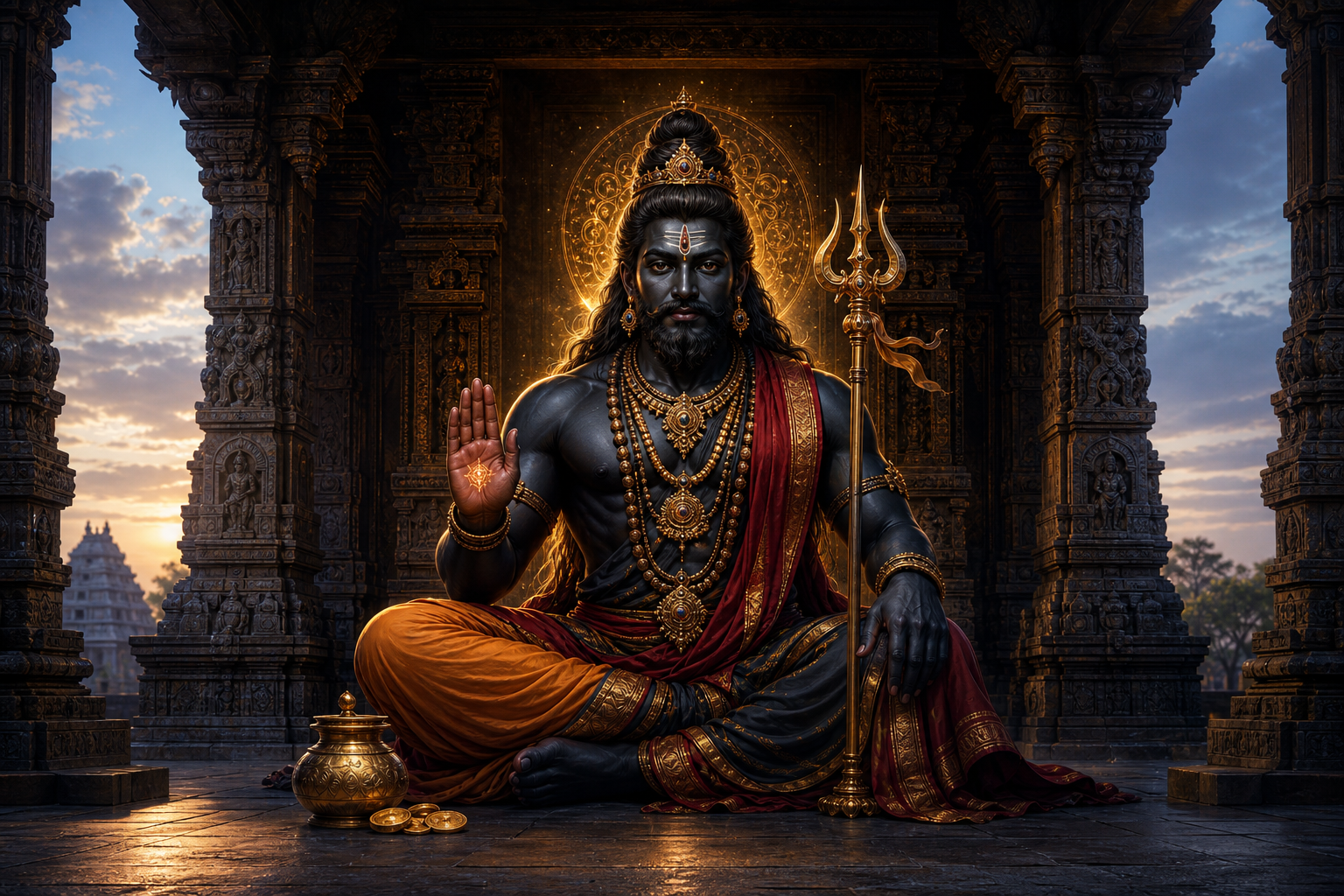
Mother Goddess Dhara & Dakshinamurthy Shiva: Sacred Union of Wisdom-Shakti

Sanatana Dharma venerates Dakshinamurthy as the Adi Guru whose luminous silence reveals inner knowledge. Honoring “Mother Goddess Dhara” as the flowing Shakti of wisdom offers a symbolic, devotional complement to this south-facing form of Shiva. The union of wisdom and Shakti affirms an Advaita insight: consciousness and its compassionate expression are inseparable. Framed through the…
-
Thomas Jefferson’s Paradox: Equality, Slavery, and the Moral Limits of a Revolutionary

Thomas Jefferson’s legacy embodies a profound paradox: the champion of equality who expanded a slave society. This analysis clarifies how Scottish moral-sense philosophy informed his universal claims while his racist pseudoscientific beliefs narrowed their application. Readers gain a concise, evidence-based overview of Jefferson’s thought, key quotations from Notes on the State of Virginia, and the…
-
Happiness Beyond Problems: Hindu Wisdom for Unshakable Inner Peace and Resilient Living

Hindu philosophy reframes happiness as inner steadiness rather than problem-free living. Drawing on the Bhagavad Gita, Karma Yoga, and meditative practices, it shows how equanimity reduces reactivity and supports ethical clarity. Practical tools—mindfulness, pranayama, Yoga, and reflective self-inquiry—help cultivate resilience and emotional balance. Everyday challenges then become opportunities for insight instead of triggers for turmoil.…
-
Awaken the Silent Witness: Master the Mind with Dharmic Wisdom for Calm and Clarity

Sakshi-bhava—the unaffected witness—offers a practical, dharmic way to master the mind without suppressing emotions or withdrawing from life. Rooted in the Upanishads, the Bhagavad Gita, and Yoga philosophy, it cultivates equanimity (samatva), ethical clarity (viveka), and compassionate action through Karma Yoga. Breath-centered pranayama, daily dhyana, steady japa, and informal mindfulness build this capacity in realistic,…
-
Kumarila Bhatta: The Brilliant Mimamsa Sage Who Revitalized Vedic Thought and Unity

Kumarila Bhatta, the eminent Mimamsa thinker of the 7th–8th century CE, revitalized Vedic philosophy through rigorous hermeneutics and disciplined reasoning. His major works—Ślokavārttika, Tantravārttika, and Tuptikā—refine language theory, epistemology, and the authority of the Veda. Rather than opposing other dharmic paths, his precise critiques of Buddhist and Jaina arguments exemplify a constructive culture of debate…
-
Pradeśa-Mātra Unveiled: Upanishadic Wisdom on the Infinite Within the Heart

Pradeśa-mātra, a refined Upanishadic term, explains how the Infinite can be contemplated in a “measurable” heart-space without limiting the Self. Grounded in the Chandogya and Katha Upanishads, it offers a practical doorway for meditation and self-inquiry. By focusing attention in the hṛdaya-ākāśa, practitioners stabilize the mind and intuit the all-pervading Ātman. Vedānta resolves the paradox…
-
Purification and Transcendent Elevation: Sincere Chanting, Bhakti Practice, and Dharmic Unity

This reflection presents a Gaudiya Vaishnava perspective on how sincere chanting of the holy name of Krishna, supported by worship, listening, and service, cultivates purification and transcendent elevation. It explains that intention and humility, rather than mere repetition, unlock the practice’s transformative power. The discussion connects these insights with shared dharmic values across Hinduism, Buddhism,…
-
Why ‘Name and Form’ Create Suffering: A Powerful Dharmic Lens on Oneness and Freedom

Hindu philosophy traces suffering to separateness born of nāma (name) and rūpa (form), a misidentification that obscures underlying unity. Upanishadic and Advaita perspectives treat names and forms as provisional, while the Bhagavad Gita offers practices—jñāna, bhakti, and karma yoga—to reorient attention toward what endures. Everyday experiences show how labels intensify anxiety and craving; loosening identification…
-
Infinite Paths, One Truth: How Hinduism Empowers Personal Realization and Sacred Unity

Hinduism (Sanatana Dharma) teaches that no two individuals experience the Divine in the same way—and turns that insight into a strength. Drawing on the Upanishads and the Bhagavad Gita, it validates personal realization through concepts like Ishta and multiple yogic paths. This pluralism resonates across Dharmic traditions through Anekantavada in Jainism, upaya in Buddhism, and…
-
Why Only Universal Truths Stay Fresh: Dharmic Wisdom to Beat Information Fatigue

Modern life delivers endless information yet little renewal. Dharmic wisdom explains why: knowledge not grounded in universal truth quickly grows stale, while insights rooted in satya, ṛta, and dharma remain evergreen. Drawing on Hinduism alongside Buddhism, Jainism, and Sikhism, this reflection highlights how compassion, non-violence, and service keep knowledge alive and transformative. It offers practical…
-
Anyonyashraya Demystified: Avoid the Mutual Dependence Trap in Dharmic Reasoning

This article clarifies Anyonyashraya, the fallacy of mutual dependence, and distinguishes it from Anyonya Abhava (reciprocal negation) in Hindu philosophy. It explains how tarka (disciplined deliberation) exposes circular justification and safeguards sound reasoning. Everyday examples make the concept relatable and easier to spot in conversations and study. The discussion situates Anyonyashraya within Indian logic alongside…
-
Why the Upanishads Endure: A Fearless Quest for Truth and Unity Across Dharmic Paths

The Upanishads endure because they transform truth into a fearless, lifelong quest rooted in rigorous inquiry and contemplative depth. Unbound by dogma, they cultivate clarity through dialogue, discernment, and lived insight. Their openness to multiple paths aligns with unity across Dharmic traditions—Hinduism, Buddhism, Jainism, and Sikhism—without erasing distinct perspectives. Readers often find emotional resonance alongside…
-
Beyond the Fleeting: Sanatan Dharma’s Timeless Path to Inner Freedom and Untold Riches

Modern life amplifies distraction, yet Sanatan Dharma teaches how to see beyond the fleeting and rediscover what truly endures. By cultivating viveka and vairāgya, seekers learn to distinguish the permanent from the impermanent. The Bhagavad Gītā and Upanishads frame this insight with clarity, while Yoga practices translate it into daily stability. The puruṣārthas align ethical…
-
Beyond Religion: How Sanatana Dharma Champions Spiritual Freedom and Unity in Diversity

Sanatana Dharma is presented as a living wisdom tradition rather than a narrow, exclusive religion. Its core emphasizes dharma, experiential understanding, and plural pathways such as Karma Yoga, Bhakti, Jnana, and meditation. The principle of Ishta validates diverse forms of worship and aligns with Buddhist upaya, Jain Anekantavada, and Sikh Nam-simran, strengthening interfaith harmony. Rather…
-
Kundika Upanishad: Powerful Lessons on Sannyasa, Inner Freedom, and Dharmic Unity

The Kundika Upanishad, a Sannyasa Upanishad linked with the Sama Veda, presents renunciation as the culmination of a dharmic life aimed at moksha. Across 34 verses, it unites ethical restraint, contemplative practice, and radical simplicity into a coherent path for inner freedom. Its symbolism—centered on the kundika (water pot)—speaks to purity, service, and sustainability. The…
-
Unveiling Creation in the Mundaka Upanishad: Powerful Symbols That Reveal Brahman

This article explores how the Mundaka Upanishad presents a symbolic, contemplative theory of creation that links the universe to Brahman, the imperishable reality. It explains the twofold knowledge framework (apara and para) and shows how cosmology serves the pursuit of liberation rather than literal cosmogony. Readers encounter the Upanishad’s powerful metaphors—spider and web, plants from…