-
When Anger Blinds Truth: Dharmic Wisdom and Practical Tools to Restore Clarity

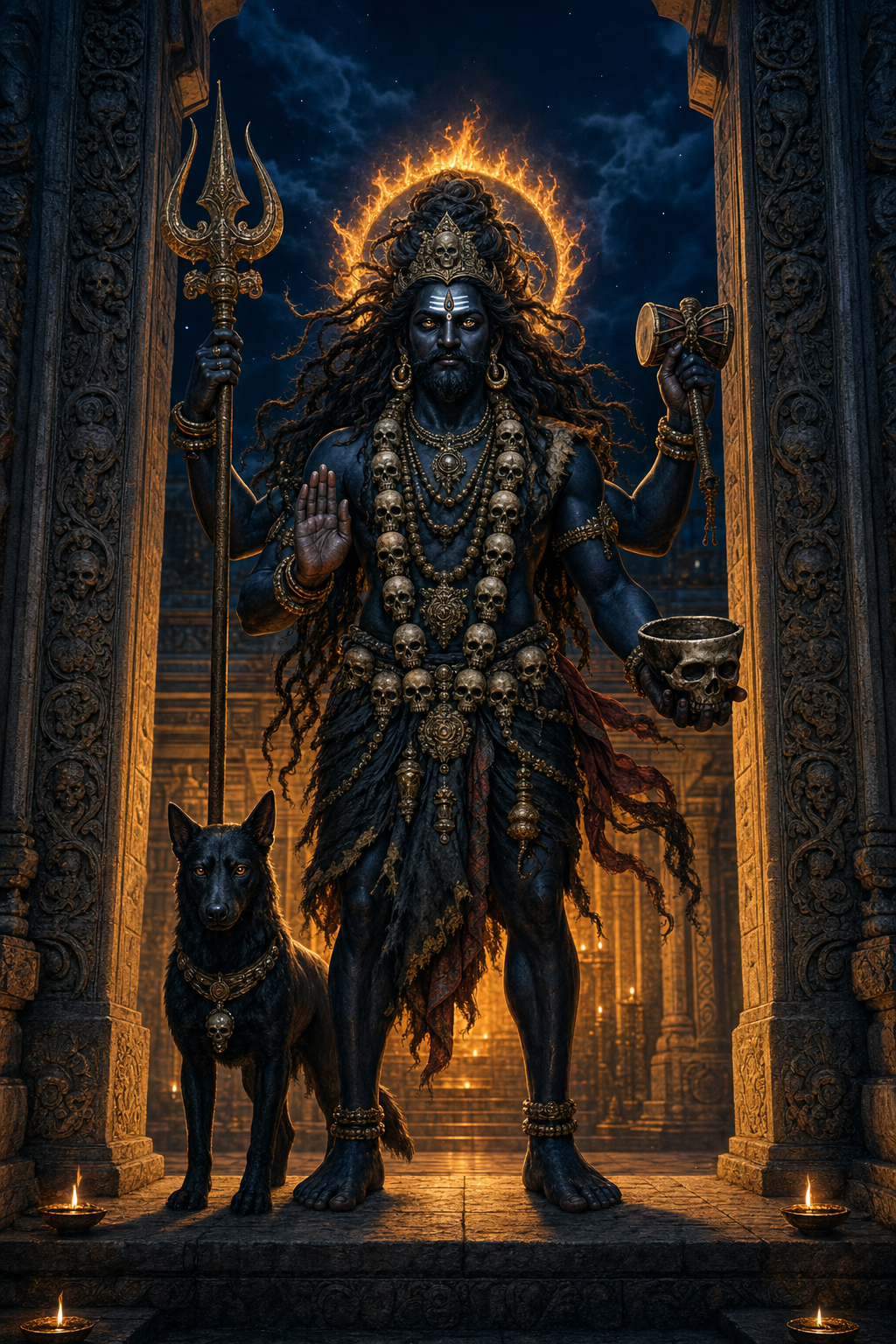
Anger, according to the Bhagavad Gita (2.63), initiates a precise cognitive and ethical decline—delusion, memory confusion, loss of discernment—ending in poor choices. Dharmic traditions converge on this insight: Hinduism, Buddhism, Jainism, and Sikhism each identify anger as a primary obstacle to wisdom and compassion. This analysis offers practical tools—breath awareness, mindfulness, loving-kindness, patience, and seva—to…
-
Destiny vs. Free Will: How Karma and Choices Shape Our Future Across Dharmic Traditions

Is the future predetermined, or do choices genuinely shape outcomes? Drawing on Hinduism, Buddhism, Jainism, and Sikhism, this piece clarifies how karma names conditions from the past while puruṣārtha preserves present agency. The Bhagavad Gita’s Karma Yoga, Buddhism’s emphasis on intention, Jainism’s ethical discipline, and Sikhism’s balance of Hukam and effort converge on responsible freedom.…
-
Jivo Brahmaiva Naparah: Unveiling Advaita’s Transformative Non‑Dual Truth for Daily Life

“Jivo Brahmaiva Naparah” expresses the Advaita Vedanta insight that the individual self is not separate from Brahman. Grounded in the Upanishads and the Bhagavad Gita, the teaching distinguishes empirical experience from absolute truth and guides seekers to Moksha through disciplined self-knowledge. It cultivates ethical clarity, compassion, and steadiness in daily life without denying personal responsibilities.…
-
Beyond the Witness: How True Meditation Dissolves the Experiencer into Non-Dual Awareness

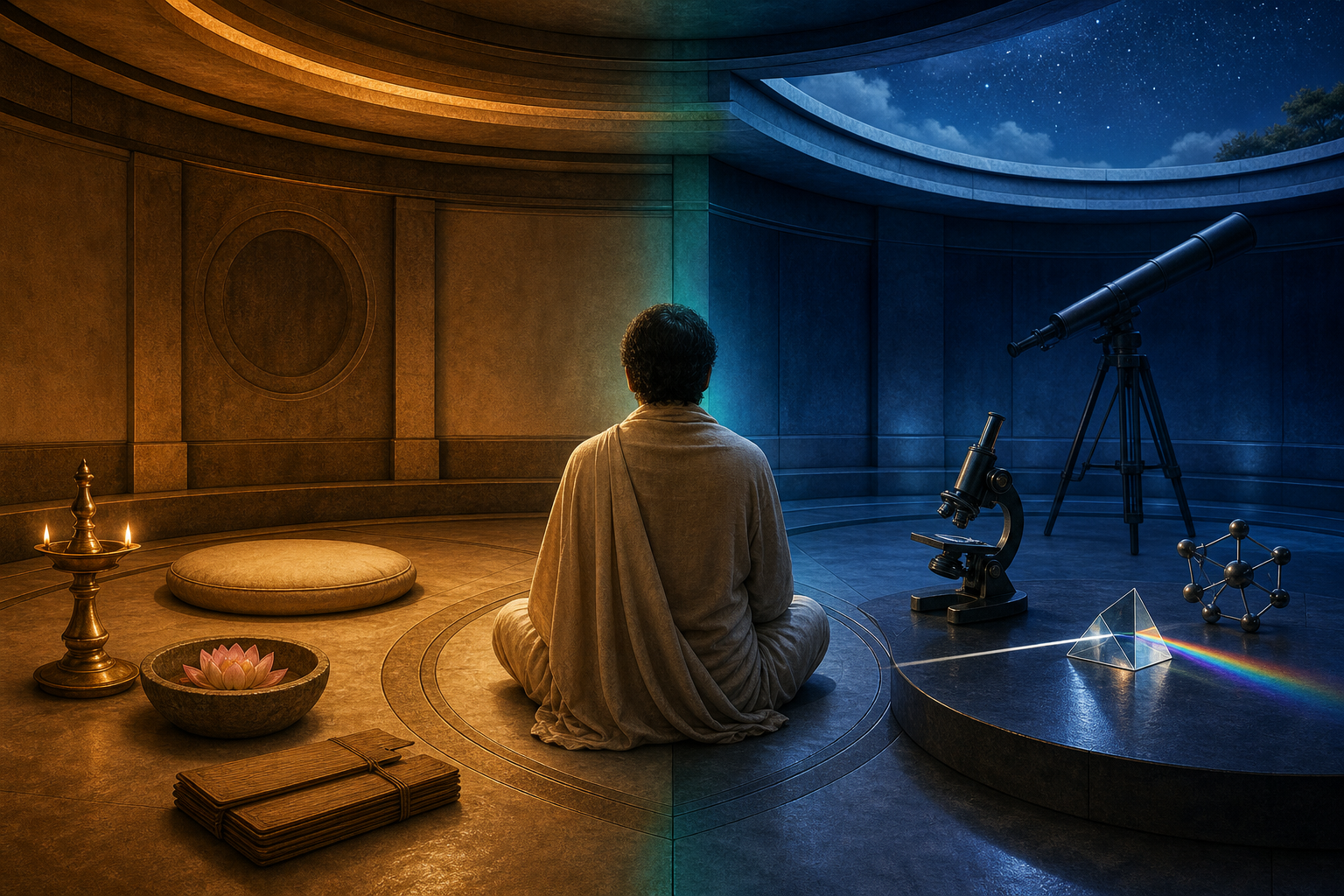
True meditation in Hindu philosophy reaches its culmination when the experiencer, the act of observing, and the observed no longer stand apart. This non-dual insight, often described as moving “beyond the witness,” dissolves the subtle identity of a separate meditator without denying the vividness of life. The Upanishads, Advaita Vedanta, and Yoga philosophy converge on…
-
Mastering the Three Gunas: A Transformative Hindu Path to Personality Growth and Calm

Hinduism offers a precise, practice-ready model of personality development through the three gunas—Sattva, Rajas, and Tamas—explained in the Bhagavad Gita and the Srimad Bhagavata Purana. By cultivating Sattva for clarity, channeling Rajas into purposeful service, and reducing obstructive Tamas, individuals gain emotional balance, ethical focus, and resilient energy. Practical steps—meditation, pranayama, sattvic diet, structured routines,…
-
When Harm Returns Home: Dharmic Wisdom on Ahimsa, Karma, and Inner Well-Being

The maxim “In injuring others you really injure yourself” expresses a shared dharmic truth: harm rebounds upon the doer through the natural interplay of karma and dharma. Across Hinduism, Buddhism, Jainism, and Sikhism, ahimsa, compassion, and seva sustain both inner calm and social trust. Practical experience confirms this law—hurtful conduct unsettles the mind, while ethical…
-
When Society Says You’re Incomplete, Hindu Wisdom Boldly Affirms Your Eternal Wholeness

This essay challenges the modern narrative of lack by presenting Hinduism’s vision of innate wholeness. Drawing on Advaita Vedanta and the Isha Upanishad’s insight of fullness, it explains how avidya creates a sense of incompleteness and how practice reveals what is already present. It connects these ideas with contemporary psychology’s hedonic treadmill, showing why external…
-
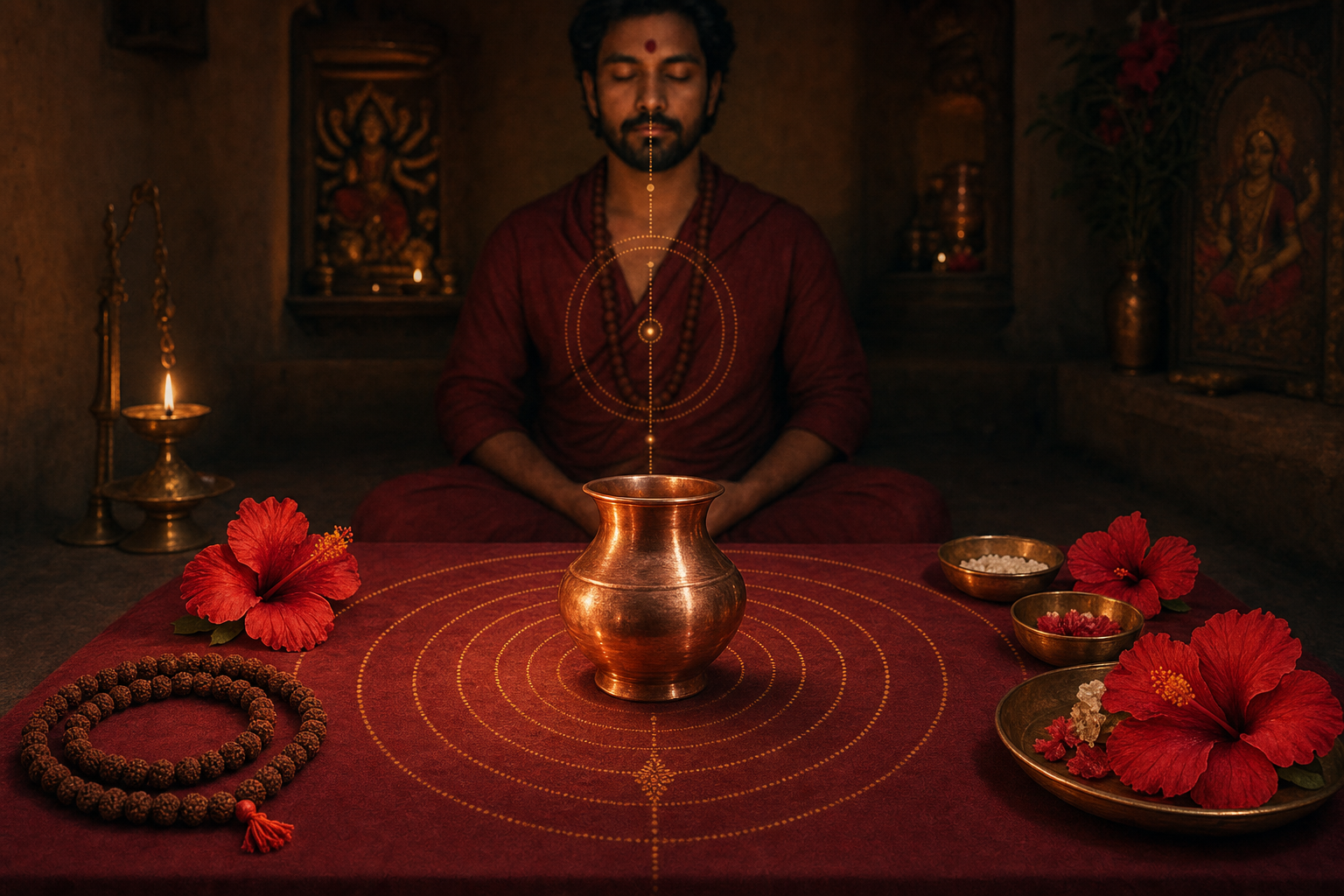
Panchayatana Puja and the Five Elements: A Profound Path to Harmony and Unity

Panchayatana Puja unites devotion and philosophy by aligning multi-deity worship with the Panchabhutas—the five elements of nature. Through panchopachara offerings and a mandala arrangement, practitioners engage earth, water, fire, air, and space in a mindful, integrative ritual. This Smarta tradition, associated with Adi Sankara, honors an ishta-devata while equally revering other forms, modeling unity within…
-
Beyond the Five Senses: Hinduism’s Profound Insight into Why Perception Misleads

Human perception is inherently limited, a point Hinduism has articulated for centuries and modern science increasingly affirms. The five indriyas capture only a fraction of reality, making errors of judgment likely without disciplined methods of knowing. Hindu epistemology balances pratyaksha (perception), anumana (inference), and shabda (authoritative testimony) to refine understanding. Concepts like Maya and Avidya…
-
Heaven on Earth Is Contentment: A Dharmic Path to Lasting Joy Beyond Wealth and Status

This article examines why contentment—santosha in Hindu thought—functions as a greater treasure than material abundance and how it manifests as “heaven on earth.” It contrasts the emptiness that can persist despite wealth with the quiet joy possible in simplicity. Drawing on shared insights from Hinduism, Buddhism, Jainism, and Sikhism, it shows how santosha, aparigraha, upekkhā,…
-
Asura Power vs Dharma’s Restraint: Ravana, Sita, and the Ramayana’s Moral Reckoning
This article examines why Asura Dharma might not condemn Ravana’s abduction of Sita, contrasting a power-first ethos with the Dharmic insistence on righteousness, restraint, and duty. It clarifies how the Ramayana positions legitimacy not in dominance but in ethical means and ends. Readers gain a clear framework to assess might versus right, applying tests of…
-
The Inner Inferno: How Hindu Wisdom Transforms Uncontrollable Anger into Clarity and Peace

Hindu philosophy reframes hell as an inner state—uncontrollable anger (krodha)—that distorts judgment and harms relationships. Drawing on the Bhagavad Gita and yogic disciplines, this article explains how anger escalates and how breath, meditation, and self-study interrupt the cycle. Practical steps—such as short pranayama sets, mindful naming of emotions, and satttvic routines—build emotional resilience and self-control.…
-
Beyond the Senses: Hindu Wisdom on the Mind’s Subtle Realm and Paths to Inner Clarity

This reflection explores how Hindu wisdom understands the mind as operating beyond the reach of the physical senses, while aligning with shared insights from Buddhism, Jainism, and Sikhism. It outlines a subtle map of mind—manas, buddhi, ahamkara, and chitta—and shows why sensory data alone cannot fully explain consciousness. Practical methods such as pratyahara, breath awareness,…
-
Who Fashions Imagination? A Dharmic Insight into Gods, Consciousness, and Creativity

This essay explores a classic Hindu philosophical paradox: if gods are imagined by humans, who fashions imagination itself? It clarifies how, in Vedanta and allied Hindu thought, awareness is ontologically prior to mental imagery, making imagination a function within consciousness rather than its source. The discussion situates deities as Ishta—meaningful forms that refine attention and…
-
Light and Shadow in the Heart: Dharmic Wisdom on Human Duality and Inner Harmony

Dharmic traditions view the human heart as a dynamic interplay of light and shadow, emphasizing growth through accountability rather than moral absolutism. Hindu scriptures describe the guṇas and the contrast of daivī and āsurī qualities, while the Upanishads situate clarity in the Self beyond mental fluctuation. Buddhism’s Middle Way, Jainism’s Anekantavada, and Sikh reflections on…
-
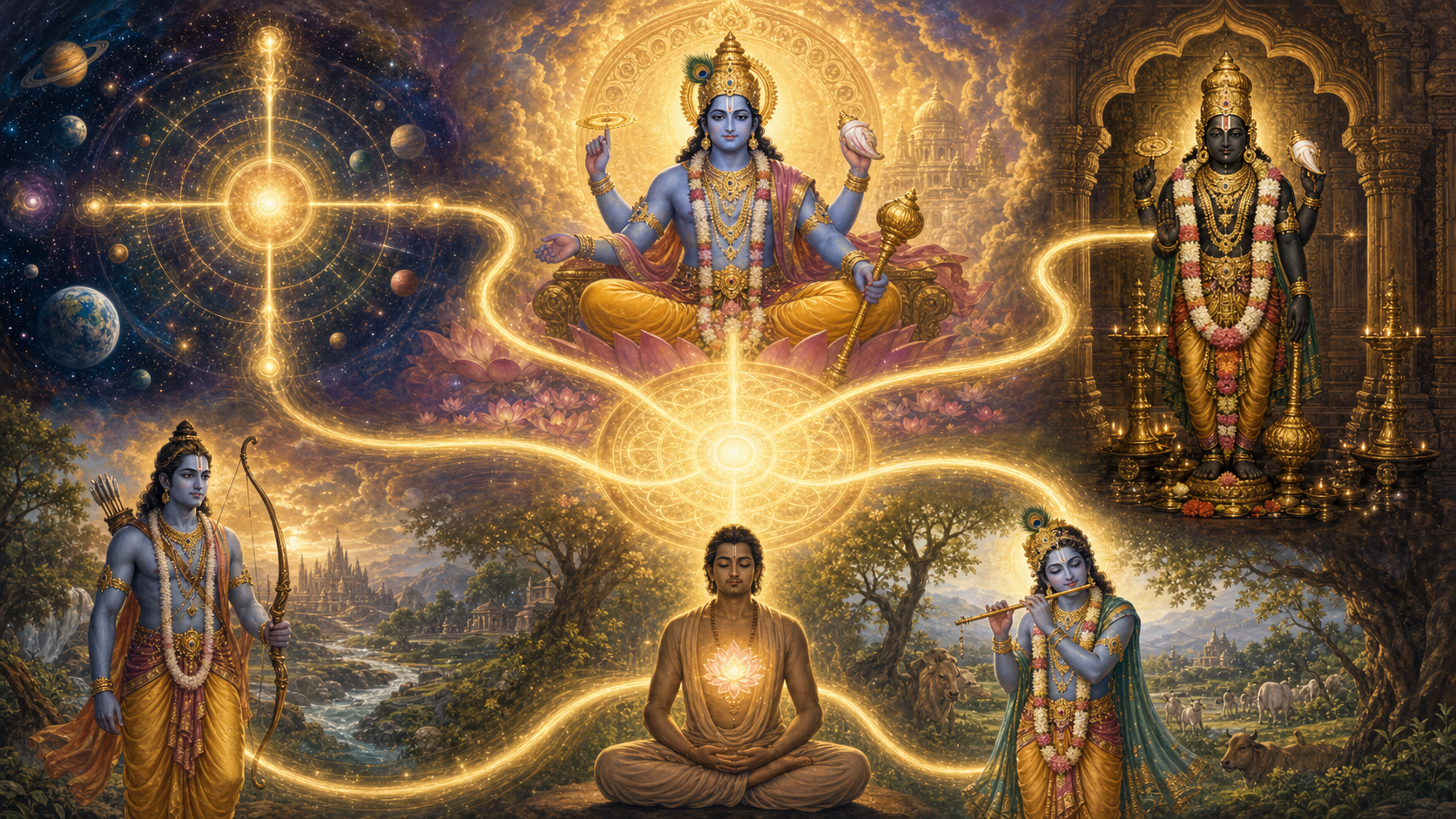
Rama’s Kalas and the Purpose of Avatars: Why the Number Matters Less Than Dharma

The discussion about whether Sri Rama manifested ten or sixteen kalas is best understood as symbolic theology rather than a literal metric of divinity. In many Vaishnava traditions, Rama’s purpose as Maryada Purushottam is to model ideal human conduct, hence a deliberate veiling of full cosmic potency. This academic reflection situates kalas within Hindu philosophy…
-
Beyond the Body: Resilience, Intuition, and Quiet Power in Dharmic Wisdom

Dharmic wisdom teaches that real strength emerges from within, not from physical appearance. By viewing the body as an instrument rather than ultimate identity, practitioners across Hinduism, Buddhism, Jainism, and Sikhism cultivate resilience, intuition, and love. Meditation, mindfulness, samayik, simran, Yoga, and Karma Yoga refine attention and character. This inner discipline develops a quiet power—calm,…
-
Vibhishana and Vikarna: Defiant Voices of Dharma Over Blood in India’s Epics

Vibhishana and Vikarna exemplify moral courage in India’s epics, choosing dharma over kinship and expedience. Vibhishana’s reasoned counsel to Ravana and subsequent alignment with Rama reflect fidelity to righteous order, not betrayal. Vikarna’s protest in the dice hall articulates truth amid power, even as his later choices reveal the tragic weight of duty. Together, they…
-
Varṇāśrama and Bhakti in Gauḍīya Siddhānta: A Powerful Guide to Harmonizing Duty and Devotion

Śrī Caitanya-śikṣāmṛta clarifies how varṇāśrama-dharma supports vaidhi-bhakti in Gauḍīya Siddhānta, showing that ethical order stabilizes and nourishes devotion. Rather than competing, duty and devotion complement each other: responsibilities cultivate clarity, while bhakti completes and elevates life. Practitioners benefit from relatable, practical guidance—steady work, family care, and seva make japa and śāstra-study more focused and joyful.…
-
Paradox of Progress: Why Discontent and Violence Rise—and Dharmic Ways to Peace

Scientific advancements have brought unprecedented capabilities, yet discontentment and violence continue to rise. This article interprets the paradox through a dharmic lens, highlighting avidyā, restless desire, and information overload as drivers of inner turmoil. It presents unifying insights from Hinduism, Buddhism, Jainism, and Sikhism—dharma, ahiṁsā, karuṇā, and sewa—as complementary solutions. Readers gain practical guidance in…