-
Awakening to a Living, Intelligent Universe: Dharma’s Cosmic Order vs Human Greed and Avidya

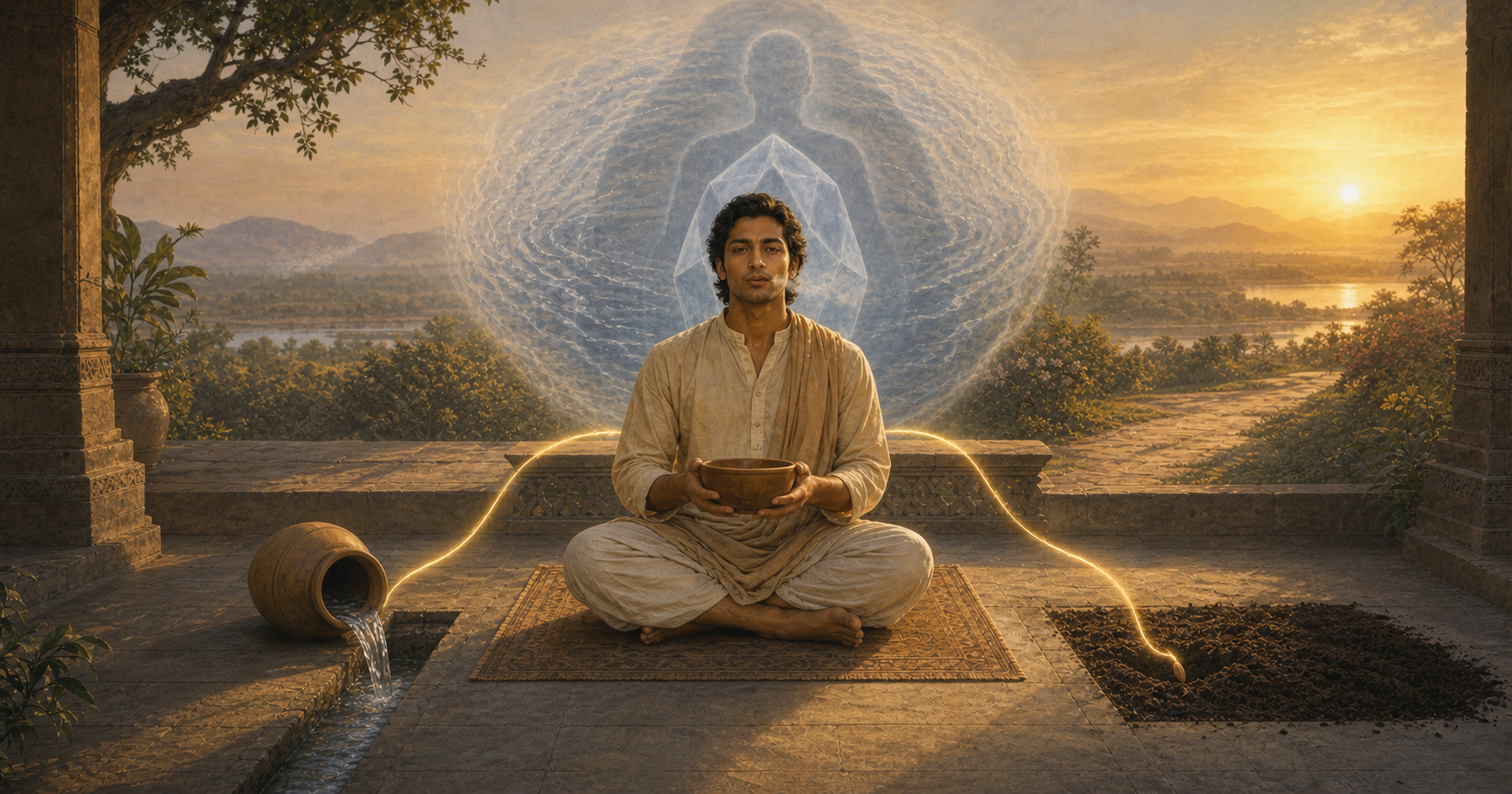
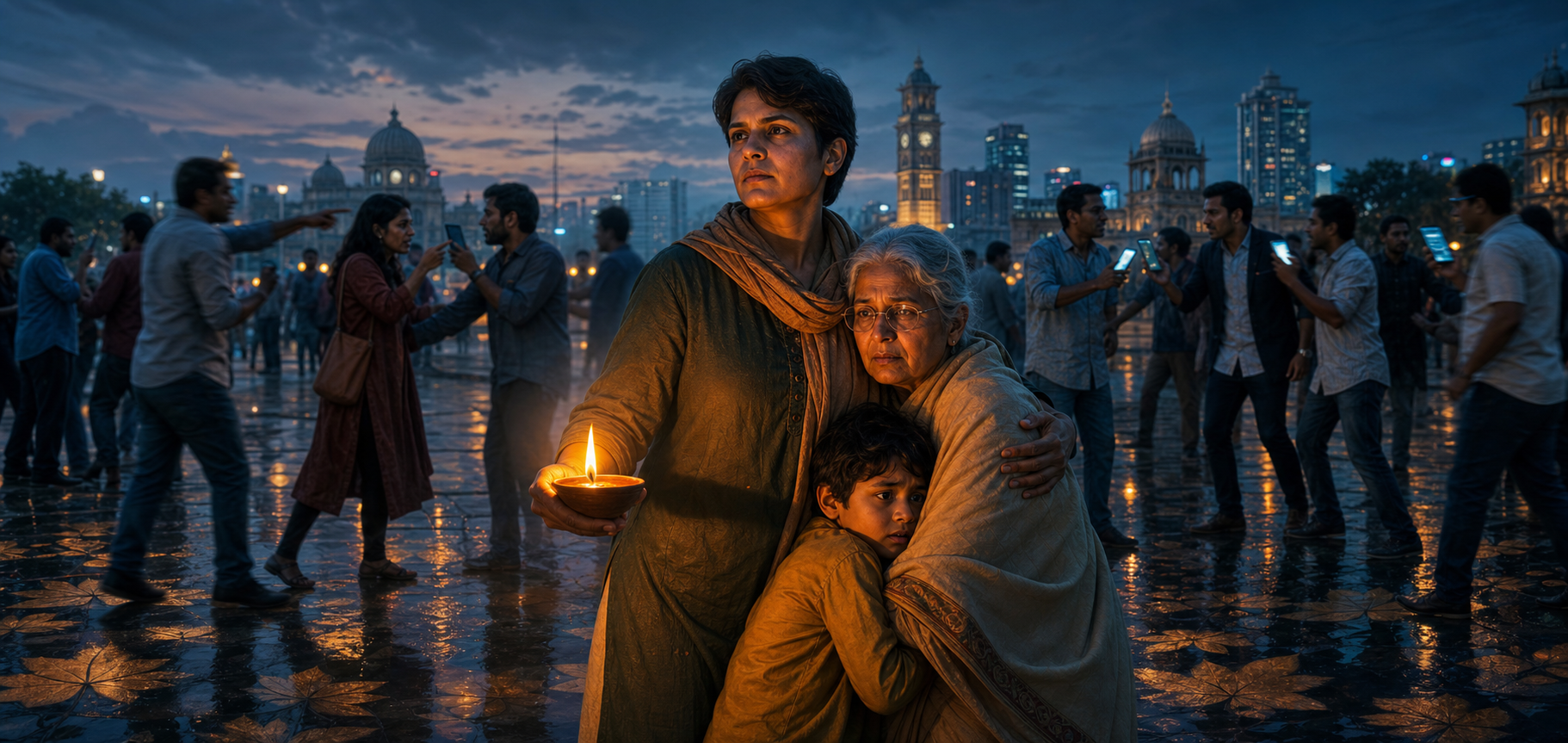
Hindu philosophy describes the universe as a living, intelligent reality governed by Rta or Dharma. This cosmic law sustains balance and harmony, shaping everything from galaxies to human thought. Parallel insights in Buddhism, Jainism, and Sikhism—through Dhamma, Ahimsa, Aparigraha, and Hukam—affirm a shared moral order across dharmic traditions. When greed and Avidya prevail, ecological, social,…
-
Paramapurushartha Explained: The Supreme Human Goal in Hindu Thought for Inner Freedom

Paramapurushartha signifies the supreme human goal in Hindu philosophy, situating moksha as the culmination of life’s aims while harmonizing dharma, artha, and kama. It offers a practical framework for meaning, guiding ethical prosperity and refined enjoyment toward inner freedom. Drawing on the Upanishads, Bhagavad Gita, and Yoga, it aligns with parallel ideals across Dharmic traditions—nirvana…
-
Timeless Dharma: How Ancient Teachers and Healers Sustained a Compassionate Gift Economy

Ancient Hindu ethical traditions envisioned teachers and healers as custodians of knowledge and care who refrained from demanding fees, receiving voluntary dakshina instead. This gift economy placed dharma and social trust above transactional exchange, preserving the sanctity of education and healthcare. Related principles across Buddhism (dana), Jainism (ahimsa and aparigraha), and Sikhism (seva) reveal a…
-
Fearlessness and Detachment in Hinduism: Powerful Practices for Inner Freedom and Growth

Fearlessness (abhaya) and detachment (vairagya) are central to Hindu philosophy, shaping a confident, ethical, and compassionate way of life. Fearlessness stabilizes decision-making under uncertainty, while detachment clarifies judgment by releasing attachment to outcomes. Practical disciplines—Yoga, meditation, pranayama, japa, svadhyaya, and seva—help integrate these virtues into daily interactions at home, work, and online. The approach strengthens…
-
Madhvacharya Jayanti 2026: Date, Significance, and Reflections on Dvaita Vedanta

Madhvacharya Jayanti 2026 falls on October 21, commemorating the birth of Sri Madhvacharya (Purna Prajna, Ananda Tirtha), honored as the ‘Dvaita Siddhanta Kartha’. The observance highlights the intellectual clarity of Dvaita Vedanta, its emphasis on the distinction between jiva and Paramatman, and its lasting impact on the Bhakti movement. Readers gain the essential date, cultural…
-
Hamsa Kshira Nyaya: Vedic Wisdom on Discernment for Unity Across Dharmic Paths

“Hamsa Kshira Nyaya” conveys a Vedic principle of discerning the essential from the incidental, symbolized by the hamsa separating milk from water. Rooted in Hindu philosophy and evoked in the Shukla Yajur Veda (19.73), it becomes a practical guide to viveka—clear discrimination grounded in dharma. The teaching resonates across dharmic traditions: Buddhism’s prajñā, Jainism’s viveka…
-
Manana in Vedanta: Harnessing Constant Reflection to Realize Atman–Brahman Unity

“Manana” in Vedanta means disciplined, constant reflection that converts scriptural listening into firm understanding. As the second step in the sadhana traya—following “sravana” and preceding “nididhyasana”—it resolves doubts through reasoned contemplation. This practice deepens clarity about the unity of Atman and Brahman and anchors insight in everyday conduct. Structured routines, journaling, and guidance from a…
-
From Doubt to Serenity: Vedic Wisdom, Mantra Chanting, and the Assurance of Divine Order

A short visit became a deeper exploration as Vedic wisdom revealed a structured and meaningful view of reality. The ancient Vedas ground practices like chanting the Hare Krishna mantra and deity worship in a disciplined, philosophical context. Vedic cosmology’s cycles of creation and dissolution offer a reasoned framework that replaces anxiety with intellectual clarity. The…
-
Systematic Management as Seva: Discipline, Accountability, and Unity in Dharmic Life

Management in dharmic life is not merely material; it is a spiritual discipline when aligned with seva, responsibility, and humility. Building on Srila Prabhupada’s guidance, effective service includes satisfying one’s immediate supervisor to preserve purpose and prevent chaos. Across Hinduism, Buddhism, Jainism, and Sikhism, systematic management safeguards unity in spiritual diversity and enables kirtan, langar,…
-
Nityalila in Vallabhacharya’s Vision: Eternal Divine Play, Grace, and the Soul’s Path

This article explores “Nityalila”—the eternal divine play—in Vallabhacharya’s Pushtimarg, explaining how grace-filled “bhakti” leads the soul toward intimate participation in Shri Krishna’s leela. It clarifies the three types of souls—Pravaha, Maryada, and Pushti—without assigning hierarchy, showing how each reflects a distinct spiritual orientation. Readers gain practical insight into how seva, nama-smarana, and ethical living cultivate…
-
Wealth of the Heart: Hinduism’s Abundance Through Simplicity, Devotion, and Dharma

Hinduism redefines wealth as an inner abundance nurtured by love, devotion, and dharma rather than by material accumulation. Across dharmic traditions, simplicity and service—bhakti, dana, aparigraha, and seva—create shared dignity and social cohesion. The Bhagavad Gita and the Upanishads frame purposeful action and mindful restraint as pathways to enduring fulfillment. Everyday experiences like bhajan, langar,…
-
Panchagavya vs Panchamakara: Unveiling Sacred Purity and Esoteric Power for Seekers

This comparative guide explores Panchagavya in Vaishnavism and Panchamakara in Shaktism, showing how both systems aim at inner transformation within Sanatana Dharma. Readers gain clear definitions, historical context, and lived meanings of these fivefold practices. The analysis highlights Panchagavya’s emphasis on ritual purity and bhakti, and Panchamakara’s symbolic, ethically guided approach to integrating Shakti. Practical…
-
Timeless Wisdom of Srila Bhaktisiddhanta: Humility, Kirtana, and Radha–Krishna Bhakti

This essay distills Srila Bhaktisiddhanta Sarasvati Thakura’s insights on Radha–Krishna bhakti, humility, and the centrality of asraya (spiritual shelter). It explains why worship framed by Sri Radhika’s role refines devotion and protects against ego-centric religiosity. The discussion presents kirtana and hari-katha as practical means of rest and orientation, echoing Sri Caitanyadeva’s kirtaniyah sada harih. It…
-
Conquering avidyā with ekāgra chitta: dharmic wisdom to end spiritual blindness

Spiritual blindness, or “avidyā,” obscures the “ātman” and fuels suffering; dharmic wisdom teaches that only sustained steadiness—“ekāgra chitta”—can dissolve this ignorance. Hinduism, Buddhism, Jainism, and Sikhism converge on this principle while honoring diverse methods such as dhyāna, remembrance, ethical restraint, and self-inquiry. Practical steps—daily meditation, mindful breathwork, japa, and reflective study of the Upanishads and…
-
Shiva–Parvati as Yin–Yang Archetypes: A Timeless Guide to Balance, Unity, and Grace

Shiva and Goddess Parvati embody a powerful archetype of complementary balance in Eastern philosophy, comparable to yin and yang. Their union models non-duality: awareness and energy co-arise to sustain harmony. The same insight appears across dharmic traditions—Buddhism’s Middle Way, Jainism’s Anekantavada, and Sikhism’s integration of temporal and spiritual life—affirming unity in spiritual diversity. Readers gain…
-
Unveiling the Real Source of Energy: Matter, Consciousness, and the Dharmic View

This essay explores the real source of energy through a dharmic lens, clarifying why matter alone lacks creative power without the organizing presence of consciousness and prana. It synthesizes insights from Hinduism, Buddhism, Jainism, and Sikhism to show a shared recognition of an enlivening principle beyond mere material aggregation. Practical analogies—like electricity requiring both a…
-
Nyaya Amrita by Vyasatirtha: Timeless Logic in a Brilliant Defense of Dvaita Vedanta

Nyaya Amrita by Vyasatirtha (Vyasaraya) is a masterwork of Hindu philosophy and a powerful defense of Dvaita Vedanta. Structured in four chapters, it unites rigorous logic with devotional insight, offering clear methods for analyzing reality, knowledge, and liberation. The text’s dialectical clarity advanced Vedanta debates while modeling respectful engagement across traditions. Readers gain tools for…
-
Hinduism’s Expansive Spectrum: How Flexibility and Pluralism Empower Inner Freedom

Hinduism’s strength lies in flexibility: a civilizational habit of accommodating diverse ideas, practices, and philosophies under shared ethical principles. This pluralism is mirrored across Dharmic traditions—Buddhism, Jainism, and Sikhism—creating unity in spiritual plurality without erasing distinct identities. The concept of Ishta exemplifies personal spiritual freedom coupled with respect for others’ paths. Historically, Hinduism has evolved…
-
Beyond Money: Dharmic Wisdom for Inner Riches, Community Bonds, and Lasting Fulfillment

This essay explores how Hinduism, in harmony with Buddhism, Jainism, and Sikhism, reframes wealth as inner stability, ethical character, and community bonds. It explains artha’s role within the puruṣārthas, showing how money serves dharma and mokṣa rather than replacing them. Readers gain practical steps—seva, mindful consumption, dāna, right livelihood, and Karma Yoga—to cultivate spiritual wealth…