-
Kali Yuga’s Hidden Crisis: How Daily Divine Remembrance Ends Confusion, Stress, and Suffering

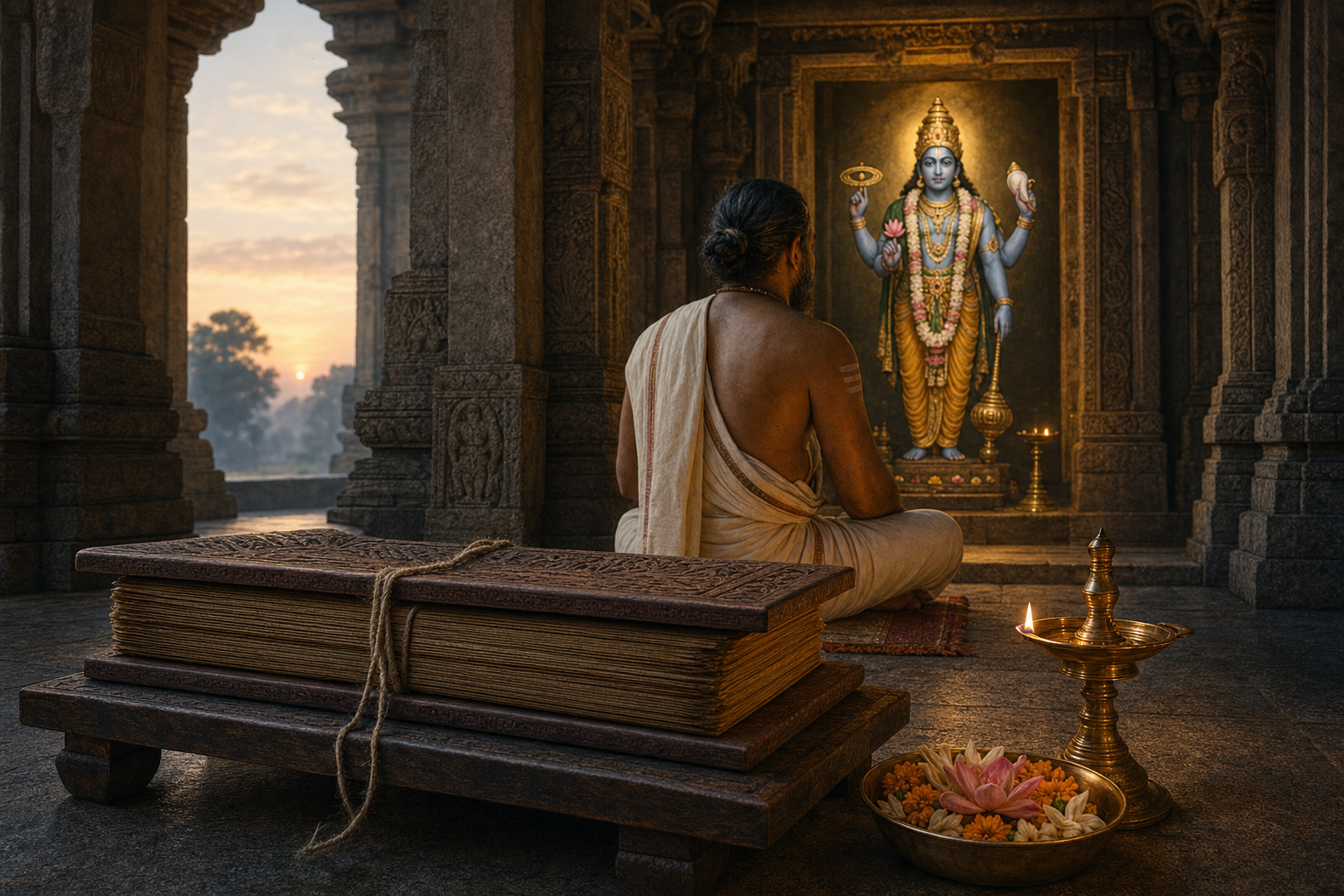
Kali Yuga’s defining crisis is not doctrinal disagreement but the everyday amnesia that severs attention from the Divine and amplifies stress and confusion. Rooted in the Bhagavad Gita’s call to remember at all times and the Bhagavata Purana’s praise of nāma-kīrtana, this analysis details a practical, inclusive protocol for continuous remembrance. It integrates japa, kīrtana…
-
Decoding Nitya Samsari in Dvaita Vedanta: Meaning, Ethics, and the Path to Moksha

Nitya Samsari, the eternally transmigrating soul in Dvaita Vedanta, is part of a threefold classification that also includes Muktiyogya and Tamo-yogya. This analysis explains the doctrine’s metaphysical basis, scriptural grounding in the Upanishads and Bhagavad Gita, and its ethical implications for daily practice. It clarifies how karma, gunas, and habit formation sustain samsara, while showing…
-
Prayer Is the Voice of the Soul: Timeless Dharmic Science for Healing, Clarity, and Grace

This article unpacks the Hindu teaching “Prayer is the voice of the soul” as a precise, reproducible inner science shared across Hinduism, Buddhism, Jainism, and Sikhism. It explains technical frameworks such as vāk (levels of speech), Pancha-kosha viveka (five sheaths), and the discipline of japa, dhyana, and pranayama. Readers gain a clear practice framework that…
-
When Inventions Rule Their Makers: Dharmic Ethics to Reclaim Agency in a Tech Age

Humanity stands at a crossroads where powerful inventions often master their makers. Drawing on Hindu, Buddhist, Jain, and Sikh wisdom, this long-form analysis shows how Dharmic ethics can reorient technology from compulsion to stewardship. It translates core ideas like Dharma, Anekantavada, mindfulness, and seva into practical tools such as Karmic Impact Assessments, sattva-first interface design,…
-
Facing Mortality, Finding Dharma: Why Mastering Dying Is the Ultimate Art of Living

A pivotal episode from the Mahabharata frames a universal insight: death is certain, denial is common, and wisdom begins when that denial ends. This long-form analysis shows how Hinduism, Buddhism, Jainism, and Sikhism converge on a shared discipline—facing mortality to live more ethically, courageously, and compassionately. Drawing on the Bhagavad Gita, the Upanishads, maranasati, samayik–pratikraman,…
-
Beyond Endless Craving: Dharmic Science of Ambition, Lust, and Lasting Happiness

Progressive ambition often fails to produce lasting happiness because the senses–mind complex is mismatched to the goal of enduring joy. Vedic philosophy explains this law of material nature and locates fulfillment in the jiva’s spiritual quality as a particle of Sachidananda Vigraha. Converging insights from Hinduism, Buddhism, Jainism, and Sikhism show that inner realignment—not external…
-
Ego (Ahamkara), Conflict, and Liberation: A Dharmic Synthesis with Practical Tools for Peace

This article examines why ego (ahamkara) is repeatedly identified by Hinduism, Buddhism, Jainism, and Sikhism as a root driver of conflict, and how each tradition prescribes precise methods to transform it. It clarifies the mechanism from avidya to anger found in the Bhagavad Gita and Yoga philosophy, then correlates those insights with Buddhist anatta, Jain…
-
When Power Outpaces Wisdom: Ancient Dharmic Insights to Heal a Wealthy, Wounded World

Modern society holds immense technological power and material wealth, yet faces crises born of its own momentum. Drawing on Hinduism, Buddhism, Jainism, and Sikhism, this analysis explains how shakti (power) must be yoked to viveka (wisdom) through dharma to restore ecological balance, social harmony, and inner clarity. It maps Purusharthas to contemporary dilemmas, applies yama–niyama…
-
Beyond ‘I Am’: Tripura Rahasya’s Bold Guide to Pure Consciousness and Nondual Freedom

Tripura Rahasya advances a radical Advaita Vedanta insight: genuine Self-Realization dissolves identity so completely that even the thought “I am” no longer arises, without slipping into blankness. The teaching redirects attention from concepts to pure, self-luminous awareness (cit), illuminating all states—waking, dream, and deep sleep—while resting as the nondual ground (turīya). It details a rigorous…
-
Empathy as the Mark of Divinity: Dharmic Teachings on Karuṇa, Dayā, and Universal Compassion

Empathy is presented as the defining mark of divinity across Hinduism and the broader dharmic family, where compassion (karuṇa/dayā) is both spiritual practice and social ethic. Grounded in scriptural foundations such as Bhagavad Gita 6.32 and 12.13, the article links inner realization with the welfare of all beings. It highlights convergences with Buddhism’s Brahmavihāras, Jainism’s…
-
How We Treat the Powerless: Dharma’s Uncompromising Measure—from Gita to Guru Granth Sahib

True character is revealed most clearly in how people treat those with little power. Drawing on Hinduism, Buddhism, Jainism, and Sikhism, this essay shows how Dharma, Ahimsa, Seva, and Karuna converge on a single ethical yardstick: dignity for the vulnerable. It synthesizes sources from the Bhagavad Gita, Mahabharata (Vidura-niti), Dharmasastra, and Arthasastra alongside Sikh langar…
-
Shiva’s Playful Forms (lilamurtis): Deep Symbolism, Agamic Iconography, Living Tradition

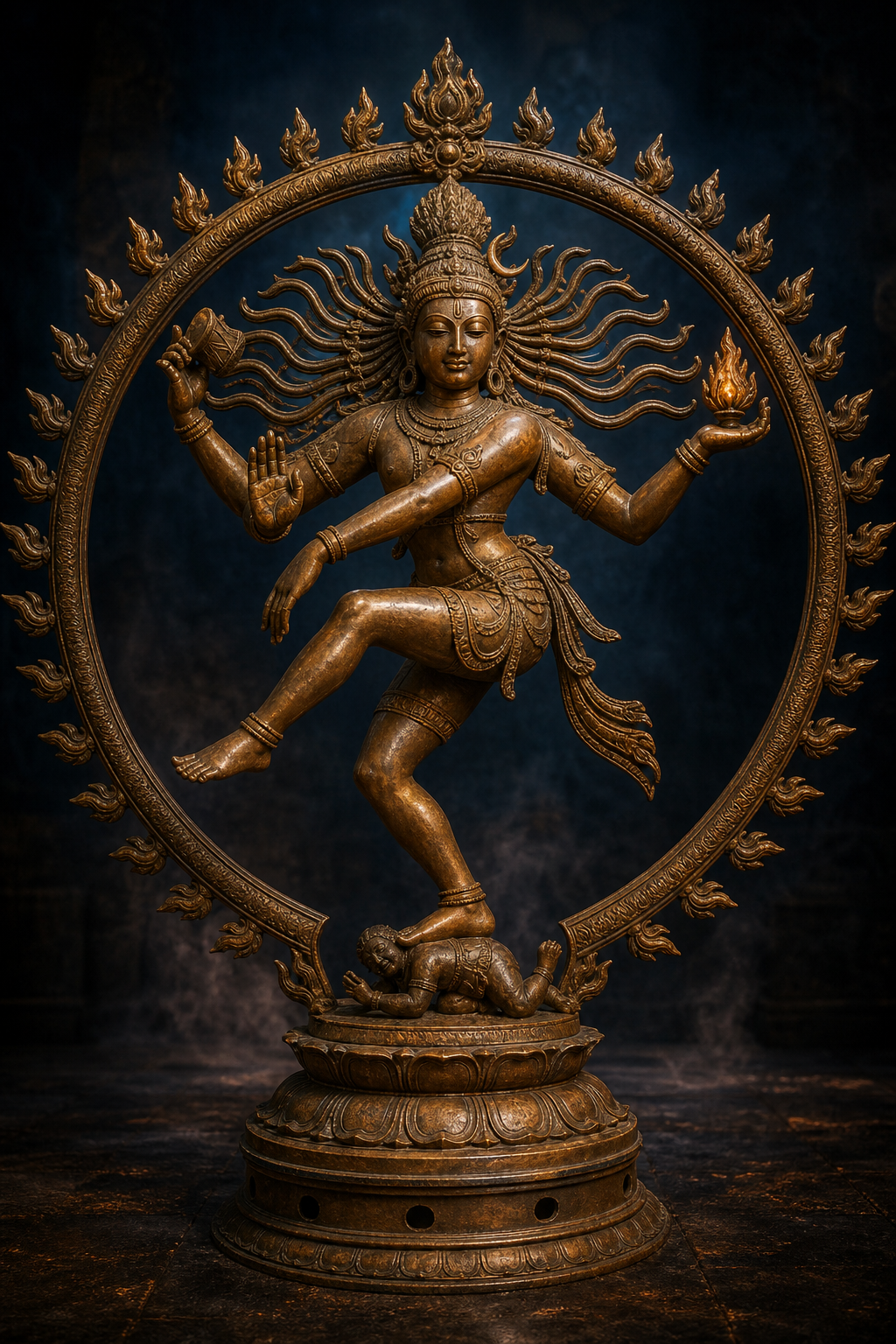
This essay decodes Shiva’s lilamurtis—playful sacred forms that translate the formless into transformative encounter—through the lenses of Agamic iconography, Purāṇic narrative, and living ritual. It explains the aniconic meaning of the Linga and shows how iconic forms like Nataraja, Ardhanarishvara, and Dakshinamurti encode philosophy as gesture and posture. Readers learn how temple architecture and ritual…
-
Manomayakosha Decoded: The Mind’s Sheath in Hindu Philosophy and Modern Life

Manomayakosha—the mind-sheath of Vedanta—explains how sensations, emotions, and thoughts organize experience between breath (prana) and discernment (buddhi). Rooted in the Taittiriya Upanishad’s Panchakosha model, it clarifies why attention, ethics, and breath regulate mental clarity. The piece distinguishes Manomayakosha from vijnanamaya-kosha and shows how the gunas (sattva, rajas, tamas) color mental states. It highlights dharmic consonance…
-
Eternal Paradox of Being: Nothing Is Lost, Yet Everything Changes in Hindu-Dharmic Thought

This essay decodes the paradox “Nothing can be wiped out; but nothing remains same” through the lens of Hindu philosophy and the wider dharmic traditions. It shows how the Upanishads, the Bhagavad Gita, Advaita, Samkhya, Nyaya-Vaisheshika, Buddhism, Jainism, and Sikhism converge on a coherent view: being persists while forms transform. Readers gain clear definitions (sat,…
-
Desire Beyond Need: Dharmic Strategies to Transform Craving into Clarity and Freedom

This article clarifies why, in Hindu thought, desire is not a need but a demand that reaches beyond need—and how that demand can be guided rather than suppressed. It maps desire across the puruṣārthas and pañca-kośa models, showing when desire serves dharma and when it becomes compulsion. It integrates insights from the Bhagavad Gita, Yoga…
-
Beyond Right and Wrong: Hindu Dharma’s Compassionate Guide to the Sacred Relativity of Truth

This article explains how Hindu Dharma frames morality as contextual rather than absolute, grounding ethical judgment in place, time, person, intention, and consequence. It clarifies the difference between universal virtues and their context-sensitive application, showing how ahimsa, satya, and lokasangraha orient decision-making. Drawing from the Mahabharata, the Bhagavad Gita, Dharmashastra, Yoga philosophy, and Mimamsa hermeneutics,…
-
Gaudapada’s Asparshayoga Explained: The Fearless Non-Contact Path to Advaita Bliss

This essay unpacks Asparshayoga—Gaudapada’s “non-contact yoga” in Advaita Vedanta—as a knowledge-centered recognition that dissolves the subject–object split. It explains why the bliss of the Self is intrinsic rather than a peak produced by sensory contact, grounding the discussion in the Mandukya Upanishad’s map of Turiya. It clarifies how Asparshayoga differs from Patanjali’s technique-driven approach while…
-
Washerman’s Whisper and Sita’s Ordeal: Unraveling Ramayana’s Most Debated Mystery

The ‘washerman episode’ in the Ramayana is more than a narrative twist; it is a rigorous exploration of ethics, governance, and compassion. This article situates the scene—five spies praising Sri Rama and a sixth overhearing a washerman’s harsh rebuke—in its textual and historical contexts, noting variations across Valmiki’s Uttara Kāṇḍa and later vernacular traditions. It…
-
Ajati in Advaita Vedanta: Radical Non-Birth, Mandukya Karika, and Deep Clarity

Ajati—Advaita Vedanta’s doctrine of non-birth—asserts that ultimate reality never truly originates or changes, while preserving everyday causality and ethics at the empirical level. Rooted in the Mandukya Upanishad and Mandukya Karika, it culminates in the recognition of turīya, the ever-present awareness. By distinguishing absolute from empirical standpoints, Ajati avoids nihilism and affirms a positive, non-dual…
-
Beyond Ego (Ahamkara): Atman, Attachment, and Liberation across Hindu, Buddhist, Jain, Sikh Paths

This comprehensive analysis explains how Hinduism, aligned with Buddhism, Jainism, and Sikhism, understands internal attachment as self-identification with ego (ahamkara/asmita). It clarifies core doctrines—Atman–Brahman, avidya–adhyasa, and the Yoga kleshas—while mapping practical methods in Karma Yoga, Bhakti, Jnana, and Raja Yoga. Readers gain a technical yet accessible framework using Pancha Kosha Viveka, samskara theory, and Gita-based…