-
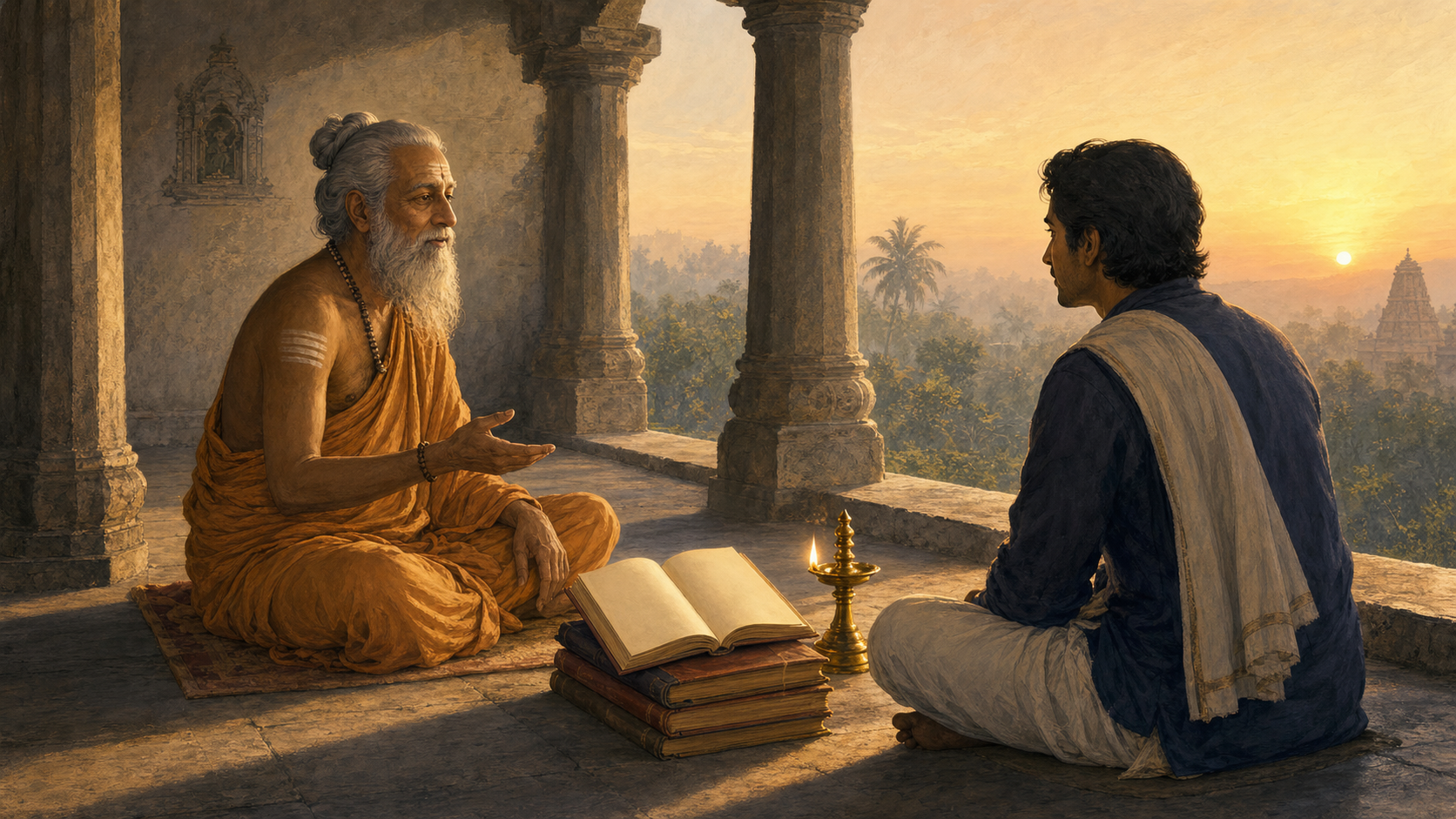
Decoding Nityānuvāda in Pūrva Mīmāṃsā: How Reiteration Shapes Vedic Meaning and Practice

Nityānuvāda, a core device in Pūrva Mīmāṃsā, explains why the Veda sometimes reiterates what is already known. Rather than creating new duties, it safeguards constant associations and stabilizes practice, complementing vidhi (injunction) without competing with it. Recognizing nityānuvāda helps readers avoid inflating obligations and dissolves apparent scriptural contradictions. The distinction from restrictive vidhis is precise:…
-
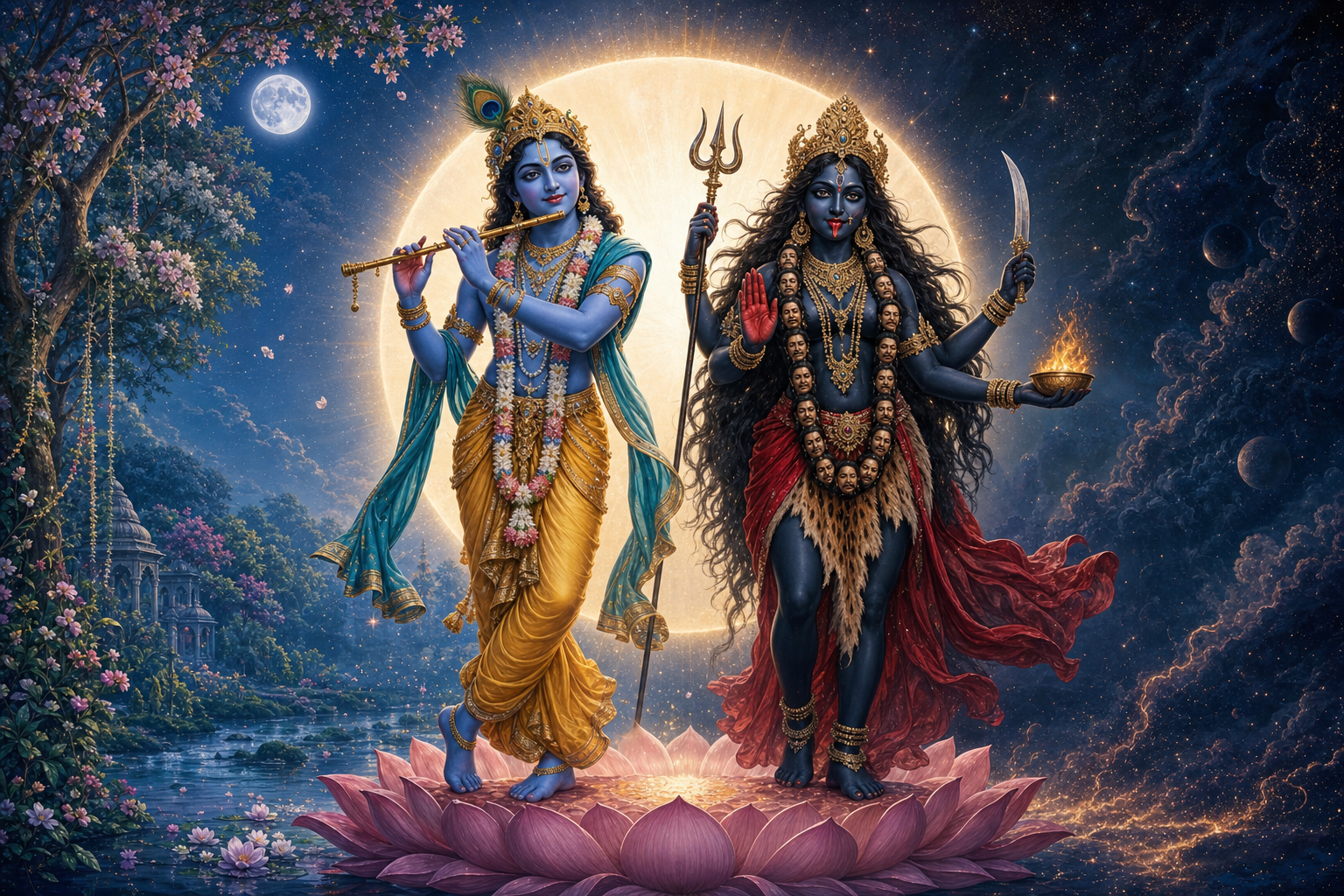
Surrender Made Practical: Sharanagati, Inner Resilience, and Divine Help in Daily Life

Surrender (sharanagati) is presented here as a rigorous, actionable discipline within Sanatana Dharma, grounded in a widely cited Back to Godhead teaching attributed to Srila Prabhupada and centered on a simple, sincere prayer to Krsna. The article clarifies that surrender is not passivity but intelligent consent to higher wisdom, consistent with the Bhagavad Gita’s call…
-
Maitrayaniya (Maitri) Upanishad: Origins, Structure, Sixfold Yoga, and Transformative Wisdom

The Maitrayaniya (Maitri) Upanishad of the Krishna Yajurveda blends Vedanta and early Yoga with unusual precision, making it a key late-Upanishadic text. It analyzes time and the timeless, the mind’s role in bondage and freedom, and the threefold nature of suffering, while culminating in a concise sixfold Yoga. Readers gain a clear map from inquiry…
-
Unmasking the Self: Dharmic Wisdom on Maya, Ahamkara, and Authentic Living Today

In a culture of performative identities, dharmic traditions provide a precise, compassionate roadmap for authentic living. Drawing on Hindu concepts such as māyā, avidyā, ahaṁkāra, and Pancha Kosha Viveka, alongside Buddhist analysis of the skandhas and anatta, Jain practices of samayika and pratikramana, and Sikh disciplines of nām simran, kīrtan, and sevā, the piece shows…
-
Ultimate Reality Cannot Be Taught: Profound, Experiential Wisdom in Hinduism and Dharmic Paths

This long-form exploration clarifies why Ultimate Reality in Hindu philosophy cannot be taught as a mere concept and must be realized through direct experience. It maps the classical triad of śravaṇa–manana–nididhyāsana and the role of Guru–Shishya Tradition, highlighting how scripture and guidance remove ignorance rather than transfer realization. Readers gain a technically sound overview of…
-
Decoding the Trimurti and Time: Brahma, Vishnu, Shiva as One Timeless Consciousness

Hinduism affirms a formless, timeless Brahman while compassionately offering the Trimurti—Brahmā, Viṣṇu, and Śiva—as a contemplative lens on one consciousness performing creation, preservation, and dissolution. Grounded in Upanishadic and Vedic insights, this approach unites nirguṇa metaphysics with saguṇa devotion without contradiction. By situating the Trimurti within cyclical time (yugas, manvantaras, kalpas), the tradition frames change…
-
Mahatparinama Unveiled: The Transformative Journey from Subtle to Manifest Reality in Hindu Philosophy

Mahatparinama—the transformation from subtle to manifest—provides a unifying grammar for Hindu philosophy, linking Samkhya’s cosmology, Vaisheshika’s atomism, Vedanta’s metaphysics, and Yoga’s inner practice. This comprehensive explainer maps the emergence from mahat (cosmic intelligence) through ahamkara, tanmatras, and the mahabhutas, clarifying how sukshma processes shape sthula outcomes. It contrasts satkaryavada and asatkaryavada, situates parinama and vivarta…
-
Bhagavad Gita’s Arjuna vs Yoga Vasishta’s Rama: Two Renunciations, One Dharma-Centered Path

This long-form analysis contrasts Arjuna’s crisis in the Bhagavad Gita with Rama’s dispassion in the Yoga Vasishta to clarify why two similar withdrawals demand different remedies. It explains how moha (confusion) calls for karma-yoga—duty purified by relinquishment of fruits—while vairagya (dispassion) calls for vichara and jnana-yoga. Readers gain a practical diagnostic to discern whether they…
-
Jara’s Arrow and Krishna’s Departure: Time, Dharma, and the Eternal Law of Transformation

The narrative of Jara’s arrow and Krishna’s departure, preserved in the Mahabharata and Bhagavata Purana, encodes a rigorous meditation on time, dharma, and karmic causality. By exploring the Sanskrit semantics of jarā (old age) and the story’s careful framing within prophetic and ethical horizons, the episode becomes a study of impermanence and intentional closure. It…
-
Beyond Marks and Robes: Recognizing True Sanatana Dharma by Conduct and Consciousness

The dharmic traditions of the Indian subcontinent teach that true spiritual identity is recognized through conduct and consciousness, not through marks, robes, or ritual display. Sanatana Dharma and its sister paths—Buddhism, Jainism, and Sikhism—converge on ethical and contemplative maturity as the most reliable signatures of practice. Scriptural anchors such as the Upanishads, the Bhagavad Gita,…
-
Queen Leela and King Padma in Yoga Vasistha: The Eternal Dance of Desire, Time, and Liberation

This long-form exploration of Queen Leela and King Padma in the Yoga Vasistha unpacks how consciousness, desire, and time interweave to produce the felt world. Readers learn why the text situates death and rebirth within the triad of gross, subtle, and causal bodies, clarifying continuity without clinging. The analysis translates core methods—shravana, manana, nididhyāsana, and…
-
Oceanic Equanimity: Dharmic Science of Inner Stability, Seva, and Self‑Realization

Srimad Bhagavatam 3.24.44 teaches an enduring method for emotional resilience and Self-Realization using the ocean as a model for equanimity. This article unpacks the verse in a clear, academic style and maps its insights to Yoga philosophy (abhyasa, vairagya, pratyahara, dhyana) for technical precision. It then builds bridges across Hinduism, Buddhism, Jainism, and Sikhism, showing…
-
Definitive Gaudiya Vaisnava Siddhanta for ISKCON: Unanimous 2025 GBC Consensus and Dharmic Unity

ISKCON’s GBC has unanimously approved a definitive policy statement—Gaudiya Vaisnava Siddhanta for ISKCON—anchored in the teachings of His Divine Grace A. C. Bhaktivedanta Swami Prabhupada. Developed over several years with input from senior devotees and authored by His Holiness Bhakti-Vijnana Maharaja, it consolidates doctrine to support consistent education, practice, and governance worldwide. The statement strengthens…
-
Bliss in Cosmic Harmony: Align Individual Life with the Universal Rhythm in Hindu Thought

Hindu philosophy teaches that genuine bliss arises when individual life resonates with the universal rhythm, a harmony expressed in the Upanishadic vision of atman and Brahman. This essay grounds the idea in scriptural sources, including tat tvam asi, sarvam khalvidam brahma, and the Gita’s view of the yogin who perceives unity in diversity. It clarifies…
-
Definitive 9‑Lecture Journey into the Bhagavad Gita with Prof. Ithamar Theodor

This nine‑lecture series at Bhaktivedanta Research Center presents a rigorous, text‑based journey through the Bhagavad Gita with Prof. Ithamar Theodor, uniting academic clarity and contemplative depth. Participants gain historical context, philological literacy, and a comparative understanding of Advaita, Visistadvaita, and Dvaita interpretations. Core teachings on Dharma, Karma Yoga, Jnana Yoga, and Bhakti Yoga are examined…
-
From Ritual to Realization: Ending Barren Devotion with Dharmic Discipline and Insight

Modern worship often looks vibrant yet feels spiritually thin. This long-form, academic analysis explains why devotion turns barren—transactional aims, inattentive ritual, neglected ethics, and fragmented attention—and details what Hindu, Buddhist, Jain, and Sikh scriptures actually prescribe for transformation. It offers an integrated method grounded in yama–niyama or śīla, daily abhyasa of japa or dhyana, breath…
-
Tapas, Siddhis, and the Hidden Trap of Mada: Preventing Spiritual Arrogance in Sadhana

Hindu philosophy honors tapas and acknowledges the possibility of siddhis, yet warns that both can catalyze mada—spiritual arrogance—if pursued without humility and ethical grounding. Drawing on the Yoga Sutra, the Bhagavad Gita, and epic narratives, this analysis shows how austerity and unusual capacities become obstacles when they inflate identity. Converging perspectives from Buddhism, Jainism, and…
-
Choosing Our ‘Amazing Stories’: A Rigorous Case for Vedic Epistemology and Dharmic Unity

This essay examines the oft-quoted contrast between materialism and the Vedic view by asking how anyone comes to know. Drawing on the dharmic theory of pramāṇa—perception, inference, testimony, and more—it distinguishes the legitimate power of science from the unwarranted metaphysics of scientism. It argues that Vedic epistemology offers greater coherence and explanatory breadth, especially for…
-
Loka Saṅgraha in the Bhagavad Gita: Powerful Ethics for Leadership, Duty, and Social Order

Loka saṅgraha—welfare and cohesion of the world—is the Bhagavad Gita’s public-spirited anchor for Karma Yoga and ethical leadership. Rooted in verses 3.20–3.26, it unites inner freedom with responsible action, guiding leaders to serve by example and to act without attachment. The concept emphasizes integration rather than control, advancing social harmony, trust, and the flourishing of…