-
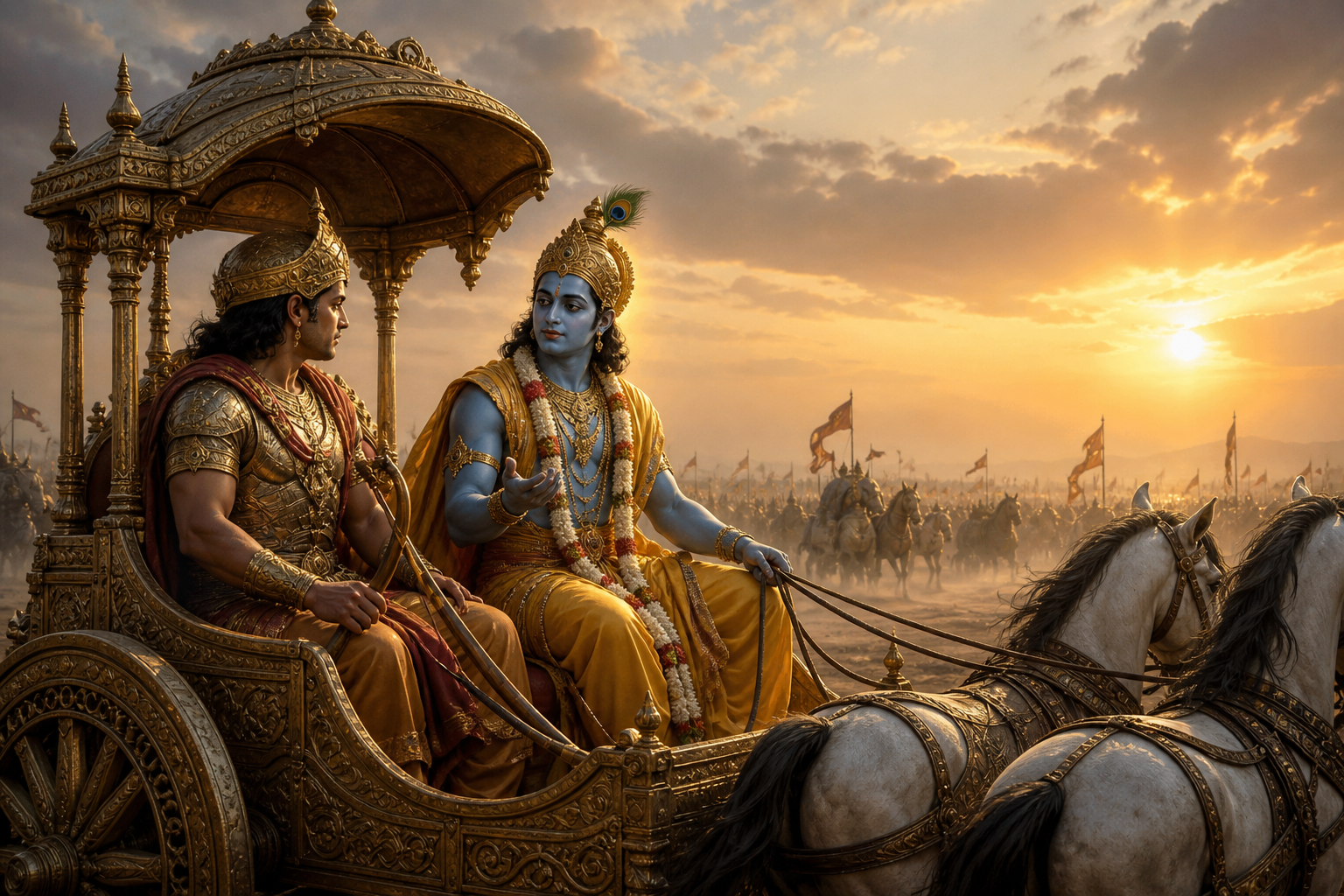
Love Conquers All: Bhakti’s transforming power, Gita-guided compassion, Dharmic unity

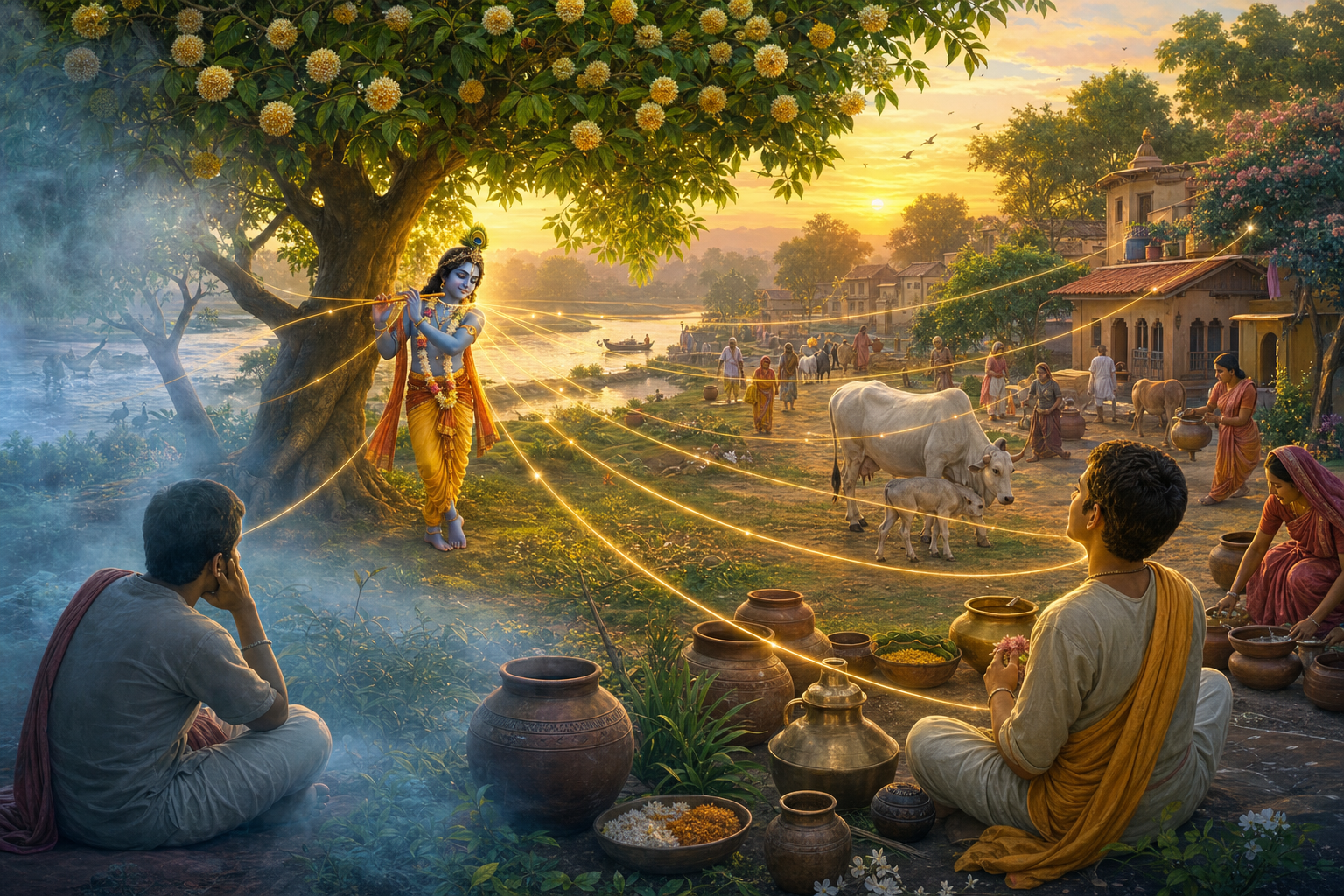
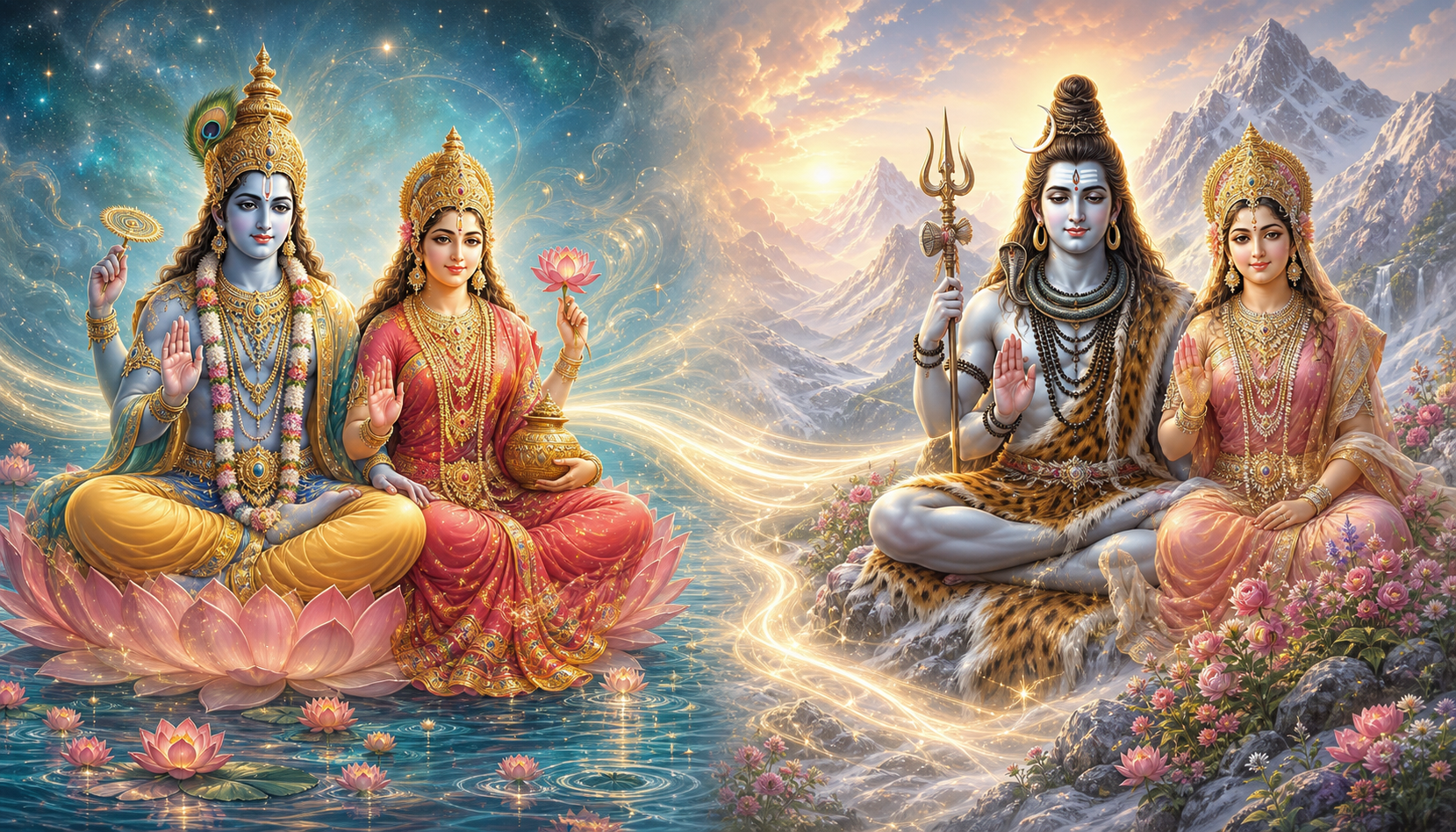
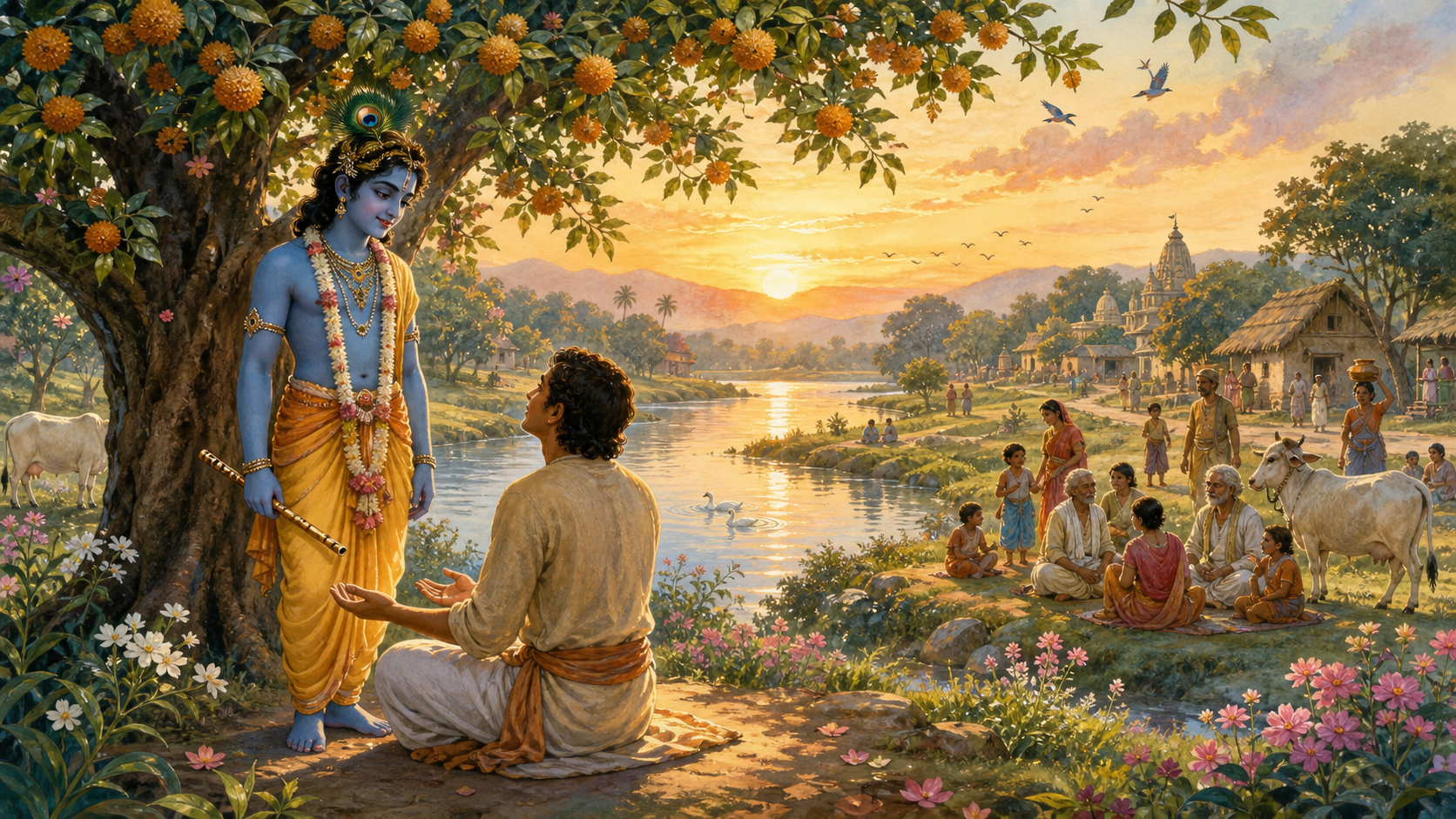
This essay examines the proposition “Love conquers all” through the lens of bhakti, situating Virgil’s maxim alongside Bhagavad-gita teachings on equal vision and empathy. It clarifies how Sri Krishna and Srimati Radharani are interpreted in Gaudiya Vaishnava theology as complementary expressions of the Divine—love’s object and love’s essence—without imposing exclusivist claims. It explains Puranic cosmology’s…
-
Sri Ramanujacharya Jayanti 2026: Date, Puja Guide, and the Timeless Vishishtadvaita Legacy

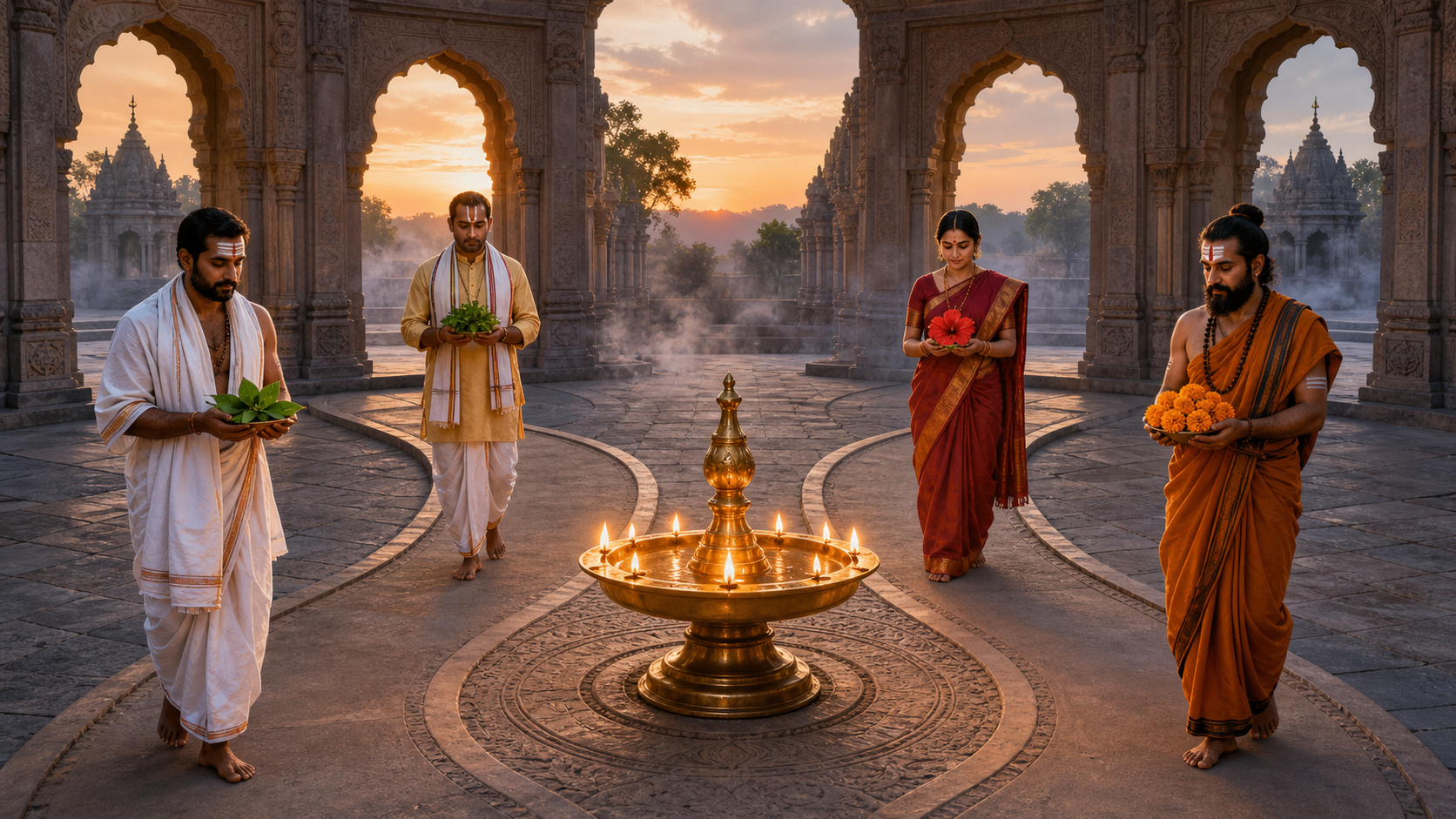
Sri Ramanujacharya Jayanti 2026 will be observed on 22 April 2026, honoring the birth anniversary of the foremost exponent of Vishishtadvaita Vedanta. The guide explains how the date arises from the Hindu calendar and why regional observances may track either the Chaitra Shukla Paksha tithi or Thiruvadirai (Ardra) nakshatra in Chithirai Masam. It outlines temple…
-
Rama Rajya, Then and Now: A Timeless Blueprint for Justice, Welfare, and Unity

Rama Rajya—also known as Rama Rajyam—presents a rigorous, non-sectarian blueprint for ethical governance rooted in the Ramayana and allied texts. Its core—Rajadharma—balances rule of law, welfare with dignity, ecological stewardship, and accountable leadership. The tradition’s portrait of Ayodhya under Sri Rama, supported by Lakshmana, Bharata, Shatrughna, Hanuman, and a wise council, functions as a normative…
-
Anumana in Mimamsa Darsana: Mastering Rigorous Inference to Unlock Vedic Dharma and Meaning

Anumāna (inference) in Mīmāṁsā Darśana is a disciplined method of knowing that integrates reason with Vedic hermeneutics to guide dharma. This long-form exploration defines the technical structure of inference—pakṣa, sādhya, hetu, vyāpti—and explains how anvaya–vyatireka, upādhi analysis, and tarka establish reliability. It clarifies differences between inference and arthāpatti (postulation), outlines the Bhāṭṭa–Prābhākara debate on anupalabdhi…
-
Cut Through the Noise: Yoga Vasistha’s Radical Call for Direct Experience over Debate

Yoga Vasistha confronts the overload of modern discourse with a precise remedy: shift from argument to direct experience. Framed as a dialogue between Vasishta and Rama, this classical Hindu scripture privileges aparoksha-anubhuti—immediate realization—over conceptual accumulation. It maps a practical path through dispassion, inquiry, meditation, and ethical alignment, showing how transformation is verified in everyday equanimity…
-
When Knowledge Feels Hollow: Hindu Philosophy on Reuniting Intellect and Spirit

Modern life often shapes keen intellects while leaving many with a quiet sense of hollowness. Hindu philosophy explains this as a split between buddhi (intellect) and adhyatma (spiritual orientation), and prescribes integration through the four Yogas—Jnana, Bhakti, Karma, and Raja. Drawing on the Upanishads, the Bhagavad Gita, Patanjali’s Yoga, and the Pancha Kosha model, this…
-
Rama Rajyam Reimagined: Timeless Dharmic Statecraft for Just, Compassionate Governance

Rama Rajyam—Rama Rajya—offers a rigorous, values-based model of good governance that unites Dharma with modern constitutional practice. This long-form analysis clarifies its textual roots, unpacks its ethical and administrative pillars, and demonstrates how justice, welfare, decentralization, and environmental stewardship align with contemporary policy design. It synthesizes kindred ideals from Buddhism, Jainism, and Sikhism—Dasa Raja Dharma,…
-
Pratyaksha in Mimamsa Darsana: Unlocking the Power of Direct Perception in Dharma and Reason

Pratyaksha in Mimamsa Darsana presents a rigorous, experience-centered account of how direct perception functions as a trustworthy pramana. It clarifies the two-phase structure of perception (from indeterminate to determinate), the role of the mind in perceiving inner states, and the conditions that distinguish valid perception from illusion. The article explains how Mimamsa integrates perception with…
-
From Stalemate to Synthesis: Laws of Bhakti as a Rigorous, Measurable Science of Consciousness

The long-standing impasse between science and religion dissolves when bhakti is reframed as a disciplined, measurable science of consciousness. This article articulates ten practice-based laws—covering intention, attention–affect coupling, rhythmic regularity, ethical congruence, community resonance, embodiment, narrative internalization, pluralism (Ishta), grace–readiness reciprocity, and self-correction—that guide reliable spiritual growth. Each law invites operational definitions and supports testable…
-
Kalamukhas vs Kapalikas: decoding enigmatic Shaiva ascetics—their history, rituals, and legacy

This long-form, research-based comparison clarifies who the Kalamukhas and Kapalikas were, where they thrived, and how they practiced. It distinguishes inscription-rich Kalamukha institutions in Karnataka and Andhra from the more liminal, Bhairava-oriented Kapalikas known through Sanskrit literature. It explains the ritual logic behind skull-bowls, black forehead marks, temple endowments, and cremation-ground sādhanā without sensationalism. It…
-
At the Doorstep of Light: Hindu Lamp Symbolism for Inner Wisdom and Social Harmony

A lamp at the doorstep in Hindu tradition is more than décor; it encodes a philosophy in which inner clarity must become outer care. Light symbolizes knowledge in the Upanishads, while the threshold—being a liminal space—bridges private devotion and social responsibility. Diwali, Yam Deep Daan, Karthika masam, and Karthigai Deepam place lamps at entrances to…
-
Vidura of the Mahabharata: Unyielding Integrity and the Timeless Power of Vidura-niti

Vidura stands in the Mahabharata as Hastinapura’s moral conscience, a statesman whose Vidura-niti fuses ethical clarity with practical statecraft. His counsel in Udyoga Parva details sense-control, just taxation, impartial justice, and prudent diplomacy, offering a durable template for governance. Key episodes — the lacquer house rescue, denunciation of the dice-game injustice, and principled withdrawal from…
-
Ego’s Illusion of Difference: Dharmic Wisdom on Avidya, Unity in Diversity, and Healing

This essay examines why humans manufacture differences where none ultimately exist, using a dharmic framework drawn from the Upanishads, the Bhagavad Gita, Yoga Sutra, Anekantavada, Buddhist anatta, and Sikh teachings on Ik Onkar. It explains how avidya and ahankara harden provisional distinctions into identity, and how sama-darshana resists that process. It integrates classical Indian logic…
-
Kali Yuga and Immediate Karma: A Clear, Cross-Dharmic Guide to Action, Reaction, and Dharma

This essay explains why the belief that actions trigger swift, sometimes near-immediate consequences in Kali Yuga is both philosophically coherent and practically observable. It situates the claim within Hindu cosmology and classical karma theory (sanchita, prarabdha, kriyamana; drishta/adrishta-phala). It shows how social and technological conditions of Kali Yuga create faster feedback loops for both harm…
-
Knower of the Field: Cutting-Edge Insights into Consciousness, Experience, and Dharmic Unity

This essay examines consciousness through the Bhagavad-Gita’s kshetra–kshetrajna lens and connects it with current neuroscience and philosophy of mind. It clarifies arousal versus awareness, reviews global neuronal workspace and integrated information theory, and explains how predictive and recurrent processing shape experience. Drawing on cell biology, it traces how neuronal excitability, glial modulation, and plasticity ground…
-
Person or Energy? Find Clarity in a Dharmic Synthesis across Vedanta, Buddhism, Jainism, Sikhism

This essay clarifies whether the Divine is best understood as Person or Energy by synthesizing perspectives from Vedanta, Buddhism, Jainism, and Sikhism. It defines key terms (Brahman, purusha, shakti, prana) and shows how saguna–nirguna, nirgun–sargun, and anekantavada converge in a coherent framework. Readers gain a precise yet accessible model that honors both devotional intimacy and…
-
Arjuna’s Dilemma and the Power of Svadharma: Choosing Authentic Duty Over Escapism

The Mahabharata’s portrayal of Arjuna reveals why authentic duty (svadharma) outperforms artificial renunciation over the long term. By aligning action with intrinsic disposition (svabhava) and practicing karma yoga, individuals gain inner steadiness, ethical clarity, and resilience. This insight, far from endorsing aggression, exemplifies Dharma-Yuddha—protective duty guided by compassion, proportionality, and the common good. Parallel teachings…
-
Pure Mind Beyond Desire: A Rigorous Path to Moksha in the Gita, Upanishads, and Yoga

This article offers a rigorous, text-anchored exploration of the Hindu ideal of a pure mind free from desire, linking it to moksha in the Bhagavad Gita, the Upanishads, and Patanjali’s Yogasutra. It clarifies the difference between eliminating compulsive craving and nurturing dharma-aligned intention, avoiding the common pitfall of suppression or nihilism. Readers gain a practical…
-
Show the Path, Not Carry the Burden: Empowering Dharmic Wisdom for Inner Freedom

Across Hinduism, Buddhism, Jainism, and Sikhism, a unifying principle prevails: sages can show the path, but seekers must walk it. The essay grounds this ethic in the Bhagavad Gita, Upanishads, Dhammapada, Jain Tattvartha-sutra, and Sikh teachings, explaining how grace, community, and guidance support but never replace personal agency. Technical concepts such as svadharma, adhikara-bheda, abhyasa–vairagya,…
-
Shiva at the Margins: Why Mahadeva Reigns Over Ghosts, Outcasts, and Sacred Transgression

Shiva’s dwelling in cremation grounds and sovereignty over bhuta-ganas present a theology of fearless inclusion that dignifies what societies often cast aside. By tracing the arc from Vedic Rudra to Puranic Shiva, the discussion shows how ashes, serpents, and the smashana encode teachings on impermanence and compassion. Bhairava’s guardianship of thresholds clarifies why time, change,…