Category: Philosophy

  • Courage and Compassion in Statecraft: Hindu War Ethics from Hemu to Kautilya and Ashoka

    Courage and Compassion in Statecraft: Hindu War Ethics from Hemu to Kautilya and Ashoka

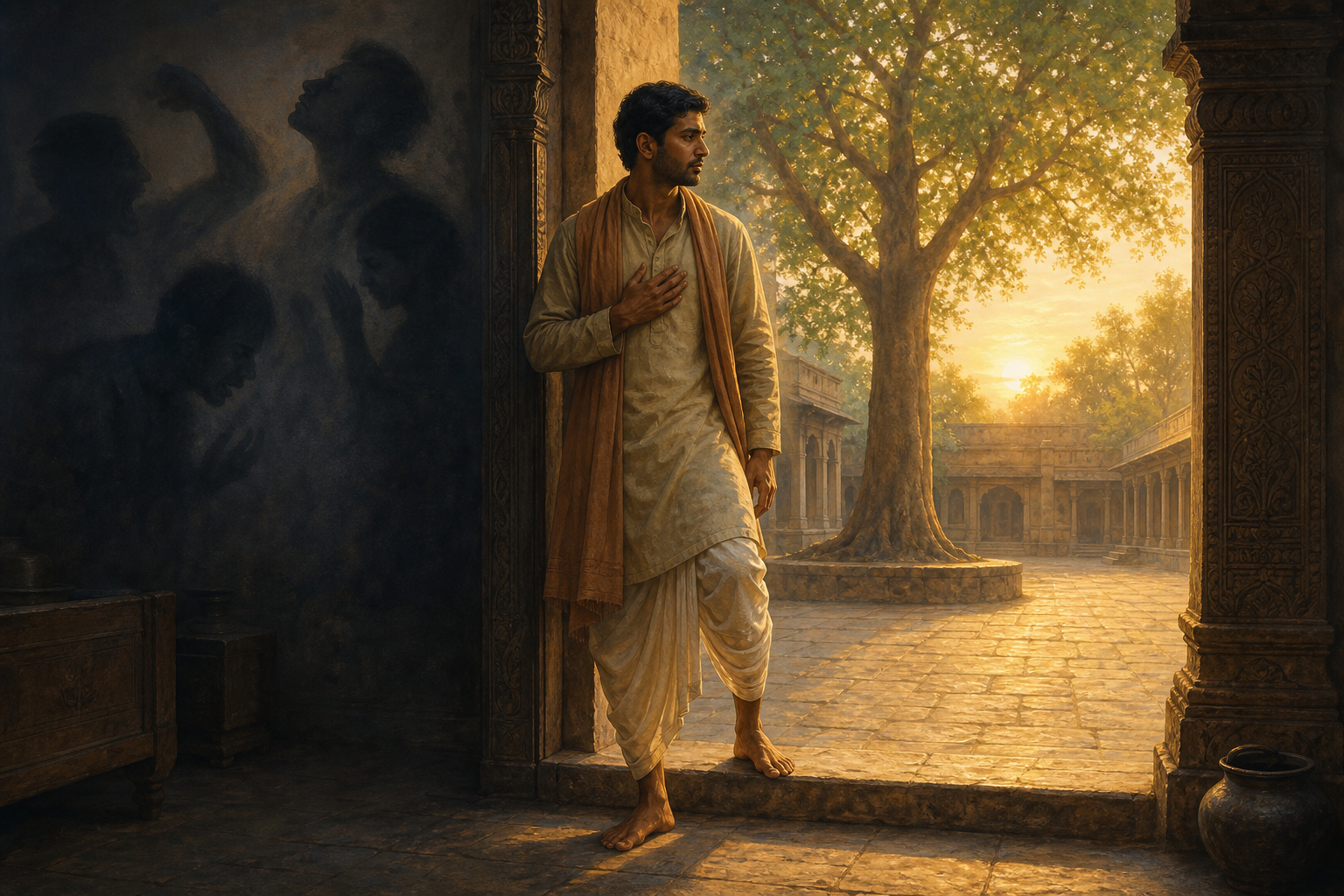
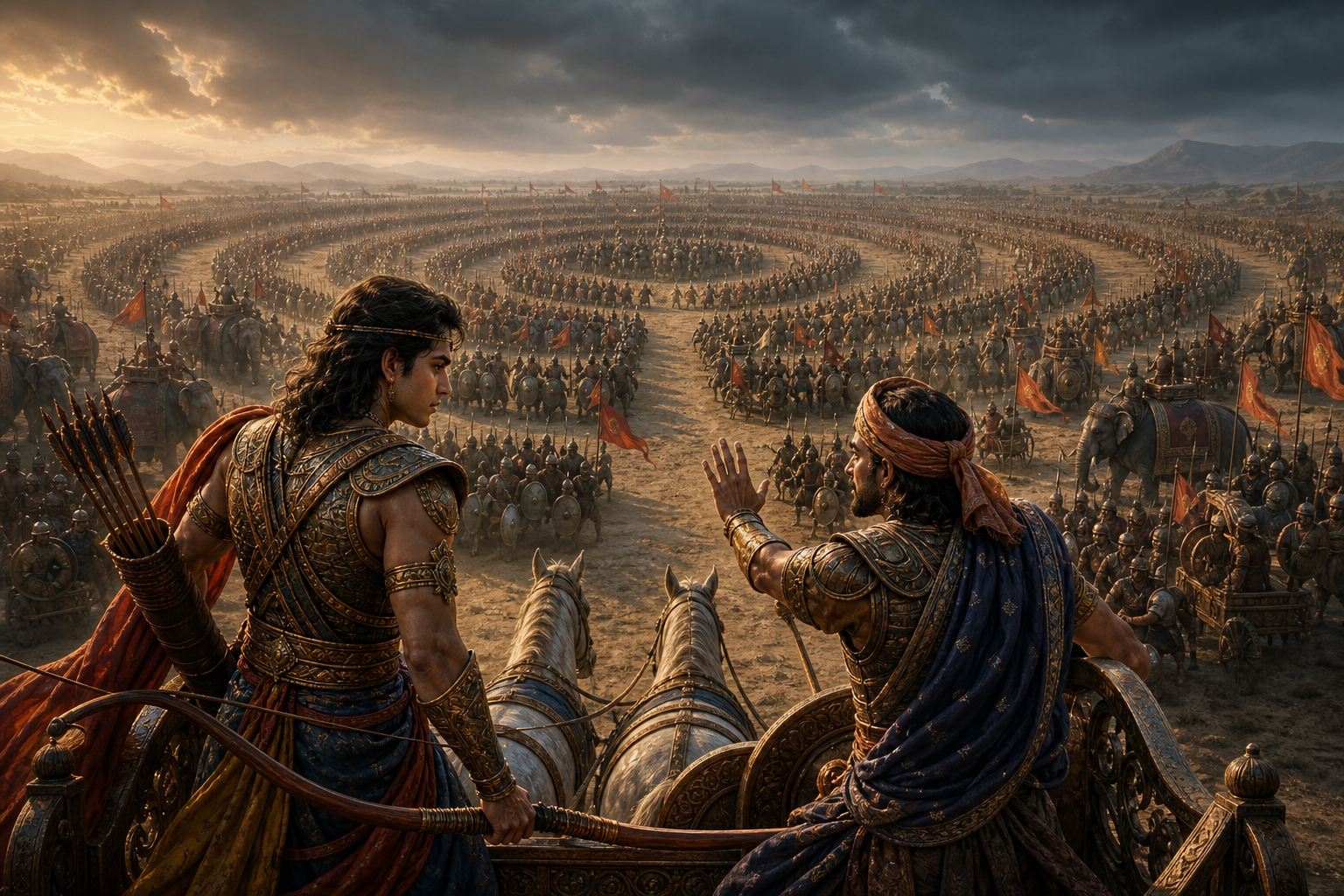
    Hemachandra Vikramaditya’s remarkable rise and fall reframes a larger, enduring question in Indian statecraft: how should force be guided by dharma? This long-form analysis traces the Hindu ethics of war—from Sama, Dana, Bheda as last resort to strict noncombatant immunity—across sources like the Arthasastra, Dharmasastra, and Mahabharata. It decodes the tripartite ideal of Dharma Vijaya,…

  • Moksha in Mimamsa Darsana: Unraveling Liberation through Dharma, Ritual, and Knowledge

    Moksha in Mimamsa Darsana: Unraveling Liberation through Dharma, Ritual, and Knowledge

    Mimamsa, celebrated for its Vedic hermeneutics, also offers a precise and compelling account of moksha as the cessation of suffering and the self’s release from embodied limitation. Rooted in the Jaimini Mimamsa Sutras and elaborated by Śabara, Kumārila, and Prabhākara, the system distinguishes ritual’s finite results from liberation’s non-binding freedom. It explains karma through the…

  • Beyond Labels: Hindu, Buddhist, Jain, and Sikh Wisdom to Reclaim Identity and Inner Freedom

    Beyond Labels: Hindu, Buddhist, Jain, and Sikh Wisdom to Reclaim Identity and Inner Freedom

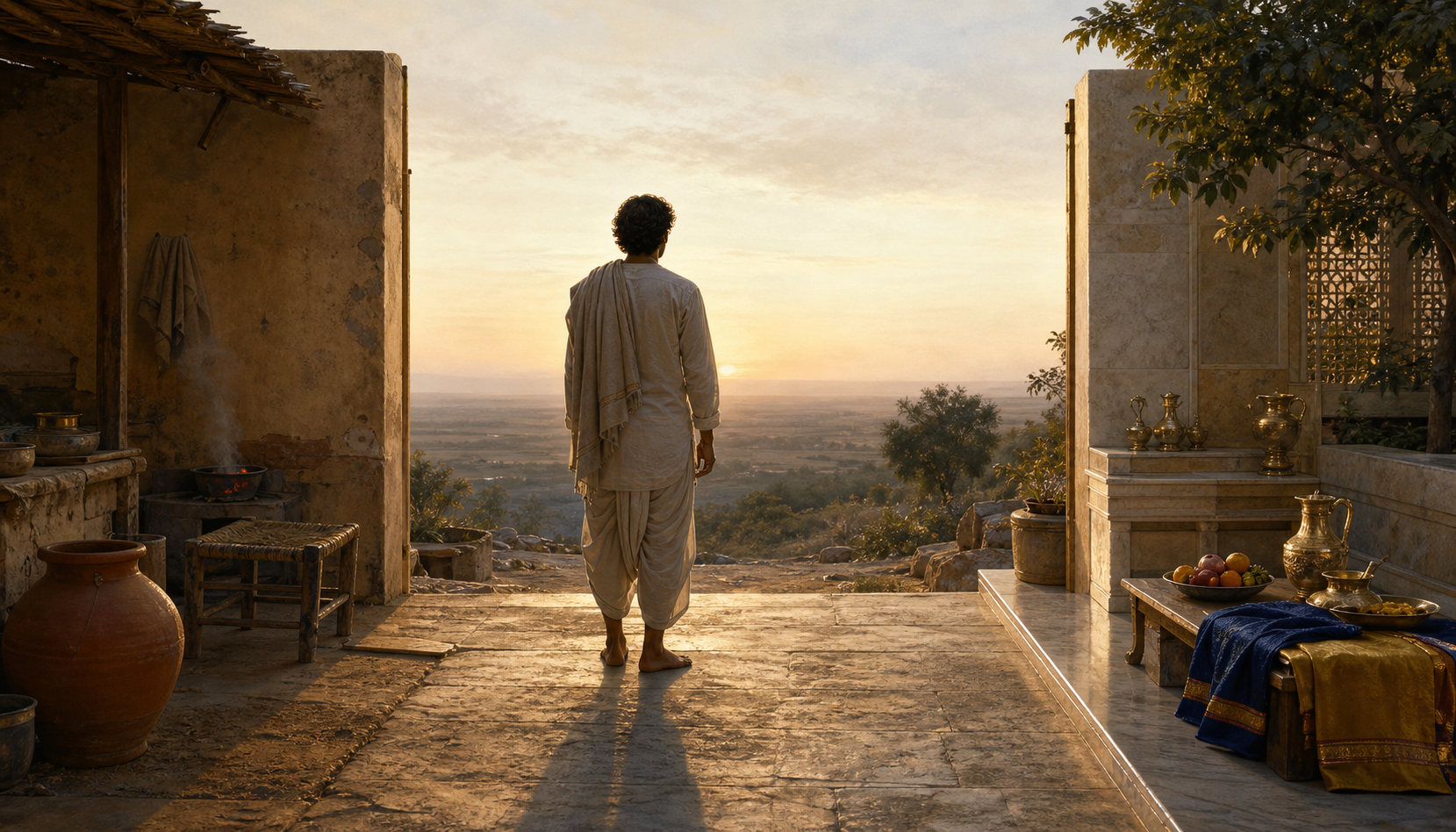
    Modern society rewards borrowed identities built on titles, metrics, and public narratives, yet Hindu wisdom—and allied dharmic perspectives—offers a precise path to inner freedom. Drawing on the Upanishads, Bhagavad Gita, Yoga Sutras, and the Pancha Kosha model, this essay distinguishes social roles from the enduring Self. It explains how avidya, maya, and the kleshas distort…

  • Ignorance Is Its Nemesis: A Definitive Advaita Vedanta Guide to Avidya, Jnana, and Moksha

    Ignorance Is Its Nemesis: A Definitive Advaita Vedanta Guide to Avidya, Jnana, and Moksha

    This long-form, academically grounded exploration clarifies how Advaita Vedanta understands avidya (ignorance) as the root of bondage and jnana (knowledge) as its precise antidote. Drawing on the Upanishads and the Bhagavad Gita, it explains key concepts—adhyasa, maya, sadhana-chatushtaya, and sravana–manana–nididhyasana—while detailing how knowledge functions as a pramana for Brahman. The discussion situates Advaita within a…

  • Dharma Paripalana Moorthy: Sri Rama’s Timeless Blueprint of Rajadharma in Rama Rajya

    Dharma Paripalana Moorthy: Sri Rama’s Timeless Blueprint of Rajadharma in Rama Rajya

    Sri Rama as Dharma Paripalana Moorthy embodies a rigorous model of ethical governance—Rama Rajya—that continues to inform discussions on justice, welfare, and leadership. Grounded in the Valmiki Ramayana, including the Uttara Kanda’s portrayal of an 11,000-year reign, the narrative articulates rajadharma as personal virtue aligned with fair institutions and compassionate law. The analysis situates this…

  • The Lantern of Dayā: Uniting Dharmic Traditions through Compassion, Ahimsa, and Seva

    The Lantern of Dayā: Uniting Dharmic Traditions through Compassion, Ahimsa, and Seva

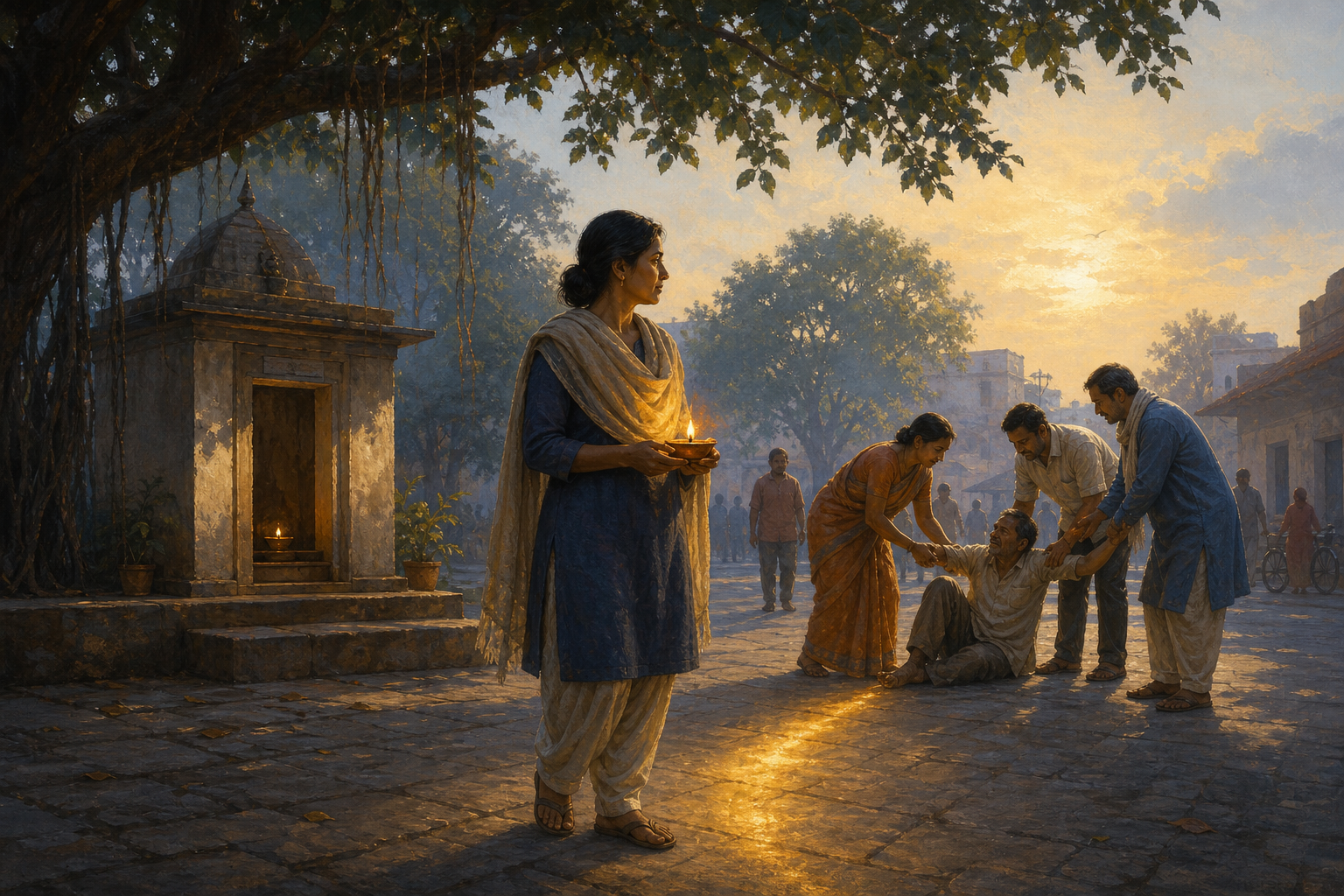
    The Lantern of Dayā advances a clear, comparative framework for compassion that unites Hinduism, Buddhism, Jainism, and Sikhism without erasing their distinct identities. It traces how dayā/karuṇā functions as disciplined practice, social ethic, and policy-relevant principle rooted in Dharma, Ahimsa, Anekantavada, and Seva. Readers gain a rigorous yet accessible mapping across texts and institutions—from Yoga…

  • Unmatta Bhairava’s Divine Madness: Decoding Shiva’s Fearless Transcendence and Sacred Symbols

    Unmatta Bhairava’s Divine Madness: Decoding Shiva’s Fearless Transcendence and Sacred Symbols

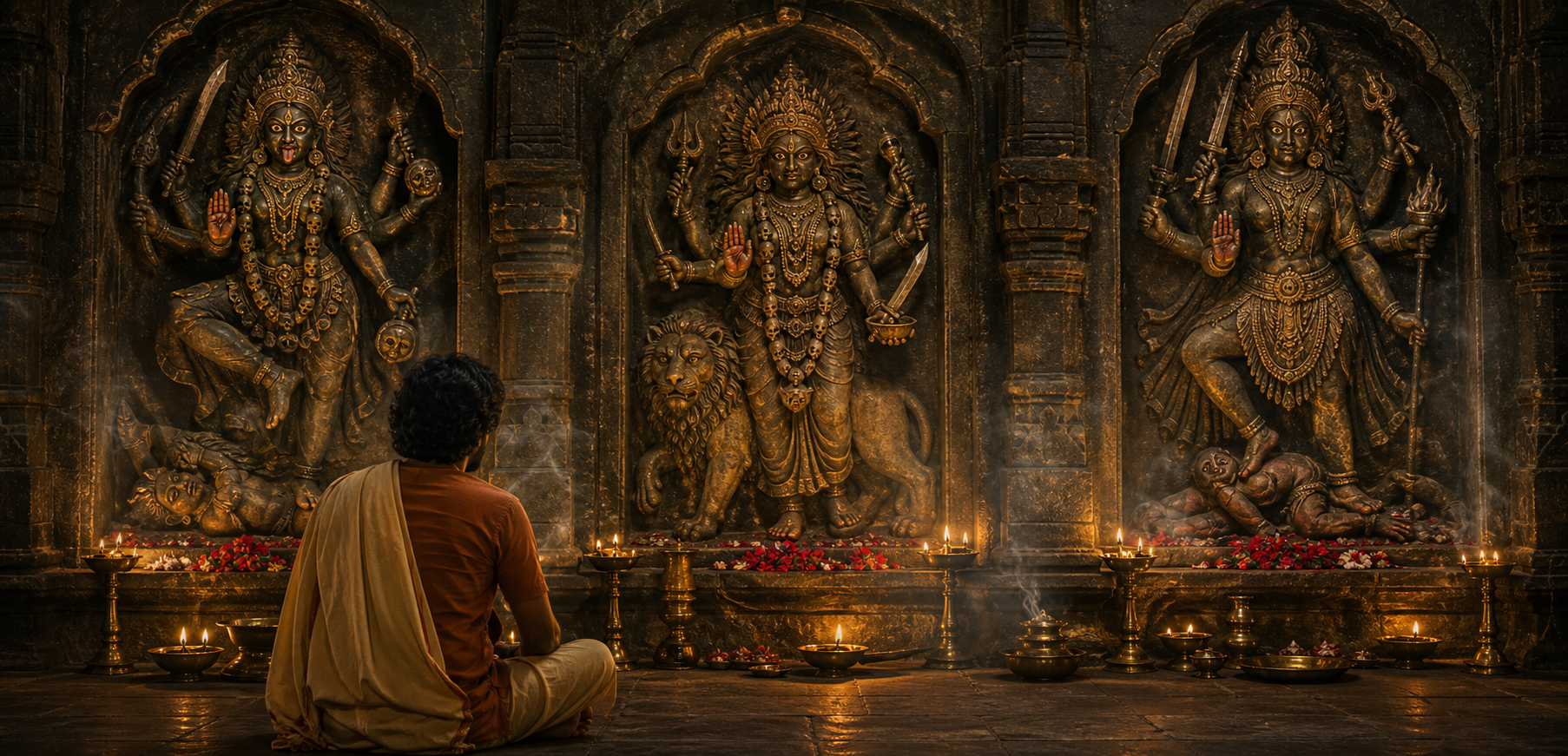
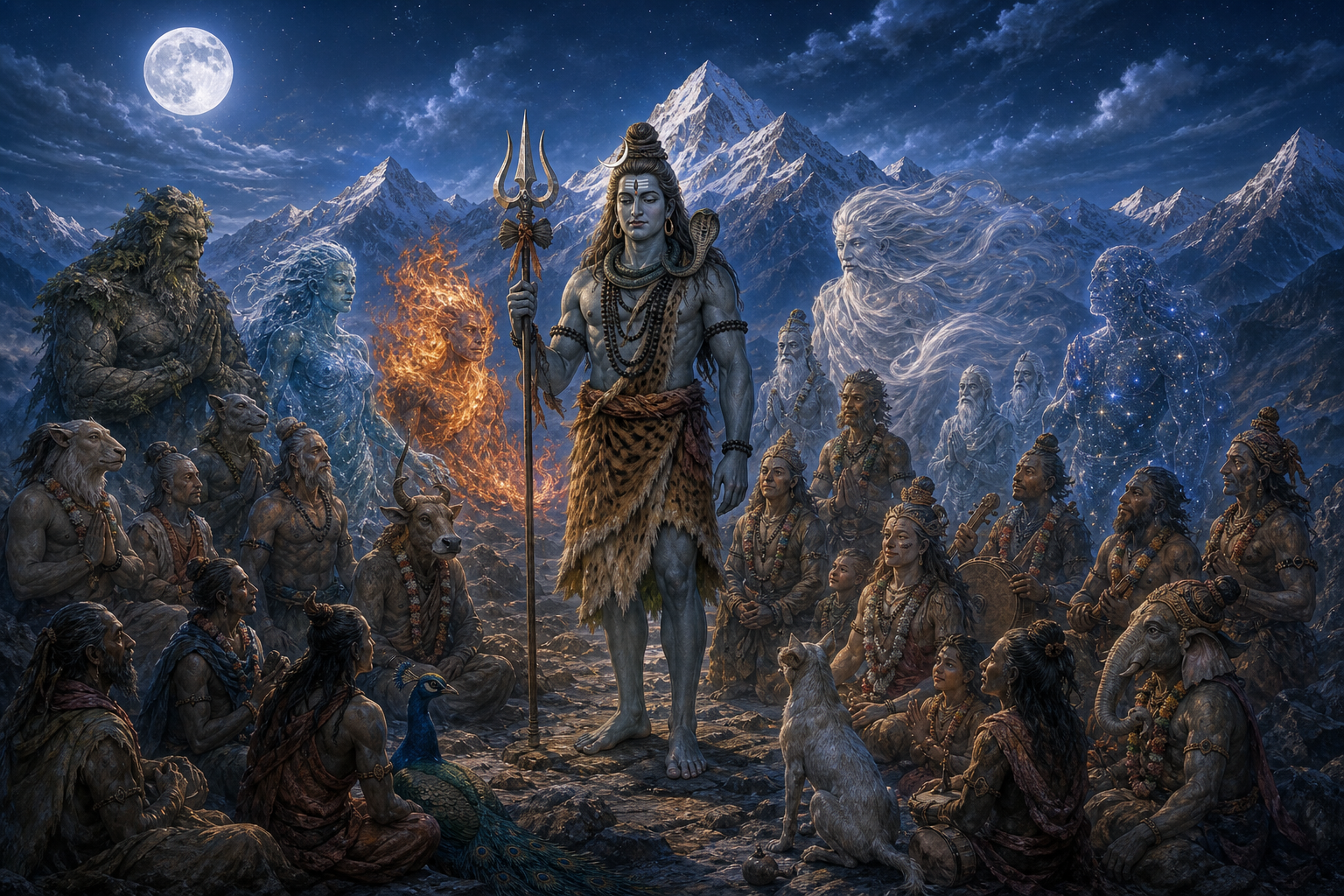
    Unmatta Bhairava, one of the Ashta Bhairavas, encodes the paradox of divine madness as fearless, ethical clarity beyond the discursive mind. This long-form study unpacks the philology of unmatta and the theology of Bhairava, connects the icon’s weapons and emblems to Shaiva metaphysics, and locates Unmatta within living ritual, pilgrimage, and art-historical traditions. Readers gain…

  • Mīmāṃsā Darśana on the World: Realism, Sacred Symbolism, and Living Relevance Today

    Mīmāṃsā Darśana on the World: Realism, Sacred Symbolism, and Living Relevance Today

    Mīmāṃsā Darśana offers a realist, practice-centered vision of the world: everyday life is a reliable field for meaningful action where dharma is learned and lived. It grounds duty in the apauruṣeya Veda, clarifies injunctions through precise hermeneutics (śruti–liṅga–vākya–prakaraṇa–sthāna–samākhyā), and explains how ritual symbolism educates attention without abandoning empirical realism. Its semantic theories (abhihitānvaya vs anvitābhidhāna)…

  • Timeless Grace Beyond Scholarship: Women’s Devotional Intelligence Unifying Dharmic Traditions

    Timeless Grace Beyond Scholarship: Women’s Devotional Intelligence Unifying Dharmic Traditions

    This essay reframes spiritual intelligence through a Dharmic lens, showing how sincerity of purpose—expressed through bhakti, seva, and ethical discipline—elicits transformative results more reliably than scholastic display alone. It grounds this claim in Indian epistemology (pramana), the Bhagavad Gita, and parallel concepts in Buddhism, Jainism, and Sikhism. Historical exemplars—from Gargi and Maitreyi to Andal, Mirabai,…

  • The Eloquence of Silence: Sant Kabir’s Science of Inner Stillness and Dharmic Unity

    The Eloquence of Silence: Sant Kabir’s Science of Inner Stillness and Dharmic Unity

    This essay examines Sant Kabir’s teaching that inner stillness is the highest eloquence, situating his insight within the shared dharmic heritage of Hinduism, Buddhism, Jainism, Sikhism, and Sufism. It explains how silence functions not as withdrawal but as a precise method for clarifying perception, aligning ethics, and deepening compassion. Readers learn a stepwise contemplative progression—from…

  • Myth-Busting the ‘Traitor’ Label: Vibhishana’s Dharma-First Loyalty in the Ramayana

    Myth-Busting the ‘Traitor’ Label: Vibhishana’s Dharma-First Loyalty in the Ramayana

    This analysis challenges the popular notion of Vibhishana as a betrayer and demonstrates, with reference to Ramayana ethics, that his alignment with dharma over family partisanship constitutes exemplary loyalty. It explains how Rajadharma and Sharanagati frame his choice as morally necessary rather than opportunistic. By contrasting Vibhishana with Kumbhakarna and drawing on Dharmashastra principles, it…

  • Unlocking the Hidden in Hindu Philosophy: Arthapatti and the Power of Postulation in Mimamsa

    Unlocking the Hidden in Hindu Philosophy: Arthapatti and the Power of Postulation in Mimamsa

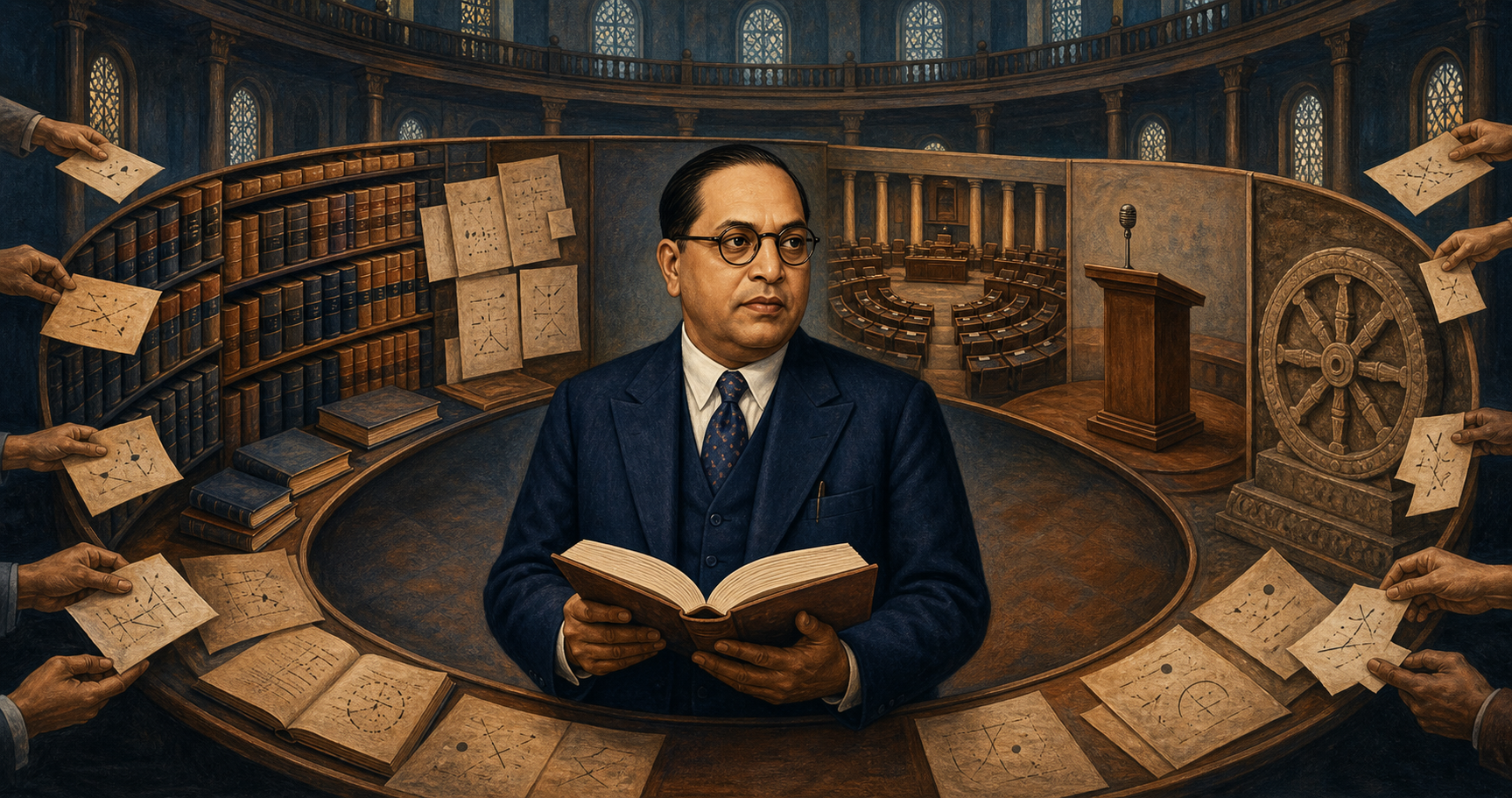
    Arthapatti (postulation) is a distinctive Mimamsa pramana that posits an unperceived fact when established data would otherwise be incoherent. Classic examples such as the stout Devadatta who does not eat by day illustrate how explanatory necessity (anyathā-anupapatti) drives this cognition. The article clarifies how arthapatti differs from ordinary inference, outlines its two forms (drshtārthapatti and…

  • Shabda Pramana in Mimamsa: The Timeless Power of Vedic Testimony for Truth and Dharma

    Shabda Pramana in Mimamsa: The Timeless Power of Vedic Testimony for Truth and Dharma

    Shabda—verbal testimony—holds a privileged place in Mimamsa Darshana, where it functions as a rigorous means of valid knowledge for matters of dharma beyond the reach of perception and inference. By affirming the Vedas as apauruṣeya (authorless), Mimamsa secures scriptural authority through a detailed theory of semantics, sentence meaning, and hermeneutic indicators. The Bhāṭṭa and Prābhākara…

  • Life After Death in Hinduism: A Clear, Compassionate Guide to Karma, Rebirth, and Moksha

    Life After Death in Hinduism: A Clear, Compassionate Guide to Karma, Rebirth, and Moksha

    Hindu philosophy portrays life after death as an ethically coherent, compassionate continuum shaped by karma, guided by dharma, and culminating in moksha. Core ideas from the Upanishads, the Bhagavad Gita, and Puranic literature explain how the atman journeys onward through subtle and causal bodies, modulated by sanchita, prarabdha, and agami karma. Temporary states such as…

  • Unmasking Avidya: Adi Shankaracharya’s Advaita roadmap to the wonders within the Self

    Unmasking Avidya: Adi Shankaracharya’s Advaita roadmap to the wonders within the Self

    This article presents an academically grounded overview of how Adi Shankaracharya diagnoses human suffering as avidya and prescribes Advaita Vedanta as a precise remedy. It explains adhyāsa, the superimposition error, and shows how Upanishadic mahāvākyas remove ignorance rather than create divinity. Readers learn the graded reality framework, the role of śruti as pramāṇa, and the…

  • Digital Maya Unmasked: Rethinking Influencer Culture with Sikh Wisdom and Dharmic Ethics

    Digital Maya Unmasked: Rethinking Influencer Culture with Sikh Wisdom and Dharmic Ethics

    Influencer culture often amplifies urgency, comparison, and performance, but Sikh philosophy reframes these pressures as Digital Maya that can be met with clarity and care. Grounded in Hukam, Seva, Santokh, and Sarbat da Bhala, the article offers a practical, ethical framework for creators. It shows how Naam Japna, Kirat Karni, and Vand Chhakna translate into…

  • Why Questioning Is Sacred in Hinduism: A Deep Dive into Dharmic Philosophy and Pluralism

    Why Questioning Is Sacred in Hinduism: A Deep Dive into Dharmic Philosophy and Pluralism

    This article examines why questioning is sacred in Hinduism and the wider dharmic traditions, showing how inquiry anchors both philosophy and spiritual practice. It explains how the Upanishads, the Bhagavad Gita, and the classical darshanas institutionalize rigorous debate, evidence, and contemplative verification. Readers learn practical tools from pramana theory to navigate misinformation, and from disciplines…

  • Unveiling the Soul’s Journey: Life After Death in Hinduism—Karma, Yama, Moksha

    Unveiling the Soul’s Journey: Life After Death in Hinduism—Karma, Yama, Moksha

    Hinduism presents life after death as a just, compassionate, and educative journey governed by karma and oriented toward moksha. Foundational texts—the Upanishads, Bhagavad Gita, and Puranas—affirm that the immortal ātman continues through realms (lokas) or returns via reincarnation according to ethical causality. Lord Yama Dharma embodies impartial moral order, while rites such as antyeṣṭi, śrāddha,…

  • Debt of the Deep: Karma, Rta, and Dvaraka’s Fate from Treta to Dvapara Yugas

    Debt of the Deep: Karma, Rta, and Dvaraka’s Fate from Treta to Dvapara Yugas

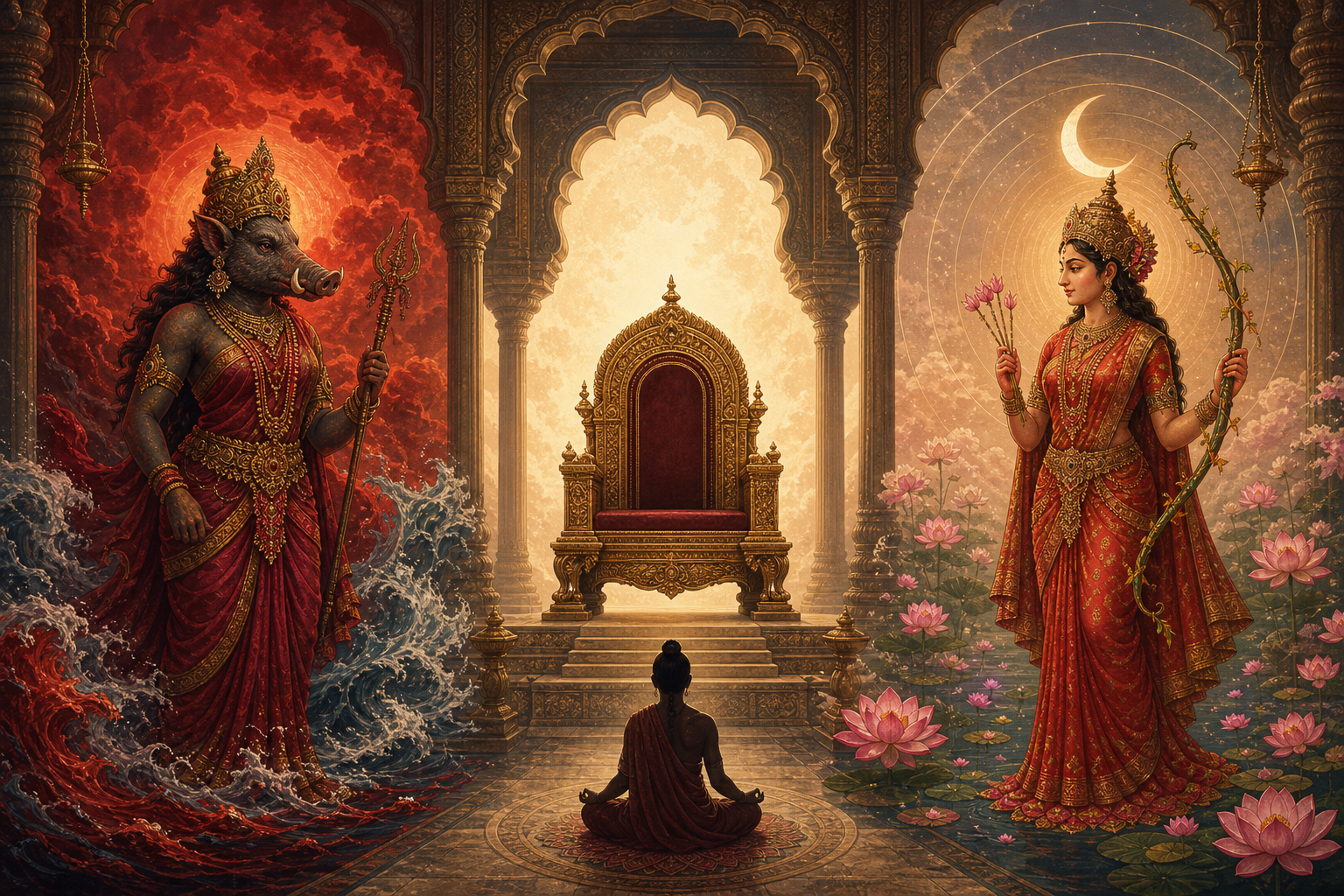
    This essay reads the Ramayana and the Mahabharata together through the shared grammar of Karma and Rta, showing how avatars work within cosmic order rather than above it. It revisits Rama’s petition to Samudra Deva and the calm that enabled Rama Setu, then turns to Dvaraka’s submergence in the Mausala Parva and Bhagavata Purana as…

  • Upamana in Mimamsa Darshana: Unlocking How Comparison Becomes Valid Knowledge in Hindu Epistemology

    Upamana in Mimamsa Darshana: Unlocking How Comparison Becomes Valid Knowledge in Hindu Epistemology

    Upamāna, or comparison, is treated in the Mimamsa Darsana as a disciplined source of valid knowledge that aligns testimony, perception, and relevant similarity. Rather than a loose metaphor, it is a technical pramāṇa with clear conditions: credible prior śabda, relevance of features, and the absence of defeaters. Classical debates—especially with Nyāya—clarify whether comparison yields the…