
-
Choose Mental Fuel, Not Noise: Dharmic Wisdom to Protect Self‑Respect and Clarity

This essay presents a rigorous, dharmic framework for curating a nourishing “mental diet” that protects clarity and self‑respect in an age of digital distraction. Drawing on the Upanishads, the Bhagavad Gita, and Yoga Sutra, it explains how sattva, abhyasa–vairagya, and pratyahara translate into concrete media habits. Buddhist thought contributes the four nutriments and wise attention;…
-
Adhika Jyeshta Masam 2026: Definitive Telugu Panchangam Guide to Purushottam Maas

Adhika Jyeshta Masam 2026 in the Telugu Chandramana Panchangam runs from 17 May to 15 June during Parabhava Nama Samvatsaram. This guide explains the exact intercalation rule in the Hindu calendarno Sankranti between two Amavasyasand why 2026 qualifies as an Adhika Masam. It maps the month’s Shukla and Krishna Paksha flow, notes the special Ekadashi…
-
Tasting the Whole Krishna: Beyond One‑Dish Devotion to the Complete Vishvarupa Experience
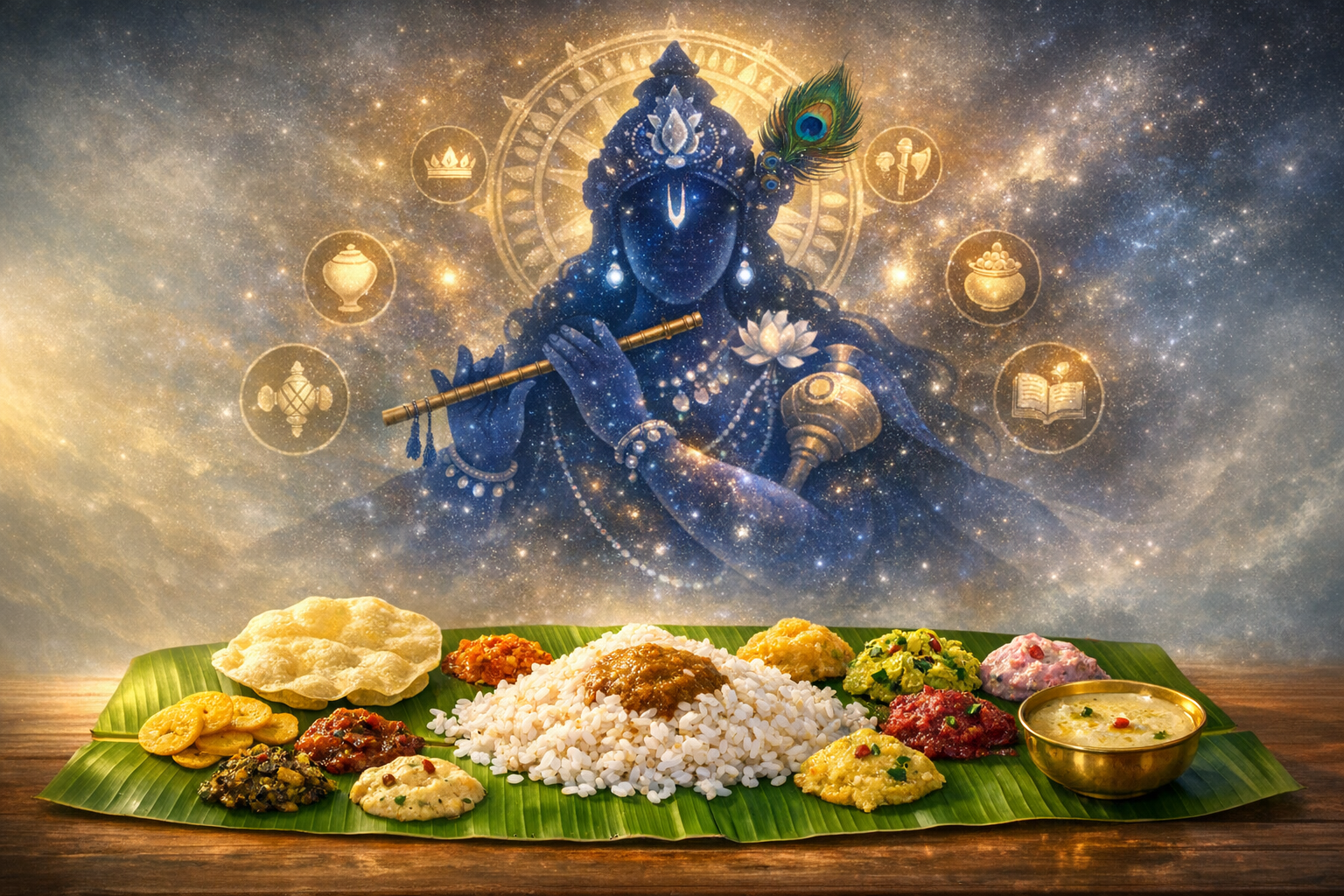
A Kerala Sadhya on a banana leaf offers the perfect metaphor for understanding Sri Krishna: tasting only the sweet payasam is not the same as experiencing the complete meal. This long-form reflection shows how the Bhagavad Gita, the Bhagavata Purana, and Vaishnava theology present a whole visionVishvarupa, six divine opulences, multiple rasas, and the vyūha…
-
Satara Hindu groups seek decisive legal action to protect legacy of Rashtraguru Samarth Ramdas

Representatives of pro-Hindu groups in Satara have sought decisive, lawful action against derogatory and unverified claims about Rashtraguru Samarth Ramdas Swami. The report explains why such appeals matter for cultural heritage, outlines the legal framework balancing free speech and public order, and clarifies relevant IPC provisions and due process. It highlights the civic role of…
-
ISIS-style mock ‘execution’ of PM Modi in UK: legal boundaries, community harm, and a dharmic response

A widely shared video from Birmingham shows a small protest staging an ISIS-style mock execution of Prime Minister Narendra Modi outside the Indian consular premises, triggering public outrage and legal scrutiny. The analysis explains how UK statutesPublic Order Act 1986, Terrorism Acts of 2000 and 2006, and the Crime and Disorder Act 1998define boundaries around…
-
How Sharing Food Heals Enmity: Timeless Dharmic Practices from Hindu, Buddhist, Jain, Sikh Traditions

Hinduism and its sister dharmic traditions treat shared food as a deliberate instrument of reconciliation. Philosophical axioms such as Annam Brahma, Atithi Devo Bhava, and Vasudhaiva Kutumbakam elevate feeding from charity to peacecraft. Ramayana narratives, temple prasada, Sikh langar, Jain anna-kshetras, and Buddhist dana converge on a single ethic: dignified, vegetarian commensality dissolves social distance…
-
Bhujanga Lalita Tandava: Decoding Shiva’s Serpentine Grace and the Defeat of Avidya
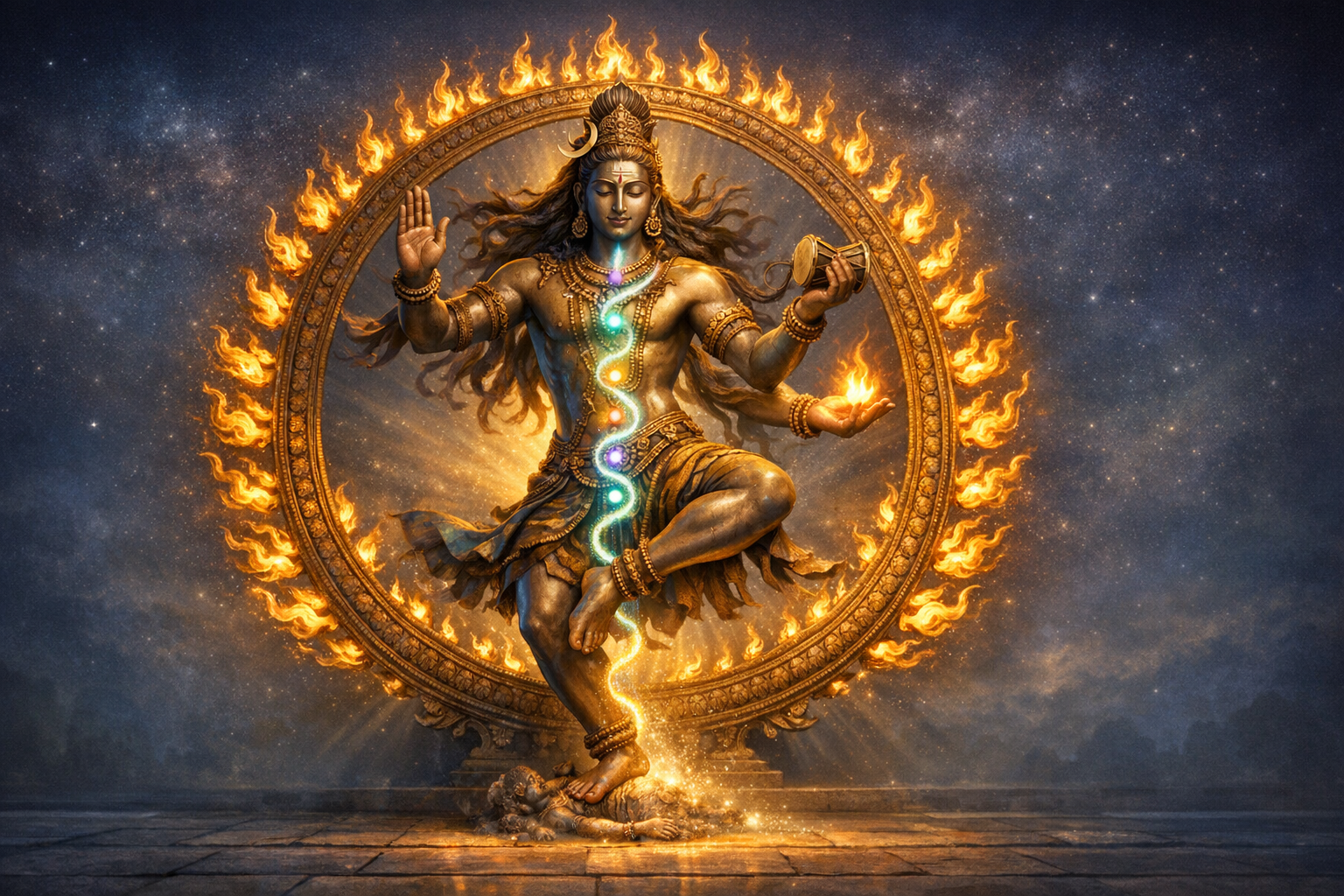
Bhujanga Lalita Tandava unites Shiva’s dynamic tandava with the soft cadence of lalita, translating complex Shaiva metaphysics into a clear, embodied grammar of movement. The dance’s serpentine wave, read through kundalini symbolism, demonstrates how intelligence and grace transform raw force into awakened action. Iconography of Natarajaespecially the subduing of Apasmara (avidyā)grounds an ethics where clarity…
-
Historic Turning Point in West Bengal: Suvendu Adhikari to be sworn in as first BJP CM on May 9
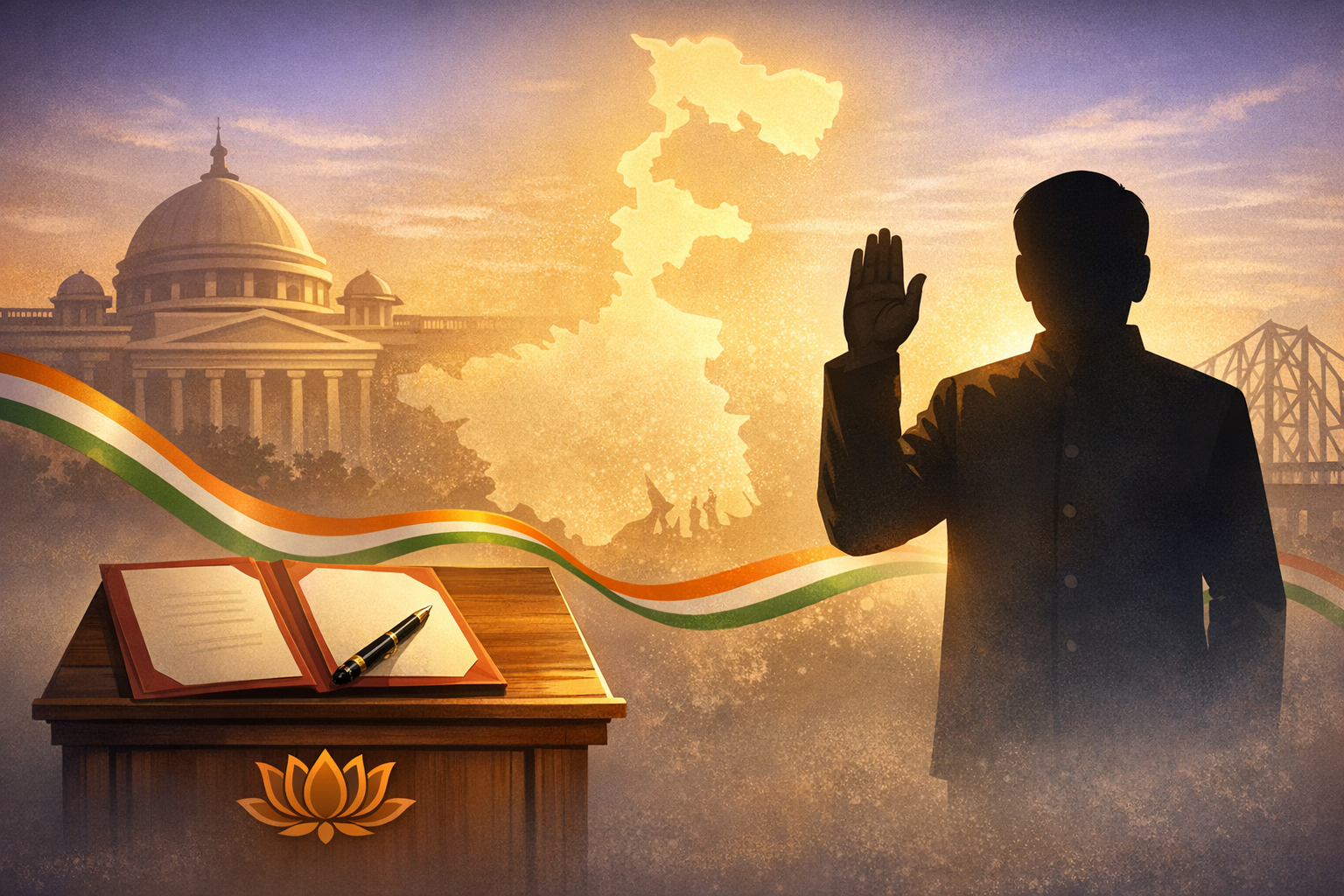
Reports from Kolkata indicate that Suvendu Adhikari is slated to take oath on May 9 as West Bengal’s first BJP Chief Minister, pending formal confirmation by Raj Bhavan. The moment marks a historic turning point in a state long led by the Left Front and TMC, and it will test a new model of governance,…
-
Hindu Vote Consolidation as BJP’s Force Multiplier: West Bengal’s Dramatic Recast

This in-depth, data-grounded analysis explains how Hindu vote consolidation acted as a force multiplier for the BJP in West Bengal under India’s first-past-the-post system. It traces the timeline from marginal presence to principal opposition, showing how social coalitions (including Namasudras and Rajbanshis), booth-level organization, and welfare credibility combined to reshape competitiveness. The piece differentiates necessary…
-
Singer Apologises After Mocking Shri Ekvira Devi Bhajan, Protests Ignite Powerful Call for Respect

Singer Sunny Sante apologised after mocking a Shri Ekvira Devi bhajan during a local haldi ceremony, following strong protests from Hindu community members. The analysis explains why devotional songs function as living prayers and identity markers, making ridicule feel like an injury to collective dignity. It outlines the haldi ceremony’s ritual frame, where bhajan, aarti,…
-
Why Hanuman’s Lanka Infiltration Seemed Impossible: Fortifications, Yogic Science, and Bhakti

Hanuman’s entry into Lanka in the Sundara Kanda is a tightly orchestrated mission that combined strategic insight, advanced fortifications, yogic mastery, and unflinching bhakti. Lanka’s defensesattributed in origin to Vishwakarma’s design and later fortified by Ravanamade infiltration rather than siege the rational first move. The ocean crossing presents a trilogy of tests (Mainaka, Surasa, Simhika)…
-
Sanatan Sanstha files complaint over false programme attribution, pledges harmony and transparency

Sanatan Sanstha clarified it did not organise Gautam Khattar’s programme and has filed a complaint over alleged defamation, highlighting the need for precise event attribution and responsible communication. The analysis explains how Indian law treats defamation, including the shift from IPC to the BNS 2023, and outlines common civil and criminal remedies. It translates legal…
-
Know the Infinite Within: A Dharmic Guide to Self-Realization and Mindful Speech

This essay unpacks the teaching Know the Infinite within and give up all vain words as a unified, practical discipline shared across Hinduism, Buddhism, Jainism, and Sikhism. It grounds Self-Realization in the Upanishadic identity of Ātman and Brahman while noting convergences with Buddhist insight, Jain anekāntavāda, and Sikh remembrance of Ik Oṅkār. It translates metaphysics…
-
Colonial-Era Hanuman Idol in Pune Police Custody: Lawful Roadmap to Restore a Sacred Icon
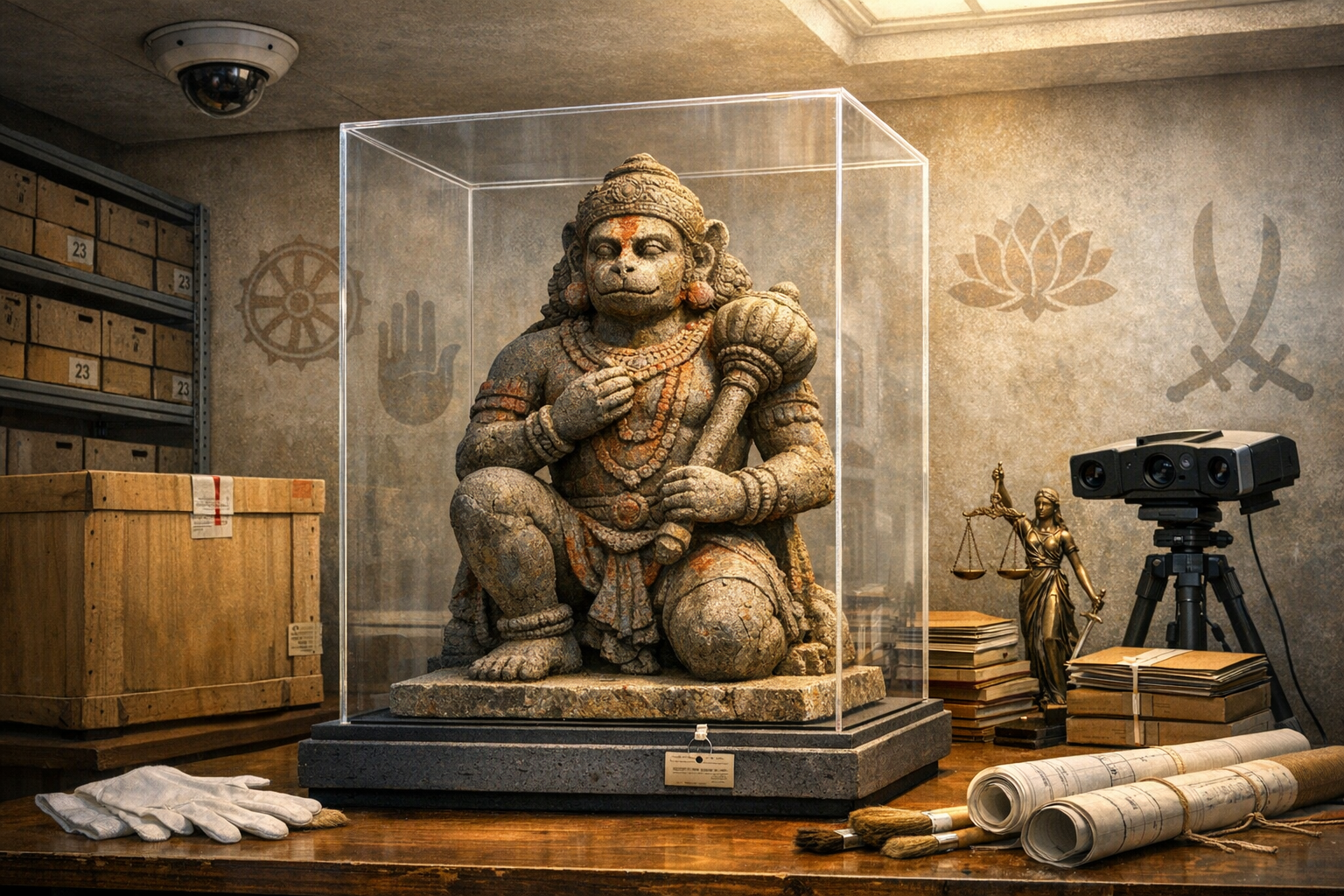
A colonial-era Hanuman idol reportedly held in Pune police custody has revived a vital conversation about heritage law, conservation, and community devotion. This analysis explains the legal pathways for release under the Antiquities and Art Treasures Act, 1972 and the Criminal Procedure Code, with jurisprudence encouraging timely, responsible handovers. It outlines a conservation-first roadmapcondition documentation,…
-
HJS urges legal action on NCP’s Vikas Lavande to protect Warkari dignity and harmony

Hindu Janajagruti Samiti (HJS) has urged immediate legal actionup to arrest if warrantedagainst NCP leader Vikas Lavande over remarks alleged to insult the Warkari Sampradaya. The analysis explains why Warkari devotion, centered on Vithoba and the Pandharpur Wari, holds deep social significance in Maharashtra. It sets out the applicable legal framework (IPC Sections 295A, 153A,…
-
Kalachakra in Hindu Tantra: Decoding the Wheel of Time, Consciousness, and Dharmic Unity

Kalachakra in Hindu Tantra presents time as a living cycle that unifies microcosm and macrocosm, offering a precise path to the timeless ground of awareness. Drawing on the Maitri Upanishad and the Bhagavad Gita, it treats time as both measurable rhythm and doorway to the Akāla, the unconditioned. The framework integrates Vedic cosmology, pañcāṅga timing,…
-
Kolhapur Protests over Shivaji’s Legacy: Calls to Ban ‘Shivaji Kon Hota?’ Spark Legal Debate

Protests erupted at Shivaji Chowk in Kolhapur demanding a ban on Comrade Govind Pansare’s ‘Shivaji Kon Hota?’. Demonstrators allege the book distorts the legacy of Chhatrapati Shivaji Maharaj and hurts religious sentiments, and they submitted a memorandum seeking prohibition and legal action. This analysis explains why Shivaji’s image carries deep emotional weight across Hindu, Buddhist,…
-
Om krato smara kritam smara: Ishavasya Upanishad’s urgent call to remember, reckon, and transcend

The Ishavasya Upanishad’s injunction, “Om krato smara kritam smara,” is a precise ethical and contemplative tool that unites Vedic ritual language with Upanishadic interiority. Addressing kratu (will, intention), the mantra urges a lucid remembrance of deeds (kritam), not for guilt but for clarity and freedom. Placed in cremation rites and used in daily reflection, it…
-
Shoola vs Trishul: Decoding Sacred Weapons, Iconography, and the Timeless Power of Dharma

Shoola (single-pointed spear) and Trishul (three-pronged trident) are often confused, yet they carry distinct forms and meanings in Hindu iconography. This article clarifies how a spear encodes one-pointed discernment while a trident integrates triadic powersiccha, jnana, kriya; the gunas; and the three dimensions of time. Readers learn to identify each implement swiftly at temples and…
-
Cradled by Prakriti: A Dharmic and Science-Backed Guide to Caring for Mother Nature
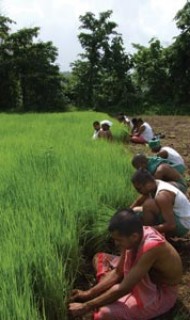
This article reframes the classic insightGod as supreme source and nature as nurturing motherthrough a unified dharmic and scientific lens. Drawing on Hindu concepts of Prakriti, the pañca-mahābhūta, and guṇa theory, it aligns Vedic philosophy with modern ecology’s ecosystem services. It integrates Ayurveda’s seasonal and daily regimens to translate ecological literacy into embodied health. Ethical…