
-
Madanaparijata Unveiled: The 14th‑Century Dharmashastra Digest That Shaped Hindu Law and Ritual

The Madanaparijata is a 14th‑century Dharmashastra digest by Vishveshvara Bhatta that unifies Hindu law, ethics, and ritual into a rigorous, accessible manual. Composed circa 1360–1390 CE, it harmonizes Smriti sources and authoritative commentaries through clear hermeneutic rules, while honoring local custom and the principle of desa–kala–patra. Its coverage spans family law (marriage, stridhana, adoption, inheritance),…
-
Mapping Sacred Power: How the Sanskrit ‘krānta’ Shapes Tantric Space and Cosmic Order

Drawing on the Sanskrit root √kram, this article explains how “kranta” (krānta) evolves in Tantric thought from a simple act of stepping into a precise science of sacred demarcation. It shows how maṇḍalas, Vāstu Puruṣa Maṇḍala, and temple architecture encode cosmic order into measured, traversable space. Readers gain a clear framework for understanding mantra, mudrā,…
-
Inside New Vrindaban’s 3rd Newsletter: Inspiring Seva, Festivals, Education, and Dharmic Unity

The third issue of the New Vrindaban community newsletter consolidates festival planning, seva, education, and heritage care into a single, accessible resource. It provides a factual, organized view of how an ISKCON temple-town sustains daily worship, kirtan, and cultural stewardship in the Appalachian setting. Readers gain clarity on volunteer roles, calendars, and learning pathways that…
-
Prahlada’s Hearth: SB 5.18.9 on Narasimha, Fearless Compassion, and Dharmic Dialogue

This analysis distills insights shared by Rukmini D.D acbsp at the ISKCON Communications Retreat into a clear, actionable reading of Srimad-Bhagavatam (SB) 5.18.9. It situates the verse within the Bhagavata Purana, explains its philological and theological contours, and clarifies how Narasimha’s omnipresent shelter grounds real-world fearlessness. The discussion translates the verse into a communications ethic…
-
Hindu Kesari Honour for Prabal Pratap Singh Judev: Seva, Sanatan Culture, and Plural Unity

Shri Prabal Pratap Singh Judev received the ‘Hindu Kesari’ award in New Delhi for contributions to social service, stewardship of Sanatan culture, and leadership associated with the ghar wapsi Abhiyan. This analysis situates the event within India’s constitutional framework (Article 25) and key jurisprudence against coercion, emphasizing the primacy of free and informed choice. It…
-
Mastering Lifelong Learning: Dharmic Methods that Transform Observation into Wisdom

Rote learning produces fragile knowledge; dharmic education converts observation into durable wisdom. Drawing on Hinduism, Buddhism, Jainism, and Sikhism, this piece outlines a replicable pathway: inquiry, reasoning, contemplative assimilation, and ethical action. It maps classical pramanas to modern evidence-based methods such as retrieval practice, spaced repetition, and mindfulness. Nyaya’s tarka, Mimamsa’s hermeneutics, Vedanta’s sravana–manana–nididhyasana, Buddhist…
-
Devotion Through Buddhi and Grace: Mastering Hindu Bhakti via Consciousness and Surrender

This essay examines two complementary currents of Hindu devotionbuddhi-yoga (devotion through consciousness and intelligence) and prapatti/śaraṇāgati (devotion through surrender)grounded in the Bhagavad Gita, the Bhāgavata Purāṇa, Vedānta, and Yoga. It explains how disciplined study, reflection, and mindful ritual refine devotion, while wholehearted entrustment to the divine expands receptivity to grace. The discussion translates classical terms…
-
Vatsalya Rasa: When God Becomes a ChildParental Love at the Heart of Bhakti

Vatsalya rasa, the bhakti mood of parental love, reveals a distinctive Hindu insight: the Divine can be cherished, protected, and served as a beloved child. Anchored in the Bhagavata Purana and refined by rasa theory, it replaces distance with intimacy and translates theology into daily care. Practices such as Bala Gopala sevā, Kartika worship with…
-
Krishna Katha at ISKCON Silicon Valley: Radhanath Swami on Nāma, Kīrtana, and Inner Resilience
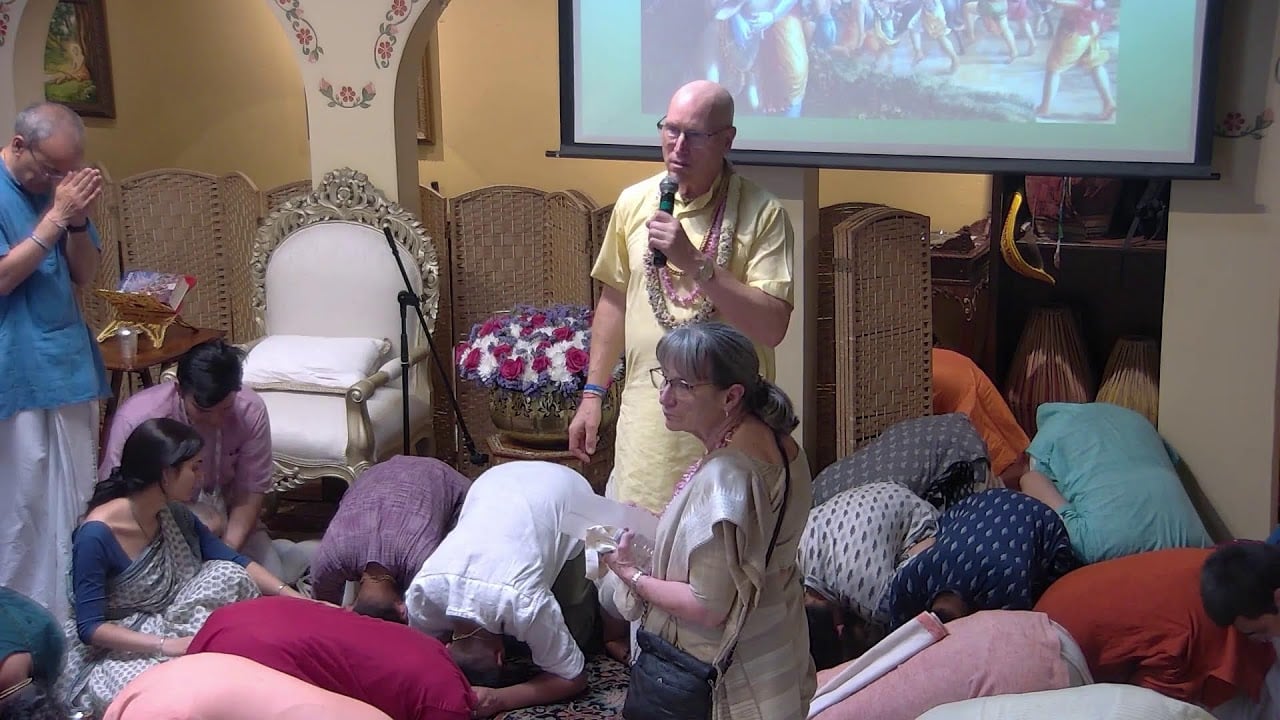
A Krishna Katha by H.H. Radhanath Swami at ISKCON Silicon Valley (31 May 2026) explored why hearing (śravaṇa) and chanting (kīrtana) of Krishna’s names and teachings constitute the methodological core of bhakti-yoga. Grounded in Bhagavad-Gita and Srimad Bhagavatham, the session presented nāma-sankīrtana as a rigorous, repeatable practice for clarity, steadiness, and ethical purpose. It outlined…
-
Burning for Power or Truth? Asuric vs Human Tapas in Hindu Dharma, with Scriptural Insights

Tapas in Hindu Dharma is a double-edged heat: it can fuel domination or refine awareness. Drawing on the Bhagavad Gita, Yoga Sutra, Upanishads, and Purāṇic narratives, this analysis distinguishes asuric austerity (ambition, harm, display) from sattvic human tapas (truth, non-harm, integration). It maps these paths onto the guṇa framework, shows how intention and method determine…
-
Mahiravana and Ahiravana Unmasked: Untangling Folk Ramayanas, Patala Sorcery, and Panchamukhi Hanuman

Are Mahiravana and Ahiravana one demon or two? This long-form, academically grounded exploration surveys medieval vernacular Ramayanas, regional theatre (from Ramlila to Yakshagana), and Southeast Asian tellings to clarify how the Patala episode evolved beyond the Valmiki Ramayana. It explains why most traditions treat the names as interchangeable while some stage lineages present them as…
-
Unshakable Safety in Saranagati: Why Krishna’s Protection Surpasses All Obstacles

This essay examines the Vaishnava doctrine of saranagatisurrender to Krishnaas an intellectually rigorous and ethically disciplined path to unshakable protection. Anchored in Bhagavad Gita assurances (4.11, 9.22, 18.66) and illuminated by case studies such as Gajendra, Draupadi, Prahlada, and Govardhana, it shows how divine shelter operates within, not outside, responsible agency. The six limbs of…
-
Morning Class on SB 10.6.10: Pūtanā, vātsalya-rasa, and the life-changing power of divine grace
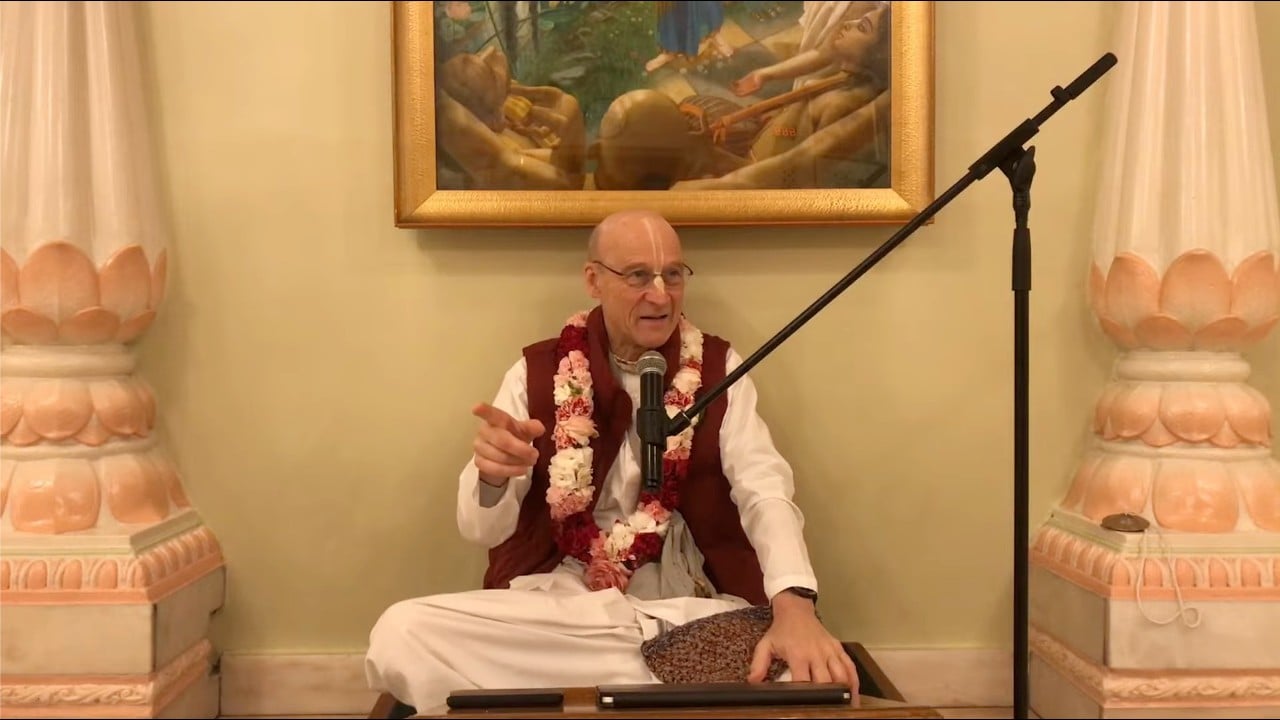
Delivered on 27 May 2026, this Melbourne morning class examines Śrīmad Bhāgavatam 10.6.10 within the broader Pūtanā narrative to illuminate how divine grace transforms karma through the aesthetics of vātsalya-rasa. The analysis connects Gaudiya Vedānta insights to the Bhagavad-Gītā’s vision of devotion reshaping destiny. Ethical nuances of intention, compassion, and communal responsibility are explored alongside…
-
Escaping Samsara: Why Dharmic Traditions Urge Freedom from Rebirth and End Suffering

Life’s recurrent conflicts and losses point to a systemic feature of samsara rather than isolated misfortune. Dharmic traditionsHinduism, Buddhism, Jainism, and Sikhismconverge on a technical diagnosis: ignorance and craving generate karma that sustains rebirth, while disciplined ethics, meditation, wisdom, and service interrupt the cycle. This essay synthesizes Upanishadic, Yogic, Vedantic, Buddhist (paṭicca-samuppāda), Jain (samvara–nirjara and…
-
Vedic Intelligent Design Revisited: Bhaktivedanta Institute, Flagellum, and Dharmic Unity

This essay revisits the Vedic conversation on Intelligent Design, spotlighting the Bhaktivedanta Institute’s early engagement with the bacterial flagellum while honoring the integrity of evolutionary biology. It explains the flagellum’s rotary motor in technical terms, outlines design arguments such as irreducible and specified complexity, and summarizes mainstream evolutionary responses involving modularity and exaptation. It then…
-
Sultanpur Lodhi: Sacred Spring of Guru Nanak’s Mission, Sikh Heritage, and Dharmic Unity

Sultanpur Lodhi is the historic river-town in Punjab where Guru Nanak Dev Ji’s public mission took form, anchoring Sikh heritage in lived practice along the Kali Bein. The town’s sacred geographycentered on Gurdwara Sri Ber Sahib and a constellation of related gurdwarastranslates scripture and song into daily acts of kirtan, langar, and seva. Ethical labor,…
-
Rama on Hanuman, Lakshman on Angada: Decoding Yuddha Kanda Strategy and Sacred Symbolism

This study examines Rama’s march to Lanka through the dual lenses of strategy and symbolism in the Yuddha Kanda. It traces how intelligence from Sundara Kanda matured into a disciplined campaign: ritual diplomacy with the ocean, Nala’s engineering of Rama Setu, and Sugriva’s team-of-teams command across a high-mobility Vanara army. It clarifies that Valmiki does…
-
Turning Obstacles into Opportunity: A Dharmic Guide to Action, Resilience, and Seva

A classic teaching story about a boulder in the roadway demonstrates a rigorous dharmic principle: obstacles are structured invitations to act responsibly for the common good. Read how Hinduism, Buddhism, Jainism, and Sikhism converge on the same ethic of service, non-harm, and Right Effort, turning adversity into measurable public benefit. The analysis connects Karma Yoga,…
-
Bhim Ekadashi (Nirjala) 2026: Exact Date, Transformative Fasting Guide & Pandava Heritage

Bhim Ekadashialso called Bhimseni, Bhima Ekadasi, Pandava Ekadashi, and Nirjala Ekadashifalls on Thursday, 25 June 2026 (Jyeshtha Shukla Ekadashi) and is honored as one of the most stringent and transformative Ekadashi vratas. The vrata prescribes a waterless fast (Nirjala) from sunrise to Dwadashi parana, aligning tapas with Vishnu-bhakti through nama-japa, simple archana, and quiet study.…
-
Under the Naga’s Canopy: The Powerful, Timeless Meaning of Serpent Hoods in Hindu Icons

Hooded serpents above Hindu deities are not mere ornaments but condensed philosophies. The motif announces protection and sovereignty, like a living royal canopy (chatra), while symbolizing time’s cycles and awakened energy. In Vaiṣṇava art, Ananta-Śeṣa frames Vishnu as the still center of an infinite cosmos; in Śaiva icons, Vāsuki’s presence proclaims mastery over fear, poison,…