
-
Bilva Tree and Goddess Lakshmi: Timeless Symbolism, Prosperity Rituals, and Sacred Ecology
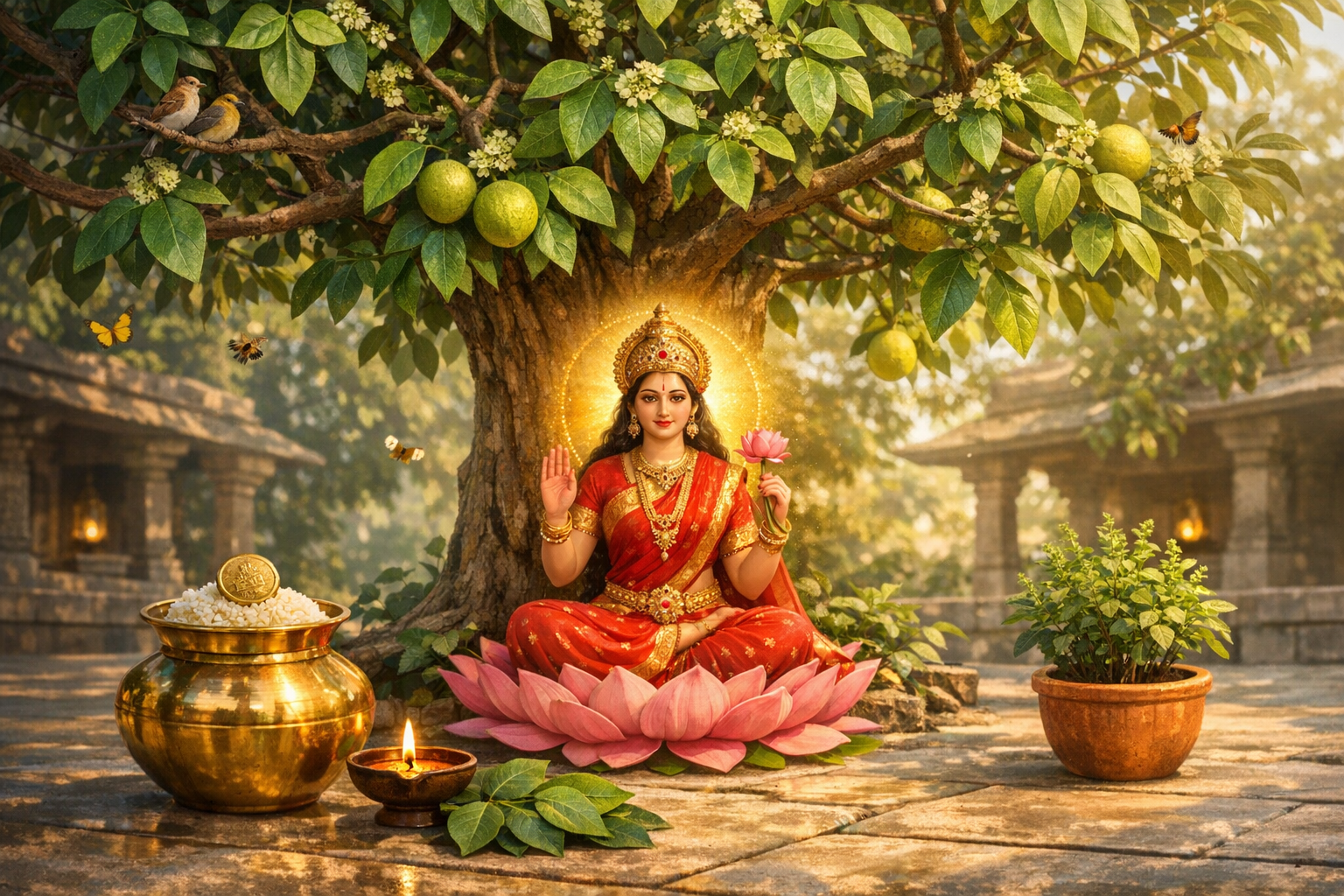
The Bilva tree (Aegle marmelos) is venerated in Hinduism not only as dear to Shiva but also as a sacred abode of Goddess Lakshmi, embodying durable, dharmic prosperity. This long-form exploration synthesizes scripture, ritual practice, Ayurveda, and temple ecology to show how Bilva bridges Śaiva and Vaiṣṇava devotion while nurturing household well-being. It explains the…
-
Beyond Gossip: Choosing Compassionate Speech to Heal Shame, Build Trust, and Find Peace

Gossip can feel like relief when shame and insecurity spike, yet it often intensifies guilt and erodes trust. This reflection traces a turning point after job loss and the shock of being casually discussed, revealing how gossip masquerades as narrative control when life feels uncontrollable. Drawing on research and dharmic ethics of Right Speech, it…
-
DCP Monika Raut Honoured: Courageous Nashik Probe Unites Police and Community for Kumbh Safety

The felicitation of DCP Monika Raut by the Ranragini wing of Hindu Janajagruti Samiti recognizes a covert, victim‑centric investigation into a conspiracy harming women while reinforcing due process and digital‑forensic rigor. The collaboration outlined for the Simhastha Kumbh Mela in Nashik advances a technically robust, NDMA‑aligned disaster management plan centered on crowd safety, public health,…
-
Singing Between the Lines: Ekendra Das on Spiritual Messaging in Krsna Conscious Music and Theater

This long-form profile examines how Ekendra Das (Ekendra Prabhu) unites professional musicianship with disciplined seva to communicate dharmic wisdom through Krsna Conscious bands, theater, and responsible humor. It explains how Straight Edge ethics parallel Hindu vrata and align with Buddhist, Jain, and Sikh disciplines, framing music as a practice of clarity rather than escape. Drawing…
-
Beyond Form: Hindu Dharma’s Powerful Vision of God as All Forms and the Formless

The teaching that “God is not the name for a form; it is the name for all the forms” captures Hinduism’s union of transcendence and immanence: Brahman is beyond description yet luminous in every meaningful image and practice. Drawing on the Upanishads and the Bhagavad Gita, the discussion explains how nirguna and saguna complement each…
-
Balarama’s Wrath and Wisdom at Naimisharanya: Dharma, Humility, and Romaharshana’s End

At Naimisharanya, Balarama’s startling decision to end Romaharshana’s life with a blade of kuśa grass becomes a profound lesson in dharma, humility, and institutional accountability. Set within the Bhagavata Purana’s sacred milieu, the episode weighs an assembly’s vow against the demands of ethical conduct in public religious life. By empowering Ugraśrava Sauti to complete the…
-
From One Morsel of Mercy to Love of God: SB 1.5.25, Prasadam, and the Science of Bhakti

The discourse on SB 1.5.25 by HG Srutakirti Prabhu at ISKCON France presents a precise, practice-centered account of how honoring prasadam from pure devotees initiates purification and awakens spiritual attraction. Rooted in the Bhagavata Purana and the Bhakti Tradition, the talk maps a concrete actreceiving sanctified food with gratitudeto the classic stages of devotional growth…
-
Why Dushasana’s Savage End in the Mahabharata Became Dharma’s and Karma’s Verdict

Dushasana’s death in the Mahabharata is not gratuitous violence but a juridical and karmic reckoning anchored in dharma. The Sabha Parva’s humiliation of Draupadi creates an ethical debt that battlefield dharma later settles when institutions fail. Bhima’s vow and its fulfillment on the sixteenth day fit the epic’s vow-driven architecture of justice, illustrating apad-dharma under…
-
Pioneering Saṅkīrtana with Heart: HG Vaisesika Dasa Honors HG Caru Dāsa’s Enduring Legacy

On 09 April 2026 at Bhaktivedanta Manor, HG Vaisesika Dasa offered a scholarly and heartfelt homage to HG Caru Dāsa Prabhu, presenting him as a true pioneer of the saṅkīrtana movement. The tribute situates Caru Dāsa’s innovative outreachespecially Utah’s Festival of Colorswithin the theology of kīrtana and the broader ISKCON tradition of combining prasāda, music,…
-
Beyond Labels: Hindu, Buddhist, Jain, and Sikh Wisdom to Reclaim Identity and Inner Freedom

Modern society rewards borrowed identities built on titles, metrics, and public narratives, yet Hindu wisdomand allied dharmic perspectivesoffers a precise path to inner freedom. Drawing on the Upanishads, Bhagavad Gita, Yoga Sutras, and the Pancha Kosha model, this essay distinguishes social roles from the enduring Self. It explains how avidya, maya, and the kleshas distort…
-
Myth-Busting the ‘Traitor’ Label: Vibhishana’s Dharma-First Loyalty in the Ramayana

This analysis challenges the popular notion of Vibhishana as a betrayer and demonstrates, with reference to Ramayana ethics, that his alignment with dharma over family partisanship constitutes exemplary loyalty. It explains how Rajadharma and Sharanagati frame his choice as morally necessary rather than opportunistic. By contrasting Vibhishana with Kumbhakarna and drawing on Dharmashastra principles, it…
-
Honoring HG Caru Prabhu ACBSP: Utah’s Krishna Temples, KHQN, and Holi Legacy

HG Caru Prabhu ACBSP, founder of Utah’s Krishna temples, KHQN Radio, and the Utah Holi Festival of Colors, passed away on April 7, 2026, following a car accident. This tribute examines how temple-building, inclusive festivals, and devotional broadcasting shaped the Hindu American Community in the Intermountain West. It clarifies the significance of his ACBSP discipleship…
-
Anumana in Mimamsa Darsana: Mastering Rigorous Inference to Unlock Vedic Dharma and Meaning

Anumāna (inference) in Mīmāṁsā Darśana is a disciplined method of knowing that integrates reason with Vedic hermeneutics to guide dharma. This long-form exploration defines the technical structure of inferencepakṣa, sādhya, hetu, vyāptiand explains how anvaya–vyatireka, upādhi analysis, and tarka establish reliability. It clarifies differences between inference and arthāpatti (postulation), outlines the Bhāṭṭa–Prābhākara debate on anupalabdhi…
-
A Vision for Bharat: Shivamogga Sammelan Calls for Dharmic, Constitutional, Unifying Governance

At a provincial Hindu Rashtra Sammelan in Shivamogga on April 6, 2026, the Hindu Janajagruti Samiti (HJS) called for “Hindu Ideology-Based Governance” in Bharat. Read through a constitutional and inclusive lens, this can be translated into a broader, dharmic governance model that upholds pluralism, compassion, and rule of law for Hindus, Buddhists, Jains, Sikhs, and…
-
Hanuman’s Humility in Ashoka Vatika: Assamese Ramayana’s Powerful Lesson on Dharma and Consent

The Assamese Ramayana preserves a compelling motif of Hanuman pausing in Ashoka Vatika to seek permission before tasting its fruit, transforming a moment of reconnaissance into a study in dharma. Framed within Sundara Kanda, the episode fuses courage with humility, presenting consent as a devotional discipline rather than a legal formality. The emphasis aligns with…
-
Vishukkani Darshan Unveiled: Meaning, Muhurta, and Complete Setup for a Prosperous Vishu

Vishukkani Darshan is the sacred “auspicious sight” that inaugurates Vishu, the Malayalam solar New Year, by presenting a curated ensemble of light, abundance, and devotion. This comprehensive guide explains what Vishukkani is, when it is celebrated (on Mesha Sankranti, typically 14–15 April), and why each componentkonna pua, the ‘Uruli’ of rice, fruits, vegetables, lamp, mirror,…
-
Compassion on Garuḍa’s Wings: SB 2.7.17Gajendra’s Rescue, Bhakti, and Daily Practice
SB 2.7.17 presents an archetypal moment of divine responsiveness: the Lord hears a sincere plea and arrives on Garuḍa with the cakra to liberate the supplicant. Read alongside the fuller Gajendra-mokṣa narrative in Canto 8, the verse affirms the Bhakti Tradition’s core doctrine of śaraṇāgatirefuge met by grace. The symbolism of Garuḍa (swift compassion) and…
-
Kurukshetra’s Hollow Victory: Mahabharata’s Stark Warning Against Meaningless War

The Mahabharata presents the Kurukshetra War as a hollow victory, using scale, lament, and post-war ethics to warn against meaningless conflict. Through Udyoga Parva’s failed diplomacy and Vidura-niti’s counsel, it sets out a just-war frameworkjust cause, last resort, right intention, and proportionalitythen dramatizes the consequences when those rules are broken. Shanti and Anuśāsana Parvas outweigh…
-
Prabhasa Patan’s Timeless Confluence: Where Krishna Departed and Somnath Inspires Unity

Set on Gujarat’s Saurashtra coast, Prabhasa (Prabhasa Patan/Prabhasa Kshetra) is the Triveni Sangam of the Hiran, Kapila, and subterranean Sarasvati, long revered as a threshold of purification and insight. Scripture situates epochal events here: the Mahabharata’s Mausala Parva narrates the Yadavas’ final conflict, while the Bhagavata Purana memorializes Sri Krishna’s departure at Bhalka and Dehotsarg…
-
Eighteen Steps, One Presence: The Fierce Aniconic Power of Karuppasamy at Azhagar Kovil

Situated in the Azhagar Malai hills near Madurai, the Pathinettam Padi Karuppasamy shrine at Azhagar Kovil embodies an aniconic form of worshipno carved idol, only an intense guardian presence encountered at a threshold of eighteen steps. The shrine harmonizes classical Vaishnava temple worship with the fierce protection of a kaval deivam, emphasizing vows, truth, and…