
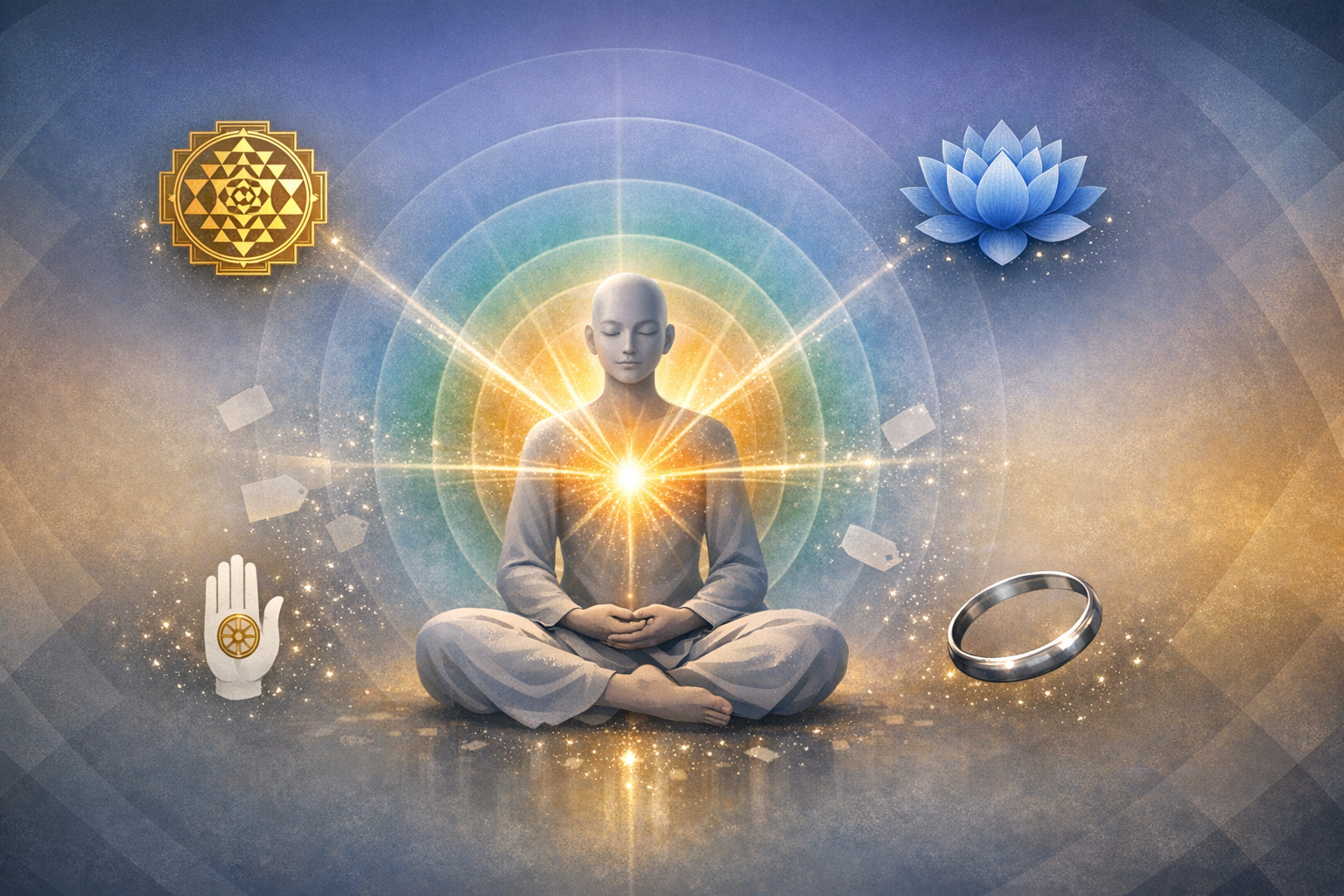
Modern life surrounds individuals with a relentless chorus of external definitions. Professional titles, possessions, social metrics, and public narratives assemble a borrowed identity that can be celebrated one day and dismantled the next. Hindu wisdom, in dialogue with allied dharmic traditions, offers an exacting framework to examine this crisis and to anchor identity in what is stable, ethical, and ultimately liberating.
Social roles are indispensable for cooperation, yet they are not the measure of a person’s essence. Classical Hindu thought distinguishes between transient labels and the enduring Self, noting how identity shaped solely by external validation becomes fragilesusceptible to anxiety, comparison, and performative living. This brittleness is explained through concepts such as nāma-rūpa (name and form) and ahaṁkāra (the ego-maker), which over-identify the person with objects, statuses, and reactions.
Upanishadic insight locates one’s ground of being in Atman (atma), the unconditioned witness distinct from shifting roles and experiences. Mahāvākyas like “tat tvam asi” and “aham brahmāsmi” indicate that true identity is not a social mask but a reality that cannot be diminished by praise or blame. This does not negate social responsibility; rather, it clarifies the standpoint from which responsibility is most effectively and compassionately discharged.
A practical diagnostic appears in the Pancha Kosha model: annamaya (physical), prāṇamaya (vital), manomaya (mental), vijñānamaya (intellectual), and ānandamaya (bliss) sheaths. Pancha Kosha Viveka trains discernment to recognize how identification gets trapped in outer sheathsbody image, emotional flux, or opinionwhile missing the substratum of awareness that illumines them all.
Complementing this, many Vedantic expositions describe three bodies: sthūla (gross), sūkṣma (subtle), and kāraṇa (causal). Habitual patterns (saṁskāra) and latent tendencies (vāsanā) are said to reside in subtler layers, giving the person a felt sense of continuity that is often mistaken for a fixed identity. The work of inner clarity involves observing these patterns without fusing to them.
Advaita Vedānta identifies avidyā (ignorance) and māyā (appearance) as roots of misidentification, while adhyāsa (superimposition) describes the mechanism by which the attributes of body and mind are projected onto the Self. The corrective is not withdrawal from duty but precise knowledge and right orientation, so that action flows from clarity rather than compulsion.
Patañjali’s Yoga delineates the kleśasavidyā, asmitā (egoism), rāga (attachment), dveṣa (aversion), and abhiniveśa (fear of loss)as drivers of suffering and identity distortion. These forces color perception so that individuals equate “who I am” with “what I have” or “how I am seen,” magnifying the gap between essence and appearance.
Across the tradition, the four puruṣārthasdharma (ethics and duty), artha (means), kāma (meaningful desire), and mokṣa (liberation)form a holistic map of human aspiration. “Who am I?” and “What is worth doing?” converge when sva-dharma (one’s apt, responsible course) is recognized as a vehicle for both worldly harmony and inner freedom, as epitomized in the Bhagavad Gita.
Arjuna’s hesitation on the Kurukṣetra field is a classic study in an identity crisis: competing roleskinsman, warrior, studentcollide under moral pressure. Kṛṣṇa’s counsel reframes action through karma yoga, stabilizing attention in duty free from fixation on outcomes: “karmanye vadhikaraste ma phaleshu kadachana.” Equanimity“samatvam yoga uchyate”is taught as a mark of alignment with dharma.
Hindu sources therefore differentiate social roles, which are dynamic, from dharma, which is principled, and from Atman, which is unconditioned. When identity rests solely in roles, attachment hardens; when it rests in dharma, action matures; when it rests in Atman, action becomes free and compassionate.
Four complementary disciplines operationalize this clarity. Jñāna yoga uses inquiry to expose false identifications: “neti neti” (not this, not this). Reflection on the Upanishads and steady ātma-vicāra reveal that awareness is the constant amid changing experience.
Bhakti yoga cultivates devotion to Īśvara, softening egoic rigidity and orienting the person around love rather than status. The Hindu principle of Ishta affirms that each seeker may approach the Divine according to nature and capacity, safeguarding unity without uniformity and modeling a profound tolerance for diverse spiritual paths.
Karma yoga refines conduct by prioritizing intention and service (seva) over self-advertisement. Actions aligned to lokasaṅgraha (the welfare of the world) transmute everyday work into sādhanā, decreasing dependence on praise or outcomes for a sense of self.
Rāja yoga stabilizes attention through pratyāhāra, dhāraṇā, dhyāna, and samādhi, restoring sovereignty over reactivity. Breath regulation (prāṇāyāma) enhances vagal tone and quiets rumination, while meditation reduces identification with thought-streams, allowing values-guided action to replace impulse.
Ethical disciplines (yamas and niyamas)including ahiṁsā, satya, asteya, aparigraha, and śauca, santoṣa, tapas, svādhyāya, Īśvara-praṇidhānafortify identity by practice rather than posturing. They supply an actionable profile of the “Hindu way of life,” translatable into family, workplace, and civic contexts.
Parallel currents in allied dharmic traditions underscore a shared civilizational insight. Buddhism analyzes the person as five aggregates and emphasizes anatta (anatma) to loosen clinging. The point is not nihilism; it is precisionfreeing awareness from fusion with conditioned processes that masquerade as a permanent self.
Jainism’s Anekantavada (many-sidedness) trains humility in truth-seeking, while its analysis of jīva and karmic accretions details how conduct refines consciousness. Vows and restraints resonate strongly with Yoga’s yamas, supplying a rigorous ethic for disentangling identity from craving and aversion.
Sikh teachings proclaim “Ik Onkar,” centering life in the One. Through Naam Simran, Hukam, and sewa, haumai (ego-centricity) is softened, aligning the person with a truth larger than self-display. This is a practical route to dignity without domination, intimacy without insularity.
Taken together, Hinduism, Buddhism, Jainism, and Sikhism advance unity in spiritual diversity: varied methods, one aimfreedom from fixation on ego-bound identity and stabilization in wisdom, compassion, and responsibility. This shared orientation is the civilizational antidote to polarization and performative belonging.
Contemporary cognitive science adds convergent evidence: the “narrative self” is assembled by memory and prediction processes frequently linked with the brain’s default mode network. Training attentionby dhyāna, japa, or breathworkreduces overactivity in these circuits, enabling choiceful response over habitual reactivity. Ancient sādhanā and modern psychology thus meet on common ground.
Practical protocols follow. Daily svādhyāya (self-study) clarifies motives; timed digital boundaries limit identity overinvestment in metrics; structured prāṇāyāma steadies physiology; and value-aligned volunteering strengthens a service-based sense of self. None of these demand withdrawal from society; they refine participation.
Consider a professional facing burnout from relentless benchmarking. Applying karma yoga reframes outcomes as feedback rather than self-worth; Naam Simran or japa tempers rumination; mindfulness, per Buddhist practice, reduces grasping; Jain-inspired restraint moderates consumption and schedule; and Gita-based sva-dharma clarifies which commitments are essential. The result is competence with composure.
A decision framework helps test identity claims: Is this identity role-dependent or value-dependent? Does it increase rāga/dveṣa or deepen equanimity? Is it congruent with dharma and care for others (lokasaṅgraha)? Can it withstand loss without collapsing self-respect? Aligning with affirmative answers restores inner freedom.
Thus, the instruction “Do not let the world tell who you are” is not a call to indifference; it is a call to discernment. Roles are honored, dharma is upheld, and identity is reclaimed from the noise by rooting awareness in what cannot be taken away. “neti neti” refines perception; “tat tvam asi” affirms the ground; “karmanye vadhikaraste ma phaleshu kadachana” steadies action.
In a plural society, this inner steadiness expresses as mutual respect. The dharmic horizon“Vasudhaiva Kutumbakam,” the world is one familyinvites communities to safeguard space for diverse practices while moving toward shared ethical ends. Here, unity is not uniformity; it is a disciplined agreement to seek truth without erasing difference.
Reclaiming identity through Hindu wisdom and its sister traditions therefore means seeing clearly, acting cleanly, and relating kindly. Borrowed identities dissolve; clarity, courage, and compassion remain. That is inner freedom, available nowstable amid change, luminous amid complexity, and practical in every sphere of life.
Inspired by this post on Hindu Blog.
