
-
Religious Significance of the Yamuna River: Mythology, Pilgrimage, and Dharmic Ecology

This in-depth overview explains why the Yamuna Riverreverentially known as Yamunaji and Kalindiholds enduring religious significance in Hindu Dharma and stands as a unifying symbol across the dharmic traditions of Hinduism, Buddhism, Jainism, and Sikhism. Readers will discover the river’s Vedic and Puranic foundations, her identity as Yami (sister of Yama and daughter of Surya),…
-
Historic MP High Court Verdict Affirms Bhojshala as Saraswati Temple: Devotees Pray Peacefully

A day after the Madhya Pradesh High Court affirmed Bhojshala as the Mata Saraswati temple, Hindu devotees in Dhar offered prayers peacefully under a robust security plan. The verdict clarifies the site’s religious character while embedding worship within heritage protection norms and public-order protocols. Historical and archaeological evidencedocumented by the Archaeological Survey of Indiaunderpins the…
-
MP High Court Declares Bhojshala a Hindu Temple: Landmark Ruling, Ayodhya Principles, ASI Proof
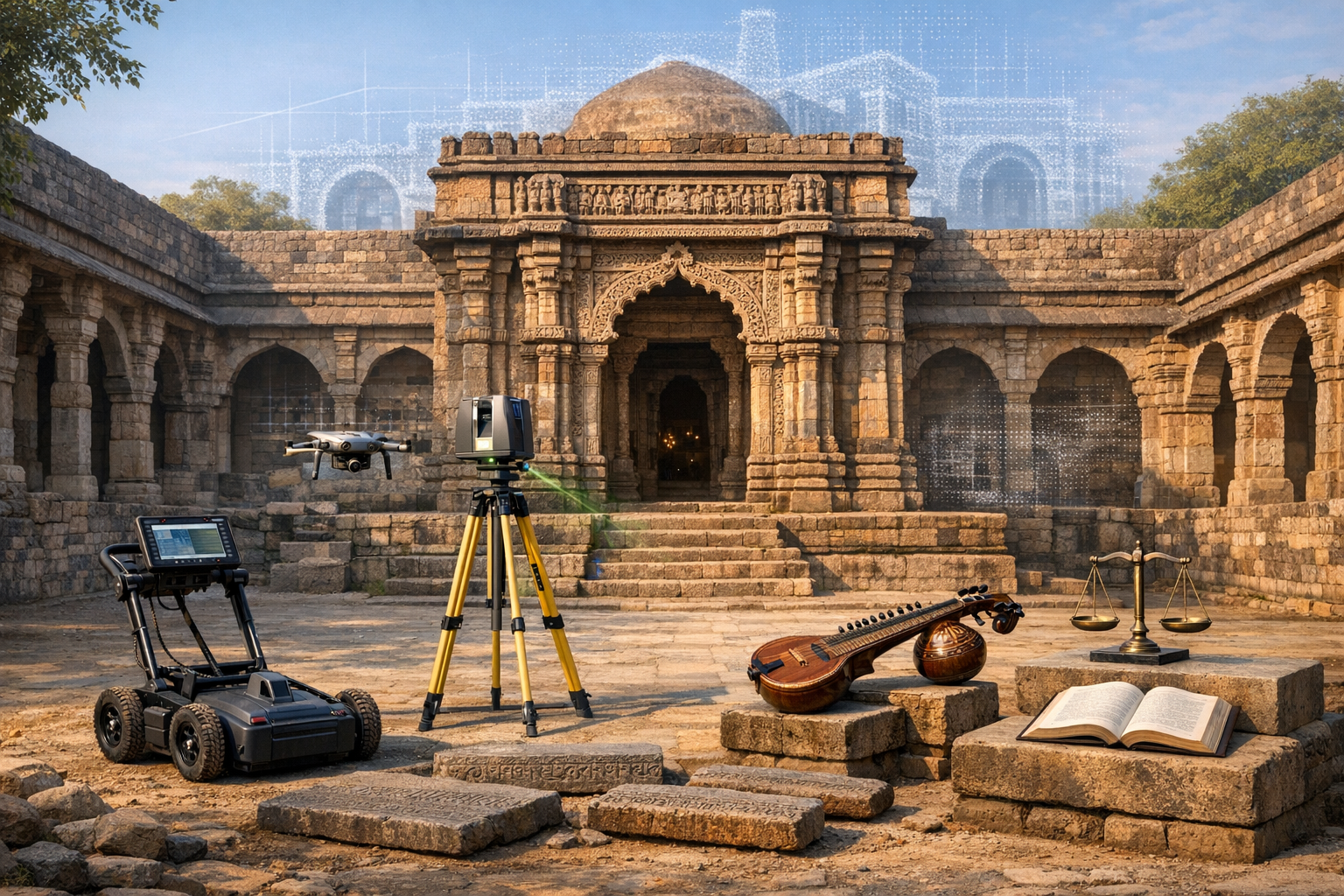
The Madhya Pradesh High Court has declared the disputed precinct within the Bhojshala complex a Hindu temple, expressly invoking the Supreme Court’s Ayodhya principles. This long-form analysis explains what the ruling means in constitutional and heritage law, how courts distinguish historical “religious character” from mere possession, and why archaeology and epigraphy matter. It unpacks the…
-
Dashashanti: Ten Timeless Vedic Shanti Mantras for Protection, Harmony, and Inner Calm

Dashashanti designates a cycle of ten Vedic Śānti Mantras recited to sanctify study, rituals, and community life. Drawn from the Rigveda, Yajurveda, and early Upanishads, these hymns seek protection, clarity, and universal welfare. The cycle typically includes Bhadraṁ karṇebhiḥ, Śaṁ no mitraḥ, Saha nāvavatu, Pūrṇam adaḥ, Asato mā, Āpyāyantu mamāṅgāni, Āpyāyasva sametu te, Svasti na…
-
Why Ramanujacharya Asked ‘Have You Loved?’Bhakti, Emotional Maturity, and Divine Grace

A classic teaching story about Sri Ramanujacharya turns on a simple question: “Have you ever loved anybody?” Rather than prescribing abstract doctrine, he points to love (prema) as the formative ground of bhakti. In Vishishtadvaita Vedanta, devotion matures through lived relationship, culminating in prapatti (surrender) supported by divine grace. The distinction between kama (desire) and…
-
Chanting with Feeling: How Remembrance of Hari Dissolves Fear and Calms the Mind

This article explains how chanting with genuine feeling dissolves fear by uniting scriptural insight and modern psychophysiology. It outlines why Hari“the one who takes away”removes anxiety rooted in uncertainty through heartfelt remembrance (smaraṇa) and steady mantra meditation. Readers learn practical, evidence-aligned methods for pacing breath, engaging emotion (bhāva), and consolidating calm after practice. Everyday scenarios…
-
May 17, 2026 Panchang: Precise Tithi Timings, Auspicious Muhurat Guide, and Ritual Insights

On Sunday, May 17, 2026, the Panchang marks Amavasya tithi until 1:37 AM and Shukla Paksha Pratipada from 1:37 AM to 11:14 PM, after which Dwitiya begins. The day’s civil hours largely align with the auspicious, initiating quality of Pratipada, making it suitable for sankalpa, study, and constructive beginnings. For sensitive undertakings, refine planning with…
-
Surajkund Hanuman Temple, Mandla: Experience Hanuman’s Three Timeless Forms Revealed Daily

Surajkund Hanuman Temple in Mandla, Madhya Pradesh, is famed for a living tradition in which devotees perceive Hanuman’s murti in three forms across a single dayBala (child), Yuva (youth), and Vriddha (elder). Set near a ritual water body and open sky, the temple’s environment lets sunlight, reflection, and lamp glow shape a uniquely dynamic darshan.…
-
Thiruporur Kandaswamy Temple: Legends, Ritual Science, Darshan Timings, and Festival Guide
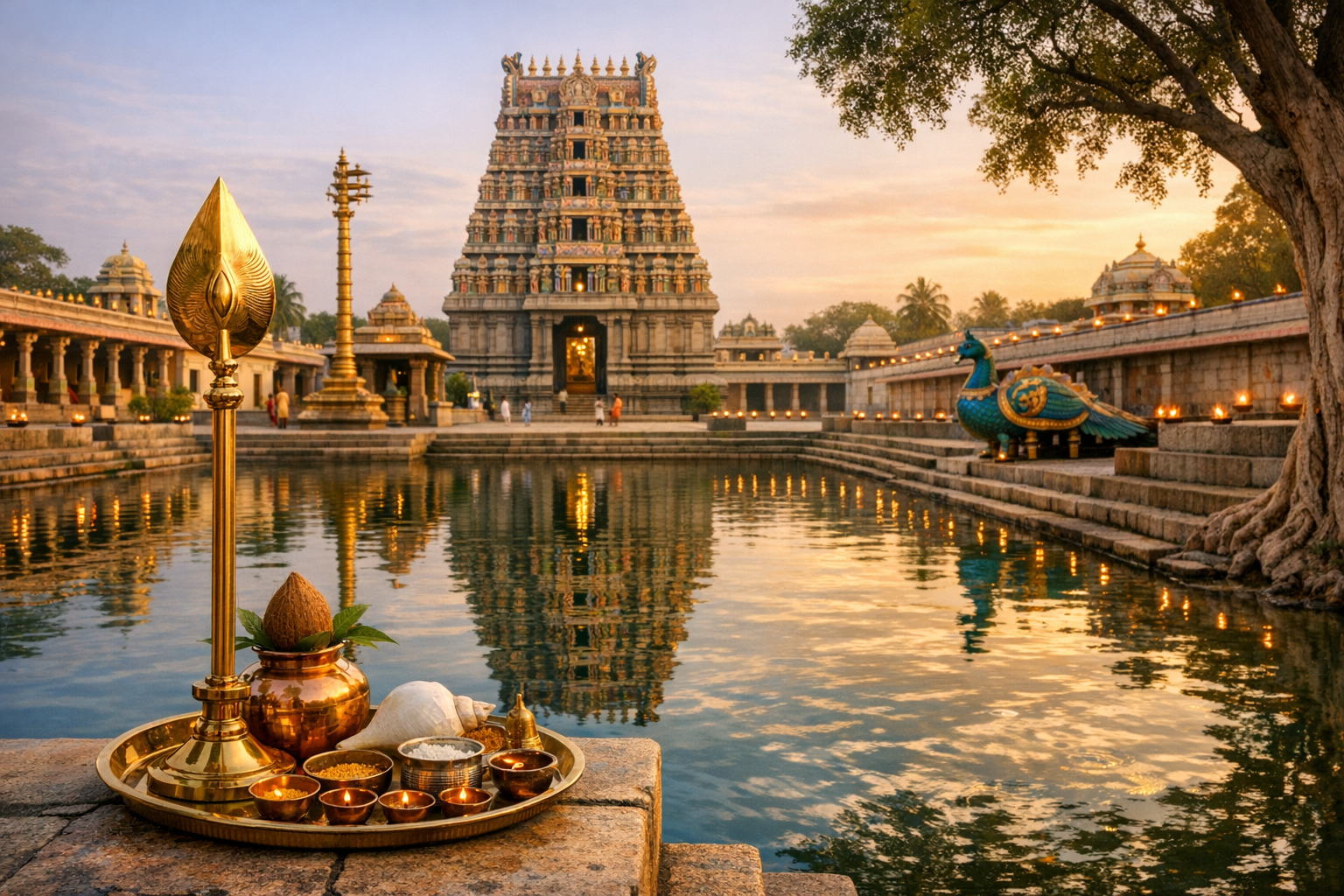
Thiruporur Kandaswamy temple (Thiruporur Murugan Temple) in Chengalpattu, Tamil Nadu, is a living center of Murugan worship renowned for Dravidian architecture, precise Agamic ritual, and a vibrant festival calendar. Visitors can plan around clear darshan timings (6:30 am–12:30 pm; 3:30 pm–8:00 pm) and four daily pujas that culminate in abhishekam and deepa aradhana. The temple’s…
-
Unsung Guardian of Maratha Archives: D.B. Parasnis and Acharya Jadunath Sarkar’s Salute

This essay examines Acharya Jadunath Sarkar’s tribute to D. B. Parasnis, highlighting the latter’s pivotal role in preserving primary sources central to Maratha history. It traces Parasnis’s early literary ventures, his collaborations around the Peshwas’ Daftar in Poona, and his Marathi publications that made crucial documentssanads, kaifiyats, yadis, diaries, and despatchesavailable to scholars. The discussion…
-
Why Hindu Gods Ride Animals: The Profound Symbolism Behind Ganesha’s Mouse and Skanda’s Peacock

Why do Hindu gods ride animals such as Ganesha’s mouse and Skanda’s peacock? In Hindu iconography, vāhanas are a precise symbolic language codified in Purāṇas, Āgamas, and śilpa-śāstra that maps each deity’s ethical and cosmological function. Animals personify instincts and forces that the deity harmonizes, teaching that spiritual mastery begins with taming subtle habits. Case…
-
Shukla Devi Puja 2026: Jyeshta Shukla Ashtami Date, Complete Vidhi, and Deeper Meaning
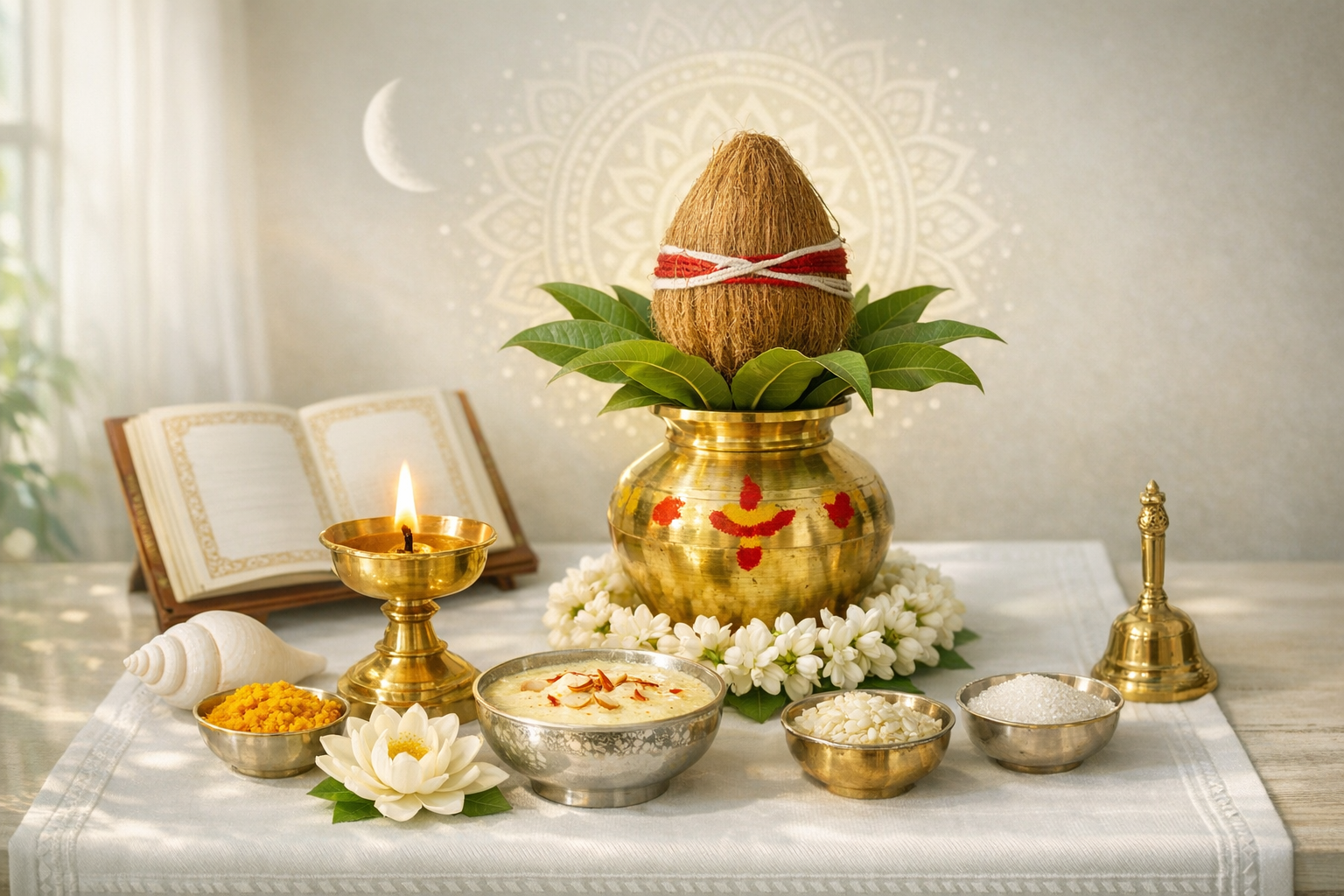
Shukla Devi Puja (Shukla Devi Aradhana) is observed on Jyeshta Shukla Ashtami, and in 2026 this sacred day falls on 22 June in most Indian almanacs. The vrata honors the sattvic radiance of Shukla Devi, integrating Panchopachara or Shodashopachara puja, mindful fasting, and the recitation of Devi stotras. Offerings typically emphasize the Shukla ethoswhite flowers,…
-
Urgent Kolkata HJS Briefing on Corporate Extremism: Ethics, Red Flags, and Dharmic Unity

A Kolkata gathering hosted by HJS (Hindu Janajagruti Samiti) highlighted growing concerns about ideologically driven behaviors in India’s corporate sector and urged calm, rights-respecting vigilance. The discussion reframed the term ‘corporate jihad’ in neutral, academic language as corporate extremism that can arise from any rigid ideology. It outlined how narrative seeding, closed-group exclusivity, procurement capture,…
-
Mercy Beyond Boundaries: How Lord Narasimha’s Mayapur Grace Answers Prayers Through Nama
This article explores a widely shared testimony of Lord Nrisimhadeva’s mercy at ISKCON Mayapur, showing how, within Vaishnava theology, grace is believed to extend even beyond formal devotional identity. It situates the couple’s experiencepilgrimage, vrata, and heartfelt surrender on Nrisimha Caturdasiin the broader bhakti framework that emphasizes the transformative power of nama. It explains how…
-
May 6, 2026 Panchang: Chaturthi to Panchami Transition, Key Muhurats, and Vedic Timing Guide

On Wednesday, May 6, 2026, the Hindu calendar (Panchang) records Krishna Paksha Chaturthi until 5:01 AM, after which Krishna Paksha Panchami prevails. This summary explains how tithi timing works, why the early-morning transition matters, and how to select Shubh Muhurat through local computation rather than fixed clock values. It outlines method-based guidance for Abhijit Muhurat…
-
Kumbhakarna vs Karna: Loyalty’s Tragic Valor and Vibhishana’s Dharma in the Ramayana

The crisis in Lanka dramatizes a timeless ethical conflict: should loyalty to kin outrank allegiance to universal righteousness? Through Vibhishana’s principled dissent and Kumbhakarna’s tragic loyalty, the Ramayana clarifies how Dharma-Yuddha prioritizes justice over faction. A comparative glance at the Mahabharata’s Karna sharpens this lesson, showing that valor cannot redeem complicity in adharma. Read alongside…
-
Panchamrita Abhisheka: Sacred Science, Symbolism, and Temple Tradition of the Five Nectars

Panchamrita Abhishekathe bathing of deities with milk, curd, ghee, honey, and sugar/jaggeryunites sacred symbolism, Ayurveda, and practical icon care. Sri Sri Ravishankar’s observation that these five are “like nectar” echoes Agamic and Puranic guidance and explains why they endure in temple ritual. Each substance contributes uniquely: milk cools and nourishes, curd clarifies, ghee protects, honey…
-
Beyond Starships: Vedic and Dharmic Pathways for Safe, Effortless Journeys to Other Worlds
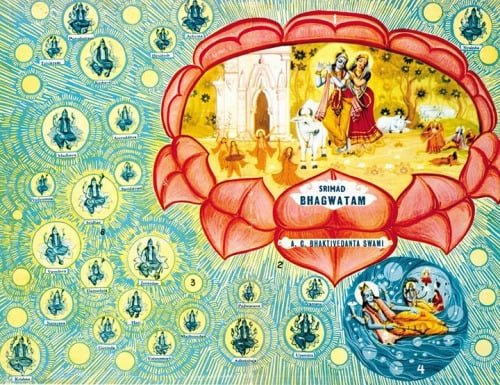
Modern fascination with interplanetary travel reflects a timeless philosophical impulse to understand creation and its inhabitants. Vedic literature, supported by Srimad-Bhagavatam, Sri Isopanisad, and the Bhagavad-gita, offers a complementary research program to empirical science via testimony and disciplined practice. Rather than relying on fragile material instruments, the Vedic model proposes bhakti-yoga as a safe, replicable…
-
May 1, 2026 Panchang Master Guide: Purnima Tithi, Auspicious Times, Nakshatra & Rashi

May 1, 2026 is a full-moon day (Purnima) in the Hindu Panchang, lasting until 9:27 PM IST and followed by Krishna Paksha Pratipada through May 2, 11:03 PM. The guide clarifies how tithis are angle-based, why precise local Panchang verification matters, and how to align vrata and puja when Purnima prevails at sunrise. It explains…
-
Divine Dwarapalakas of Lord Murugan: Sumukha & SudehaVeerabahu’s Fearless Gatekeepers of Dharma

This in-depth exploration examines Sumukha and Sudehathe revered sons of Lord Veerabahuwho serve as the Dwarapalakas (divine gatekeepers) of Lord Murugan. It situates their roles within the wider narrative arcs of the Skanda Purana and Tamil traditions, linking their valor in the Surapadman campaign to their enduring presence at the temple threshold. Readers gain a…