
-
Aadi Masam Unveiled: Deep Significance, Sacred Rituals, and Monsoon Blessings in the Tamil Calendar

Aadi masam (mid-July to mid-August) in the Tamil calendar is widely avoided for weddings, yet deeply revered for Shakti worship, water veneration, and ancestral rites. Beginning with Kataka Sankramana and overlapping Ashada masam elsewhere in India, Aadi coincides with Dakshinayanathe deva-rātriwhen inner disciplines and protective rituals are emphasized. Key observances include Aadi Velli and Aadi…
-
Unveiling Narayana Suktam’s Heart‑Lotus: An Upanishadic, Yogic, and Dharmic Synthesis

The Narayana Suktam, preserved in the Mahanarayana Upanishad (Taittiriya Aranyaka), teaches that the Divine abides within the heart, offering a precise contemplative map rather than mere poetry. This long-form essay unpacks its Upanishadic symbolism, links it to yogic anatomy (anahata, sushumna, prana), and presents a practical, breath-and-mantra-based method centered on oṁ namo nārāyaṇāya. It shows…
-
Mastering the Mind with Vedanta: Discern Uplifting vs Harmful Thoughts for Inner Freedom

Hindu philosophy provides a precise, time-tested method for discerning between wholesome and unwholesome thoughts using tools from Vedanta, the Bhagavad Gita, and the Yoga Sutra. The framework integrates nitya–anitya–viveka, guna diagnostics, and pratipaksha–bhavana to remodel mental habits at the root. Case studies from the Ramayana illustrate how sattva stabilizes action under pressure while rajas and…
-
Nottingham Rathayatra 2026: BBC Midlands Showcases a Vibrant Festival of Lord Jagannath

On 7 June 2026, Nottingham hosted a Rathayatra (Festival of Chariots) honoring Lord Jagannath, with coverage by BBC Midlands. The article situates the event within the centuries-old tradition of Jagannath Puri, explaining how diaspora communities respectfully adapt the procession for urban settings. It clarifies the theological and symbolic dimensions of the chariot, ropes, and communal…
-
Krishna’s Science of Non-Attachment: A Dharmic Path to Fearlessness, Peace, and Joy

This essay presents a clear, research-aligned account of non-attachment as taught by Bhagavan Sri Krishna in the Bhagavad Gita and shows why it reliably produces fearlessness, peace, and happiness. It defines attachment and non-attachment with precision and details Krishna’s core methodsniṣkāma karma, equanimity, and the cultivation of sthita-prajña. It demonstrates convergence across Dharmic traditions, connecting…
-
Sri Chamunda Stotra: Unveiling Shakti, the Primordial Force Animating All Gods and Cosmos

This in-depth exploration of Śrī Cāmuṇḍā Stotra presents Shakti as the primordial power animating every divine and cosmic function. Grounded in Shakta and Tantric philosophy, it explains why, without Shakti, even the gods remain inert, and how this insight coheres with Advaita, Kashmir Śaivism’s spanda theory, and Śrīvidyā practice. Iconographic elementscremation grounds, skull-garland, and jackalsare…
-
Vishnu’s Cow and Shiva’s Bull: A Profound Decoding of Order and Wild Energy in Sanatana Dharma

This in-depth exploration decodes why Hinduism venerates the cow and the bull, showing how Vishnu’s pastoral symbolism and Shiva’s bull iconography express a unified philosophy of order and wild energy in Sanatana Dharma. Drawing on Vedic, Puranic, and Agamic currents, it clarifies the ethical ecology of ahimsa, yajña, and sustainable stewardship. The analysis interprets Nandi…
-
Allegations at Wipro Pune ignite debate on religious bias: law, due process, and inclusive fixes

Allegations of religion-based harassment at a Wipro campus in Hinjawadi, Punefollowing earlier controversies in Nashik and Mumbaihave reignited an urgent discussion on how Indian workplaces manage belief and difference. This analysis clarifies what constitutes religious harassment, explains the Indian legal and corporate governance context, and outlines due-process investigations that protect all parties. It highlights data…
-
Rama’s Exile Reimagined: How the Indonesian Ramayana Transforms Vanvas into Sacred Austerity

The Indonesian Ramayana preserves the familiar arc of Rama’s 14-year exile while transforming its meaning through Javanese-Balinese ethics, performance, and iconography. Drawing on the Kakawin Ramayana, Prambanan’s ninth-century reliefs, and wayang and kecak traditions, exile (vanvas) is recast as tapa brataa disciplined pathway to leadership rather than mere banishment. Local concepts such as nrimo ing…
-
June 8, 2026 Panchang: From Ashtami to NavamiAuspicious Guidance, Rituals, and Significance

June 8, 2026 features Krishna Paksha Ashtami until about 9:48 PM, followed by Krishna Paksha Navami. This academically grounded guide clarifies how the tithi transition frames daily practice and planning within the Hindu Panchang. It explains practical methods to compute Abhijit Muhurat, Brahma Muhurta, and weekday-based Rahu Kalam using local sunrise and sunset. Readers learn…
-
June 7, 2026 Panchang: From Krishna Paksha Saptami to Ashtami, Rituals and Shubh Muhurat

June 7, 2026 features a clear tithi transition: Krishna Paksha Saptami lasts until 10:12 PM in most regions, after which Krishna Paksha Ashtami begins. Understanding this change helps in scheduling vratas and pujas aligned with each tithi’s character, including the monthly Kalashtami after Ashtami starts. The guide explains how tithi is calculated, why its boundaries…
-
June 2026 at Tiruchanur: Soulful Guide to Sri Padmavathi Ammavari Festivals & Planning
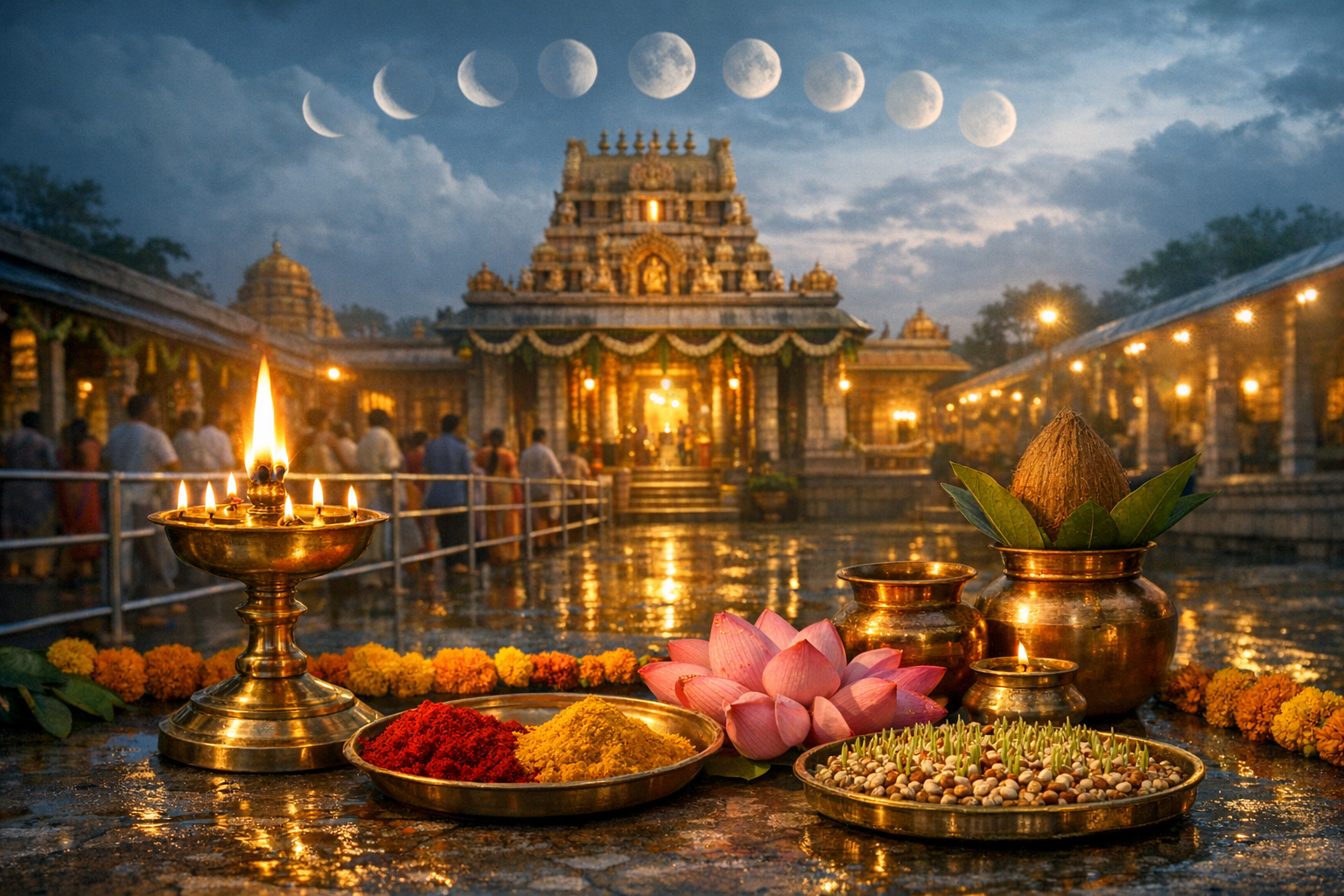
June 2026 at Sri Padmavathi Ammavari Temple, Tiruchanur, unfolds under a precise TTD calendar aligned to Jyeshtha and Ashadha. This guide explains how Panchang-driven scheduling works, the core Lakshmi-centric sevas commonly seen in June, and how to plan Darshan and Seva bookings smoothly. Devotees can anticipate kumkumarchana, sahasranamarchana, and designated snapana tirumanjanam, with tithi observances…
-
Pride Is Not Supremacy: Debunking Smears‑by‑Association Against Hindu American Communities

This evidence-driven analysis explains why smears-by-association misrepresent Hindu American community life and fuel Hinduphobia. It clarifies the difference between heritage and ideology, showing how family ties, youth camps, and diaspora networks are normal civic features, not pipelines to extremism. Readers learn practical standards for ethical journalismquote the person, document conduct, triangulate recordsand how these protect…
-
Agneyas among the Gandharvas: Timeless Insights into Kubera’s Celestial Musicians

This article examines the Agneyas as a Gandharva collective in Hinduism, drawing on Puranic and allied textual traditions to clarify their identity as celestial musicians and attendants in divine courts. It explains how several narratives place the Agneyas in the orbit of Kubera (Vaiśravaṇa), the god of wealth and guardian of the northern direction, where…
-
Modi Meets Giampaolo Tomassetti (Jnananjana Dasa) in Rome: Kashi Art and Civilizational Bridges

Prime Minister Narendra Modi’s Rome meeting with Italian artist Giampaolo Tomassetti (Jnananjana Dasa) spotlighted cultural diplomacy through the gifting of a Varanasi painting. The exchange linked India–Italy ties with the soft power of sacred art, situating Kashi’s iconic ghats and the Ganga river within a broader civilizational conversation. This analysis decodes the artwork’s symbolism, technique,…
-
Dasa Bhairava Unveiled: A Powerful Shaiva-Tantric Journey through Fear, Time, and Grace

This long-form, research-based exploration presents Dasa Bhairava (the Tenfold Fierce One) as a living Shaiva-Tantric framework that transforms fear into clarity and ethical action. It clarifies how tenfold schemas vary by lineage, situating them alongside Ashta Bhairava and sixty-four Bhairava traditions without imposing a single orthodoxy. Readers gain a technical yet accessible view of iconography,…
-
Historic First: Dr. Gunisha Kaur Named First Sikh to Serve as a U.S. Federal Commissioner

Dr. Gunisha Kaur’s appointment as a U.S. federal commissioner is a historic first for the Sikh community and a milestone for Dharmic unity across Hindus, Buddhists, Jains, and Sikhs. The role carries substantive responsibilities: convening stakeholders, analyzing evidence, and issuing policy recommendations that can strengthen civil rights and religious freedom. The piece explains how federal…
-
Timeless Welcoming Grace: Ahuya–Varada Mudra in Hindu Iconography and Sculpture
Ahuya–Varada Mudra crystallizes a powerful promise in Hindu iconography: an invitation to approach, followed by the boon of grace. The analysis clarifies etymology and formAhuya as a welcoming inclination, Varada as the classic downward, open palmwhile distinguishing them from Abhaya. Drawing on Shilpa Śāstra canons, regional styles (Chola, Odishan, Pāla–Sena, Hoysala), and ritual practice, it…
-
Arghya to the Sun: Vedic Symbolism, Subtle Physiology, and Daily Surya Worship Benefits

Arghyaoffering water to the rising Sununites Vedic symbolism, yogic subtle physiology, and modern circadian insights in a simple, potent daily rite. Rooted in sandhyā-vandana and popularized in contemporary teachings as “water is love,” arghya blends mantra, breath, and gratitude to steady attention and uplift mood. Yogic traditions describe a gentle activation of the solar current…
-
Shirovaratna of the Shivalinga: The Crowning Jewel of Shaiva RitualForms, Geometry, Agamas

This in-depth guide clarifies why the Shirovaratnathe crown of the Shivalingais the most sanctified architectural and ritual member of the linga–nala system. It explains Agamic sources, precise proportions, and crown geometries that ensure both theological fidelity and optimal abhishekam flow. Readers learn how materials from granite to sphaṭika shape a radiant apex, and how variants…