
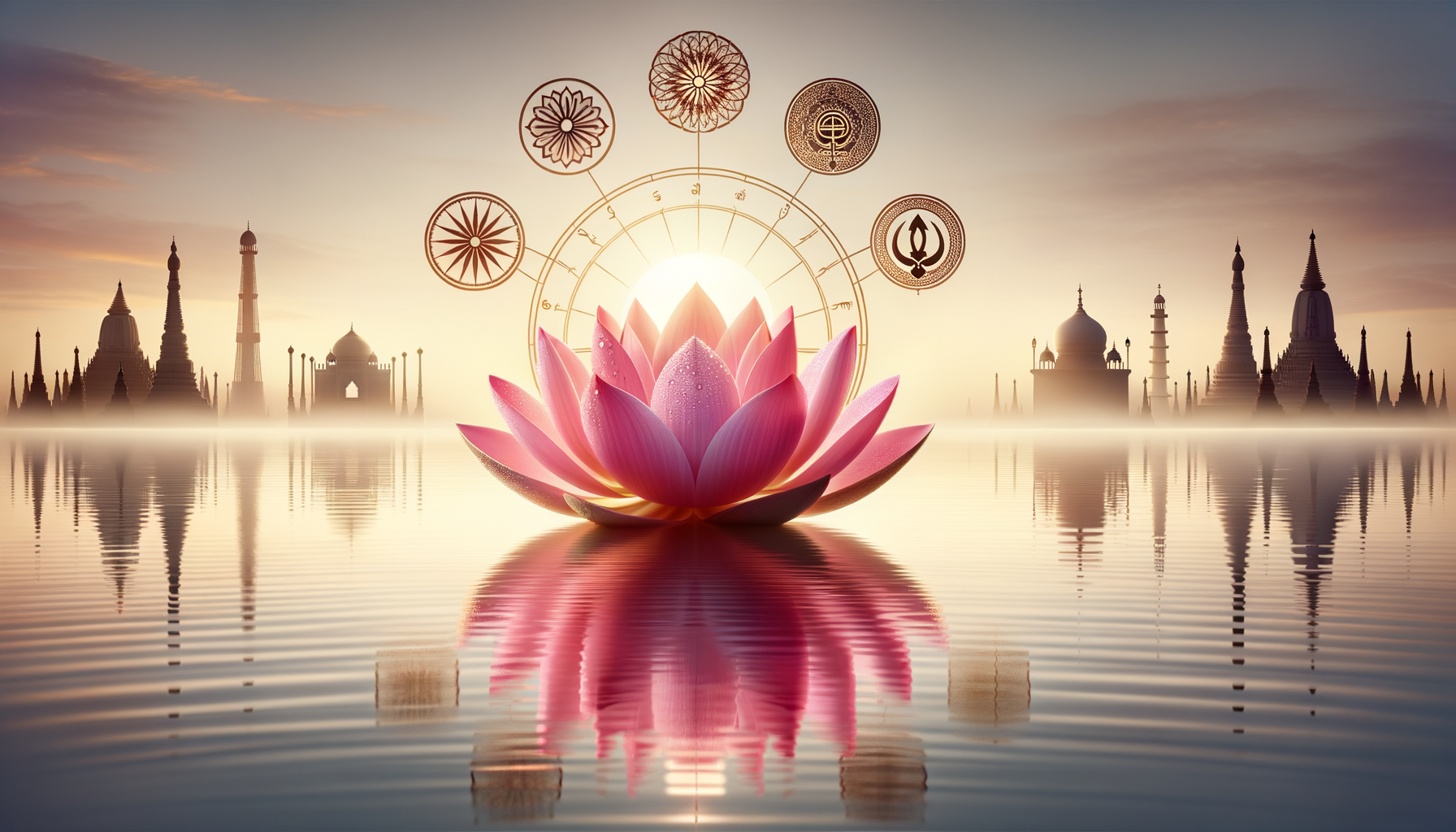
Padma, the divine lotus flower, stands as a shared sacred symbol across Hinduism, Buddhism, Sikhism, and Jainism, expressing purity, resilience, and spiritual awakening. Its presence in scriptures, temple iconography, and daily worship weaves a unifying thread through the dharmic traditions, illuminating common values of inner clarity, ethical living, and auspiciousness.
Within Hinduism, the lotus is intimately associated with Ma Lakshmi and Lord Vishnu. Numerous Slokas of Ma Lakshmi praise the Padma for its beauty and sanctity, and the lotus is revered as the divine seat of Mata Lakshmi Devi. In household and temple practice, it is offered during puja to Lord Vishnu and Ma Lakshmi, signifying prosperity (śrī), purity, and grace. Classical texts, including references in the Padma Purana, affirm the lotus as a symbol of auspiciousness and spiritual abundance.
In Buddhism, the lotus signifies the flowering of wisdom from the mud of human experience, a concise metaphor for enlightenment and compassionate action. Sikh teachings employ the lotus image to illustrate living in the world with inner detachment, like a blossom untainted by surrounding waters. Jain tradition venerates the lotus in both iconography and contemplation; notably, the Tirthankara Padmaprabha bears the lotus as an emblem, and lotus pedestals are common in images symbolizing purity and equanimity. Across these traditions, Padma functions as a contemplative aid and a moral compass, linking devotion with inner transformation.
Ritually, the lotus deepens the experience of puja and festival observances. During Lakshmi Puja in Diwali and on other auspicious days, families often place fresh lotuses before Ma Lakshmi and Lord Vishnu to invite well-being and harmony. For many communitieswhether beside a temple tank in India or within a diaspora congregationthe sight and fragrance of a lotus evoke calm, gratitude, and a shared cultural heritage that transcends regional and sectarian lines.
Philosophically, Padma conveys layered meanings: emerging unsullied from the mud, it models ethical purity; unfolding petals mirror the expansion of consciousness; and its serene poise reflects mental clarity cultivated through dhyana and mindful living. These facets align with dharmic teachings that encourage inner steadiness, compassion, and righteous conduct grounded in Dharma.
As a unifying sacred symbol, the divine lotus invites a broader understanding of religious pluralism within the dharmic family. By recognizing Padma’s shared significance in Hinduism, Buddhism, Sikhism, and Jainism, communities can nurture interfaith respect, celebrate cultural continuity, and affirm unity in spiritual diversity. In this way, the lotus serves not only as an object of devotion but also as a living bridge among traditions dedicated to wisdom, harmony, and the good of all.
Inspired by this post on Hindu Pad.
