
-
Moral Injury and Betrayal Trauma: How Broken Trust Rewires the Nervous Systemand How to Heal

Moral injury is not simply fear-based trauma; it is an ethical wound formed when trusted people or systems violate core moral expectations. This long-form analysis explains how betrayal trauma reshapes the nervous system, why shame and withdrawal so often replace fear and anger, and how to distinguish trauma reenactment from trauma repair. Drawing on dharmic…
-
Kamyakali Unveiled: The Desire-Fulfilling, Fierce-Compassionate Power of Goddess Kali

Kamyakali is venerated in Shakta traditions as a form of Goddess Kali who unites fierce protection with maternal compassion while fulfilling desires aligned with dharma. The discussion clarifies the Sanskrit root of kāmya, connecting it to ethical, purpose-driven worship rather than unexamined craving. It explores Kali’s core iconography and explains how Kamyakali highlights blessing gestures…
-
Lucknow attack on ex-Muslim YouTuber Saleem Vastik: swift police action, security lessons

A stabbing targeting ex-Muslim YouTuber Saleem Vastik in Lucknow has renewed focus on freedom of expression, targeted violence, and the standards governing police encounters in India. Initial reports indicate the two alleged assailants, Gulfam and Zeeshan, were later killed in an encounter, triggering both relief at the neutralization of an immediate threat and calls for…
-
Hupari Mobilizes: Hindu Rashtra-Jagruti Andolan Urges Relentless Action on Drug Trade in Kolhapur

Hupari in Kolhapur district witnessed a Hindu Rashtra-Jagruti Andolan demanding strict police action against drug peddlers and a full investigation into wider narcotics supply networks. This analysis situates the event within India’s NDPS legal framework and highlights best-practice enforcement that is both effective and rights-respecting. It outlines a ten-point community safety plan for Huparicovering intelligence…
-
Why the Mahabharata’s Grey Shades Matter: Navigating Dharma, Dilemma, and Duty Today

The Mahabharata remains vital because it refuses to flatten ethics into heroes and villains, instead mapping how real people make hard choices under pressure. Its layered model of dharma from universal norms to role- and crisis-specific duties explains why legendary figures display ‘grey shades’ without collapsing into relativism. Through case studies such as the dice…
-
Lanka Kānda in Tulsidas’s Ramcharitmanas: Dharma, Strategy, and Enduring Bhakti

Lanka Kānda in Ramcharitmanas unites poetic beauty with ethical clarity, presenting a dharma-yuddha rooted in diplomacy, restraint, and devotion. Setubandha functions as engineering feat and sacred metaphor, while Vibhīṣaṇa’s refuge models principled dissent and moral courage. Tulsidas’s nuanced handling of Sita’s sanctity and Ravana’s downfall centers compassion over suspicion and ego. The kānda serves as…
-
Unlocking Complete Knowledge: Krishna and the Five Realities in a Dharmic, Unified Perspective

This long-form reflection presents an academic, integrative reading of Krishna-centered wisdom in the Bhagavad Gita, showing how devotion and disciplined inquiry reinforce one another. It frames the Gita’s promiseyaj jñatvaas a call to meta-knowledge that orders facts, clarifies purpose, and unifies the sciences with spiritual realization. The five realitiesIshvara, Jiva, Prakriti, Kala, and Karmaare explained…
-
Wealth, Karma, and Krishna: Evidence‑Based Dharmic Guidance to Earn, Spend, and Give with Peace

This long-form analysis explains how money reflects inner consciousness and how Krishna’s sanction, karma, and purushartha interact to shape financial outcomes. It integrates Hindu philosophy with Buddhist Right Livelihood, Jain aparigraha, and Sikh principles of kirat karo, vand chhako, and seva to offer a unified ethic. Drawing on Srila Prabhupada’s reminders about destiny and greed,…
-
Kedarnath’s Silver Sceptre ‘Roop Chhad’ Missing: Uttarakhand Orders High-Priority Heritage Probe

Kedarnath Temple has reported the sacred silver sceptre known as the Roop Chhad missing, prompting the Uttarakhand government to order a high-priority inquiry on March 10, 2026. This report explains why the sceptre matters in the temple’s ritual life and how its loss is felt by devotees. It outlines the governance context of the Badrinath-Kedarnath…
-
Power and Grace of ISKCON London’s Ladies Sankirtan: Book Distribution and Community Impact

ISKCON London’s ladies Sankirtan party demonstrates how devotional service, ethical outreach, and disciplined training can transform brief public encounters into enduring spiritual inquiry. Through consent-first dialogue, culturally sensitive communication, and the voluntary distribution of texts like the Bhagavad-gita, the teams nurture curiosity without coercion. Women-led leadership adds relational depth and approachability, improving the quality of…
-
Nish Shreyas in Hinduism: The Life-Changing Choice of Shreyas over Preyas toward Moksha

Nish Shreyas denotes the ultimate good in Hinduismthe enduring well-being that culminates in mokshaclarified through the Katha Upanishad’s contrast between preyas (the pleasant) and shreyas (the beneficial). This article explains how Vedanta, the Bhagavad Gita, and integrated yogic disciplines channel everyday decisions toward freedom rather than compulsion. It offers a clear decision framework and practical…
-
Kalatita Unveiled: A Rigorous Guide to the Timeless Self and Eternal Truth in Hinduism

This article presents a rigorous, accessible exploration of Kalatita’beyond time’in Hindu philosophy, anchored in the Upanishads, Bhagavad Gita, and Yoga Sutra. It clarifies how cyclical time (yuga, kalpa) coexists with the timeless ground of Brahman, using Advaita Vedanta, Sāṅkhya, and Bhakti perspectives. The discussion bridges theory and practice with concrete contemplations, showing how presence, fearlessness,…
-
Beyond Temples: Experiencing Vishnu’s All‑Pervading Presence in Nature, Mind, and Cosmos

This essay explores how Vaishnava scriptures and practice reveal Vishnu as all-pervading in elements, ecosystems, and consciousness, expanding devotion beyond temple walls. Drawing on the Upanishads, Bhagavad Gita, Pancharatra tradition, and living ritual, it outlines how daily actsdrinking water, mindful breath, lamp-lighting, and servicebecome universal worship. The discussion situates iconic and aniconic forms (including Śāligrāma)…
-
Why the Vedas Are Called Nigama: Etymology, Canonical Authority, and Agama–Nigama Unity

Nigama names the Vedas as the clearest, most authoritative revelation in Hinduism, a status grounded in precise oral transmission, rigorous hermeneutics, and enduring philosophical insight. Etymologically linked to decisiveness and disclosure, Nigama highlights how Shruti reveals truth with canonical clarity. Classical literaturesuch as “nigama-kalpa-taror galitaṁ phalam”uses the term to celebrate the Vedas as a life-giving…
-
Ugadi 2026 Kannada Greeting Cards: Free Printables, E-Greetings, Design Specs & Cultural Symbols

Ugadi 2026, the Kannada New Year, invites thoughtful, culturally faithful greetings that balance tradition and technology. This guide explains how to craft printable cards and e-greetings with accurate Panchang references, respectful iconography such as ಬೇವು-ಬೆಲ್ಲ and toranas, and clear Kannada typography. It details print specifications (CMYK, 300 DPI, bleed, paper stocks) and digital standards (1080×1920,…
-
Celebrate Gudi Padwa with Purpose: Symbolism, Ritual Steps, Wishes and WhatsApp Status

Gudi Padwa marks the New Year in Maharashtra on Chaitra Shukla Pratipada, aligning with the Shaka Samvat and signaling renewal in the Hindu calendar. This guide explains the festival’s meaning, the symbolism of the Gudi, and step-by-step home rituals in clear, accurate terms. It situates Gudi Padwa alongside Ugadi and other spring observances to highlight…
-
Anang Trayodashi 2026: Auspicious Date, Lord Shiva Puja Vidhi, and Year‑Long Vrat Guide
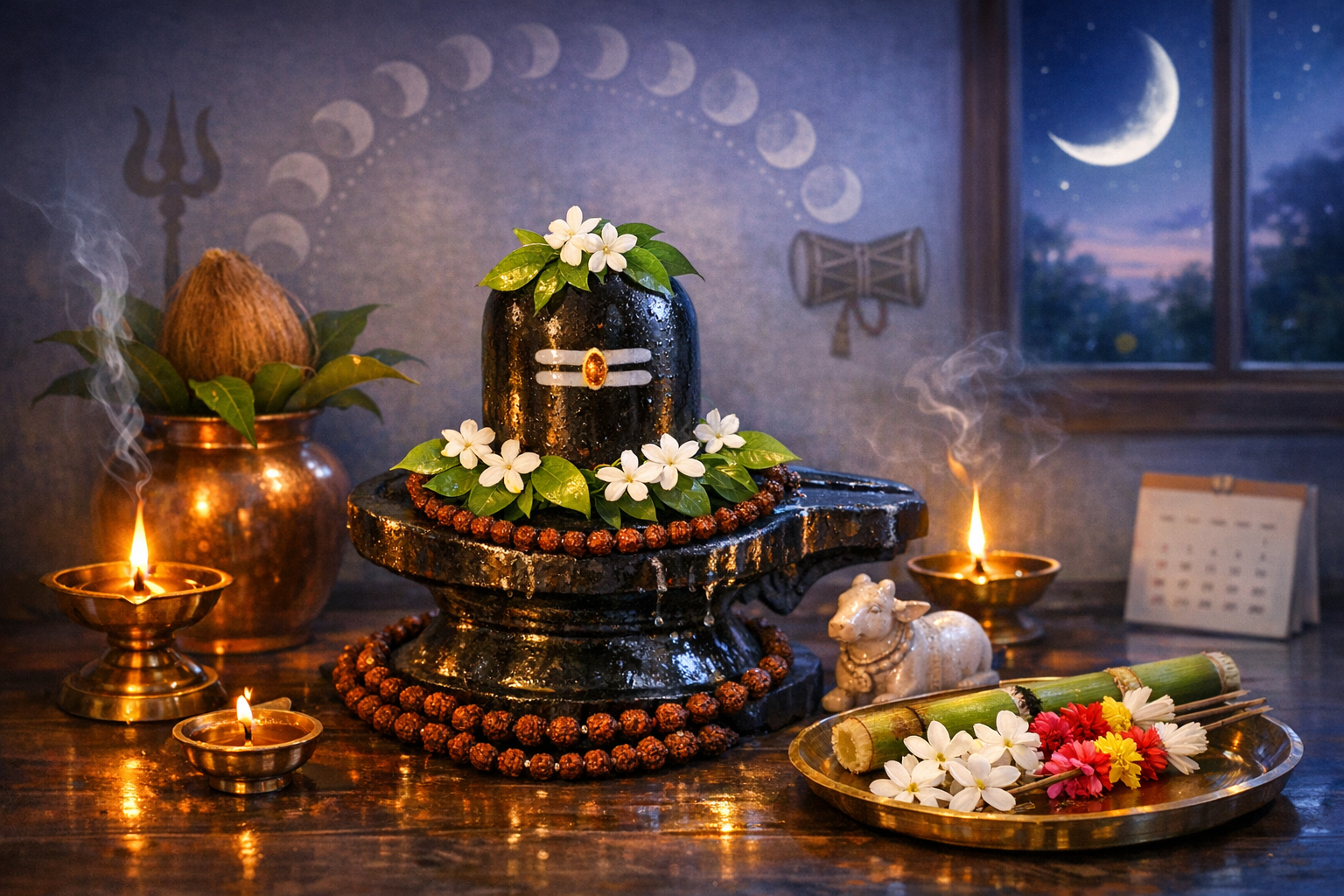
Anang Trayodashi 2026 falls on March 30, aligning with Chaitra Shukla Trayodashi and honoring Lord Shiva with complementary reverence to Rati and Kamadeva. The observance is especially noted in Maharashtra, Gujarat, and several South Indian regions, with puja often centered in Pradosha Kala. This guide explains the tithi logic, fasting options, and an adaptable puja…
-
Skandagiri Panguni Uthiram 2026, Hyderabad (1 April): Definitive Guide to Kalyanam, Kavadi & Homams

Skandagiri Subramanya Swamy Temple in Hyderabad will celebrate Panguni Uthiram on Wednesday, 1 April 2026, aligning with the sacred Uthiram nakshatra in the Tamil month of Panguni. The program includes special pujas with Ganapati Homam at 7.30 AM, Mahanyasam at 7.30 AM, and temple-facilitated Kavadi and Palkudam leading to abhishekam and alankaram of Subrahmanya. The…
-
Ganesha Damana Puja 2026: Damanak Chaturthi Date, Dhavanam Significance, Complete Vidhi
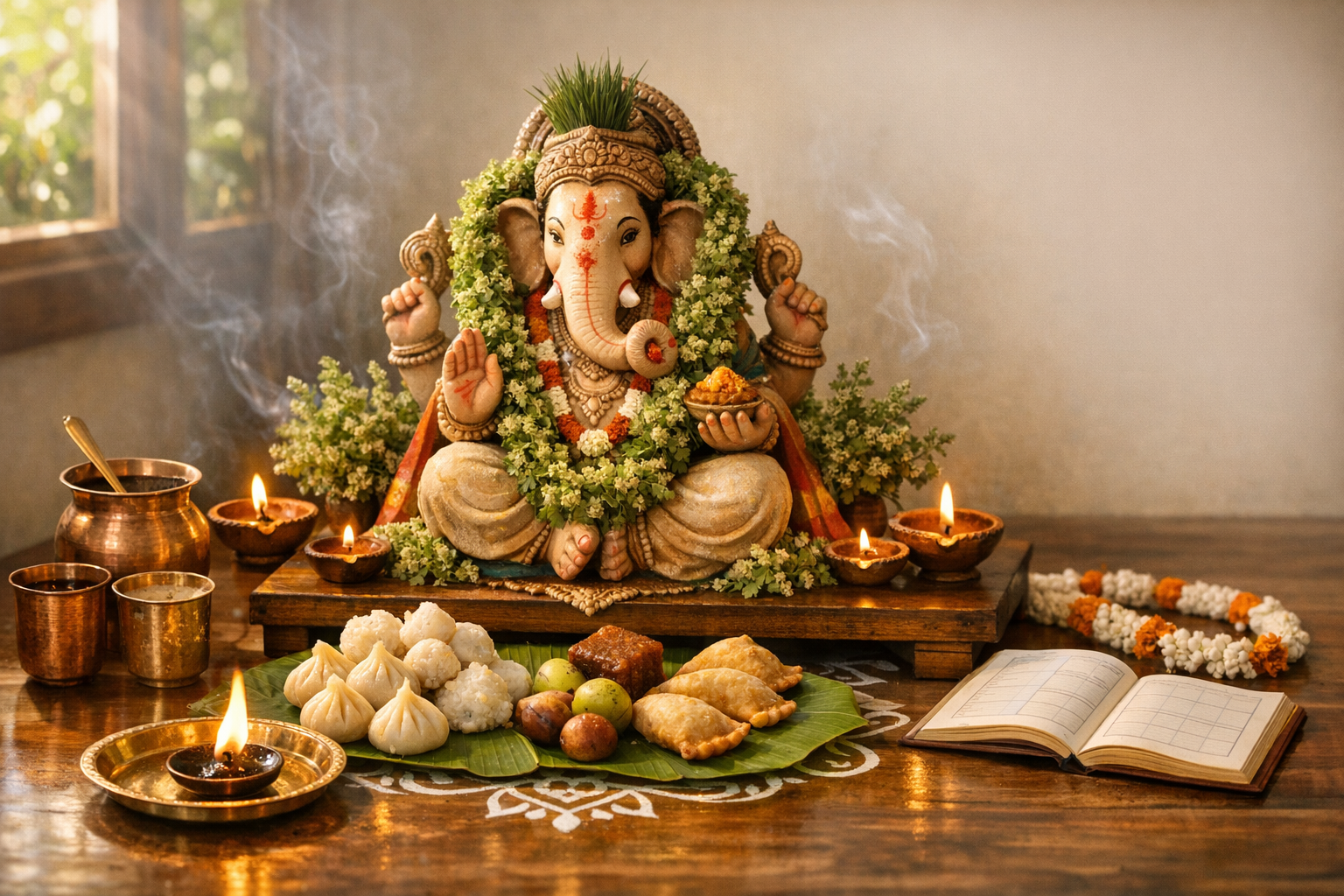
Ganesha Damana Puja (Damanak Chaturthi) in 2026 falls on 22 March, observed on Chaitra Shukla Chaturthi with the central offering of Dhavanam (Artemisia pallens). The rite follows the Vinayaka Chaturthi rule of performing the puja during the Madhyahna period on the day when Chaturthi prevails locally. This long-form guide explains the botanical identity and aromatic…
-
Arka Shashti Vrata 2026: Radiant Surya Worship with Arka LeavesDate, Vidhi, Benefits

Arka Shashti Vrata, observed on Chaitra Shukla Shashthi, honors Surya Bhagavan with the sacred offering of Arka (Calotropis procera) leaves through Shodashopachar Pooja. In 2026, it falls on March 24, inviting devotees to align sunrise arghya, mantras like Aditya Hridayam, and a disciplined fast with the tithi at local sunrise. The vrata’s symbolism emphasizes vitality,…