
-
Conquer the Kleshas: Patanjali’s Yoga Sutras on Ending Suffering and Reclaiming Clarity

This in-depth guide explains Patanjali’s doctrine of kleshas—the inner afflictions that fuel suffering—and shows how the Yoga Sutras translate diagnosis into a practical path of freedom. Readers learn the five kleshas (avidya, asmita, raga, dvesha, abhinivesha), their activation states, and how they perpetuate karma and samskaras. The article details Kriya Yoga and Ashtanga Yoga as…
-
Yogic Vision of Narayana: A Transformative Guide to Dhyana, Unity, and Srimad Bhagvatam 3.15.45
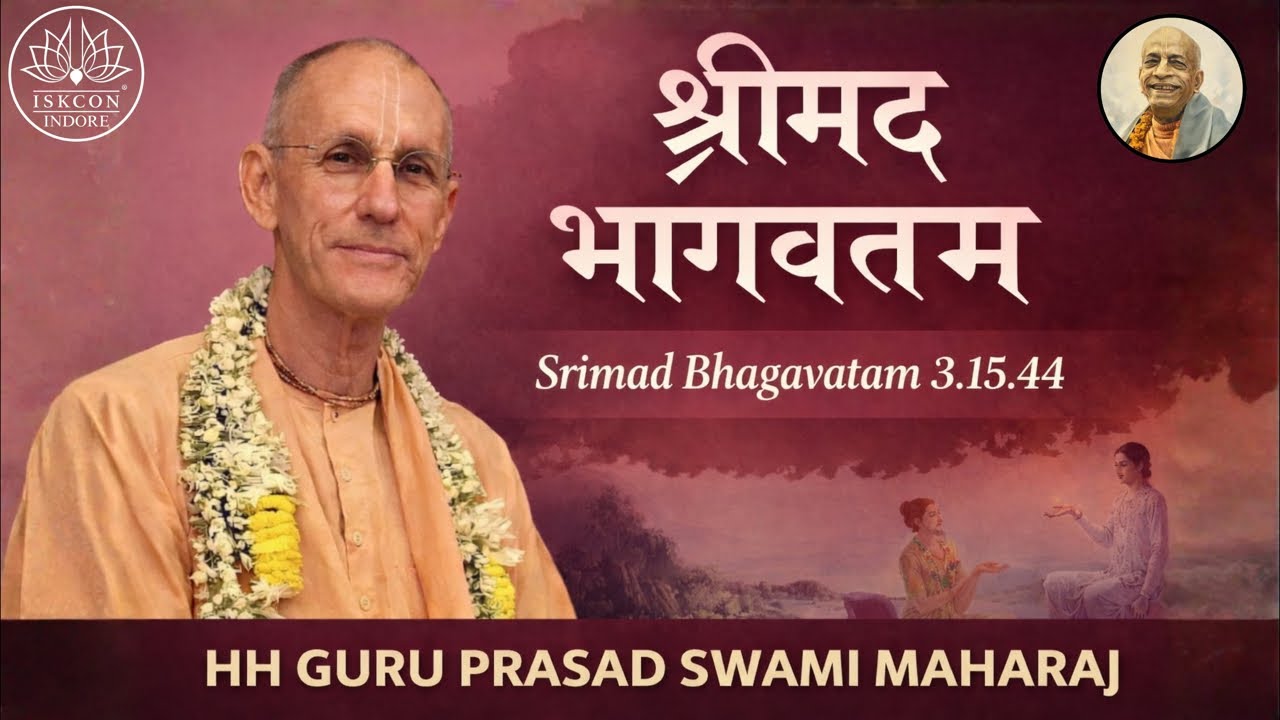
The exposition on Srimad Bhagvatam 3.15.45 at ISKCON Indore presents the divine form of Narayana as a real and transformative focus for meditation. It frames true yoga as disciplined mental absorption—dharana and dhyana—upon the Supreme dwelling in the heart. The narrative of Vaikuntha and Narayana’s four-armed iconography provides a precise meditative support, aligning with classical…
-
Why Devotional Focus Suddenly Turns Sensual—and Science-Backed Ways to Steady the Mind

Devotional focus can collapse into sensual distraction with surprising speed because material desire functions like a gravitational pull on attention. Classical frameworks from Hinduism, Buddhism, Jainism, and Sikhism explain this shift through gunas, kleshas, hindrances, and the five thieves, while neuroscience highlights cue-driven reward predictions and attentional capture. A practical, evidence-aligned toolkit helps steady the…
-
Unmasking Myths: How Truly Enlightened Beings Live, Eat, and Speak Among Us

This essay dismantles the popular myth that enlightened beings must look or act extraordinary, showing instead how Dharmic traditions depict realization as profound normalcy. Drawing on Hindu philosophy, Buddhism, Jainism, and Sikhism, it clarifies how liberation expresses itself in everyday eating, speaking, working, and serving. It synthesizes concepts such as mokṣa, nirvāṇa, kaivalya, kevala-jñāna, and…
-
Stop Chasing Happiness: Dharmic Science to Light the Inner Cave of Joy and Resilience

The dharmic saying “Seeking happiness outside is like waiting for sunshine inside a deep cave” captures a precise psychology of well-being common to Hinduism, Buddhism, Jainism, and Sikhism. Rather than promising joy through acquisition, these traditions direct attention to the hṛdaya-guha—the cave of the heart—where clarity and resilience abide. Vedanta, the Yoga Sutra, Buddhist insight,…
-
Cultivating Contentment: Dharmic Pathways to Enduring Happiness and Inner Peace

This essay examines why contentment generates enduring happiness through a unified lens from Hinduism, Buddhism, Jainism, and Sikhism. It distinguishes short-lived pleasure (sukha) from abiding wellbeing (ananda) and situates santosha within Yoga philosophy and the Bhagavad Gita’s portrait of steady wisdom. It integrates Vedanta’s Pancha Kosha model, Buddhist mindfulness and equanimity, Jain ahimsa and aparigraha…
-
Jyotishmati in Yoga: Awakening an Illuminated Mind for Clarity, Sattva, and Inner Wisdom

Jyotishmati—rooted in “Jyoti” (light) and “mati” (mind)—signifies an illuminated consciousness within Yoga. It describes a sattva-filled mind where clarity, discernment, and wisdom become reliable guides. The concept unites dharmic traditions by resonating with prajna in Buddhism, kevala-jñāna in Jainism, and the divine jyot in Sikhism. Practical cultivation relies on dhyana, mindfulness, pranayama, ethical discipline, and…
-
Satya in Yoga: How Truthfulness Unifies Inner and Outer Self for Lasting Inner Peace

Satya, the practice of truthfulness in Patanjali’s Yoga Sutras, unifies inner self and outer self by aligning thought, speech, and action. This ethical discipline reduces inner conflict, strengthens integrity, and supports mental clarity. Practiced with Ahimsa, truthfulness improves communication, trust, and community cohesion. The principle resonates across dharmic traditions—Jainism, Buddhism, Sikhism, and Hinduism—affirming unity in…
-
Manas and Buddhi Explained: Harness the Two Minds for Clarity, Calm, and Wise Action

Manas and Buddhi describe two complementary functions of the mind in Hinduism: Manas gathers sensory impressions and emotions, while Buddhi provides discriminative clarity and ethical direction. The Bhagavad Gita (3.42) places Buddhi above Manas and both beneath the Self, offering a practical inner hierarchy for wise action. This model resonates across Buddhism, Jainism, and Sikhism,…
-
Karmashaya Demystified: Uncovering the Hidden Storehouse of Karma in Patanjali’s Yoga

Karmashaya—Patanjali’s term for the subtle storehouse of karma—explains how actions leave impressions (samskaras) that condition future experience. Grounded in the Yoga Sutras (2.12), it links klesha-driven actions to both present and unforeseen outcomes, clarifying the mechanics of reactive patterns. Read together with the threefold classification of karma (sanchita, prarabdha, agami), karmashaya functions as a dynamic…
-
Master the Restless Mind: Patience, Constant Practice, and Detachment in Dharmic Traditions

Dharmic traditions converge on a precise method for mastering the restless mind: patience (kṣamā), constant practice (abhyāsa), and detachment (vairāgya). This triad—affirmed in Hinduism and echoed in Buddhism, Jainism, and Sikhism—translates timeless wisdom into practical steps for inner peace and emotional balance. Short, regular sessions of breath awareness, japa, or meditation build attentional strength without…
-
Karana Sharira, Unlocked: How the Causal Body Shapes Karma—and the Path to Freedom

This article explains Karana Sharira—the causal body in Vedanta—and shows how it seeds the gross and subtle bodies while storing vasanas and karmic tendencies. Readers gain a clear map of the tri-sharira model, its relation to the Panchakosha framework, and its role in deep sleep (sushupti). The piece clarifies why Karana Sharira is an upadhi…
-
Decoding the Bhagavad-gita’s Timeless Architecture: Dharma, Yoga, and Moksha Unveiled

This reading of the Bhagavad-gita reveals a clear three-tiered architecture—dharma, yoga, and moksha—that unifies ethical life, disciplined practice, and ultimate liberation. Understanding dharma as the finite, yoga as the bridge, and moksha as the infinite preserves the text’s internal coherence. The framework offers practical guidance for modern responsibilities while pointing beyond them to lasting freedom.…
-
When Words Fall Silent: Hinduism’s Transformational Path to Inner Stillness and Wisdom
True silence in Hinduism is not mere muteness but an effortless stillness of mind that reveals wisdom. Upanishadic insights describe a reality beyond speech and thought, while Yoga philosophy offers a practical path through pranayama, pratyahara, dharana, and dhyana. Sound becomes a gateway to silence as japa and kirtan refine attention from words to awareness.…
-
Mind, Intelligence, and Yoga in Srimad Bhagavatam: Aniruddha’s Grace and Dharmic Unity

This Srimad Bhagavatam (Canto 3, Chapter 26) exploration by HH Mukunda Goswami examines mind, intelligence, and yoga through Srila Prabhupada’s purports and the Gaudiya Vaishnava tradition. It clarifies the mind’s identification with Lord Aniruddha, the ruler of the senses, translating sensory mastery into sacred practice. The session presents a practical, integrated yoga—yama-niyama, pratyahara, dhyana, and…
-
The Inner Inferno: How Hindu Wisdom Transforms Uncontrollable Anger into Clarity and Peace

Hindu philosophy reframes hell as an inner state—uncontrollable anger (krodha)—that distorts judgment and harms relationships. Drawing on the Bhagavad Gita and yogic disciplines, this article explains how anger escalates and how breath, meditation, and self-study interrupt the cycle. Practical steps—such as short pranayama sets, mindful naming of emotions, and satttvic routines—build emotional resilience and self-control.…
-
Beyond the Senses: Hindu Wisdom on the Mind’s Subtle Realm and Paths to Inner Clarity
This reflection explores how Hindu wisdom understands the mind as operating beyond the reach of the physical senses, while aligning with shared insights from Buddhism, Jainism, and Sikhism. It outlines a subtle map of mind—manas, buddhi, ahamkara, and chitta—and shows why sensory data alone cannot fully explain consciousness. Practical methods such as pratyahara, breath awareness,…
-
Paradox of Progress: Why Discontent and Violence Rise—and Dharmic Ways to Peace

Scientific advancements have brought unprecedented capabilities, yet discontentment and violence continue to rise. This article interprets the paradox through a dharmic lens, highlighting avidyā, restless desire, and information overload as drivers of inner turmoil. It presents unifying insights from Hinduism, Buddhism, Jainism, and Sikhism—dharma, ahiṁsā, karuṇā, and sewa—as complementary solutions. Readers gain practical guidance in…
-
Bhojavritti on Patanjali’s Yogasutra: A Brilliant Royal Exegesis Illuminating Yoga Philosophy

Bhojavritti (Rajamartandavritti) is a lucid and faithful Sanskrit commentary on Patanjali’s Yogasutra by Bhoja, the versatile king of Malava (1018–60 CE). It clarifies the internal meaning of the sutras while preserving their precision, making complex ideas accessible to careful readers. Drawing on Bhoja’s broad learning—from Ayurveda to governance—the work illuminates Yoga’s ethical, psychological, and contemplative…
-
Awaken the Silent Witness: Master the Mind with Dharmic Wisdom for Calm and Clarity

Sakshi-bhava—the unaffected witness—offers a practical, dharmic way to master the mind without suppressing emotions or withdrawing from life. Rooted in the Upanishads, the Bhagavad Gita, and Yoga philosophy, it cultivates equanimity (samatva), ethical clarity (viveka), and compassionate action through Karma Yoga. Breath-centered pranayama, daily dhyana, steady japa, and informal mindfulness build this capacity in realistic,…