
-
Nirupadhika in Advaita Vedanta: Adjunct-Free Brahman, Practice Insights, and Dharmic Parallels

Nirupadhika“without the upadhis”names Advaita Vedanta’s insight that Brahman is never altered by limiting adjuncts such as body, mind, maya, or avidya. The article maps how nirupadhika contrasts with sopadhika, clarifies tri-level reality, and shows how Upanishadic hermeneutics (neti neti, tat tvam asi via bhaga-tyaga-lakshana) reveal the adjunct-free Self. It unpacks core methodsadhyaropa-apavada, Drig-Drishya Viveka, and…
-
Mastering the Modern Mind: Bhagavad-gita, Patanjali, and Dharmic Paths to Clarity

Delivered at Hsuan Chuang University (Hsinchu City, Taiwan) on 18 March 2026, this lecture by Dr. Kenneth Valpey (HH Krishna Kshetra Swami) offers a rigorous, practical roadmap for mastering the modern mind. It integrates the Bhagavad-gita, the Yoga Sutras of Patanjali, and allied dharmic traditions to explain manas, buddhi, citta, and the five koshas. Listeners…
-
Dry January, APOE Risk, and Midlife Brain Health: Surprising, Evidence-Based Gains in Sleep and Focus

A month without alcohol became a practical case study in midlife brain health, shaped by family history and an APOE-linked elevation in Alzheimer’s risk. Choosing a clear, all-or-nothing boundary reduced decision fatigue and revealed how quickly the reward system shifts to alternative stimuli, notably sugar. Despite brief weight gain and a transient flare of hormonal…
-
Beyond Indra’s Heaven: King Arishtanemi’s Bold Renunciation and Yoga Vasishta’s Vairagya

The opening narrative of the Yoga Vasishta, where King Arishtanemi declines Indra’s heaven, distills the text’s core teaching: lasting freedom arises from vairagya (renunciation) grounded in clear discrimination (viveka). Rather than reject joy, the king outgrows the promise of celestial pleasure by recognizing its impermanence and karmic limits. This analysis situates the story within Yoga…
-
Beyond 24×7 Devotion: A Dharmic Guide to Spiritualizing Every Daily Action

Many assume spirituality requires unbroken prayer or constant meditation. Dharmic traditions, led by the Hindu way of life, offer a more practical path: spiritualize each action through intention, ethics, and mindful presence. Grounded in the Bhagavad Gita’s teachings on Karma Yoga, īśvara-arpana-buddhi, and prasāda-buddhi, this approach consecrates work without withdrawing from responsibility. The Pañca-Mahā-Yajña translates…
-
Yoga and Psychological Stress Relief: Evidence-Based Pathways to Calm, Clarity, and Resilience
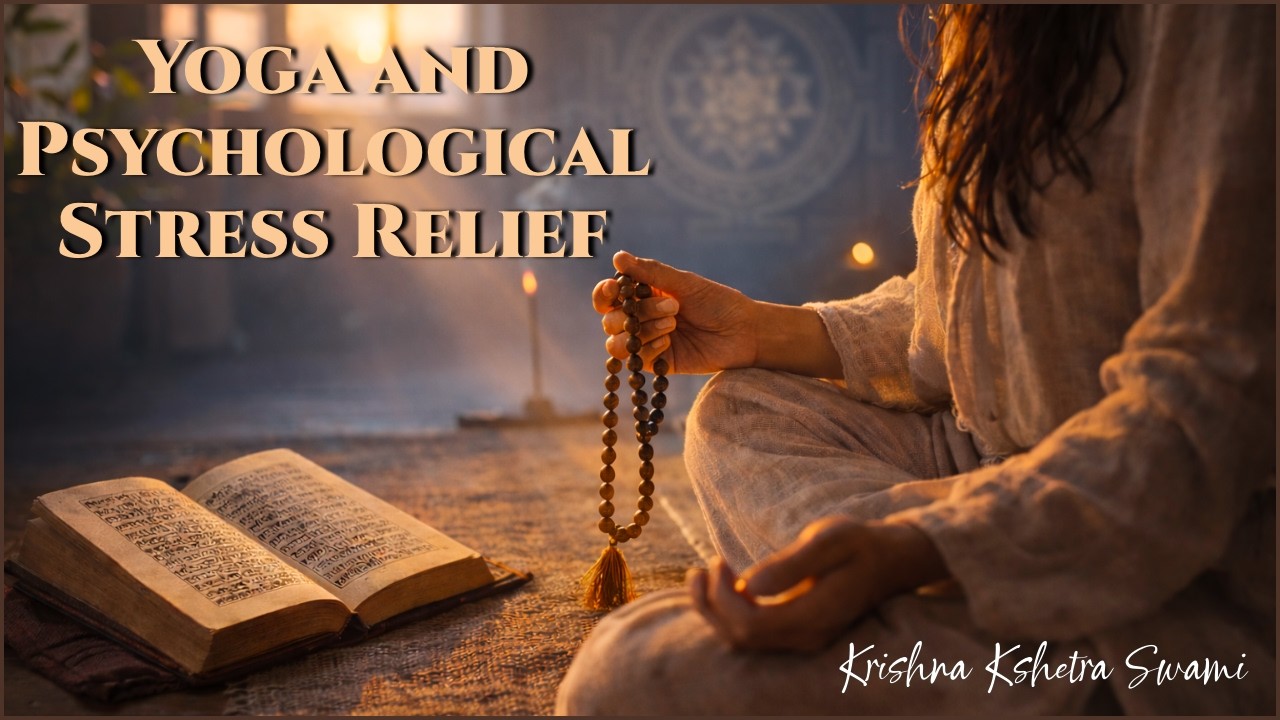
HH Krishna Kshetra Swami’s address at China Medical University highlighted how the classical yoga tradition approaches stress through systematic preparation of the minduniting meditation, Pranayama, and ethics. This comprehensive analysis bridges those insights with contemporary psychophysiology, explaining how slow breathing boosts vagal tone, meditation reshapes attention and emotion, and ethical congruence reduces cognitive load. Practical…
-
Freedom from the Senses: A Dharmic Pathway to Moksha, Mastery, and Inner Sovereignty

This essay explores the Hindu philosophical insight that freedom from the slavery of the senses constitutes liberation and shows how it converges with parallel teachings in Buddhism, Jainism, and Sikhism. It clarifies how indriyas, raga-dvesha, and samskaras generate compulsion, and how masterynot repressionunlocks moksha. Drawing from the Bhagavad Gita, the Upanishads, and Yoga philosophy, it…
-
How a Daily Yoga Routine Rewires the Brain, Calms the Nervous System, and Lifts Mood

Embedding yoga into a daily routine produces measurable benefits for mental health. Regular asana, pranayama, and dhyana raise endorphins and GABA, boost BDNF, and rebalance serotonin and dopamine. Consistent practice calms the HPA axis, lowers cortisol, improves vagal tone and HRV, and reduces inflammatory markers linked to low mood. Imaging studies show stronger prefrontal–amygdala control…
-
Transformative Bhakti: Śrīmad-Bhāgavatam 3.32.22–36 Reveals a Clear Roadmap to Moksha

This exploration of Śrīmad-Bhāgavatam 3.32.22–36 distills how faithful śravaṇa about Kṛṣṇa initiates and sustains bhakti-yoga as a clear pathway to moksha. It clarifies the Sāṅkhya distinction between the witnessing self and the body-mind, showing how devotion both utilizes and transcends analysis. Practical stepsdaily hearing, kīrtana or japa, seva, sat-saṅga, and reflective svādhyāyaare presented alongside minimalist…
-
Beyond Facts: Transformative Teaching through DharmaTimeless Hindu, Buddhist, Jain, Sikh Insights

Education is not the mere transfer of facts; in dharmic traditions it is a transformative process that unites knowledge, character, and contemplative depth. Drawing on Hindu, Buddhist, Jain, and Sikh insights, this analysis explains why śravaṇa–manana–nididhyāsana, anekāntavāda, and the triad of śabad–sangat–seva map onto evidence-based practices like active learning and mindfulness. It clarifies the parā/aparā…
-
Patanjali’s Kriya Yoga Decoded: Tapas, Svadhyaya, Ishvara-Pranidhana for God-Union

Patanjali defines Kriya Yoga as a threefold disciplinetapas, svadhyaya, and Ishvara-pranidhana (Yoga Sutra 2.1)designed to attenuate afflictions and cultivate samadhi (2.2). This synthesis of disciplined effort, self-study, and surrender functions as both foundation and consummation of practice, guiding seekers toward union with God as understood in the Yoga Sutras. The discussion clarifies how each limb…
-
Conquer the Kleshas: Patanjali’s Yoga Sutras on Ending Suffering and Reclaiming Clarity

This in-depth guide explains Patanjali’s doctrine of kleshasthe inner afflictions that fuel sufferingand shows how the Yoga Sutras translate diagnosis into a practical path of freedom. Readers learn the five kleshas (avidya, asmita, raga, dvesha, abhinivesha), their activation states, and how they perpetuate karma and samskaras. The article details Kriya Yoga and Ashtanga Yoga as…
-
Yogic Vision of Narayana: A Transformative Guide to Dhyana, Unity, and Srimad Bhagvatam 3.15.45
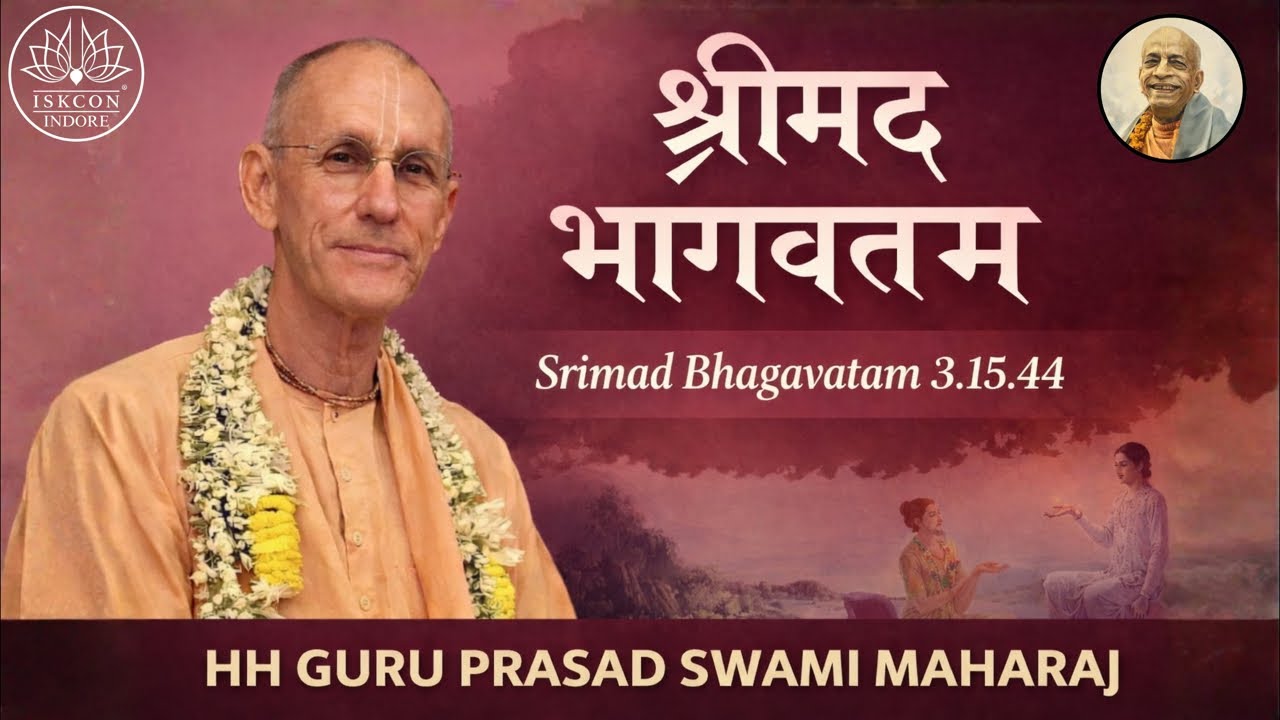
The exposition on Srimad Bhagvatam 3.15.45 at ISKCON Indore presents the divine form of Narayana as a real and transformative focus for meditation. It frames true yoga as disciplined mental absorptiondharana and dhyanaupon the Supreme dwelling in the heart. The narrative of Vaikuntha and Narayana’s four-armed iconography provides a precise meditative support, aligning with classical…
-
Why Devotional Focus Suddenly Turns Sensualand Science-Backed Ways to Steady the Mind

Devotional focus can collapse into sensual distraction with surprising speed because material desire functions like a gravitational pull on attention. Classical frameworks from Hinduism, Buddhism, Jainism, and Sikhism explain this shift through gunas, kleshas, hindrances, and the five thieves, while neuroscience highlights cue-driven reward predictions and attentional capture. A practical, evidence-aligned toolkit helps steady the…
-
Unmasking Myths: How Truly Enlightened Beings Live, Eat, and Speak Among Us

This essay dismantles the popular myth that enlightened beings must look or act extraordinary, showing instead how Dharmic traditions depict realization as profound normalcy. Drawing on Hindu philosophy, Buddhism, Jainism, and Sikhism, it clarifies how liberation expresses itself in everyday eating, speaking, working, and serving. It synthesizes concepts such as mokṣa, nirvāṇa, kaivalya, kevala-jñāna, and…
-
Stop Chasing Happiness: Dharmic Science to Light the Inner Cave of Joy and Resilience

The dharmic saying “Seeking happiness outside is like waiting for sunshine inside a deep cave” captures a precise psychology of well-being common to Hinduism, Buddhism, Jainism, and Sikhism. Rather than promising joy through acquisition, these traditions direct attention to the hṛdaya-guhathe cave of the heartwhere clarity and resilience abide. Vedanta, the Yoga Sutra, Buddhist insight,…
-
Cultivating Contentment: Dharmic Pathways to Enduring Happiness and Inner Peace

This essay examines why contentment generates enduring happiness through a unified lens from Hinduism, Buddhism, Jainism, and Sikhism. It distinguishes short-lived pleasure (sukha) from abiding wellbeing (ananda) and situates santosha within Yoga philosophy and the Bhagavad Gita’s portrait of steady wisdom. It integrates Vedanta’s Pancha Kosha model, Buddhist mindfulness and equanimity, Jain ahimsa and aparigraha…
-
Jyotishmati in Yoga: Awakening an Illuminated Mind for Clarity, Sattva, and Inner Wisdom

Jyotishmatirooted in “Jyoti” (light) and “mati” (mind)signifies an illuminated consciousness within Yoga. It describes a sattva-filled mind where clarity, discernment, and wisdom become reliable guides. The concept unites dharmic traditions by resonating with prajna in Buddhism, kevala-jñāna in Jainism, and the divine jyot in Sikhism. Practical cultivation relies on dhyana, mindfulness, pranayama, ethical discipline, and…
-
Satya in Yoga: How Truthfulness Unifies Inner and Outer Self for Lasting Inner Peace

Satya, the practice of truthfulness in Patanjali’s Yoga Sutras, unifies inner self and outer self by aligning thought, speech, and action. This ethical discipline reduces inner conflict, strengthens integrity, and supports mental clarity. Practiced with Ahimsa, truthfulness improves communication, trust, and community cohesion. The principle resonates across dharmic traditionsJainism, Buddhism, Sikhism, and Hinduismaffirming unity in…
-
Manas and Buddhi Explained: Harness the Two Minds for Clarity, Calm, and Wise Action

Manas and Buddhi describe two complementary functions of the mind in Hinduism: Manas gathers sensory impressions and emotions, while Buddhi provides discriminative clarity and ethical direction. The Bhagavad Gita (3.42) places Buddhi above Manas and both beneath the Self, offering a practical inner hierarchy for wise action. This model resonates across Buddhism, Jainism, and Sikhism,…