
-
Reviving Sacred Questioning: Vedic, Buddhist, Jain, and Sikh Paths to Intellectual Freedom

Sacred questioning sits at the heart of the dharmic heritage. This long-form analysis traces how Vedic dialogues, Nyāya–Mīmāṃsā logic, Buddhist pramāṇa theory, Jain anekāntavāda, and Sikh vichar cultivated disciplined inquiry as a path to truth and social harmony. It explains the technical tools of reasoningpramāṇas, syllogisms, hermeneutic canons, and fallacy-detectionand shows how classical śāstrārtha fostered…
-
Decoding ‘Om krato smara kritam smara’: karma, memory, and the art of conscious dying

“Om krato smara kritam smara” from the Īśāvāsya Upaniṣad condenses the Upanishadic path into one imperative: let the sovereign will remember what has been done. The mantra sits at a pivotal moment in the text (Vājasaneyi Saṁhitā 40.17), pairing ethical clarity with the acknowledgement of impermanence. A brief philological reading clarifies ‘krato’ (will/intellect), ‘smara’ (remember),…
-
18 Research-Backed Facts about Ganesha: Iconography, Mantras, Festivals, and Global Legacy

This comprehensive, research-grounded guide presents 18 essential facts about Ganeshahis Puranic origins, rich iconography, mantras, and threshold role as Prathama Pujya. Readers will learn how symbols such as the goad, noose, modaka, and the mouse vahana communicate psychological discipline and ethical intent. The overview explains the eight incarnations (Mudgala Purana), monthly observances like Sankatahara Chaturthi,…
-
Timeless Gautama Maharshi: Rig Veda Seer, Dharmasutra Sage, and a Unifying Dharmic Beacon

Gautama Maharshi emerges as a multidimensional sage whose legacy spans the Rig Veda, the early Dharmasutra tradition, classical Indian logic, and the living sacred geography of the Godavari. This article clarifies how the shared name “Gautama” applies to multiple luminariesVedic seers, the Dharmasutra authority, Akṣapāda Gautama of the Nyāya-sūtra, and revered figures in Jain and…
-
Decoding Nakshatras: A Timeless Vedic Star Map Uniting Dharmic Traditions and Skywatchers
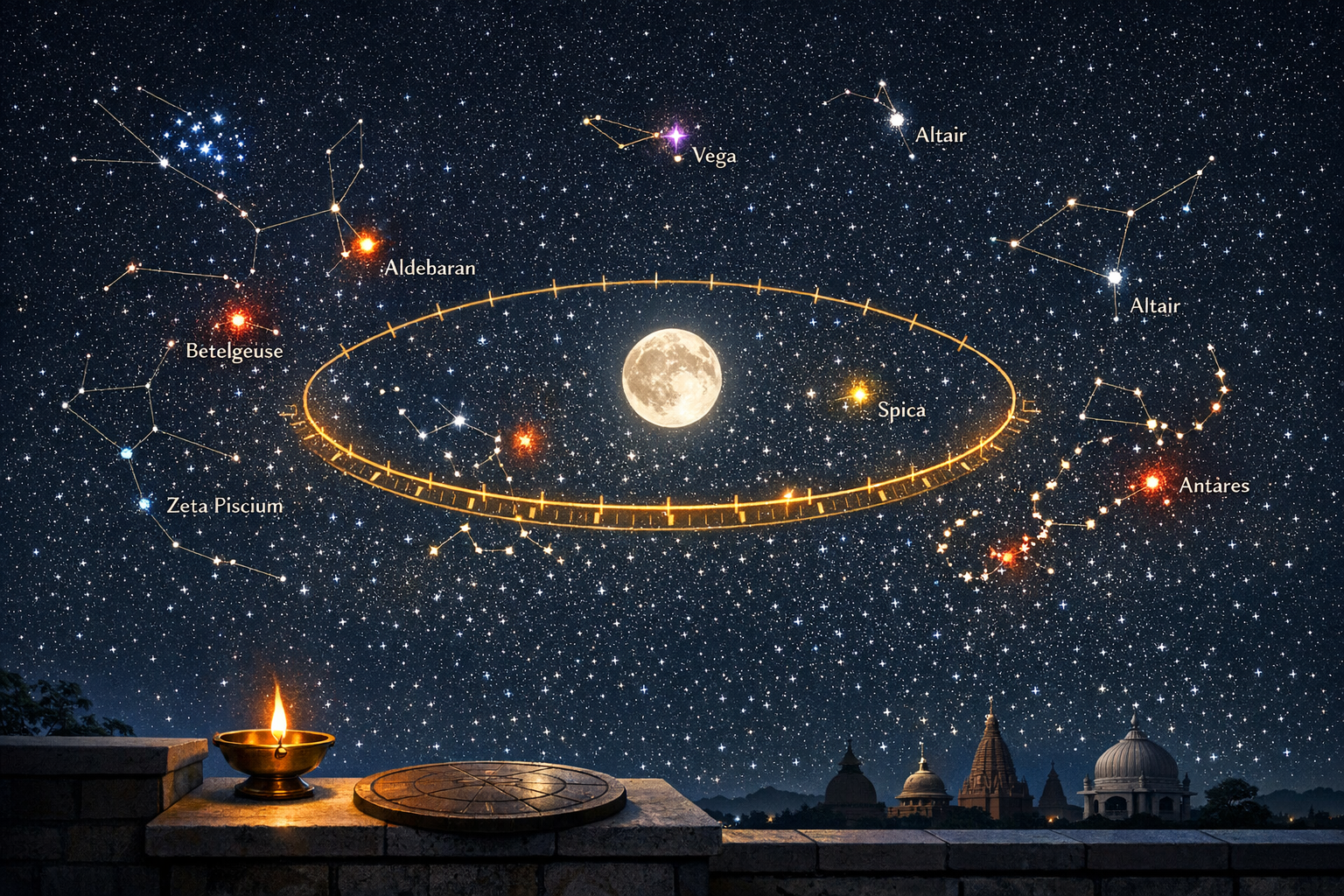
Nakshatras, the 27 lunar mansions of Vedic astronomy, form a precise star map that has guided Hindu Dharma and related dharmic traditions for millennia. Each mansion spans 13°20′ along the Moon’s path and is anchored by recognizable stars such as the Pleiades (Krittika), Aldebaran (Rohini), Spica (Chitra), and Antares (Jyeshtha). Classical sourcesfrom the Rigveda and…
-
Indra Parameshwari, Lion-Seated Sovereign: Awe-Inspiring Shakta Theology and Iconography
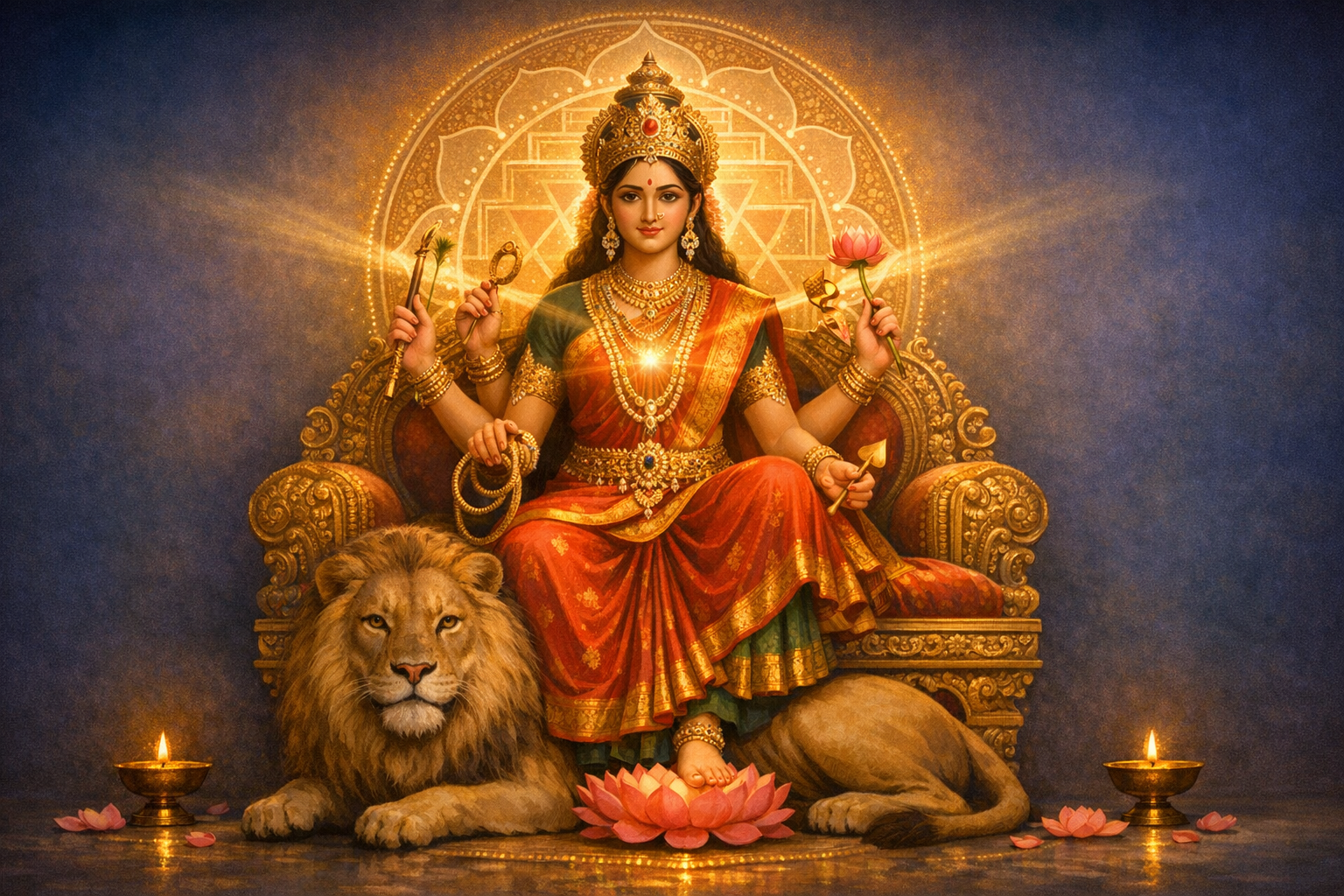
Indra Parameshwari identifies the Goddess as the supreme, lion-seated sovereign of Shakta theology, where indra functions as a superlative for lordship and Parameshwari declares the Supreme Lady. Grounded in Vedic and Upanishadic insights and elaborated by the Devi Mahatmya and Sri Vidya traditions, this study unpacks the title’s philology, metaphysics, and iconography. The lion-throne (simhasana)…
-
Ekadasha Parayana of Vishnu Sahasranama: Transformative Benefits, How-To, and Daily Discipline

Ekadasha Parayana is an eleven-day observance in which the Vishnu Sahasranama is recited eleven times daily, uniting devotion, attention training, and ethical living. Rooted in the Mahabharata and the Vaishnava bhakti tradition, the practice is accessible to householders and monastics and adaptable to individual contexts. Practitioners commonly report cognitive clarity, emotional balance, and a deepening…
-
From War Thunder to Living Gods: Ratha (Chariot) as Weapon, Ritual, and Wisdom in Ancient Hinduism
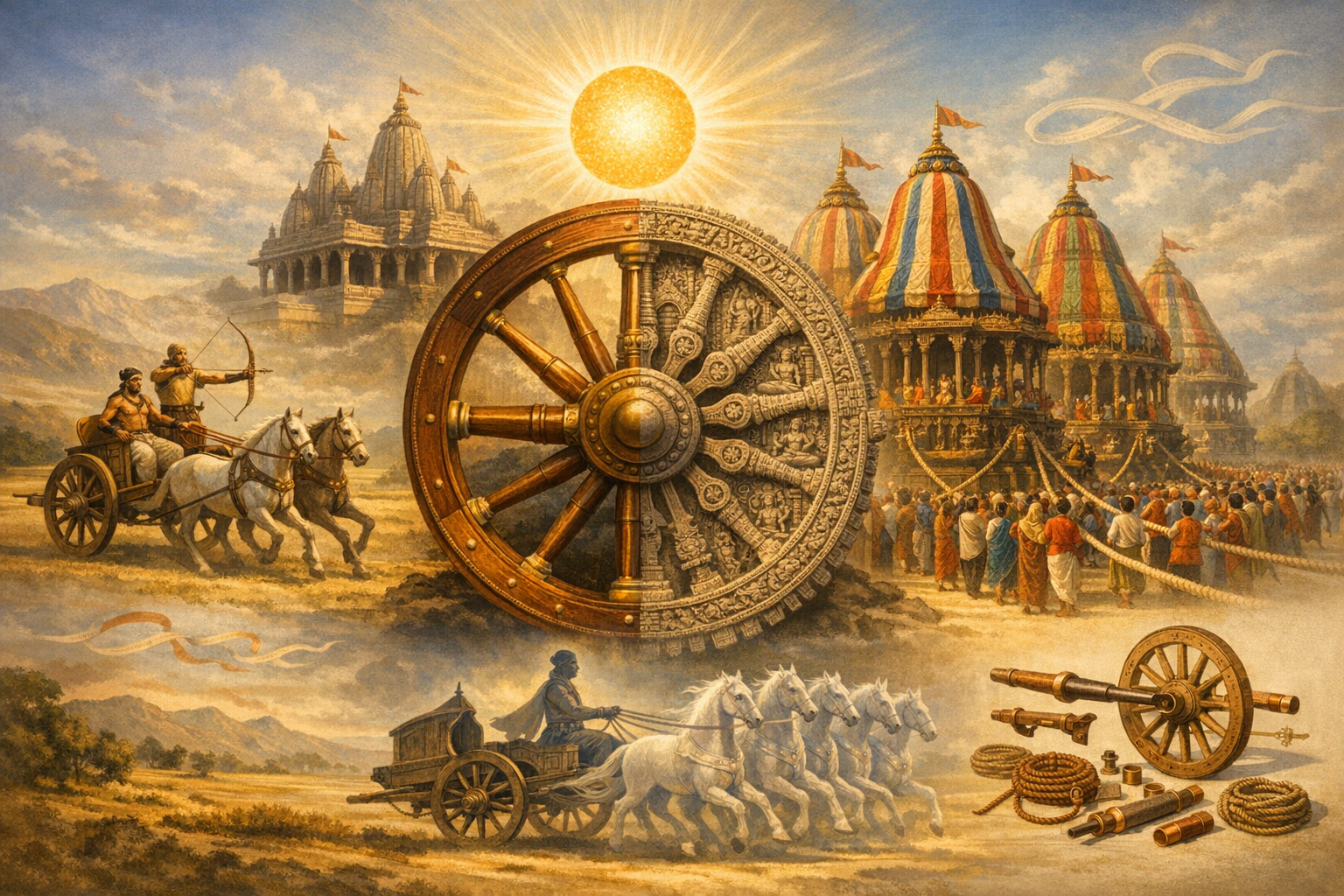
This long-form, research-driven essay follows the ratha (chariot) from its earliest Vedic mentions through epic warfare, temple architecture, and living festivals. Readers gain a balanced view of textual evidence (Rigveda, Mahabharata, Upanishads), archaeological debates (including Sinauli), and the Arthaśāstra’s statecraft, alongside technical insights into chariot design, crew roles, and battlefield tactics. It unpacks the Kaṭha…
-
Pratyaksha in Mimamsa Darsana: Unlocking the Power of Direct Perception in Dharma and Reason

Pratyaksha in Mimamsa Darsana presents a rigorous, experience-centered account of how direct perception functions as a trustworthy pramana. It clarifies the two-phase structure of perception (from indeterminate to determinate), the role of the mind in perceiving inner states, and the conditions that distinguish valid perception from illusion. The article explains how Mimamsa integrates perception with…
-
Decoding the Sacred Power of Om: Indra’s Epic Triumph in the Gopatha Brāhmaṇa Explained

The Gopatha Brāhmaṇa of the Atharvaveda preserves a striking motif: Indra and the devas overcome asuras through the sacred syllable Om. Read alongside the Chāndogya and Māṇḍūkya Upaniṣads, the narrative reveals Om as a ritual seed, acoustic map of consciousness, and instrument of non-violent victory. The symbolism frames Indra’s triumph as clarity over confusion, integrating…
-
Avanaddha: The Sacred Science of Indian Drums from Vedic Pushkara to Pakhawaj

Avanaddha, the classical Indian family of drums defined in the Natyashastra, links Vedic references such as pushkara and dundubhi with today’s diverse performance, ritual, and communal traditions. This article explains how construction techniquesshell materials, membrane fastening, and the famed syahi loadingengineer near-harmonic overtones and pitch-centered strokes. It surveys major drum types (mridangam, pakhawaj, khol, chenda,…
-
Shiva’s Playful Forms (lilamurtis): Deep Symbolism, Agamic Iconography, Living Tradition

This essay decodes Shiva’s lilamurtisplayful sacred forms that translate the formless into transformative encounterthrough the lenses of Agamic iconography, Purāṇic narrative, and living ritual. It explains the aniconic meaning of the Linga and shows how iconic forms like Nataraja, Ardhanarishvara, and Dakshinamurti encode philosophy as gesture and posture. Readers learn how temple architecture and ritual…
-
Revati Nakshatra 2026–2027: Definitive Vedic Forecast for Career, Wealth, Health & Dharma

Revati Nakshatra 2026–2027 (Revati Nakshatra Phalam) unfolds under Saturn’s sober focus in Pisces, Jupiter’s supportive shift into Cancer, and a late-2026 node change that channels gains through networks. The year emphasizes structure, ethical clarity, and skill-building while preserving Revati’s natural strengths in memory, attention, and economic judgment. Career paths advance through method and mentorship; finances…
-
Dhanishta (Avittam) Nakshatra 2026–2027: Powerful, Actionable Insights on Career, Love, Wealth

Dhanishta (Avittam) Nakshatra 2026–2027 brings disciplined growth, strong partnerships, and measured risk for most natives, with distinct trajectories for Capricorn and Aquarius padas. Saturn in Pisces concludes Sade Sati for Makara padas and finalizes it for Kumbha padas, while Jupiter’s move to exalted Cancer mid-2026 reshapes alliances, career progress, and relationship outcomes. Early 2026 supports…
-
Shani Sadesati for Vrishabha Rashi: Mastering Janma Shani (Second 2½ Years) with Remedies

Shani Sadesati for Vrishabha Rashi reaches its defining middle stage during Janma Shani, when Saturn transits Taurus and conjoins the natal Moon. Classical principles indicate sober restructuring of identity, stamina, and responsibilities, moderated by the natural friendship between Shukra (Venus) and Shani. From Taurus, Saturn’s aspects to the 3rd, 7th, and 10th fortify communication, partnerships,…
-
Parabhava 2026–2027 Samvatsara: Hard Truths, Risk Signals, and Dharmic Remedies to Thrive

Parabhava Nama Samvatsaram (2026–2027) is traditionally read as a testing year, with negative aspects clustered around budgetary stress, climate volatility, reputational risk, and public health burdens. This in-depth analysis explains the Samvatsara framework, the “Jovian year” concept in Vedic astrology, and how tools like Varsha Lagna, Mesha Sankranti, Navanayaka phala, and Aaya–Vyaya refine yearly forecasts.…
-
Parabhava 2026–2027: Hidden Risks, Aaya‑Vyaya Warnings, and Dharma‑Centered Remedies

Parabhava 2026–2027, the 40th year in the 60-year Samvatsara cycle, traditionally signals a period where unforced errorsoverspending, hasty policy shifts, and social frictioncan magnify risks. Interpreted prudently, it is a cautionary lens rather than a fixed fate, urging budgetary discipline (Aaya Vyaya 2026-2027), conservative execution, and ethical steadiness. Classical jyotisha places weight on the Aries…
-
Parabhava 2026–2027 (Ugadi to Ugadi): Transform Obstacles into Opportunity with Vedic Insights

Parabhava Nama Samvatsaram (2026–2027) begins on Ugadi, March 19, 2026, and invites a disciplined, optimistic approach to karmic transformation, deep reflection, and overcoming obstacles. As the 40th year in the 60-year Hindu calendar cycle (Śaka 1948), it encourages clarity of intention, ethical restraint, and steady practice. Practical frameworks such as Aaya–Vyaya 2026–2027 support prudent budgeting,…
-
In-Depth Tula Rashi 2026–2027: Libra Moon Sign Vedic Astrology for Career, Wealth, Health, Dharma

Tula Rashi 2026–2027 unfolds in two clear phases for the Libra Moon Sign. Early in the period, Jupiter’s 9th-house placement emphasizes dharma, higher learning, mentor support, and long-distance opportunities. Mid-2026 onward, exalted Jupiter in the 10th house catalyzes promotions, public recognition, and institutional roles as Saturn in the 6th rewards systems, discipline, and service excellence.…
-
Makara Rashi 2026–2027: Rebuild, Rise, and Thrive with Capricorn Moon Transits & Remedies

This comprehensive Makara Rashi (Capricorn Moon Sign) forecast for 2026–2027 uses the sidereal zodiac and Gochar analysis from Chandra Lagna to explain how Saturn in Pisces, Jupiter’s shift from Gemini to exaltation in Cancer, and the mid-November 2026 Rahu–Ketu transition will shape work, health, relationships, and finances. Expect a post–Sade Sati consolidation phase, strong mid-year…