
-
Breaking the Resolution Cycle: Samsara, Sankalpa, and Srimad Bhagavatam’s Timeless Clarity

New Year’s resolutions often falter because they are treated as short-term projects rather than long-term practices. Framed through samsara, they reveal recurring habit cycles that call for wiser design, not harsher effort. Srimad Bhagavatam offers a clear corrective: anchor intention (sankalpa) in dharma, sustain it with steady practice (abhyasa), and temper it with detachment (vairagya).…
-
Mind, Body, and Soul in Balance: Practical Strategies to Build Inner Strength and Harmony

Asking whether mind, body, or soul is strongest creates a false contest; each holds a distinct role that becomes powerful in balance. The body anchors vitality, the mind refines attention and choice, and the soul aligns life with dharma and meaning. Practical routinesmovement, breath awareness, and meditationintegrate these dimensions to cultivate emotional resilience and holistic…
-
Make 2026 Truly Different: A Dharmic, Research-Backed Path to Sustainable Joy and Purpose

The early optimism of a new year often fades because life demands outpace willpower. A dharmic, research-informed approach offers a sustainable alternative. By combining Dharma, mindfulness, Ahimsa, and Seva, change becomes practical, ethical, and compassionate. Short, focused learning (20–25 minutes) paired with daily application builds momentum without overwhelm. Key areasvitality, emotional well-being, relationships, finances, habits,…
-
Why Gentle Guidance Works: Building Trust and Unity with a Counselor System in ISKCON

This reflection outlines a compassionate, experience-based case for a counselor system in ISKCON, emphasizing guidance rooted in empathy rather than institutional authority. It explains why top-down “hammering” rarely opens hearts and how gentle, consistent support strengthens trust and spiritual well-being. The counselor model fosters peer mentorship, early conflict resolution, and shared accountability. It aligns naturally…
-
Hindu Spirituality at Dawn: Cultivating Joy, Resilience, and Harmony Every Morning

Hindu spirituality frames each morning as a fresh start, where optimism is cultivated through disciplined practice rather than mere sentiment. Rising at dawn, integrating pranayama, meditation, and Surya Namaskara, and setting compassionate intentions align personal rhythm with nature and dharma. This daily orientation is echoed across dharmic traditionsBuddhist mindfulness, Jain Samayik, and Sikh Amrit Velademonstrating…
-
Nurturing Children’s Spiritual Growth with Play, Respect, and Joy: A Dharmic Approach

Spiritual growth in childhood flourishes through play, respect, and lightness rather than constant instruction. This Dharmic approach, aligned with Hindu spirituality and shared across Buddhism, Jainism, and Sikhism, weaves mindfulness and compassion into daily family life. Play becomes a gentle form of sadhana, and reciprocal learning reflects the spirit of the Guru-Shishya Relationship. Practical ideaslaughter-filled…
-
Life’s Long Journey: Harness Daily Opportunities for Transformative Change through Dharmic Wisdom

This essay frames a classic Hindu teachingeach day offers a chance to changewithin a dharmic, academically grounded perspective. It explains how small, consistent actions reshape samskara, aligning daily life with Dharma and karma-yoga. Drawing on the Bhagavad Gita and the Upanishads, it shows how Mindfulness, Meditation, and Yoga convert insight into routine resilience. Parallels with…
-
If Something Changes Your Life, Let It: Dharmic Wisdom to Cultivate Resilience and Grace

The reflection “If something changes your life, let it” expresses a core dharmic insight shared by Hinduism, Buddhism, Jainism, and Sikhism: change, met with discernment and non-attachment, catalyzes spiritual growth. Drawing from the Bhagavad Gita, Patanjali’s Yoga Sutra, anicca, Anekantavada, Hukam, and Chardi Kala, the post outlines a practical pathpause, breathe, discern, act ethically, reflectto…
-
Kurukshetra Within: How the Mahabharata’s Battlefield Guides Courageous Spiritual Growth

Kurukshetra in the Mahabharata can be read as the inner field of Dharma where ethical dilemmas, emotional turbulence, and spiritual aspiration meet. The Bhagavad Gita’s counsel reframes conflict as an opportunity for clarity, courage, and disciplined action. Arjuna’s hesitation mirrors modern experiences of doubt and responsibility, while Krishna’s guidanceKarma Yoga, Jnana, and Bhaktioffers practical tools…
-
Nurturing Truth Within: A Dharmic Guide to Cultivating the Soul’s Seed of Wisdom

The insight, “Truth’s seed may be sown, but it must be nurtured by the soul,” highlights the difference between knowing truth and living it. Hindu philosophythrough shravaṇa, manana, and nididhyāsanashows how knowledge matures into steady wisdom. The Bhagavad Gita and the Upanishads emphasize that dharma-centered practice, not concept alone, yields Self-Realization. Parallel principles across Buddhism,…
-
Dharma as Living Ethics: A Compassionate Path to Spiritual Elevation and Unity

Dharma is a Sanskrit concept that defies exact translation, often approximated as righteousness, virtue, or moral law. It is best understood as living ethics: principles applied in daily life that elevate both the individual and society. This applied wisdom aligns personal responsibility with the common good, balancing svadharma and Lokasangraha. Across Hinduism, Buddhism, Jainism, and…
-
When Love Can’t Heal: Reclaiming Safety, Dignity, and Dharma After Emotional Abuse

This reflection explores how healing from emotional abuse begins when safety and dignity are prioritized over the belief that love alone can change harmful dynamics. It shows that love cannot substitute for another person’s willingness to do the work and that true transformation requires mutual participation, respect, and safety. Readers will learn how social and…
-
Unlocking Lakshmi’s Blessing in Kali Yuga: Pure Hearts, Steadfast Faith, and True Prosperity

The teaching that Goddess Lakshmi blesses the pure of heart and the steadfast in faith appears simple yet proves exacting in Kali Yuga. This article clarifies purity as ethical clarity and compassion in action, and faith as disciplined steadiness under pressure. It shows how these virtues, affirmed across Hinduism, Buddhism, Jainism, and Sikhism, align individuals…
-
Bhakti-yoga and Psychotherapy: Integrating Krishna Consciousness for Resilient Well‑Being

Chanting the holy name and practicing Bhakti-yoga in the Gaudiya Vaishnavism tradition are presented as primary means of purification and healing, while psychotherapy is framed as a respectful adjunct rather than a replacement. The piece explains why some practitioners benefit from counselingespecially when unresolved samskaras, trauma, or anxiety impede steady sadhana. It highlights practical ways…
-
Essential Breakthrough: Master Change via Proven Guru-Bhakti and Obedience to Guidance

Many practitioners face discouragement when obstacles arise on the spiritual path. A proven, unifying remedy across dharmic traditions is love-inspired obedience to the guru’s guidance. As Prabhupada taught, deeper love naturally amplifies the will to follow instructions, transforming reluctance into service. The attitude, “I may not want to do something, but I will do it…
-
The Essential Dharmic Secret to Clarity: Discover Travel as a Proven Path to Inner Renewal

This article explores a time-tested Dharmic insight: intentional travel as a disciplined practice for clarity. Drawing on Hinduism’s tirtha-yatra and the parivrajaka ethos, it shows how movement functions as sādhanā that resets cognition, widens perspective, and supports mindful self-discovery. Scriptural themessuch as Charaiveti charaiveti and the Gita’s emphasis on equanimityare connected to modern psychology’s findings…
-
Master Deep Focus and Memory: Proven Benefits of Studying Sacred Texts across Dharmic Paths

Sacred study functions as a sattvika yagyadisciplined worship performed without attachment to resultsgrounded in Bhagavad Gita 17.11 (karmani prayoga). Traditional methods such as memorization, precise recitation, and commentary reading build medha shakti while cultivating humility and steadiness. Modern research supports these practices, linking Vedic learning to neuroplasticity and gains in short- and long-term memory, language,…
-
Essential Breakthrough: How Opposition and Setbacks Transform Spiritual Mastery Across Dharmic Paths

Opposition often becomes the crucible in which clarity, resilience, and spiritual mastery are forged. Drawing on examples from Hinduism, Buddhism, Jainism, and Sikhism, this piece shows how setbacks refine intention and elevate practice across dharmic traditions. It reframes adversity as a catalyst for growthpersonally and collectivelywithout diluting historical or philosophical nuance. Readers discover practical ways…
-
Master Inner Strength: HH Svayam Bhagavan Keshava Maharaja’s Proven Guide to Overcoming Spiritual Weakness
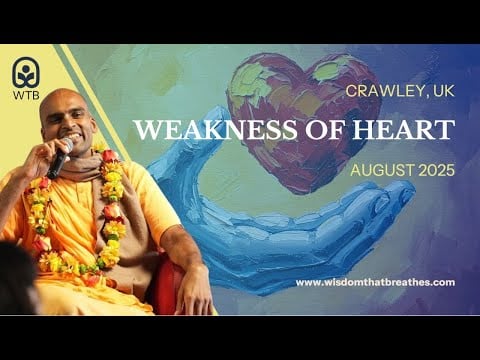
HH Svayam Bhagavan Keshava Maharaja’s talk in Crawley, UK presented a clear, compassionate study of spiritual weakness as a universal human challenge. It explained how determination, consistency, and clarity combine to create resilient inner strength. Listeners learned to recognize how weakness often appears in solitude and during adversityand how steady daily practice counters it. Scriptural…
-
The Proven Power of Santosha: Discover How Inner Satisfaction Ignites Creativity

Santosha (contentment) in Hindu philosophy functions as a practical catalyst for creativity by quieting mental noise and freeing attention for insight. As a niyama of Yoga, it refines motivation from scarcity-driven striving to curiosity-driven exploration. Parallels in Buddhism (upekkhā), Jainism (aparigraha), and Sikhism (Santokh) reveal a shared Dharmic emphasis on inner satisfaction as a basis…