
-
Sultanpur Lodhi: Sacred Spring of Guru Nanak’s Mission, Sikh Heritage, and Dharmic Unity
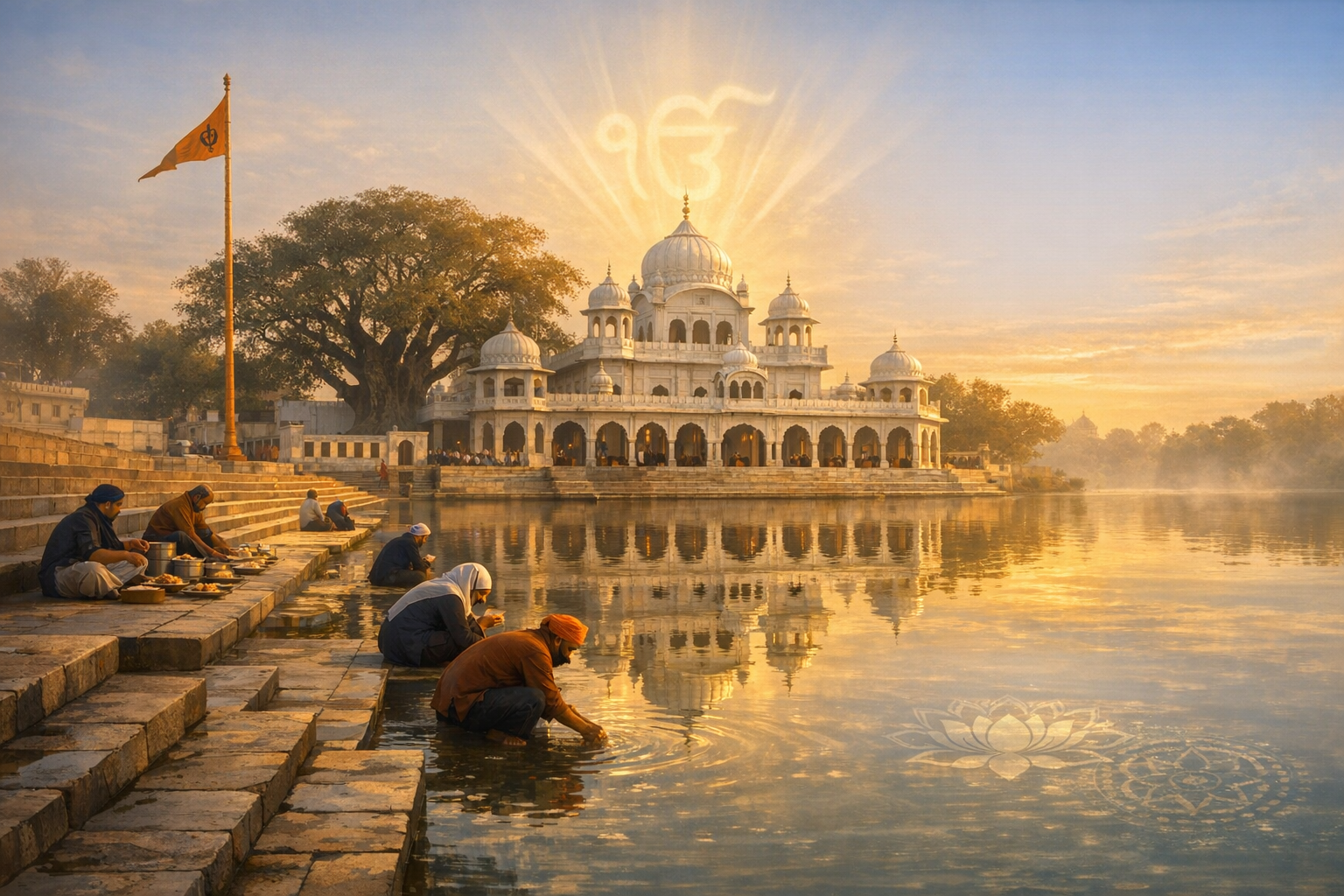
Sultanpur Lodhi is the historic river-town in Punjab where Guru Nanak Dev Ji’s public mission took form, anchoring Sikh heritage in lived practice along the Kali Bein. The town’s sacred geographycentered on Gurdwara Sri Ber Sahib and a constellation of related gurdwarastranslates scripture and song into daily acts of kirtan, langar, and seva. Ethical labor,…
-
Pathar Sahib, Leh: A Timeless Testament to Compassion, Forgiveness, and Dharmic Unity
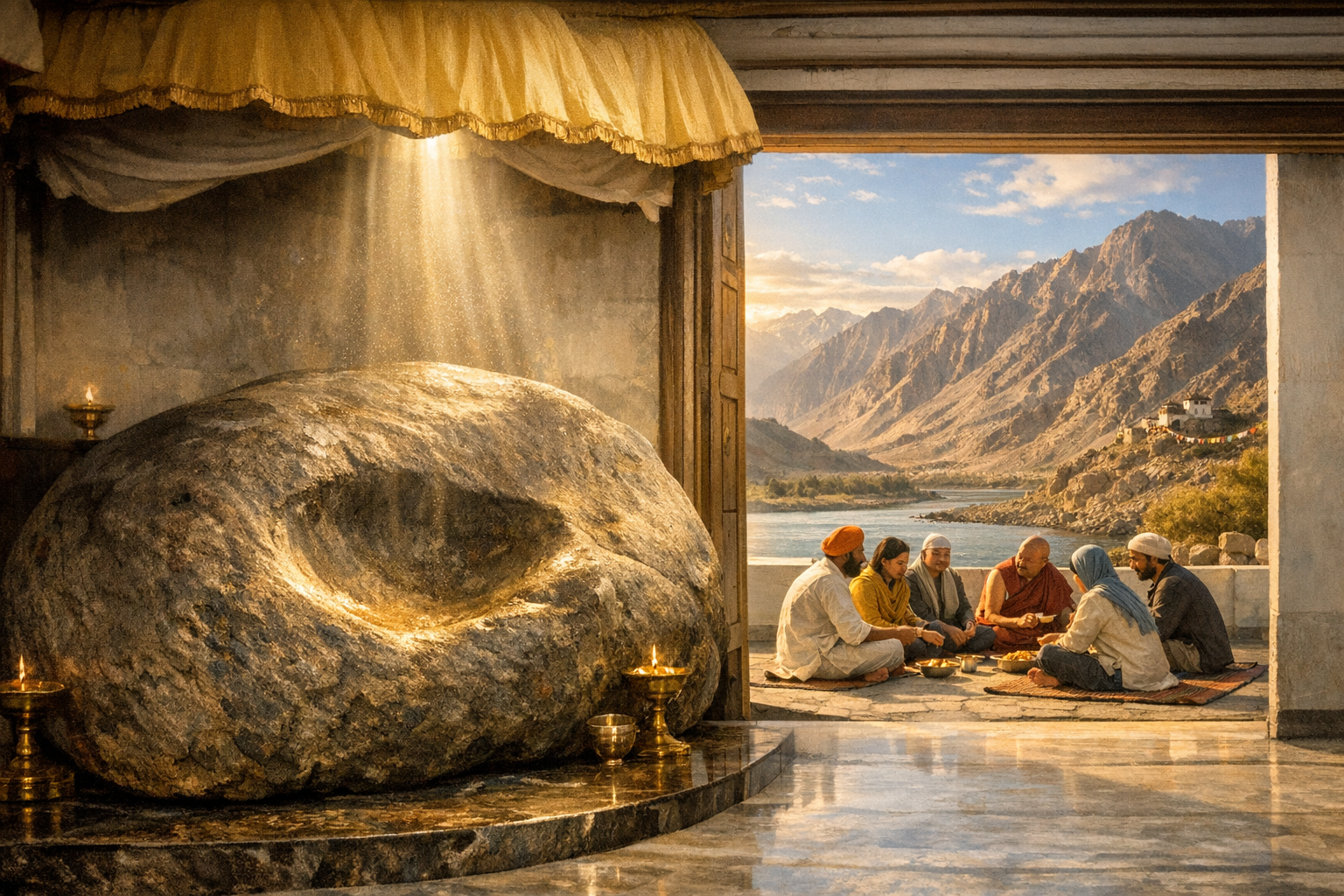
Gurdwara Pathar Sahib in Leh, Ladakh, is a revered Sikh sanctuary where the legend of Guru Nanak’s compassion and forgiveness converges with the high-Himalayan landscape. This comprehensive, research-driven overview situates the site within Janamsakhi traditions, interfaith memory, and Ladakh’s cultural geography. It explains how the venerated boulder and living practiceskirtan, ardas, and langartranslate ideals like…
-
Sikhs of Punjab: Khalsa Nationhood, Miri-Piri Sovereignty, and the Sacred Homeland
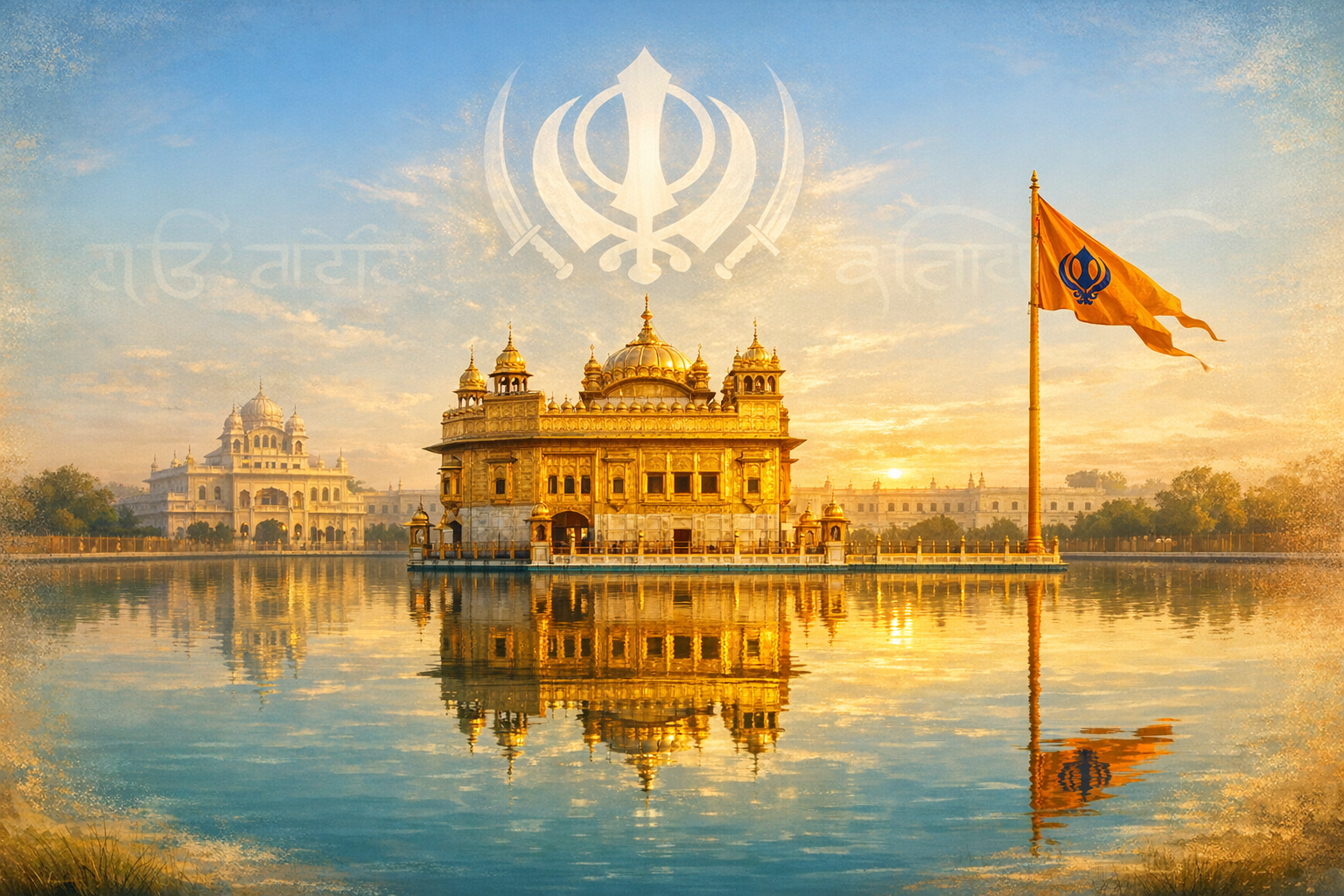
This comprehensive essay examines the Sikhs of Punjab through three lenses: historical nationhood (qaum), religious sovereignty (miri-piri), and the homeland of the Khalsa. It traces the arc from Guru Nanak’s foundational institutions to the Khalsa discipline of 1699, through the Sikh misls and the inclusive statecraft of Maharaja Ranjit Singh, to modern constitutional arrangements and…
-
Historic 327th Baisakhi: Khalsa Spirit and Dharmic Unity Ignite Gatherings Worldwide
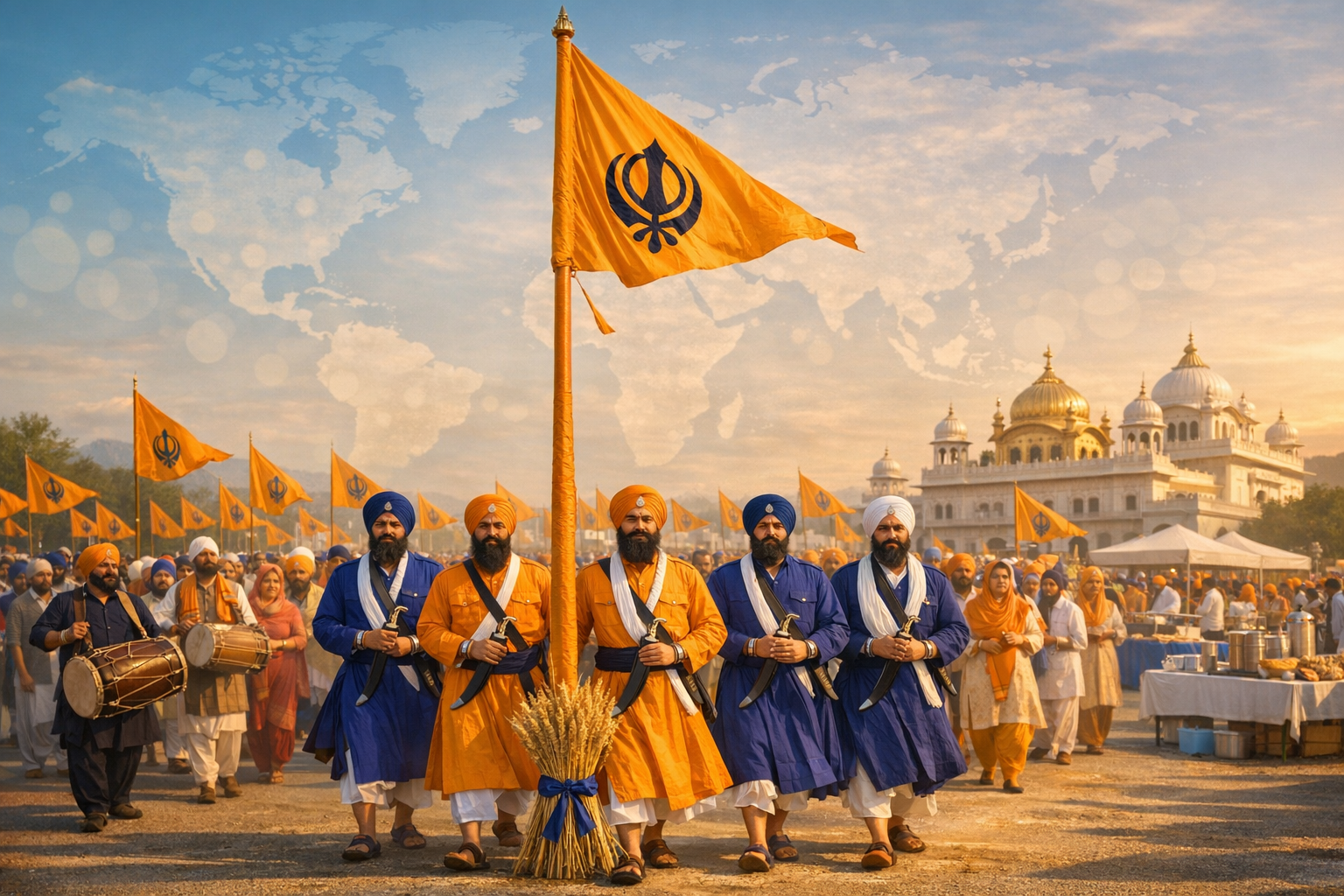
The historic 327th Baisakhi united Sikh communities across India and the global diaspora in a powerful commemoration of Khalsa Sirjana Diwas. Centered on Amrit Sanchar, kirtan, Ardas, and the Hukamnama, observances highlighted discipline, equality, and the living legacy of Guru Gobind Singh’s 1699 institution of the Khalsa. Processions (Nagar Kirtan) and Gatka demonstrations intertwined martial…
-
Matak Hulāre Unveiled (Part 2): Swaying Rhythms, Folk Aesthetics, and Punjabi Dance Science

Matak Hulāre captures the essence of Punjabi folk movement as a disciplined sway animated by joy, community, and musical pulse. This in-depth second installment analyzes its cultural history across Giddha and Bhangra, explains rhythmic foundations such as keherva cycles, and details the roles of dhol, algoza, chimta, and tumbi. It explores boliyan as living oral…
-
‘Gems of Sikhism’ Review: Timeless Teachings, Khalsa Ethos, and Dharmic Unity Today
This academically grounded review of ‘Gems of Sikhism’ distills the core teachings of SikhismIk Onkar, Naam, Seva, Kirat Karni, Vand Chakna, Sarbat da bhala, and the Khalsa ethosinto a coherent, accessible framework. It explains how Sikh practices like Langar and Seva institutionalize equality and compassion, while Miri–Piri and the Sant–Sipahi ideal provide a disciplined theory…
-
Honoring Dr. I. J. Singh: Enduring Legacy of Sikh Scholarship, Dharmic Unity, and Seva
This tribute reflects on Dr. I. J. Singh’s enduring legacy as a scholar of Sikhism whose life integrated faith, rigorous reasoning, and seva into a coherent method. It outlines how careful definitions, hermeneutic humility, and evidence-based argument advanced both public understanding and institutional ethics in the Sikh Community. It highlights miri-piri as a practical design…
-
Baba Deep Singh Ji: Scholar‑Warrior who safeguarded the Guru’s Word and Amritsar’s sanctity

Baba Deep Singh Ji (1682–1757) embodies the Sikh Sant‑Sipahi ideal, uniting rigorous scholarship with principled courage. This comprehensive account situates his formation at Anandpur Sahib and Damdama Sahib, his role in scribing and standardizing Gurbani manuscripts, and his leadership within the Dal Khalsa and the Shaheedan Misl. It presents the 1757 defense of Amritsar with…
-
Baba Deep Singh Ji: Scholar‑Soldier of the Khalsa and Guardian of the Golden Temple
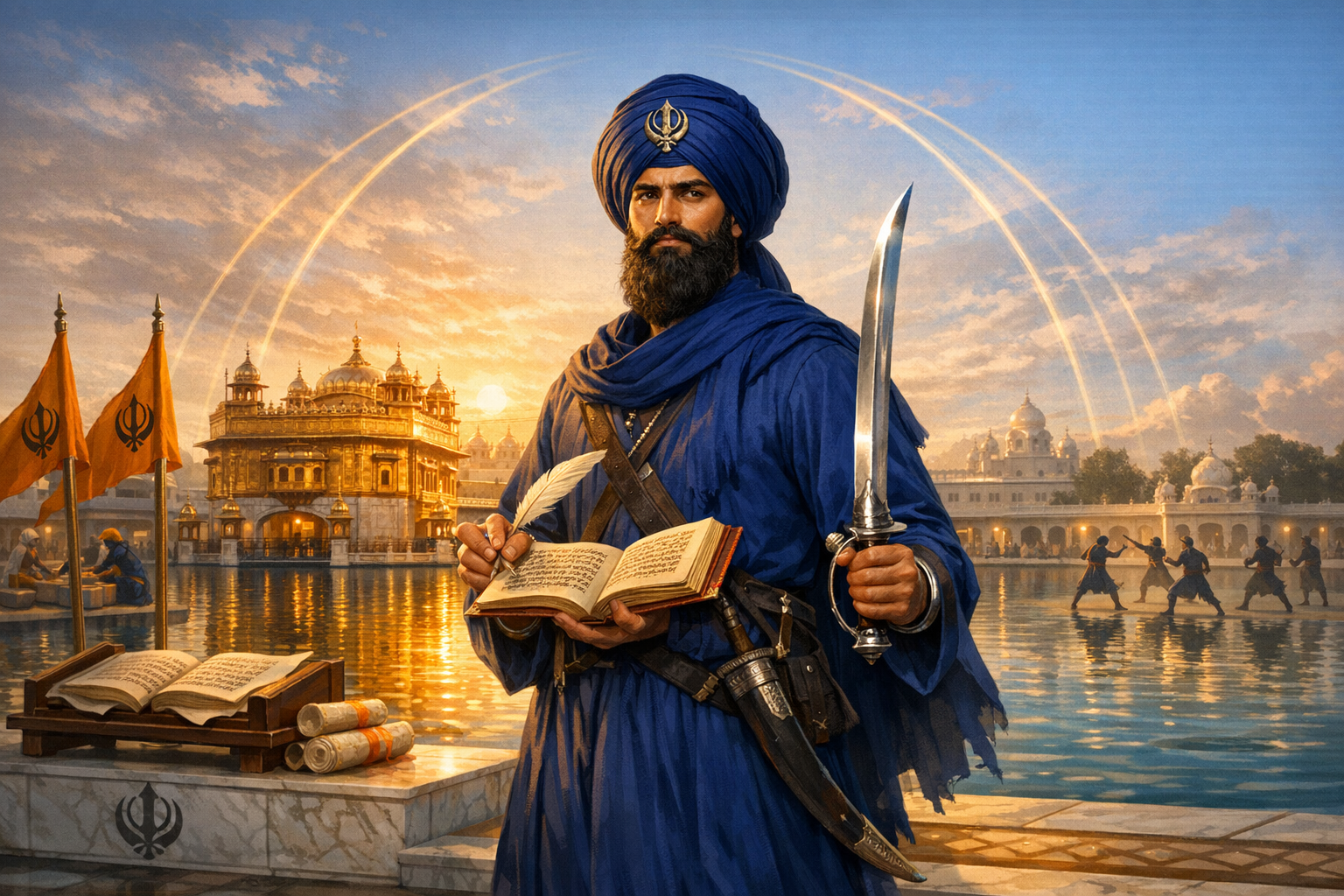
Baba Deep Singh Ji embodied the Sikh sant‑sipahi ideal by uniting deep scholarship with principled courage, ensuring the protection of sacred spaces and the continuity of learning. Set against the turbulence of eighteenth‑century Punjab, his work at Damdama Sahib safeguarded scriptural integrity while his leadership helped restore access to Harmandir Sahib after its desecration in…
-
Illuminating Sikh Lives: Eleanor Nesbitt’s Transformative Legacy in Sikh Studies and Dialogue

Eleanor Nesbitt’s scholarship reshaped Sikh Studies by centering lived religion, diaspora ethnography, and dialogue with communities. Her workrooted in careful fieldwork and clarity of methodhelps educators and students understand Sikhism through both scripture and everyday practice. By examining home, school, and gurdwara as interconnected learning spaces, she demonstrates how seva, langar, kirtan, and the 5…
-
Re-reading Guru Tegh Bahadur: A Fearless Beacon of Religious Freedom and Dharmic Unity

This interdisciplinary re-reading of Guru Tegh Bahadur situates his life and bani within history, music, philosophy, and public ethics. It explains how his teachings on detachment, compassion, and fearlessness formed a coherent ethic of conscience, culminating in a martyrdom for the protection of others’ faith. The narrative highlights how Sikhism’s sarbat da bhala converges with…
-
Sikhi Through Story: Evidence‑Based, Gurmat‑Aligned Narratives for a Dharmic Unity Vision
This message articulates how SikhNet Stories approaches children’s narratives as rigorous, Gurmat-aligned pedagogy. It roots storytelling in the Guru Granth Sahib’s inclusive vision while honoring Sikh maryada and the lived practices of Naam, Seva, and Sangat. Drawing on research in educational psychology, it explains why narrative transportation, dual-coding, and social learning improve attention, retention, and…
-
Vaisakhi Through Sikh Art: An Invitation to the VillaA Powerful Blueprint for Unity

This exhibition blueprint frames Vaisakhi as an academic and community-centered journey through Sikh art within an intimate villa setting. It traces the Khalsa’s founding at Anandpur Sahib, highlights Gurmukhi calligraphy and manuscript traditions, and situates paintings, textiles, and martial regalia within rigorous historical context. Preventive conservation, ethical display practices, and bilingual interpretation ensure scholarly integrity…
-
Shaheedi of Guru Tegh Bahadur: 350 Years of Courage that Secured Freedom of Conscience
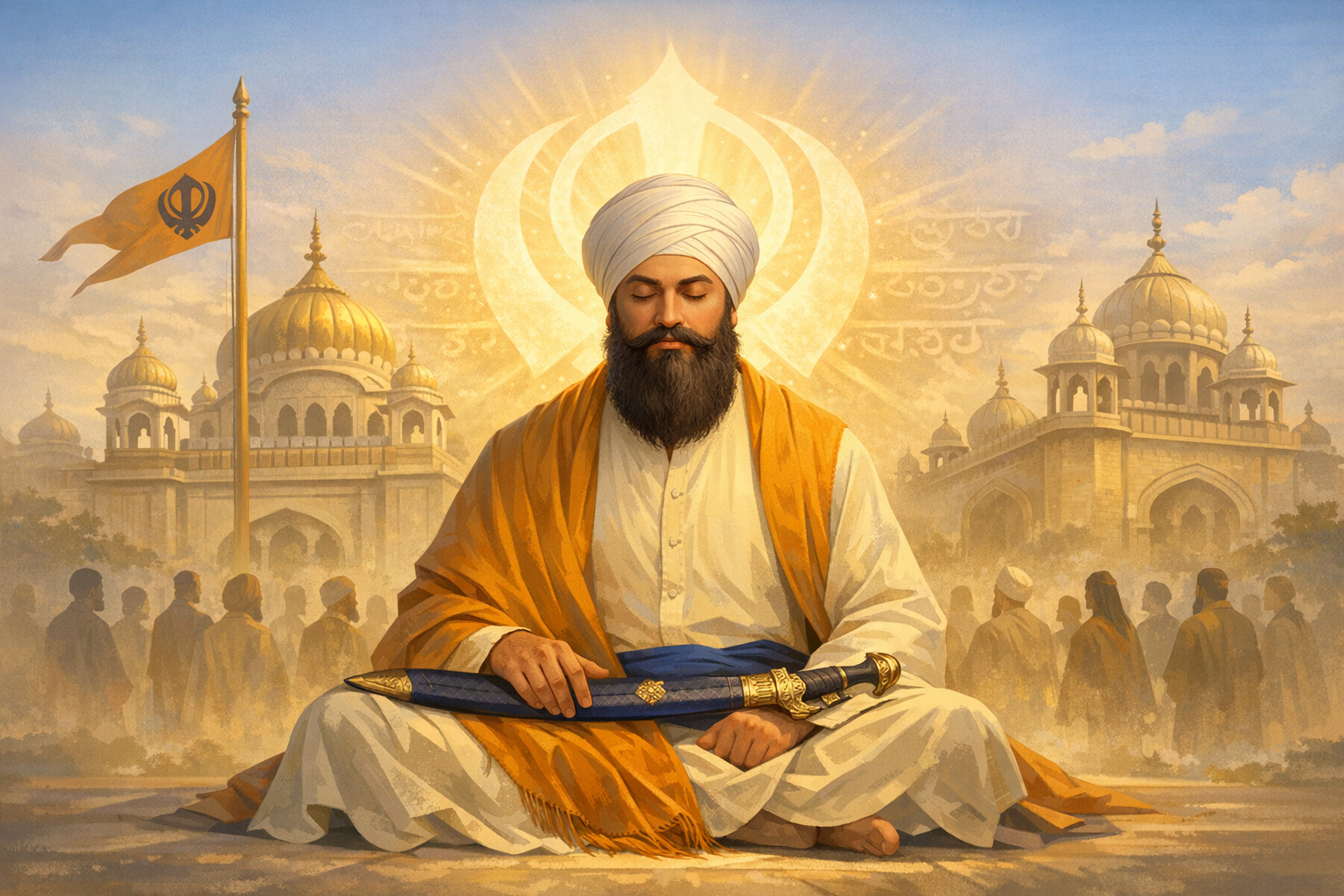
This long-form essay marks 350 years since the Shaheedi of Guru Tegh Bahadur Sahib Ji and examines the event’s historical context, ethical significance, and enduring legacy. It synthesizes Sikh, Persian, and European accounts while noting interpretive variations to present a rigorous, balanced narrative. Readers gain a concise timeline, a survey of key sites of memory…
-
Supreme Court clarifies: SC status for Hindus, Sikhs, Buddhists; conversion ends benefits

The Supreme Court of India has reaffirmed that Scheduled Caste status, under the Constitution (Scheduled Castes) Order, 1950, applies to persons professing Hinduism, Sikhism, or Buddhism and ceases upon conversion to any other religion. The ruling emphasizes constitutional continuity under Article 341 and clarifies that expansions of eligibility are for Parliament to decide, not the…
-
Guru Amar Das Ji: Seva, Radical Equality, and the Institutions that Shaped Sikhism
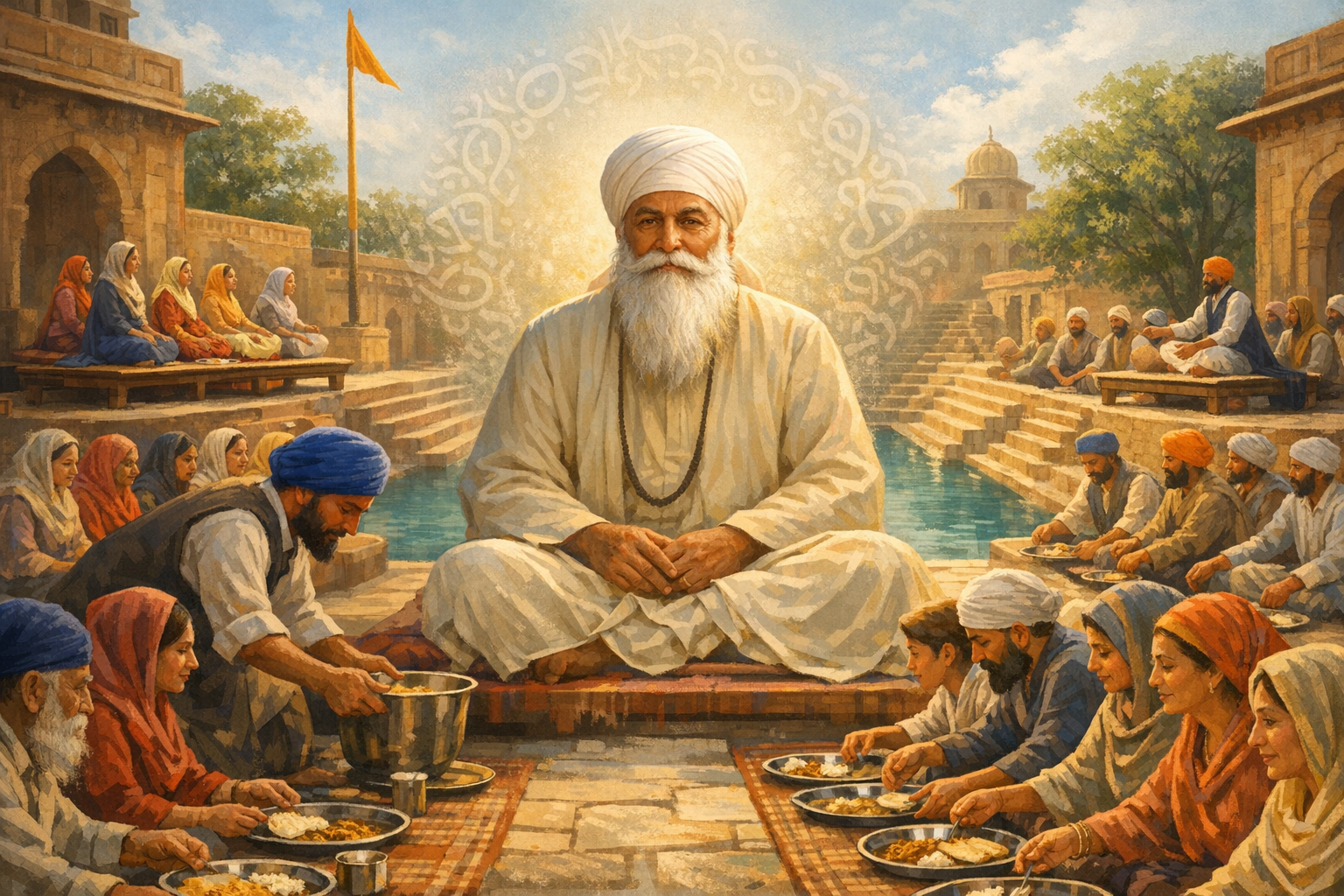
Guru Amar Das Ji, the third Sikh Guru, transformed spiritual principles into living institutions that still guide Sikhism worldwide. This article traces his late-life spiritual turn, the creation of the Manji–Piri leadership network, and the expansion of langar as a disciplined practice of equality. It examines Goindwal Sahib’s Baoli as sacred-public infrastructure and analyzes his…
-
Sardar Baghel Singh: The Visionary Who Etched Sikh Heritage on Delhi’s Sacred Map (1783)

Sardar Baghel Singh (c. 1730–1802) transformed Delhi’s sacred geography in March 1783 through a negotiated accord with the Mughal court that authorized, secured, and funded the construction of Sikh shrines at historic sites. Rather than a mere military episode, his intervention institutionalized Sikh memorymost notably at Sees Ganj Sahib and Rakab Ganj Sahibthrough a sustainable…
-
Sardar Baghel Singh: The Visionary Who Etched Sikh Heritage on Delhi’s Sacred Map (1783)

Sardar Baghel Singh (c. 1730–1802) transformed Delhi’s sacred geography in March 1783 through a negotiated accord with the Mughal court that authorized, secured, and funded the construction of Sikh shrines at historic sites. Rather than a mere military episode, his intervention institutionalized Sikh memorymost notably at Sees Ganj Sahib and Rakab Ganj Sahibthrough a sustainable…
-
Viral WWII Memorial Dance: Outrage, Double Standards, and the Erasure of Indian Sacrifice

A brief dance video by two Indian performers at the National World War II Memorial in Washington, D.C., sparked fierce online criticismsome of it justified on decorum grounds, much of it tinged with xenophobic and Hinduphobic rhetoric. This analysis separates rules-based concerns from racialized targeting, explaining what National Park Service guidance actually permits and prohibits…
-
Historic Honour: Param Singh MBE Receives Freedom of the City of London, Inspiring Dharmic Unity
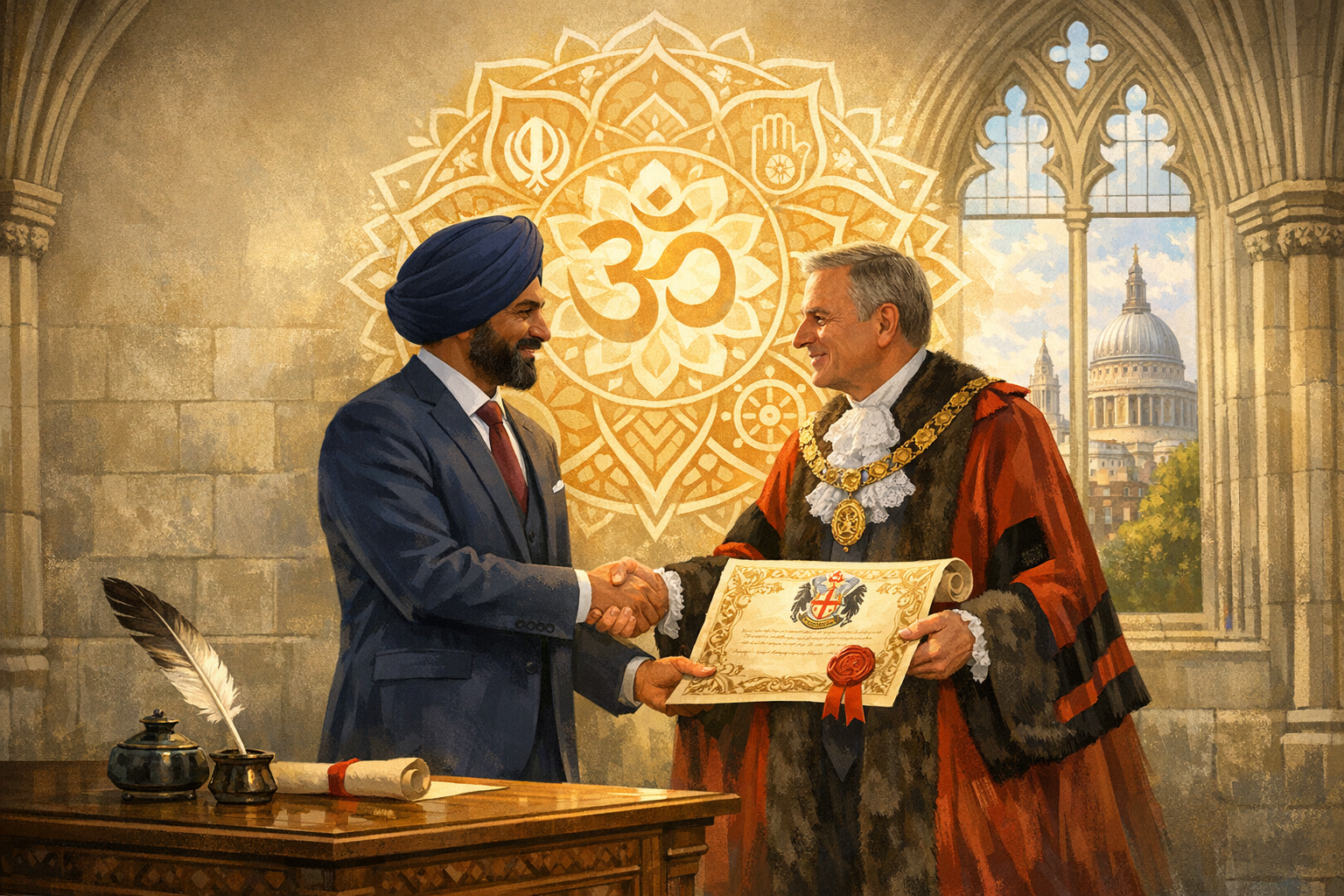
Param Singh MBE, founder of City Sikhs, has been awarded the Freedom of the City of London, a historic civic honour that recognizes sustained leadership in community cohesion, interfaith dialogue, and public service. The recognition highlights how Sikh values of seva and sarbat da bhala translate into inclusive civic action within London’s ancient institutions. It…