
-
Is Life Easy or Difficult? Dharmic wisdom unites dukkha and ananda with practical tools

The longstanding paradoxBuddhism’s dukkha versus the claim that life is joyresolves when viewed through dharmic frameworks that distinguish conventional from ultimate truth. Buddhism names the instability of conditioned life, while Vedanta points to ananda as the intrinsic nature of consciousness; Jain Anekantavada and Sikh Chardi Kala further harmonize these insights. This synthesis is practical, not…
-
Memento Mori as Dharmic Practice: Urgent Living, Clear Priorities, and Courageous Leadership

This article presents a disciplined, Dharmic approach to mortality contemplation as a practical technology for urgent living and ethical leadership. It synthesizes insights from Hinduism, Buddhism, Jainism, and Sikhismmaranasati, pratikraman, simran, and dharmato convert awareness of impermanence into decisive action. A step-by-step protocol guides breath awareness, a regrets inventory, value-based reprioritization, and execution of one…
-
Dissolving Trishna’s Hidden Fire: Timeless Dharmic Strategies to Transform Craving into Freedom

This long-form, research-driven exploration explains trishna (craving) as the subtle energy that precedes actionthe “root before the root.” It integrates Hindu, Buddhist, Jain, and Sikh perspectives to present a unified Dharmic framework for transforming craving into clarity and freedom. Readers gain a technical map (kleśas, vāsanās, vedanā, dependent arising), scriptural anchors (Yoga Sutra, Bhagavad Gita,…
-
Backbiting and Dharma: Psychological, Social, and Karmic CostsPlus Practical Remedies

Backbiting may appear trivial, yet dharmic ethics and modern psychology converge on its real costs: eroded trust, increased anxiety, fragmented communities, and deepened karmic imprints. Hinduism (Bhagavad Gita 17.15), Buddhism (Right Speech), Jainism (ahimsa and satya), and Sikhism (rejection of ninda) all prescribe compassionate, truthful, and beneficial speech. Research likewise shows that malicious gossip undermines…
-
Is Life Easy or Difficult? An Evidence-Backed Dharmic Guide to Joy, Suffering, and Mastery

Is life easy or difficult? A dharmic analysis shows the question spans two complementary levels: the conventional reality of dukkha (unsatisfactoriness) and the ultimate discovery of ananda (joy). Buddhism’s Four Noble Truths, the Yoga Sutra, Vedanta’s ananda doctrine, Jain anekantavada, and Sikh Chardi Kala together form a unified method for transforming difficulty into resilience while…
-
Ramayana’s Unfinished Truth: Why Rama and Sita Don’t Get a Fairy-Tale Ending (and Dharma’s Lesson)

Ramayana is not a fairy tale about bliss after victory; it is a rigorous meditation on dharma under the pressures of love, power, and public trust. The narrative after Ravana’s defeat intensifies into a study of rajadharma, where Rama’s personal anguish and public duty collide. Sita’s trialsAgni Pariksha, exile, and her return to Mother Earthexpose…
-
Adi Granth as an Ecumenical Beacon: Guru Granth Sahib’s Universal Wisdom for Dharmic Harmony

This essay presents the Adi Granth, enshrined today as the Guru Granth Sahib, as a uniquely oecumenical scripture whose language, music, and ethics resonate across Hindu, Buddhist, Jain, and Sikh traditions. It traces the canon’s historical formation, its multivocal authorship, and its raga-based architecture to explain why the text travels so well across communities. Theological…
-
Baba Deep Singh Ji: Scholar‑Warrior who safeguarded the Guru’s Word and Amritsar’s sanctity

Baba Deep Singh Ji (1682–1757) embodies the Sikh Sant‑Sipahi ideal, uniting rigorous scholarship with principled courage. This comprehensive account situates his formation at Anandpur Sahib and Damdama Sahib, his role in scribing and standardizing Gurbani manuscripts, and his leadership within the Dal Khalsa and the Shaheedan Misl. It presents the 1757 defense of Amritsar with…
-
Baba Deep Singh Ji: Scholar‑Soldier of the Khalsa and Guardian of the Golden Temple
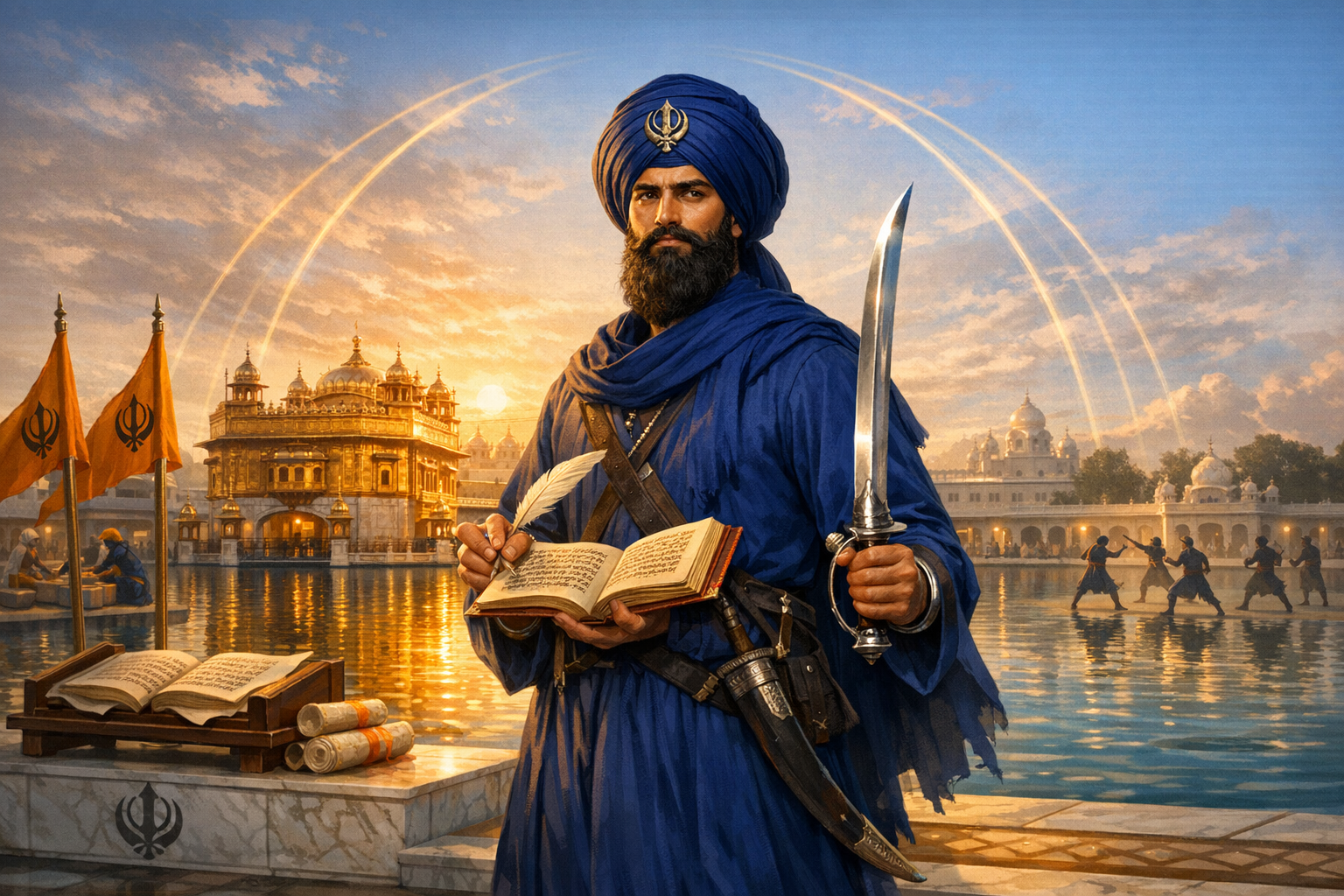
Baba Deep Singh Ji embodied the Sikh sant‑sipahi ideal by uniting deep scholarship with principled courage, ensuring the protection of sacred spaces and the continuity of learning. Set against the turbulence of eighteenth‑century Punjab, his work at Damdama Sahib safeguarded scriptural integrity while his leadership helped restore access to Harmandir Sahib after its desecration in…
-
How Sharing Food Heals Enmity: Timeless Dharmic Practices from Hindu, Buddhist, Jain, Sikh Traditions
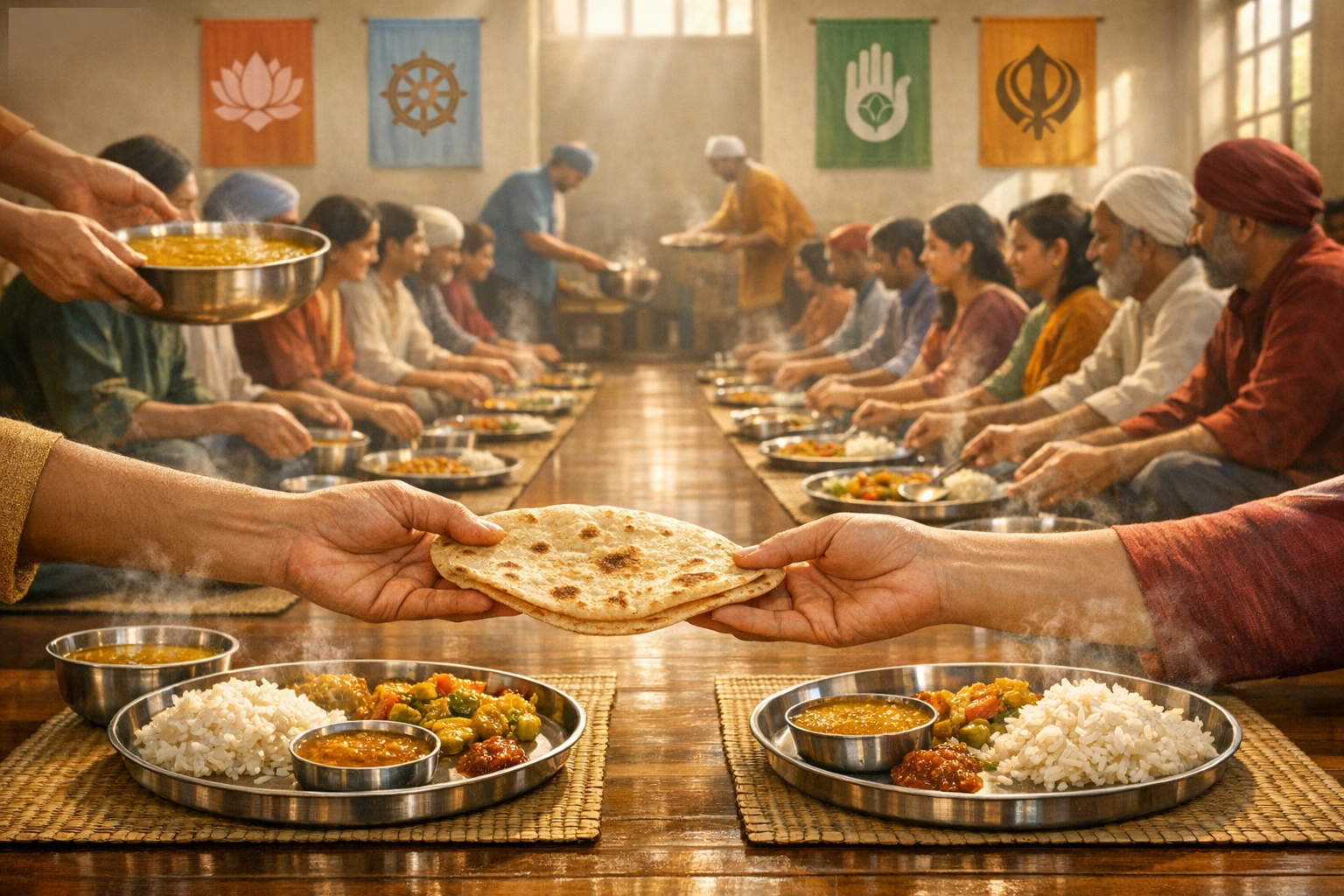
Hinduism and its sister dharmic traditions treat shared food as a deliberate instrument of reconciliation. Philosophical axioms such as Annam Brahma, Atithi Devo Bhava, and Vasudhaiva Kutumbakam elevate feeding from charity to peacecraft. Ramayana narratives, temple prasada, Sikh langar, Jain anna-kshetras, and Buddhist dana converge on a single ethic: dignified, vegetarian commensality dissolves social distance…
-
As You Believe, So You Live: Hindu Dharma’s Science of Mindset, Health, and Longevity

This long-form analysis explores how dharmic wisdomHinduism, Buddhism, Jainism, and Sikhismanticipated modern findings on the mind-body connection by showing that belief (śraddhā, bhāva) measurably shapes healthspan and longevity. It integrates Bhagavad Gita and Yoga Sūtra insights with Ayurveda’s sattvavajaya and rasāyana, and aligns them with contemporary stress biology, autonomic regulation, and immune resilience. Practical guidance…
-
Transcend Forms, Find Clarity: Hindu Wisdom for Locating the Cause Behind All Phenomena

This article examines a central teaching of Hindu philosophy: look past nāma-rūpa (names and forms) to the abiding kāraṇa (cause). Drawing on the Upaniṣads and Bhagavad Gītā, it explains how Vedānta distinguishes empirical from ultimate reality and why māyā is a principle of appearing rather than mere illusion. It shows how forms function as upāyameans…
-
Self‑Born, Mind‑Born, Womb‑Born: Decoding the Profound Hindu Cosmology and Sanat Kumaras
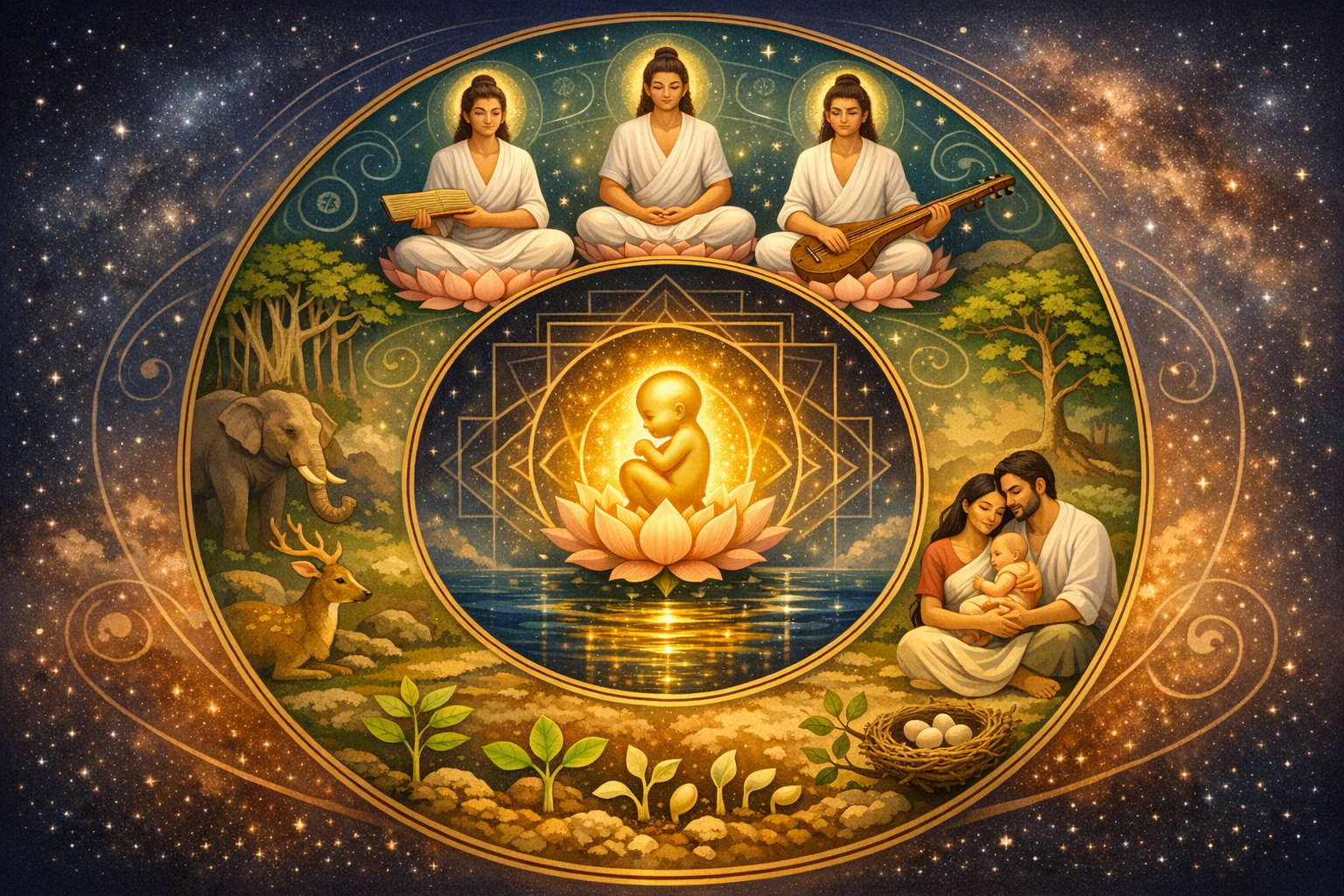
Hindu cosmology describes creation in three interlinked stages: self-born (svayambhū), mind-born (mānasa), and womb-born (jarāyujā). Drawing on the Viṣṇu Purāṇa, Śrīmad-Bhāgavatam, and allied texts, this analysis shows how sarga (primary emanation) and visarga (secondary diversification) structure a descent from subtle principle to mental formation and biological life. The Sanat Kumaras and Nārada exemplify the mind-born…
-
Dissolve Thoughts at Their Source: Hindu Wisdom and Dharmic Science for a Clearer Mind

Ancient Hindu wisdom teaches that thoughts gain power only when grasped; dissolving them at inception restores clarity and self-mastery. The method aligns with Yoga Sutra principles of vritti-nirodha, abhyasa, and vairagya, and is reinforced by Upanishadic and Bhagavad Gita guidance. Practical protocolsbreath coherence, light labeling, mantra gating, atma-vichara, and somatic defusionmake the technique accessible in…
-
Kapal‑Muni in Bhagat Maalaa: Unifying Hindu, Buddhist, Jain, and Sikh Wisdom Today
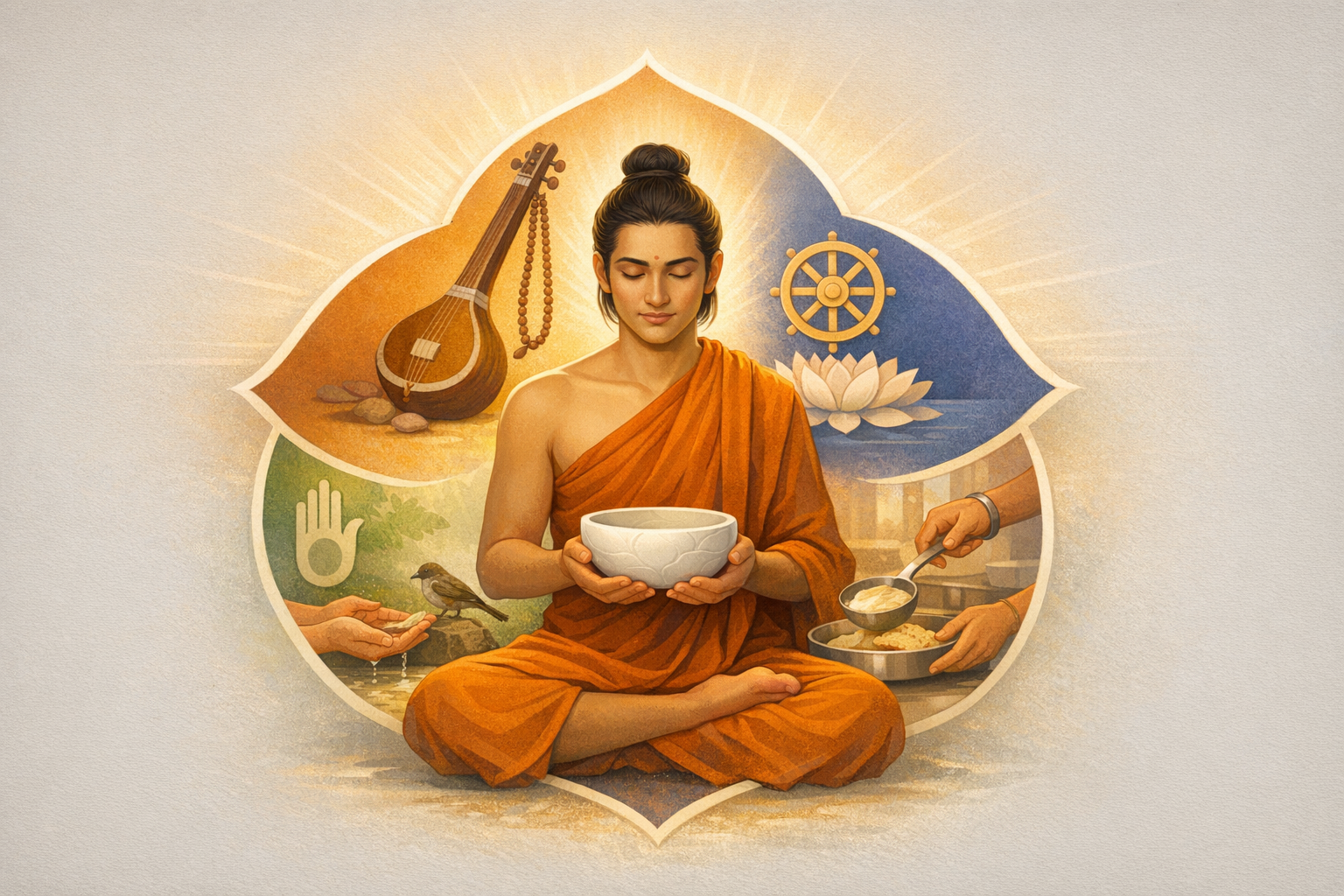
This article examines the Kapal‑Muni motif within the broader Bhagat Maalaa/Bhaktamal tradition as a didactic lens on impermanence, ego, and compassion. It clarifies how skull‑cup symbolism functions ethically rather than sensationally, inviting readers to privilege inner transformation over outward austerity. The discussion surveys convergences and distinctions across Hindu Śaiva and Vaishnava currents, Sikh teachings centered…
-
Beyond Guru Worship: Living Sanatana Dharma through Practice, Pluralism, and Service
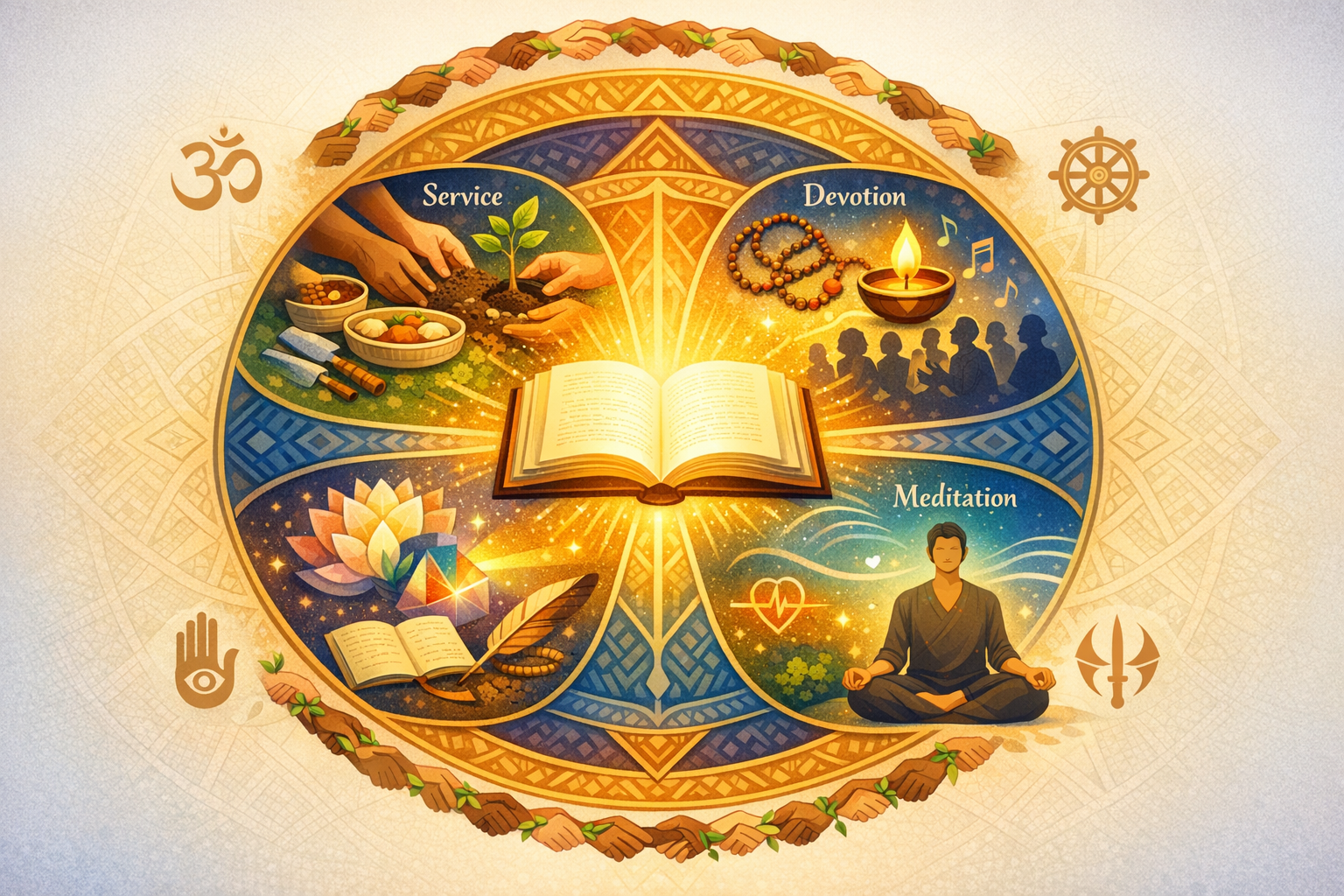
Public celebrations of guru anniversaries have grown spectacular, but the risk of drifting from teachings to personality worship is real. This essay reframes devotion through a Dharmic lens shared by Hinduism, Buddhism, Jainism, and Sikhism: live the message, not the messenger. It maps classical yardsticks of authentic progressyamas and niyamas, lokasangraha, simran and seva, sīla…
-
Unlock the Ocean Within: Dharmic Pathways to Atman, Timeless Wisdom, and Resilient Strength

This essay examines the statement “You know little of that which is within you. Within you is the ocean of infinite power” through the shared frameworks of Hinduism, Buddhism, Jainism, and Sikhism. It explains the Upanishadic vision of ātman and Brahman, the yogic map of prāṇa and kundalinī, and the ethical preconditions that make inner…
-
Beyond Chant and Dance: The Transformative Science of Nama, Naam Simran, and Scriptural Hearing
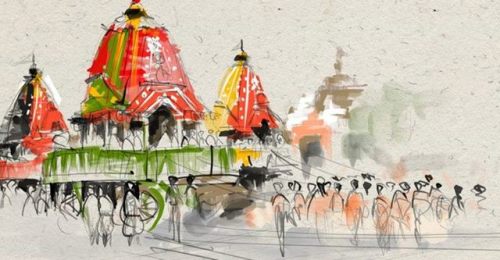
Chanting the Holy Name stands supreme in Sri Caitanya Mahaprabhu’s teaching, yet it flourishes when supported by hearing, reflection, and ethical alignment. Drawing on Srimad-Bhagavatam’s ninefold path of devotion, this article explains why sravana (hearing) provides the sambandha-jnana that turns sound into a living relationship with Krishna (Krsna). It clarifies the difference between mere “shadow…
-
Beyond Sectarianism: Dharmic Wisdom for an Inclusive, Boundless Vision of the Divine

This essay examines the insight that a sectarian mind yields a defective image of the Divine, drawing on Hindu philosophy and the wider Dharmic traditions. It traces Vedic and Upanishadic roots of pluralism, explains the Bhagavad Gita’s inclusivism, and shows how Ishta, Advaita, Vishishtadvaita, and Dvaita approach the One-and-many problem without mutual negation. It integrates…
-
Omnipotence and Sacred Sound: Why Krishna’s Words Remain a Living Presence Across Traditions

Omnipotence in Vedic philosophy explains how Krishna remains in unbroken companionship with living beings through sacred sound. Vaishnava theology teaches nāma–nāmi abheda, the non-difference between the Divine Name and the Divine Person, grounding the transformative power of the Hare Krishna Mahāmantra. The principle of śabda-brahman shows that divine words are not merely symbolic; they are…