
-
When One Verse Moved a Sage to Tears: Rallapalli A. Sarma and Annamacharya’s Revival
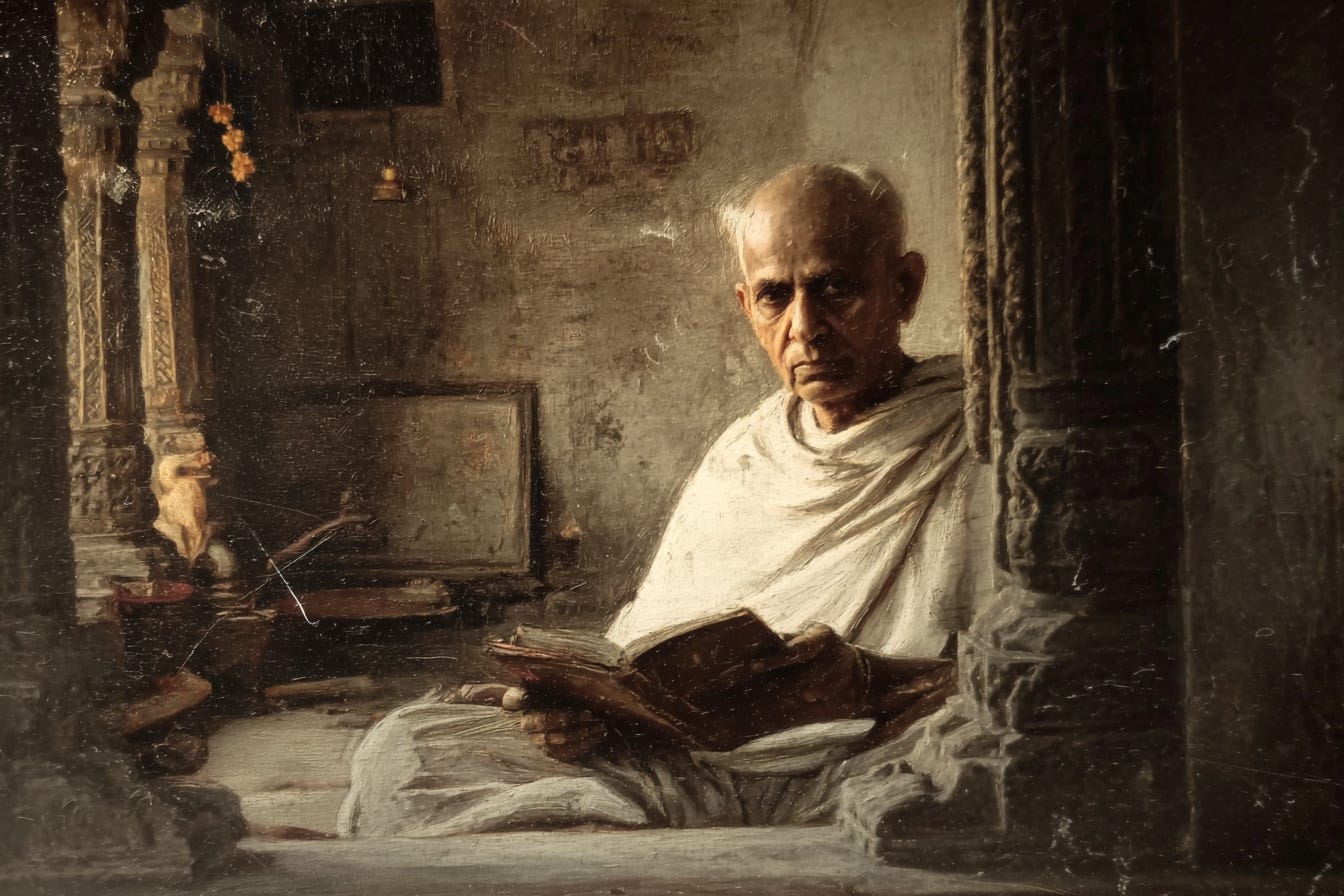
This essay examines the life and legacy of Ganakalasindhu Sri Rallapalli Anantakrishna Sarma, focusing on his seminal role in reviving Tallapaka Annamacharya’s Kritis for TTD and his formation within the Guru-Shishya Relationship at Parkala Matha. It recounts a moving episode in which a single Ramayana verse moved his Guru, Sri Krishnabrahmatantra Yatindra, to tearsan emblem…
-
Mahanamni Explained: Sacred Sama Veda Sakvari Verses Shaping Ahina Rituals and Unity

The Mahanamni, a set of nine Sama Veda verses in Jaiminiya Samhita 2.7, begins with the words “vida maghavan” and is also known as the Sakvari verses. These chants hold enduring ritual significance, especially within the focused framework of Ahina sacrifices. Their careful phonetics and measured melodic patterns ensure that intention, meter, and meaning align…
-
Ghanapatha: The Brilliant Oral Science That Preserved the Vedas with Unmatched Precision

Ghanapatha is an advanced Vedic recitation method that preserved the Vedas with exceptional precision through patterned repetition and reversal. Situated within the Shiksha Vedanga, it crowns a structured pedagogySamhita, Pada, Krama, Jata, and Ghanathat builds redundancy and error-checking into every line. By guarding phonetics and pitch accents (udātta, anudātta, svarita), it retains exact meaning and…
-
Thirteen Radiant Forms of Goddess Kali in Tantraloka: Abhinava Gupta’s Kashmiri Vision

This exploration presents the thirteen forms of Goddess Kali in Abhinava Gupta’s Tantraloka as a living contemplative map within Kashmir Shaivism. Rather than a fixed list, these forms serve as dynamic lenses that refine attention, transmute fear, and reveal the liberating vastness of Shakti. The discussion situates Kali within Trika and Kaula streams while acknowledging…
-
Halayudha’s Genius: The 10th-century Sanskrit lexicographer who shaped Indian letters

Halayudha, the 10th-century Sanskrit scholar and lexicographer, is best known for the Abhidhanaratnamala (Halayudhakosha), a metrical dictionary that shaped classical Indian literature. Composed for memorization and precision, it preserves semantic fields vital to poets, teachers, and students. The work’s linguistic and historical value helps modern readers interpret layered meanings across texts central to Hinduism, Buddhism,…
-
Srimad Bhagavatam 3.23.42: The Life-Changing Refuge at the Lotus Feet of the Divine
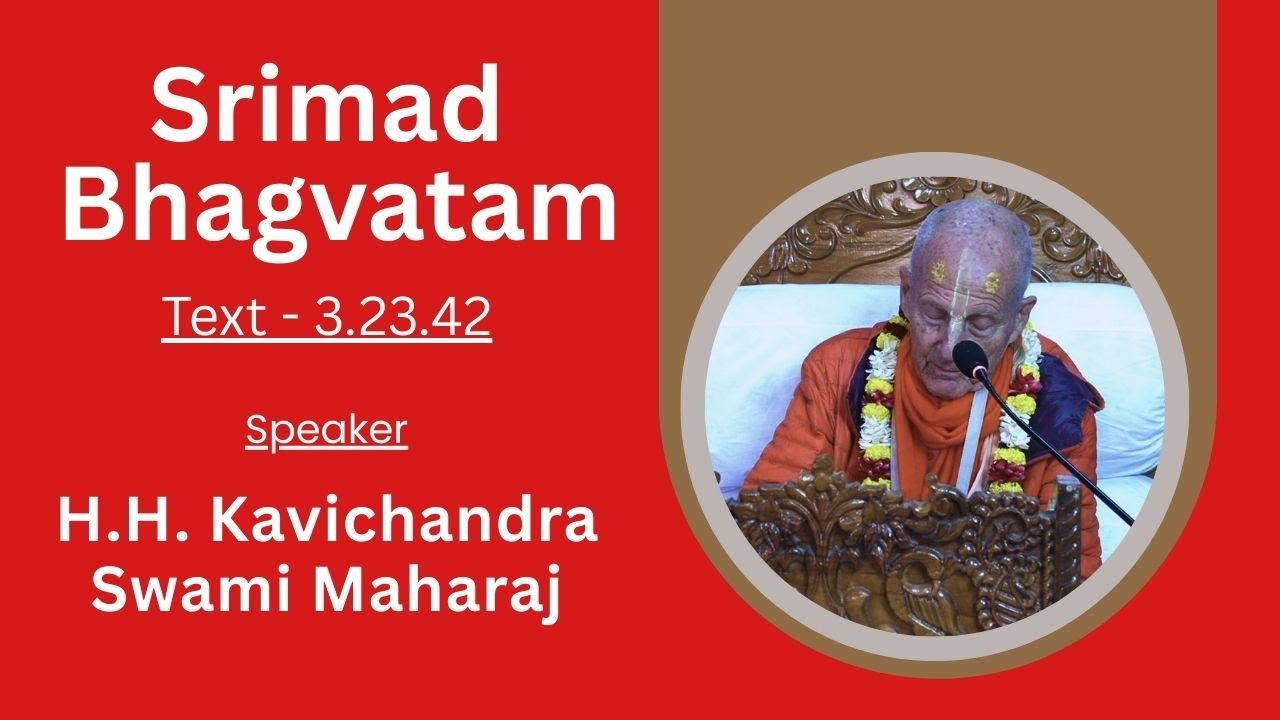
Srimad Bhagavatam 3.23.42 teaches that determined refuge at the Divine lotus feet turns difficult goals into attainable realities. The verse’s image of sacred rivers like the Ganga flowing from those feet signals purification and release from worldly danger. The phrase yair āśritas tīrtha-padaś caraṇaḥ highlights a shared dharmic metaphor: the holy ford that carries seekers…
-
Unlocking Sanskrit Mastery: Patanjali’s Mahabhashya on Panini’s Ashtadhyayi, Explained

Panini’s Ashtadhyayi (5th century BCE), with its eight chapters and 3,996 sutras, offers a precise formal system for Sanskrit grammar that has influenced linguistic thought for millennia. Patanjali’s Mahabhashya deepens this precision through dialectical analysis, clarifying rule interactions and interpretive principles across phonology, morphology, and syntax. Together, they provide a shared scholarly foundation for Hindu,…
-
Chhinnamasta in the Pranatosini Tantra: Divine Self-Sacrifice and Cosmic Renewal

This article explores the Pranatosini Tantra’s account of Chhinnamasta, a Mahavidya who embodies divine self-sacrifice and cosmic renewal. It explains how the Goddess nourishes her attendants through three life-giving streams, an image read as both prāṇa symbolism and radical generosity. The iconographystanding over Kāma and Ratiillustrates mastery over desire and the transformation of passion into…
-
Why Memorizing Shlokas Transforms the Mind: Daily Practices, Focus, and Inner Joy
Memorizing shlokas steadily fills the mind with sacred sound, reducing distractions and strengthening focus. The discipline often moves from initial effort to enduring pleasure as cadence and meaning take root. Everyday routinescooking, commuting pauses, and brief phone sessionsoffer natural touchpoints for learning. Consistent, bite-sized practice builds recall and creates a calm inner rhythm of mantras.…
-
Kshiraswamin on Amarakosha: A Master Commentator Who Shaped Sanskrit Lexicography

Kshiraswamin is widely regarded as a master commentator on Amarasimha’s Amarakosha, a foundational work in Sanskrit lexicography. His analysis clarifies synonym sets, refines semantic distinctions, and connects entries to principles of Sanskrit grammar. Though his precise dates are debated, he is often placed in the early medieval period, and his authority across traditional and modern…
-
Kulluka Bhatta’s Manvarthamuktavali: A Brilliant Beacon in India’s Dharmashastra Heritage

Kulluka Bhatta’s Manvarthamuktavali shaped how generations interpret the Manusmriti, blending Mimamsa hermeneutics and Nyaya reasoning to clarify a foundational Dharmasastra text. Situated in Varendra Bengal and remembered as the son of Bhatt-ivakara, Kulluka’s biography points to vibrant medieval Sanskrit networks. His commentary stabilized a widely read recension, influenced later editions and translations, and refined debates…
-
Pavamana Suktam in the Rig Veda: Timeless Hymn of Soma, Purity, and Dharmic Unity

Pavamana Suktam (Rig Veda 9.1.1–10) opens the Soma Mandala with a powerful vision of purification, clarity, and renewal. Attributed to Madhucchanda and composed in the Gayatri meter, it functions as both liturgical chant and contemplative text. The imagery of Soma’s sacred flow symbolizes inner transformation, aligning with shared values across Hinduism, Buddhism, Jainism, and Sikhism.…
-
Raghunātha Śiromaṇi and Navya-Nyāya: The Daring Indian Modernity Before Descartes

Indian modernity did not require a rupture with the past. Through Navya-Nyāya, Raghunātha Śiromaṇi advanced “reason and evidence-based critical inquiry” a century before Descartes, crafting a precise technical language to analyze reality from the finest concepts to composite bodies. This tradition flourished around Mithila, Navadwīpa, and Varanasi, drawing scholars from Tibet and nurturing cross-dhārmic exchange.…
-
Achyuta Unveiled: Meaning, Symbolism, and the Imperishable Grace of Vishnu

Achyutameaning “the unfallen”is a profound Sanskrit name of Lord Vishnu and Sri Krishna that conveys imperishability and unwavering grace. Scriptural anchors such as Bhagavad Gita 1.21 and the Vishnu Sahasranama highlight its theological depth and devotional relevance. The name’s symbolism nurtures steadiness, moral clarity, and resilience, guiding practitioners through uncertainty. Its core intuition of a…
-
Power and Tapas in Kalidasa: Tagore on Raghuvamsha and Kumarasambhava’s Lesson

Rabindranath Tagore’s reading of Kalidasa reveals a profound dialogue in Sanskrit literature between worldly power and inner discipline. Raghuvamsha maps the ascent born of tapas and the decline that follows indulgence, using dawn-and-dusk imagery to frame a moral architecture. Kumarasambhava then proposes the remedy: harmonize renunciation and enjoyment so that strength is born from balance.…
-
Kalidasa and His Age: Nature, Dharma, and the Rise of Heroism in Sanskrit Poetry
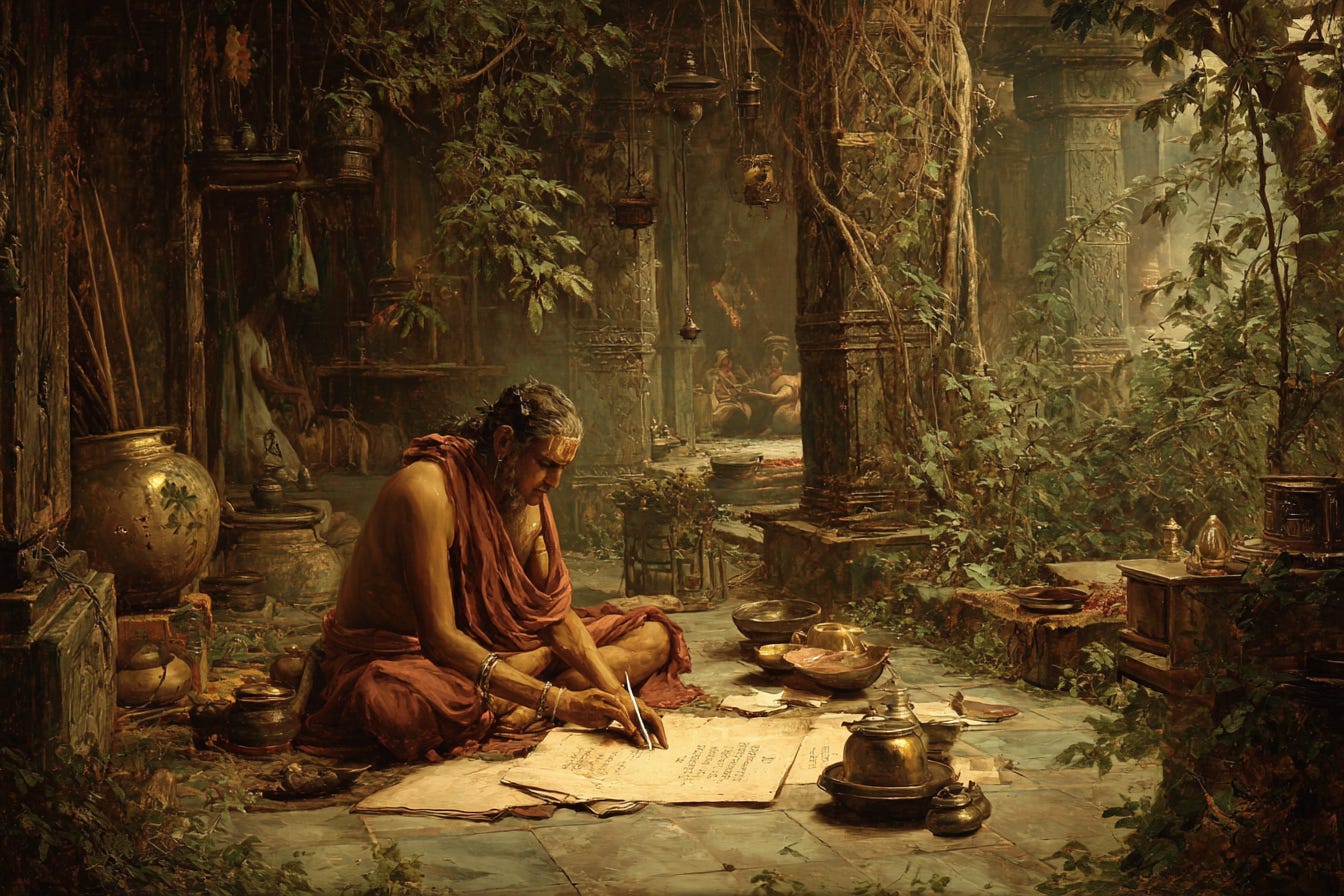
Kalidasa’s poetry unites human emotion with the grandeur of Nature and the ethical clarity of dharma, making him a representative voice of his age. Vivid imagesechoing the hermitage in Kadambaridepict a civilization where people, plants, and animals share ritual, learning, and care. Ritusamhara shows early passion harmonized by seasons, while Kumara-sambhava reframes desire through a…
-
First English Release of Kavya-kaustubha: Unlocking Sri Baladeva Vidyabhusana’s Poetics

Kavya-kaustubha, composed by Sri Baladeva Vidyabhusana, is now available in English for the first time, opening a precise gateway to Sanskrit poetics. The work’s rigorously defined concepts, each paired with clear examples, make complex ideas accessible for students, educators, and researchers. This edition enhances classroom teaching and self-study while supporting comparative literary analysis. It also…
-
Bhasa’s Bold Reimagining of Sita’s Abduction in Pratima Natakam: Ethics, Dharma, Drama

Bhasa’s Pratima Natakam (Pratimanatakam) presents Sita’s abduction not as onstage spectacle but as a reflective, ethically charged episode grounded in classical Sanskrit dramaturgy. By channeling the event through memory, messenger-reports, and the symbolic power of the pratima (statue), the play emphasizes dharma, agency, and the psychology of crisis over physical action. This approach foregrounds rasaespecially…
-
Annapurna Jayanti 2025: Date, Powerful Mantra, Vrat Guide, Significance and Sacred Symbolism
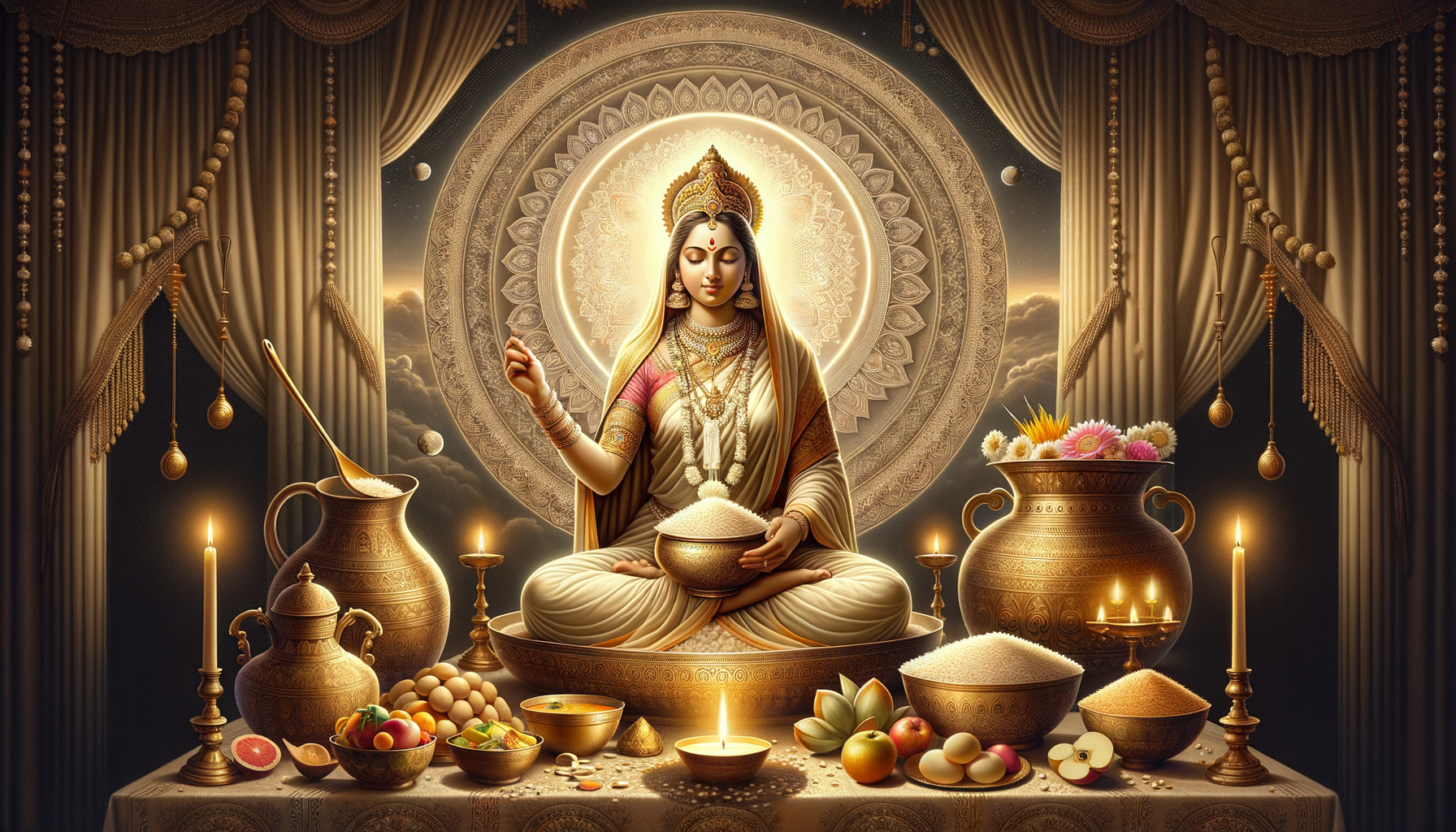
Annapurna Jayanti 2025 falls on December 4, coinciding with Margashirsha Purnima in the Hindu calendar. The festival venerates Goddess Annapurna, celebrating the sacredness of food, gratitude, and community care. Devotees observe Annapurna Vrat, offer naivedya, and prioritize annadanam, affirming compassion through the act of feeding. The mantra ह्रीं अन्नपूर्णायै नम:॥ is chanted to invoke abundance…
-
Br̥hatī (Brihati) Vedic Meter Explained: Structure, Rigvedic Usage, and Timeless Significance

Br̥hatī (Brihati) is a principal Vedic meter with thirty-six syllables arranged as four quarters of nine. Traditionally placed fourth in canonical lists of chandas, it bridges compact and expansive meters, balancing precision with breadth. Its cadence shapes the sound and emphasis of Vedic hymns, especially in the Rigveda, and remains audible in contemporary recitation and…