
-
Enigmatic Two-Headed Golden Deer: What Regional Ramayanas Reveal about Sita’s Abduction

The Ramayana’s Sita abduction episode is not a fixed script but a living tradition across India. In select Kerala and Tamil Nadu repertoires, the golden deer becomes a two-headed marvel, amplifying the epic’s meditation on maya, desire, and deception. Anchored in Valmiki’s Aranya Kanda yet enriched by Kamba Ramayanam, Adhyatma Ramayanam Kilippattu, and folk performance,…
-
Sacred Robes Betrayed: Ravana’s Sanyasi Deceit, Sita’s Abduction, and Shiva’s Silent Wrath

This long-form analysis examines Ravana’s abduction of Sita through the guise of a Sanyasi, highlighting why the episode is treated across Ramayana traditions as a grave betrayal of civilizational trust. It clarifies the Valmiki baseline, explains later vernacular expansions, and separates popular motifs like the Lakshmana Rekha from the Sanskrit core while preserving their ethical…
-
Ravana’s Abduction of Sita Revisited: Dharma, Curses, and a Deliberate Path to Moksha
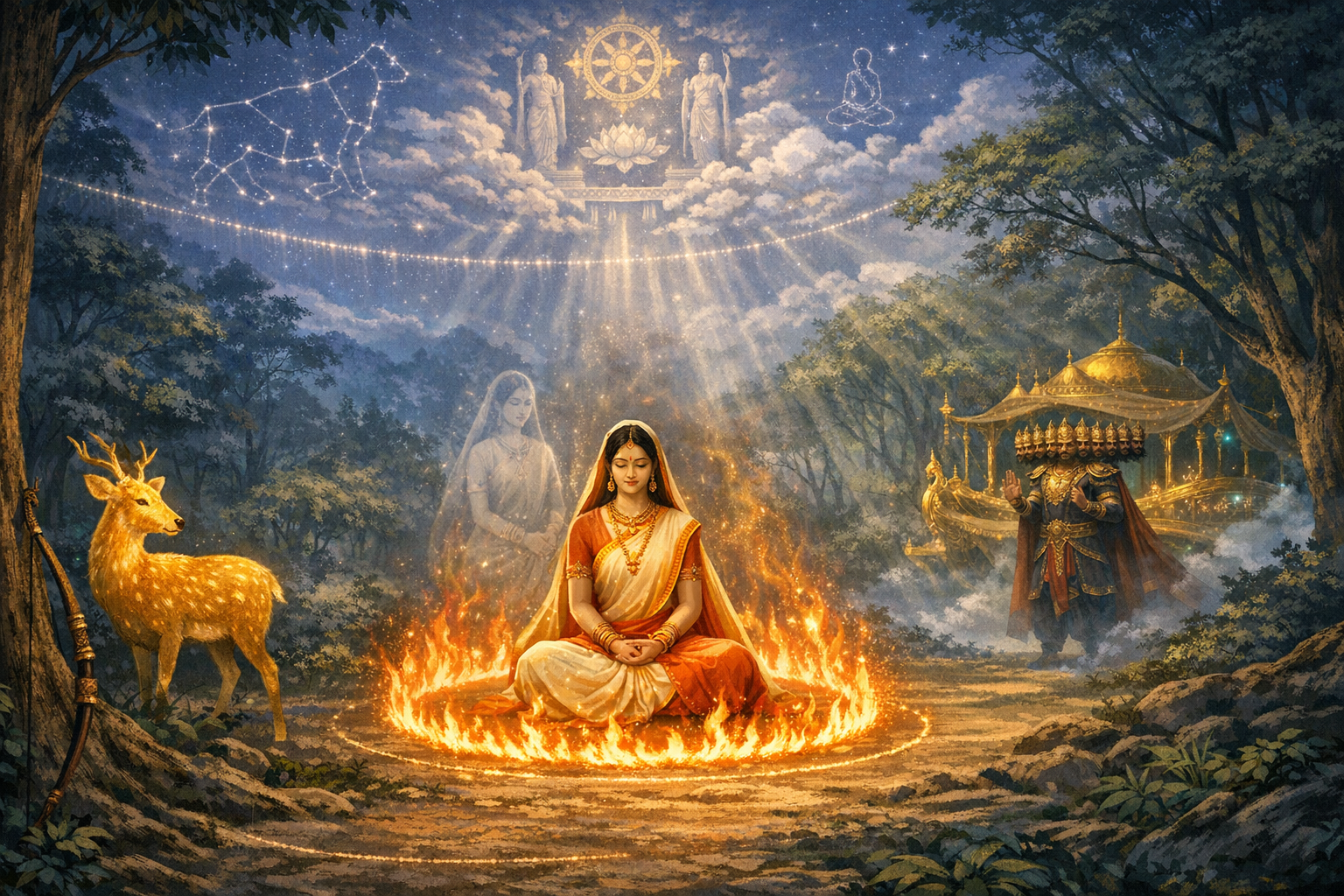
Did Ravana kidnap Sita to be slain by Sri Rama and attain moksha? A careful, text-sensitive study shows that while Valmiki’s Ramayana emphasizes Ravana’s pride and desire, later Puranic and bhakti traditions interpret his fall within a cosmic design of grace. The Jaya–Vijaya doctrine, vaira-bhakti (absorption through enmity), karmic curses, and the Maya Sita motif…
-
Vibhishana’s Daring Intervention: How Dharma Rescued Rama and Lakshmana from Indrajit’s Sorcery

Vibhishana’s interventions during the Lanka campaign reveal how moral clarity and technical insight can rescue an army immobilized by occult warfare. By correctly identifying Indrajit’s Naga-pāśa and steadying the Vanara ranks until Garuḍa’s release, he prevents collapse at a decisive moment. He repeatedly exposes māyā, including the illusion of Sita’s severed head, foiling psychological warfare.…
-
Ravana as Rama’s Priest: Akalbodhan in Krittibas’s Bengali Ramayana and Dharmic Unity
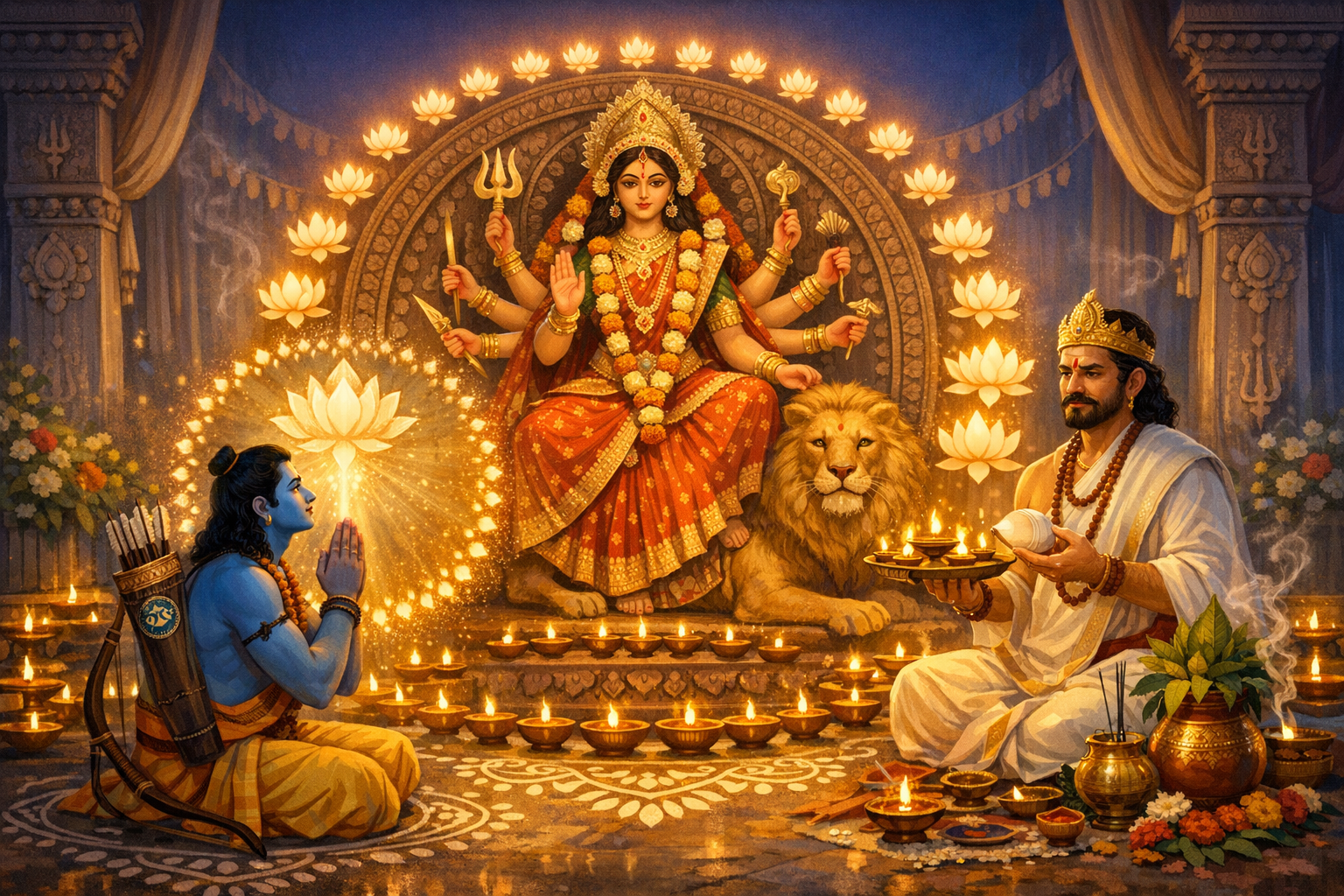
This essay examines the Krittibas Ojha Bengali Ramayana episode in which Ravana, despite being Rama’s adversary, officiates as priest for Rama’s Durga Puja. It contextualizes the scene within Akalbodhan, the autumnal invocation of Durga that anchors Bengal’s Sharadiya Durga Puja. Contrasting Krittibas with Valmiki’s Aditya Hridayam, it shows how regional retellings adapt epic theology without…
-
Indrajit Samhara Moorthy: Lakshmana’s Slaying of Meghanada and the Dharma of the Ramayana

Lakshmana’s epithet “INDRAJIT SAMHARA MOORTHY” commemorates his defeat of Indrajit (Meghanada) during the Lanka war in the Ramayana. The episode centers on the Nikumbila yajna (yagna), where Lakshmana, supported by Hanuman and guided by Vibhishana, intervened to prevent an invincibility boon and then prevailed in open combat. Ethically, the act aligns with Dharma-Yuddha principles: stopping…
-
Ravana Anugrahamurti: Shiva’s Compassionate Power and the Transformative Lesson of Humility

Ravana Anugrahamurti reveals Lord Shiva’s grace transforming Ravana’s pride into devotion, offering a clear ethical lesson for modern life. The narrative emphasizes humility, restraint, and responsibilitycore values in Hindu philosophy and resonant across Buddhism, Jainism, and Sikhism. Readers gain practical insights for daily practice, from reflective chanting to mindful leadership. The iconography highlights compassion over…
-
Why Shiva Gave His Golden Palace to RavanaTimeless Lessons on Detachment and Karma

This exploration of Shiva gifting a golden palace to Ravana distills a powerful lesson in detachment, karma, and dharma. Drawing on Puranic variations, it shows how Shiva’s non-attachment contrasts with Ravana’s intensifying desire, turning a boon into a test of character. The analysis connects seamlessly with Buddhist insights on clinging, Jain aparigraha, and Sikh cautions…
-
When Ravana Became Rama: A Brief Awakening to Dharma and the Transformative Power of Virtue

This exploration of a lesser-known Ramayana motifRavana assuming Rama’s formexamines how virtue resists imitation and demands inner transformation. By situating the episode in the ethical drama of Sita’s steadfastness in the Ashoka grove, it shows how adharma collapses under the weight of authentic dharma. The analysis highlights literary, psychological, and philosophical dimensions, clarifying the difference…
-
Neelkanth in the Ramayana: Shiva’s Blessing and Rama’s Triumphant Victory over Ravana

The Neelkanth (Indian Roller) is cherished in Hindu tradition as an auspicious sign linked to Shiva’s protective grace and the Ramayana’s climactic victory of Lord Rama over Ravana. While the Valmiki text does not explicitly mention the bird in battle, oral traditions and temple lore interpret the Neelkanth’s appearance as a divine omen affirming dharma.…
-
Ravana Gita: Timeless Leadership Wisdom from the Ravana–Lakshmana Dialogue in Ramayana

Ravana Gita, the widely known title for Ravana’s final counsel to Lakshmana in the Ramayana, offers clear, actionable lessons on leadership and governance. The dialogue emphasizes timingacting swiftly on beneficial duties while exercising caution in risky mattersand the ethics of counsel, confidentiality, and honest dissent. It also warns against underestimating adversaries, urging vigilance and strategic…
-
Ravana vs Mahabali: Unraveling Lineage, Dharma, and Legacy Across Dharmic Traditions
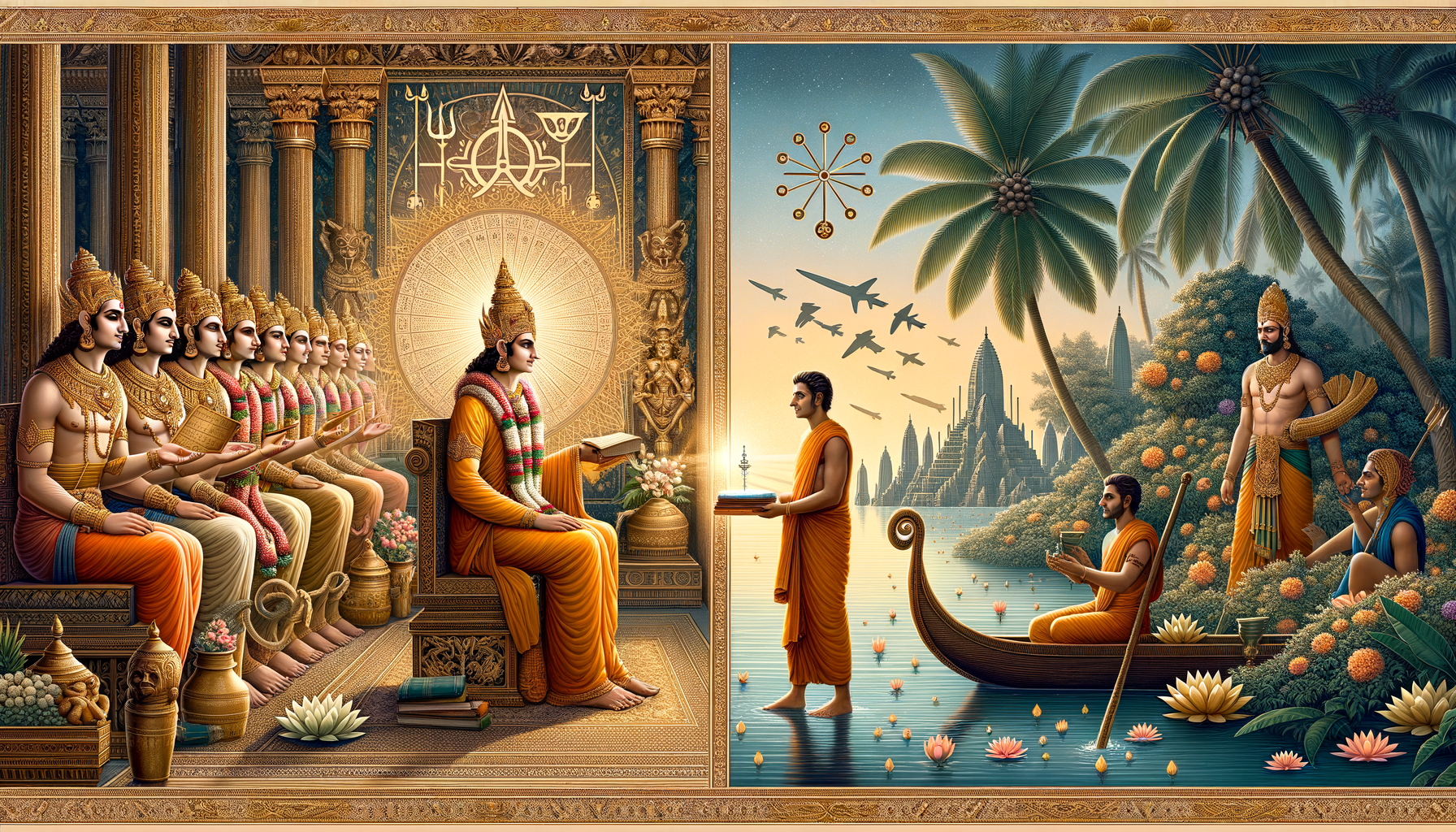
Ravana and Mahabali occupy contrasting roles in Hindu mythology that illuminate dharma, humility, and righteous leadership. Ravana, the learned yet pride-driven king of Lanka, confronts Sri Rama and falls for violating ethical boundaries. Mahabali, the generous asura king and grandson of Prahlada, surrenders to Vamana and receives enduring gracehonored each year during Onam. Comparing lineage,…
-
Sundara Kanda Unveiled: Hanuman’s Epic Journey to Lanka and the Hope it Inspires

Sundara Kanda, the fifth book of the Ramayana by Valmiki, chronicles Hanuman’s mission to find Sita and transform uncertainty into hope. The narrative highlights the ocean leap, encounters with Mainaka, Surasa, and Simhika, the discovery of Sita in Ashoka Vatika, and the powerful audience with Ravana. Hanuman’s burning of Lanka is framed as disciplined, ethical…
-
Asura Power vs Dharma’s Restraint: Ravana, Sita, and the Ramayana’s Moral Reckoning
This article examines why Asura Dharma might not condemn Ravana’s abduction of Sita, contrasting a power-first ethos with the Dharmic insistence on righteousness, restraint, and duty. It clarifies how the Ramayana positions legitimacy not in dominance but in ethical means and ends. Readers gain a clear framework to assess might versus right, applying tests of…
-
Angada’s Immovable Feet in Folk Ramayana: Diplomacy, Dharma, and a Pre‑War Masterstroke

Angada’s mission to Lanka in Folk Ramayana presents a masterclass in diplomacy rooted in dharma. As Rama’s final envoy of peace, he embodies restraint, clarity, and moral courage, urging the return of Sita to avert war. The iconic planting of his foot in Ravana’s court conveys a potent symbol: dharma stands firm when anchored in…
-
Vibhishana’s Wise Boon in the Ramayana: Timeless Dharma Over Powerand Why It Matters

The Ramayana records three pivotal boons, yet Vibhishana’s dharma-centered request proves the most transformative. Rather than seeking power, he asked for unwavering righteousness and moral clarity, and this orientation shaped the fate of Lanka. His counsel to Ravana, subsequent sharanagati to Sri Rama, and ethical leadership grounded the war’s outcome in dharma and adharma. The…
-
Ravana’s Karmic Reckoning: Sage Dvaipayana’s Curse and Surpanakha’s Tragic Turn in the Ramayana

This exploration presents a lesser-known strand in Ramayana storytelling that links a curse attributed to Sage Dvaipayana with Surpanakha’s ordeal, highlighting the theme of karmic justice. It clarifies that while Valmiki’s text is primary, regional and later traditions use this motif to teach moral causality. Readers gain an academic yet accessible account that balances empathy…
-
Ravana’s Arrogance and the Brahmin’s Curse: How Kartavirya Arjuna Humbled a Titan

This retelling of Ravana’s imprisonment by Kartavirya Arjuna presents a clear, scriptural lesson on karma, humility, and the impartiality of dharma. It frames the Brahmin’s curse as a literary device expressing moral causality rather than superstition. Readers encounter Kartavirya Arjuna (Sahasrabahu) as the disciplined ruler of Mahishmati whose strength is guided by reverence for sages.…
-
10 Defining Moments of the Ramayana: Timeless Lessons from Rama’s Epic Journey

This concise guide highlights ten defining moments of the Ramayanafrom Rama’s birth in Ayodhya and Sita’s swayamvara to the vanvas, Hanuman’s Sundara Kanda mission, and the return to Ayodhya. Each episode is presented with clear context and ethical significance to illuminate Dharma in action. Readers gain practical insights into righteous leadership, loyalty, compassion, and the…
-
Why Ravana Took Sita to Lanka: Exploring a Protective Motive Across Dharmic Perspectives

This article examines why Ravana took Sita to Lanka by engaging both the Valmiki Ramayana and alternative interpretations that emphasize restraint and honor. It highlights how Sita’s inviolable dignity becomes the ethical fulcrum of the narrative across Hindu, Buddhist, Jain, and Sikh perspectives. Readers gain a nuanced understanding of motive, vow, and dharma without displacing…