
-
Sita’s Sacred Resolve: Why Only Rama Could Rescue Herand What It Teaches About Dharma

Why did Sita insist that only Rama rescue her, even when Hanuman could have carried her to safety? This long-form analysis of Sundara Kanda shows how her decision unites maryada, kshatra-dharma, reputation, and tactical prudence into a single, coherent ethic. Drawing on Valmiki Ramayana and key regional traditions, it explains why justice in the Ramayana…
-
When Pride Breaks a God-Gifted Sword: The Curse that Unmade Ravana’s Chandrahasa

This long-form, research-informed reading of the Chandrahasa episode explains how later Ramayana and Puranic traditions frame Ravana’s celestial sword as a dharma-conditioned gift from Lord Shiva. It clarifies why the blade’s power failed: not through metallurgy but through a self-executing moral law that de-authorizes weapons when wielded in arrogance. It surveys variant tellings across regional…
-
Ravana’s Hubris and Vasishta’s Warning: How Knowledge Without Humility Ensured Defeat

Framed as “Vasishta’s curse,” this long-form analysis examines how later Ramayana traditions dramatize the collision between Ravana’s brilliance and the dharmic demand for humility. It clarifies textual nuance by distinguishing the core Valmiki Ramayana from regional and oral tellings, reading the “curse” as a pedagogical axiom rather than magical determinism. The essay surveys the ethical…
-
Ramayana’s Powerful Blueprint: Dharma vs. Disorder and the Quest for Just Leadership

This essay examines how the Ramayana confronts humanity’s enduring paradox: the quest to draw order from chaos without promising utopia. It analyzes dharma as a multi-layered systemcosmic, social, and personaland shows how Rama’s choices model rule-bound leadership (rajadharma) under real-world constraints. Readers gain a technically grounded framework for just decision-making: prioritize norms, exhaust diplomacy before…
-
Ravana’s Doom Foretold: Dattatreya’s Disciples, a Vanara’s Kick, and Dharma’s Triumph
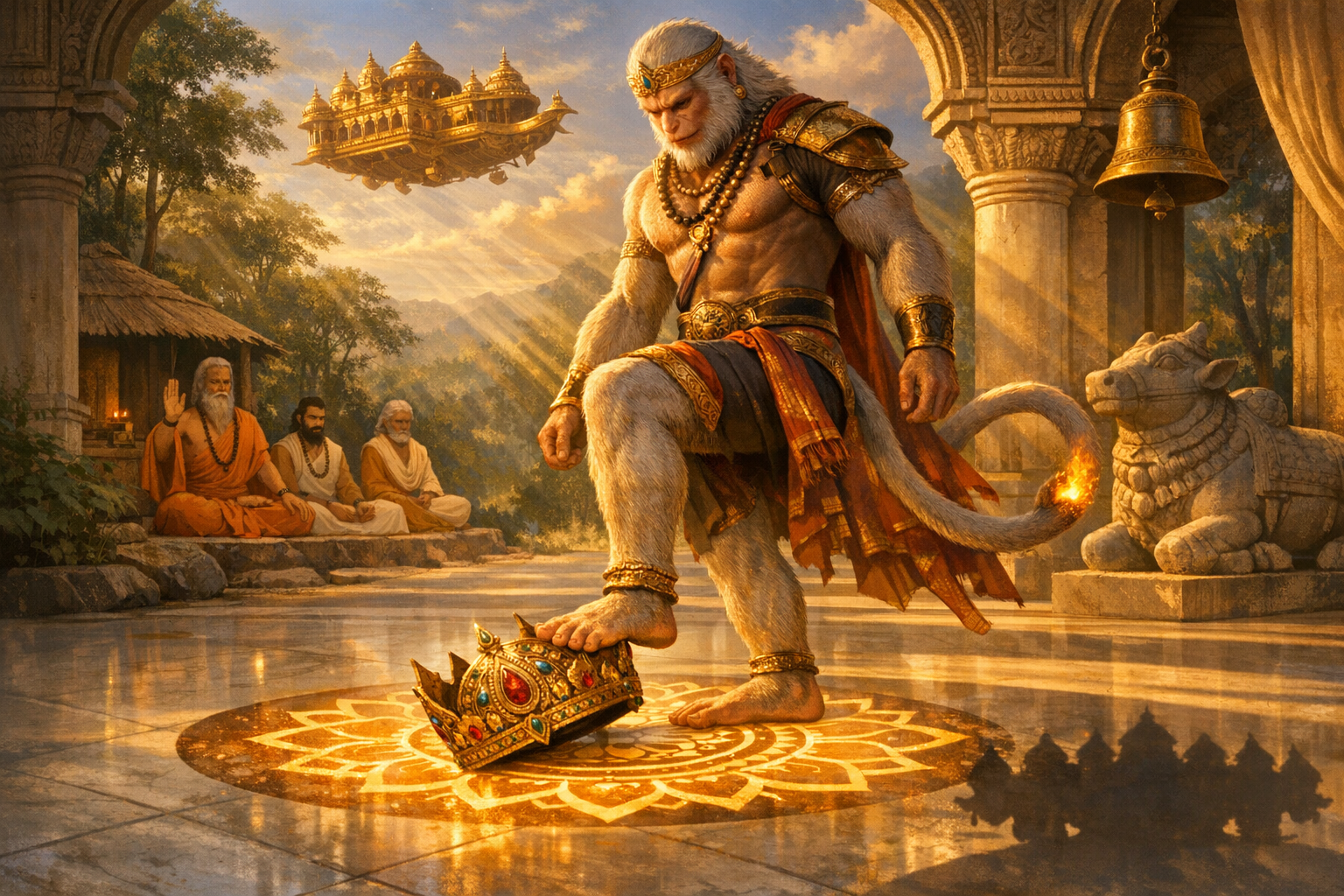
This long-form analysis examines a powerful Ramayana motif: a sage’s curse that Ravana, intoxicated by power and pride, would be humiliatedeven kickedby vanaras. It situates a regional strand that identifies the ascetics as disciples of Dattatreya alongside the canonical curse of Nandi in the Valmiki Ramayana’s Uttara Kanda. Readers gain a clear sense of how…
-
Did Ashtavakra Curse Ravana? Evidence, Variants, and Dharma’s Powerful Warning on Ego

This long-form analysis examines the popular claim that Sage Ashtavakra cursed Ravana, distinguishing between canonical Ramayana sources and later oral retellings. It explains why the episode, though absent from early textual strata, persists as a compelling ethical parable about Dharma, ego, and consequence. The essay profiles Ashtavakra’s Advaita message and Ravana’s complex character, situating both…
-
Nalakubera’s Curse on Ravana: The Fatal Restraint That Foretold Lanka’s Fall
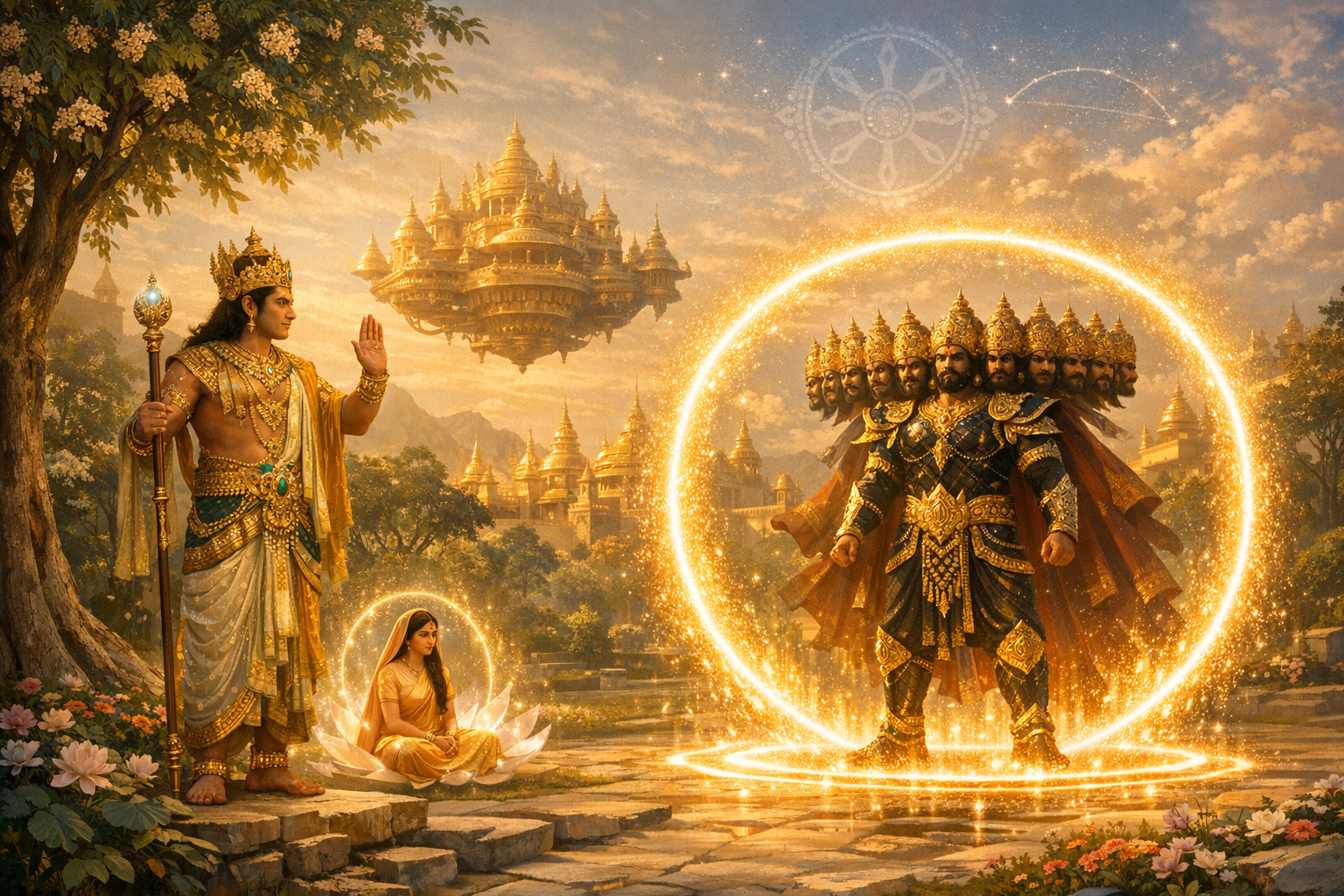
Nalakubera’s curse on Ravana is a decisive ethical and narrative pivot in the Ramayana. It prohibits sexual coercion, preserves Sita’s inviolability, and funnels Ravana’s unchecked desire into strategic hubris that precipitates Lanka’s fall. Grounded in late recensions of the Uttara Kanda and echoed across regional tellings, the episode articulates a consent-centered ethic that subordinates kama…
-
Decoding Ravana’s Pushpaka Vimana: Pishacha‑Faced Mules, War Chariots, and Dharma’s Warning
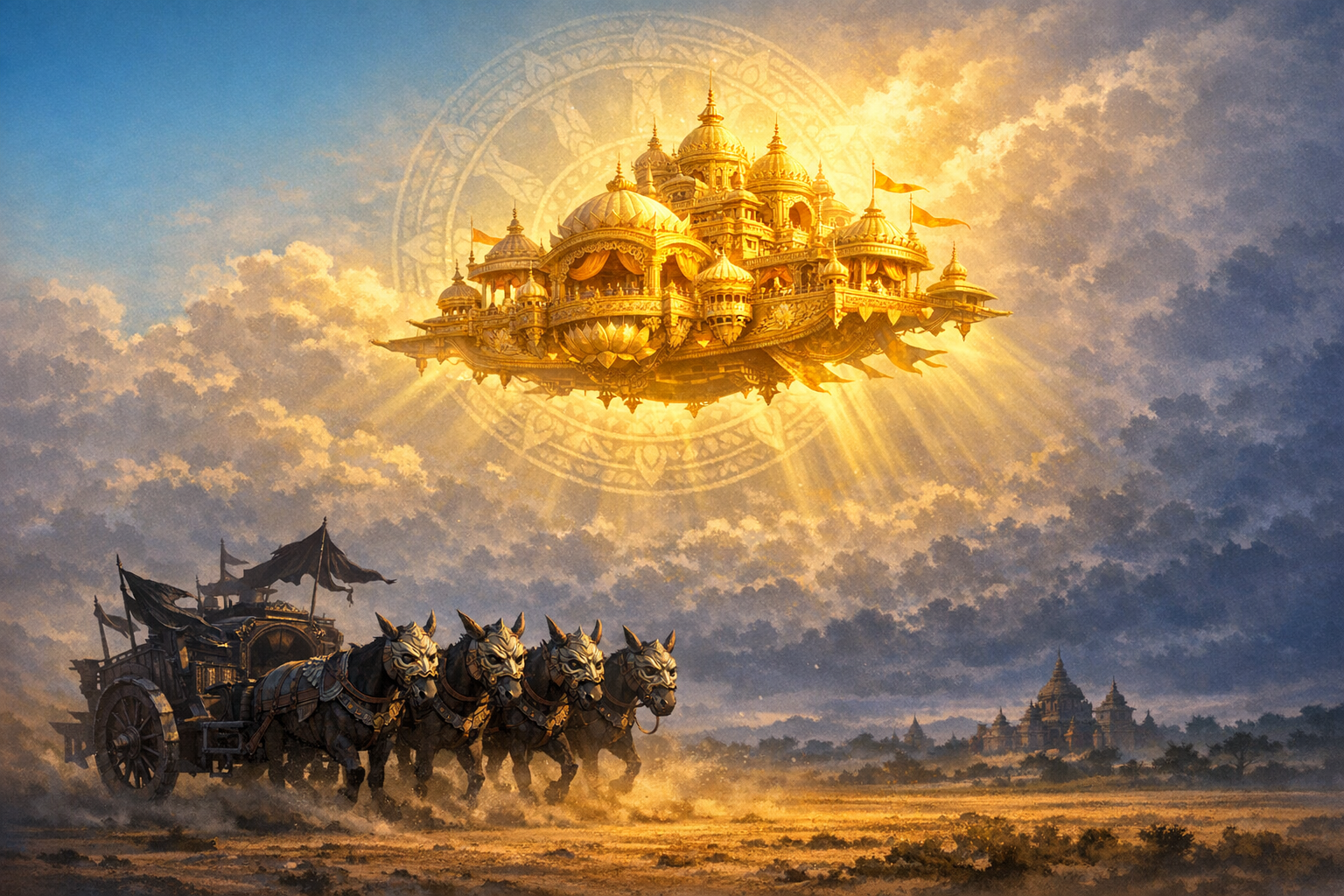
This in-depth analysis clarifies a frequent confusion in Ramayana studies by distinguishing Ravana’s mule-drawn war-chariotoften depicted with piśāca-like facesfrom the Pushpaka Vimana, the celestial, self-propelled vehicle reclaimed by Rama. Drawing on Valmiki’s Ramayana and southern vernacular traditions such as Kambaramayanam, it explains how these images function in classical aesthetics (rasa) and dharma ethics. The mule…
-
When Kings Fail: Ramayana’s Timeless Blueprint for Rajadharma and Good Governance
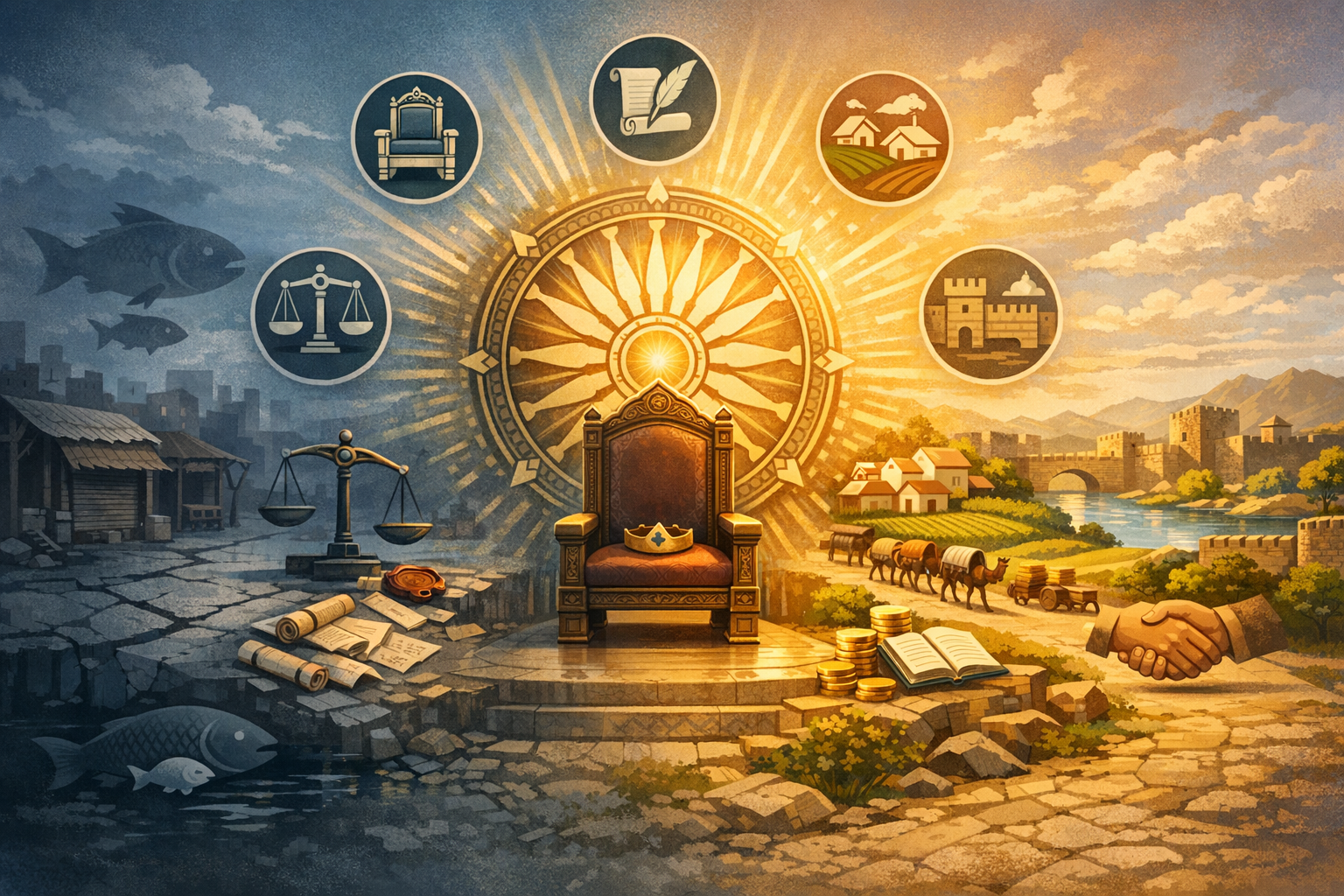
This long-form analysis demonstrates how the Ramayana functions as a living manual of rajadharma, diagnosing the social symptoms of failed leadership and prescribing practical remedies. It explains the timeless concept of matsya-nyāya, the legal vacuum where the strong prey on the weak, and shows how Vibhishana’s counsel to Ravana outlines a ruler’s core duties in…
-
Lankapuri’s Golden Splendor: Ramayana’s City on Trikuta and a Timeless Warning on Greed

Lankapuri, the golden city of the Ramayana, unites mythic splendor with ethical instruction by showcasing how dharma tempers power and prosperity. Fashioned by Vishvakarma and set upon Mount Trikuta, Lanka’s luminous architecture, maritime horizons, and courtly spectacle are balanced by a sharp critique of lobhagreed. The narrative contrasts Kubera’s trusteeship of wealth with Ravana’s extractive…
-
Ravana Grounded: Kamban’s Earthbound Abduction of Sita and the Curse That Altered Dharma

This analysis explores how Kamban’s Tamil Iramavataram reshapes the abduction of Sita into an earthbound ordeal governed by a curse that limits Ravana’s agency. In contrast to Valmiki’s aerial abduction, Kamban’s version compels Ravana to carry Sita upon a slab of earth, intensifying witness, pathos, and ethical indictment. The study situates Kamban historically and theologically,…
-
Lanka Kānda in Tulsidas’s Ramcharitmanas: Dharma, Strategy, and Enduring Bhakti

Lanka Kānda in Ramcharitmanas unites poetic beauty with ethical clarity, presenting a dharma-yuddha rooted in diplomacy, restraint, and devotion. Setubandha functions as engineering feat and sacred metaphor, while Vibhīṣaṇa’s refuge models principled dissent and moral courage. Tulsidas’s nuanced handling of Sita’s sanctity and Ravana’s downfall centers compassion over suspicion and ego. The kānda serves as…
-
Awakening a Mountain: Comic Brilliance of Kumbhakarna in Folk Ramayanas Across Asia
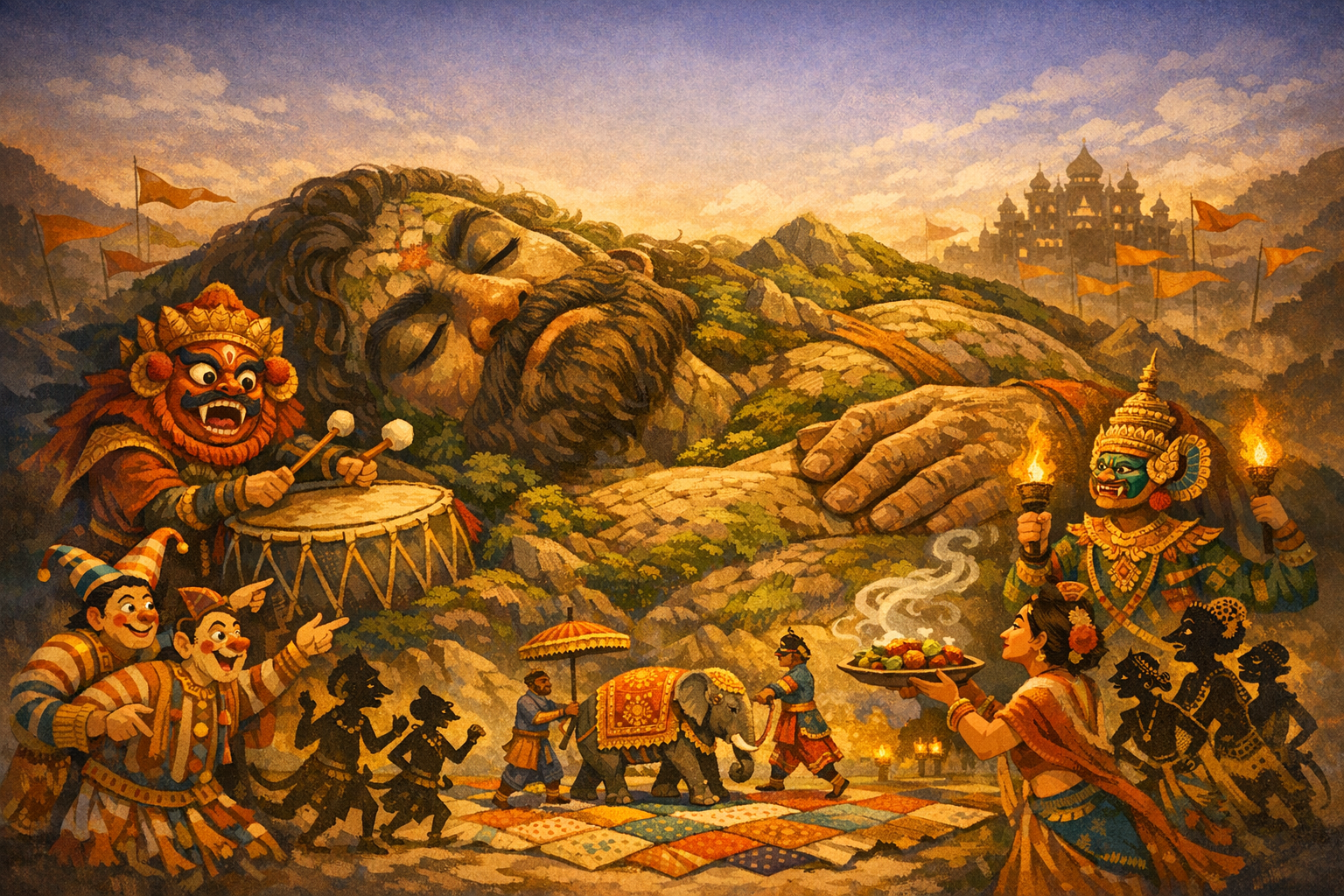
This essay explores how the waking of Kumbhakarna functions as a masterclass in hasya rasa across folk Ramayanas. It traces the episode’s classical kernel and shows how Ramlila, Yakshagana, Kathakali, Jatra, and Southeast Asian forms like wayang and the Ramakien expand it into an inclusive, communal highlight. Readers gain a clear view of the scene’s…
-
From Brahma’s Treasure to Ravana’s Gates: Lankini, Vijayalakshmi, and Dharma’s Fate
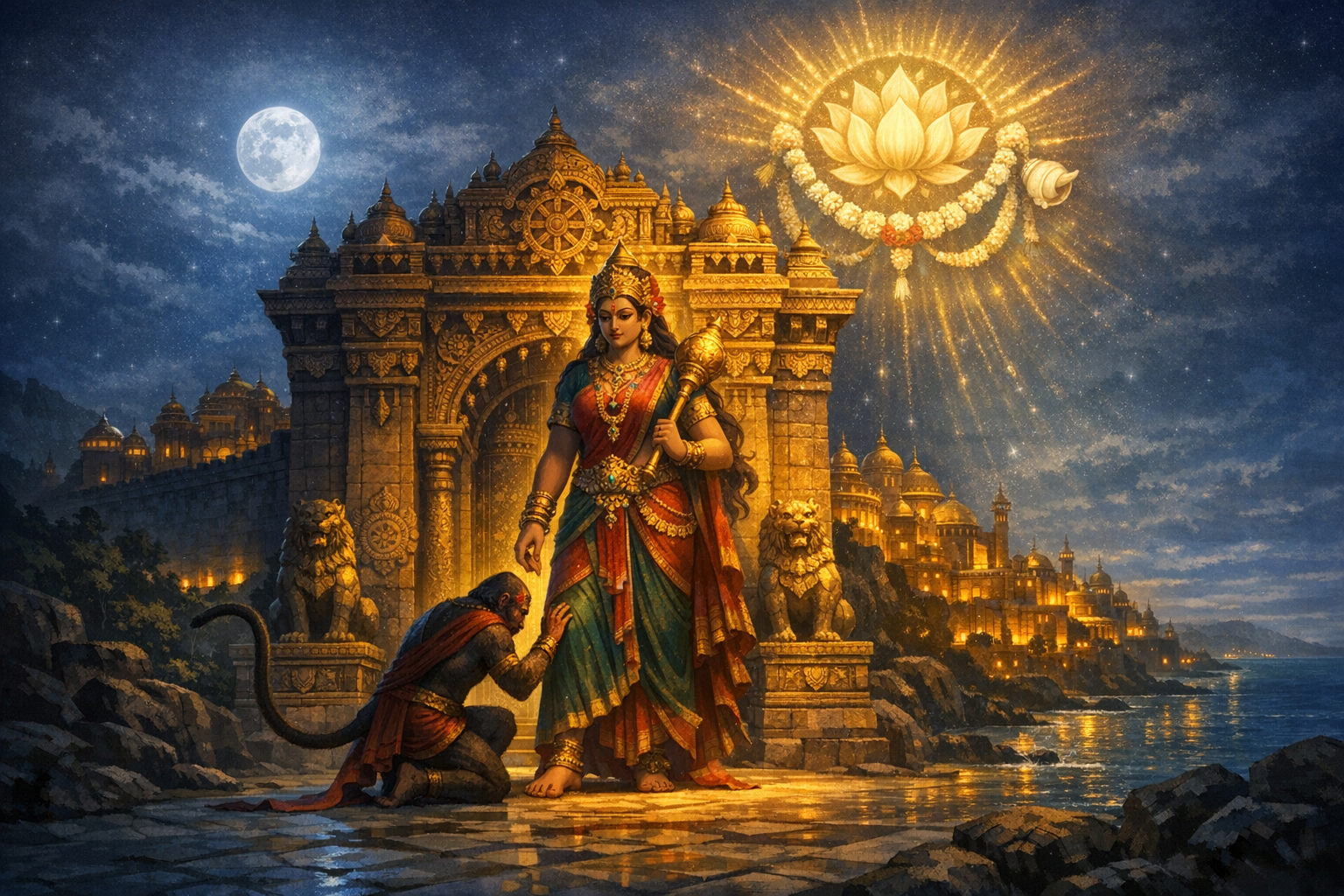
This article explores Lankini (Lankalakshmi) as Lanka’s guardian deity in the Ramayana and explains how her encounter with Hanuman marks the ethical turning point of the epic. It traces Lanka’s origins as a divine ‘treasure’ linked to Brahma, Kubera, and later Ravana, showing how prosperity (śrī) is ethically contingent. It clarifies Vijayalakshmi’s place among the…
-
Indra, Ravana, and the Divine Peacock: A Ramayana Tale of Protection, Boons, and Dharmic Unity

This long-form exploration traces the Ramayana episode in which a peacock aids Indra during his confrontation with Ravana and receives enduring boons that sacralize its radiant, eye-studded plumage. Drawing on the Uttara Kanda and later Purāṇic and regional retellings, it explains how the bird becomes a cross-cultural emblem of guardianship, gratitude, and auspiciousness. The analysis…
-
Bali’s Mercy Toward Ravana: A Ramayana Lesson on Dharma, Restraint, and Modern Leadership

The Bali–Ravana encounter in the Ramayana tradition yields a precise ethic for modern life: power must be governed by restraint. Later tellings and purāṇic echoes preserve the episode of Bali subduing yet sparing Ravana, illustrating kṣātra-dharma, proportionality, and the protection owed to a suppliant. The narrative anticipates principles of international humanitarian law while aligning with…
-
From Mortal Hero to Sacred Ideal: Rama’s Journey from Valmiki to the Bhakti Age

Rama’s image evolves from Valmiki’s ethically tested human king to the Bhakti movement’s compassionate divine, illuminating how dharma and devotion converge rather than compete. Valmiki Ramayana presents Maryada Purushottama as a ruler who chooses justice amid painful dilemmas; Bhakti-era RamayanasKamba Ramayanam, Adhyatma Ramayana, and Tulsidas’s Ramcharitmanasreframe those dilemmas through grace, interior devotion, and inclusive accessibility.…
-
Shattering the Myth: Why Valmiki’s Ramayana Has No Maya SitaEvidence and Dharma
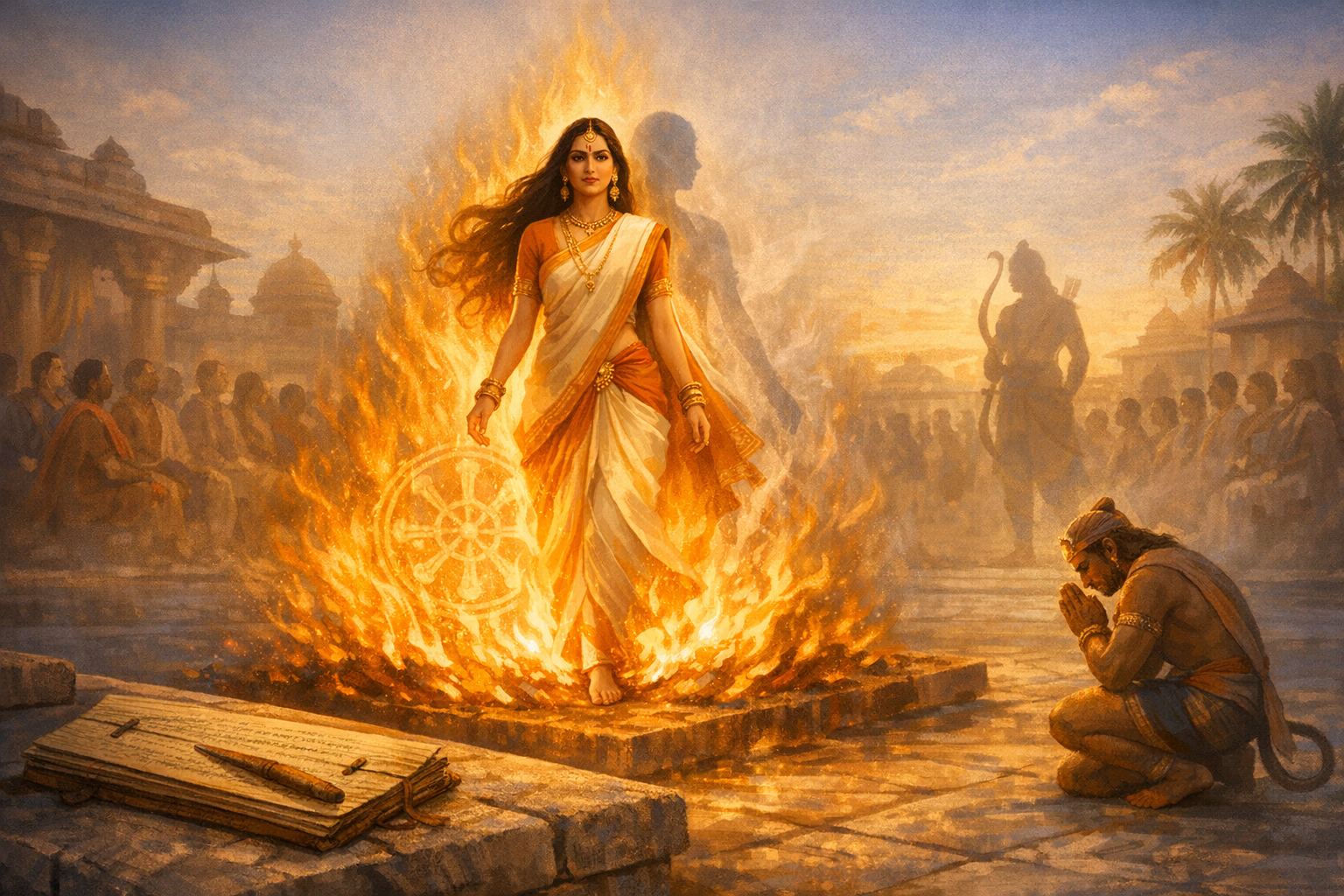
The Maya Sita motifan illusory duplicate of Sitadoes not appear in Valmiki’s Ramayana. Textual criticism across northern and southern manuscript families confirms its absence, especially in the Yuddha Kanda where Sita’s Agni-praveśa serves as public vindication. Later Puranic and bhakti-era tellings, such as the Adhyātma Rāmāyaṇa, introduce Maya Sita to offer a theologically protective reading…
-
Karma and Karmaphala in the Ramayana and Mahabharata: Dharma, Consequence, and Liberation

This essay reads the Ramayana and Mahabharata as precise ethical maps of karma (action) and karmaphala (consequence), showing how intention, duty, and context shape outcomes. It explains sañchita, prārabdha, and āgāmi karma, and situates them within dharma and the puruṣārthas. Through case studiesDaśaratha’s unintended harm, Rāvaṇa’s hubris, the dice hall’s complicity, Karna’s complexity, and Bhīṣma’s…
-
Ravana’s Fatal Breach of Rajadharma: Desire Over Duty and the Ruin of Lanka’s Statecraft

This long-form analysis examines Ravana’s breach of rajadharma in the Ramayana as a rigorous lesson in Dharmic statecraft. It situates kingship within Hindu, Buddhist, Jain, and Sikh ethical frameworks, showing how a ruler’s personal desire must remain subordinate to public duty. It explains how Ravana’s abduction of Sita, dismissal of counsel, and politicization of private…