
-
Parabhava 2026–2027 (Ugadi to Ugadi): Transform Obstacles into Opportunity with Vedic Insights

Parabhava Nama Samvatsaram (2026–2027) begins on Ugadi, March 19, 2026, and invites a disciplined, optimistic approach to karmic transformation, deep reflection, and overcoming obstacles. As the 40th year in the 60-year Hindu calendar cycle (Śaka 1948), it encourages clarity of intention, ethical restraint, and steady practice. Practical frameworks such as Aaya–Vyaya 2026–2027 support prudent budgeting,…
-
Navreh 2026 (Laukika 5102): Sacred Kashmiri New Year Date, Rituals, Meaning, and Unity

Navreh, the Kashmiri Hindu New Year, falls on 19 March 2026 (IST), aligned with Chaitra Shukla Paksha Pratipada and the first day of Chaitra Navratri. The festival inaugurates Laukika (Saptarishi) year 5102 (2026–2027), rooting contemporary practice in an ancient Kashmiri time-reckoning tradition. Observance centers on the Navreh thaalrice, mirror, flowers, coins, curd, salt, walnuts, a…
-
Kumbha Rashi 2026–2027 (Aquarius Moon): Vedic Astrology Guide to Thrive Through Sade Sati

Kumbha / Kumbh Rasi (Aquarius Moon) enters 2026–2027 with Saturn in Pisces (Sade Sati’s concluding phase), Jupiter moving from Gemini to exaltation in Cancer, and a nodal shift late in 2026 that redirects energy from identity and partnerships to sleep, service, and deep healing. This in-depth Vedic astrology guide explains how to turn these transits…
-
Ugadi Brahma Damana Puja: Sacred Significance, Regional Traditions, and the 2026 Date
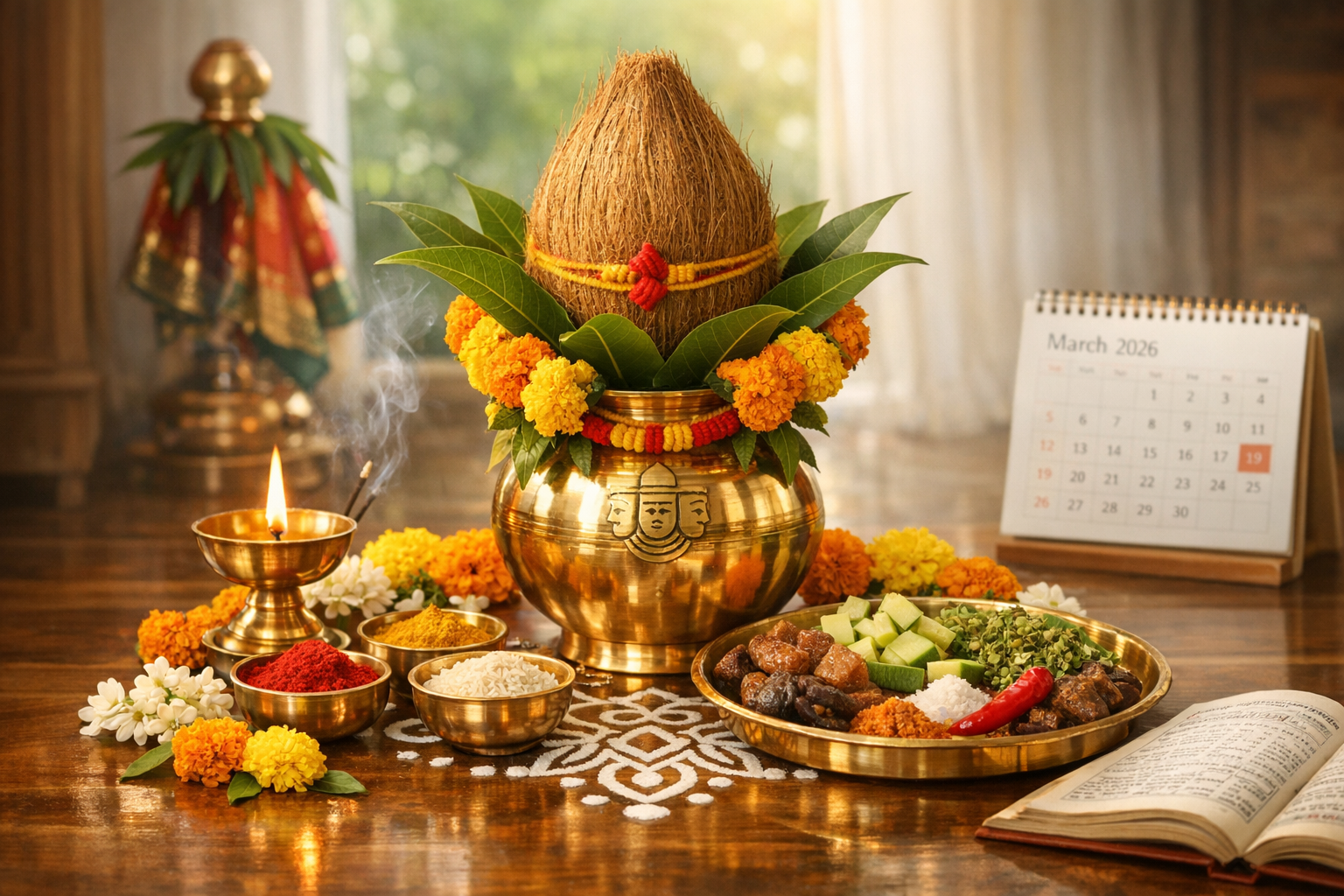
Brahma Pooja (Brahma Damana Puja) on Ugadi/Gudi Padwa aligns households with the New Year’s sacred time-cycle on Chaitra Shukla Pratipada. In 2026, the observance falls on 19 March and marks the start of Parabhava Nama Samvatsaram, emphasizing learning, clarity, and ethical resolve. The puja integrates Vedic cosmology through sankalpa, honors Brahma as the source of…
-
Kandaya Phalam 2026–2027: Authoritative Quarter‑Wise Nakshatra Phalam for Parabhava
Kandaya Phalam for Parabhava Nama Samvatsaram 2026–2027 provides quarter-wise nakshatra guidance in a concise three-digit format, one digit per four-month period. This academic guide explains how to identify the correct Janma Nakshatra, read the digits against a Panchanga’s legend, and map them to Chaitra–Ashadha, Shravana–Kartika, and Margashirsha–Phalguna. It shows how to integrate Kandaya Phalam with…
-
Marathi Panchang 2026–2027 (Parabhava): Complete Guide to Shubh Muhurats, Tithis, and Festivals
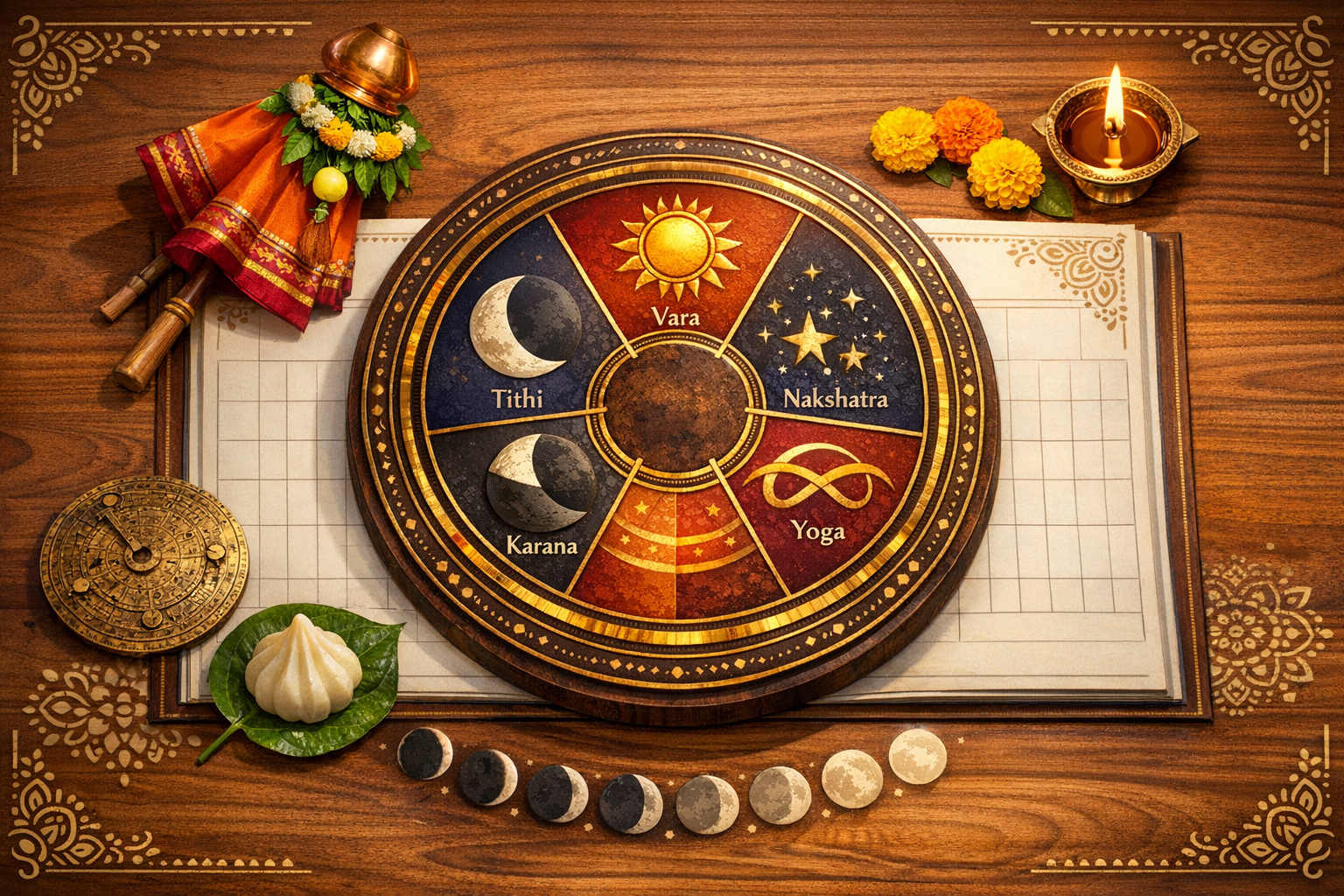
This academically grounded overview presents the Marathi Panchang 2026–2027 (Parabhava, Śaka 1948) compiled by Uttaradi Math for Maharashtra. It clarifies the year’s span from March 19, 2026 to April 6, 2027, and explains how Tithi, Vara, Nakshatra, Yoga, and Karana drive shubh muhurat selection for Vivah, Griha Pravesh, Upanayan, and Mundan. Readers learn why the…
-
Ugadi Asthanam 2026 at Sri Govindaraja Swamy Temple, Tirupati: Rituals, Panchanga, Devotee Guide
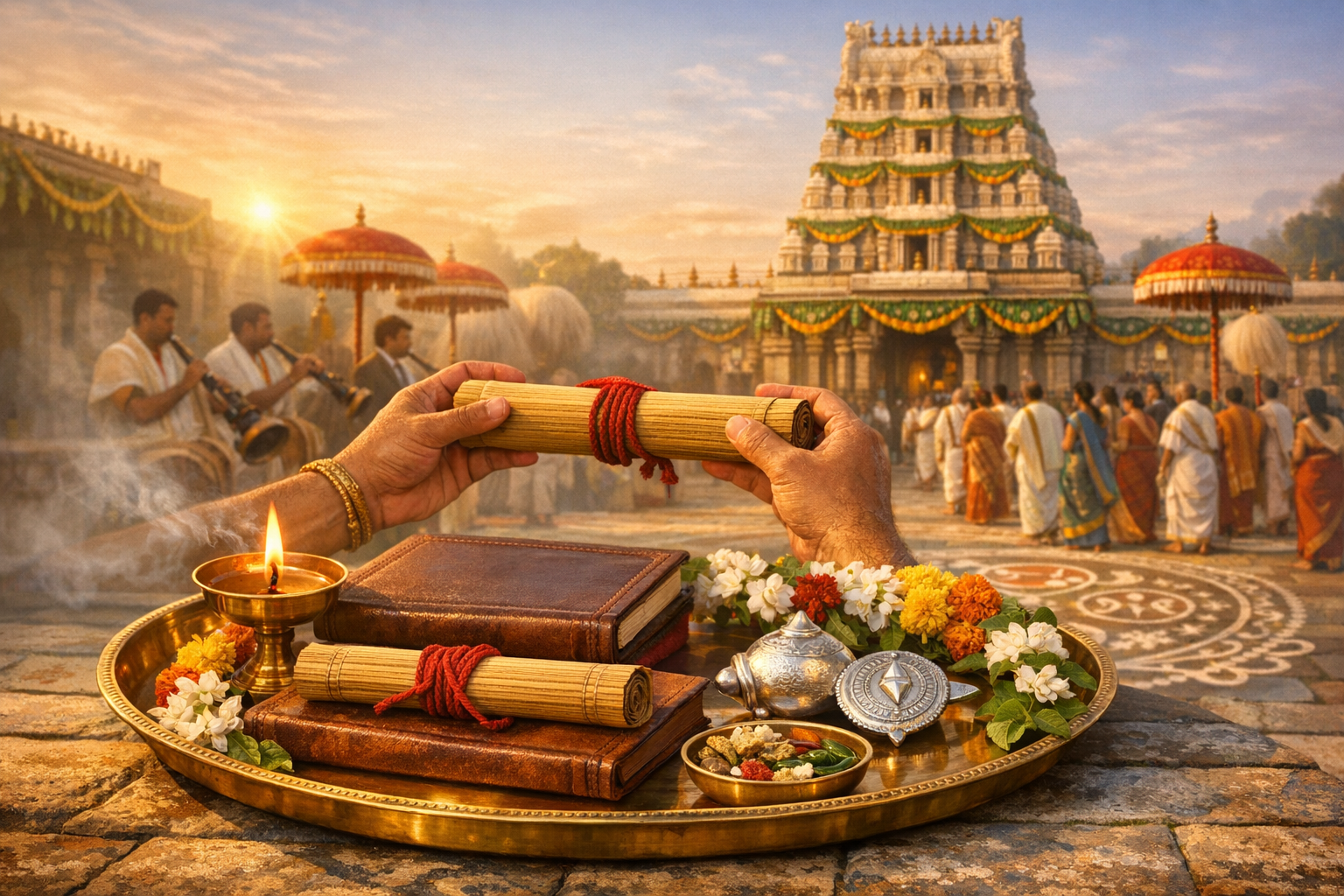
Sri Govindaraja Swamy Temple in Tirupati will observe the Ugadi Asthanam on 19 March 2026, inaugurating the Parabhava Nama Samvatsaram with a precise sequence of Vaishnava rituals. The morning features Suprabhatam, Thomala Seva, Koluvu, Panchanga Sravanam, and Archana; the evening concludes with a second Panchanga Sravanam and the formal Ugadi Asthanam. This guide explains the…
-
Tirumala’s Sacred March 2026 Asthanams: Ugadi, Sri Ramanavami & PattabhishekaA Complete Guide
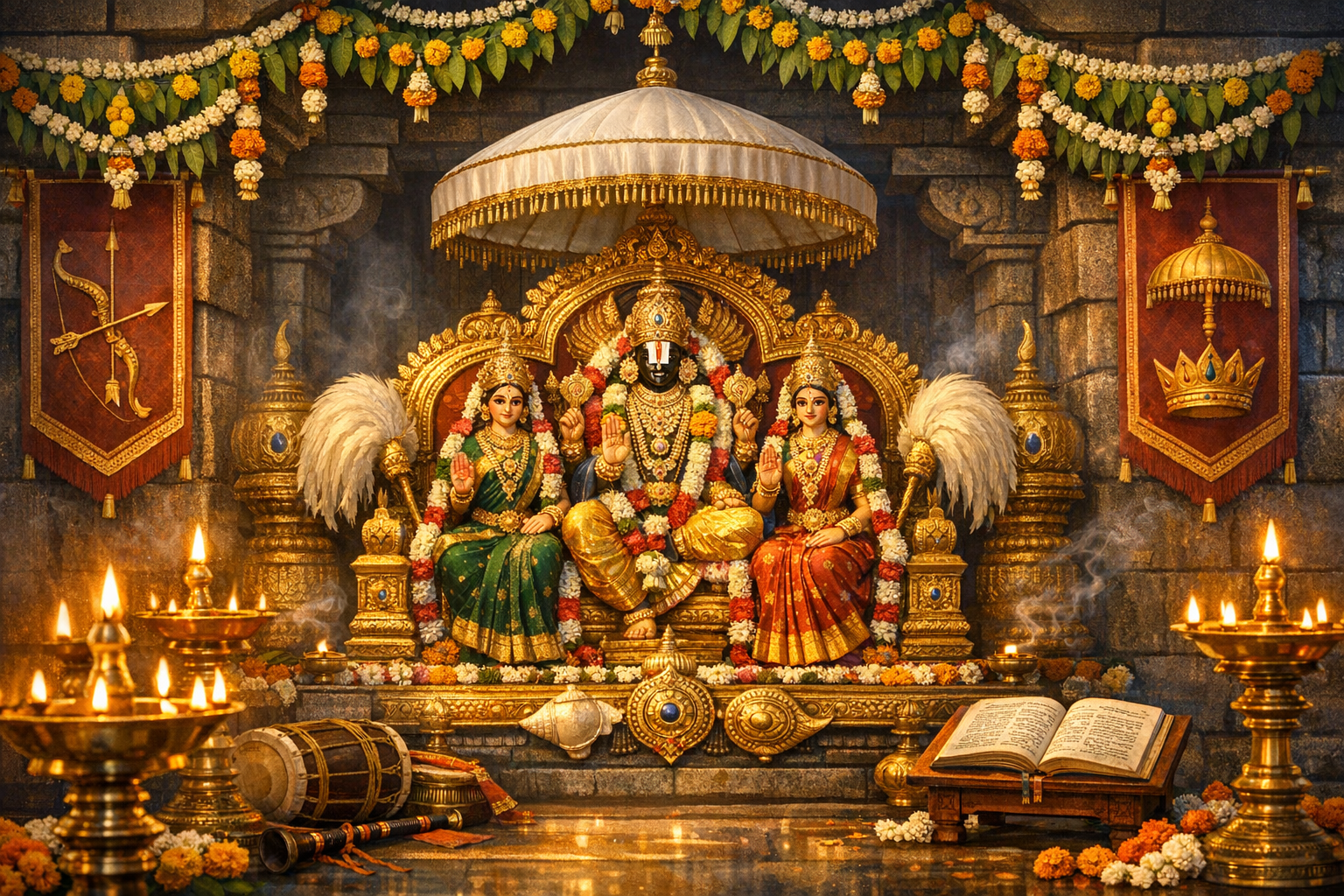
Tirumala’s Sri Venkateswara Swamy Temple will observe three major Asthanams in March 2026: Ugadi, Sri Ramanavami, and Sri Rama Pattabhisheka. Conducted at the Garudalwar Sannidhi, these temple-court rituals unite devotional depth with the courtly aesthetics of Vaishnava worship. Ugadi Asthanam ushers in Parabhava Nama Samvatsaram with Panchanga Sravanam and auspicious invocations. Sri Ramanavami centers Rama-bhakti…
-
Parabhava Nama Year 2026–2027: Ugadi/Gudi Padwa Dates, Meaning, and Panchanga Essentials

Parabhava Nama Year 2026–2027 starts on Thursday, 19 March 2026 (IST), replacing Vishwavasu and inaugurating Ugadi (Telugu, Kannada) and Gudi Padwa (Marathi). The name Parabhava is the 40th in the Hindu calendar’s 60-year Samvatsara cycle, a framework tied to the elegant astronomy of Jupiter and Saturn. While often translated as “humbling,” Parabhava invites a reflective,…
-
Parābhava Samvatsara 2026–2027: Exact Ugadi/Gudi Padwa Date, Meaning, and Traditions

Parābhava Nāma Samvatsara begins on Thursday, 19 March 2026, as Chaitra Shukla Pratipada anchors the New Year for Ugadi/Yugadi and Gudi Padwa observances. The transition closes Vishwavasu (ending 18 March 2026) and inaugurates Śaka Samvat 1948 and, for many, Vikram Samvat 2083. The piece explains how panchāṅgas determine the date at local sunrise, why minor…
-
Rajapujyam–Avamanam 2026–2027: Comprehensive Honor–Dishonor Guide for Every Rashi
This in-depth guide explains Rajapujyam and Avamanamthe annual honor–dishonor ratio presented for each Janma Rashiwithin the 2026–2027 Parabhava Nama Samvatsaram context. It outlines how the 1–7 scale is interpreted, why figures vary by Panchangam tradition, and how to combine the ratio with Aaya–Vyaya 2026–2027, Tarabalam, and key transits for practical decisions. Jupiter’s shift into exalted…
-
Aaya Vyaya 2026–2027 Unpacked: Clear Income–Expense Signals for All Moon Signs (Rashis)
Aaya Vyaya (Aadayam & Vyayam) for 2026–2027, aligned with Sri Parabhava Nama Samvatsaram, distills yearly income and expense momentum for each Moon sign (rashi) into two numbers on a 1–14 scale. This guide explains how to read the table, why Moon sign is used, and how to convert the Income–Expense signal into clear budgeting and…
-
Gudi Padwa 2026 (March 19): Rituals, Panchang, History, and Dharmic New Year Harmony
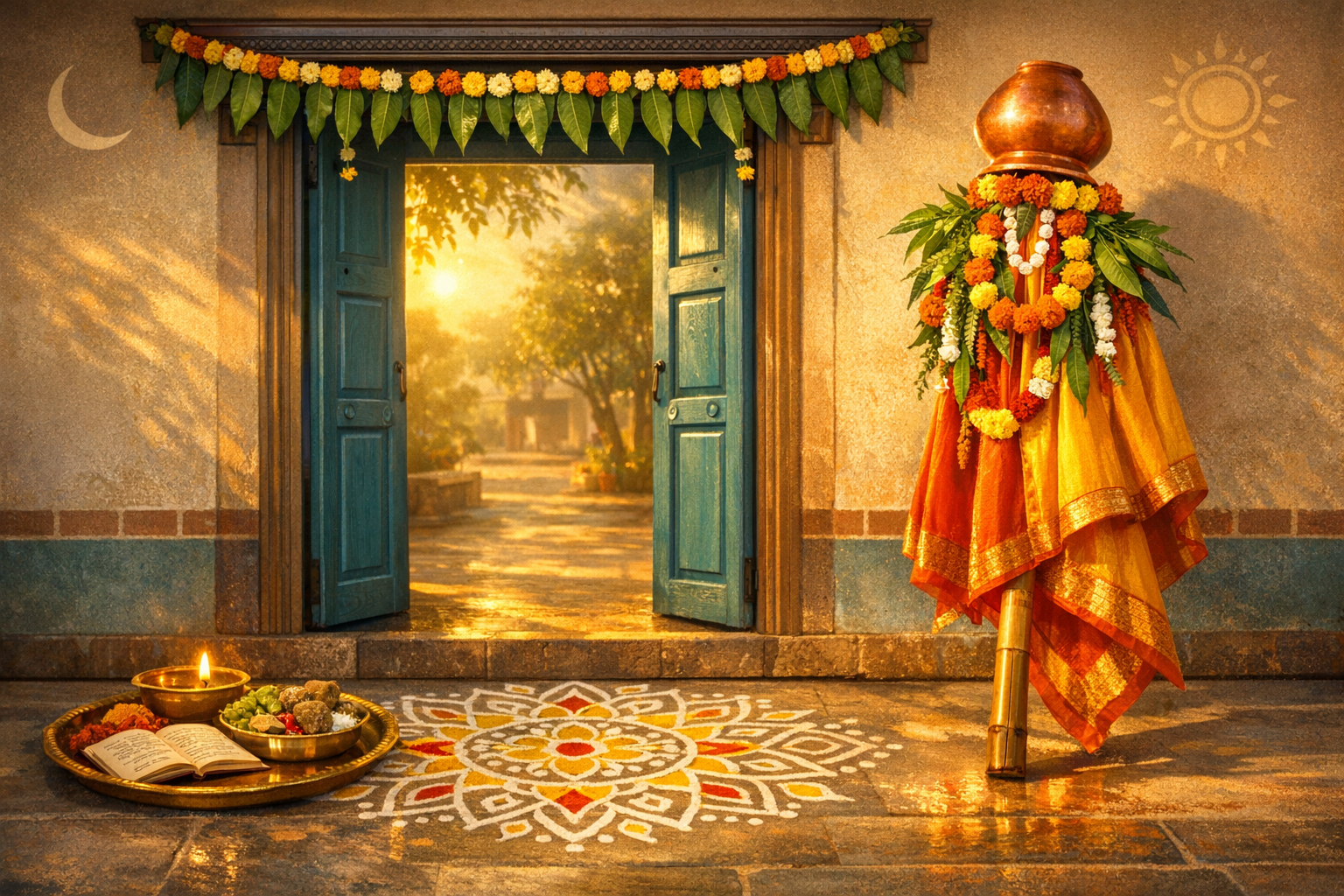
Gudi Padwa 2026 falls on March 19, aligning with Chaitra Shukla Pratipadathe first bright lunar day of the Hindu year for Maharashtrians and Konkanis, and observed as Yugadi/Ugadi in Telangana, Andhra Pradesh, and Karnataka. This guide explains the festival’s Panchang basis, the 60-year Samvatsara cycle (commencing Parabhava in 2026), and the sunrise muhurat logic to…
-
Authoritative Free Telugu Panchangam 2026–2027: Parabhava Samvatsaram PDF, Festivals & Muhurat

This in-depth guide to the Telugu Panchangam 2026–2027 (Sree Parabhava nama Samvatsara Panchangam) explains how to use a free, printable PDF for precise daily observances, festival planning, and muhurat selection. It clarifies the five limbs of the PanchangamTithi, Vara, Nakshatra, Yoga, and Karanaand details modern Drik calculations, ayanamsha standards, and sunrise-based timing. Readers learn how…
-
Chaitra Pratipada 2026: Comprehensive Ugadi & Gudhi Padwa Rituals, Date, and Panchang Insights

Chaitra Pratipada (Chaitra Padyami) in 2026 falls on 19 March in India and is celebrated as Ugadi in Telugu and Kannada traditions and as Gudhi Padwa in the Marathi tradition. This comprehensive guide explains how the lunar tithi at sunrise determines the date, why regional calendars differ, and how the new SamvatsaraParabhava Nama Samvatsaramframes the…
-
Chaitra Masam 2026 in the Telugu Calendar: Sacred Dates, Ugadi Insights, and Festival Guide
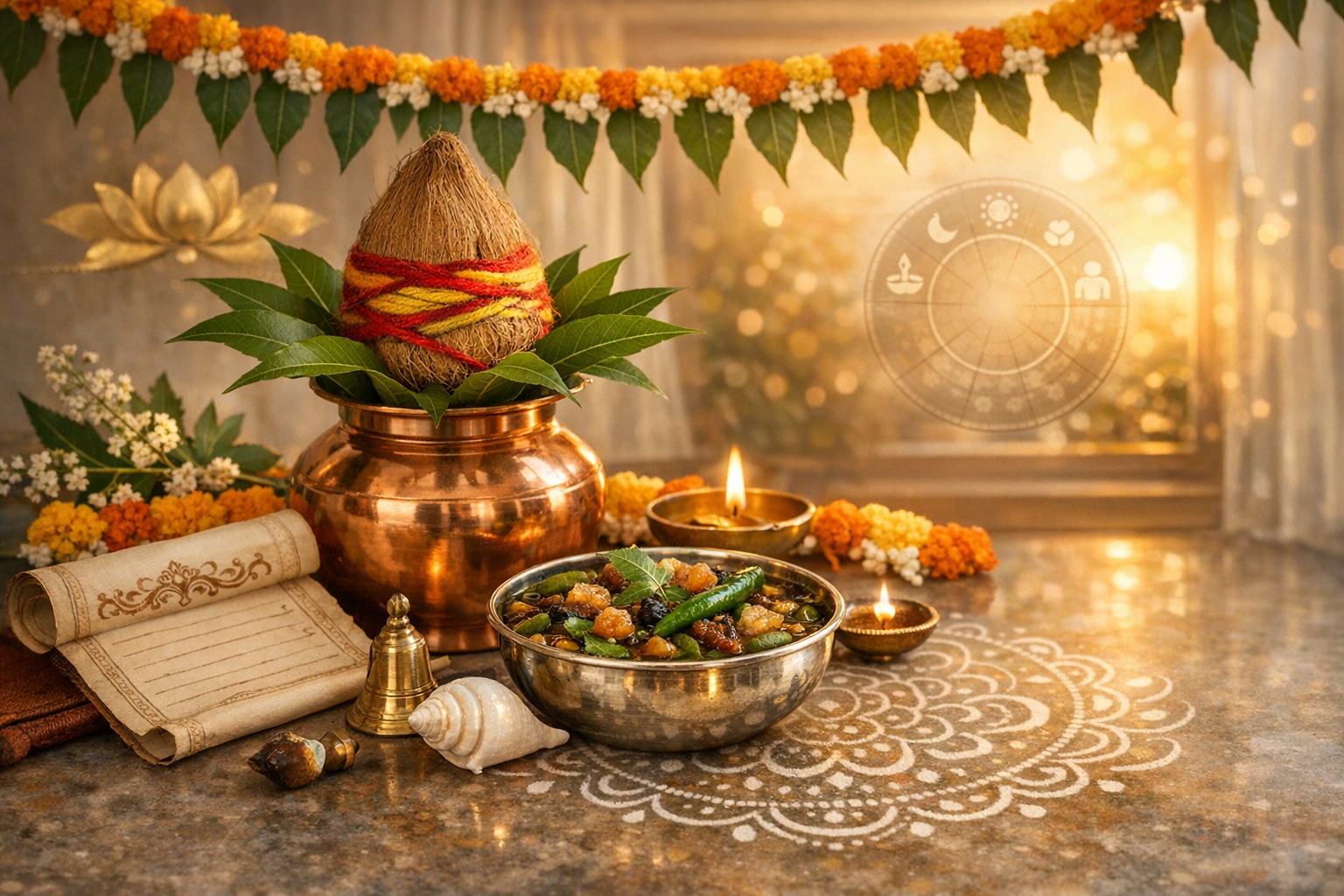
Chaitra Masam 2026 is the first month of the Telugu calendar and spans March 19 to April 17, aligning with the early spring period of the Gregorian year. Anchored in the amanta system (new moon to new moon), it inaugurates the Parabhava Nama Samvatsaram and places Ugadion Chaitra Shukla Pratipadaat the heart of New Year…
-
Varuda Rasipalan 2026–2027 (Parabhava): Deep-Dive Puthandu Predictions, Rituals & Auspicious Windows
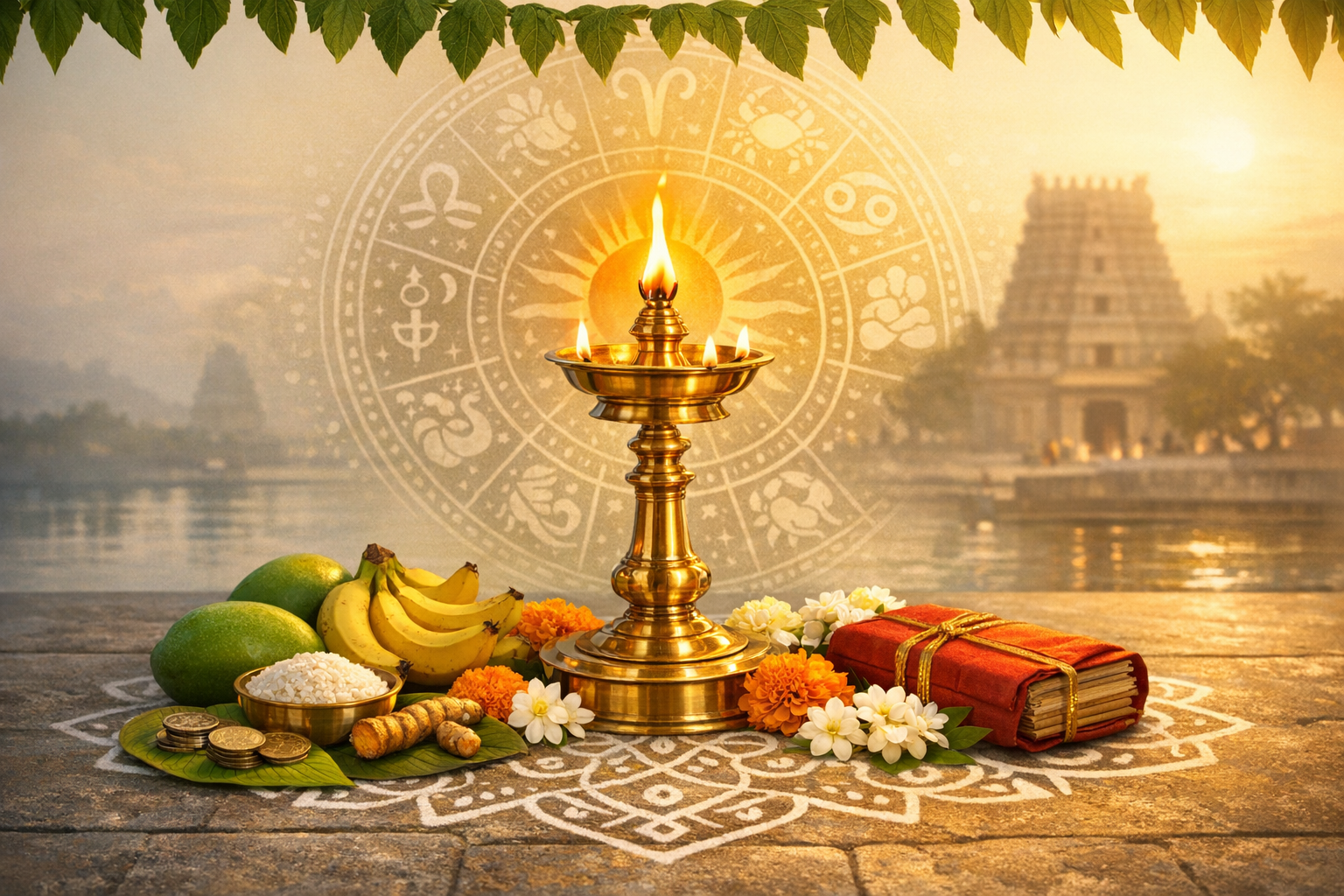
Puthandu 2026 (Chithirai 1) inaugurates the Parabhava Nama Varsha on 14 April 2026, aligning the Tamil solar New Year with a wider Indic cycle that also frames Vishu and Vaisakhi. This long-form Varuda Rasipalan explains the Tamil calendar’s sidereal basis, outlines the year’s key transitsShani in Meena and Guru’s move from Mithuna to exalted Karkaand…
-
Nakshatra Phalam 2026–2027: Definitive Predictions for 27 Birth Stars in Sri Parabhava Samvatsaram

This definitive Nakshatra Phalam 2026–2027 guide synthesizes Kandaya Phalam and major transits for Sri Parabhava nama samvatsaram to offer clear, practical direction for all 27 birth stars. It explains how to read annual predictions by janma nakshatra, outlines the year’s planetary context (Jupiter exalted in Cancer, Saturn in Pisces, and the Rahu–Ketu shift), and provides…
-
Puthandu 2026 on April 14: Chithirai 1 Mesha Sankranti, Rituals, and Parabhava Samvatsara
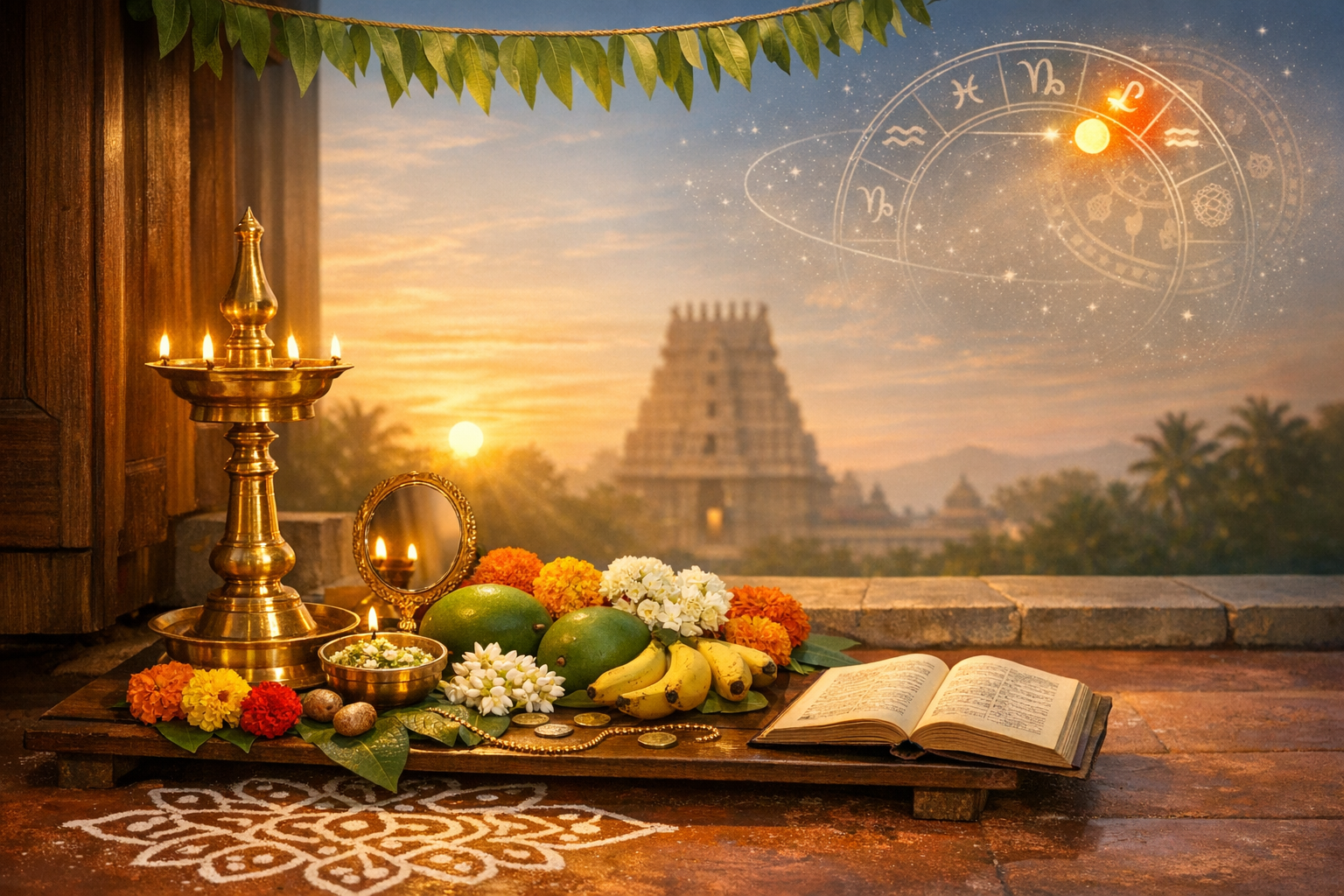
Puthandu 2026 (Varusha Pirappu/Chithirai Vishu) falls on 14 April, coinciding with Mesha Sankrantithe Sun’s sidereal ingress into Mesha Rashi (Aries)and inaugurates Parabhava Nama Samvatsaram. The article explains the Tamil Sauramana (solar) calendar’s reliance on the sidereal zodiac, why the New Year clusters around mid-April, and how local panchangams use the precise Sankranti moment to guide…