
-
Decoding the Sacred Power of Om: Indra’s Epic Triumph in the Gopatha Brāhmaṇa Explained

The Gopatha Brāhmaṇa of the Atharvaveda preserves a striking motif: Indra and the devas overcome asuras through the sacred syllable Om. Read alongside the Chāndogya and Māṇḍūkya Upaniṣads, the narrative reveals Om as a ritual seed, acoustic map of consciousness, and instrument of non-violent victory. The symbolism frames Indra’s triumph as clarity over confusion, integrating…
-
Siddha Kali and the Science of Siddhis: Tantric Methods, Mantras, and Ethical Mastery

Siddha Kali is revered in Shakta traditions as the beneficent source of siddhisspiritual capacities that ripen through disciplined mantra, meditation, and ethical living. This long-form exploration presents the iconography, mantric grammar, and ritual architecture that distinguish her worship, from nyasa and yantra to Panchopachara offerings. It situates siddhi within a pan-dharmic ethos shared by Hinduism,…
-
Matrisadbhava of Kerala: Authoritative Guide to Shakta Tantra and Bhadrakali (Rurujit)
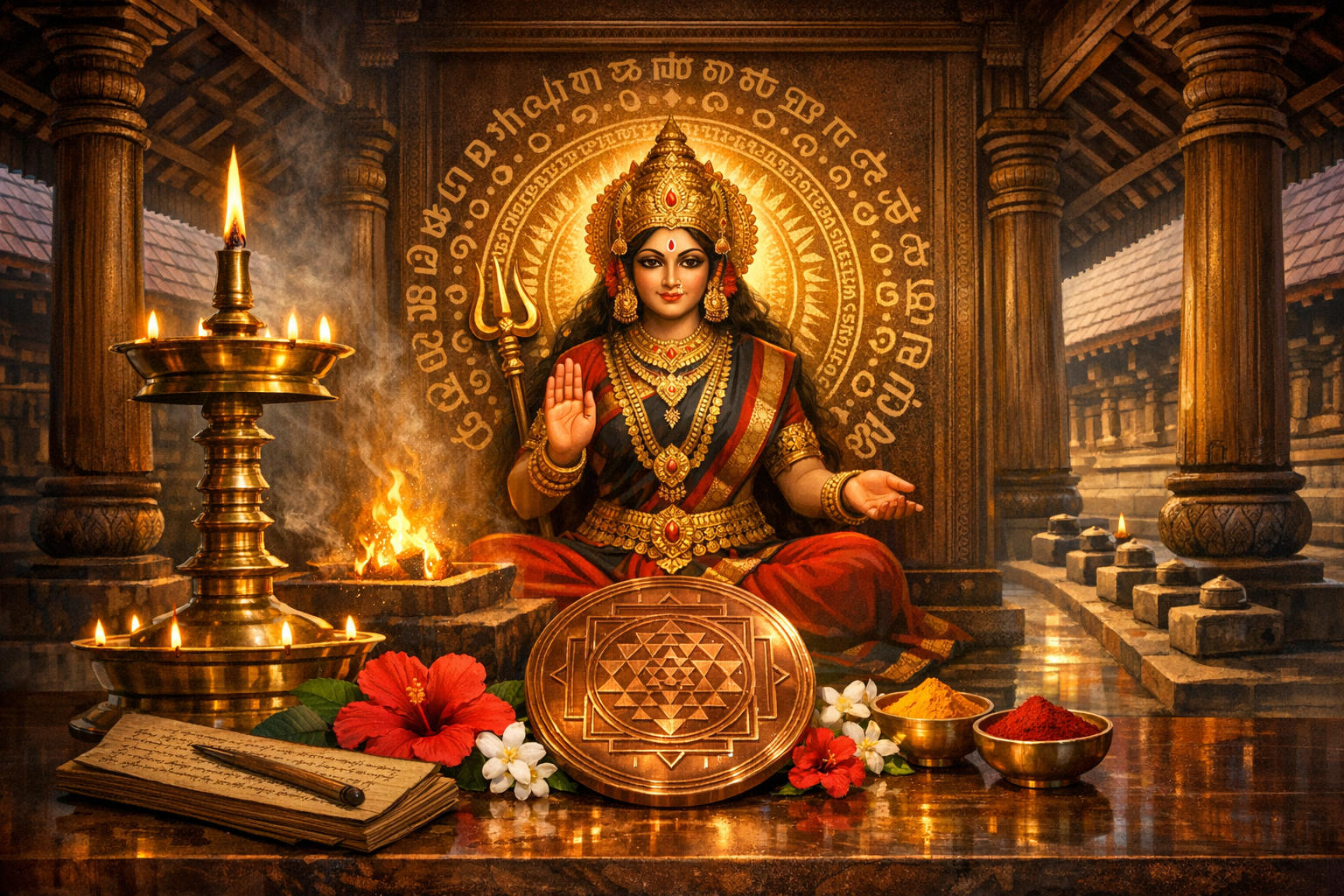
Matrisadbhava stands out in Hindu scriptures as a Kerala-centered Shakta Tantra that systematically encodes the worship of Goddess Bhadrakali, also revered as Rurujit. It unites doctrinal depth with Kerala’s temple pragmaticsnyāsa, mantra, yantra, homa, and baliwhile foregrounding an ethic of care and precision. The text’s maternal vision affirms unity in diversity across Dharmic traditions, highlighting…
-
Kalaratri Saptami 2026: 10 Powerful Navratri Day 7 Practices for March 25 and Oct 17

The seventh day of Navaratri (Saptami) honors Goddess Kalaratri as Shubankari, the fierce remover of darkness who grants auspicious outcomes. In 2026, Saptami falls on 25 March during Chaitra Navratri and on 17 October during Sharad Navratri, with local panchang variations possible. This guide details ten grounded practicessankalpa and altar setup, mantra japa, night worship,…
-
Navratri Day 7 (25 March 2026): Master Kalaratri Puja with 10 Powerful, Auspicious Practices
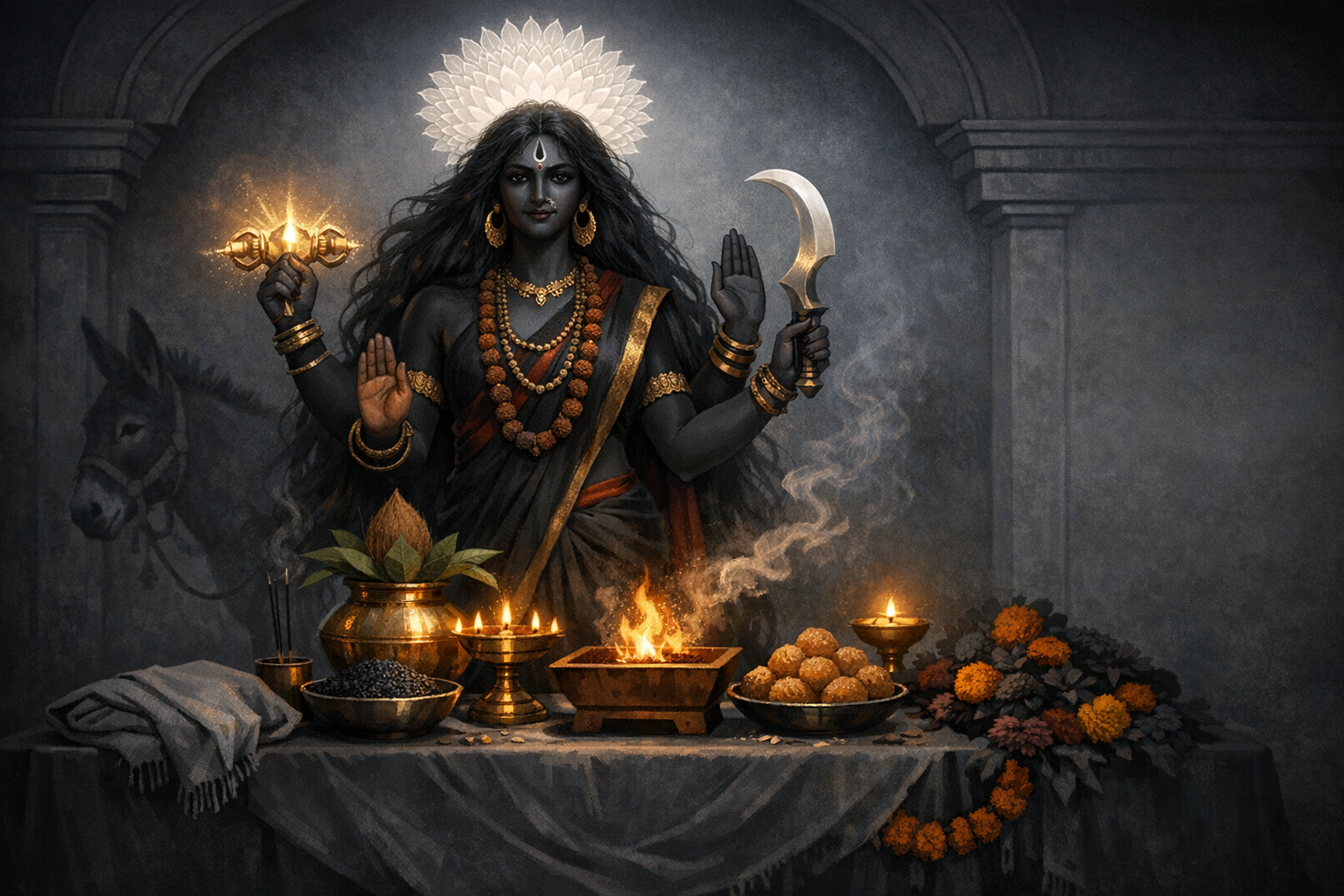
The seventh day of Navratri (Saptami) on 25 March 2026 honors Goddess Kalaratri, the fierce-yet-auspicious Shubankari who dissolves fear and darkness. This guide clarifies the date for 2026, explains Kalaratri’s iconography and Sahasrara-chakra symbolism, and presents 10 precise practicesincluding sankalpa, Shodashopachara puja, moola-mantra japa, Devi Mahatmya recitation, disciplined fasting, a sesame-based havan, night meditation, and…
-
Chithirai Vishu 2026: Powerful Tharpana Mantras, Puthandu Sankalpam & Punya Kaalam (14 Apr, 9:25–12:17)

Chithirai Vishu and Puthandu on 14 April 2026 coincide with Mesha Sankranti, inaugurating the Tamil solar New Year during an auspicious Punyakala. The Mesha Sankramana Punya Kaalam runs from 9:25 AM to 12:17 PM, a window traditionally reserved for Tharpanam, Sankalpam, Surya-ārghya, snana, dana, and japa. This guide explains the astronomical basis of the Punyakala,…
-
Chithirai Vishu 2026 Punyakaala Tharpana Guide: Exact Timings, Puthandu Sankalpam, Mantras

Chithirai Vishu (Puthandu) in the Parabhava year falls on 14 April 2026, coinciding with Mesha Sankranti. The Mesha Sankramana Punya Kaalam runs from 9:25 AM to 12:17 PM IST, with the Maha Punya Kaala closest to 9:25 AM. This guide explains the significance of Chithirai Vishu Punyakaala Tharpana, lists essential steps, and provides concise mantras…
-
Dhata the Aditya of Well‑Being: Origins, Mantra, Rituals, IconographyA Comprehensive Guide
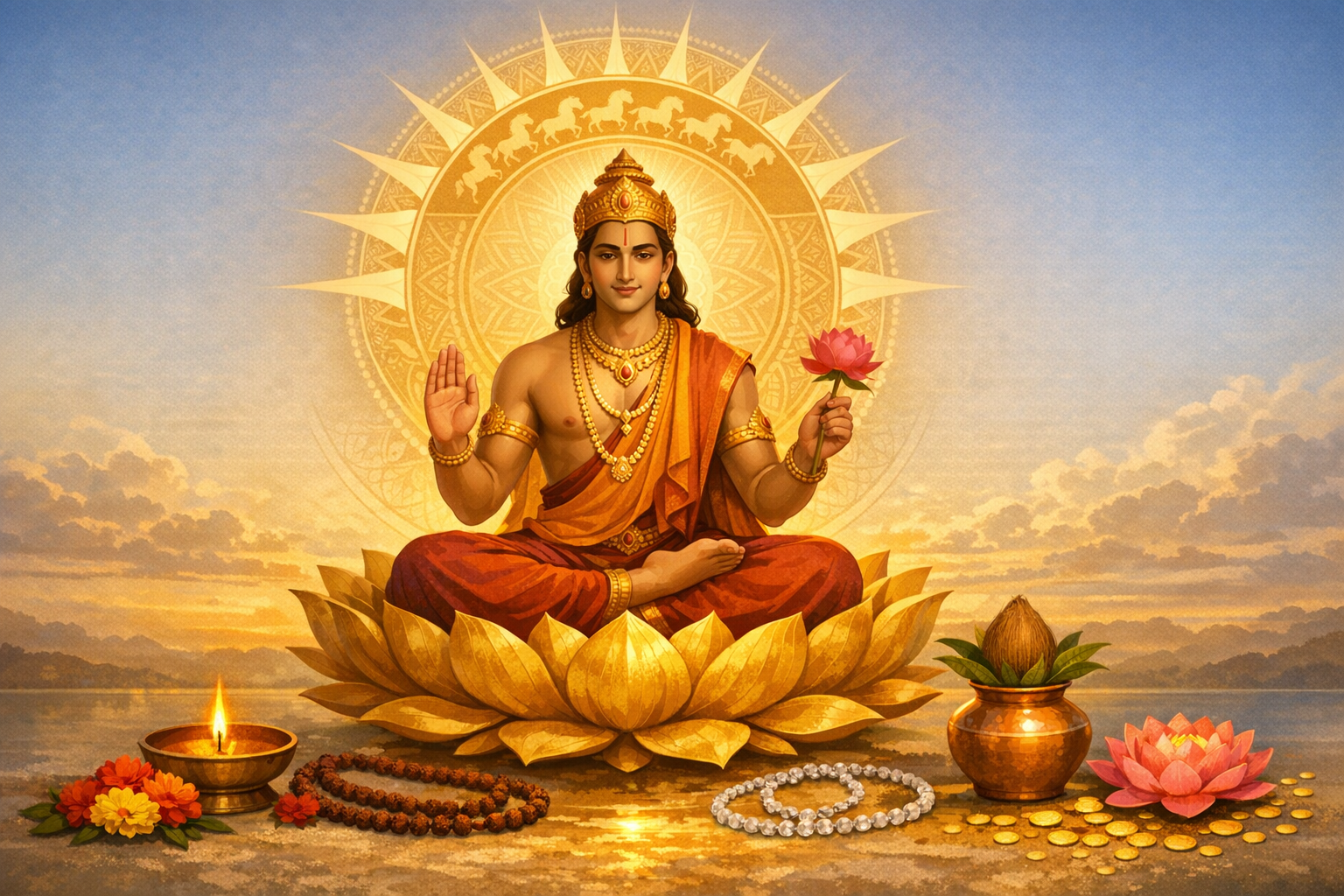
Dhata, one of the Dwadasha Adityas and son of Aditi and Kashyapa, is revered as an establisher of cosmic order and a benefactor of health, wealth, and peace. This comprehensive guide explains Dhata’s Vedic etymology, his place among the Adityas, and why traditions often worship him with Mata Lakshmi Devi for holistic well-being. It outlines…
-
Navaratri Day 2, 20 March 2026: 10 Powerful Brahmacharini Puja Steps, Mantras, and Fasting Tips
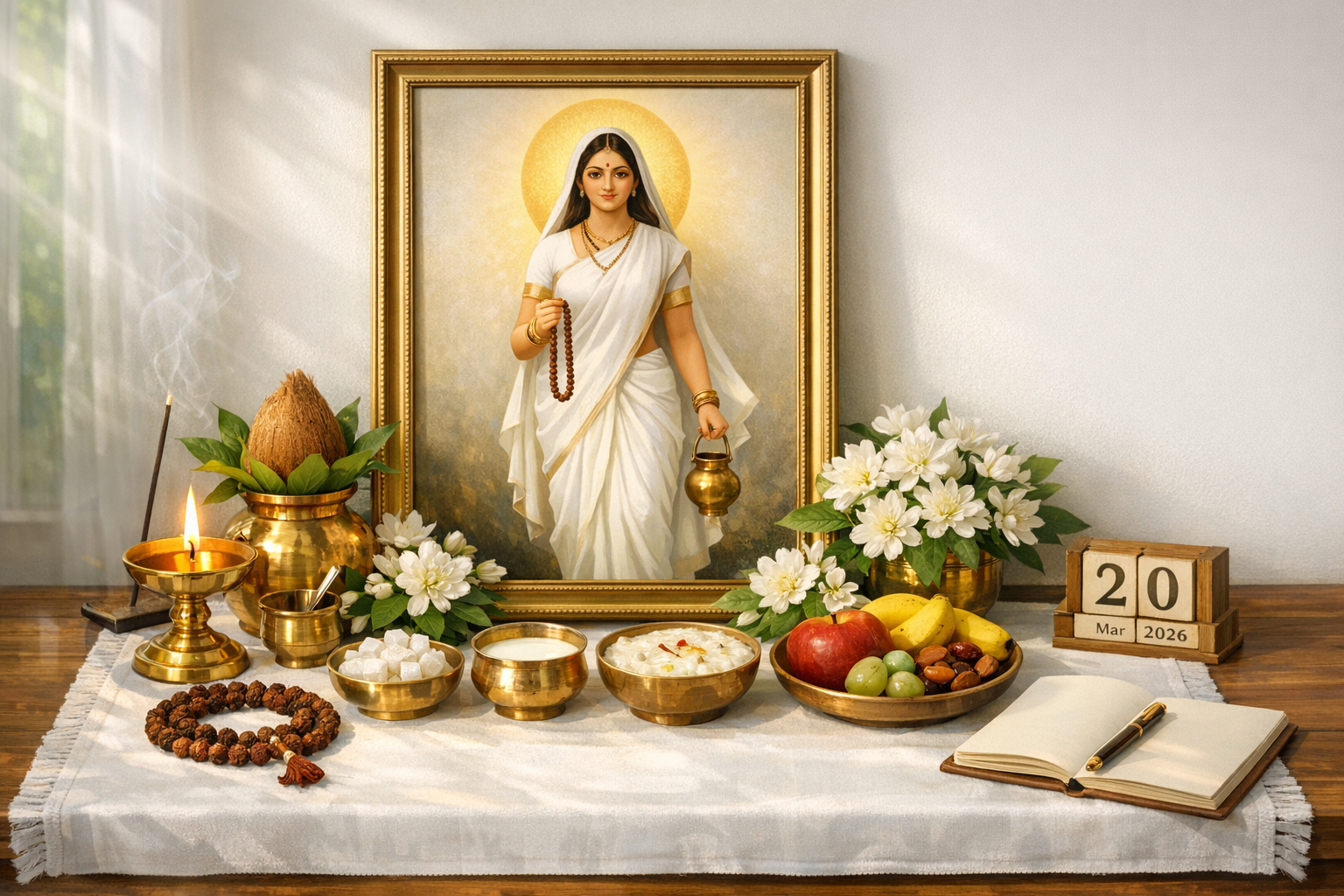
The second day of Chaitra Navaratri on 20 March 2026 honors Brahmacharini, the Navadurga form of tapas and steadfast devotion. This guide details a complete Brahmacharini Puja Vidhi with Panchopachara steps, core mantras, and a simple home sequence that balances accuracy and accessibility. It outlines mindful fasting rules, sattvic bhog options like mishri and milk-based…
-
Pallava Mantras in Tantra: Power of Naming, Will, and Karma (Pallav Prayogas Explained)
This in-depth exploration clarifies what a Pallava Mantra is and how Pallav Prayogas personalize a mūla-mantra by ethically inserting a name or intention. It explains the linguistic and phonetic rules that guide such insertions, along with the ritual frameśuddhi, nyāsa, dhyāna, protective sealing, and universal dedication. The discussion foregrounds dharma, ahimsa, and consent, showing why…
-
From Ritual to Realization: Ending Barren Devotion with Dharmic Discipline and Insight

Modern worship often looks vibrant yet feels spiritually thin. This long-form, academic analysis explains why devotion turns barrentransactional aims, inattentive ritual, neglected ethics, and fragmented attentionand details what Hindu, Buddhist, Jain, and Sikh scriptures actually prescribe for transformation. It offers an integrated method grounded in yama–niyama or śīla, daily abhyasa of japa or dhyana, breath…
-
On the Banks of Mother Ganga: Immersive Kirtan, Mantra Science, and Dharmic Unity in Rishikesh

Set in Rishikesh on the banks of Mother Ganga, this in-depth exploration of Rishikesh Kirtan Fest explains how communal chanting, breathwork, and meditation combine to create a sustained field of devotion and learning. It defines kirtan within the Bhakti Tradition, outlines its musical architecture, and connects mantra practice to contemporary insights in neuroscience and physiology.…
-
Growing Up With Shabad: The Transformative Science, Music, and Devotion Uniting Dharmic Paths

Growing up with Shabad forms attention, identity, and ethics through sacred sound anchored in Sikhism’s Shabad Guru. Musicological rigorraag, taal, and the interpretive role of rahausupports cognitive development, Gurmukhi literacy, and stable daily rhythms. Physiological pathways, including breath-synchronized prosody and vagal regulation, help reduce stress and build resilience. Comparative insights show deep kinship with Hindu…
-
Daily Rashi Stotrams: Precise Moon‑Sign Prayers to Strengthen Mind, Karma, and Well‑Being

Rashi Stotrams are daily prayers aligned with the Moon sign (Janma Rashi) in Hindu astrology, designed to steady the mind and harmonize karmic tendencies through sacred sound. This guide explains how to select the appropriate hymn using classical sign-lordship, then details practical recitation advice for all twelve rashisfrom Mesham (Aries) through Meenam (Pisces). It clarifies…
-
Astika Mantra from the Mahabharata: Powerful Snake-Bite Protection, Meaning, and Safe Use

The Astika mantra, preserved in the Mahabharata’s Astika Parva, is a revered protective chant for snake-bite safety that appeals to remembrance, gratitude, and non-violence. By recalling Astikaborn of Jaratkaru and Jaratkaruwho halted King Janamejaya’s sarpa-satra, the mantra respectfully addresses nāgas and requests non-injury. This guide presents the original Sanskrit, accurate transliteration, and a clear, line-by-line…
-
The Charismatic Harinama: ‘Jai Shri Rama’, Ram Setu, and the Dharmic Science of Naam

Harinama, the sacred practice of chanting the Divine Name, is explored through the Ramayana’s setu narrative, where ‘Jai Shri Rama’ symbolizes devotion’s power to bridge the impossible. The discussion grounds Harinama in scripture, citing the Bṛhan-nāradīya Purāṇa and the Kali-santarana Upaniṣad, and explains nāma-tattvathe non-difference of Name and Named. It highlights inter-dharmic resonances with Sikh…
-
Srimad Bhagavatam 11.5.32 Decoded: Chaitanya’s Sankirtana as Kali Yuga’s Transformative Path

Srimad Bhagavatam 11.5.32 presents congregational chanting of the divine Name as Kali Yuga’s most intelligent path, a vision Gaudiya Vaishnavism reads as pointing to Sri Chaitanya Mahaprabhu. Drawing on classical commentaries by Jiva Goswami and Krishnadasa Kaviraja, and on expositions by H.H. Jayapataka Swami Maharaj, this analysis unpacks the verse’s grammar, theology, and praxis. The…
-
Dhanvantari Homam Explained: Benefits, Moolamantra, and Step-by-Step Vidhi for Lasting Health
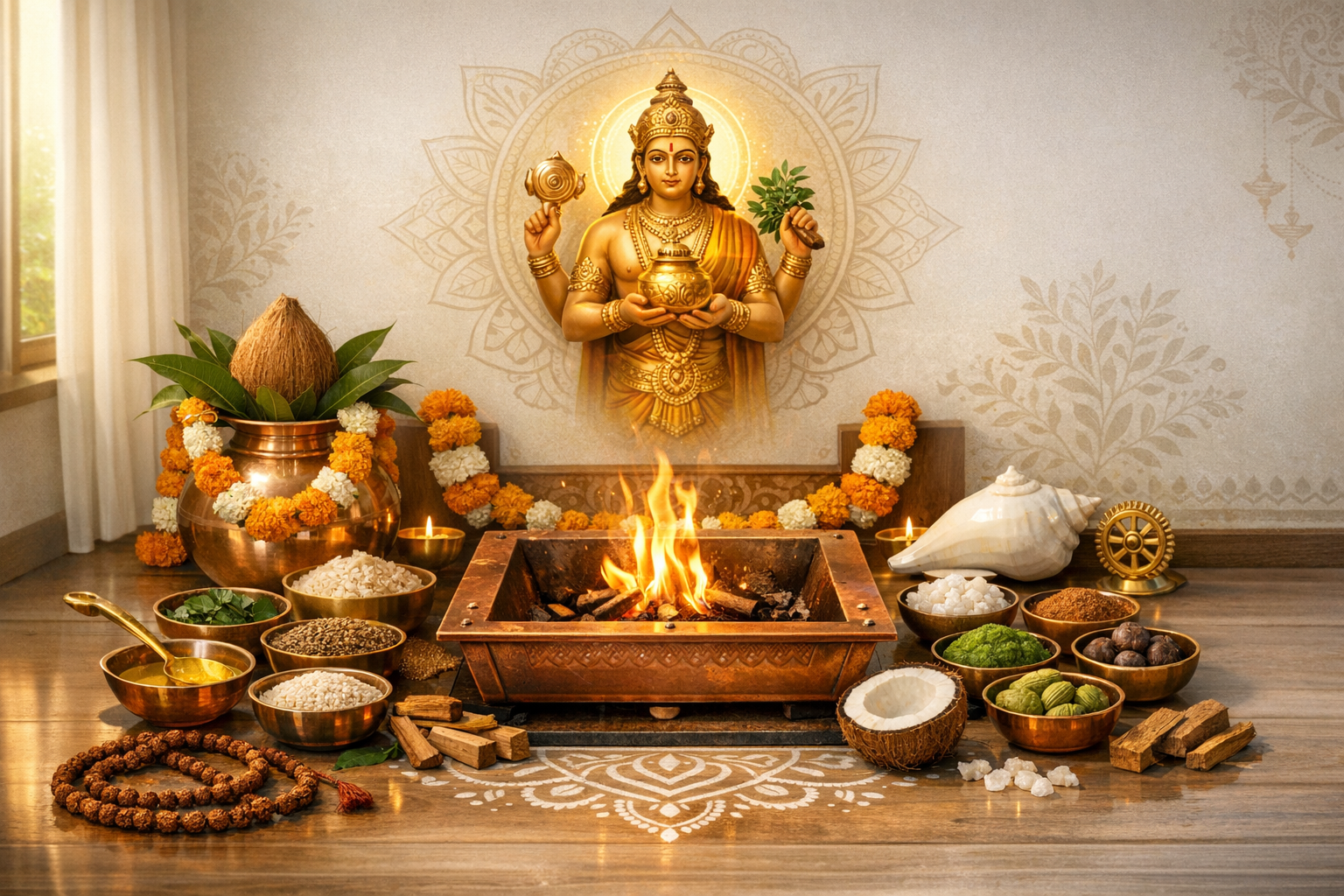
Dhanvantari Homam is a Vedic yagna to invoke Lord Dhanvantarithe Divine Physicianfor health, longevity, and the alleviation of disease. The rite integrates the Dhanvantari Moolamantra with disciplined vidhi and vidhana, aligning Ayurvedic symbolism and Havan Kund niyams with a clear, healing sankalpa. It is best performed on Dhanvantari Jayanti (Dhanteras), during Pushya Nakshatra, or in…
-
In Memoriam: Ranjit Das on Vrindavan 1976Srila Prabhupada’s Enduring Lesson in Humility

This in memoriam preserves HG Ranji Prabhu’s (Ranjit Das) vivid account from Vrindavan in 1976, when A. C. Bhaktivedanta Swami Prabhupada redirected loud glorification to his own spiritual master, Bhaktisiddhanta Sarasvati Thakura. The episode offers a precise field lesson in the Guru–Shishya Tradition: authentic teachers pass honor upward through the parampara. It situates Gayatri mantra…
-
Lunar Eclipse 3 March 2026: Definitive Chandra Grahana Sankalpa, Pitru Tarpana & Dāna Mantras Guide

A shastra-aligned, long-form guide to the 3 March 2026 lunar eclipse (Chandra Grahana), this article provides precise Sankalpa templates that can be filled with local panchanga details, complete Pitru Tarpana ślokas for tilodaka offerings, and Thila Tarpana Anantara Vidhi (Samarpana) mantras. It explains sūtaka observance, outlines pre/during/post-eclipse practice flow, and presents widely recited Chandra mantras…