
-
Bhishma’s Five Golden Arrows: How Suspicion Altered Destiny in the Kurukshetra War

This analysis revisits the Mahabharata episode of Bhishma’s five golden arrows to illuminate how suspicion can derail strategy and reshape destiny. It explains why Duryodhana’s mistrust led him to hold the arrows, how Krishna’s foresight and Arjuna’s claim of a prior boon transformed the outcome, and why Bhishma framed the reversal through the balance of…
-
Yuyutsu’s Moral Stand: The Kaurava Who Chose Dharma Over Dynasty in the Mahabharata

Yuyutsu’s decision to side with the Pandavas in the Mahabharata exemplifies moral courage over dynastic loyalty. Born to Dhritarashtra and a Vaishya maid, he navigated social marginality with ethical clarity. His public defection before the Kurukshetra War signals allegiance to dharma rather than bloodline. Surviving the war, he was entrusted with responsibilities in Hastinapura, affirming…
-
Vikarna, the Lone Kaurava of Conscience: A Stirring Lesson in Dharma and Courage

Vikarna stands out in the Mahabharata as a Kaurava who chose conscience over convenience, challenging the humiliation of Draupadi with clear, dharmic reasoning. His solitary dissent in the dice hall reveals how ethical courage can persist amid overwhelming pressure. Yet his later decision to fight for the Kauravas highlights the epic’s deeper paradox of duty…
-
Fierce Grace on Kurukshetra: Goddess Kalaratri’s Sacred Role and Soul-Carrying Symbolism

Goddess Kalaratri emerges in the Mahabharata War as a profound symbol of Time, moral consequence, and fierce compassion. Read as a cosmic witness and soul-carrier, she reframes Kurukshetra not as mere carnage, but as a rite of ethical passage aligned with Dharma-Yuddha. This lens clarifies how endings in the epic serve renewal within a larger…
-
Bhima vs Duryodhana: The Final Reckoning and Symbolic Resolution of the Mahabharata
The Mahabharata’s Kurukshetra War resolves in a singular, symbolic duel between Bhima and Duryodhana. Framed by gada-yuddha rules and a stark, dried lake bed, the battle concentrates the epic’s ethical tensions into one decisive moment. Bhima’s controversial blow fulfills a vow while testing the bounds of dharma and procedure. The thigh, marked by prior insult,…
-
The Forgotten Warrior: Reclaiming Vrishasena’s Valor Beyond Abhimanyu’s Shadow

This essay re-examines the Kurukshetra War to recover Vrishasena’s overlooked valor alongside Abhimanyu’s celebrated martyrdom. It explains how narrative framing and cultural pedagogy can elevate certain episodes and obscure others in the Mahabharata. Readers gain a clearer view of kshatra-dharma by recognizing courage across both Kaurava and Pandava camps. The piece outlines Vrishasena’s disciplined role…
-
Duryodhana’s Lake Dwaipayana Refuge: A Powerful Mahabharata Lesson on Adharma Unmasked

On the war’s final day, Duryodhana’s retreat into Lake Dwaipayana becomes a powerful allegory for how adharma seeks concealment when confronted by truth. The episode’s symbolism reframes waterfrom purification to evasionwhile the subsequent mace duel with Bhima exposes the tension between rule-bound procedure and restorative justice. Read through a dharmic lens, the moment highlights karma’s…
-
Dronacharya’s Fall at Kurukshetra: How Truth, Dharma, and Strategy Changed the War

Drona’s death in the Mahabharata marks a pivotal ethical and strategic turning point in the Kurukshetra War. After Bhishma’s fall, Dronacharya’s battlefield mastery proved insurmountable until a plan leveraged his attachment to Ashwatthama. Yudhishthira’s qualified statement“Ashwatthama hata iti gaja”preserved the letter of truth while straining its spirit, prompting Drona to lay down arms. Dhrishtadyumna then…
-
Yudhishthira’s Half-Truth: Decoding a Heart-Rending Dharma Dilemma of the Mahabharata
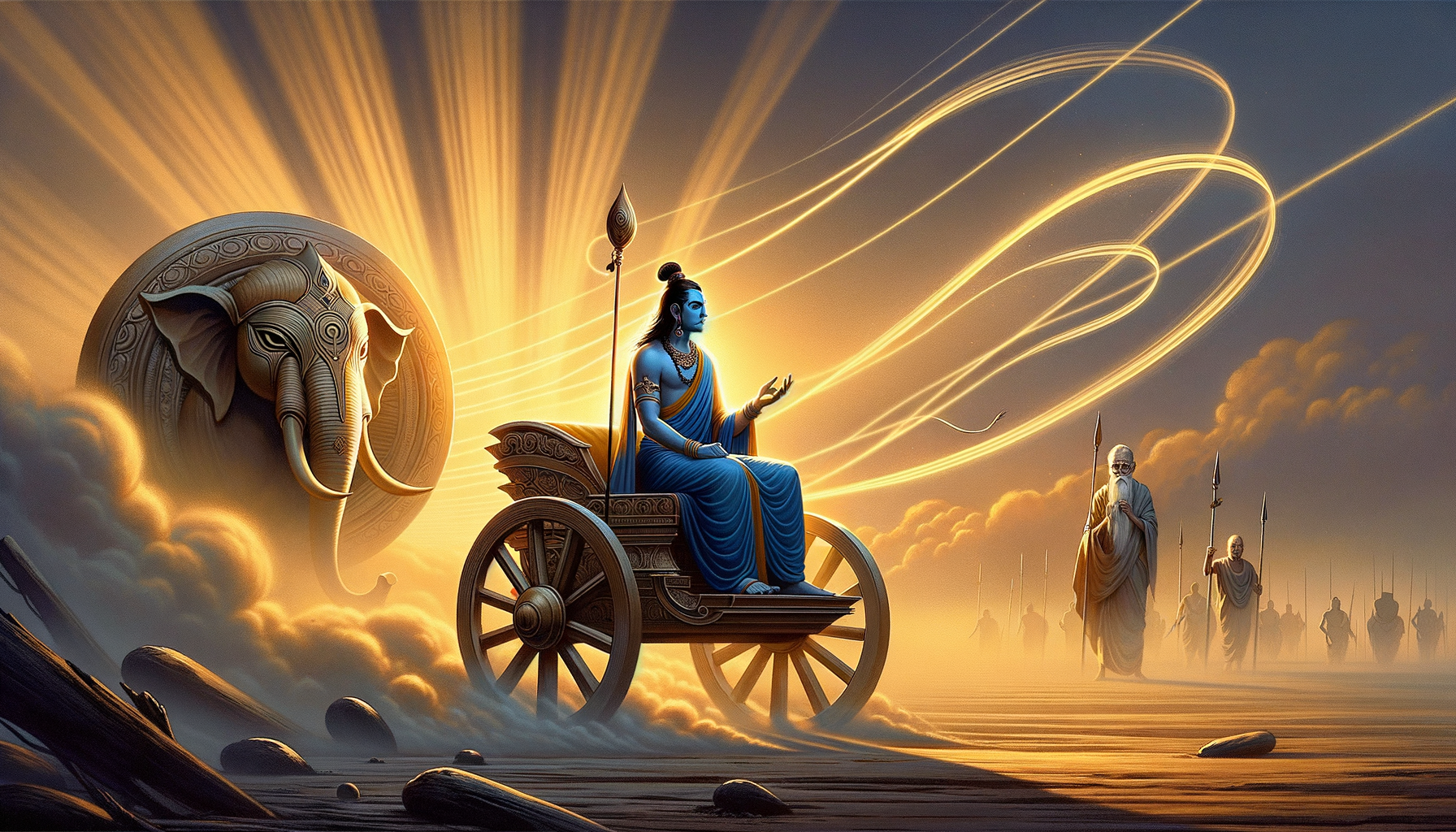
Yudhishthira’s half-truth in the Mahabharata presents a timeless ethical dilemma: when personal virtue conflicts with public duty in the midst of war, how should leaders act? The episode, centered on Drona’s disarmament after the ambiguous proclamation “Aśvatthāmā hataḥ,” highlights dharma-sankata and the costs of hard choices. Rather than offering easy answers, it encourages a method…
-
Decoding the Legendary Chakravyuha: The Circular Formation that Shaped Kurukshetra
Chakravyuha, the circular battle formation described in the Mahabharata, shaped a decisive phase of the Kurukshetra War through disciplined rotation, dynamic encirclement, and strategic deception. Its layered design illustrates how command, communication, and training determine battlefield outcomes, as seen in Abhimanyu’s valiant ingress and the risks of incomplete procedural knowledge. The formation’s vulnerabilitiesespecially at coordinated…
-
Bhishma’s Fall in the Mahabharata: Strategy, Dharma, and Leadership Lessons from Kurukshetra
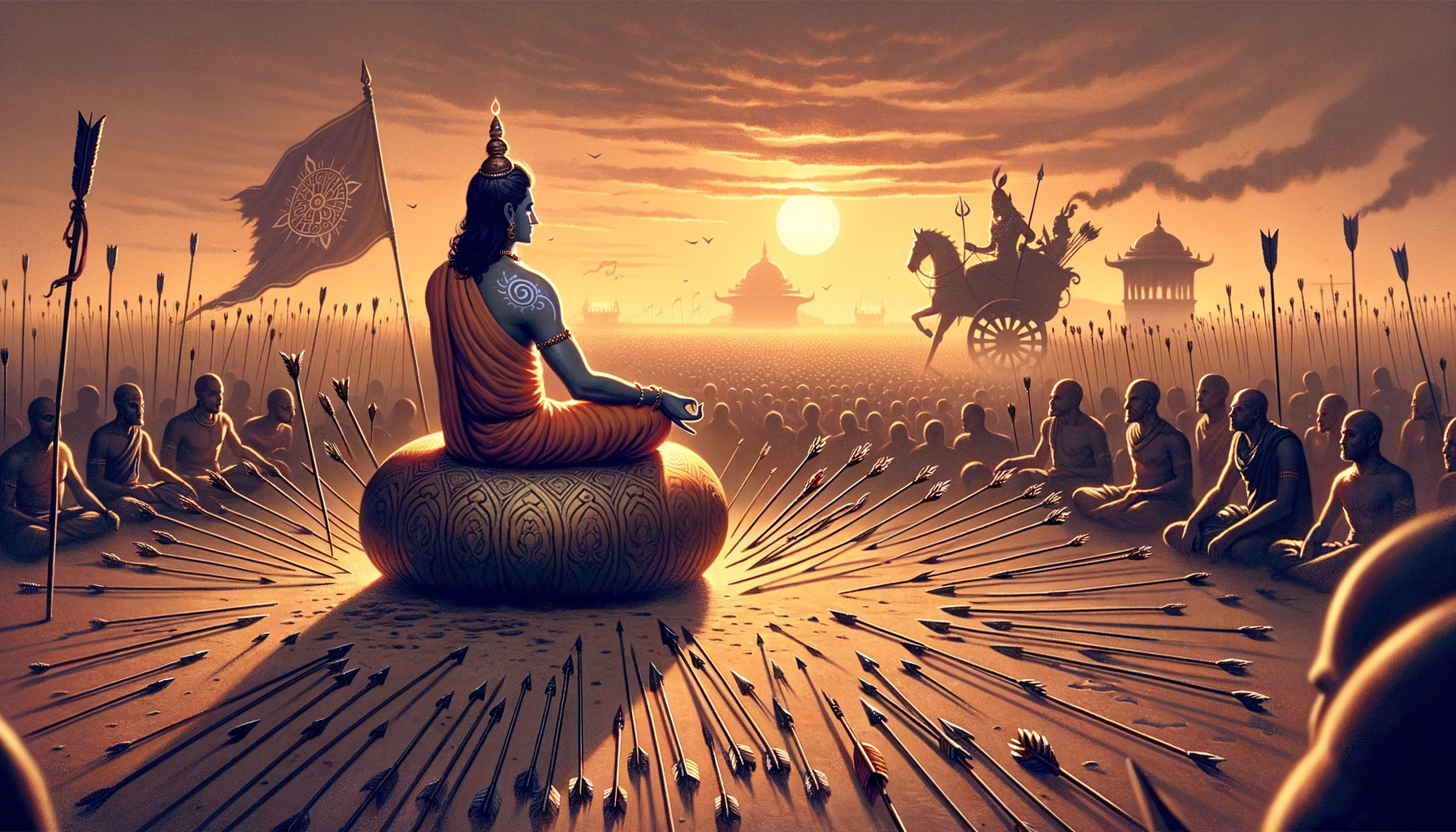
Bhishma’s fall marks a decisive shift in the Kurukshetra War, blending strategy with dharma in a way few epic moments achieve. The account clarifies why Bhishma’s vows shaped both the tactics and ethics of the Mahabharata. Readers gain context for Arjuna’s role, Krishna’s guidance, and the use of Shikhandi in preserving Dharma-Yuddha. The narrative shows…
-
Dronacharya and Dhrishtadyumna: Destiny, Deception, and Dharma in the Kurukshetra War
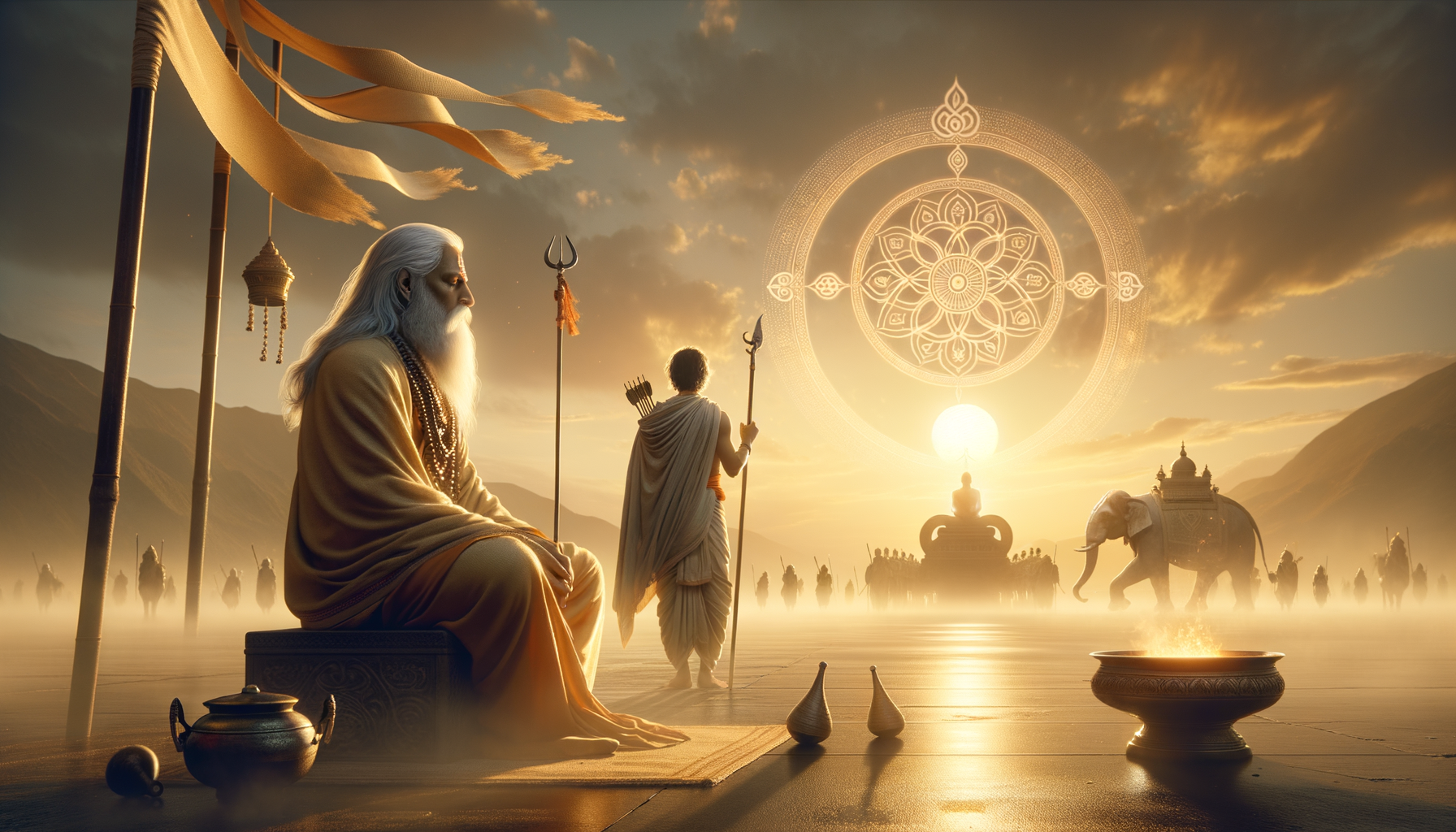
This analysis traces the full arc of Dronacharya and Dhrishtadyumna, from Drupada’s humiliation to the prophetic birth of Dhrishtadyumna, the guru–shishya paradox, and the Kurukshetra stratagem involving Ashwatthama. It clarifies competing versions of Drona’s death and weighs the ethical dimensions of deception in warfare. Readers gain a clear timeline, context for motives on both sides,…
-
Mahabharat Stories: 10 Iconic Moments That Shaped Dharma, Destiny, and the Kurukshetra War

This academically grounded overview presents ten iconic moments from the Mahabharata that continue to shape ethical thought, leadership, and social harmony. It explores Dyutakrida and the dignity of justice, Bhishma’s vow and the cost of rigid duty, and Krishna’s Udyoga Parva diplomacy as a model of principled peace. The Bhagavad Gita reframes action through svadharma…
-
Mahabharata’s Hidden Heroes: Shadow Diplomats, Espionage, and Dharma in Ancient Bharata

This exploration of the Mahabharata uncovers a disciplined intelligence culturespies, envoys, and shadow diplomatsoperating within a clear ethical framework. It highlights how Vidura-niti and Udyoga Parva illustrate protocols for reconnaissance, negotiation, and moral restraint. Readers gain insights into how Sri Krishna’s Diplomacy prioritized peace through precise knowledge and timing. The narrative shows intelligence as a…
-
Bhagavad Gita’s Battlefield Wisdom: Practical Guidance for Modern Life’s Daily Conflicts

The Bhagavad Gita was taught on a battlefield, signaling that wisdom belongs in the most demanding spaces of life. Its guidance on dharma reframes everyday dilemmasfrom work pressures to family responsibilitiesas opportunities for ethical clarity. Karma Yoga encourages action with excellence while reducing anxiety through non-attachment to outcomes. Equanimity (samatva) and disciplined focus provide stability…
-
Babruvahana and Arjuna: A Powerful Mahabharata Tale of Duty, Defeat, and Redemption in Manipur
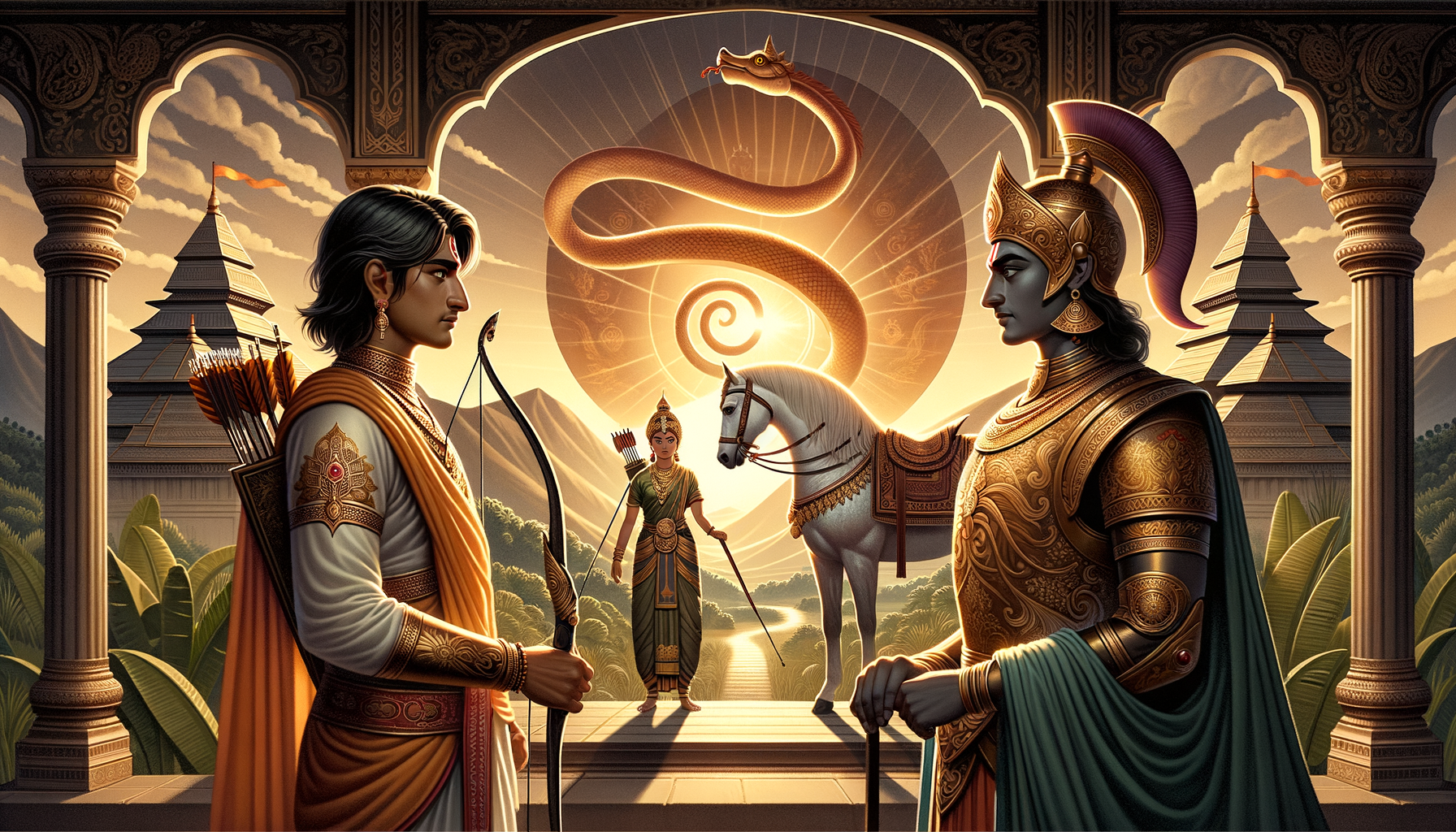
This retelling of the Babruvahana Katha presents a clear, academically grounded account of how Babruvahana defeated Arjuna during the Ashvamedha Yajna in Manipur. It explains the roles of Chitrangada and Ulupi, the ethical framework of Kshatra-dharma, and why the confrontation was necessary in certain recensions. Readers gain clarity on the specific question, “How did Babruvahana…
-
18 Parvas of Mahabharata: A Life-Changing Guide to Dharma, War, and Wisdom

This guide to the 18 Parvas of the Mahabharata dispels the misconception that the epic breeds disorder, showing instead how it clarifies dharma and strengthens ethical discernment. It outlines each Parvafrom Adi to Svargarohanahighlighting key teachings such as Vidura-niti and the Bhagavad Gita. Readers across Hinduism, Buddhism, Jainism, and Sikhism will find shared values like…
-
Arjuna’s Battlefield Anxiety: A Timeless Guide to Dharma, Mental Resilience, and Action
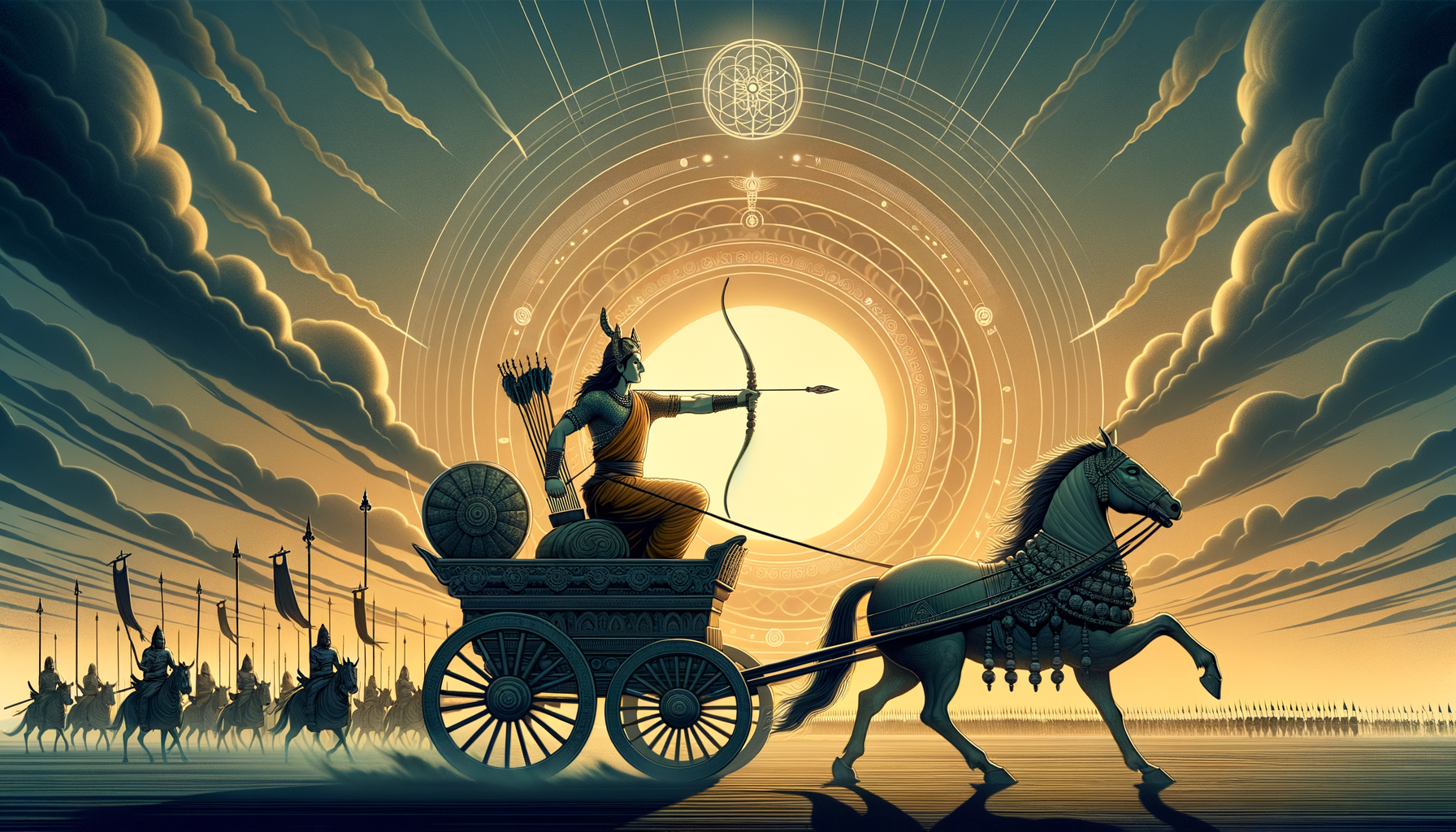
The Bhagavad Gita’s opening presents Arjuna in acute distresstrembling, disoriented, and morally tornoffering a precise portrait of battlefield anxiety. Rather than pathologizing, the text frames his vishada as the starting point for ethical clarity and inner steadiness. Krishna’s counsel models a pragmatic sequence: reframing, values-based duty, equanimity, breath regulation, and focused attention. These principles map…
-
Abhimanyu’s Final Stand: Why His Death in the Mahabharata Became an Unyielding Victory
Abhimanyu’s stand on the thirteenth day of the Kurukshetra War illustrates how a life can be “killed but not defeated” when Dharma is upheld. This analysis explains why his death represents an ethical victory that transcends the battlefield. It clarifies the tactical context of the Chakravyuha and the violation of Dharma-Yuddha that led to his…
-
Dhritarashtra’s Strategic Gamble: Sending Sanjaya to Arjuna before Kurukshetra
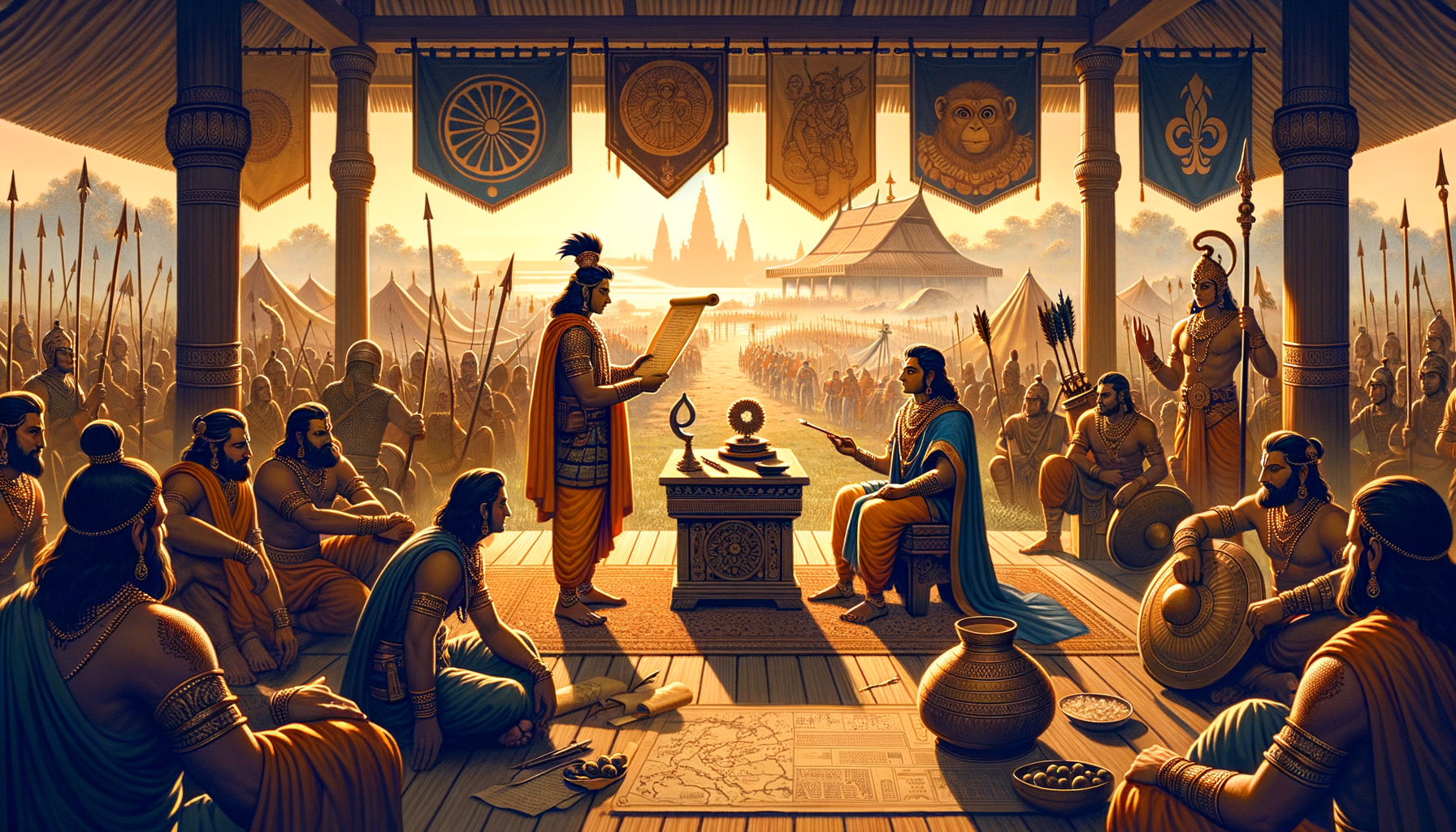
Dhritarashtra’s embassy through Sanjaya in the Udyoga Parva was far more than a perfunctory peace gesture. It legitimized Kuru policy under dharma, gathered intelligence on Pandava readiness, and probed Arjuna’s psychology at the nerve center of their war effort. Addressing Arjuna directly tested resolve, Krishna’s influence, and the possibilities of accommodation without ceding moral ground.…