
-
Queen Leela and King Padma in Yoga Vasistha: The Eternal Dance of Desire, Time, and Liberation
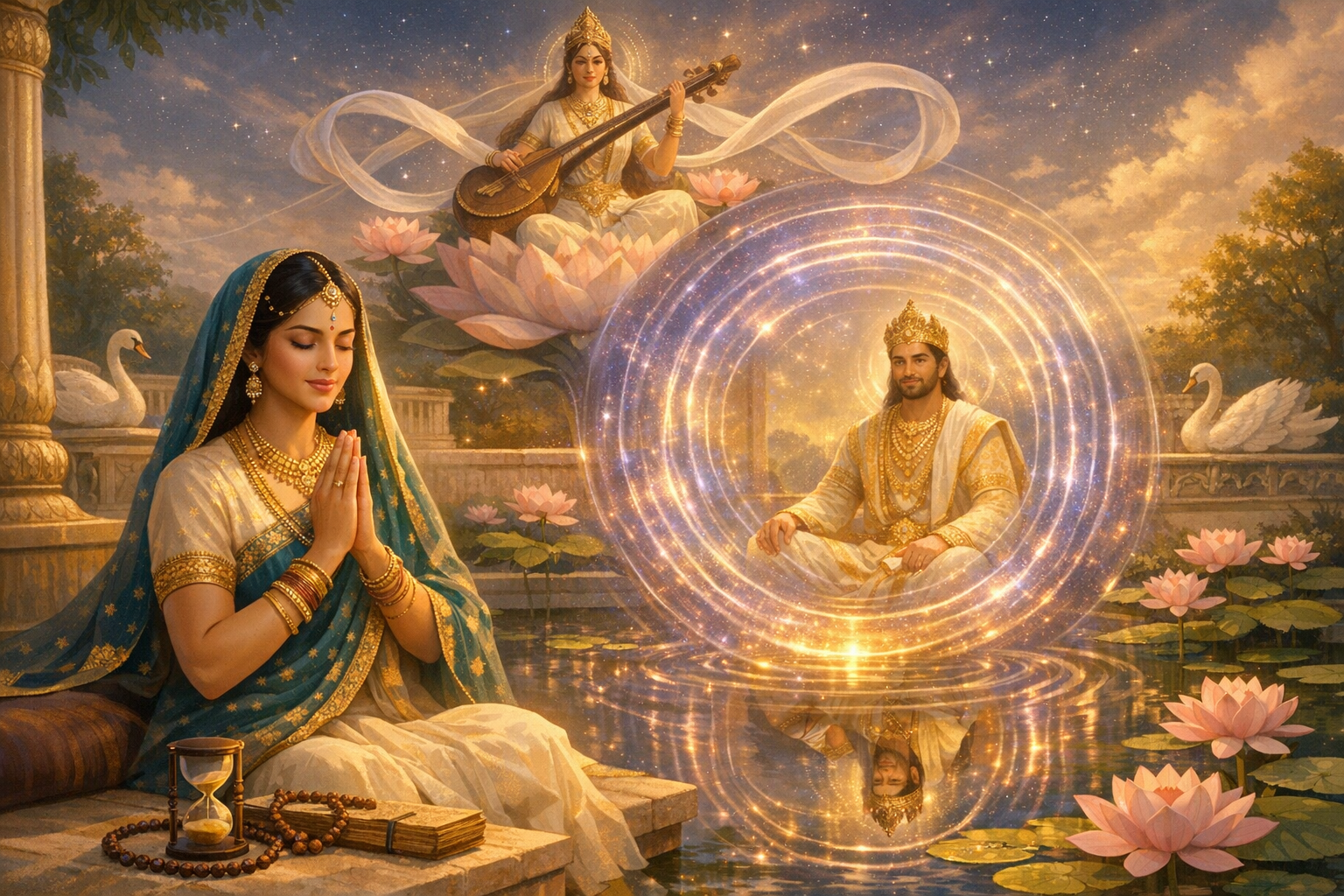
This long-form exploration of Queen Leela and King Padma in the Yoga Vasistha unpacks how consciousness, desire, and time interweave to produce the felt world. Readers learn why the text situates death and rebirth within the triad of gross, subtle, and causal bodies, clarifying continuity without clinging. The analysis translates core methodsshravana, manana, nididhyāsana, and…
-
Are Animals and Plants Free from Karma? A Dharmic Deep Dive into Choice and Consciousness
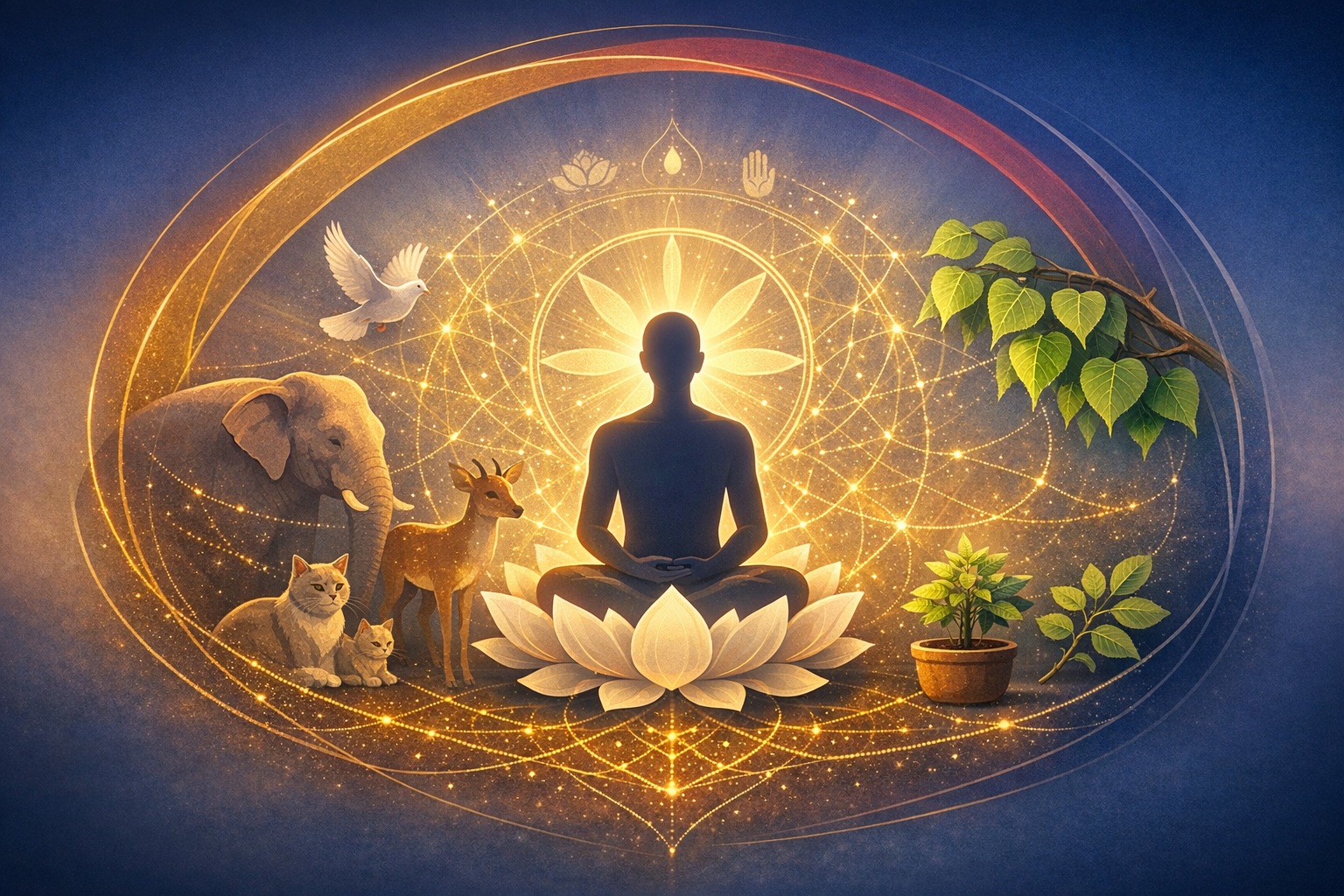
Do animals and plants accrue karma like humans? This comprehensive, dharmic analysis explains why many Vedantic interpretations hold that animals and plants seldom generate fresh, morally binding karma, while humansendowed with reflective awarenesscarry heavier responsibility. It synthesizes perspectives from Hinduism, Buddhism, Jainism, and Sikhism, showing a shared insight: karmic weight scales with intention and choice.…
-
Rethinking Death and Consciousness: Rigorous Evidence for Reincarnation and Dharmic Convergence

Modern neuroscience commonly assumes that consciousness ends at death, yet decades of rigorous field researchinitiated by Ian Stevenson at the University of Virginiahas documented hundreds of cross-cultural cases suggestive of reincarnation. The strongest reports involve young children who spontaneously recount verifiable details of a previous life, exhibit phobias or behaviors matching the prior death, and…
-
Unlocking Complete Knowledge: Krishna and the Five Realities in a Dharmic, Unified Perspective
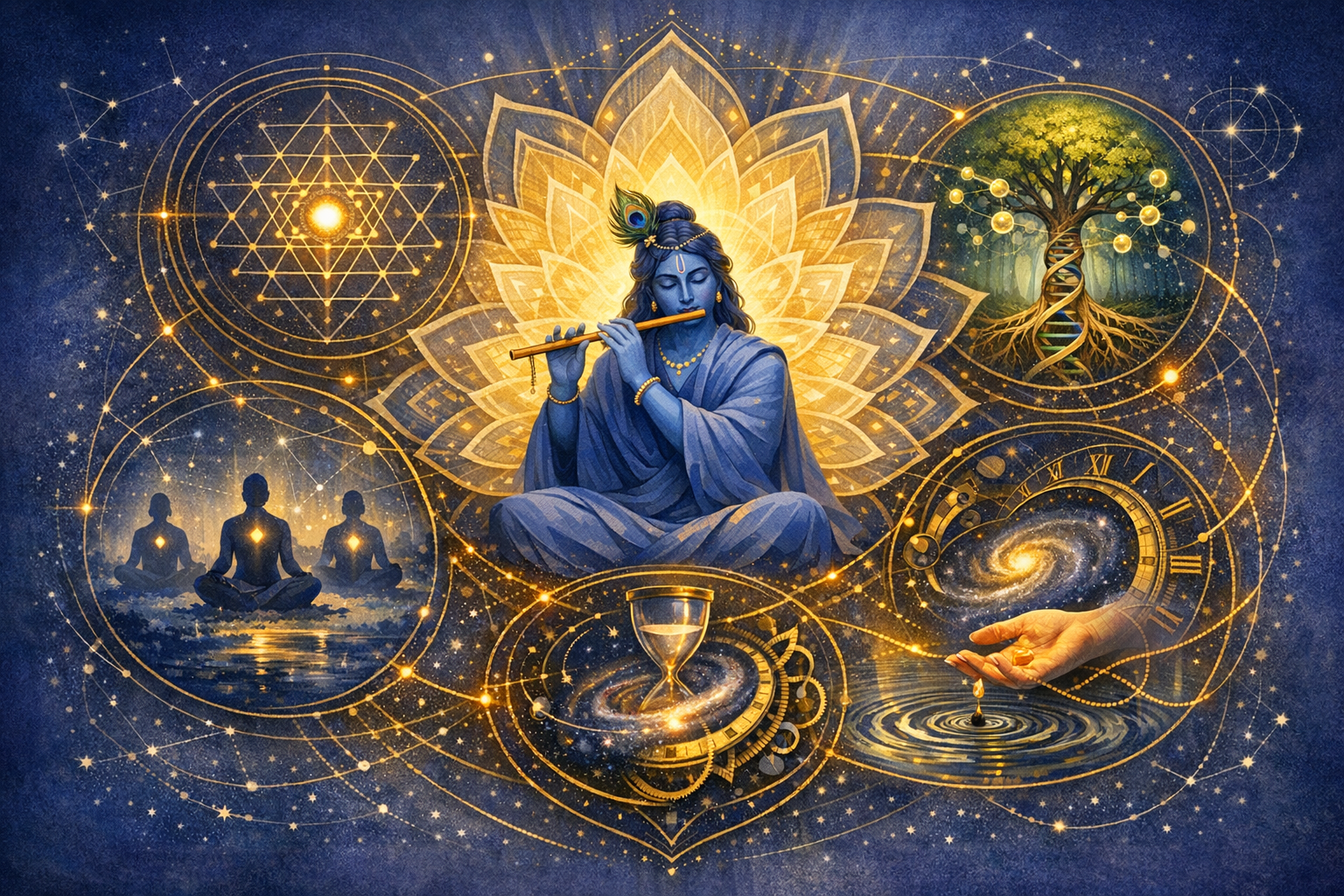
This long-form reflection presents an academic, integrative reading of Krishna-centered wisdom in the Bhagavad Gita, showing how devotion and disciplined inquiry reinforce one another. It frames the Gita’s promiseyaj jñatvaas a call to meta-knowledge that orders facts, clarifies purpose, and unifies the sciences with spiritual realization. The five realitiesIshvara, Jiva, Prakriti, Kala, and Karmaare explained…
-
Karma in Hinduism: A Definitive, Practical Guide to Action, Consequence, and Liberation
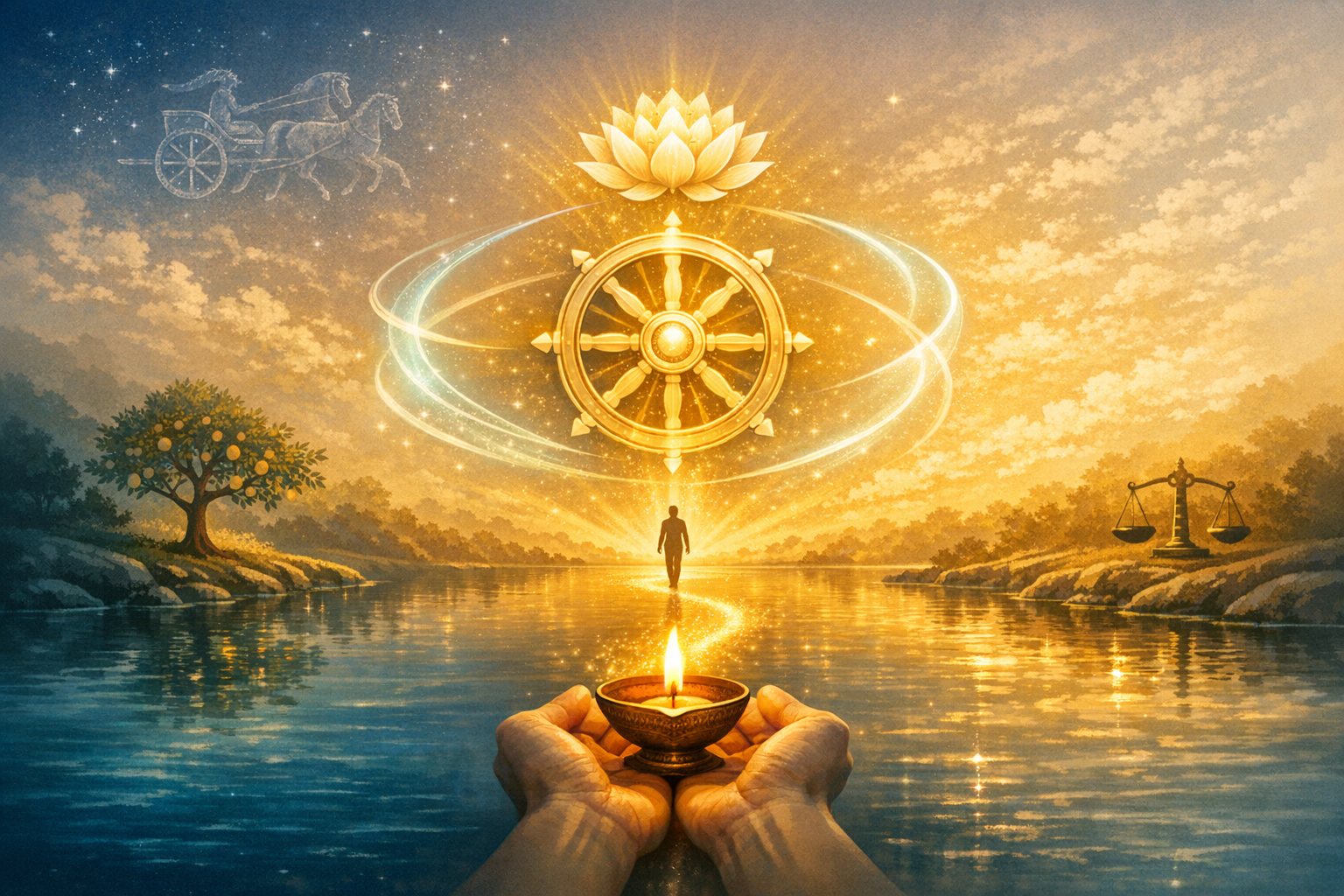
Karma in Hinduism is a precise ethical and philosophical system linking intention, action, and consequence within the larger pursuit of moksha. Drawing on the Bhagavad Gita, the Upanishads, and allied schools of Hindu philosophy, this long-form guide explains the threefold temporal modelsanchita, prarabdha, and agamialongside the Gita’s categories of karma, akarma, and vikarma. It clarifies…
-
Divine Lawkeeper: How Dharma and Karma Make God the World’s Most Just Policeman
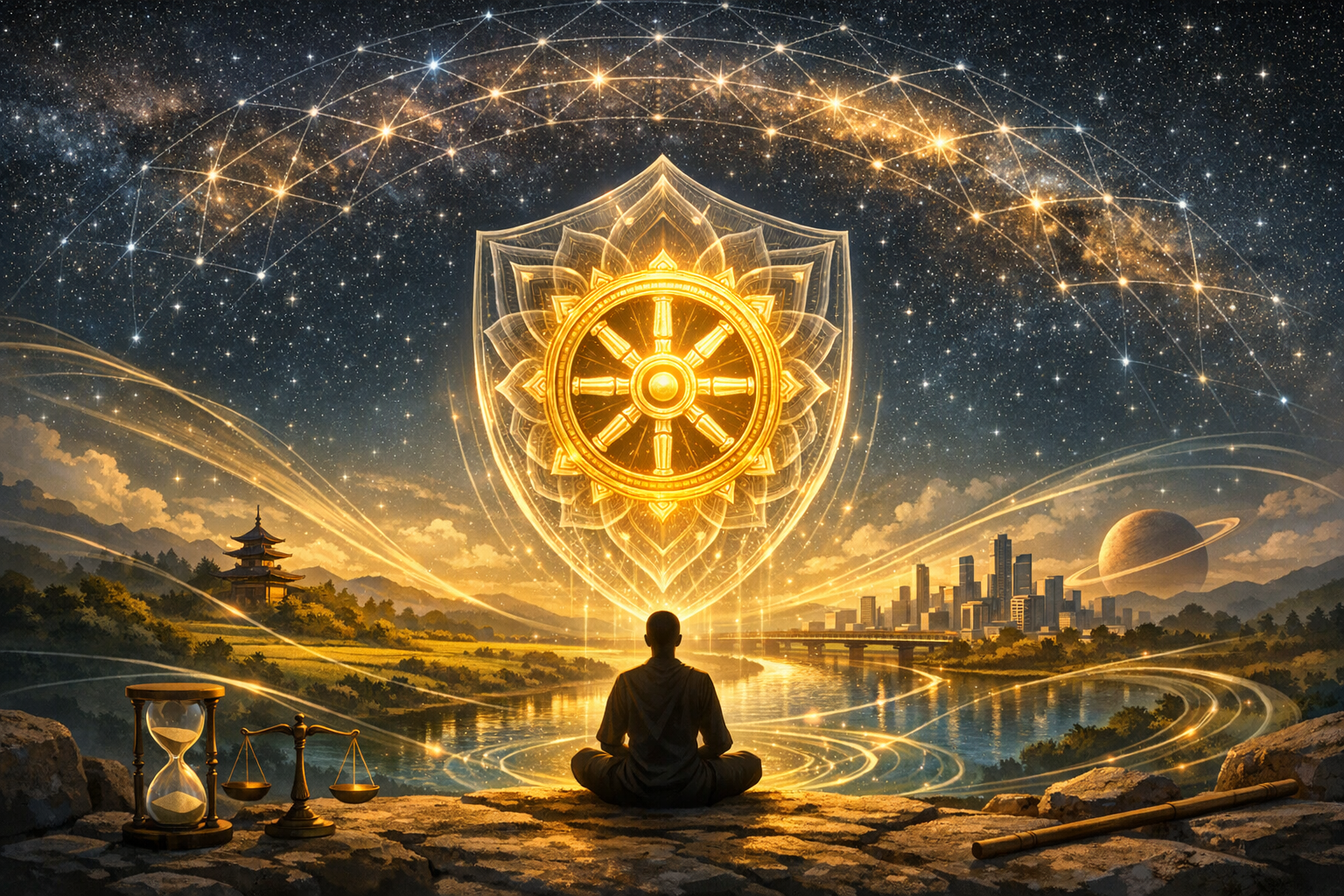
This essay presents a rigorous, accessible account of how Hindu philosophy understands God as the ideal lawkeeper through the integrated workings of dharma, karma, and ṛta. Readers learn how justice in Sanatana Dharma is primarily restorative and educational, privileging conscience, proportionality, and reform over retribution. The discussion bridges scripture (Bhagavad Gita, Dharmasastra, Arthasastra) with social…
-
Plantain-Born Kadaligarbha in Kathasaritsagara: Divine Origins, Relentless Karma, and Vairagya
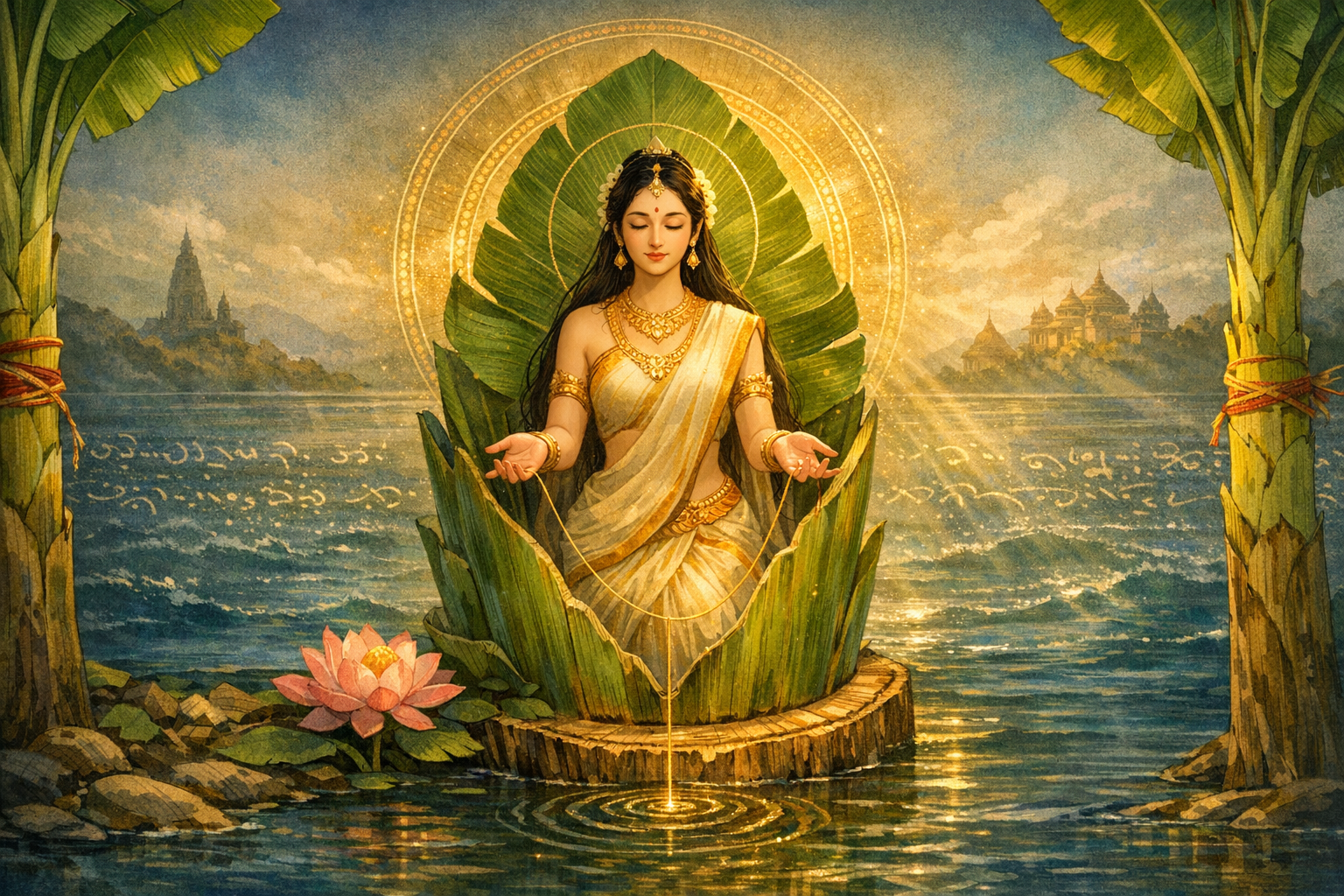
The Kathasaritsagara’s tale of Kadaligarbha, the plantain-born maiden, fuses literary beauty with precise philosophical instruction. It stages the inevitability of karma while demonstrating how dharma and vairagya (detachment) reshape response without denying consequence. Readers gain a clear map of the classical classification of karmasancita, prarabdha, and agamiand see why only disciplined non-attachment can blunt compulsive…
-
Karma and Karmaphala in the Ramayana and Mahabharata: Dharma, Consequence, and Liberation

This essay reads the Ramayana and Mahabharata as precise ethical maps of karma (action) and karmaphala (consequence), showing how intention, duty, and context shape outcomes. It explains sañchita, prārabdha, and āgāmi karma, and situates them within dharma and the puruṣārthas. Through case studiesDaśaratha’s unintended harm, Rāvaṇa’s hubris, the dice hall’s complicity, Karna’s complexity, and Bhīṣma’s…
-
Transformative Lal Kitab Remedies for Shukra in the 1st House (Lagna)

This guide explains the Lal Kitab view of Venus (Shukra) in the 1st house (Lagna), including why the Saturn–Venus “Crow Line” is considered challenging and how to respond with balanced, ethical remedies. Readers learn practical Friday observances, charitable donations of white items, and the symbolic use of silver to ease Venus afflictions. Cleanliness, gentle fragrance,…
-
Revealing Trinajalayuka Nyaya: The Caterpillar Maxim Illuminating the Soul’s Rebirth

Trinajalayuka Nyaya, the maxim of the caterpillar, clarifies how the jiva transitions between lives with continuity shaped by karma and samskara. Rather than abrupt change, it presents a measured movement that preserves moral causation across embodiments. This insight aligns with Vedanta and finds resonances in Buddhism, Jainism, and Sikhism, reinforcing unity across dharmic traditions. The…
-
From Trickster to Kingmaker: Maricha to Shakuni and the Karmic Echoes Across the Yugas

This piece examines the thematic linkage between Maricha in the Ramayana and Shakuni in the Mahabharata as a teaching device about karma, samsara, and moral causality across the yugas. It clarifies that core texts do not attest a direct rebirth but shows how the comparison illuminates the evolution of deception from personal illusion to systemic…
-
Karmavipaka Explained: How Karma Ripens Across Dharmic Paths and Shapes Destiny

Karmavipaka (कर्मविपाक) explains how actions ripen into lived experience within Hindu philosophy. Grounded in the Sanskrit kri, meaning “to do,” it frames karma as lawful causality rather than external reward or punishment. The threefold classificationsanchita, prarabdha, and kriyamanaclarifies how past, present, and future actions interrelate. Far from fatalism, Karmavipaka emphasizes purushartha (effort), ethical choices, and…
-
Sacred Yet Transient: How Hindu Philosophy Illuminates the Soul’s Journey and the Body’s Role

Hindu philosophy presents the body as a sacred yet impermanent vessel for the eternal Atman, a view memorably expressed in Bhagavad Gita 2:22. Understanding this distinction encourages reverence for embodied life while cultivating non-attachment. The model of sthula, sukshma, and Karana Sharira explains experience across physical, mental, and karmic layers, clarifying why ethical action matters.…
-
Karana Sharira, Unlocked: How the Causal Body Shapes Karmaand the Path to Freedom

This article explains Karana Sharirathe causal body in Vedantaand shows how it seeds the gross and subtle bodies while storing vasanas and karmic tendencies. Readers gain a clear map of the tri-sharira model, its relation to the Panchakosha framework, and its role in deep sleep (sushupti). The piece clarifies why Karana Sharira is an upadhi…
-
Doshams Decoded: Navagraha, Pitru, and SarpaCauses, Signs, Remedies for Karmic Harmony
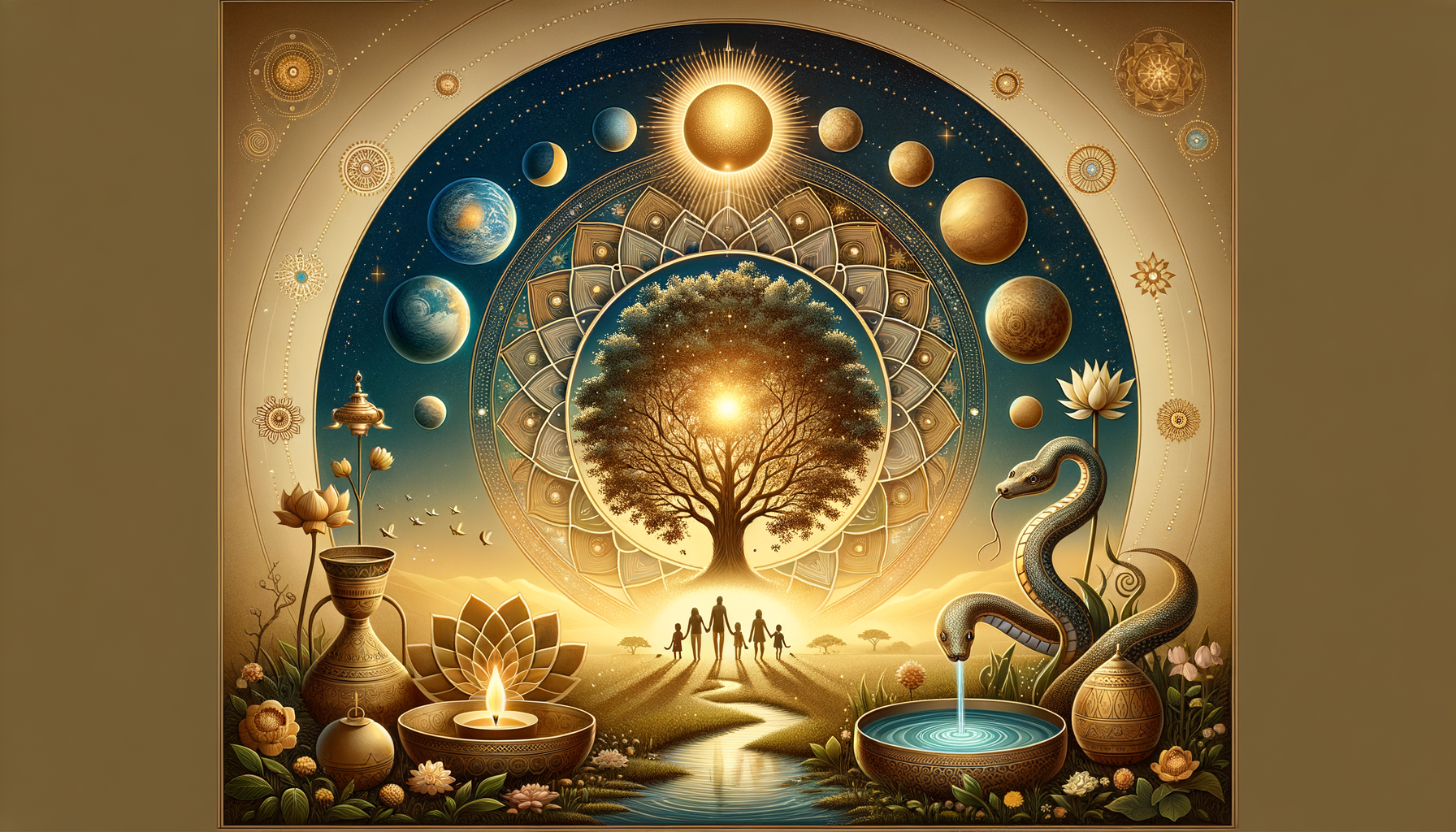
Doshams are viewed as indicators of karmic imbalance rather than fixed fate, pointing toward ethical refinement and compassionate remedies. This guide clarifies the three major typesNavagraha Dosham, Pitru Dosham, and Sarpa Doshamand outlines how they relate to planetary harmony, ancestral obligations, and ecological reverence. It highlights practical responses such as Navagraha Shanti, Pitru Tarpana, Naga…
-
Agni Yagna and Karmic Renewal: Sripada Srivallabha’s Fiery Path to Inner Purification

Sripada Srivallabha’s legacy in the Dattatreya tradition places Agni Yagna at the heart of karmic purification and ethical renewal. The sacred fire in a Havan Kund serves as both purifier and witness, inviting practitioners to surrender burdens and realign with dharma. Devotional narratives emphasize disciplined practice, guided by competent gurus and grounded in Havan Ke…
-
Free Will, Samskara, and Karma: Choose Compassion over Passion to Transform Life
Free will can guide samskara and vasana, allowing individuals to act by choice rather than impulse. Across Hinduism, Buddhism, Jainism, and Sikhism, this aligns with disciplined living, ahimsa, and seva. Karma is not punishment but pedagogy, teaching responsibility through experience. Suffering signals the need to replace passion with compassion and self-service with service to others.…
-
Narayana Mantra at Life’s Final Breath: How Last Thoughts Shape Destiny and Peace

This reflection explains why chanting the Narayana Mantra, Om Namo Narayanaya, is revered at life’s final breath in Hindu beliefs. It clarifies how the mind’s last impressions align with karma and reincarnation, echoing Bhagavad Gita teachings on the power of final consciousness. Practical, compassionate guidelines are offered for creating a calm environment, choosing suitable modes…
-
Embracing Samsara: The Unavoidable Cycle of Life and Transformation in Hindu Thought
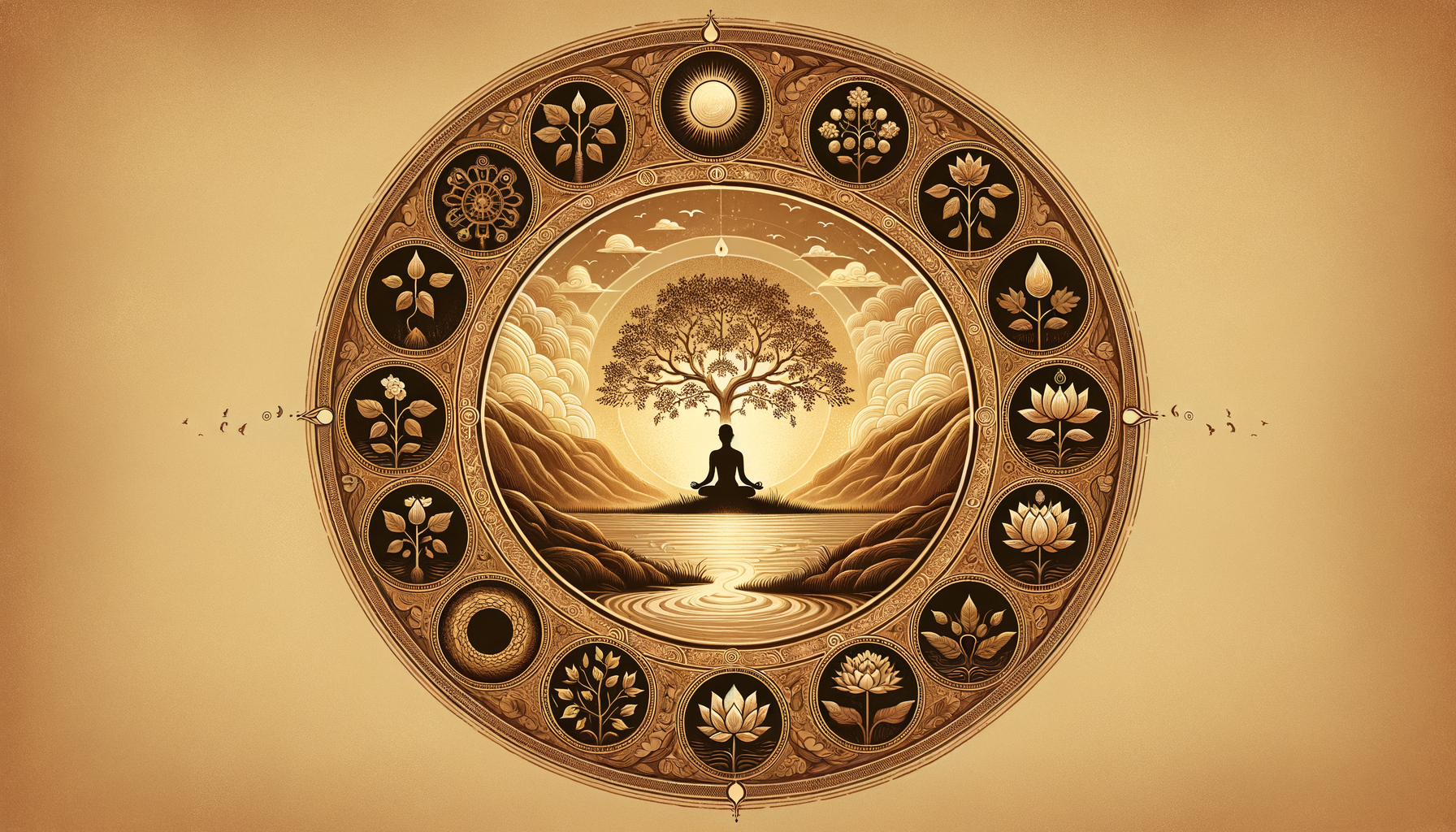
The insight that life moves through birth, growth, flowering, fruiting, decay, and transformation reflects Hinduism’s vision of Samsara as a meaningful cycle shaped by karma and oriented by dharma toward moksha. This piece explains how the metaphor of nature clarifies impermanence while cultivating equanimity and ethical responsibility. It highlights scriptural coherence found in the Upanishads…
-
Poetic Karmic Justice: Vali Reborn as Jara and the Arrow That Ends Krishna’s Leela

This article explores a powerful link between the Ramayana and the Mahabharata through the motif of karmic justice connecting Vali, Jara, Rama, and Krishna. It clarifies how later devotional and regional traditions interpret Jara as Vali reborn while noting that the critical Mahabharata text simply names Jara as a hunter. Readers gain a nuanced understanding…