
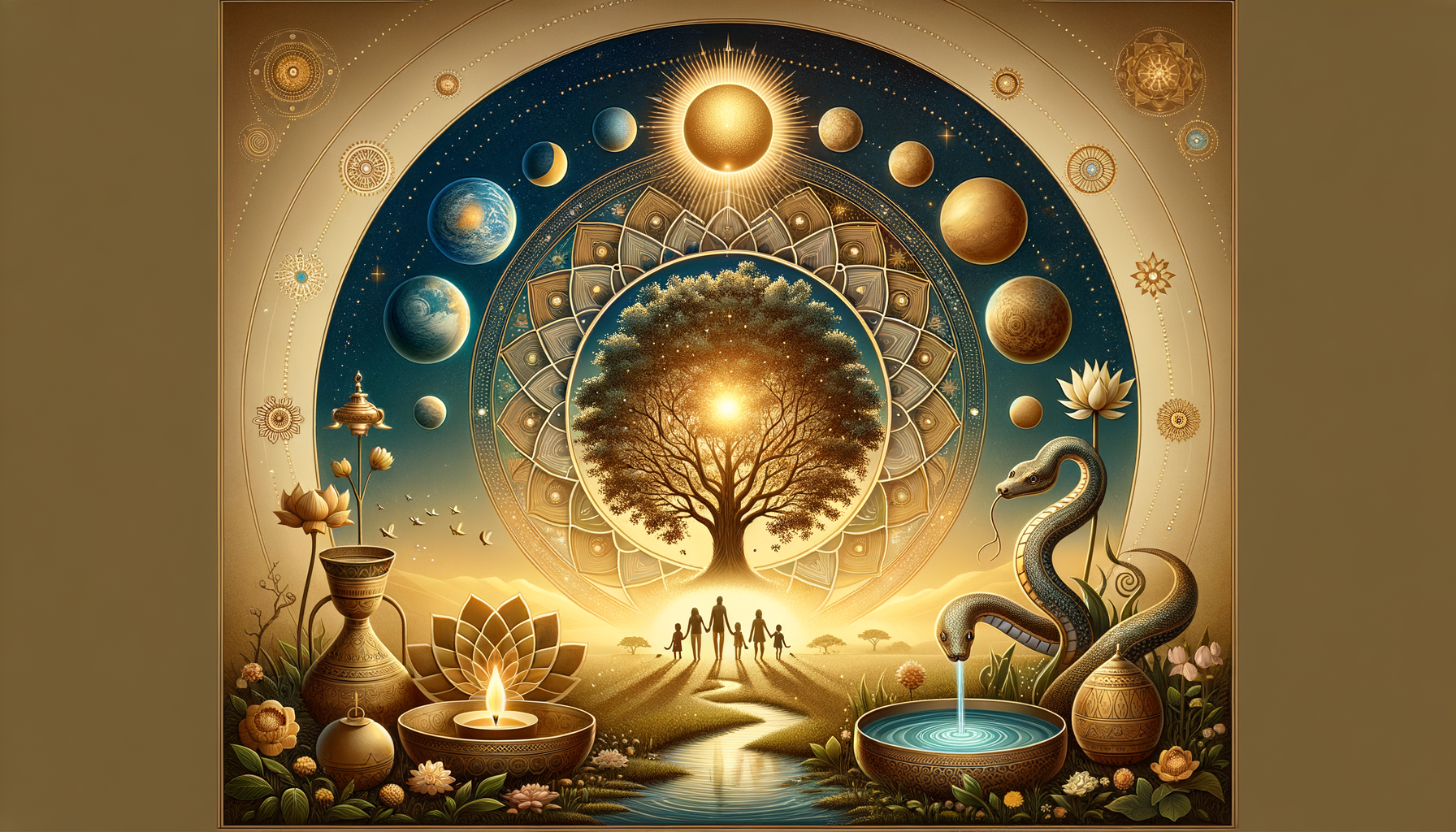
Doshams are traditionally understood as life challenges arising from accumulated karma, often perceived as the residual effects of actions across births. Within Hindu beliefs, three commonly discussed types are Navagraha Dosham, Pitru Dosham, and Sarpa Dosham. Each points to a distinct axis of imbalanceplanetary influences, ancestral obligations, and serpent symbolismwhile collectively emphasizing ethical living, self-reflection, and compassionate remedies grounded in Sanatan Dharma.
Across dharmic traditionsHinduism, Buddhism, Jainism, and Sikhismkarmic causation is approached through responsibility, service (seva), ahiṃsā, and disciplined practice. This perspective avoids fatalism: doshams do not predetermine destiny but highlight areas for conscious correction. In this unifying framework, individuals can transform difficulties into growth by aligning thought, speech, and action with dharma.
Navagraha Dosham refers to perceived disharmony among the nine planetary forces (Navagraha) as interpreted in Vedic astrology. Practitioners often associate this with fluctuations in health, career, relationships, or timing. Time-honored responses include Navagraha Shanti (propitiatory rites), mantra practice, ethical discipline, and consistent seva. A balanced routinemindfulness, truthful conduct, and commitment to dutyserves as a practical stabilizer alongside any ritual observance.
Pitru Dosham highlights an unsettled relationship with lineage, commonly linked to unmet ancestral duties. Communities frequently observe signs such as recurring delays in family milestones or intergenerational discord. Remedial measures include Pitru Tarpana, charitable giving in the name of ancestors, care for elders, and contributions to education or public welfare. Such actions integrate reverence with responsibility, reaffirming family bonds and social harmony.
Sarpa Dosham is associated with the symbolic and sacred place of serpents (Naga) in Indic traditions, often connected with transformation, protection of land and water, and ecological respect. It is sometimes linked to obstacles in property matters or prolonged delays in plans. Practitioners turn to Naga Puja, compassionate conduct toward all beings, and environmental stewardshipsuch as protecting water sources and planting treesas complementary remedies that honor the symbolism and ethics embedded in the tradition.
A practical roadmap integrates ritual with daily virtue. Many households blend mantra and vrata with daana (charity), meditation, and ethical commitments like ahiṃsā, satya, and self-discipline. Regular remembrance of gratitude toward ancestors, mindful speech, and service to community create cumulative, stabilizing effects. When in doubt, consultation with competent and compassionate guides helps ensure that remedies remain dignified, context-sensitive, and aligned with Sanatan Dharma.
An academic yet empathetic approach cautions against fear-based interpretations or rigid prescriptions. Doshams are best regarded as diagnostic lenses pointing to moral and spiritual refinement, not as labels of doom. In the dharmic spirit of unity, shared principlesright intention, responsible action, and serviceoffer accessible pathways for harmonizing Navagraha Dosham, Pitru Dosham, and Sarpa Dosham while fostering cohesion among diverse practices within Hinduism, Buddhism, Jainism, and Sikhism.
Ultimately, understanding doshams encourages clarity and courage: challenges become invitations to cultivate inner steadiness, honor ancestors, respect nature, and contribute to collective well-being. Through balanced remedies and ethical living, individuals can transmute adversity into progress and restore harmony in both personal and communal spheres.
Inspired by this post on Hindu Pad.
