
-
Purva Linga and Achala Shivlings: Uncreated Symbols of Shiva’s Eternal Presence
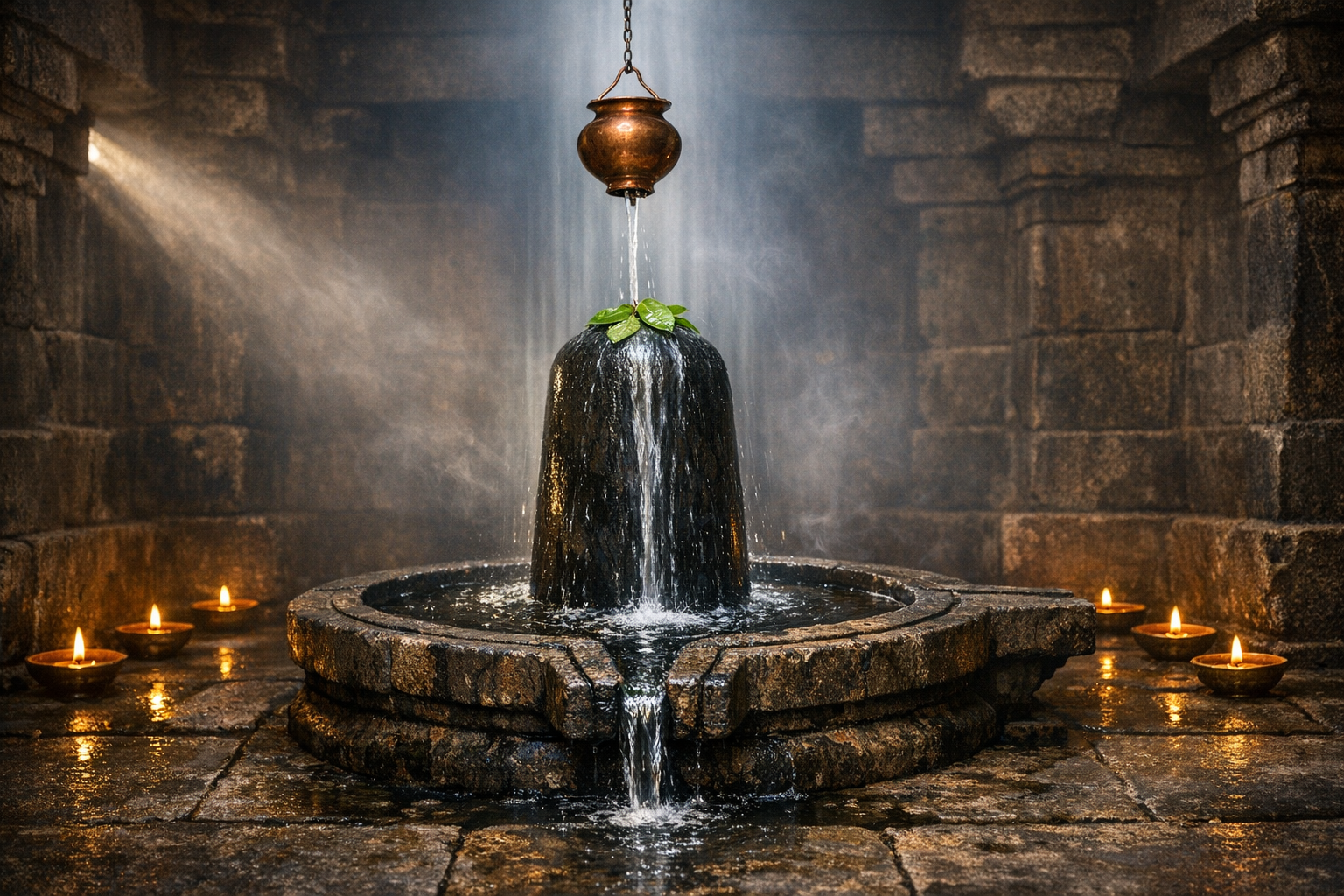
This article explains why the Purva Linga is counted among the Achala Shivlings in Shaivism and how it epitomizes an uncreated, immovable presence of Shiva. It clarifies the philology of “pūrva” and the aniconic meaning of the Shivalinga, linking these ideas to Lingodbhava and Maha Shivaratri. Readers learn how temple architecture, Abhishekam, and daily puja…
-
Panchamrita Abhisheka: Sacred Science, Symbolism, and Temple Tradition of the Five Nectars

Panchamrita Abhishekathe bathing of deities with milk, curd, ghee, honey, and sugar/jaggeryunites sacred symbolism, Ayurveda, and practical icon care. Sri Sri Ravishankar’s observation that these five are “like nectar” echoes Agamic and Puranic guidance and explains why they endure in temple ritual. Each substance contributes uniquely: milk cools and nourishes, curd clarifies, ghee protects, honey…
-
18 Research-Backed Facts about Ganesha: Iconography, Mantras, Festivals, and Global Legacy

This comprehensive, research-grounded guide presents 18 essential facts about Ganeshahis Puranic origins, rich iconography, mantras, and threshold role as Prathama Pujya. Readers will learn how symbols such as the goad, noose, modaka, and the mouse vahana communicate psychological discipline and ethical intent. The overview explains the eight incarnations (Mudgala Purana), monthly observances like Sankatahara Chaturthi,…
-
Jyotiba of Maharashtra’s Sacred Hills: Radiant Warrior-Protector, Fusion of Shiva and Surya
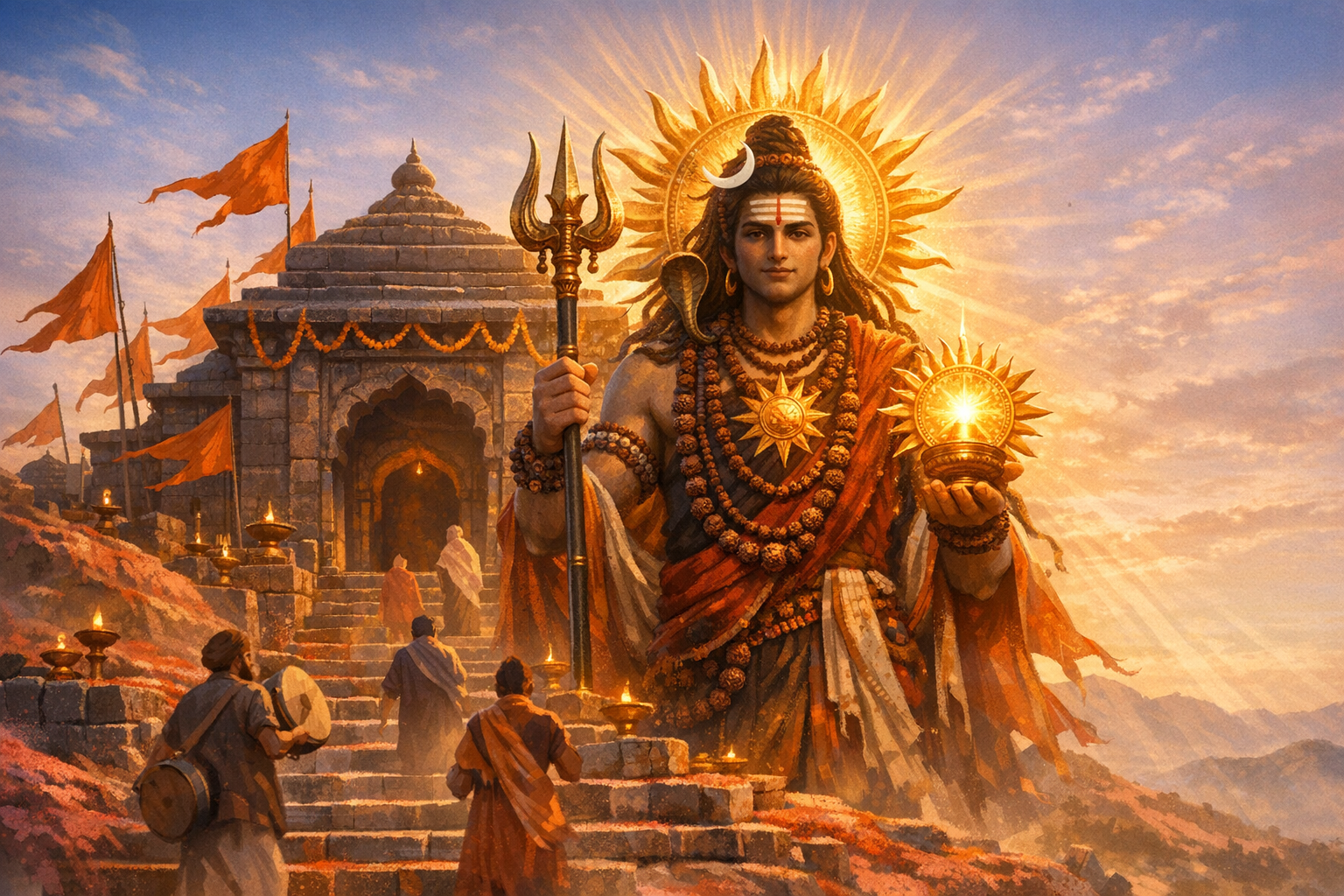
Jyotiba, the radiant warrior-protector of Maharashtra’s sacred hills, is revered across the Deccan as a powerful fusion of Shiva’s transformative force and Surya’s life-giving radiance. Set on Wadi-Ratnagiri near Kolhapur, the temple anchors a sacred geography that interlinks with the famed Mahalakshmi shrine, illustrating how local ecology and pan-Indic theology cohere. The Chaitra Purnima yatra,…
-
Khandoba’s Idol Decoded: Valor, Protection, and Sacred Kingship in Maharashtra’s Jejuri

Khandobarevered as Martanda Bhairava, Malhari, and Mallariunites Shiva’s protective grace, martial valor, and divine kingship in a compelling idol form central to Maharashtra’s sacred geography. The anthropomorphic equestrian murti and the aniconic linga together encode a complete theology of guardianship, justice, and prosperity. Weapons such as the khanda and spear symbolize Kshatra Dharma and Dharma-Yuddha,…
-
Why Temples Have Doors: Sacred Thresholds that Protect, Purify, and Deepen Darshan
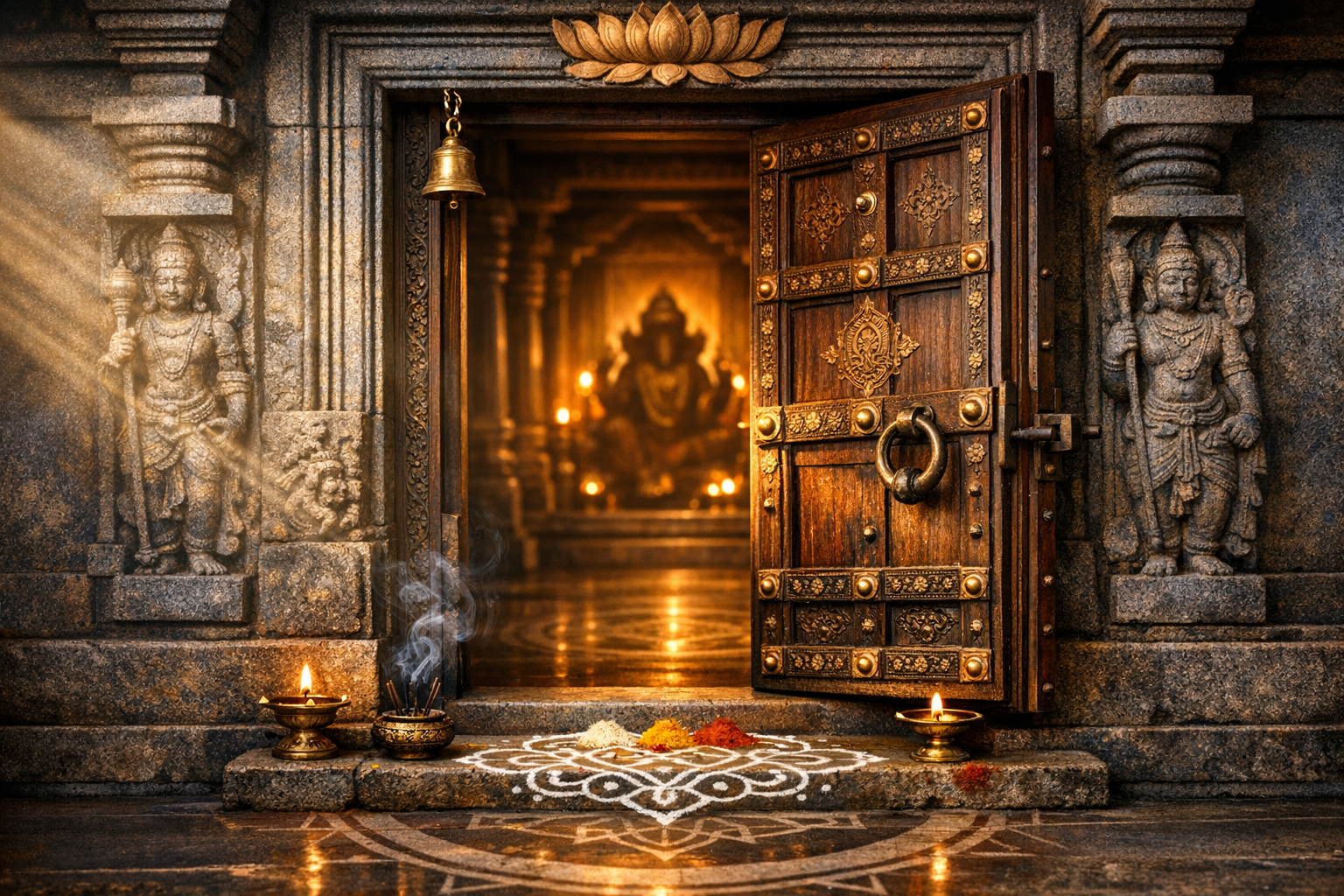
Temple doors are sacred thresholds, not mere barriers. In Hindu temple architecture grounded in Vastu-shastra and Agama-shastra, doors regulate ritual cycles, pace darshan, and uphold sanctity in the garbhagriha. They serve conservation needs by stabilizing microclimates, managing acoustics, and protecting murtis, textiles, and paintings from dust, humidity, and light. Doors also secure community-held heritage such…
-
Experience Sacred Renewal: Tiruchanur Koil Alwar Thirumanjanam28 Apr 2026, Vasantotsavams Prelude
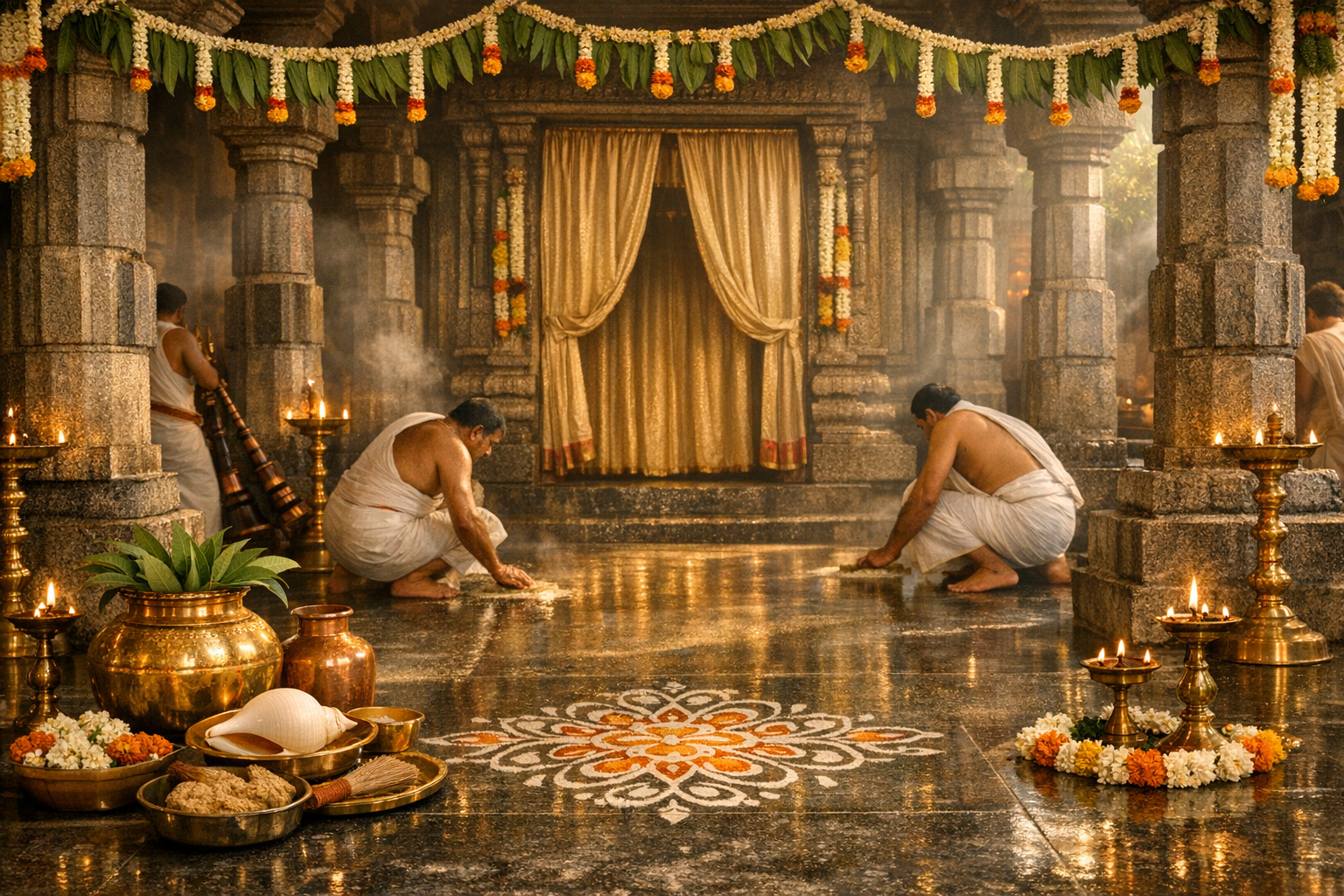
Sri Padmavathi Ammavari Temple, Tiruchanur, will perform Koil Alwar Thirumanjanam on 28 April 2026 as the formal prelude to the Vasanthotsavams scheduled from 30 April to 2 May 2026. The day begins with Suprabhatam and a temple-wide purification from 6:00, aligning with Pancharatra Agama and TTD protocols. Readers gain a clear understanding of the ritual’s…
-
Krishnavataram Trailer Unveiled at Krishna Janmabhoomi: Sacred Cinema That Unites Devotion

The Krishnavataram trailer launch at Krishna Janmabhoomi evolved from a routine release into a living act of devotion, as chants and darshan-oriented gathering reshaped it into a sacred public moment. Set within Mathura’s revered temple ecology, the event demonstrated how mythological cinema can align with Sanatana Dharma’s values when framed by reverence and protocol. It…
-
Eraiyur Thagam Theerthapureeswarar Temple: Shaiva Heritage, Travel Guide & Architecture

Arulmigu Eraiyur Thagam Theerthapureeswarar Temple in Iraiyur (Erayur), near Vridhachalam, is a living Shaiva kshetra where Shiva as Dhagam Theerthapureeswarar and Goddess Annapurni are venerated. The name evokes a theological image of thirst being quenched at a sacred theertha, aligning with Shaiva Siddhanta’s compassionate vision. Practical access is simple: buses are available, roads are direct,…
-
Historic Revival in Sindhudurg: Decades-Closed Temples Reopen via Maharashtra Mandir Mahasangh

Several long-closed temples in Sindhudurg have reopened after a structured, non-confrontational intervention by the Maharashtra Mandir Mahasangh. The initiative combined Naam-Satsang, facilitated dialogue, and a district convention to rebuild trust and identify actionable solutions. Governance was restored through compliance with the Bombay Public Trusts Act, 1950, transparent Temple Management Committees, and clear operating procedures. Daily…
-
Chhattisgarh Mandir Mahasangh: A Bold Plan to Protect Temples and Renew Dharmic Heritage
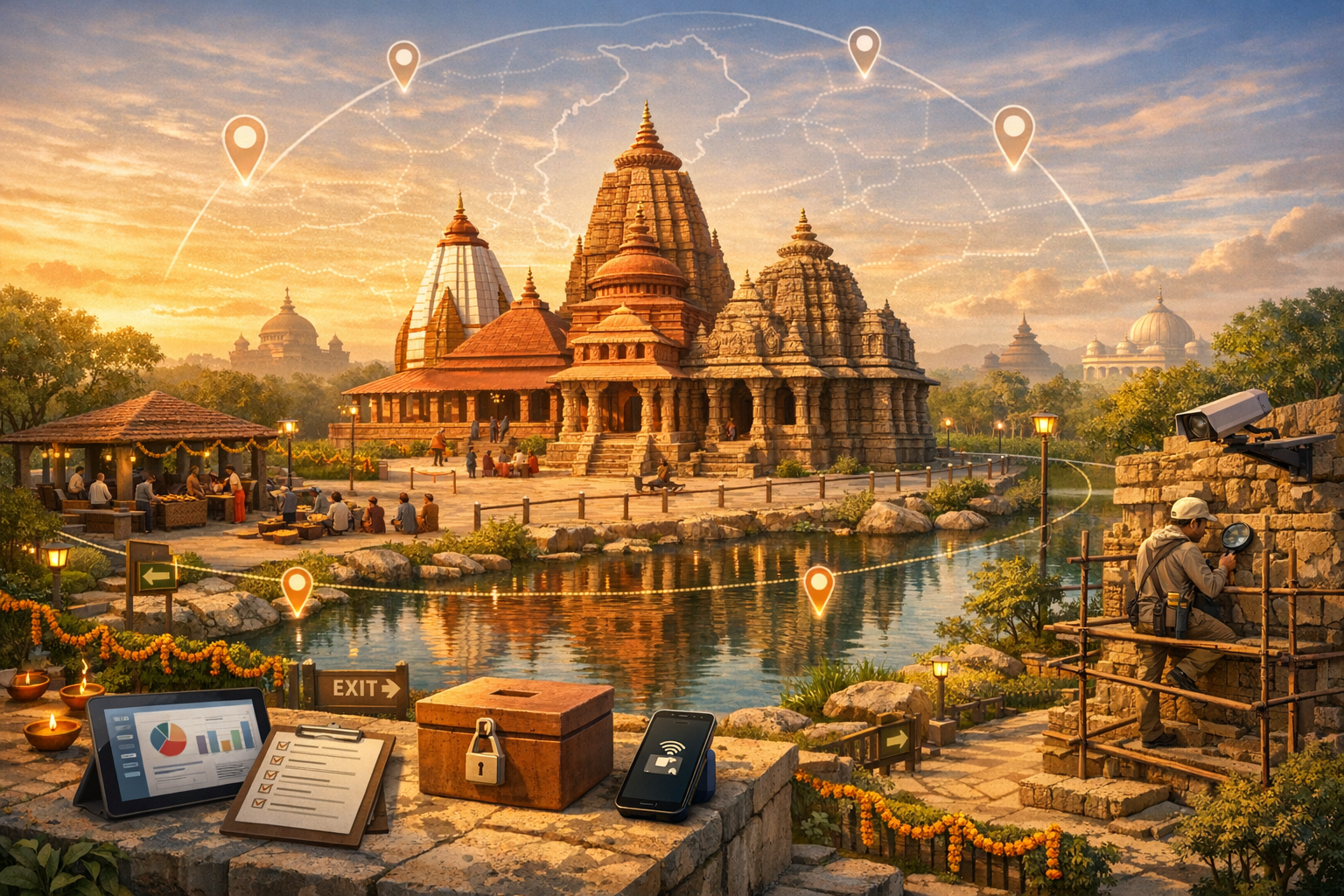
Temple trustees and priests in Chhattisgarh have resolved to establish a Mandir Mahasangh to professionalize temple management, protect temple lands from encroachment, and renew Dharmic heritage. The proposed federation emphasizes legal compliance, financial transparency, and standard operating procedures while respecting local traditions. It recommends GIS-based land protection, conservation-grade heritage care, and robust safety and crowd…
-
Ardhoruka in Hindu Bronzes: Decoding the Warrior’s Drape and Ascetic Power in Iconography
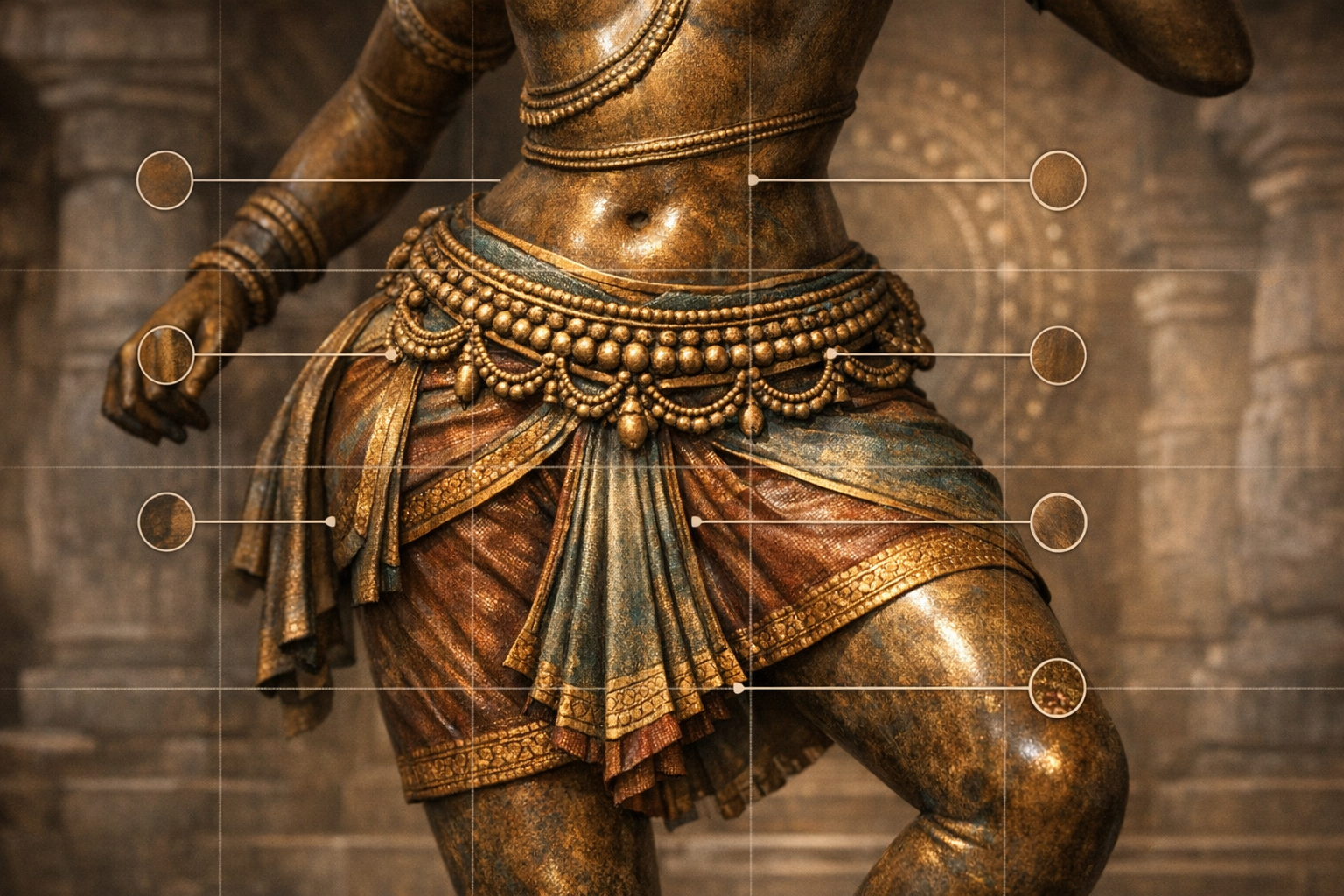
The ardhorukaa short, tightly wrapped lower garmentplays a central role in Hindu bronze iconography, especially in South Indian masterpieces. By exposing the thighs and condensing the silhouette, it signals martial vigor, dance, and ascetic discipline, contrasting with the longer antariya. Canonical texts in the Shilpa Shastras prescribe this form for specific deities, while the lost-wax…
-
Bhadrachalam Sthala Puranam: Sacred Legends, Living Devotion at Sita Ramachandra Swamy
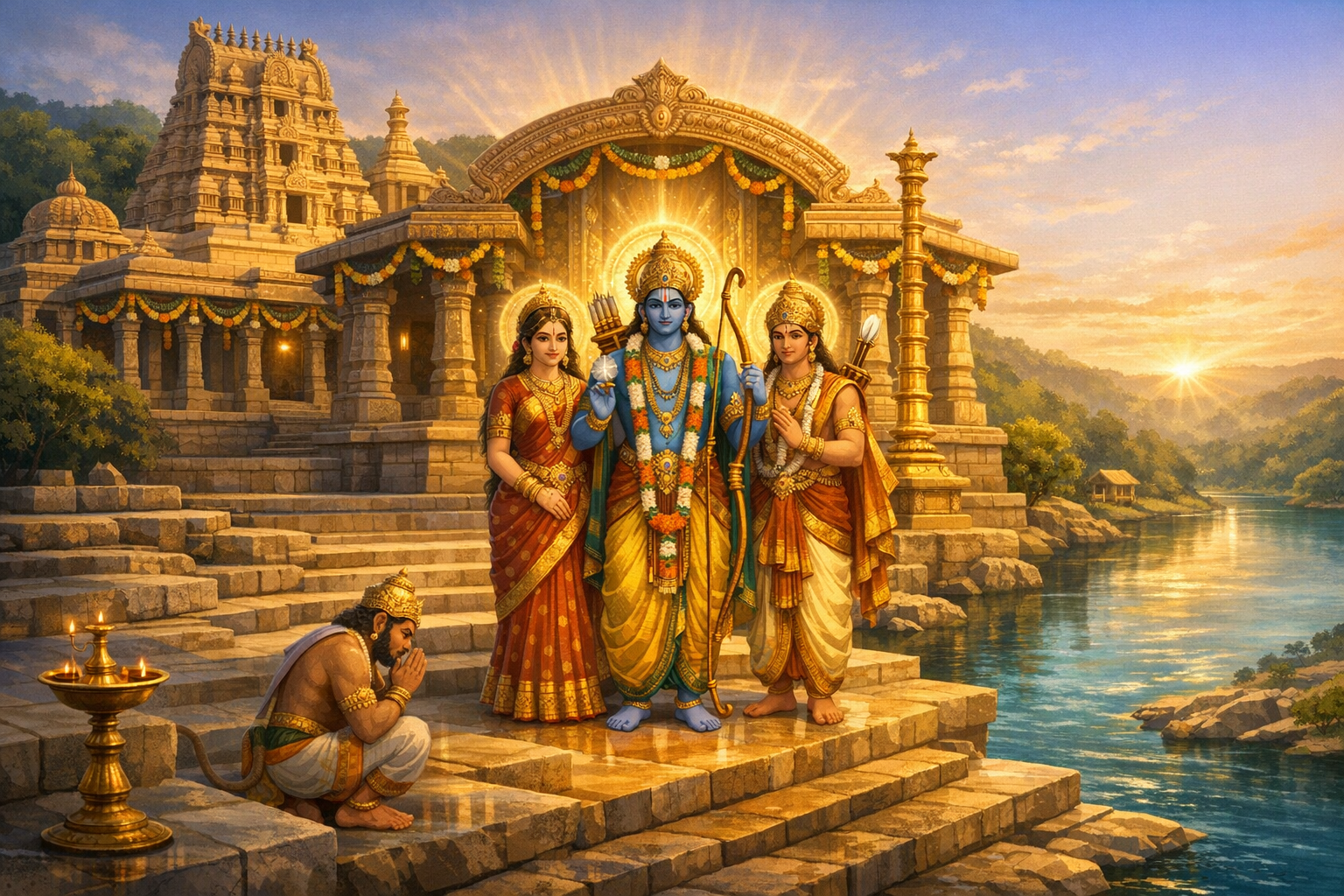
Set on the banks of the Godavari, the Bhadrachalam Sita Ramachandra Swamy Temple embodies a living synthesis of Valmiki’s Ramayana, sacred geography, and historical tradition. Its Sthala Puranam links Ayodhya’s epic events to the forests of Dandakaranya, where Sri Rama, Seetha, and Lakshmana are venerated in the unique Vaikuntha Rama iconography. The kshetra’s renaissance under…
-
Parthan Palli Parthasarathy: Thirunangur Divya Desam Where Arjuna Received Divine Wisdom
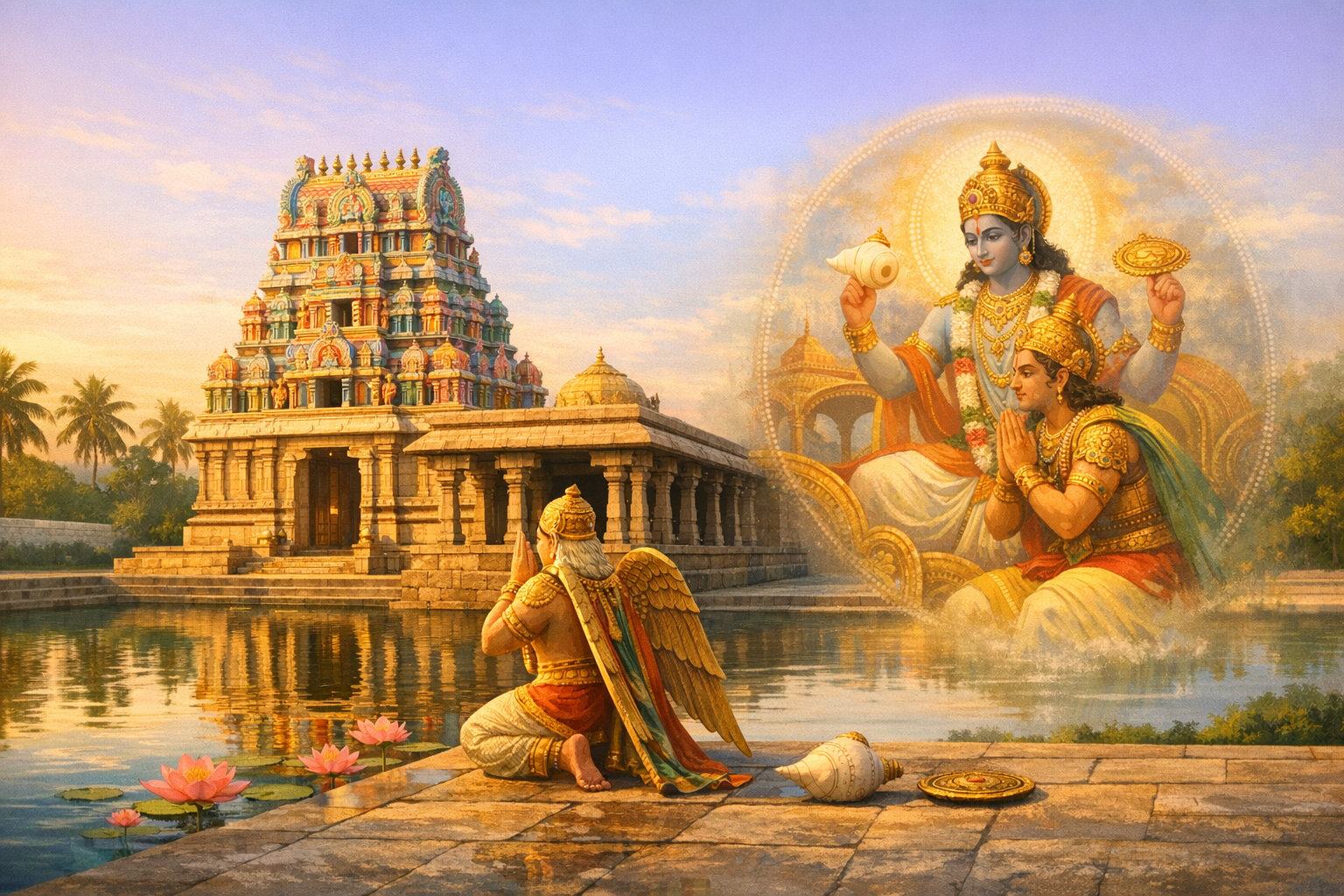
Parthan Palli Parthasarathy Perumal Temple, near Thiruvenkadu and Sirkazhi in Tamil Nadu, is revered as a Thirunangur Divya Desam where Arjuna received transformative divine guidance from Sri Parthasarathy. The kshetra’s very nameParthan Pallievokes a sanctified place of learning, aligning the temple’s living practice with the Bhagavad Gita’s ethos of duty, devotion, and discernment. Rooted in…
-
Unveiling the Golden Glow of Temple Bronzes: Sacred Metallurgy and Living Rituals Explained
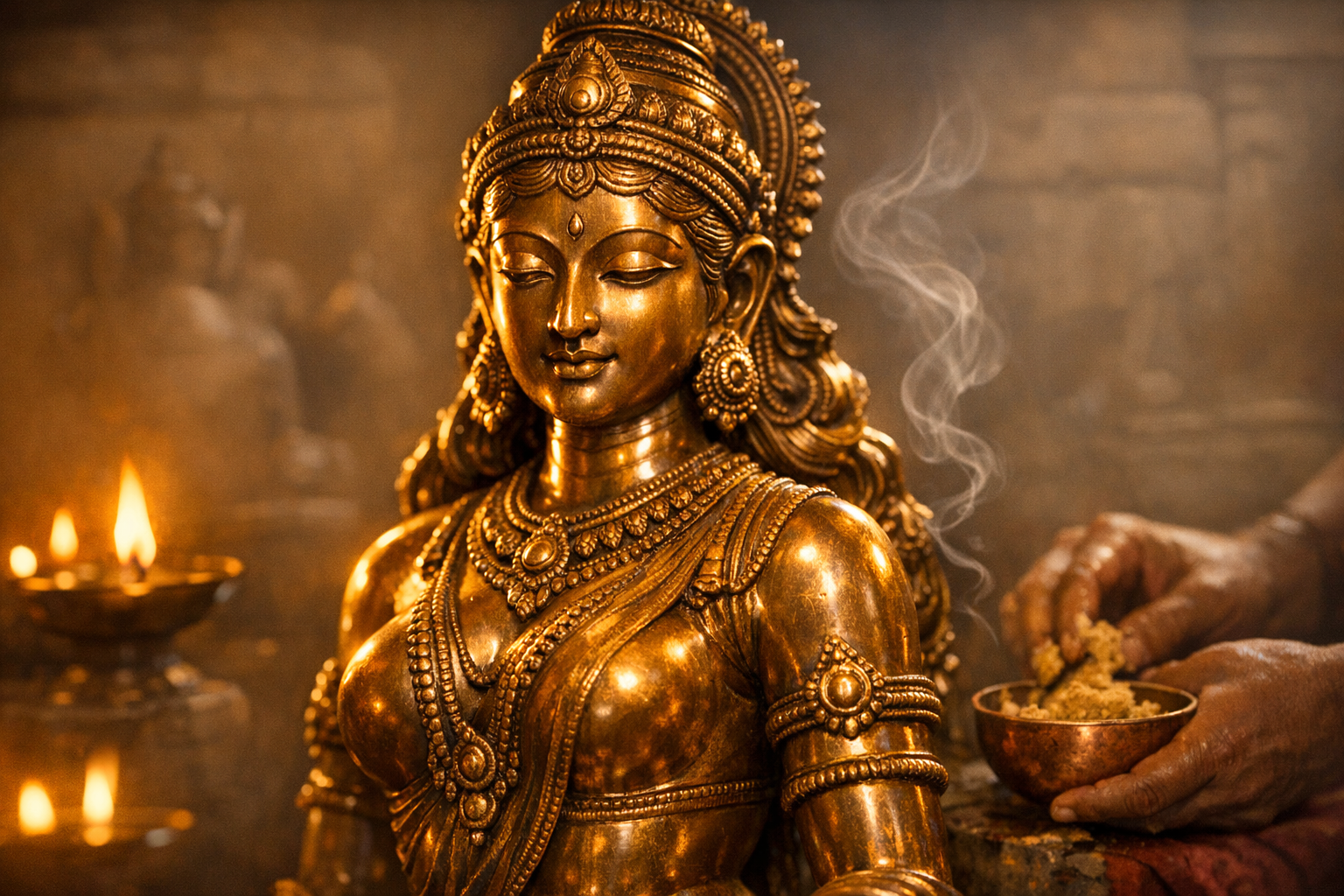
Temple bronzes often appear golden, yet their radiance rarely comes from gold. Instead, copper-rich alloysbronze or brassare cast using the lost-wax method, finished to high smoothness, and then refined by centuries of ritual. Abhishekam cycles, lamp soot, incense resins, sandalwood paste, and gentle wiping together thin oxides, add hydrophobic films, and produce a warm, stable…
-
Thirukannapuram Sowriraja Perumal: A Divya Desam of Compassion, Legend & Living Faith
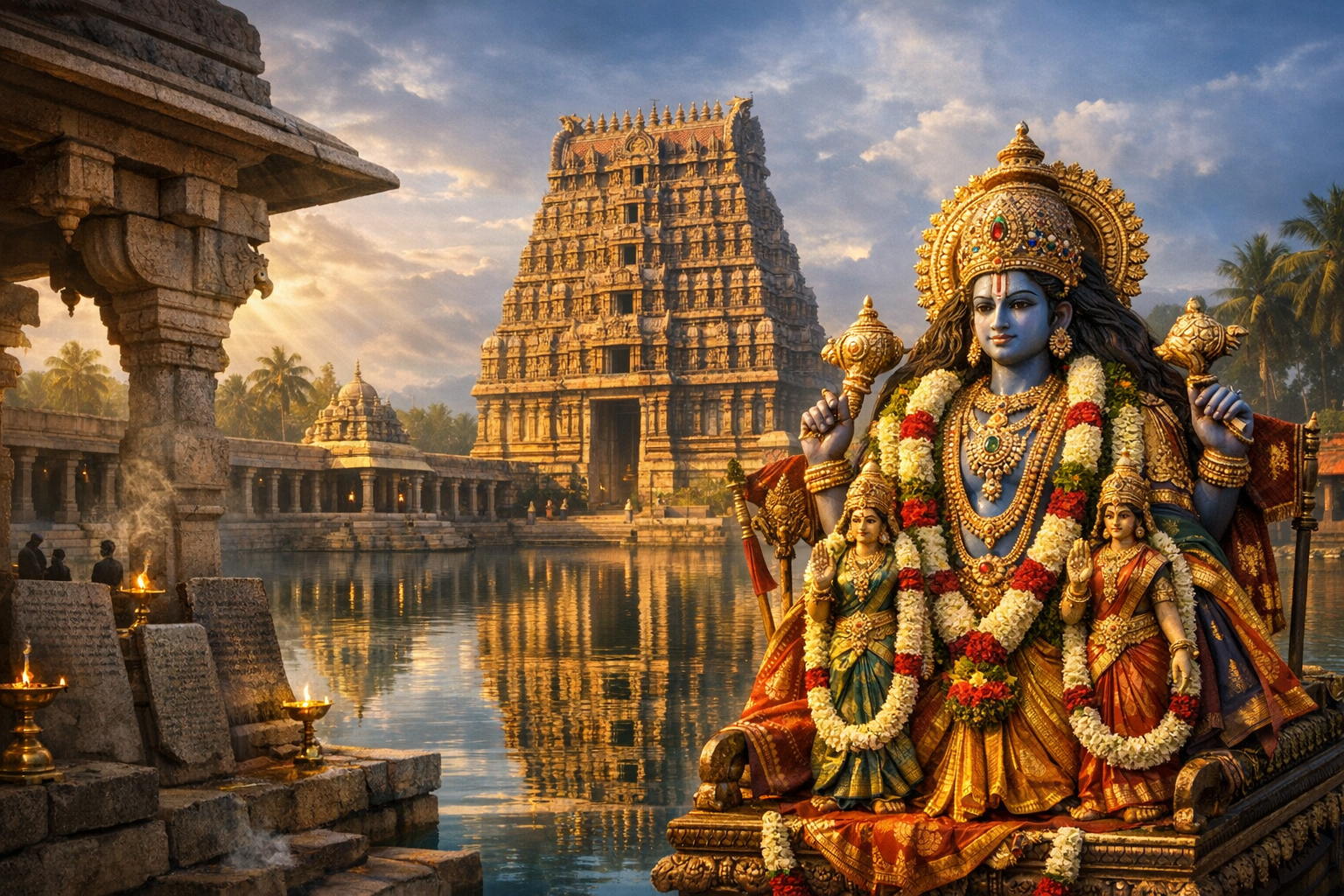
Thirukannapuram, a revered 108 Divya Desam in Tamil Nadu, venerates Lord Vishnu as Sowriraja Perumal (Neelamegha Perumal), celebrated for a unique legend in which the Lord manifested flowing locks to uphold a devotee’s word. Interpreted through the arca-avatara doctrine, this act signifies divine compassion and ethical protection, themes that resonate with shared dharmic valuesBuddhist karuna,…
-
When She Leads, She Builds: Shakti Leadership Uniting Hindu, Buddhist, Jain, and Sikh Paths

This essay examines Shakti-centered leadership across Hinduism, Buddhism, Jainism, and Sikhism, showing how women-led initiatives have historically built enduring institutionstemples, viharas, basadis, and gurdwarasthat function as knowledge commons and care infrastructures. It maps Journey and Destination across traditionsmoksha, nirvana, kevala jñāna, and muktihighlighting how aligned methods shape aligned outcomes. Case studies from Gargi and Maitreyi…
-
End ‘Paid Darshan’ Now: Mandir Mahasangh Demands Equal Access and Depoliticised Temple Governance

The Mandir Mahasangh’s call to ban “paid darshan” and end political appointments in temple trusts places equality, transparency, and accountability at the heart of Hindu temple governance. The analysis explains why monetised priority queues undermine darshan’s egalitarian spirit and sit uneasily with constitutional principles under Articles 14, 25, and 26. It outlines lawful, practical alternativestime-slot…
-
Trimbakeshwar ‘Quick Darshan’ Scam: Trustee, NCP Leader Arrested as Calls for Temple Reforms Grow
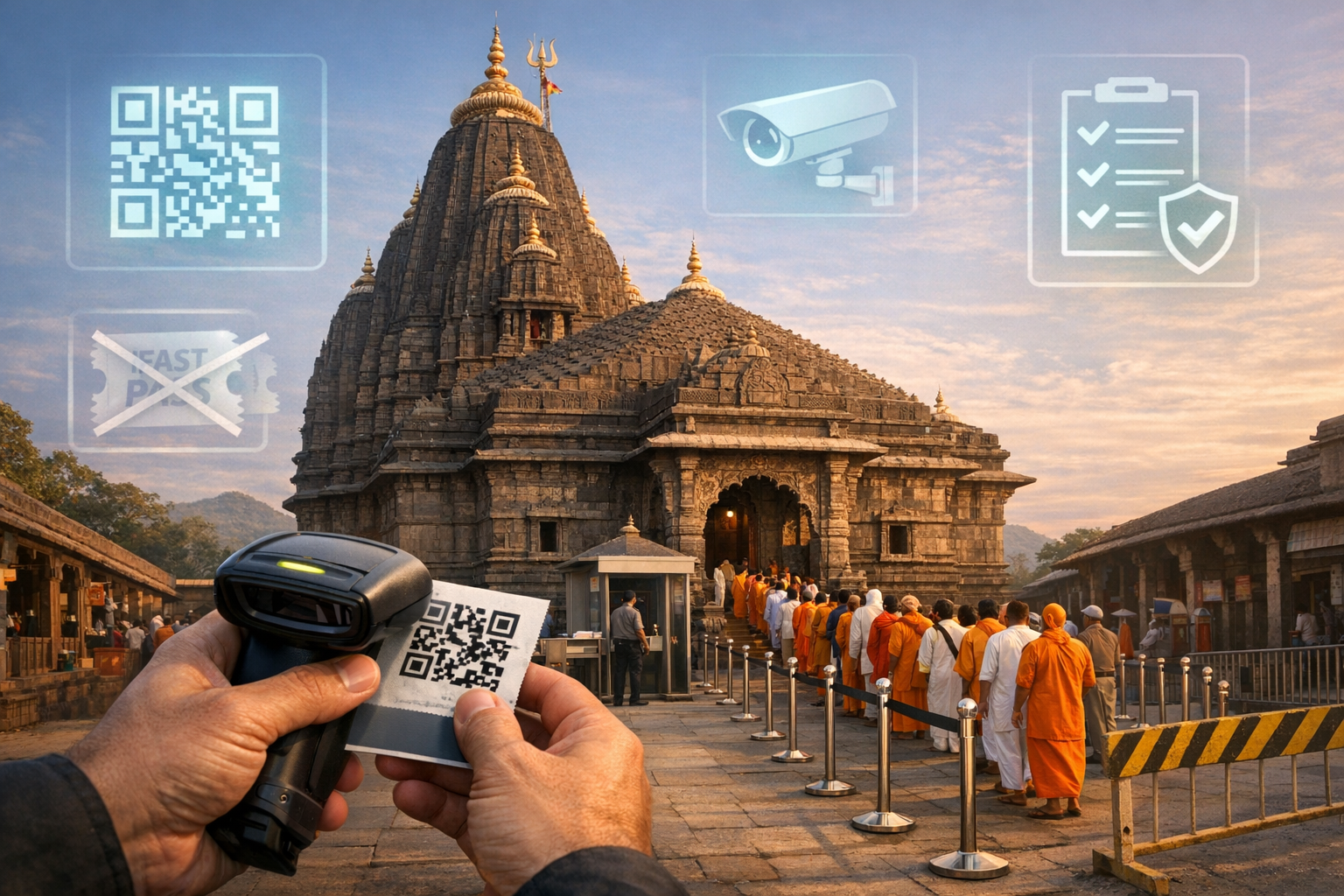
An alleged “quick darshan” black-marketing racket at Trimbakeshwar temple in Nashik has led to the arrest of a trustee associated with the NCP and several others, highlighting persistent vulnerabilities in pilgrimage management. The case underscores the need for cashless, auditable e-darshan systems, clearly defined and monitored priority access, and separation-of-duties to prevent collusion. It recommends…
-
Unveiling Brahma’s Wedding at Pushkar: Cosmic Timing, Gayatri’s Grace, and Yajna Power

Brahma’s marriage to Gayatri at Pushkar weaves together sacred geography, śrauta ritual law, and cosmic timing to explain why the Jagatpita Brahma Mandir and Pushkar Lake command exceptional sanctity. Drawing on Padma Purāṇa, Skanda Purāṇa, and regional memory, the narrative shows how the patnī-samyāja completes yajña, why muhūrta matters, and how Gayatri embodies both mantra-śakti…