
-
Manidweepa Unveiled: Inside the Jeweled Island of the Mother Goddess and Cosmic Consciousness

Manidweepa (Mañidvīpa) is portrayed in the Devi Bhagavatam Purana as the jeweled island of the Mother Goddess, a sacred geography beyond the fourteen worlds and the Ocean of Nectar. This analysis explains how Śrī Nagara, the Chintāmaṇi gṛha, and the Pañcabrāhmāsana encode Hindu cosmology and Śrīvidyā practice. It maps Manidweepa to the nine āvaraṇas of…
-
Choosing a Mahavidya for Navratri: Scholarly, Horoscope‑Aligned, Ethical, Transformative Guide
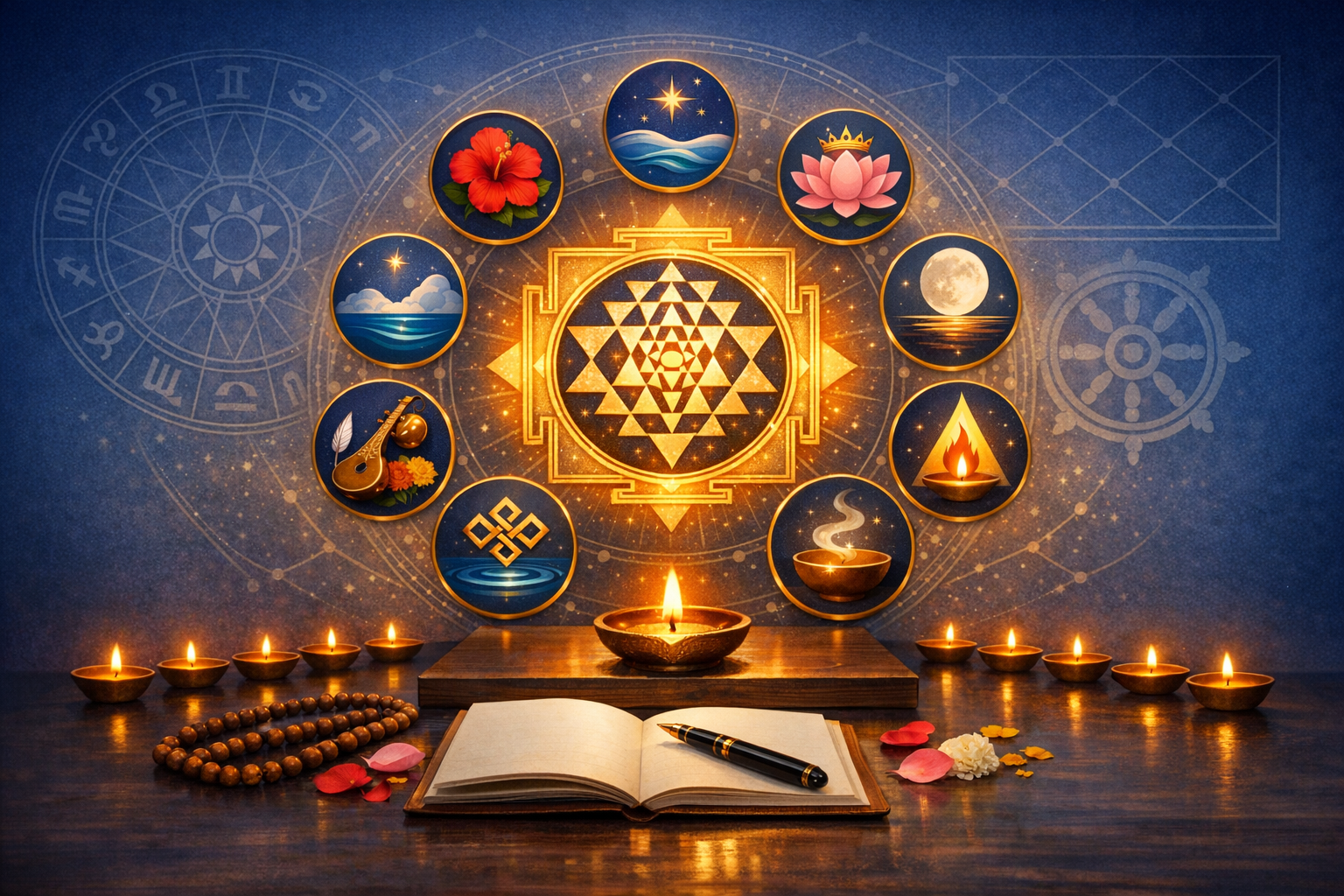
This research‑informed guide shows how to choose a Mahavidya for Navratri using three converging lenses: present life needs, Jyotisha (Vedic astrology) indications, and spiritual readiness. It summarizes the core strengths, indications, and household‑friendly practices for all ten Mahavidyas, with clear ethical safeguards. Readers learn how to align sadhana with dasha cycles and graha conditions, how…
-
Hargauri Durga in Bengal: Uma’s Tender Homecoming and Her Sacred Union with Shiva
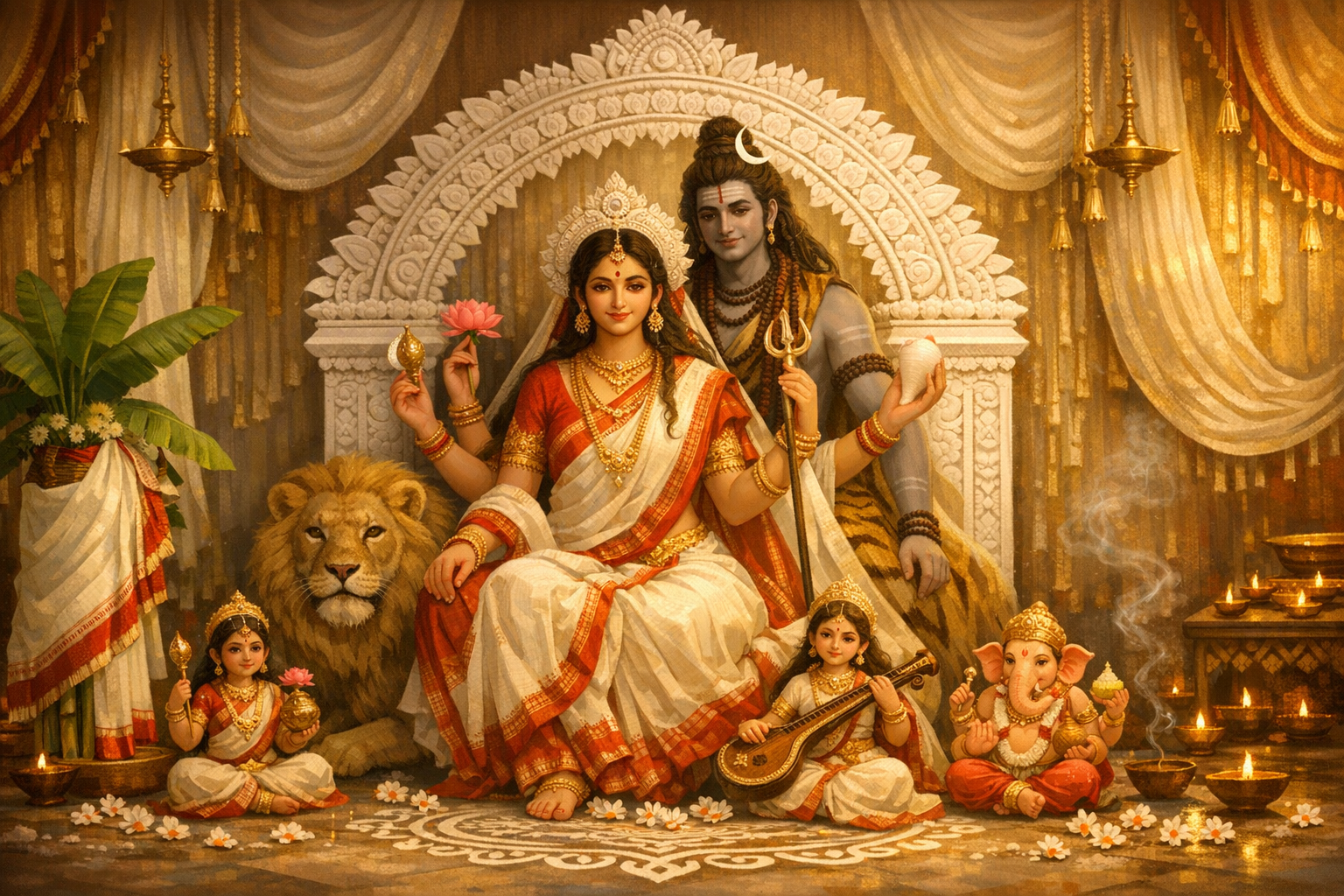
Hargauri Durga reframes Bengal’s Sharadiya devotion as Uma’s tender homecoming, with Shiva’s serene presence completing the sacred tableau. The piece decodes the Hara–Gauri archetype, clarifies its relationship to Mahishasura Mardini, and situates the tradition within Devi Paksha, from Mahalaya to Vijayadashami. It explains core ritesbodhana, nabapatrika, Sandhi Puja, Kumari Puja, and visarjanwhile interpreting how they…
-
Indra Parameshwari, Lion-Seated Sovereign: Awe-Inspiring Shakta Theology and Iconography
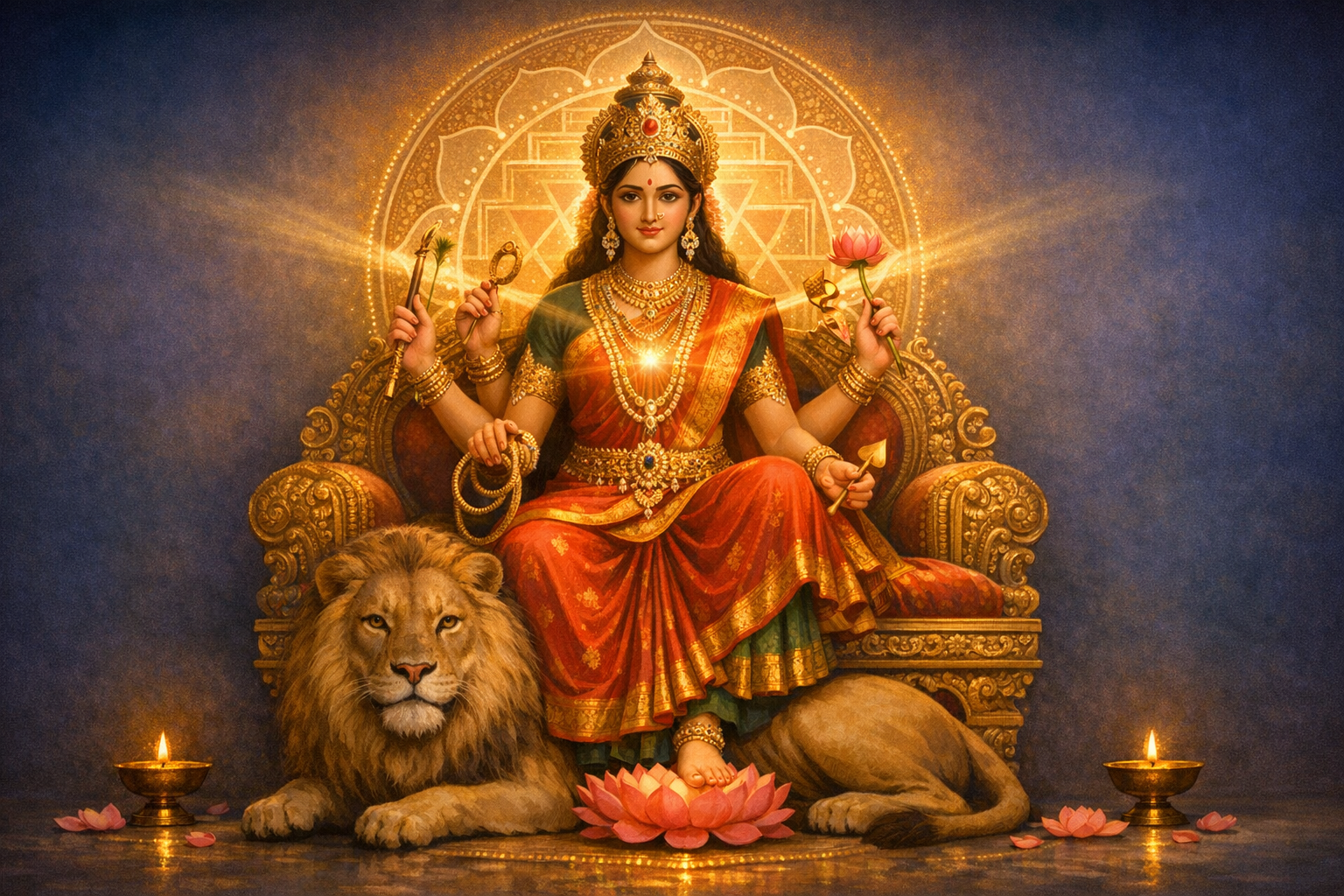
Indra Parameshwari identifies the Goddess as the supreme, lion-seated sovereign of Shakta theology, where indra functions as a superlative for lordship and Parameshwari declares the Supreme Lady. Grounded in Vedic and Upanishadic insights and elaborated by the Devi Mahatmya and Sri Vidya traditions, this study unpacks the title’s philology, metaphysics, and iconography. The lion-throne (simhasana)…
-
Upashruti: The Luminous Goddess of Night, Oracular Wisdom, and Vedic Revelation
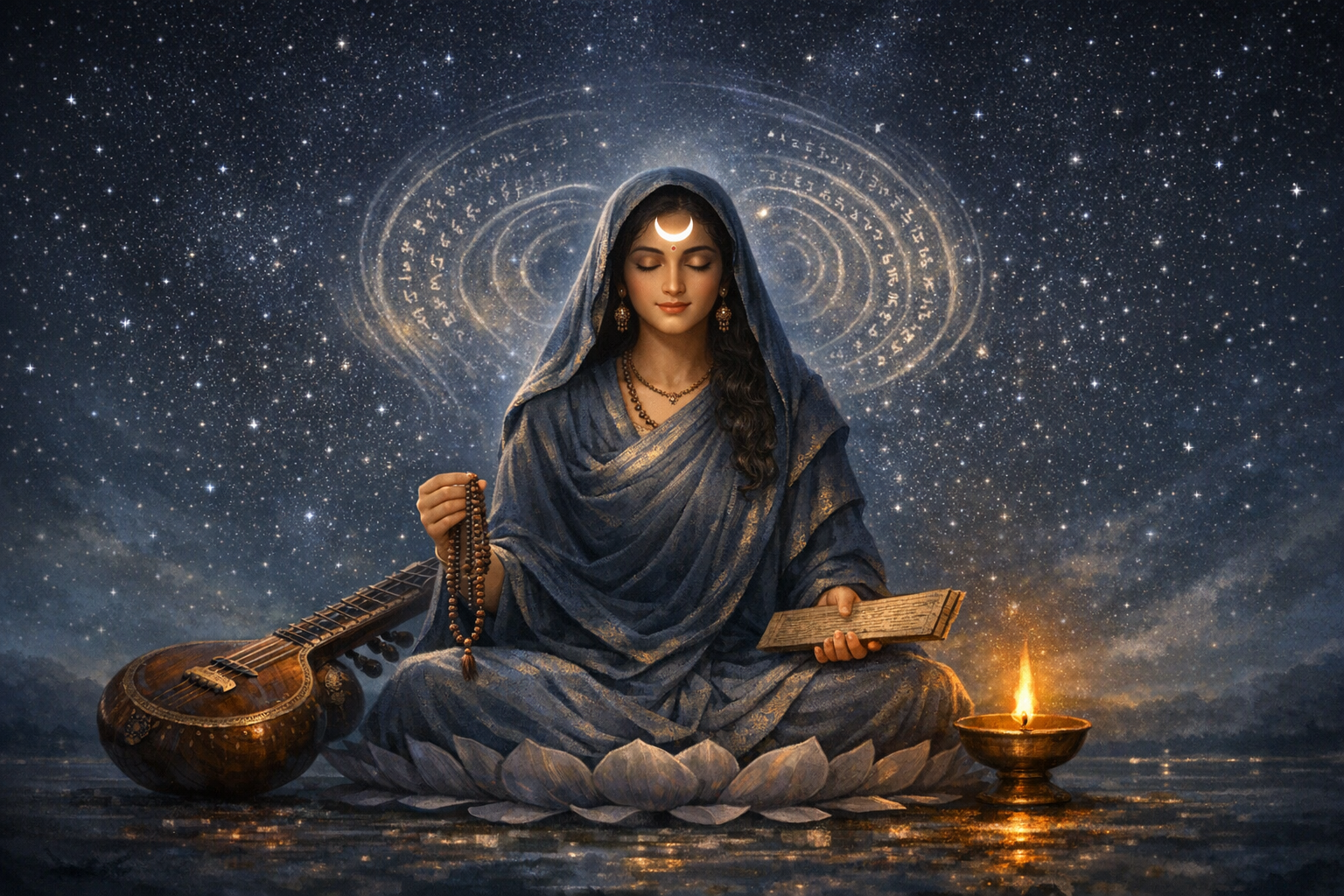
Upashruti is presented as a nuanced personification of sacred listening the contemplative capacity to ‘hear’ wisdom in the stillness of night. Grounded in Vedic philosophy, Puranas, and the logic of śabda-pramāṇa, the essay situates her alongside Rātri, Vāk, and Yoganidrā. It outlines practical, night-centered sādhanā (mauna, japa, nādānusandhāna) and explains how disciplined listening refines ethical…
-
Bhadrakali Amman Unveiled: Sacred Iconography, Rituals, and Time-Transcending Philosophy
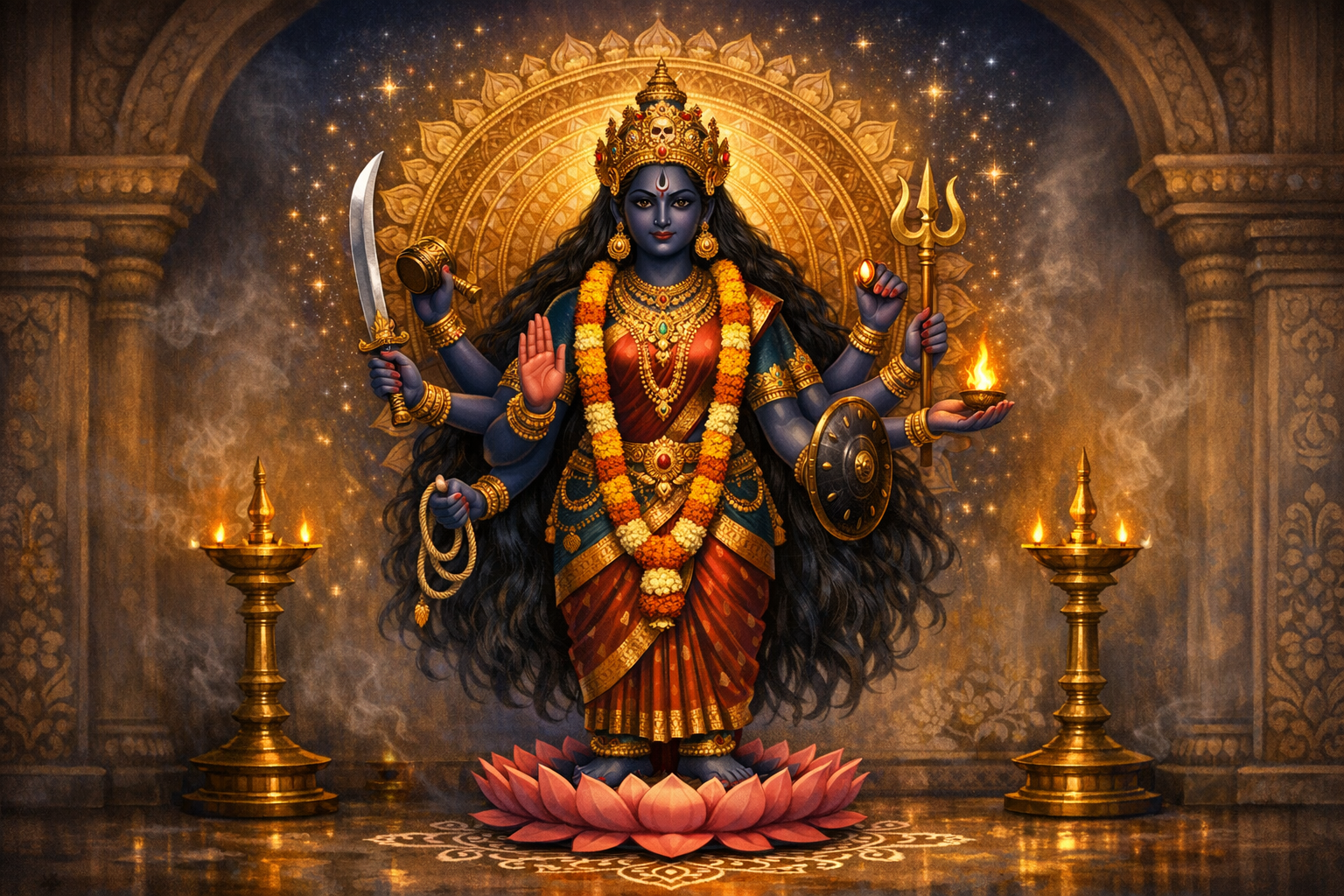
Bhadrakali Amman is presented as fierce grace: a guardian who unites auspiciousness with the transformative power of time. The analysis explains the etymology from Kala, the iconography of weapons and mudrās, and the ritual ecosystem of Amman worship in Tamil Nadu and Kerala. It highlights key festivals such as Attukal Pongala and the ethical turn…
-
Unveiling Maya Bhuvaneswari: The Blue-Hued Cosmic Mother in Odisha’s Shakta Tantra
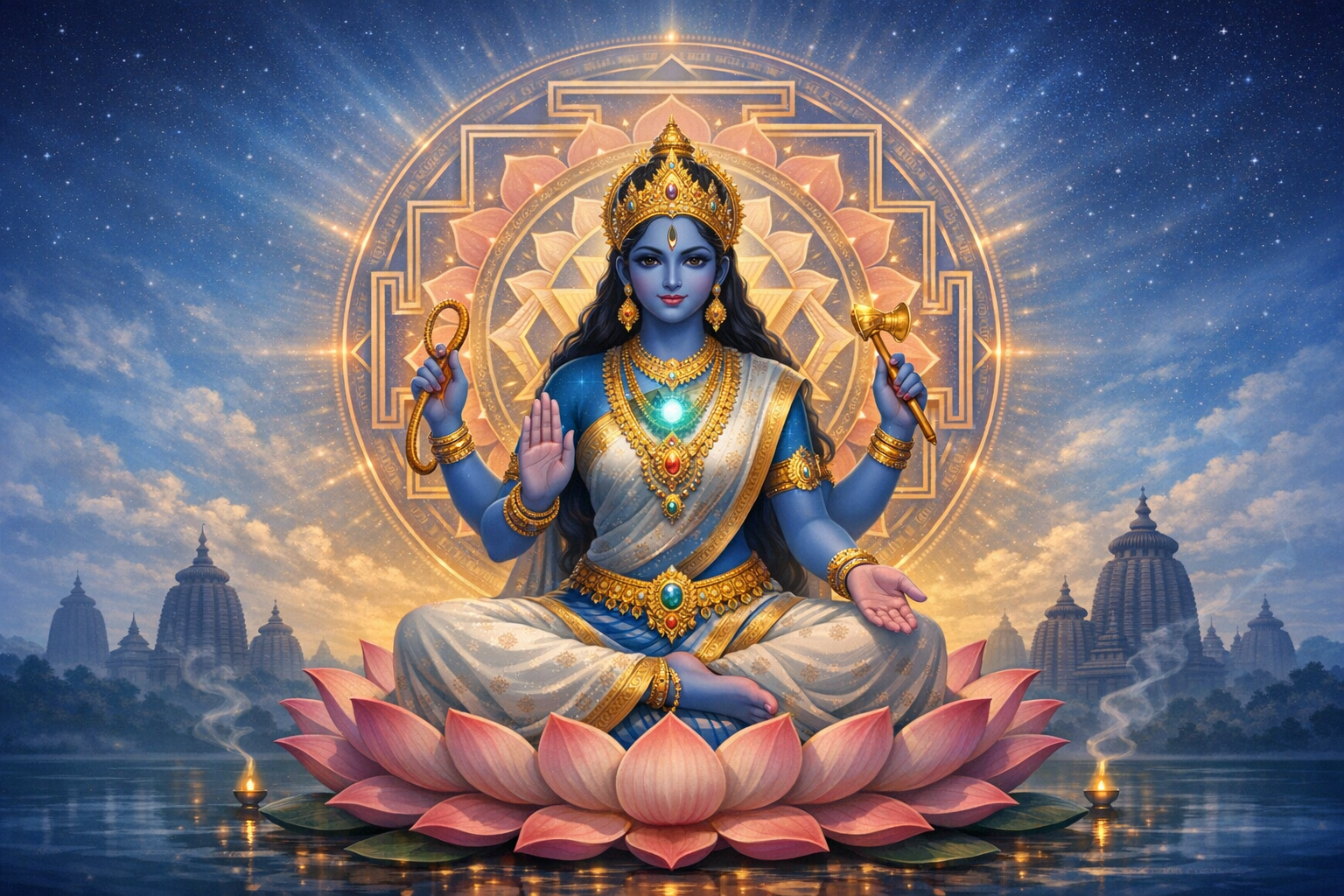
Maya Bhuvaneswari, a distinctive Odisha-centered manifestation of Bhuvaneshwari among the Mahavidyas, embodies Mahamayathe compassionate power through which consciousness appears as the universe. Rooted in Shakta Tantra, this blue-hued Hindu Goddess teaches discernment in the midst of life rather than rejection of it, aligning akasha tattva (space) with lived ethics. The article examines her iconography, mantra…
-
Naimisharanya Lalita Devi Shakti Peeth: Timeless Power, Textual Echoes, Living Devotion
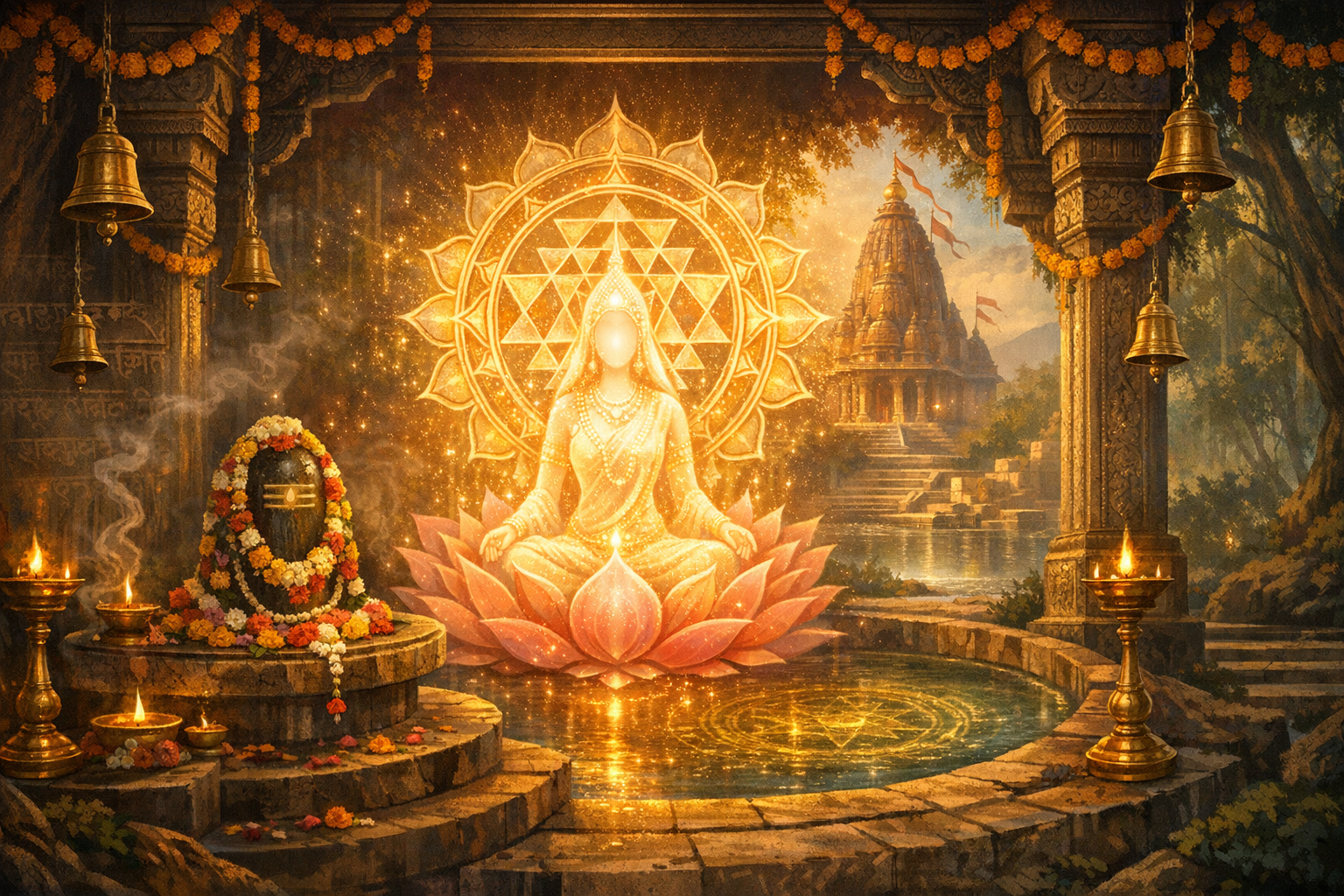
Naimisharanya’s Lalita Devi Temple in Uttar Pradesh is revered in living practice as a Siddha Shakti Peeth, drawing thousands of devotees daily. A verse in the Devi Bhagavata“Vārāṇasyāṁ Viśālākṣī Naimiśe Liṅga Dhāriṇī, Prayāge Lalitā Devī Kāmakā Gandha Mādanē…” situates Naimisharanya within a sacred map that includes Kashi and Prayag. The temple’s theology harmonizes Shaiva and…
-
Unveiling Kritya Devi: Fearsome Guardian Goddess Iconography, Tantric Symbols, and Protection
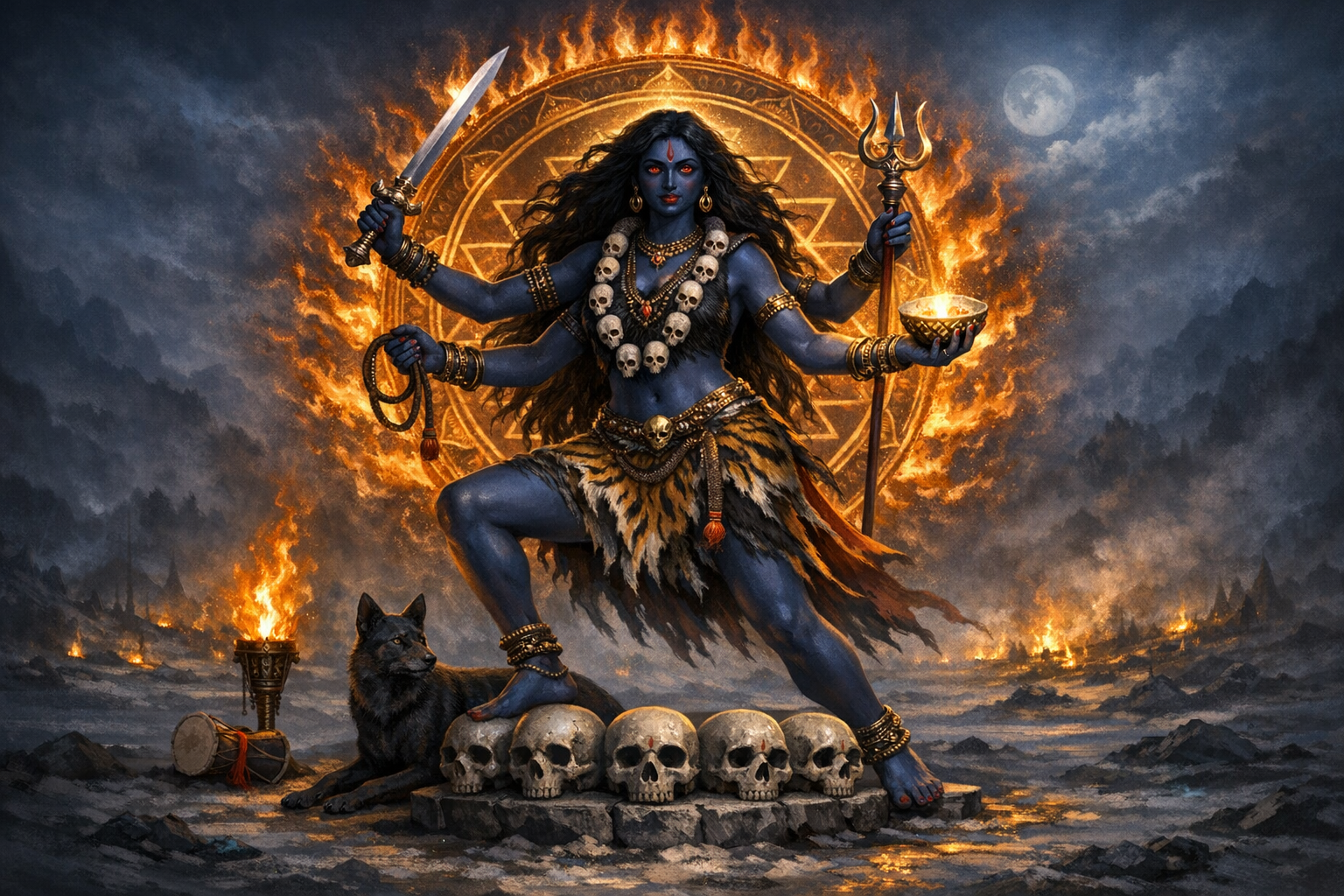
Goddess Kritya’s wrathful iconography communicates a compassionate, protective force that dissolves malefic influences and restores balance. Drawing on Atharvanic echoes and Shakta Tantra, her idol form encodes a precise visual grammardark hue, cremation-ground setting, sword, skull-bowl, and martial stancethat teaches discernment, fearlessness, and ethical boundary-setting. Regionally varied yet thematically consistent, Kritya’s attributes align with pan-dharmic…
-
HRĪṂ, the Māyā Bīja: Definitive Guide to Shakta Power, Heart Awakening, and Mantra Science
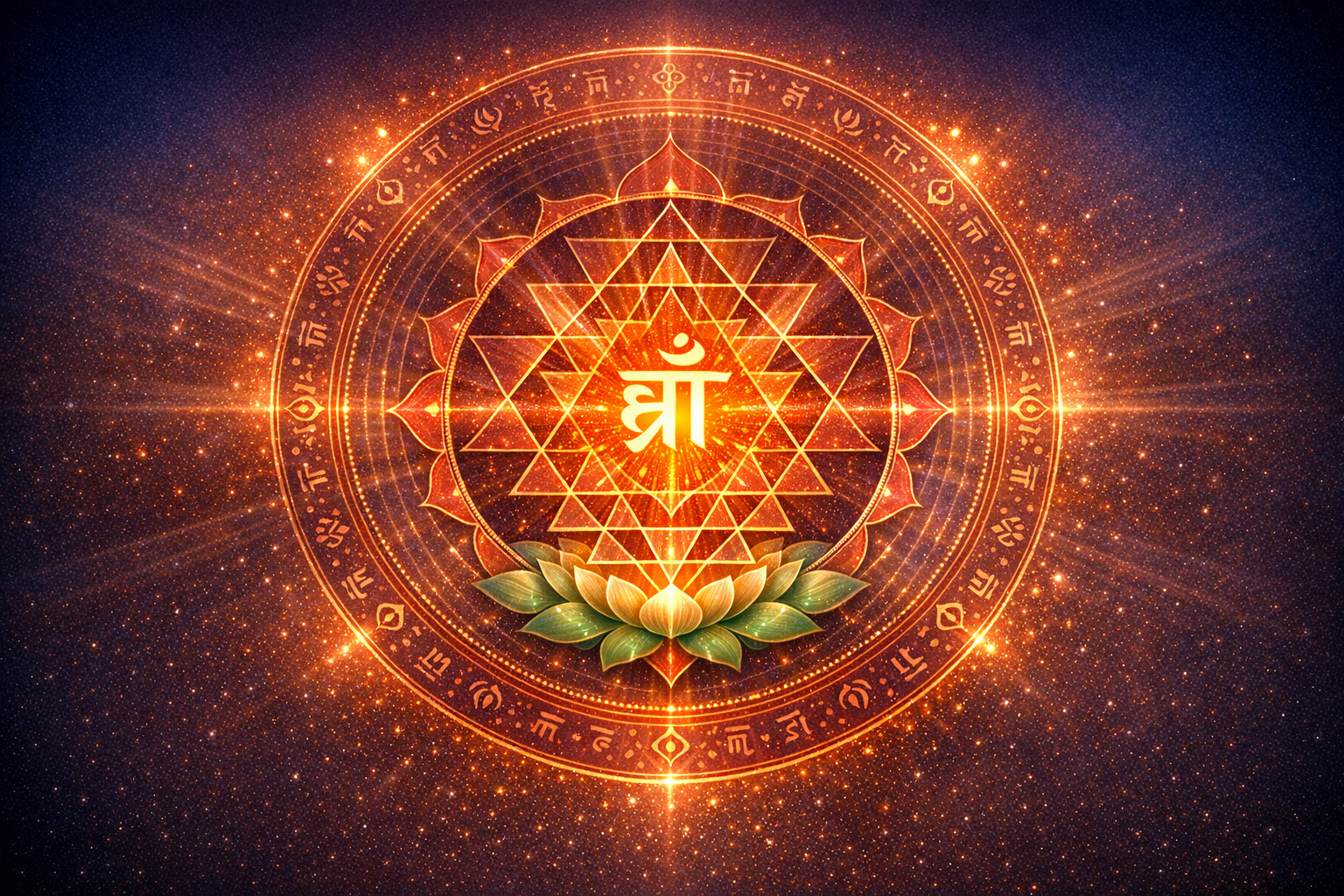
This long-form guide unpacks HRĪṂ (Hrim/Hreem), revered in Shākta traditions as the Māyā bījathe primordial seed syllable of Mahāśakti. It explains the bīja’s phonetic anatomy (ha–ra–ī–ṁ), why it is called the ‘Māyā’ seed, and how its psychoacoustic arc mirrors manifestation and dissolution. Readers learn where HRĪṂ appears in practice (Navārṇa, Śrī Vidyā Pañcadaśī), how it…
-
Shakini of the Vishuddhi Chakra: Bone-Breaking Power in Kubjika and Kularnava Tantras

Shakini, the yogini of the Vishuddhi Chakra, is celebrated in the Kubjika Mata Tantra and the Kularnava Tantra as the luminous power that purifies speech, refines breath, and clarifies understanding. Her epithet “bone-breaking” signals not violence but compassionate reshaping of inner rigidity, enabling truthful and compassionate voice. Rooted in matrika doctrine, she governs the vowels…
-
Nava Veeras of Muruga: Origins, Iconography, and Living Traditions of Nine Divine Guardians
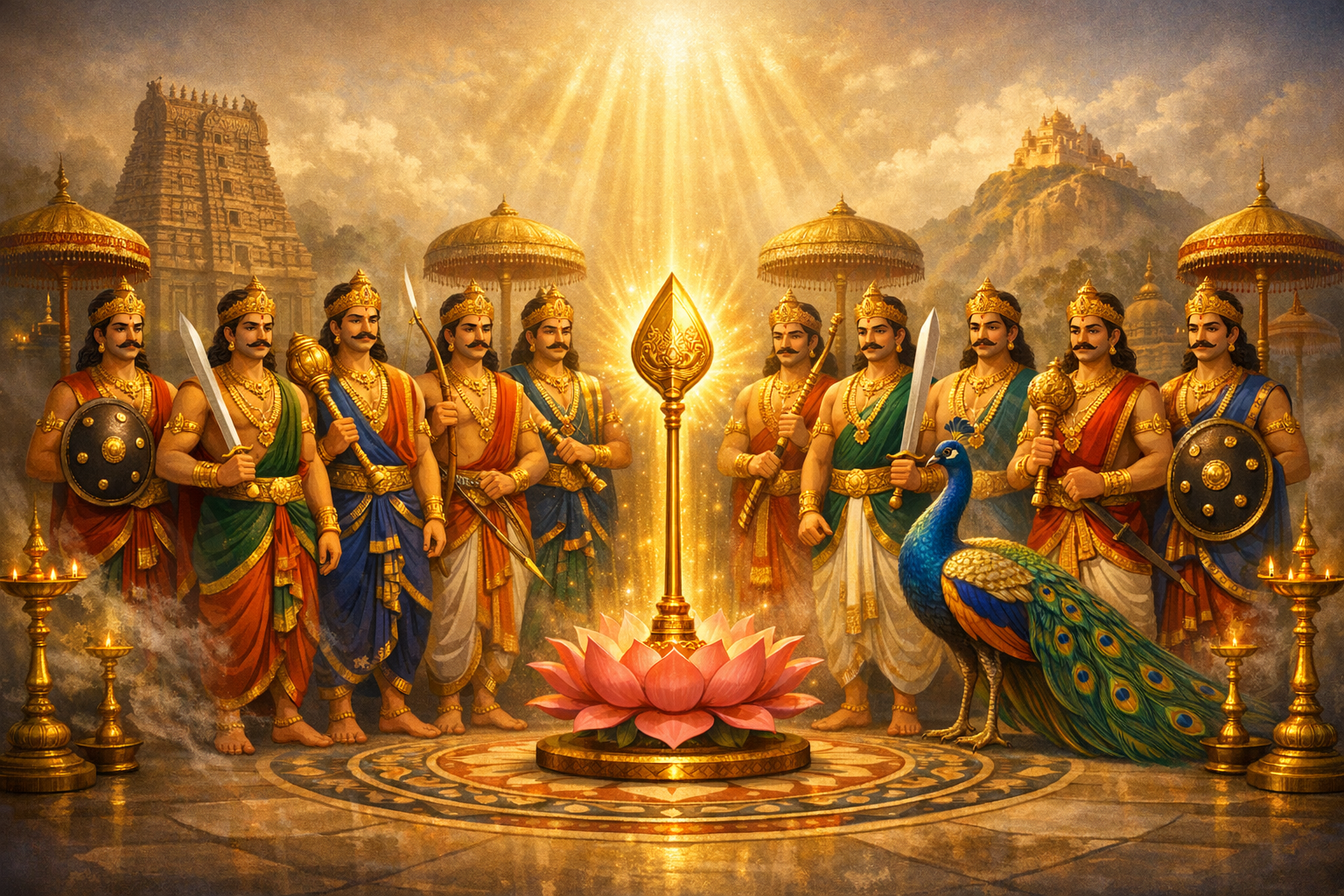
This article explores the Nava Veerasthe nine divine guardians of Lord Murugaas living embodiments of Parvati’s Shakti and exemplars of disciplined courage in service of dharma. It situates their origins within the Skanda Purana/Kanda Puranam tradition, explains their roles in the Soorasamharam cycle, and examines how regional temple practices shape their iconography and worship. Readers…
-
Navratri Day 7 (25 March 2026): Master Kalaratri Puja with 10 Powerful, Auspicious Practices
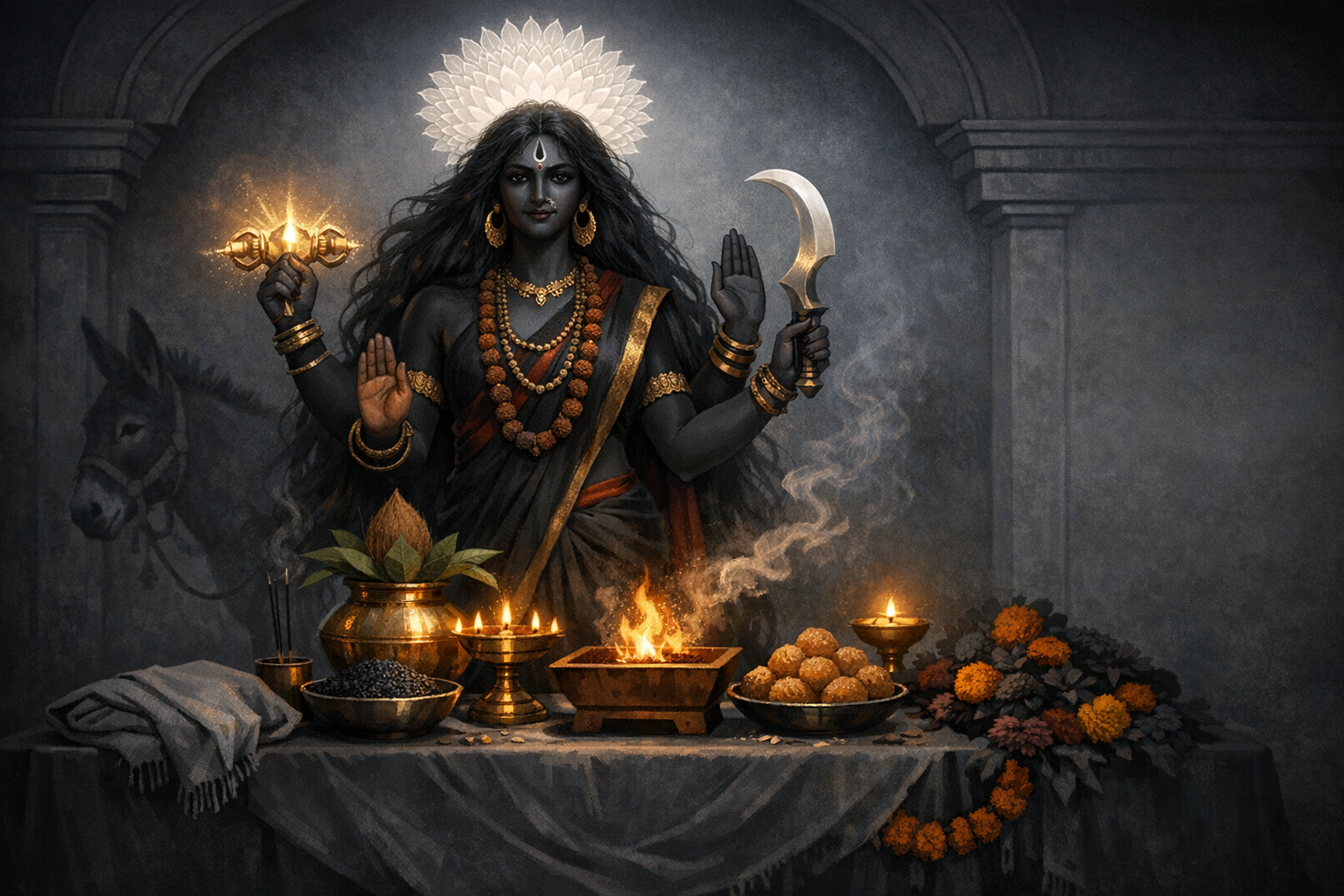
The seventh day of Navratri (Saptami) on 25 March 2026 honors Goddess Kalaratri, the fierce-yet-auspicious Shubankari who dissolves fear and darkness. This guide clarifies the date for 2026, explains Kalaratri’s iconography and Sahasrara-chakra symbolism, and presents 10 precise practicesincluding sankalpa, Shodashopachara puja, moola-mantra japa, Devi Mahatmya recitation, disciplined fasting, a sesame-based havan, night meditation, and…
-
Navratri 2026: Dates, Rituals, Regional Traditions, and the Transformative Power of Shakti
Navratri“nine nights”honors Adi Shakti as both nurturing and protective, culminating in Vijaya Dashami’s affirmation of righteous victory. In 2026, Shardiya Navratri runs from October 11 to October 20, with regional panchang differences guiding precise tithis. The festival’s lunisolar timing, Navadurga symbolism, and the three-guna framework invite a progressive inner discipline from vigor to wisdom. Core…
-
Rakta Chamundi: Blood-Red Shakti of Wrathful Compassion, Liberation, and Cosmic Balance
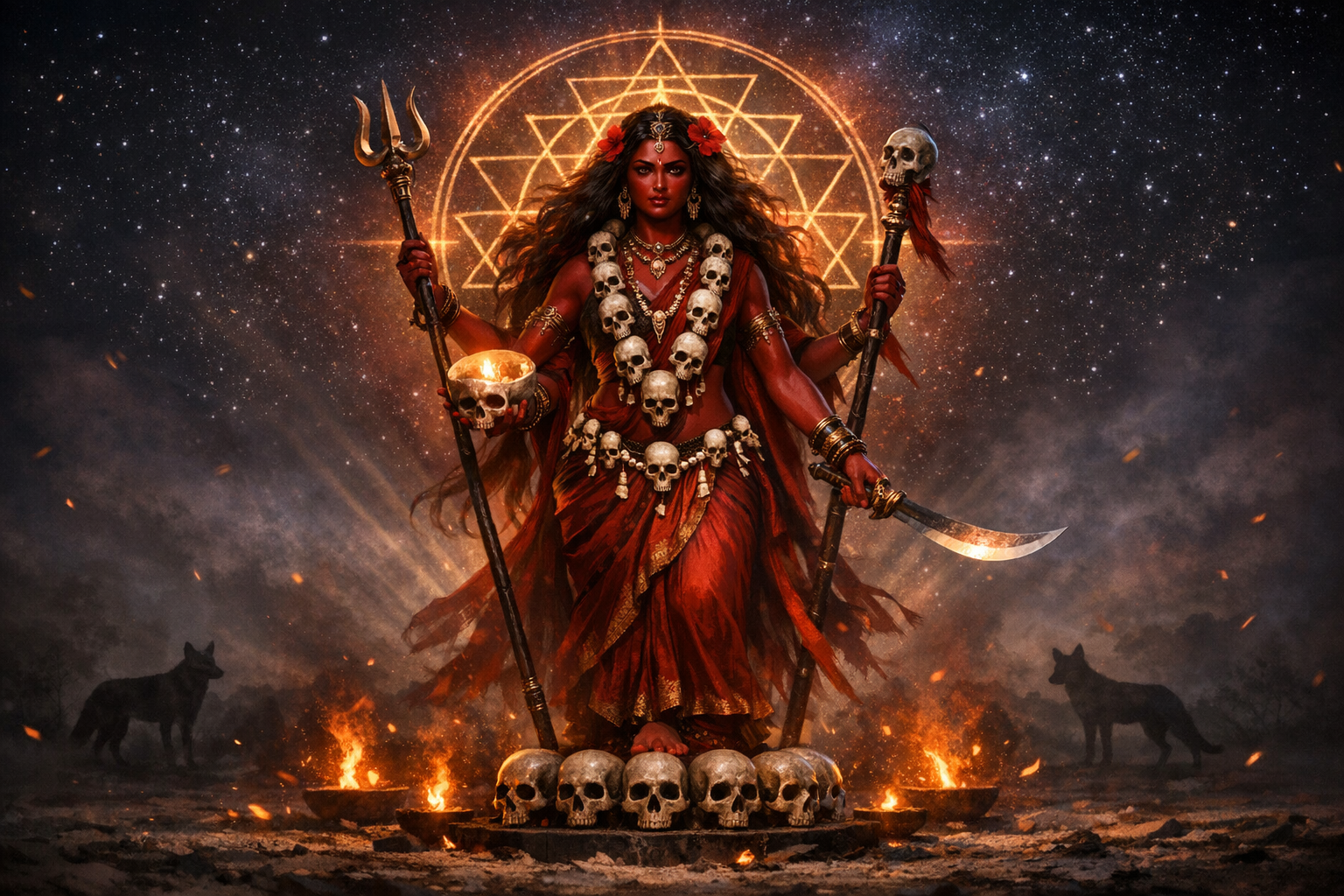
Rakta Chamundi, or Raktha Chamundi, embodies the Hindu Goddess as blood-red Shakti: fierce in aspect, compassionate in purpose, and liberative in effect. Grounded in the Devi Mahatmya’s episodes of Chanda, Munda, and Raktabija, she symbolizes a precise ethical force that ends the repetition of harm. Iconographyskull-garland, cremation-ground setting, and Panchamundi Asanateaches impermanence, vigilance, and mastery…
-
Durga Puja’s Spring Origins: King Suratha, Akal Bodhan, and the Purāṇic Timeline Explained
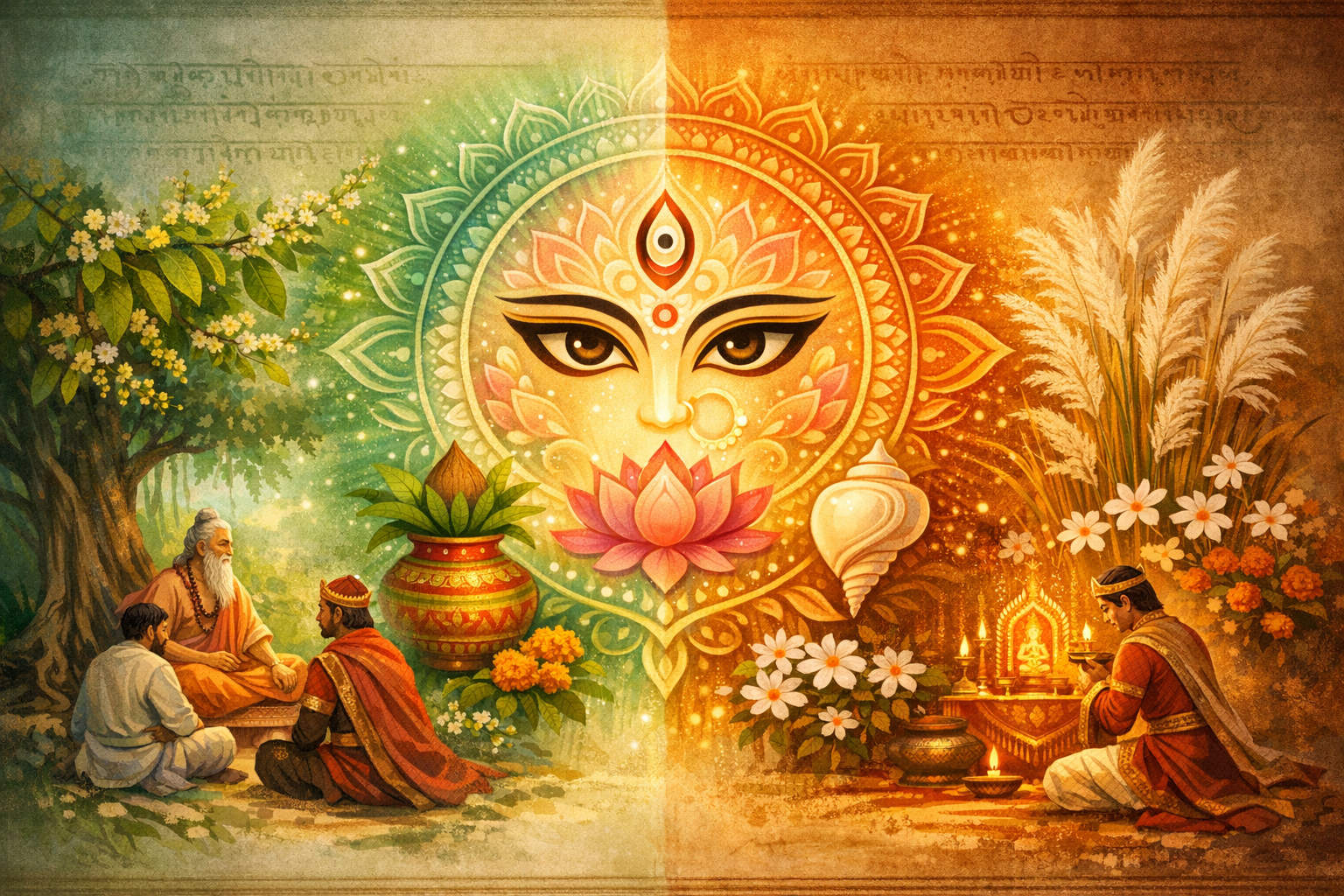
Durga Puja’s origin story is often anchored to the spring cycle (Basanti Puja) through the Purāṇic frame of King Suratha and a merchant in the Markandeya Purana’s Devi Mahatmya. The widely celebrated autumn festival (Sharad Navratri) is associated in regional retellings with Sri Rama’s Akal Bodhanan “untimely” awakening of Maa Durga before the war against…
-
Kumari Puja Unveiled: Encounter the Living Goddess of Navratri with Sacred Ritual Precision
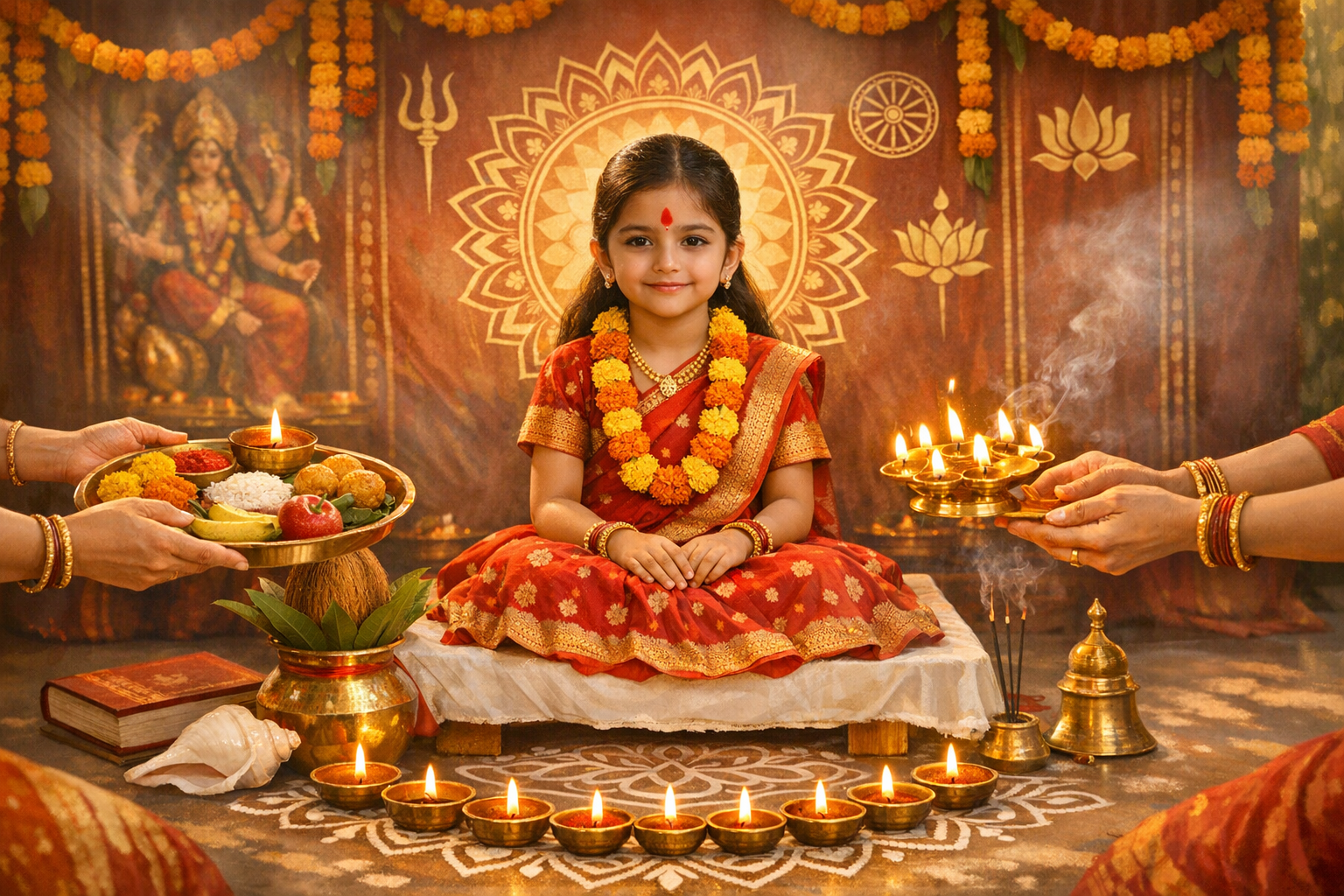
Kumari Puja venerates the Divine Mother as a living presence in pre‑pubescent girls during Navratri and Durga Puja, translating Shakta philosophy into compassionate, ethical practice. This comprehensive guide explains historical lineages, scriptural foundations in the Devi Mahatmya and Vedanta, and the symbolism of honoring the Navadurga through Kanya Puja. It details a clear, respectful puja…
-
Kamyakali Unveiled: The Desire-Fulfilling, Fierce-Compassionate Power of Goddess Kali
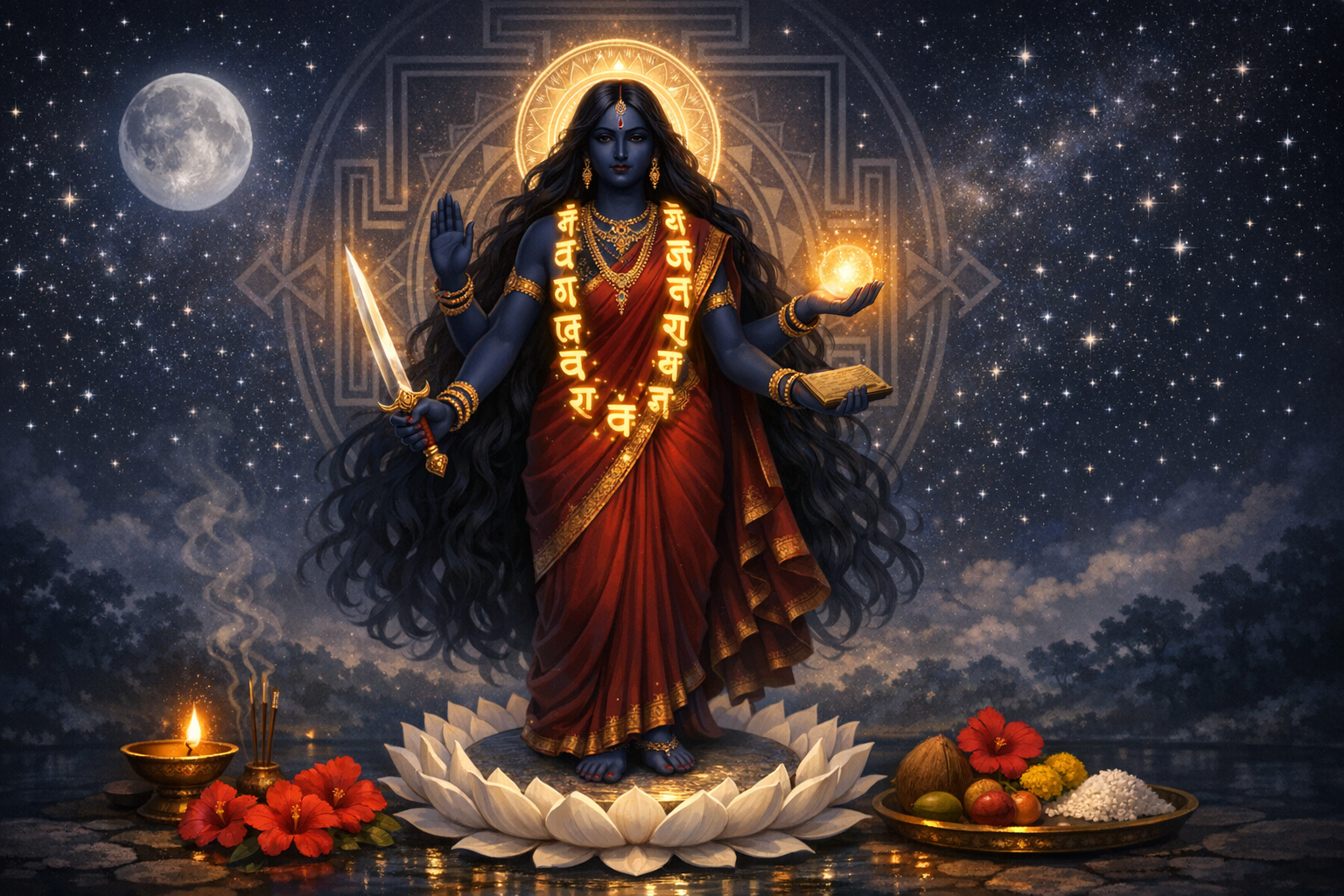
Kamyakali is venerated in Shakta traditions as a form of Goddess Kali who unites fierce protection with maternal compassion while fulfilling desires aligned with dharma. The discussion clarifies the Sanskrit root of kāmya, connecting it to ethical, purpose-driven worship rather than unexamined craving. It explores Kali’s core iconography and explains how Kamyakali highlights blessing gestures…
-
10 Sacred Shakti Peethas of Bengal: Definitive Guide to Legends, Deities, and Pilgrimage
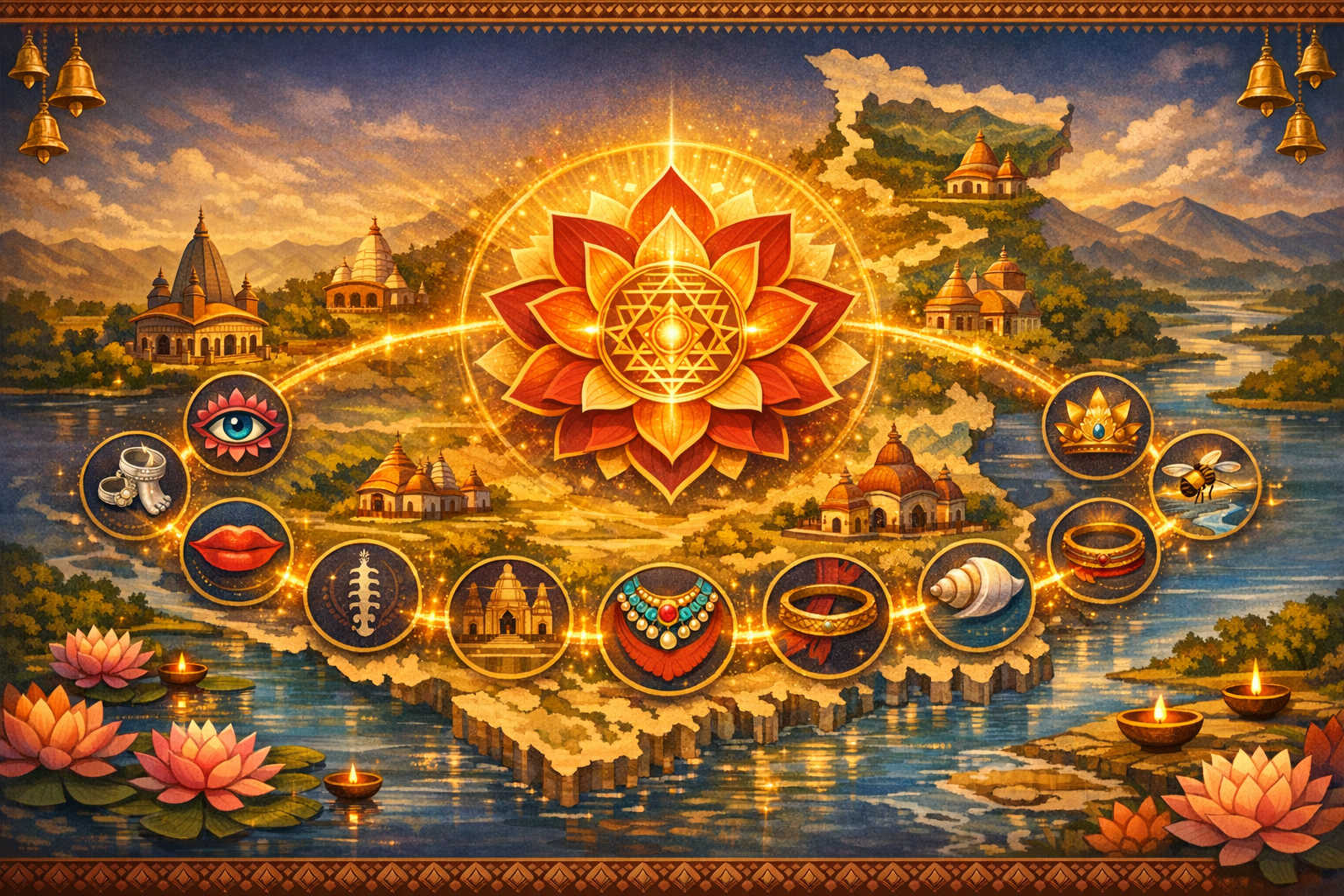
This definitive guide maps ten widely venerated Shakti Peethas across West Bengal, uniting legend, ritual practice, and practical travel insights. It introduces the Shakti Peetha tradition through Puranic sources, then profiles Kalighat, Tarapith, and eight additional sanctuaries in Birbhum, Bardhaman, Murshidabad, and North Bengal. Each entry highlights the associated body part of Sati, local worship…
-
Bhramari Devi’s Storm of Bees: The Goddess Who Shattered the Demon Aruna’s Boon
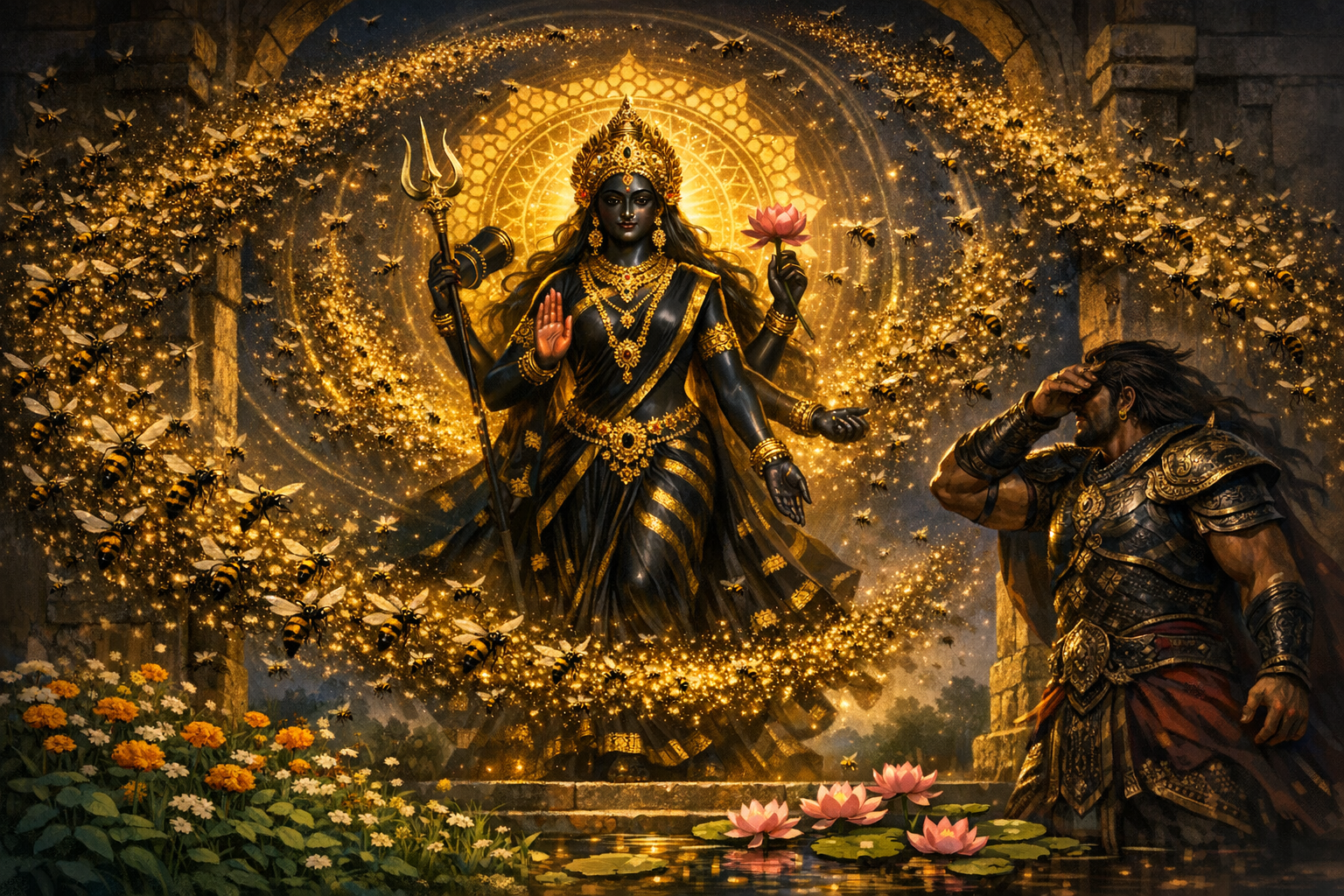
Bhramari Devihailed as the Bee Goddessembodies a dharmic strategy where collective intelligence overcomes seemingly invincible tyranny. Drawing on Shakta traditions and Purana-based retellings, the tale of Aruna (often Arunasura) shows how the Goddess honors the letter of a boon while revealing its limits through a six‑legged, many‑voiced response. The myth’s iconography and ritual practicesfragrant flowers,…