
-
Unveiling Mama Dharma in the Bhagavad Gita: A Blueprint for Duty, Identity, and Unity

Mama Dharma“my dharma”is a concise, thematic key to the Bhagavad Gita’s message: align personal identity and responsibility with the larger moral order. The Gita frames this insight from 1.1’s dharma-kṣetre and māmakaḥ to 18.78’s assurance of prosperity, victory, well-being, and sound policy when wisdom and action unite. Rather than imposing a single path, it honors…
-
Before the Final Breath: Mastering Mind and Bhakti for a Peaceful, Dharmic Transition

The Bhagavad Gita teaches that the mind’s final state determines the next destination, making inner training essential rather than optional. A Bhakti-centered disciplinesupported by japa, kirtan, seva, and ethical livingconditions attention to rest in the Divine, so remembrance arises naturally at life’s threshold. Parallel practices across Buddhism, Jainism, and Sikhismmindfulness, anupreksha, and simranaffirm a shared…
-
Kurukshetra Within: How the Mahabharata’s Battlefield Guides Courageous Spiritual Growth

Kurukshetra in the Mahabharata can be read as the inner field of Dharma where ethical dilemmas, emotional turbulence, and spiritual aspiration meet. The Bhagavad Gita’s counsel reframes conflict as an opportunity for clarity, courage, and disciplined action. Arjuna’s hesitation mirrors modern experiences of doubt and responsibility, while Krishna’s guidanceKarma Yoga, Jnana, and Bhaktioffers practical tools…
-
Nurturing Truth Within: A Dharmic Guide to Cultivating the Soul’s Seed of Wisdom

The insight, “Truth’s seed may be sown, but it must be nurtured by the soul,” highlights the difference between knowing truth and living it. Hindu philosophythrough shravaṇa, manana, and nididhyāsanashows how knowledge matures into steady wisdom. The Bhagavad Gita and the Upanishads emphasize that dharma-centered practice, not concept alone, yields Self-Realization. Parallel principles across Buddhism,…
-
18 Parvas of Mahabharata: A Life-Changing Guide to Dharma, War, and Wisdom
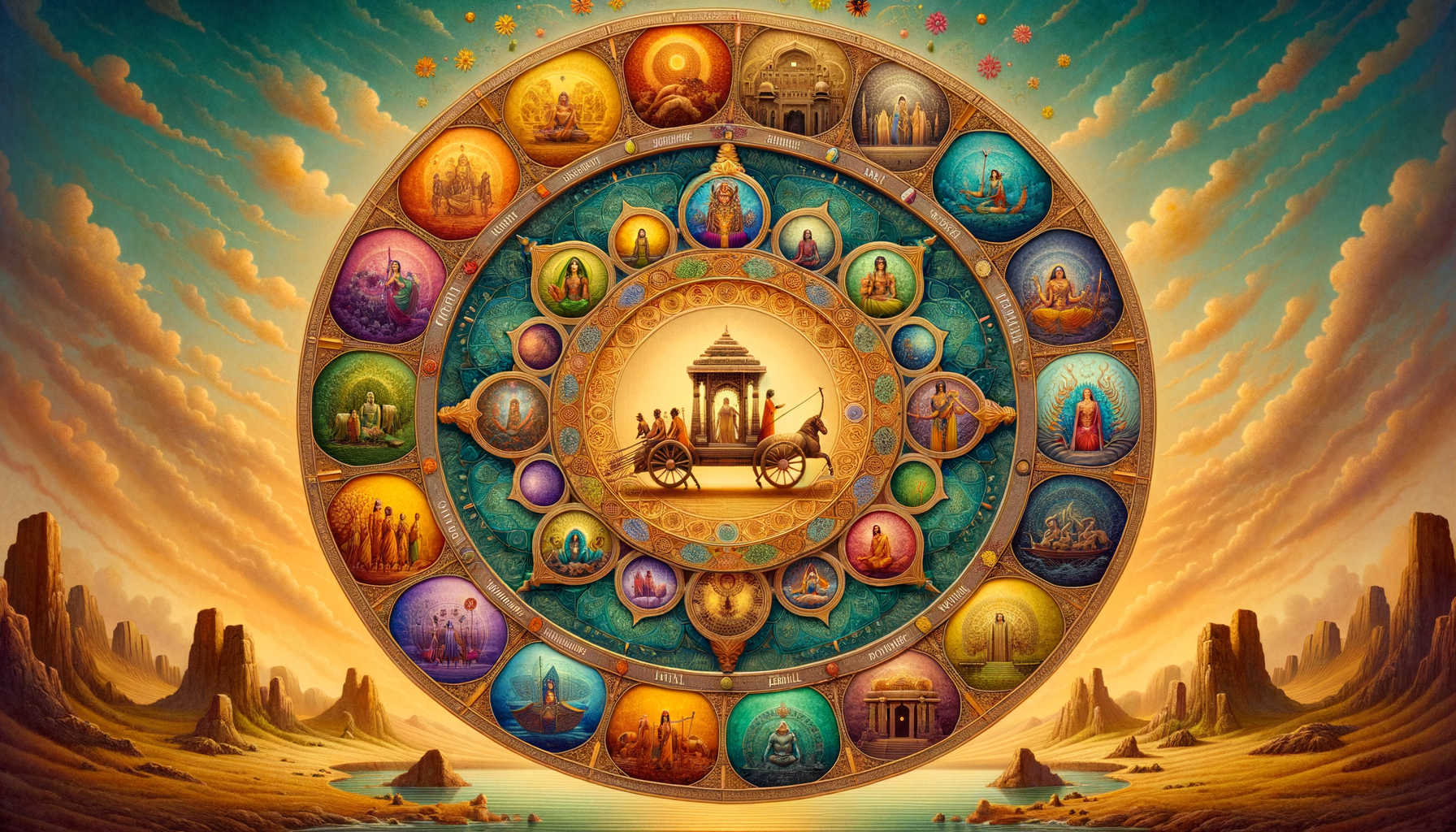
This guide to the 18 Parvas of the Mahabharata dispels the misconception that the epic breeds disorder, showing instead how it clarifies dharma and strengthens ethical discernment. It outlines each Parvafrom Adi to Svargarohanahighlighting key teachings such as Vidura-niti and the Bhagavad Gita. Readers across Hinduism, Buddhism, Jainism, and Sikhism will find shared values like…
-
Arjuna’s Battlefield Anxiety: A Timeless Guide to Dharma, Mental Resilience, and Action

The Bhagavad Gita’s opening presents Arjuna in acute distresstrembling, disoriented, and morally tornoffering a precise portrait of battlefield anxiety. Rather than pathologizing, the text frames his vishada as the starting point for ethical clarity and inner steadiness. Krishna’s counsel models a pragmatic sequence: reframing, values-based duty, equanimity, breath regulation, and focused attention. These principles map…
-
Bhishma and Drona Stood ReadyWhy Arjuna Faltered: Ego, Dharma, and the Inner War

Arjuna’s hesitation at Kurukshetra was not cowardice but a collision of compassion and duty, distorted by ego’s self-referential lens. The Bhagavad Gita reframes this confusion through Atman-centered understanding and Nishkama Karma, showing how to act without attachment to outcomes. Readers gain a practical framework: steady the mind, examine attachments, discern contextual dharma, and act with…
-
Understanding ‘Sin’ in Hinduism: Karma, Dharma, and the Compassionate Nature of the Divine
This article reframes “sin” through a Hindu lens grounded in the Bhagavad Gita, clarifying that moral error arises from misalignment with dharma rather than divine anger. It explains pāpa and puṇya, the role of karma, and the compassionate nature of the Divine. Readers gain a structured, hopeful path to self-correction via prāyaścitta, ahimsa, and the…
-
‘Get Up and Fight’: Krishna’s Counsel to Arjuna on Duty, Detachment, and Everyday Courage

Krishna’s directive to Arjuna“get up and fight”is a disciplined call to fulfill duty with compassion, detachment, and clarity. Framed within Dharma-Yuddha and Kshatra Dharma, it rejects aggression and centers ethical responsibility. Through Karma Yoga, one acts without attachment to results, supported by equanimity and reflective practice. The guidance adapts to everyday life: addressing injustice, sustaining…
-
Srimad Bhagavatam 10.90.18: Mortal Wounds, Spiritual Resilience, and Dharma’s Healing Power
This reflection on Srimad Bhagavatam 10.90.18 clarifies the metaphor of a “mortal wound” and applies it to spiritual ethics and daily practice. It distinguishes minor setbacks from integrity-compromising harms that demand urgent repair. The analysis offers practical toolsatonement, meditation, seva, satsangto prevent moral injury from becoming entrenched. It highlights parallels across Hinduism, Buddhism, Jainism, and…
-
Sat-sanga Reflections (08.11.2025): Remembering Vamsi, Gita Review, and the Joy of Prema-bhakti
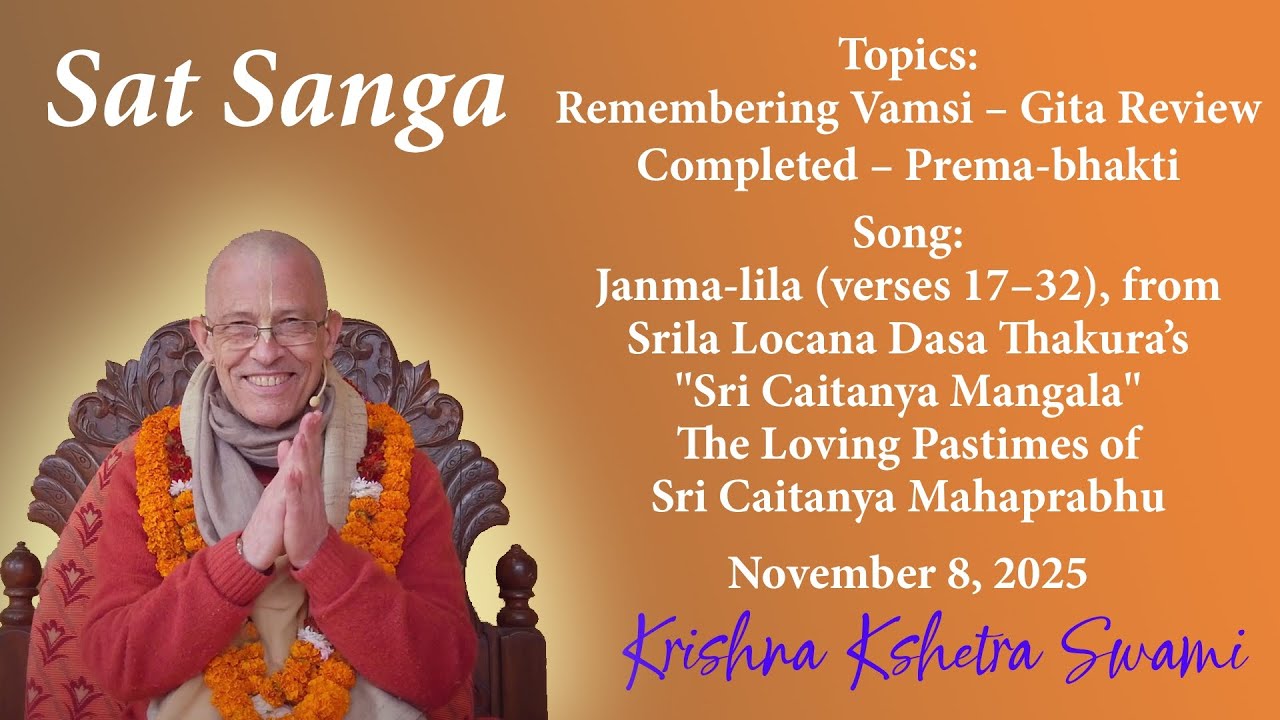
This sat-sanga (08.11.2025) with HH Krishna Kshetra Swami concluded a systematic review of the Bhagavad Gita and turned to an illuminating exploration of prema-bhakti. Drawing on Srimad-Bhagavatam, the session explained how mature devotion may express itself as tears, laughter, singing, dancing, and reverent līlā, arising naturally from deep absorption. Remembering the vamsi (Sri Krishna’s flute)…
-
Partha and Pārthiva Revealed: Profound Symbolism of the Mortal Seeker in Gita Chapter 1

Bhagavad Gita 1.25 uses “Pārtha” to frame Arjuna not merely as a warrior but as a mortal seeker grounded in lineage, responsibility, and dharma. The cognate “pārthiva”earthly, princelydeepens this symbolism, suggesting rulership over the self as the heart of ethical action. Krishna’s selective use of names functions as pedagogy, stabilizing Arjuna amid Kurukshetra’s tumult and…
-
When Grief Strikes: Finding Sacred Shelter and Resilience Through Dharmic Compassion

A grieving family sought solace after the sudden loss of their eighteen-year-old son, and the temple community responded with quiet compassion rooted in dharmic wisdom. The encounter highlights how inner orientationnot circumstancescan transform the experience of suffering. Drawing from Hindu, Buddhist, Jain, and Sikh traditions, the narrative emphasizes unity through practices like japa, mindfulness, ahimsa,…
-
Why a Disciplined Mind Outshines Any Army: Timeless Dharmic Wisdom for Inner Power

The saying, “A well-trained and controlled mind is better than a powerful army,” captures a core dharmic insight: inner discipline surpasses external force. Rooted in the Bhagavad Gita and Raja Yoga, this principle is echoed across Buddhism, Jainism, and Sikhism through practices like mindfulness, Ahimsa, Simran, and Seva. Practical applicationscalm communication, measured leadership, and ethical…
-
Bhagavad Gita Chapter 1: Duryodhana’s Restlessness, Dharma, and the Pursuit of Inner Peace

Bhagavad Gita Chapter 1 frames the Kurukshetra War as a field of dharma, revealing how inner states drive outer actions. Duryodhana’s poised yet anxious speech to Droṇa exposes a mind divided by adharma, offering a timeless psychological reading of leadership under pressure. The scene contrasts defensive agitation with Arjuna’s reflective sorrow, clarifying two paths that…
-
Hrishikesha: Why Sri Krishna Is the Lord of the Senses and Guide to Inner Harmony

“Hrishikesha” reveals Bhagavan Sri Krishna as the Lord of the Sensesan insight central to Yoga, bhakti, and ethical action in the Bhagavad Gita. The Mahabharata deploys this epithet at decisive moments, highlighting composure, clarity, and mastery in the midst of conflict. Etymology and Upanishadic symbolismespecially the charioteer allegoryclarify how sense-discipline fosters inner harmony. This principle…
-
Gitartha Sangraha: Yamunacharya’s 32-Verse Masterpiece for Gita Clarity and Self-Realization
Gitartha Sangraha distills the Bhagavad Gita into 32 precise Sanskrit verses, offering a clear, memorable pathway through karma-yoga, jñāna-yoga, and bhakti-yoga. Composed by Yamunacharya (Alavandar), it anticipates the Vishishtadvaita contours later systematized by Ramanujacharya. The text bridges rigorous study and practical sādhanā, aiding memorization, reflection, and ethical decision-making. Its succinct form supports learners, scholars, and…
-
The Potter’s Gift and the Wasted Vessel: Hinduism’s Powerful Life Symbol and a Call to Purpose

The parable of the potter and the pot in Hinduism teaches that human life is a carefully crafted vessel meant to hold wisdom, compassion, and purposeful action. Read in the light of the Bhagavad Gita and the Upanishads, the vessel represents the body-mind where dharma is lived and moksha is pursued. The image resonates across…
-
Veda Vyasa: Supreme Literary Architect Who Forged India’s Spiritual Imagination

Veda Vyasarevered as Krishna Dvaipayana Vyasaemerges as the supreme literary architect of Hindu Civilization, shaping millennia of spiritual thought and cultural life. Tradition credits him with organizing the Vedas and redacting the Mahabharata, including the Bhagavad Gita’s enduring philosophy of action, devotion, and knowledge. His Sanskrit narratives and Vedic literature form a living heritage that…
-
Why Margashirsha Maas Matters: Bhagavad Gita’s Revered Month and Living Traditions

Margashirsha Maas (Margashira masam/Margazhi) is revered as the ninth and especially auspicious month of the traditional Hindu lunar calendar. Scripture and tradition converge here: the Bhagavad Gita proclaims māsānām mārgasīrṣo ’ham (10.35), while devotional remembrance celebrates ‘Maasonam Margashirshoham’. Observances during this period emphasize vratas, pujas, Gita recitation around Gita Jayanti, and quiet pre-dawn practices that…