-
Will the World End in 2029? The Powerful Apophis Truth Science Makes Clear

The world is not expected to end in 2029, and the claim is not supported by credible scientific evidence. The fear is mostly connected to asteroid 99942 Apophis, which will make a very close but safe flyby of Earth on April 13, 2029. NASA’s refined radar observations and orbital analysis have ruled out an Apophis…
-
Powerful 5,000-Year Solstice Find Reveals Stonehenge’s Deeper Sacred Origins

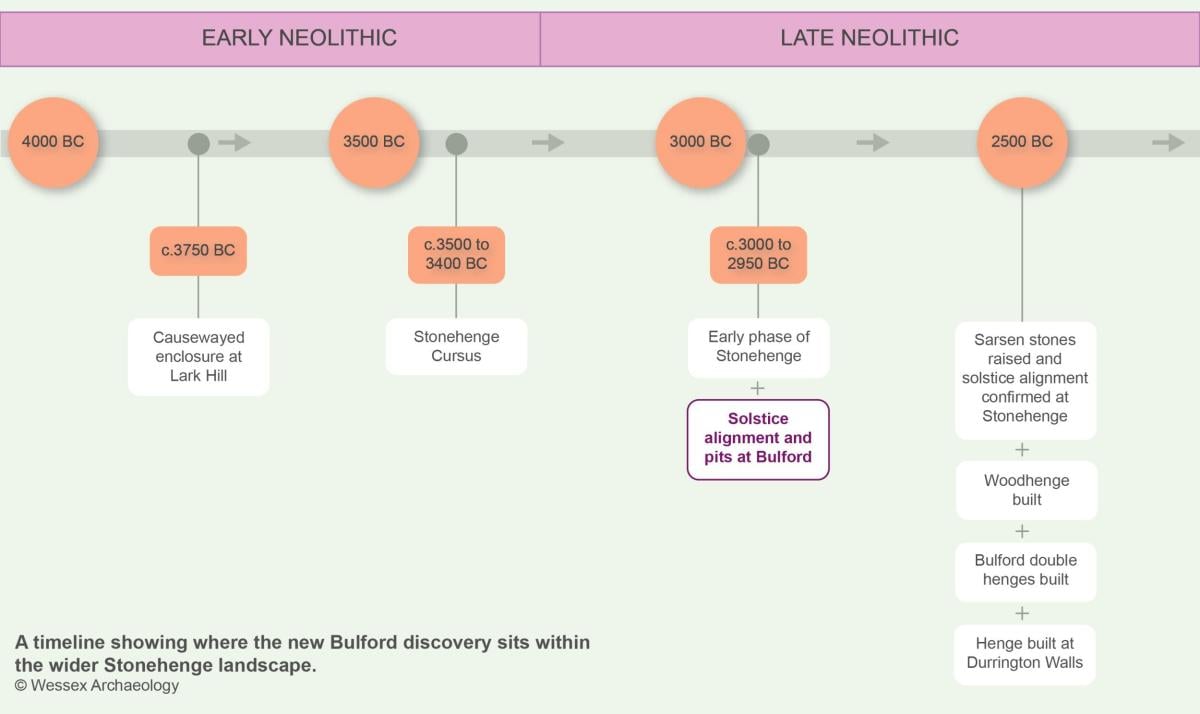
Wessex Archaeology’s Bulford discovery places Stonehenge within a deeper sacred and astronomical landscape. The 5,000-year-old timber alignment, dated to around 2950 BC, appears to have marked the summer sunrise and winter sunset centuries before the famous sarsen stones. The find shows how Neolithic communities used observation, ritual, feasting, and landscape design to relate human life…
-
Aryabhata Misused? Why ‘Amazon India’ Faces Backlash and How to Respect Scientific Heritage

A recent ‘Amazon India’ advertisement featuring a likeness of Aryabhata sparked criticism, highlighting the need for historically accurate and culturally sensitive marketing. This analysis explains Aryabhata’s verified contributionssuch as the Aryabhatiya, trigonometric tables, and the insight on Earth’s rotationwhile clarifying the multi-century evolution of the zero concept in India. It outlines how ethical frameworks like…
-
Bhadra in Hindu Astronomy: Unveiling the Two Bhadrapadas and Their Timeless Celestial Significance

Bhadra in Hindu astronomy refers to a paired lunar mansionPurva Bhadrapada and Uttara Bhadrapadarooted in the 27-nakshatra system that has guided observation and calendrics since Vedic times. The two Bhadrapadas occupy consecutive spans from late Aquarius into mid-Pisces, blending empirical sky-mapping with rich symbolic and ethical meanings. Classical Jyotiṣa associates them with Jupiter (Aja Ekapada)…
-
Konark Sun Temple: A Radiant Masterpiece of Kalinga Architecture, Astronomy, and Dharma

Konark Sun Temple in Odisha, a 13th-century UNESCO World Heritage Site, unites Kalinga architecture, astronomy, and living ritual in a single monumental vision. Commissioned by Narasimhadeva I of the Eastern Ganga Dynasty, the complex was conceived as Surya’s celestial chariot, complete with functional stone sundials. The surviving jagamohana, masterful masonry, and encyclopedic iconography make the…
-
Konark Sun Temple: Awe-Inspiring Kalinga Masterpiece, Cosmic Timekeeper, and Living Heritage

Konark Sun Temple in Odishacommissioned by Eastern Ganga ruler Narasimhadeva I around 1250 CEunites Kalinga architecture, sculpture, and ancient Indian astronomy in a breathtaking chariot-of-the-sun design. The twenty-four carved stone wheels and seven horses encode a lived experience of time and celestial geometry, while Surya’s triadic images track the diurnal path of light. As a…
-
Do Planets Shape Our Destiny? A Timeless Vedic Guide to Jyotisha, Karma, and Free Will

Is astrology truly the “eyes of the Vedas,” and do planets govern human fate? This in-depth, academically grounded guide clarifies what Vedāṅga Jyotiṣa is, how it historically joined astronomy and ritual timing, and why life is physically and culturally entangled with celestial cycles. Readers learn the technical building blocksrāśi, nakṣatra, lagna, pañcāṅga, daśā, gochara, and…
-
From Cosmic Ocean to Cosmic Web: How Scientific Cosmology Can Enrich Dharmic Faith

This evidence-based reflection shows how the Srimad-Bhagavatam’s image of a “cosmic ocean” aligns, at the level of metaphor, with the cosmic web mapped by modern astronomy. It explains what science reliably says about origins and possible endingsBig Bang, dark matter, dark energy, and competing end-of-universe scenarioswhile clarifying where responsible uncertainty remains. It places these insights…
-
Decoding Nakshatras: A Timeless Vedic Star Map Uniting Dharmic Traditions and Skywatchers

Nakshatras, the 27 lunar mansions of Vedic astronomy, form a precise star map that has guided Hindu Dharma and related dharmic traditions for millennia. Each mansion spans 13°20′ along the Moon’s path and is anchored by recognizable stars such as the Pleiades (Krittika), Aldebaran (Rohini), Spica (Chitra), and Antares (Jyeshtha). Classical sourcesfrom the Rigveda and…
-
Astro-Numerology in Hinduism: A Definitive Guide to Ashtakavarga, Rashi, Nakshatras, and Time

This article explains how Hindu astro numerology unites Jyotisha with number-based reasoning to make decisions aligned with cosmic time. It introduces ashtakavargaBhinnashtakavarga (BAV) and Sarvashtakavarga (SAV)as a quantitative scaffold for evaluating planetary transits. Readers learn how to combine ashtakavarga with Vimshottari dasha, rāśi analysis, yogas, and the Panchang for clear, reproducible judgments. It clarifies indigenous…
-
April 2, 2026 Panchang: Precise Purnima End, Krishna Paksha Start, and Sacred Timings for Rituals

On April 2, 2026 (IST), Purnima tithi continues until 6:28 AM; from then, Krishna Paksha Pratipada prevails until 7:16 AM on April 3 across most almanacs in North, South, and Eastern India. The article explains how tithis are computed (Moon–Sun angular separation), why Purnima ends when it does, and how this informs practical scheduling for…
-
Sonth (Chaitra Sankranti) 2026: Meaning, Timing, and Rituals for Kashmir’s Spring Renewal

Sonth (Chaitr Sankrat) inaugurates the Chaitra month in the Kashmiri Hindu Saptarshi Panchang and falls on 14 March 2026 in India. This comprehensive guide explains the calendar science behind Chaitra Sankranti, why it occurs in mid-March, and how Sonth relates to the closely following Navreh. It details the dawn thaal traditioncurating grains, dairy, a coin,…
-
Clash and Convergence: How Vedic and Western Worldviews Shaped Science, Faith, and History

This long-form essay traces how encounters between Vedic knowledge systems and Western scholarship reshaped global debates on science, faith, and history. It contextualizes John Bentley’s 1825 rebuke of John Playfair within wider conflicts over chronology, authority, and civilizational legitimacy. Readers gain a clear view of India’s mathematical and astronomical achievements, the emergence of Indology, and…
-
Angaraka Loka Unveiled: Mangala’s Sacred Realm and the Red Planet in Dharmic Wisdom

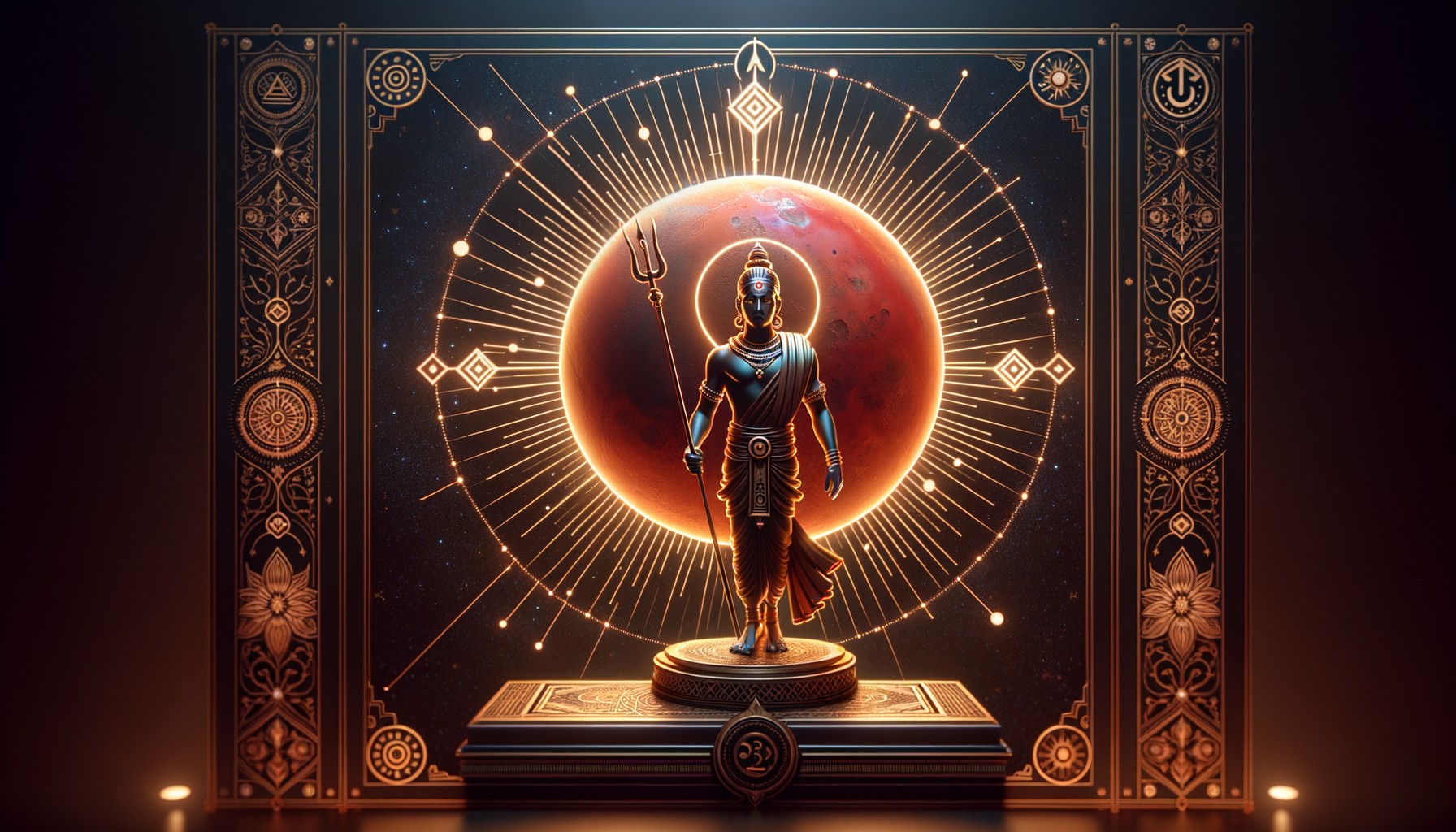
Angaraka Loka, the subtle realm of Mangala (Mars), illuminates how Vedic cosmology unites symbolism, ethics, and lived practice. Puranic narratives variously present Mangala as the son of Varaha and Bhudevi or as Bhauma born of Bhudevi, converging on a vision of disciplined courage in service of dharma. The association with Lord Muruga underscores protection, clarity,…
-
Angaraka Loka Unveiled: Mangala’s Sacred Realm and the Red Planet in Hindu Cosmology

Angaraka, also known as Mangala and identified with the Red Planet Mars, is honored in Hindu cosmology as a graha of disciplined courage and ethical action. Legends connect him with Lord Varaha and Ma Bhudevi, or with Bhudevi through Shiva’s grace, highlighting strength anchored in compassion. Angaraka Loka is approached through Navagraha worship and vivid…
-
Uttarayan (Uttarayanam) 2026: Sacred Northward Sun, Auspicious Dates, Rituals, and Unity

Uttarayan (Uttarayanam, Uttarayana Punyakalam) marks the Sun’s northward journey from Makara Sankranti to Karka Sankranti and begins on January 14, 2026. Rooted in Vedic astronomy and Hindu calendar practice, it aligns seasonal change with ritual life while explaining why dates may vary by regional Panchang. Communities across India celebrate this transition through Makara Sankranti, Pongal,…
-
Kerala’s Forgotten Calculus: The Dharmic Knowledge Tradition that Preceded Newton by 200 Years

This essay examines how the Kerala School of Mathematics developed series expansions and methods akin to calculus centuries before their European articulation. It situates the debate within the politics of recognition, showing how Eurocentric narratives shaped the reception of Indian scientific achievements. It synthesizes George Gheverghese Joseph’s research on Madhava of Sangamagrama and his successors,…
-
Does the Sun Chant ‘OM’? Solar Science, Sacred Sound, and Dharmic Unity

Social media clips suggesting the Sun chants “OM” inspire both fascination and debate. Scientifically, the Sun’s oscillations can be sonified into deep drones, which some listeners associate with “OM,” though this resemblance is interpretive rather than literal. Spiritually, “OM” holds profound meaning across Hinduism, Buddhism, Jainism, and Sikhism, offering a unifying symbol of ultimate reality…
-
Ayanacalana Explained: The Essential Guide to Mastering Hindu Timekeeping and Rituals

Ayanacalanathe precession of the equinoxesanchors the accuracy of the Hindu panchanga and the timing of rituals and festivals. By clarifying the relationship between the ecliptic, celestial equator, and nakshatras, it explains why ayanamsha is essential in Indian calendrical practice. The five limbs of the panchanga, including tithi and nakshatra, depend on this correction to reflect…
-
Discover the Proven Harmony of Science and Dharma: Newton’s Solar System Model Reimagined

A classic anecdote about Isaac Newton’s solar system model invites a disciplined way to relate science and philosophy. Instead of pitting mechanism against meaning, it encourages rigorous observation alongside intellectual humility. This balanced posture aligns with dharmic traditionsHinduism, Buddhism, Jainism, and Sikhismwhich explore causality, order, and ethics through logic and contemplative insight. Readers discover how…