
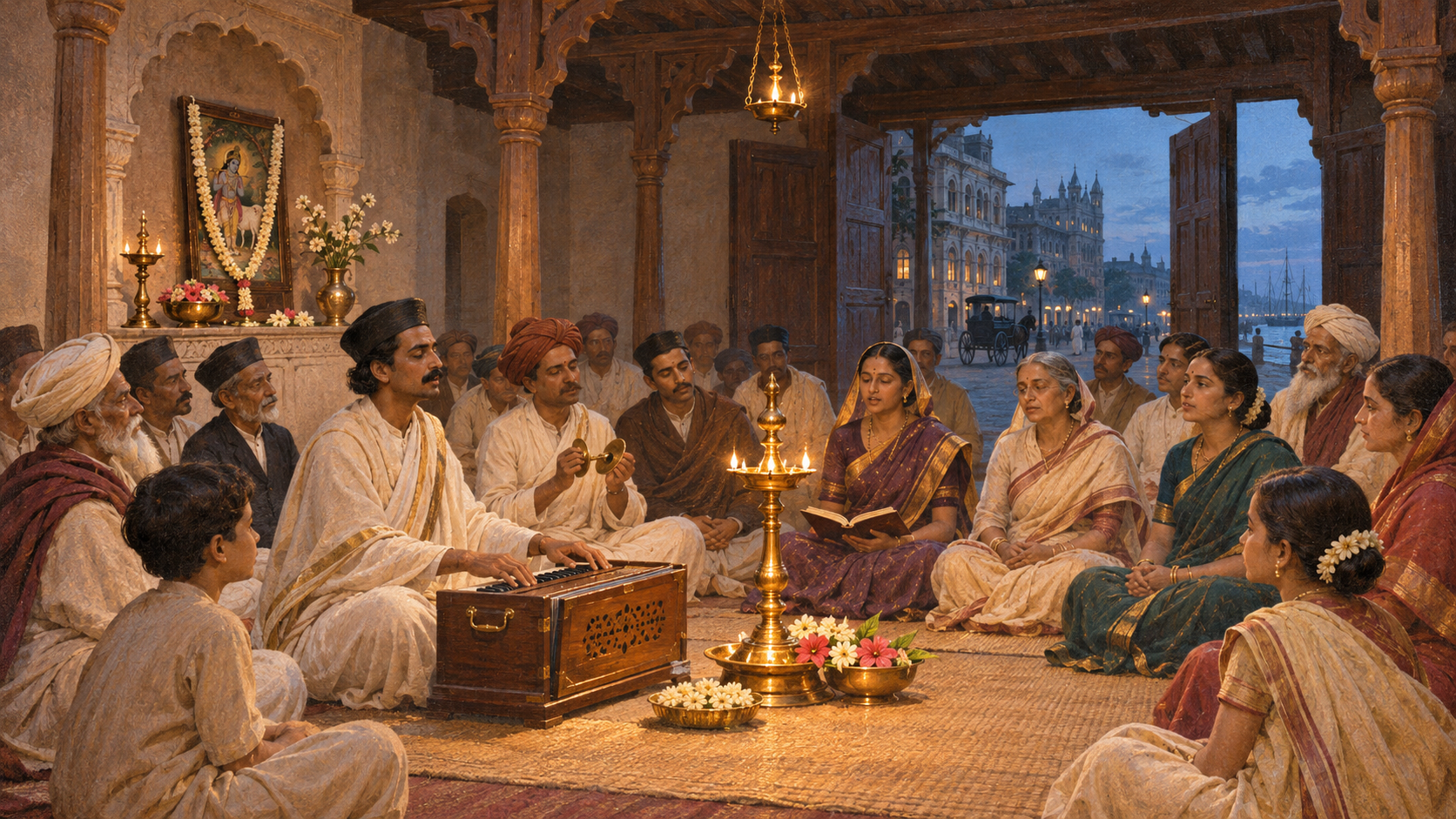
If you are trying to understand whether nineteenth-century Hindu reform was a rejection of Dharma or an attempt to renew it, Prarthana Samaj gives you a useful test case. It confronted caste exclusion, child marriage, restrictions on widows and the denial of education to women without asking Hindus to despise their civilization.
Its history also corrects two easy conclusions. Colonial criticism did not make every reform alien, and invoking Hindu continuity did not make every inherited custom defensible. Prarthana Samaj tried to hold religious belonging and moral correction together. Its achievements and limits show what that method requires.
Reform without civilizational self-rejection
Founded in Bombay in 1867 by Dr Atmaram Pandurang, Prarthana Samaj emerged among Hindus responding to a difficult historical situation. British rule had increased exposure to Western education and Christian criticism. Educated Indians could see real injustice in parts of social life, but accepting every colonial judgment would have meant treating Hindu civilization itself as the problem.
The Samaj chose a middle path. It centered religious life on devotion to one supreme God, prayer, ethical conduct and service. At the same time, it avoided demanding that members formally abandon the Hindu community. This distinction matters: reform within a tradition begins by separating its durable principles from practices that accumulated social authority without becoming morally inviolable.
Its prayer meetings simplified worship, but simplicity was not the same as spiritual emptiness. The aim was to make reverence, conscience and moral responsibility central. That approach could speak to educated people troubled by social abuses without requiring them to believe that Hindu religious life had no resources for self-correction.
Prominent figures such as Mahadev Govind Ranade, Ramakrishna Gopal Bhandarkar and Narayan Ganesh Chandavarkar helped give the movement intellectual and public weight. Their importance lay not merely in defending a doctrine. They joined religious reflection to sustained concern about institutions, education and social conduct.
Key takeaways
- Prarthana Samaj sought Hindu renewal rather than wholesale repudiation of Hindu identity.
- Prayer, belief in one supreme God and ethical conduct formed its religious center.
- Its social programme addressed the position of women, caste barriers, child marriage and unequal access to education.
- It received an important stimulus from Brahmo Samaj but adapted reform to Maharashtra’s religious and social setting.
- It remained limited as a mass movement, yet its institutional and moral influence cannot be measured by membership alone.
Prayer had to become social duty
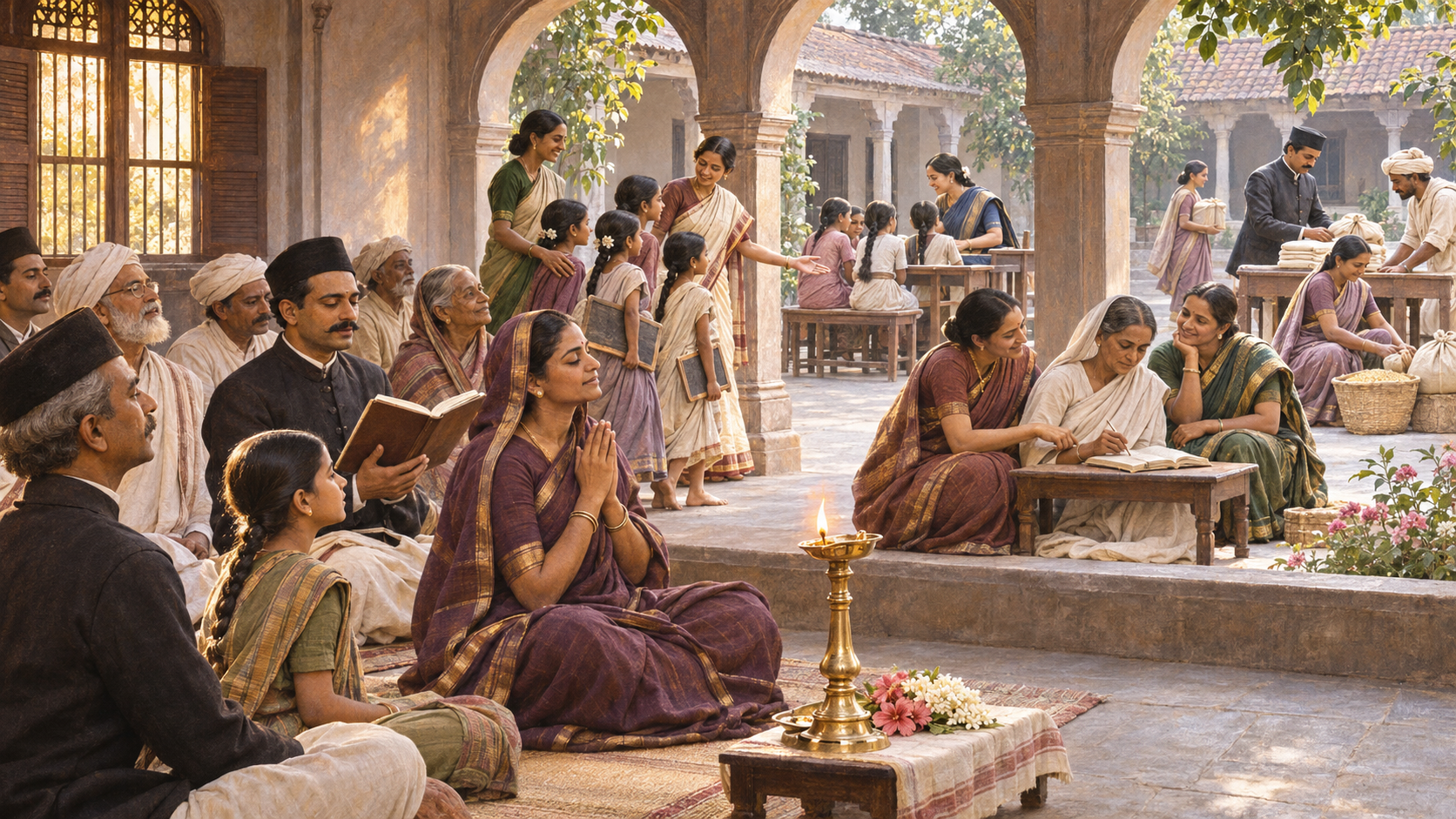
The name Prarthana Samaj can mislead you if it makes the organization sound like a devotional circle detached from ordinary life. Its prayer was meant to produce responsibility. If all people stand before the same Divine Reality, inherited rank cannot excuse cruelty, and ritual status cannot cancel a person’s human dignity.
That conviction directed attention toward widow remarriage, opposition to child marriage, women’s education and resistance to caste discrimination. These questions were connected. A girl denied education possessed little independence. A child married before she could exercise mature judgment could later become a widow subject to severe restrictions. Caste rules could then limit the people willing to support her. Reforming one custom while leaving the surrounding structure untouched would produce only partial relief.
The Samaj therefore treated education as more than the transfer of literacy. Education changed who could interpret religious and social duties, who could take part in public life and who could question customs presented as unquestionable. For a reform movement, that is a practical lesson: if authority remains concentrated in the same hands, a declaration of equality rarely changes daily experience.
Its position on caste similarly carried consequences beyond abstract equality. Caste is not overcome merely by saying that all souls are equal while maintaining exclusion in schooling, association and family life. A credible reform programme has to identify the social point at which a principle is being denied. It then has to change access, conduct or institutional rules at that point.
You can use the same test when examining any religious reform claim. Ask what changes for the person with the least power. Can a girl study? Can a widow rebuild her household? Can someone treated as socially inferior enter common institutions with dignity? If the answer remains no, elevated theology has not yet become social dharma.
Related to Brahmo Samaj, but not its copy
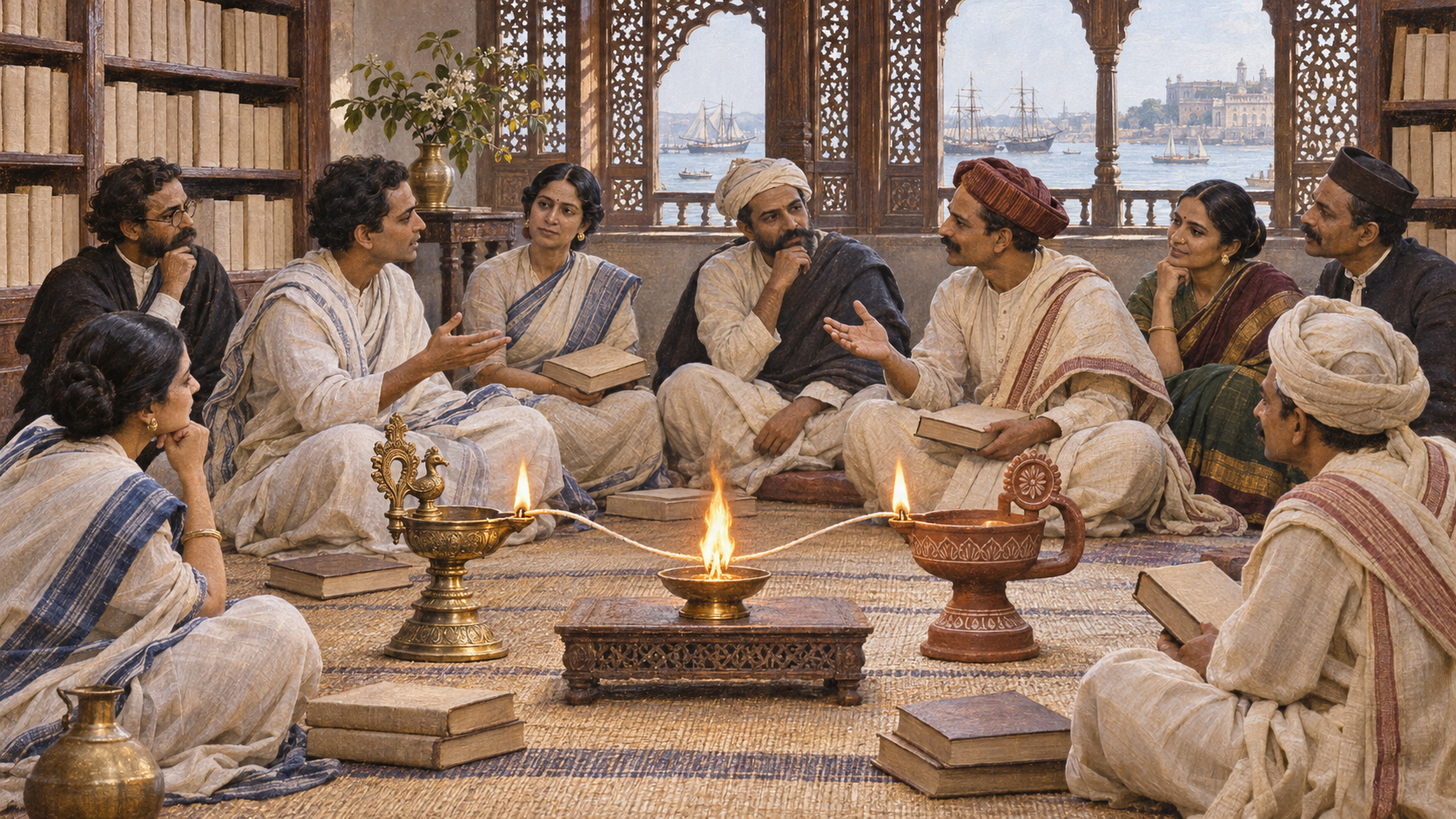
Prarthana Samaj did not arise in isolation. Brahmo Samaj and Keshab Chandra Sen helped stimulate its formation. Both movements emphasized one God, prayer, moral life and social reform. Both also responded to the intellectual pressures created by colonial rule and modern education.
Influence, however, is not identity. Brahmo Samaj developed first in Bengal and took a more pronounced doctrinal stance against several inherited forms of Hindu worship and authority. Prarthana Samaj worked in Maharashtra and generally followed a more gradual course. It simplified worship and criticized damaging customs while retaining a closer relationship with the surrounding Hindu society.
That restraint had both strength and cost. It reduced the demand that reformers choose between conscience and community. A Hindu could support change without first announcing that the religious world of parents and neighbours was worthless. This made dialogue possible where a sharper rupture might have produced immediate rejection.
Gradualism can also become ambiguous. When a movement does not state clearly which practices must change, social respectability can absorb its language while leaving power untouched. The relevant question is therefore not whether reform is moderate or radical in tone. Ask whether it names the wrong precisely, builds a workable remedy and persists until ordinary conduct changes.
This comparison helps prevent a common historical error. Similarity to another reform movement does not prove that a Hindu organization merely copied it. Ideas travel, but they are selected, translated and fitted to local moral languages. To understand Prarthana Samaj, you have to notice both the Brahmo stimulus and the Maharashtrian choice to pursue reform without a complete break from Hindu society.
Calling it a failure asks the wrong question
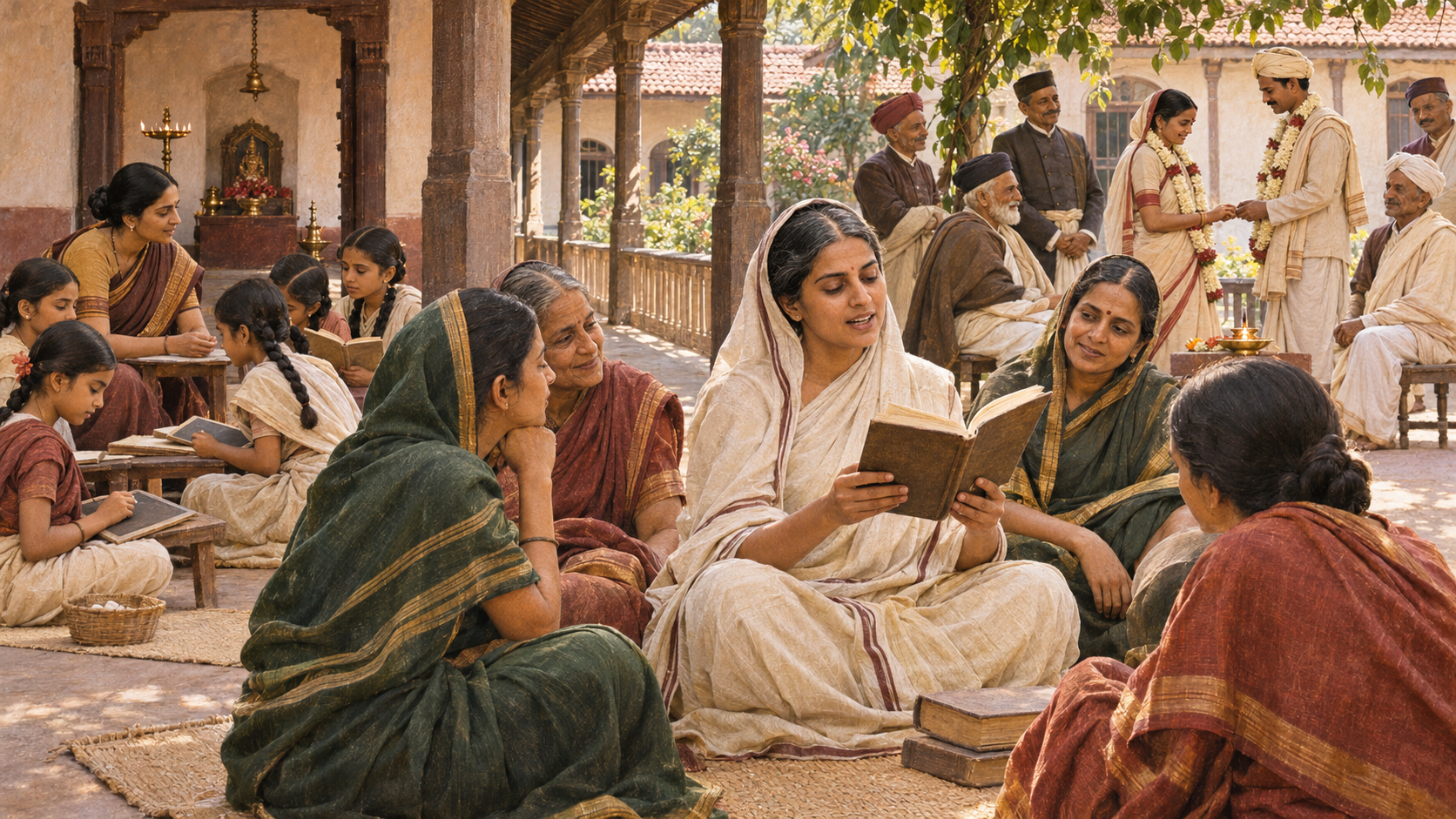
If success means becoming a mass religious movement, Prarthana Samaj fell short. Its strongest appeal remained among educated urban circles. Simple congregational prayer did not displace the temples, festivals, family observances, sectarian traditions and local devotional forms through which most Hindus experienced religion. An intellectually coherent service is not automatically a compelling popular religious culture.
Its social location created another limit. English-educated reformers could diagnose harmful customs and argue for change, but their language, associations and proximity to colonial institutions could make them appear distant from the communities they wanted to persuade. Under foreign rule, even justified reform could be suspected of accepting the ruler’s contempt for the ruled.
That suspicion should not be dismissed as mere stubbornness. Colonial power shaped the conversation: outsiders criticized Hindu society while governing India, and missionary attacks often treated specific abuses as proof of civilizational inferiority. Reformers therefore faced two tasks at once. They had to oppose injustice and demonstrate that opposition to injustice did not require cultural surrender.
Prarthana Samaj’s careful posture answered part of that problem, but caution reduced its ability to create a clear mass identity. A movement that remains close to the wider community can influence it quietly; the same closeness can make the movement itself seem indistinct. This is why membership totals or organizational survival would tell only part of the story.
A fair assessment uses separate measures. The Samaj had limited reach as a popular devotional movement. It had greater importance as a forum for social conscience, education and organized reform. It also helped normalize the proposition that a Hindu could defend the civilization while challenging customs practiced by Hindus. These outcomes do not turn every strategy into a success, but they make the word “failure” too blunt.
When you assess a reform movement, distinguish four questions: Did it attract a mass following? Did it build institutions? Did it change public argument? Did its concerns continue beyond the organization itself? A movement can answer no to the first and still matter greatly on the other three.
A practical test for Hindu reform today
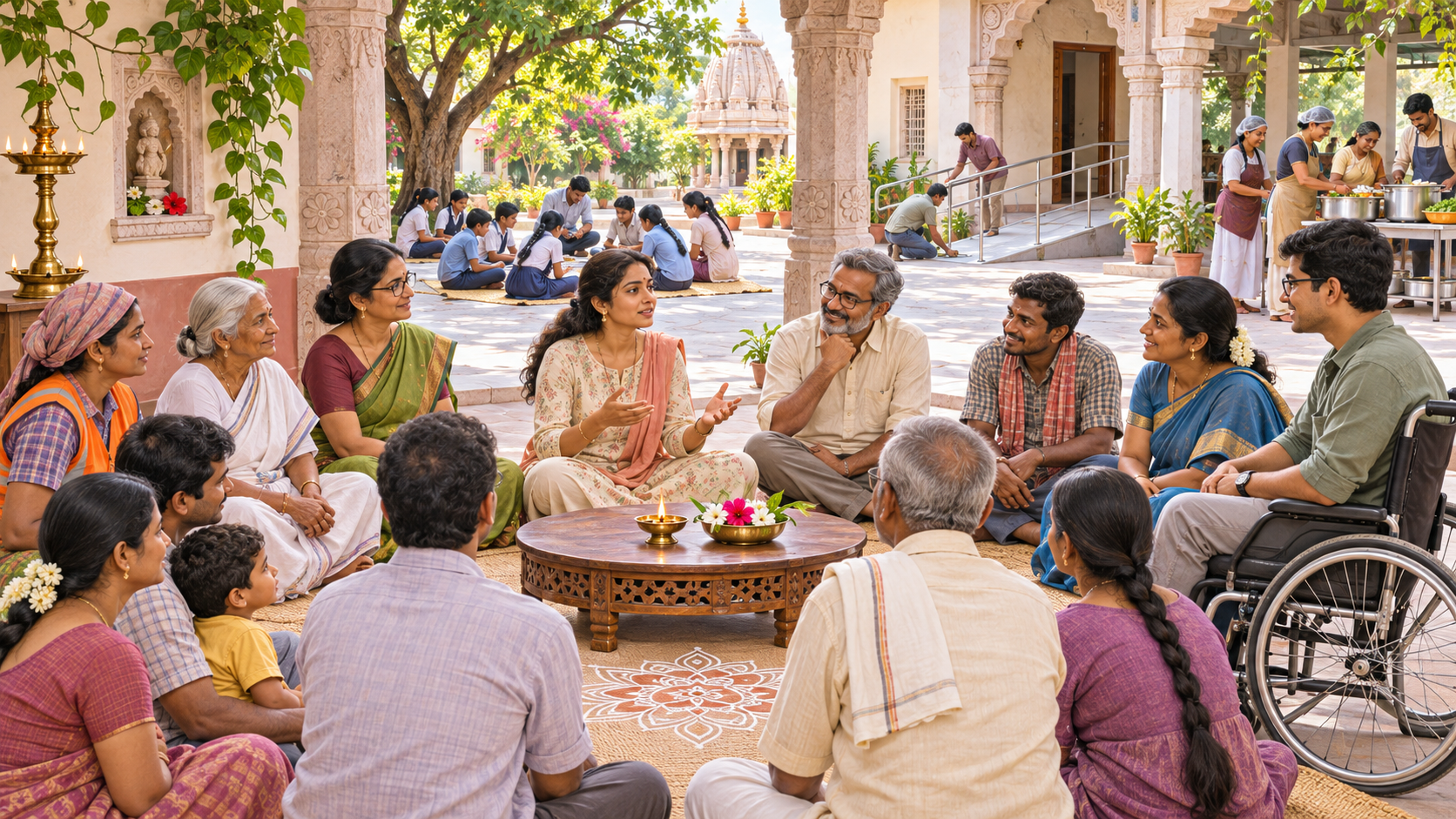
Prarthana Samaj is most useful now as a method to examine, not a nineteenth-century formula to reproduce unchanged. Its central insight remains sound: a community can correct wrongdoing without accepting that its whole inheritance is diseased. Its central warning is equally important: good arguments confined to a small educated circle do not become social transformation by themselves.
Begin by naming the practice, not condemning an entire civilization. “Hindu society is backward” gives people nothing precise to examine and repeats the flattening language of civilizational attack. “This rule denies widows, girls or a particular community equal access to education” identifies the injury, the affected person and the institution that must change.
Next, state the dharmic principle being violated. Human dignity, compassion, self-restraint, truthfulness and responsibility are not foreign intrusions into Hindu thought. Connecting reform to such principles prevents two evasions: defenders cannot dismiss the concern solely as colonial mimicry, and reformers cannot treat contempt for Hindu people as moral courage.
Then attach worship and teaching to a material practice. If a community teaches equality, examine who may enter, learn, speak and lead. If it honours feminine divinity, examine whether girls and women receive education, safety and meaningful authority. If it speaks of seva, identify the person served, the recurring need and who is responsible after the first public event ends.
Preserve religious plurality unless a form itself causes the harm. Prarthana Samaj’s simplified prayer met the needs of some believers, but Hindu life has never depended on a single mode of devotion. Reform becomes unnecessarily brittle when it assumes that ethical improvement requires everyone to worship in the same way. Correct exclusion directly instead of using reform as a pretext to erase harmless diversity.
Finally, judge progress where the custom operates. Public declarations matter less than changed admission rules, educational access, family decisions and everyday association. If the intended beneficiaries remain outside the room, the programme needs redesign, however impressive its language may be.
You need not choose between an uncritical defence of every inherited custom and a borrowed contempt for Hindu civilization. The harder and more dharmic course is discriminating reform: preserve what carries spiritual and cultural value, identify injustice without euphemism, and build the institution that makes the correction durable. Choose one practice in your own community, apply that test to it, and move the discussion from slogans to a specific change.
References

Leave a Reply
You must be logged in to post a comment.