
If you came here asking whether BJP leader Chandan Mandal died in an ordinary fairground clash or was deliberately targeted for opposing politically protected liquor and gambling, the honest answer has two parts. His fatal beating and one arrest have been reported. The alleged political motive and the responsibility attributed to named people still require proof.
You do not honour Mandal by blurring that distinction. You honour him by preserving the facts, demanding answers that can withstand partisan pressure, and making the next Kartik Puja gathering safer than the one at which he lost his life.
What is established, and what is still alleged

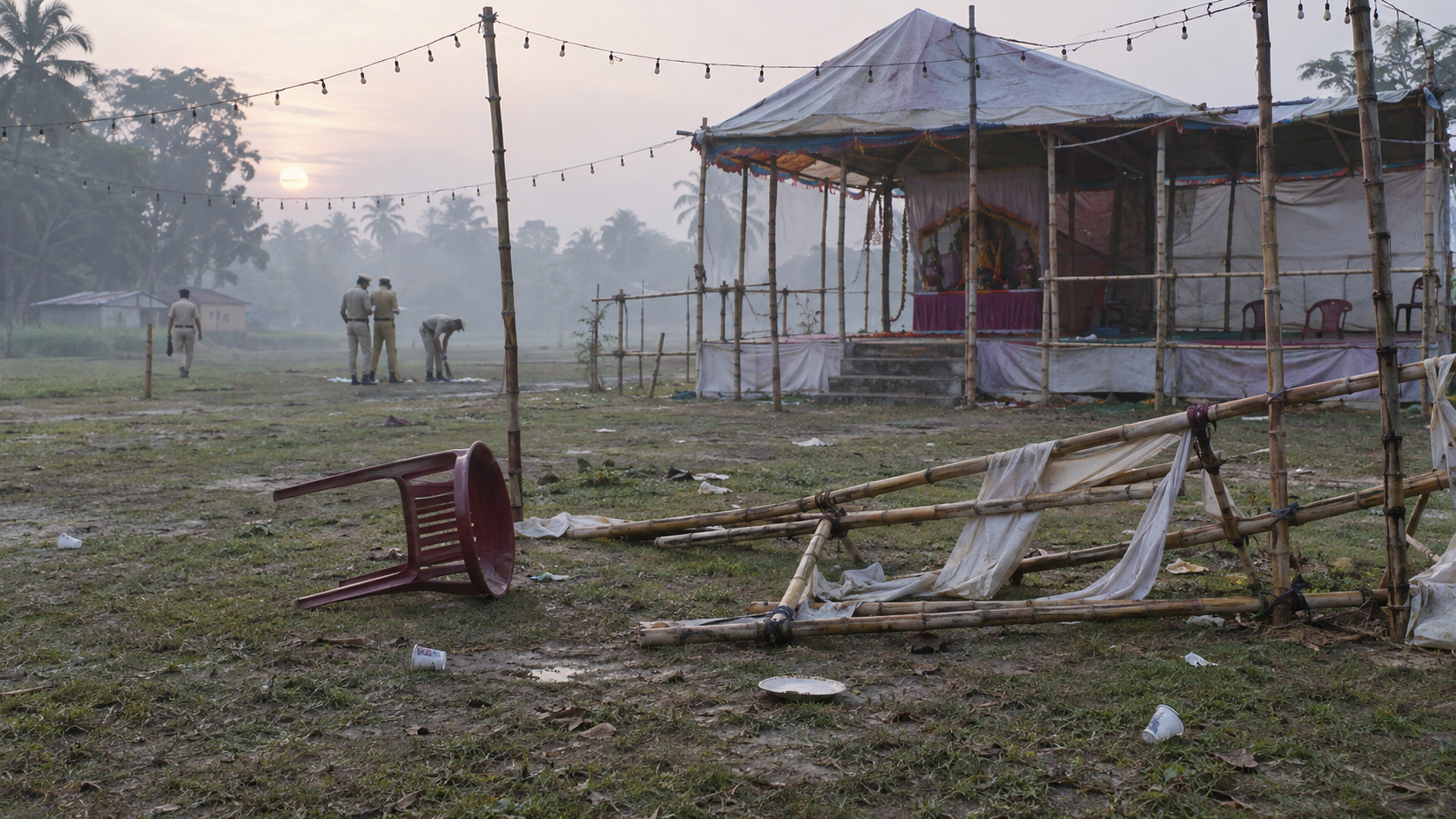
On the night of 19 November 2026, 45-year-old Chandan Mandal, a local BJP Mandal vice-president, was fatally beaten in the Rishipur area under Habibpur police station in Malda. A fair and cultural programme was being held in Chandpur village for Shadanana Kartik Puja. Around midnight, a power cut was followed by an argument among men described as intoxicated. The dispute became a fight, and Mandal reportedly intervened to stop it.
Mandal’s wife, Purnima Mandal, alleges that local TMC leader Kanai Choudhury and others were responsible. The family filed a complaint at Habibpur police station. One accused was reported arrested.
A separate and more politically consequential allegation comes from BJP leader Tarashankar Roy. He maintains that TMC-backed men operated illegal liquor outlets and gambling dens at the fair and that Mandal was attacked because he had opposed them. That allegation deserves a complete investigation. It must not, however, be silently converted into an established motive before police findings, evidence and judicial scrutiny are available.
The difference matters. A fatal assault arising from an intoxicated brawl would expose grave failures in festival management and public security. A planned attack on a political worker who challenged an illicit operation would indicate something more organised: retaliation, possible political protection and a threat to anyone who resists local criminal power. The two possibilities could also overlap if a brawl provided the occasion for an existing grievance to be settled. Investigators must determine which account the evidence supports.
Before treating guilt or motive as settled, you need answers about the identity and alleged role of the arrested person, the offences recorded by police, the number of assailants, medical findings, witness accounts, available video evidence and the responses of the people named in the complaint. A family allegation is serious evidence that must be pursued; it is not a conviction. An arrest is an investigative step; it is not proof that the whole crime has been solved.
Three questions readers should ask
Was Mandal killed because he opposed liquor and gambling?
That is the BJP’s stated allegation and a central line of inquiry, not yet an established conclusion. It should be tested against earlier complaints, witness statements, stall operations at the fair, communications among the accused and the sequence of events before the assault. Repeating the motive as proven before those links are established makes it easier for opponents to dismiss the entire case as partisan rhetoric.
Does the reported arrest mean accountability has begun?
It may be the beginning, but one arrest does not answer whether every assailant has been identified, whether anyone organised or encouraged the attack, or whether allegations of political protection will be examined. Track what happens after the arrest: the alleged role stated by police, additional investigative steps, evidence placed before a court and the treatment of every person named by the family.
Has a communal motive been established?
No communal motive has been established in the facts cited here. The killing occurred at a Hindu festival, which makes the security and sanctity of that gathering directly relevant. But the religious identities of the alleged assailants and an anti-Hindu motive have not been established. A district’s demography cannot substitute for evidence about who committed a particular crime or why. A pro-Hindu response should protect Hindu gatherings without assigning collective guilt to people who have not been connected to the attack.
Turn public anger into an evidence trail
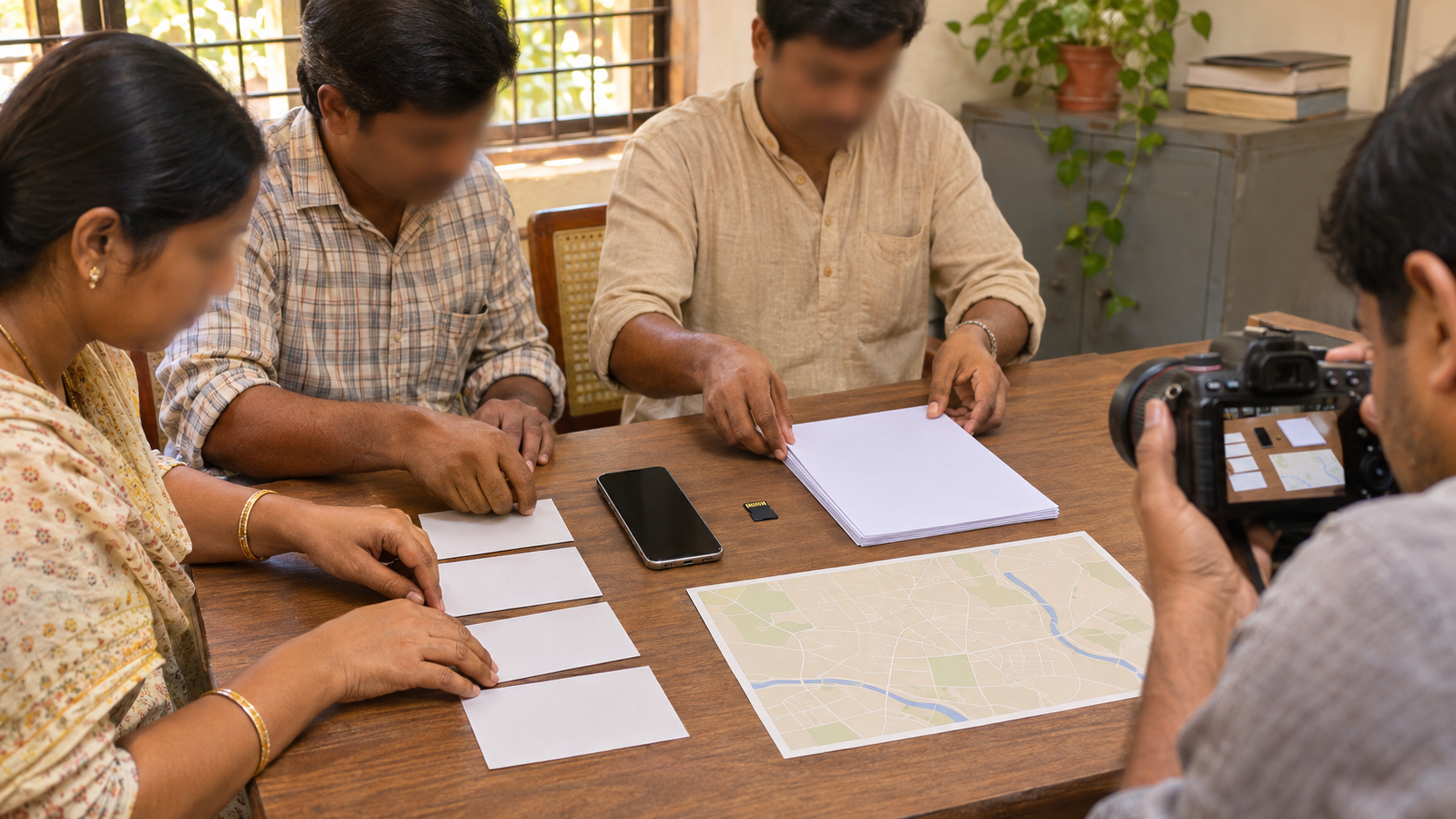
Political violence often produces a rush of claims during the first few days. Screenshots lose their dates, allegations lose their attribution, and an early mistake is copied until it looks like corroboration. If you want sustained accountability, build a record that can be corrected and updated.
- Separate facts from attributed claims. Write that Mandal was fatally beaten and that one arrest was reported. Write that Purnima Mandal alleges the involvement of Kanai Choudhury and others. Write that Tarashankar Roy alleges a connection to illegal liquor, gambling and TMC-backed operators. Do not merge those three statements into one unsupported declaration.
- Keep a dated case ledger. For every development, record the date, the person or institution making the claim, the exact claim, any supporting document or public statement, and whether it has been confirmed, disputed or corrected.
- Ask precise questions of police and elected representatives. What case was registered after the family’s complaint? Who was arrested, and what role is alleged? Have all named people been questioned? Was mobile, CCTV or event video preserved? What action is being taken on the allegation of illegal liquor and gambling at the fair?
- Protect witnesses and the family. Do not circulate private telephone numbers, addresses, unverified witness identities or graphic images. Public exposure can invite intimidation, contaminate testimony and inflict further harm without advancing the case.
- Correct mistakes visibly. If a name, photograph, political affiliation or sequence of events proves wrong, amend the original post rather than quietly deleting it. A transparent correction strengthens the trustworthy parts of the record.
If you are outside Malda, your useful role is not to identify suspects from social media or encourage confrontation. Preserve verifiable updates, direct attention to unanswered institutional questions and refuse to reward accounts that turn every uncertainty into certainty.
Protect the next puja fair before trouble begins
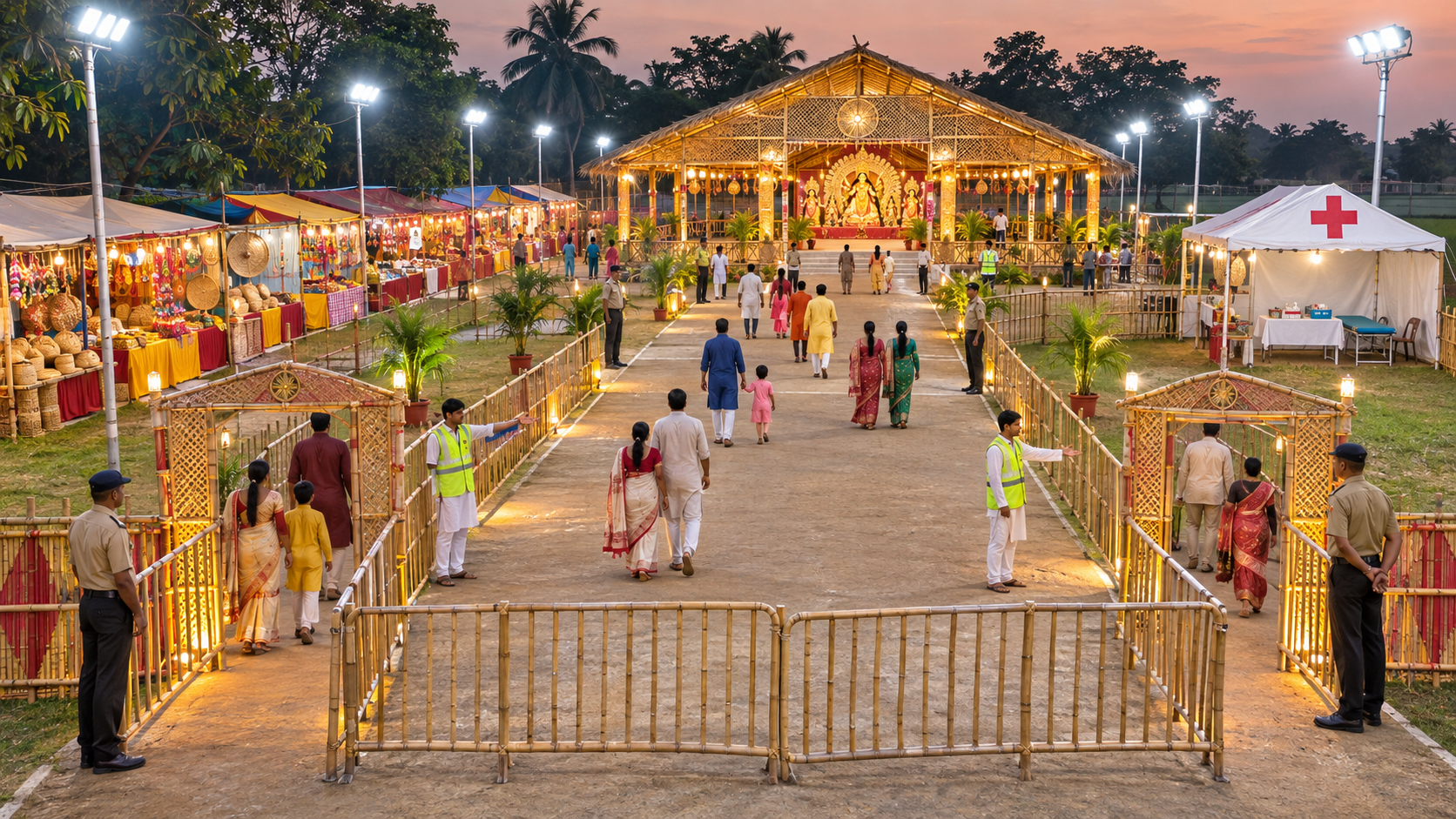
The reported sequence contains a practical warning for every puja committee: a late-night power failure, intoxicated fighting and an individual trying to stop a brawl can become a lethal combination. A volunteer or office-bearer should never be left to physically confront a group of intoxicated men alone.
- Arrange backup lighting for the stage, main paths, exits and the point from which help is summoned. Darkness should not disable both crowd supervision and evidence collection.
- Register stalls and operators before the event. Make the prohibition of unauthorised liquor sales and gambling explicit, identify who will enforce it, and record objections before the fair opens.
- Name one safety coordinator and one police liaison for each shift. Volunteers should know whom to call instead of improvising during a fight.
- Use pairs or teams for crowd intervention. Their first task should be to create distance, summon trained security or police and protect bystanders, not to enter an intoxicated melee.
- Keep emergency numbers, basic first aid and transport access available after the cultural programme ends. Midnight risk requires midnight coverage.
- Preserve incident logs and available camera recordings. Record the time of a power failure, disturbance, emergency call and official arrival while memories are still fresh.
If organisers believe an unlawful operation has political protection, they should document the concern and escalate it through formal channels rather than confronting operators privately. Where threats are made, local legal advice and written complaints are safer than a personal showdown. These precautions do not decide what happened to Mandal; they respond to the dangerous conditions surrounding his death.
A Dharmic demand must join truth with protection
A Dharmic response has three duties here. Truth requires us to attribute allegations accurately. Protection requires puja spaces in which criminal activity and intoxicated violence are not tolerated. Justice requires persistent scrutiny of the investigation, including any evidence of political patronage, without revenge or collective blame.
Insisting on evidence does not minimise Mandal’s death. It prevents his name from becoming disposable material in a short political news cycle. Nor does the absence of a completed investigation make the family’s allegation unimportant. It makes a transparent investigation more urgent.
Your next step can be concrete: save the established factual baseline, send the unanswered questions to the relevant police and public representatives, and update your understanding only when a named institution, witness or document adds verifiable information. Keep the demand narrow enough that it cannot be evaded: identify every participant, test the alleged motive, investigate the claimed illicit operations and carry the case through lawful accountability.
References
- Hindu Post — West Bengal: BJP Leader Chandan Mandal Lynched to Death in Malda After Protesting Liquor and Gambling at Kartik Puja Fair
- OpIndia — West Bengal: TMC goons lynch BJP leader Chandan Mandal in Muslim-dominated Malda, one arrested

Leave a Reply
You must be logged in to post a comment.