

Two questions have become entangled around Pāṇini: how grammatical knowledge helped preserve sacred language, and who may claim an ancient thinker associated with a landscape inside present-day Pakistan. One concerns transmission; the other concerns heritage and political identity.
Read together, the source articles offer a framework more useful than competing national labels. Pāṇini’s legacy is best approached by distinguishing intellectual inheritance from territorial possession, and by recognizing that preservation depends on both living disciplines and responsible care for historic places.
Pāṇini as an intellectual figure and a symbol of place
The preservation study places Vyākaraṇa, the discipline of grammar, within a larger architecture for maintaining Vedic śabda. The heritage study examines a different use of Pāṇini’s name: social-media descriptions of him as Pakistani because the region associated with him is now within Pakistan. These discussions address different kinds of connection, even when they invoke the same figure.
According to DharmaRenaissance Blog’s article on Pāṇini, Taxila and identity, saying that Pāṇini lived in an area now administered by Pakistan can be geographically defensible, whereas assigning him Pakistani nationality projects a state founded in 1947 into the ancient past. The article applies a similar caution to unqualified modern Indian claims: ancient India can describe a broad subcontinental and civilizational setting, but it should not automatically be equated with the territory or citizenship of the contemporary Republic of India.
Pāṇini’s name therefore operates in two registers. It points toward a grammatical tradition whose influence was carried through study and teaching, while also evoking an ancient northwestern landscape subsequently divided by modern borders. Location matters, but it does not exhaust intellectual identity. Transmission matters, but it does not transfer ownership of every associated archaeological place to the communities that preserved a tradition elsewhere.
Preservation was an architecture, not a solitary achievement
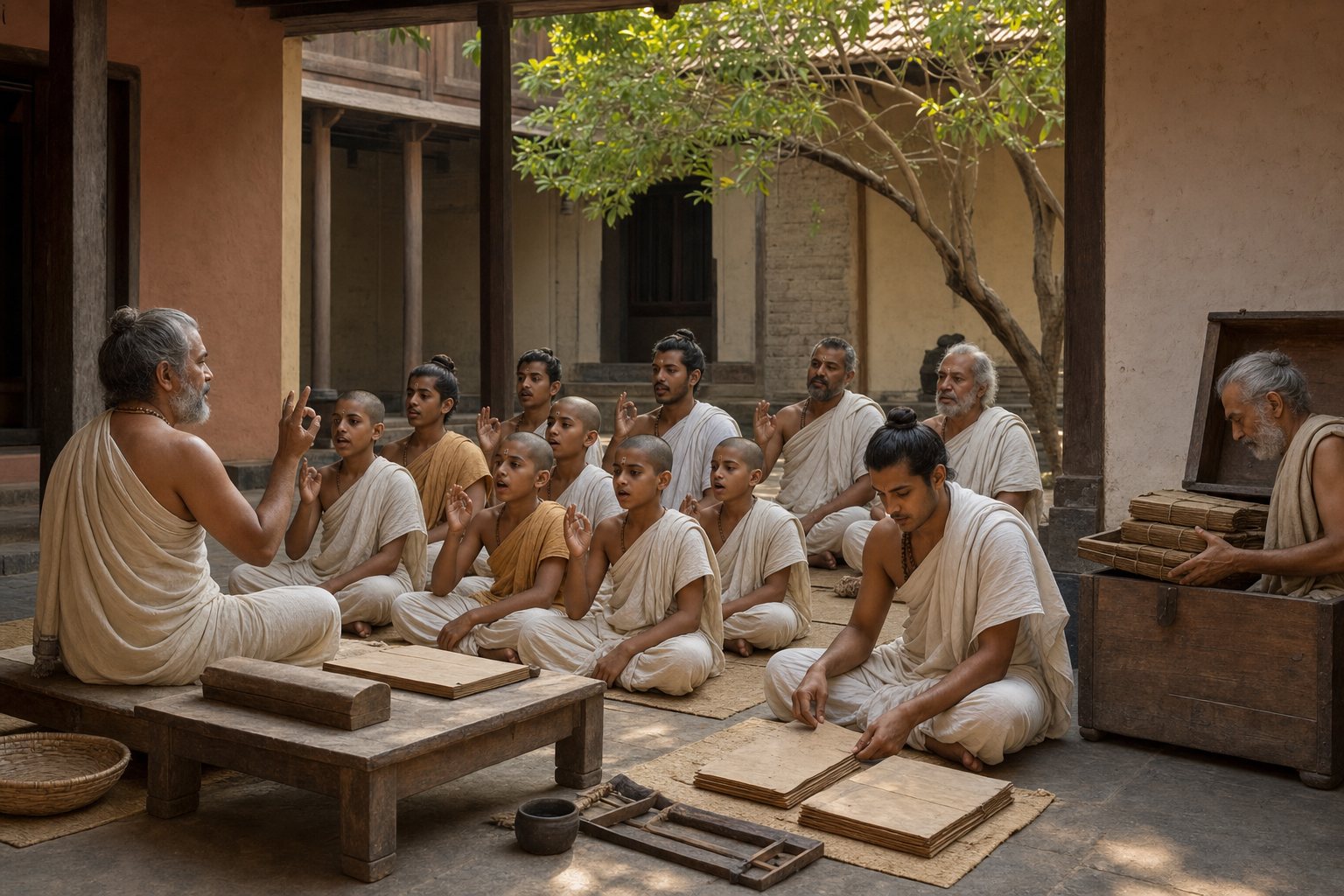
The account of Vyākaraṇa and Vedic oral memory argues that exceptional memorization alone cannot explain the controlled transmission of extensive sacred utterance. It describes preservation across several connected levels: phonetic identity, vowel length, accent, metre, sequence, word segmentation, grammatical relation, meaning and authorized ritual employment. Accuracy at one level could not compensate indefinitely for deterioration at another.
In that account, the six Vedāṅgas distribute the work. Śikṣā governs articulation, Chandas regulates metre, Vyākaraṇa analyzes linguistic form, Nirukta addresses difficult vocabulary and inherited meanings, Kalpa orders ritual procedure, and Jyotiṣa relates ritual action to the appropriate time. Their functions overlap without becoming interchangeable. Together they make Vedic speech recitable, analyzable, intelligible and ritually usable.
The traditional description of Vyākaraṇa as the mouth of the Veda becomes clearer within this cooperative system. A mouth gives articulate external form to internally ordered knowledge and enables communication between speaker and listener. Grammar likewise works in two directions: it accounts for how roots, stems, affixes and grammatical operations generate heard forms, and it enables a listener to analyze those forms back into meaningful constituents and relations.
This function is especially important in connected speech. Sandhi can alter adjacent sounds while leaving underlying words recoverable through grammatical analysis and recitational methods such as padapāṭha. Inflections and verbal forms communicate relations that a vocabulary list cannot preserve by itself. Compound analysis can also determine whether identical or similar audible material expresses qualification, possession, coordination or another relationship. Grammar consequently protects structured intelligibility rather than sound in isolation.
The scope of the claim still requires care. The source’s detailed case concerns the preservation of Vedic śabda within an oral tradition; it should not be converted without qualification into a theory of how every Sanskrit work survived. It also does not support a single-hero account in which Pāṇini alone saved Sanskrit. The reported system depended on teachers, reciters, analysts, ritual specialists and mutually reinforcing disciplines maintained over generations.
Modern borders separate custody from ancient identity
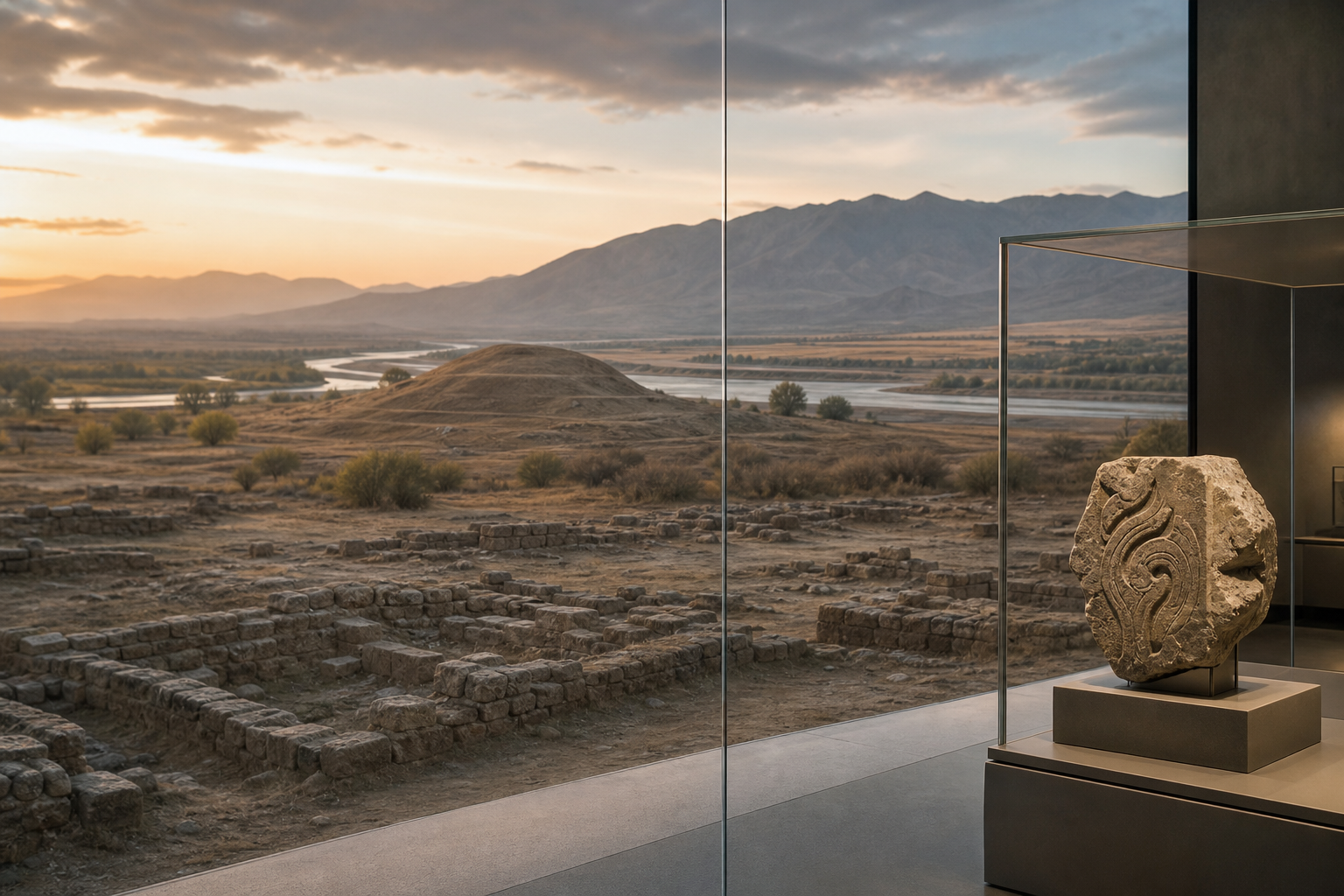
The heritage article separates four questions that nationalist arguments often collapse. A territorial claim asks where a site lies now. A historical claim asks which political and cultural settings shaped it in its own era. A civilizational claim concerns the communities, texts and practices through which its significance continued. A custodial claim identifies who is presently responsible for protecting and interpreting its physical remains.
Applied to Pāṇini, these distinctions allow several connections to coexist. Pakistan has a territorial relationship to ancient places within its borders and a corresponding role in their material stewardship. Sanskrit-learning communities across the subcontinent and beyond may possess a civilizational relationship formed through the continuing study of grammar. Historical description must meanwhile use categories appropriate to Pāṇini’s period rather than retroactive citizenship.
Taxila reinforces the point. The heritage source describes a layered region containing successive settlements, Buddhist monuments and later Islamic structures, shaped at different times by multiple political and cultural influences. It also cautions that calling Taxila a university is an analogy: learning was associated with teachers, specialist disciplines, monasteries and networks of pupils rather than the centralized administration and degree system of a modern university. Calling it a Pakistani university therefore combines two anachronisms—modern nationality and modern institutional form.
The preservation and heritage perspectives meet here. A place can remain physically fixed while the knowledge associated with it travels through recitation, commentary and teaching. Conversely, the survival of a textual tradition outside a site’s current borders does not cancel the obligations or legitimate interests of its present custodian. Material and intellectual inheritances overlap, but neither should be used to erase the other.
Key takeaways
- Present-day geography establishes where an ancient place is located; it does not create retroactive nationality for the people who lived there.
- Vyākaraṇa protected more than correct pronunciation by preserving word formation, grammatical relations, recoverable boundaries and interpretable compounds.
- Vedic precision was the outcome of a coordinated oral and analytical system, not memory alone or the work of one celebrated grammarian.
- Territorial location, historical context, civilizational transmission and present custodianship are related but distinct forms of heritage.
From ownership slogans to responsible stewardship
Responsible language is the first practical step. Descriptions can identify an ancient region and cultural setting before noting the modern country in which a site is located. Such wording neither denies Pakistan’s sovereignty over sites within its borders nor severs those places from the wider subcontinental histories in which they developed.
The second source also complicates the idea that Pakistani engagement with pre-Islamic history is merely a recent online invention. It reports that the University of Peshawar established an archaeology department in the early 1960s and that the journal Ancient Pakistan has appeared since 1964. At the same time, it cites research finding that parts of the country’s educational discourse have privileged an Islamic national story, marginalized minorities or represented India chiefly as an adversary. As reported, these strands reveal an internal contest over identity rather than a single, uniform Pakistani position.
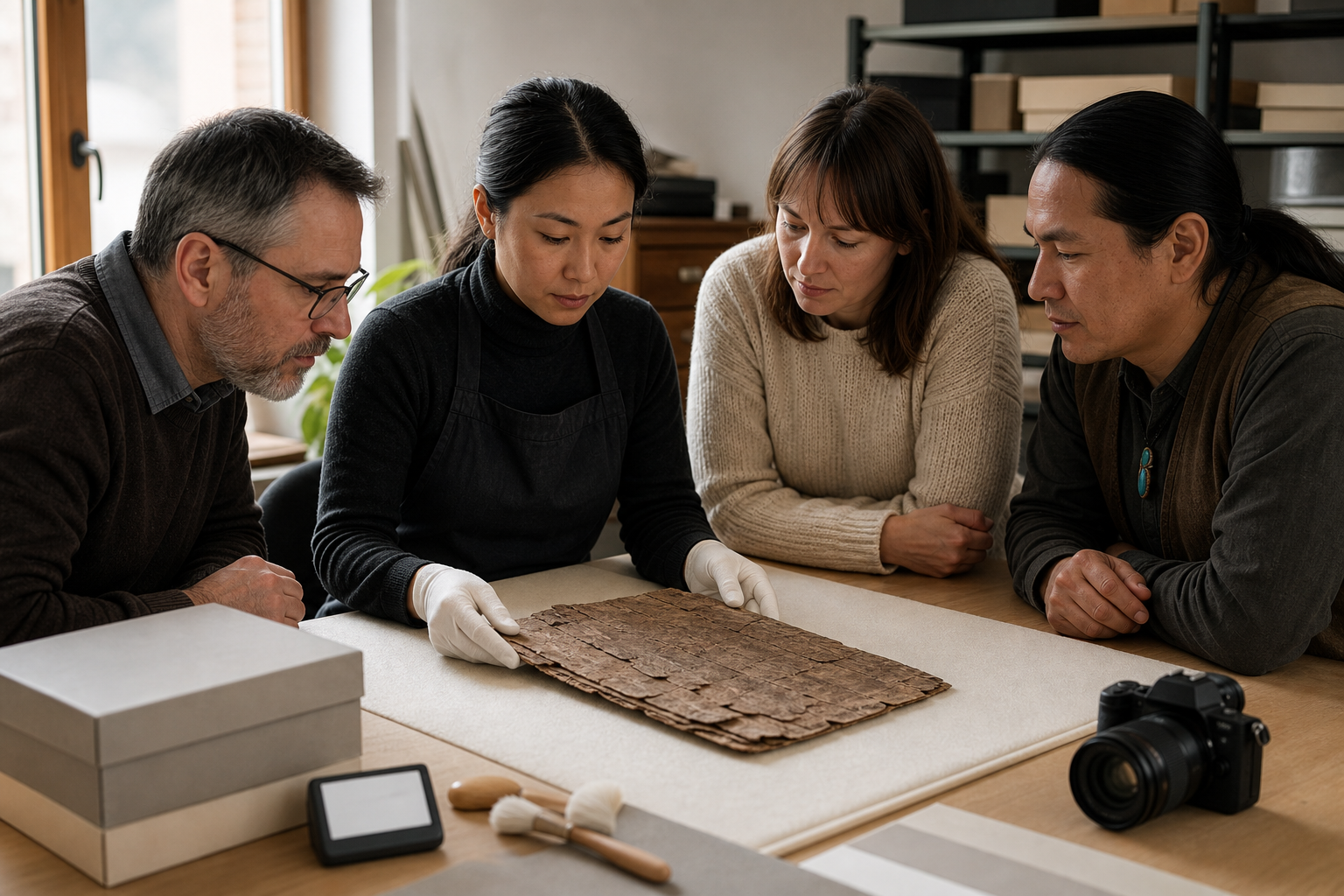
Stewardship should therefore be judged in more than one medium. Archaeological custodians must conserve sites, document them accurately and make their layered histories intelligible. Bearers of living knowledge must sustain rigorous teaching, recitation and analysis rather than treating a famous name as a substitute for practice. Scholars and public institutions can connect the two by using historically precise terminology and resisting exclusive claims unsupported by the categories of the ancient world.
A more durable treatment of Pāṇini’s legacy would allow places to be protected where they stand and knowledge to be honored wherever it is responsibly transmitted. That approach can turn a contest over possession into a shared commitment to accuracy, continuity and care.
References
- DharmaRenaissance Blog — How Vyākaraṇa Safeguards Vedic Śabda: The Powerful Architecture of Oral Memory
- DharmaRenaissance Blog — Pakistan’s Ancient Past Reclaimed: Pāṇini, Taxila and the Battle Over Identity