-
Cultivating Dharmic Patience: Turn Workplace Incompetence into Calm, Clarity, and Growth

Workplace incompetence is inevitable, but it does not have to dominate attention or emotions. Reframing each incident as a “minor story” restores calm, improves focus, and supports better Work Attitudes. A brief mindfulness pause and clear, compassionate communication create accountability without blame. Drawing from dharmic values—samatva, mindfulness, ahimsa, and seva—encourages patience alongside responsible action. Practical…
-
Escape and Evasion: Riveting Lessons in Resilience, Dharma, and Inner Strength Under Fire

This analysis presents a survival narrative as a disciplined study in Resilience, dharma, and ethical clarity. It demonstrates how Mindfulness stabilizes decision-making under threat and how restraint aligned with Ahimsa reduces harm. Readers gain practical tools—calm-start breathing, multi-route planning, discreet coordination, and de-escalation—that improve outcomes without compromising integrity. The account highlights social trust and community…
-
Transform Material Cravings into God-Centered Bhakti: A Dharmic Guide to Lasting Peace

This essay explains the shift from a life centered on the mind and senses to a God-centered life of bhakti in Hindu spirituality. It clarifies how material attachments create instability while devotion to Krishna offers ethical clarity and inner peace. The discussion highlights practical ways to re-center daily choices, including contemplation, japa, meditation, and seva.…
-
Free Will and Maya: Dharmic Wisdom for Choosing Well Amid Life’s Illusions

The Bhagavad Gita affirms human agency—“Deliberate on this fully and then do what you wish to do” (Gita 18.63)—while dharmic traditions explain how avidya, moha, and maya condition choice. This piece reconciles freedom and conditioning, showing how responsibility and compassion can coexist. Practical guidance highlights viveka, meditation, breathwork, bhakti, seva, and ethical vows as tools…
-
Escape Catastrophic Thinking: The Hope Discipline That Calms the Nervous System

Catastrophic thinking often masquerades as responsibility, especially in high-pressure work that rewards risk anticipation. A simple hope practice—asking what good might happen, acknowledging protective fear, and choosing presence—helps shift the nervous system from panic to calm response. This disciplined approach does not deny uncertainty; it reframes it through awareness and mindfulness. Small, repeatable prompts embed…
-
Why Everything Happens for a Reason: Hinduism’s Profound Lens on Karma, Dharma, and Cosmic Play

This essay explains how Hindu philosophy gives depth to the idea that everything happens for a reason by integrating karma (ethical causality), dharma (righteous duty), and lila (divine play). It shows how these concepts preserve agency without fatalism, balancing responsibility and openness to mystery. Readers gain practical ways to apply this framework—discernment, svadharma, seva, meditation,…
-
From Survival to Sanctity: How Bhakti Transformed Vegetarianism into Sacred Purity

The evolution of food ethics in the subcontinent moved from survival to sanctity. Early Vedic practices treated food as a ritual and ecological necessity, while later philosophies linked diet to inner purity and ahimsa. The Bhagavad Gita’s sattvic ideal helped shape vegetarianism as a practical path for clarity and devotion. During the Bhakti tradition, temple…
-
Brotherhood in the Ramayana: Sacred Bonds of Duty, Sacrifice, and Enduring Unity

Brotherhood in the Ramayana is portrayed as a disciplined ethic of love, respect, sacrifice, and dharma that stabilizes families and strengthens kingdoms. Rama and Lakshman exemplify vigilant companionship in adversity, while Bharata’s renunciation models humility in leadership. Shatrughna’s quiet service shows how consistent responsibility sustains the common good. In contrast, Ravana’s rejection of counsel and…
-
Sankashti Chaturthi February 2026: Complete Guide to Date, Regional Months, Vrat and Puja

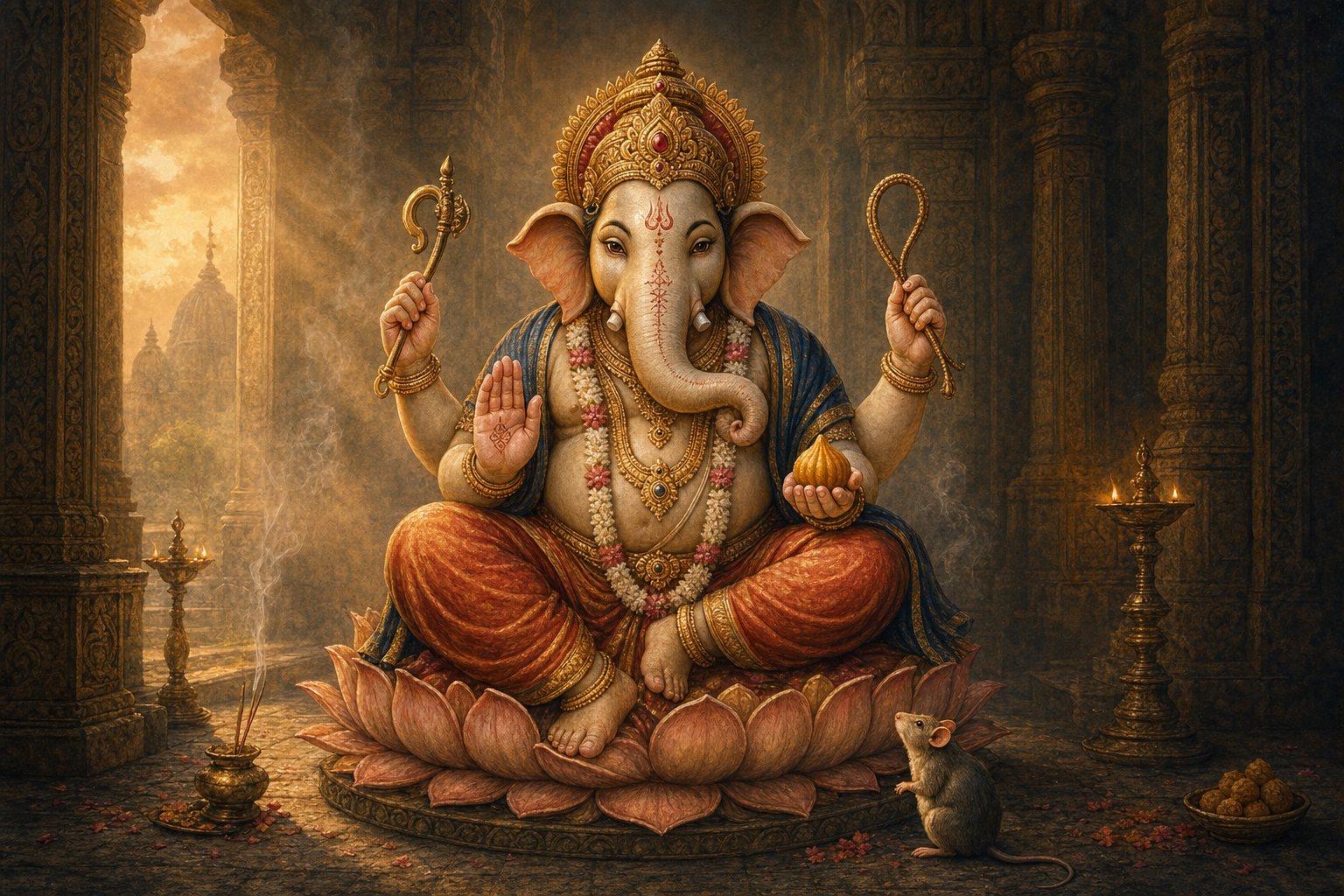
Sankashti Chaturthi in February 2026 falls on 5 February, observed on Krishna Paksha Chaturthi across traditions. It aligns with Falgun in North Indian Hindi calendars and Magha Month in Marathi, Gujarati, Telugu, and Kannada reckoning, reflecting regional diversity on a shared tithi. The vrat is kept from sunrise to moonrise, concluding after Chandrodaya with Ganesha…
-
Micro-Moments of Joy: Science-Backed Practices to Sustain Hope Through Chronic Pain

This article introduces the concept of joy deficiency—the scarcity of small, replenishing experiences amid chronic illness and mental health struggles—and explains why micro-moments of joy matter. It outlines how brief, positive experiences can help regulate the parasympathetic nervous system, support vagal tone, and reduce stress reactivity. Readers learn five practical, accessible steps for cultivating micro-moments…
-
Unclothed Infinity: Kali as Digbasana and the Fearless Symbolism of Sky-Clad Truth

Kali as Digbasana—“clothed by the directions”—presents a sky-clad iconography of truth, not sensuality. The image signals freedom from illusion and social codification, aligning with Advaita insights on reality beyond attributes. Within Shakti iconography, nakedness becomes an ethic of fearlessness, compassion, and authenticity. Cross-dharmic resonances arise with Jain non-possession, Buddhist Śūnyatā, and Sikh reverence for the…
-
Moha and the Veil of Tamas: Understanding Delusion Across Dharmic Traditions

Moha, in Hindu philosophy, is a state of delusion tied to tamas, the guna of inertia and darkness, that obscures discernment and fosters ignorance or false knowledge. It narrows perception, encourages attachment to assumptions, and turns reactivity into a substitute for reflection. Within the framework of the gunas, rajas can intensify confusion, while sattva restores…
-
Karmavipaka Explained: How Karma Ripens Across Dharmic Paths and Shapes Destiny

Karmavipaka (कर्मविपाक) explains how actions ripen into lived experience within Hindu philosophy. Grounded in the Sanskrit kri, meaning “to do,” it frames karma as lawful causality rather than external reward or punishment. The threefold classification—sanchita, prarabdha, and kriyamana—clarifies how past, present, and future actions interrelate. Far from fatalism, Karmavipaka emphasizes purushartha (effort), ethical choices, and…
-
Conquering the Fear of Death through Krishna Consciousness: Lessons from Maharaja Parikshit

This reflection on Srimad Bhagavatam presents how Krishna consciousness transforms the fear of death into composure and clarity. Using Maharaja Parikshit’s fearless surrender as a living example, it explains that consistent remembrance of Vishnu/Krishna dissolves anxiety by anchoring awareness in the eternal nature of the soul. Practical disciplines—scriptural study, japa, kirtan, and ethical service—build daily…
-
Touching the Book, Touching Freedom: HG Satyanarayana Prabhu on Bhakti and Service

This piece profiles HG Satyanarayana Prabhu, a direct disciple of Srila Prabhupada, whose service as Director of the Bhaktivedanta Book Trust in the Far East and Middle East exemplifies devotion grounded in scholarship. It highlights the bhakti conviction that sacred texts can catalyze inner transformation, beginning with a simple touch and deepening through study and…
-
Krishna Katha with H.G. Vaisesika Dasa: Transformative Chanting for Inner Clarity and Joy

Krishna Katha with H.G. Vaisesika Dasa at ISKCON of Silicon Valley (2026-01-25) presents an academically grounded, practice-centered exploration of hearing and chanting in the Bhakti Tradition. The session demonstrates how attentive listening to Krishna’s name, instructions, and pastimes supports inner clarity, emotional resilience, and ethical living. Practical steps—recitation, reflection, and consistent application—make devotion accessible to…
-
Ganapatya Linga: Silent Guardians of Shiva at Forest Edges and Sacred Thresholds

The Ganapatya Linga, revered among Achala Shivlings, is traditionally understood as established by Shiva’s ganas to guard thresholds and sanctify forest edges. Aniconic and understated, these shrines anchor sacred geography at river ghats, groves, hill trails, and village boundaries. They embody guardianship, humility, and ecological care, inviting minimal yet heartfelt offerings such as bilva leaves.…