-
Karungali Malai (Ebony) Mala: Holistic Benefits, Japa Methods, Care Tips, and Dharmic Harmony

Karungali Malai (Ebony Wood Mala) has drawn widespread interest for its grounding symbolism and practical utility in meditation and japa. Traditions across Hinduism, Buddhism, Jainism, and Sikhism use malas to cultivate focus, illustrating unity in spiritual diversity. While some question metaphysical claims, an experiential approach—consistent practice over time—offers a fair assessment of value. The mala’s…
-
Vishnu Vidiya Vratam in Phalguna: Dates, Significance, and Observance Guide (AP–Telangana)

Vishnu Vidiya Vratam is a 15-day observance in Phalguna Masam, practiced in Andhra Pradesh and Telangana from Phalguna Maasa Shukla Vidiya to Phalguna Maasa Krishna Vidiya. In 2026, it runs from February 19 to March 5, aligning devotion with both lunar phases. The vratam, dedicated to Lord Vishnu, encourages steady bhakti, light fasting according to…
-
Ugra, Raudra, Samhara: Decoding Lord Shiva’s Ferocious Grace and Cosmic Protection

Ugra, Raudra, Samhara Murti presents Lord Shiva’s ferocious yet protective aspect as an ethical force that dissolves disorder and restores balance. The terms “Ugra” and “Raudra” mean “Terrible,” while “Samhara’ means to kill,” aligning this form with Shiva’s cosmic act of dissolution. In practice, devotees turn to this aspect to overcome inner obstacles and societal…
-
Baba Lokenath: Early Life, Enduring Wisdom, and Practical Lessons for Today’s Seekers

Baba Lokenath, born in 1730 in a Brahmin family near Kolkata, exemplifies the disciplined learning and practice that defined 18th century Indian spirituality. Trained in the Vedas and Shastras under a learned scholar, he followed his father’s wish to embrace the spiritual path. Leaving home in youth for rigorous sādhanā within the guru–śiṣya paramparā, he…
-
Chali Mukte: The Transformative Saga of Forty Liberated Souls and Guru Gobind Singh

Chali Mukte—“the forty liberated”—captures a pivotal moment in Sikh history linked to Guru Gobind Singh, where regret turned into responsibility and courage. Set between Anandpur Sahib and Muktsar Sahib, the episode showcases Mai Bhago’s galvanizing leadership and the Sikhs’ return to dharma. Readers gain a concise historical overview, ethical insights into accountability, and a practical…
-
Panchmukhi Hanuman: Transformative Symbolism for Mastering the Five Senses (Indriyas)

Panchamukhi Hanuman, the five-faced form of Hanuman, presents a refined dharmic framework for mastering the five senses (indriyas). The iconography—Hanuman, Narasimha, Garuda, Varaha, Hayagriva—maps to qualities that transform sensory life from distraction to clarity. Through pratyahara, breath regulation, and mantra, perception becomes disciplined and inwardly focused. Devotion and seva anchor this process ethically, turning insight…
-
Tarapith–Udaypur Tantric Axis: A Sacred Mirror of Bengal’s Unified Divine Feminine

In Bengal, Tarapith and Udaypur form a rare Tantric axis—a sacred mirror where the divine feminine appears to face itself across a krosh. The pairing illustrates how sacred geography encodes theology, with two distinct shrines expressing a single Shakti. Pilgrims often visit both temples in one yatra, describing dawn and dusk worship as complementary rhythms…
-
Karnaprayag, Uttarakhand: Unveiling Karna’s Legacy, Sacred Confluence, and Living Temples

Karnaprayag, in Uttarakhand’s Chamoli district, is a sacred confluence where the Alaknanda meets the Pindar, revered as one of the Panch Prayag. The site’s cultural memory is anchored in the legacy of Karna from the Mahabharata, whose valor and generosity shape local devotion. Temples honoring Karna and Uma-Maheshwari, daily rituals, and evening ārtī create a…
-
Seven Stages of Life in the Ramayana: A Dharma-Guided Journey from Childhood to Moksha

The Ramayana offers a symbolic map of seven life stages—from childhood to moksha—showing how dharma shapes character, relationships, leadership, and final liberation. Read as a guide, not only as history, it highlights how virtues formed in childhood mature through disciplined study, ethical family life, purposeful renunciation, just action, compassionate governance, and ultimately selfless letting go.…
-
Sri Vaishnavism Unveiled: Devotion, Vedanta, and the Heart of Vishnu Worship

Sri Vaishnavism (Srivaishnavism) is a major Hindu tradition that unites Vedanta philosophy with heartfelt bhakti to Vishnu, especially through devotion to Sri Rama and Sri Krishna. Anchored in Tamil Nadu and Karnataka, it draws on the Tamil Alvars’ hymns and Acharya scholarship—especially Ramanuja’s Vishishtadvaita—to harmonize poetry and philosophy. Readers gain clear insight into its sacred…
-
Lord Nityananda’s Appearance Day: Radiant Compassion, Bhakti Joy, and Dharmic Unity

Lord Nityananda’s Appearance Day highlights compassion as the living core of bhakti and communal harmony. The narrative of His humility toward Lord Gaurasundara underscores service as the highest expression of spiritual greatness. As Patitapavana Avatara, Caitanya Mahaprabhu’s mission reframes outreach as dignifying and welcoming, not judgmental. Lord Nityananda’s journeys along the Ganges model respectful dialogue,…
-
When AI Polished My Voice and Dimmed My Heart: Reclaiming Self-Trust in Leadership and Well-Being

A healthcare leader recognized a subtle over-reliance on AI for emotional regulation after late-night consultations left the mind clear but the body uneasy. The realization illuminated a wider pattern in leadership and mental health: polished language was displacing authentic voice. Practical shifts restored balance—self check-ins before tool use, human connection before chat windows, and tech-free…
-
Impermanence and Human Bonds: Hindu Wisdom on Loving, Letting Go, and Lasting Peace

Hinduism teaches—most explicitly in the Yoga Vasishta—that all human associations are impermanent, a truth that clarifies how to love without clinging. Recognizing anitya (impermanence) reframes loss, softens attachment, and supports ethical, compassionate action in relationships. This perspective aligns with the dharmic insights of Buddhism (anicca), Jainism (anitya), and Sikh wisdom on hukam and seva, highlighting…
-
Dhyana and Vichara: Harmonizing Meditation and Enquiry for Self-Realization in Hinduism

This article presents an academic yet accessible synthesis of Dhyana (meditation) and Vichara (enquiry) as complementary paths in Hindu philosophy. It explains how moksha is the unveiling of the ever-present Self (Atman) as Brahman, grounded in the Upanishads, Vedanta, and the Bhagavad Gita. Readers gain practical clarity on how meditation stabilizes attention while enquiry dissolves…
-
Sarapot, Kolabou, and Clay Idols: A Deep Dive into Bengal’s Living Lakshmi Traditions

Bengal’s Lakshmi Puja unfolds through three living forms—Sarapot, Kolabou, and clay idols—each illuminating prosperity as an ethical relationship with home, community, and ecology. Sarapot Lakshmi preserves a compact, household-centered tradition rooted in local clay craft and simple offerings. Kolabou, the banana plant honored in Nabapatrika, embodies a vegetal form many households revere as Lakshmi, linking…
-
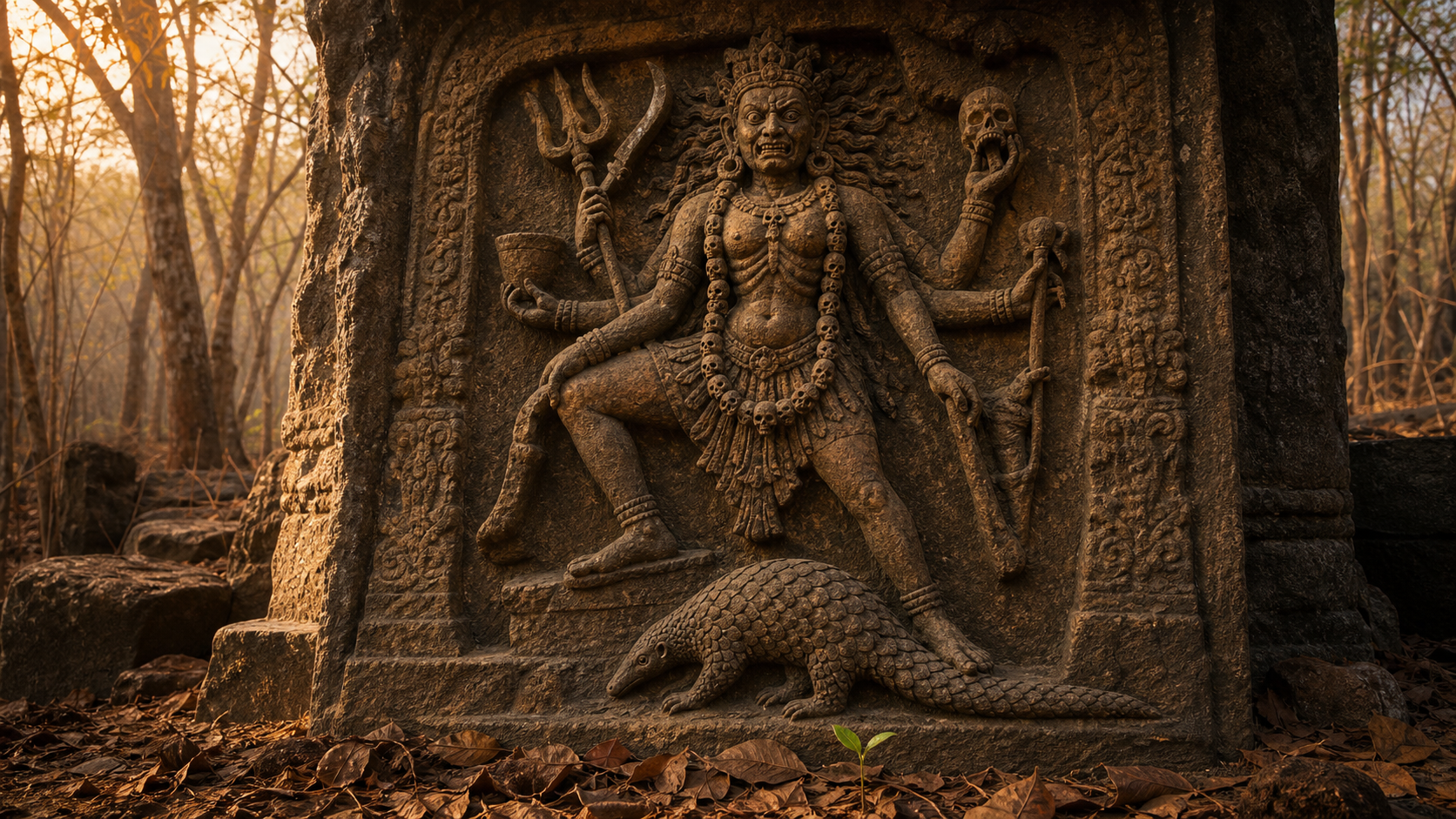
Akali, the Timeless Kali: Exploring Nine Manifestations in the Tantra Purana and Mahakala Samhita

This article surveys nine manifestations of Goddess Kali drawn from the Tantra Purana, Toral Tantra, and the Mahakala Samhita (Anusmriti Prakarana), with special attention to Akali. Akali is explained as “beyond time,” highlighting a core Shakta insight into the timeless ground of reality. The discussion connects theological meaning with lived experience, showing how these forms…
-
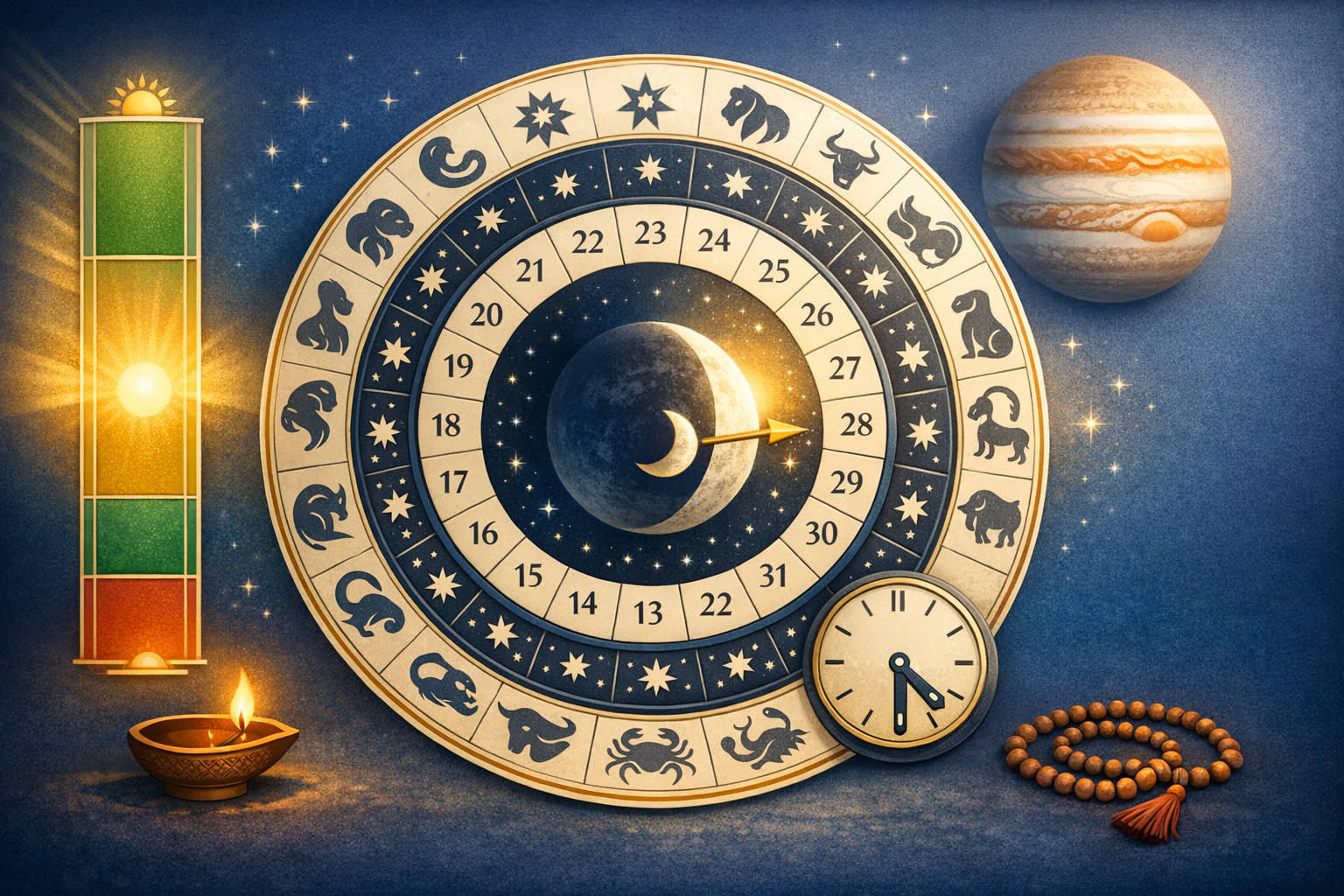
February 5, 2026 Panchang: Precise Tithi Timings and Krishna Paksha Chaturthi Insights

February 5, 2026 begins with Krishna Paksha Tritiya until 1:27 AM, then continues as Krishna Paksha Chaturthi for the rest of the day. The Panchang sequence supports planning for puja, study, and travel in harmony with the Hindu calendar. Krishna Paksha Chaturthi emphasizes obstacle-clearing prayers to Ganesha and a reflective, disciplined approach to the day.…
-
Beyond Gender: How the Guru’s Universal Guidance Elevates Every Seeker in Krishna Consciousness

This reflection affirms that the guru’s role in Krishna consciousness transcends gender and other external identities. Anchored in Srila Prabhupada’s guidance, it emphasizes spiritual qualification—realization, character, and capacity to guide—as the true criterion for leadership. Framed within the Guru-Shishya Tradition of the Bhakti Tradition, the discussion invites communities to evaluate teachers by siddhanta, sadhana, humility,…
-
Sacred Sunday in Mumbai: Powerful Temple Itinerary for Peace, Heritage, and Harmony

A Sunday pilgrimage in Mumbai can be both restorative and culturally rich, weaving together sacred stops across Hindu, Buddhist, Jain, and Sikh traditions. Starting at Siddhivinayak Temple sets a contemplative tone, while Mahalakshmi, Babulnath, Walkeshwar-Banganga, and Mumbadevi deepen engagement with the city’s spiritual heritage. The Jain temple near Malabar Hill highlights Ahimsa and architectural beauty,…