-
For 24 Years, a Human Chain Has Kept Khadakwasla Reservoir Safe and Clean on Dhulivandan

Now in its 24th year, the Khadakwasla Reservoir Protection Campaign kept celebrants out of the water during Dhulivandan through a volunteer human chain of over 200 citizens. This simple, citizen-led perimeter prevented pollution at the source and reduced safety risks without dampening festive spirit. By protecting a critical drinking water asset for Pune, the initiative…
-
Joshimath Namaz Row: Using Law, Transparency, and Dialogue to Protect Communal Harmony

Reports from Joshimath allege that a government sports building was used for namaz, prompting local objections and widespread debate. This analysis clarifies how India’s constitutional guarantees (Article 25–28), municipal permissions, and safety norms jointly govern religious use of public facilities. It explains what constitutes illegal use, how to verify claims through transparent records, and why…
-
Reimagining ISKCON Governance: A Federated Affiliate Model Rooted in Unity-in-Diversity

This analysis outlines a federal affiliate model for ISKCON that safeguards Gaudiya Vaishnava siddhanta while empowering regional adaptation in line with Srila Prabhupada’s principle of unity in diversity. It assigns the GBC custodianship over non-negotiables—doctrine, sadhana standards, ethics, safeguarding, and brand integrity—while delegating cultural and operational adaptations to accredited regional councils. The framework emphasizes subsidiarity,…
-
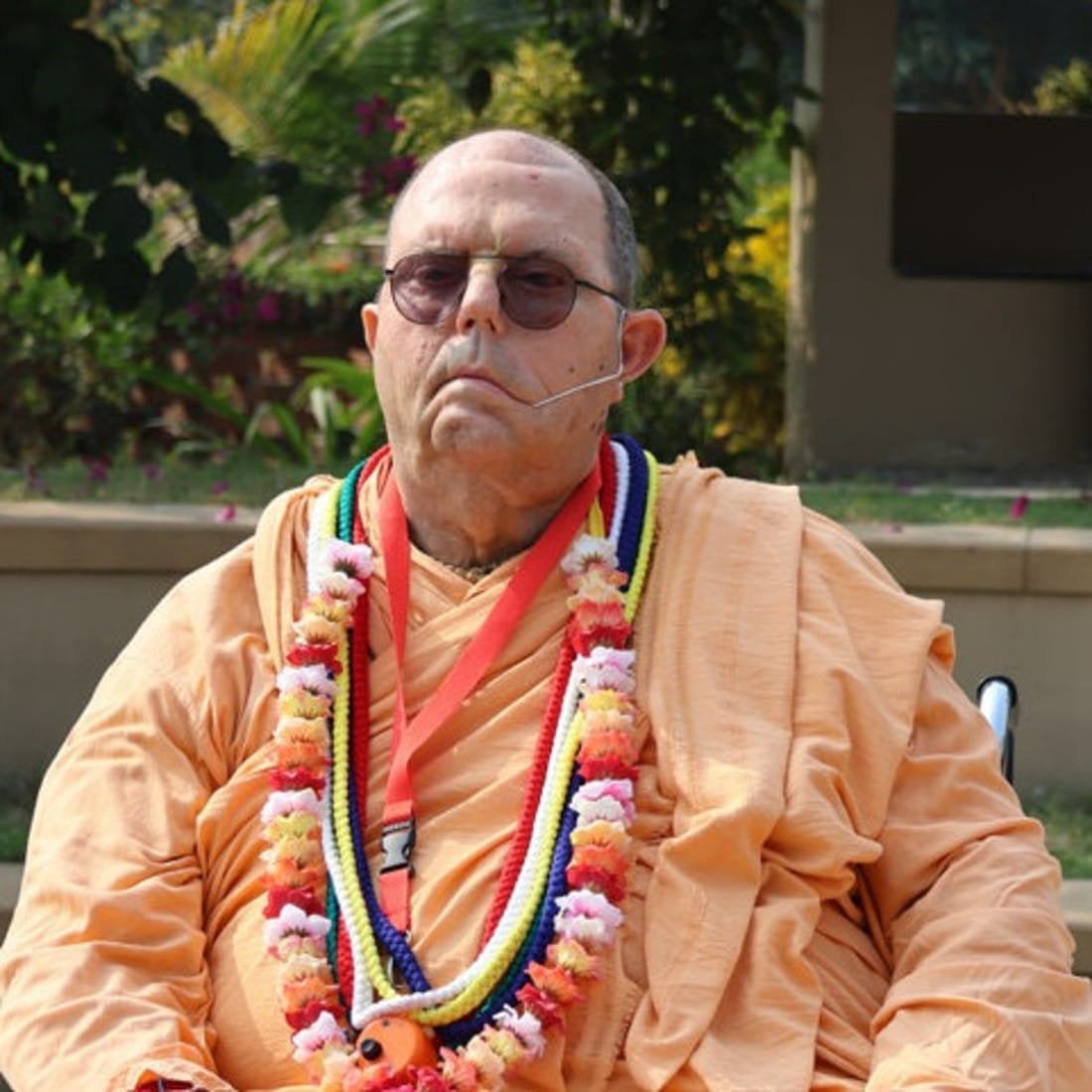
Reviving ISKCON Wellington: A Resilient Community Rebuilds Krishna’s Sacred Home

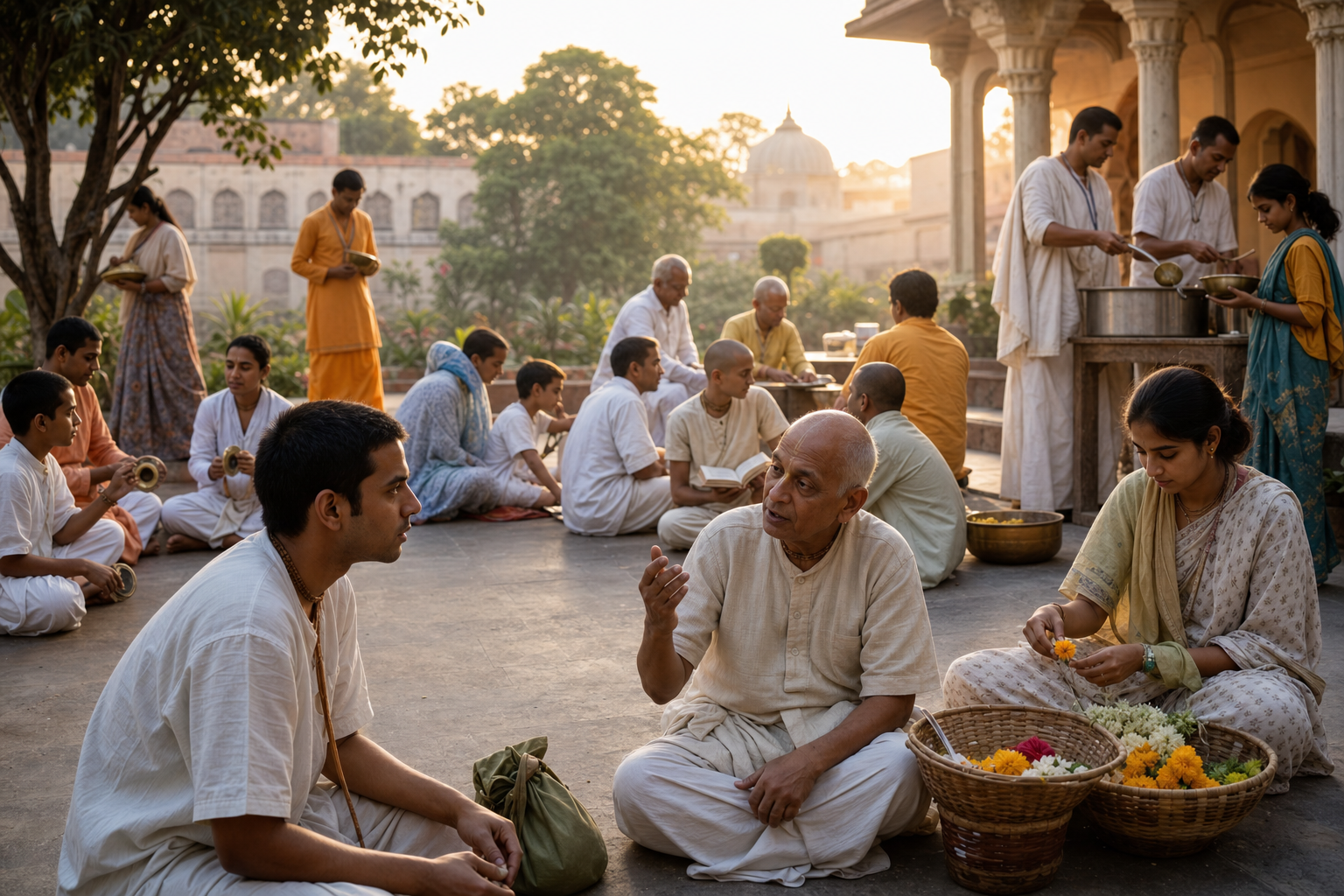
ISKCON Wellington’s long-serving temple closed in June 2024 due to structural and legal challenges, pausing a cherished rhythm of kīrtana, spiritual study, and free prasādam. This in-depth analysis outlines a responsible, step-by-step pathway to reestablish a sacred home for Krishna in Wellington that fully aligns with modern building, safety, and planning rules. It details seismic…
-
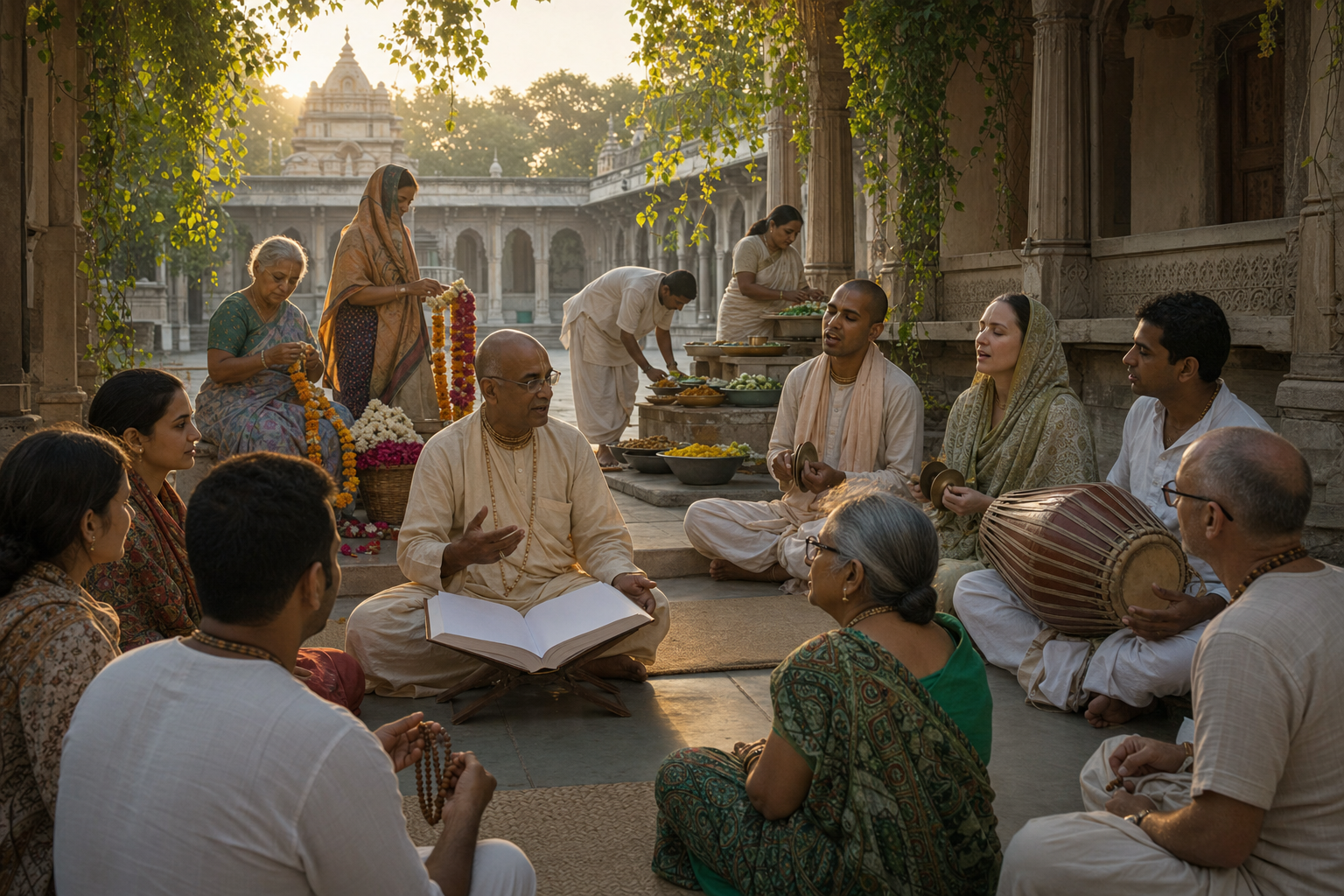
Devotee Care at ISKCON Vrindavan: Compassionate Support for Spiritual and Emotional Well‑Being

The Devotee Care Project at ISKCON Vrindavan supports devotees’ physical, emotional, and spiritual well-being through guidance, counseling, and community support. Its compassionate, dignity-centered approach nurtures resilience and deepens sadhana and seva. Devotees often report feeling seen and spiritually grounded, with shared practices like kirtan strengthening belonging. The project’s methods align with dharmic values—compassion, ahimsa, mindfulness,…
-
GBC AGM 2026 Day 6: Inspiring Awards, Stronger Child Protection, Smarter Proposals

Day Six of the GBC AGM 2026 delivered focused progress on responsible governance and care. Inspiring awards honored sustained seva that strengthens community cohesion and unity in diversity. Child protection initiatives advanced with improved training, clear reporting, and survivor-centered support grounded in ahimsa and karuna. A rigorous proposals review prioritized feasibility, accountability, and measurable community…
-
Delhi Conference Rallies 25+ Groups for Dharmic Unity and Voluntary ‘Ghar Wapsi’ Outreach
A New Delhi resolution on February 10, 2026 convened over twenty-five organizations to coordinate a voluntary ‘Ghar Wapsi’ outreach framed as a dharmic unity and cultural renewal effort. The initiative emphasizes informed choice, constitutional religious freedom, and respect for pluralism across Hinduism, Buddhism, Jainism, and Sikhism. Leaders including Upananda Brahmachari, Dr Charudatta Pingale, Rahul Dewan,…
-
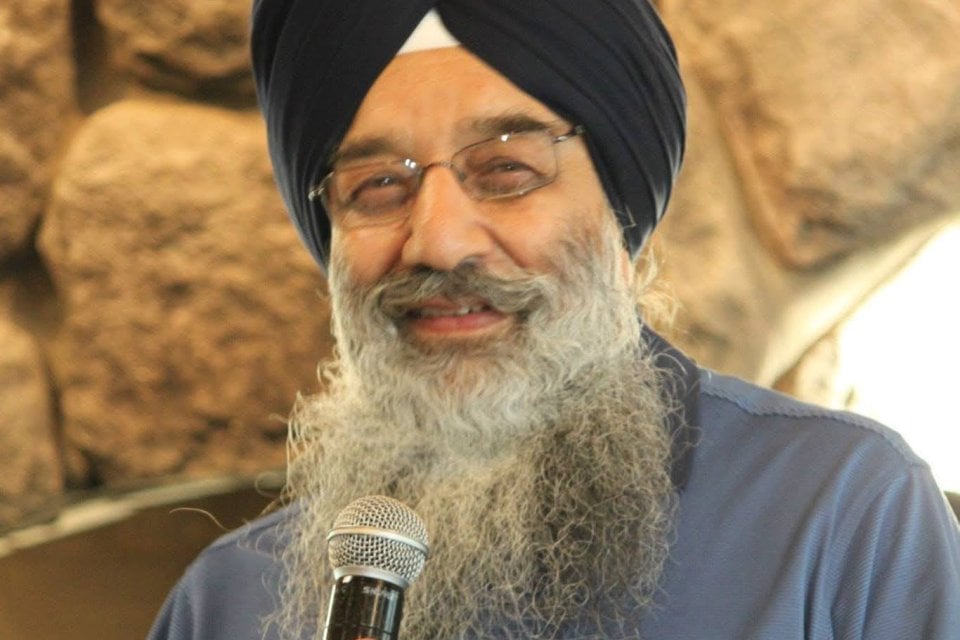
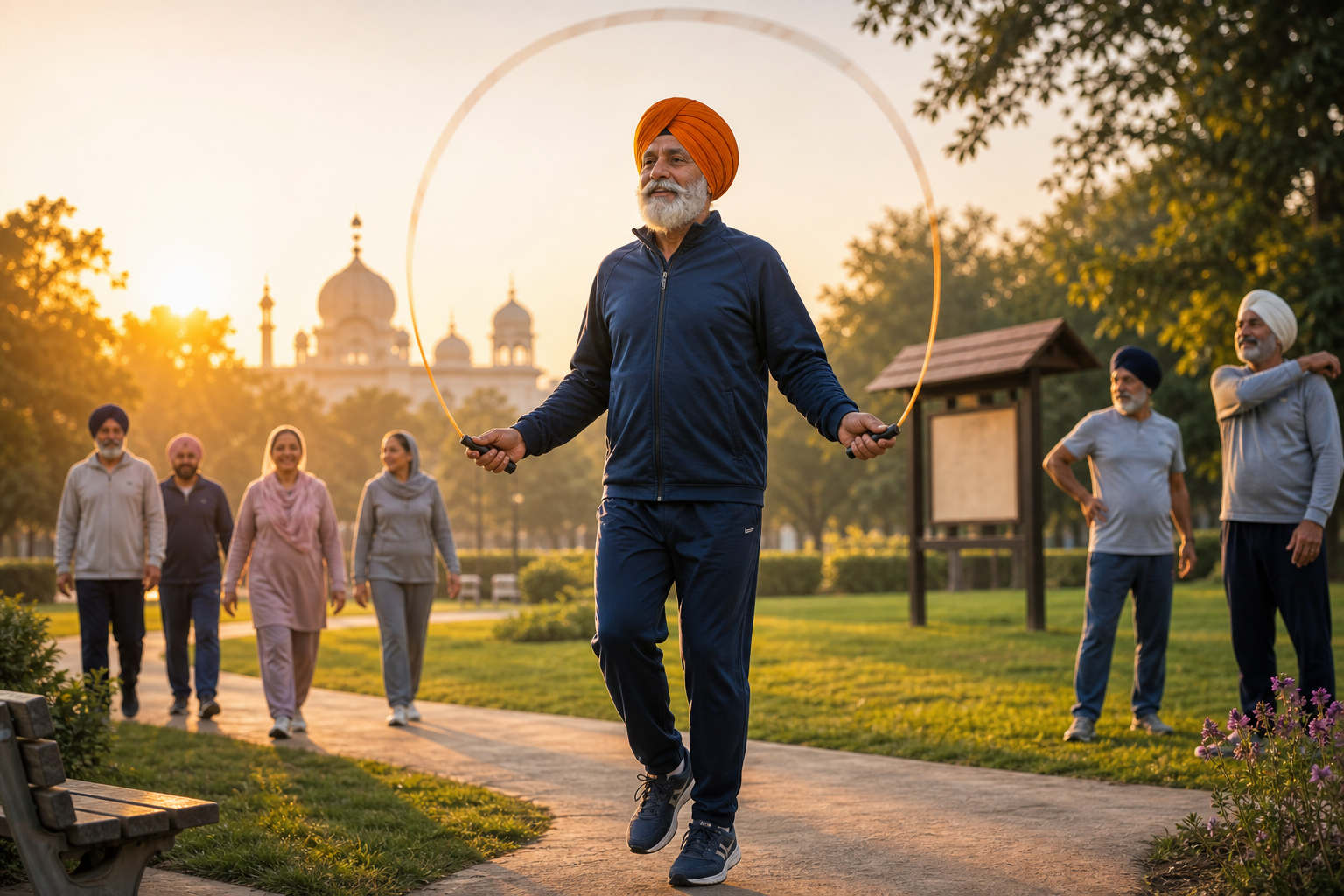
When Young Sikhs Drift Away: Rebuilding Trust Through Gurmat and Dharmic Unity

Many communities observe young Sikhs drifting from institutional life, often due to a trust gap shaped by rapid social change and perceived value-practice mismatches. This piece outlines how Gurmat offers a rigorous, practical framework—rooted in sat, seva, nimrata, and sarbat da bhala—to restore confidence and participation. Readers gain actionable steps: youth-led arth vichaar, participatory budgeting,…
-
Hare Krishna Norway: Sraddha in Oslo—A Call to Ahimsa, Compassion, and Interfaith Harmony

Set in the context of Oslo’s Hare Krishna community, this reflection examines how Sraddha (faith) translates into compassionate, practical action. It emphasizes ahimsa (non-violence) across Hinduism, Buddhism, Jainism, and Sikhism while encouraging interfaith harmony and mutual respect. The piece reframes moral concern about large-scale animal slaughter as a shared ethical challenge rather than a point…
-
ISKCON Constitution FAQ: Clear, Trust-Building Answers for Unity and Dharmic Harmony

The ISKCON Constitution Drafting Committee presents a concise FAQ that clarifies key principles of the ISKCON Constitution. This accessible resource centralizes authoritative answers, reducing ambiguity and promoting informed participation. Its structured, reliable format supports devotees, community organizers, and researchers alike. By modeling transparent and ethical governance, it also strengthens interfaith dialogue and unity in spiritual…
-
GBC AGM 2026: Pre-AGM Reflections on ISKCON Governance, Unity, and Organizational Development

Ahead of GBC AGM 2026, the Organizational Development Committee reviewed progress in Mayapur, outlining how governance can better serve ISKCON’s spiritual mission. The co-chairs highlighted three priorities: capacity building, succession planning, and data-informed stewardship. Their reflections underscored a culture of collaboration, accountability, and compassionate communication. Set in Mayapur, the exchange balanced realism with purpose, focusing…
-
Chiplun Namaz at Narayan Talab Sparks Urgent Calls for Clarity, Unity, and Lawful Public Use

Namaz at Narayan Talab in Chiplun has prompted questions about timely administrative action and calls for accountability from the Municipal Council. The incident underscores the need to balance freedom of worship with orderly, equitable use of public spaces. Readers gain clarity on the legal context—constitutional rights implemented through local, transparent permissions and safety protocols. Practical…
-
Inspiring 25 Years of Seva: Interfaith Community Services Nourishes Tompkins Square Park

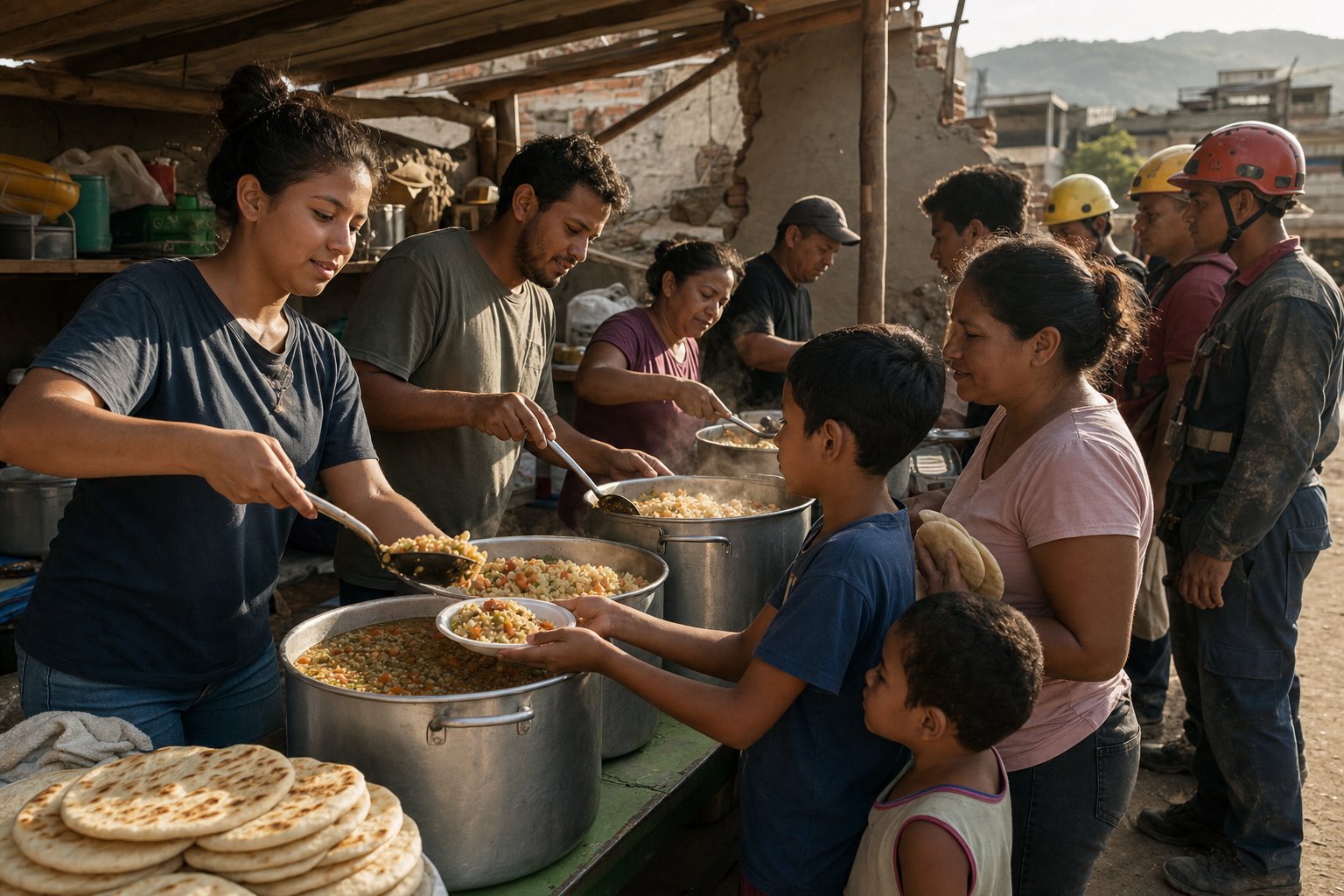
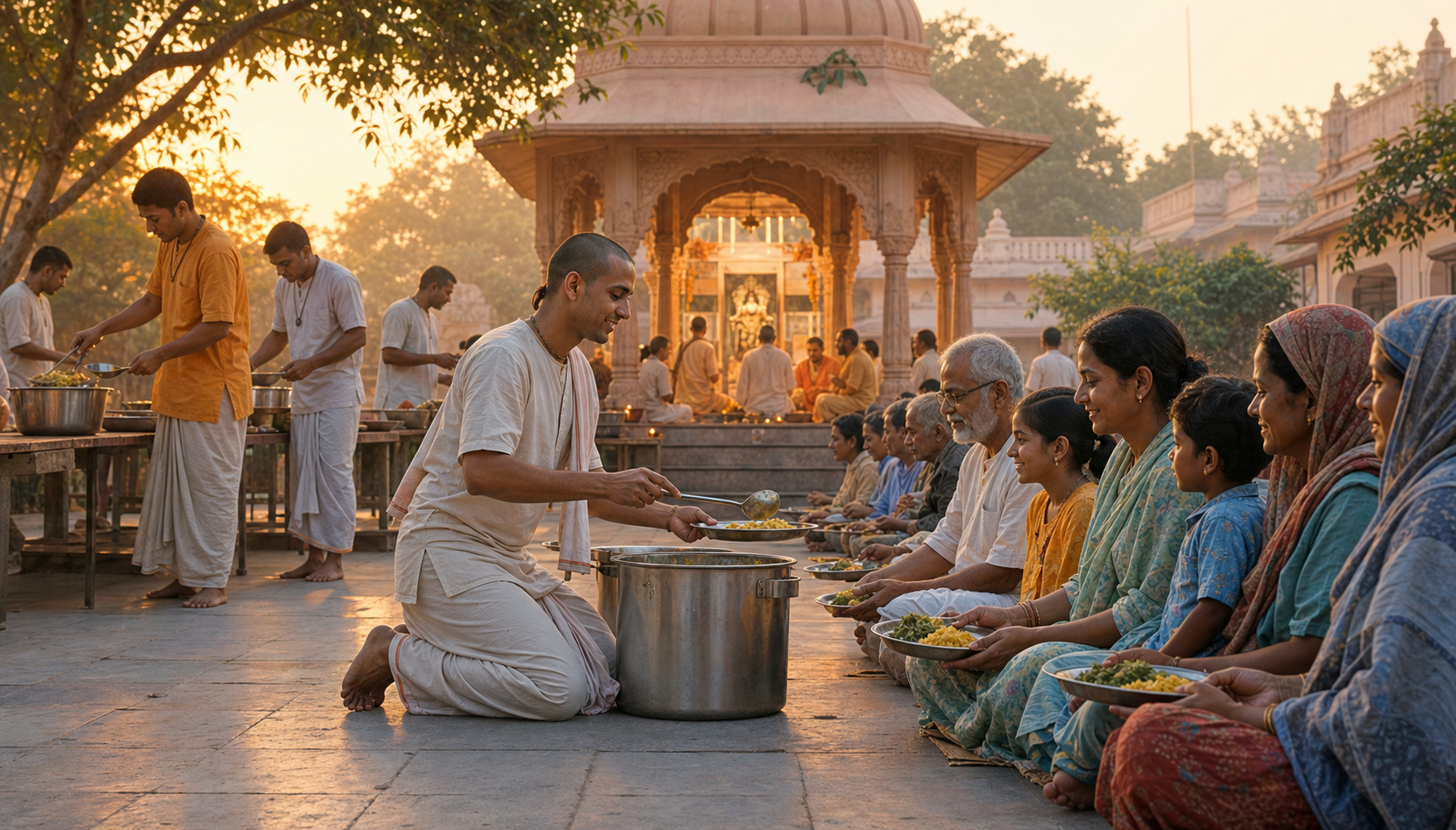
For 25 years, Interfaith Community Services has offered free hot vegetarian meals in Tompkins Square Park, extending a service tradition initiated in 1965 by Bhaktivedanta Swami (Śrīla Prabhupāda). The initiative translates spiritual conviction into dependable community care that is open, dignified, and inclusive. Framed within dharmic values, the program embodies ahimsa, dana, and seva in…
-
Confronting White Supremacy in Canada: Safeguarding Dharmic Communities and Pluralism
A CBC investigation into Second Sons Canada reveals how white supremacy threatens Canada’s pluralism and targets dharmic communities. This analysis explains the group’s deceptive recruitment tactics, the meaning behind “Remigration Now,” and documented instances of anti-immigrant and Hinduphobic rhetoric. It situates Second Sons within a wider network of ‘active clubs’ that target youth across multiple…
-
Govinda’s Kitchen in Copenhagen: Inspiring Prasadam Initiative Unites Dharmic Communities

Govinda’s Kitchen in Copenhagen, Denmark, is advancing as a mission-driven prasadam initiative focused on seva, nourishment, and cultural harmony. In July 2025, a prime location was secured, strengthening kitchen operations and community outreach. The project demonstrates how sanctified meals can serve as a bridge across Hinduism, Buddhism, Jainism, and Sikhism through shared values of ahimsa…
-
Shiv-era Self-Defence Camp Unites Chhatrapati Sambhajinagar, Honouring Jijamata & Vivekananda

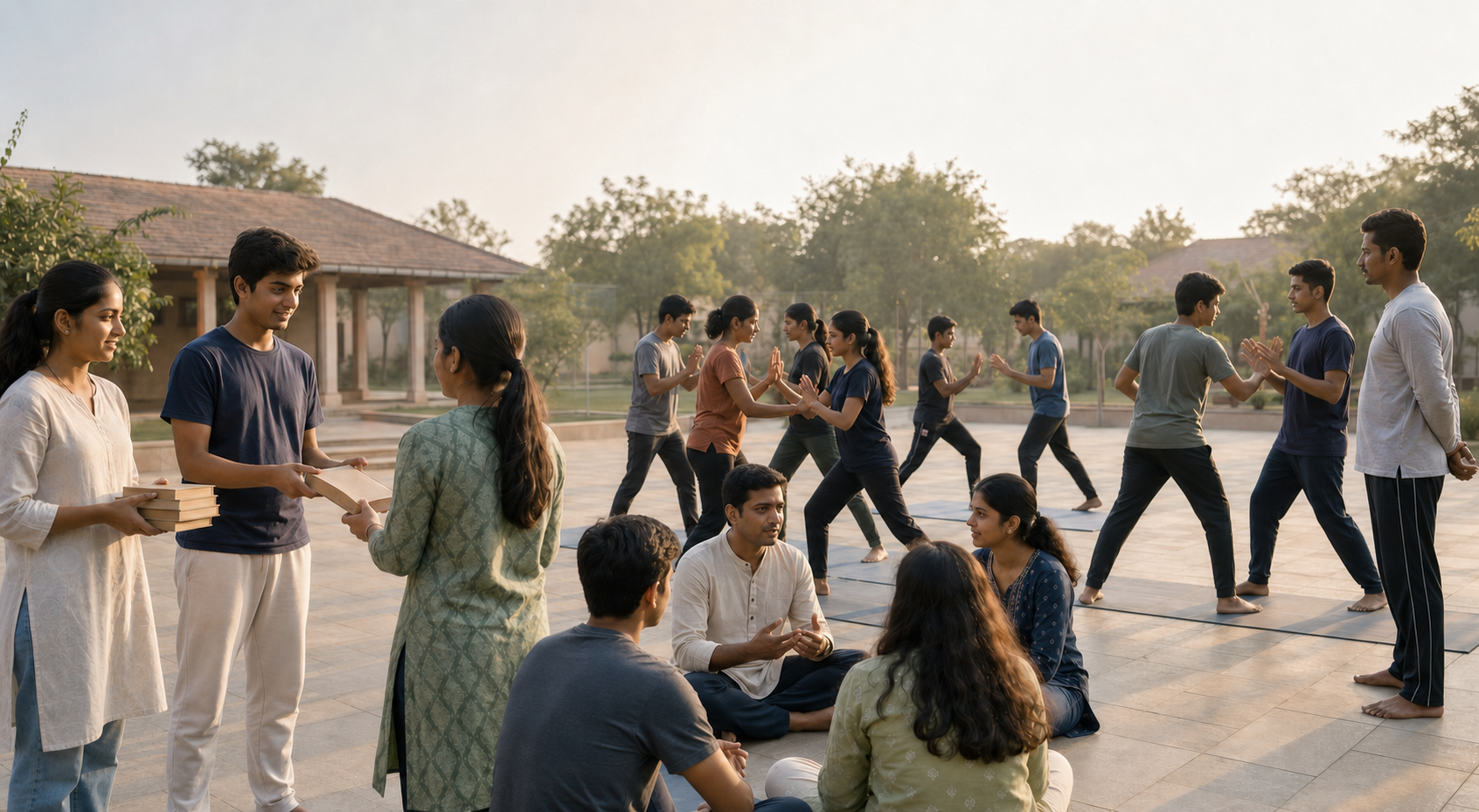
An eight-day ‘Shiv-era Self-Defence Training Camp’ concluded in Chhatrapati Sambhajinagar, jointly organised by Hindu Janajagruti Samiti (HJS), Rashtriya Dharma Raksha Gurukul, and Dharmayoddha Sangh. Timed with the birth anniversaries of Veermata Jijamata and Swami Vivekananda, the camp emphasized disciplined training, ethical responsibility, and community service. Participants reported improved confidence, situational awareness, and teamwork. The program…
-
Sikhs in Clinical Research: Insights, Ethics, and Community-Centered Innovation with Ekta Grewal

This analysis explores Sikh participation in clinical research through insights from an interview with Ekta Grewal, emphasizing ethics, cultural competence, and community engagement. It shows how seva and sarbat da bhala align with Good Clinical Practice to improve recruitment, retention, and trust. The piece outlines practical steps—mentorship pipelines, community advisory boards, and partnerships with gurudwaras—to…
-
Global Shraadh of Solidarity: Honoring Bangladesh’s Hindus and Fortifying Dharmic Unity

This essay presents shraadh as a communal practice that transforms grief into dignified remembrance and public solidarity. It explains how the Bhagavad Gita and the Garud Purana frame the transition after death, while the thirteenth-day rites ensure the departed are carried forward in memory. It situates these rituals in the context of Bangladesh Hindus, emphasizing…
-
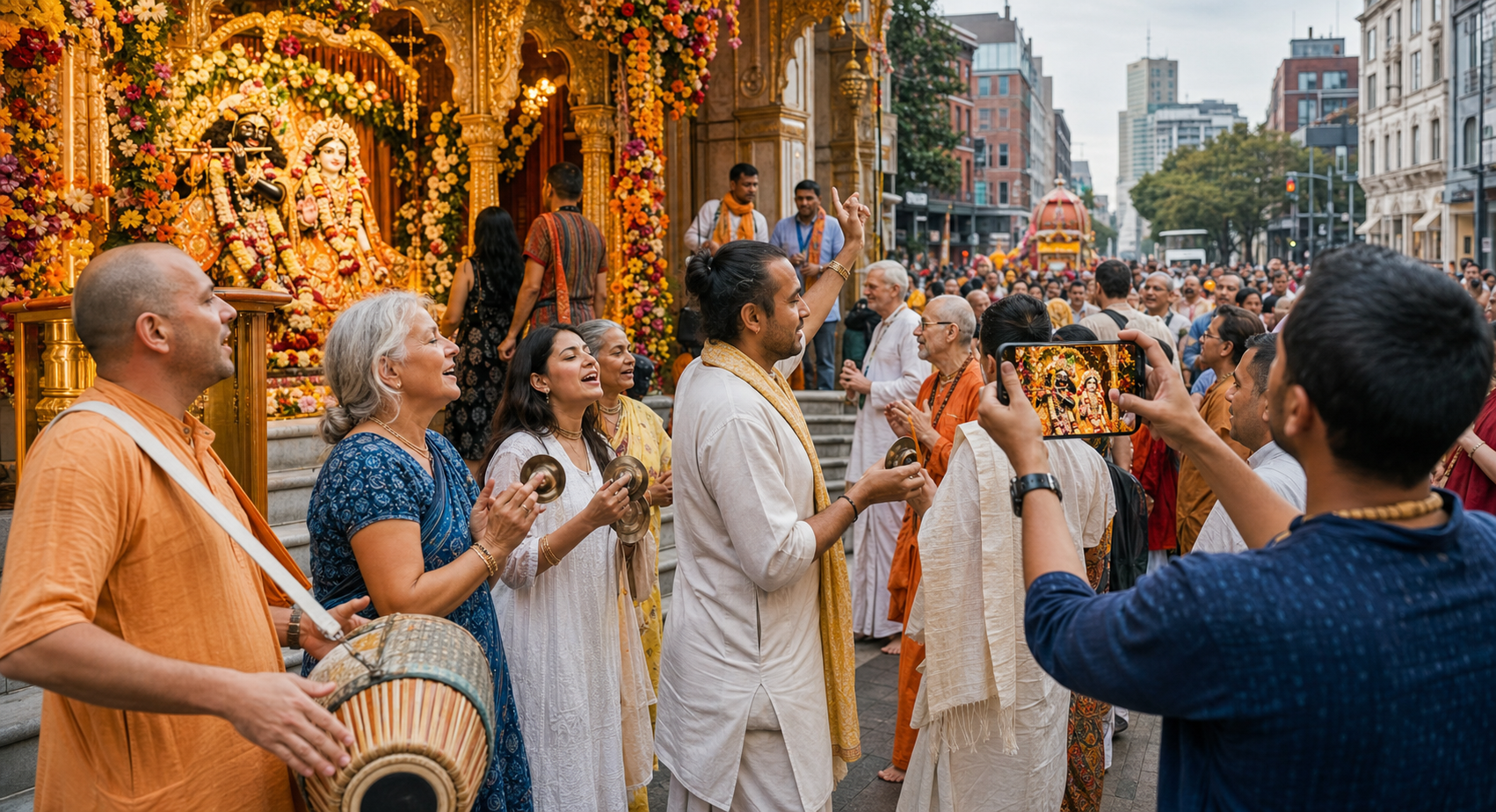
Defying Arctic Cold: ISKCON’s 2025 Prabhupada Marathon Unites Dharmic Hearts in Toronto

The 2025 Prabhupada Marathon in Toronto shows how Srila Prabhupada’s vision turned sub-zero conditions into opportunities for service. More than 110 Sankirtan outings demonstrated that kirtan, empathy, and practical care can build bridges in harsh winter weather. Engagement strategies highlighted a shared ethical vocabulary—seva, ahimsa, karuna, and bhakti—uniting Hindu, Sikh, Buddhist, and Jain communities. Conversations…
-
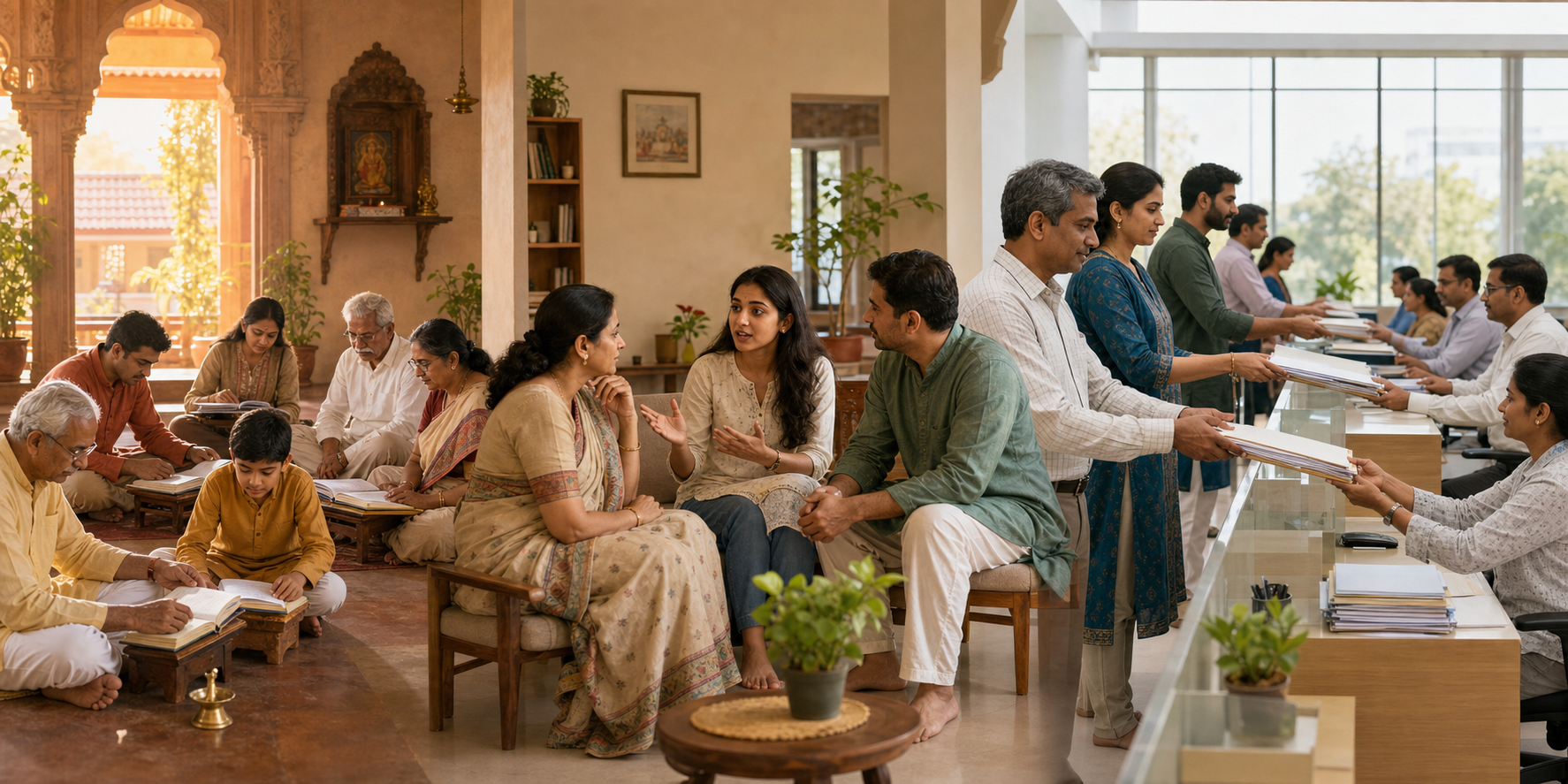
Empowering Sikh Applicants: A Blueprint for Mentorship, Equity, and Dharmic Unity

Many Sikh applicants face avoidable barriers in admissions and early careers—from limited mentorship to uncertainty about articles of faith in institutional contexts. This blueprint proposes a practical program featuring mentorship networks, cultural and legal accommodation toolkits, application labs, scholarship directories, and well-being cohorts. It translates seva, leadership, and cultural contributions into strong portfolios while equipping…