
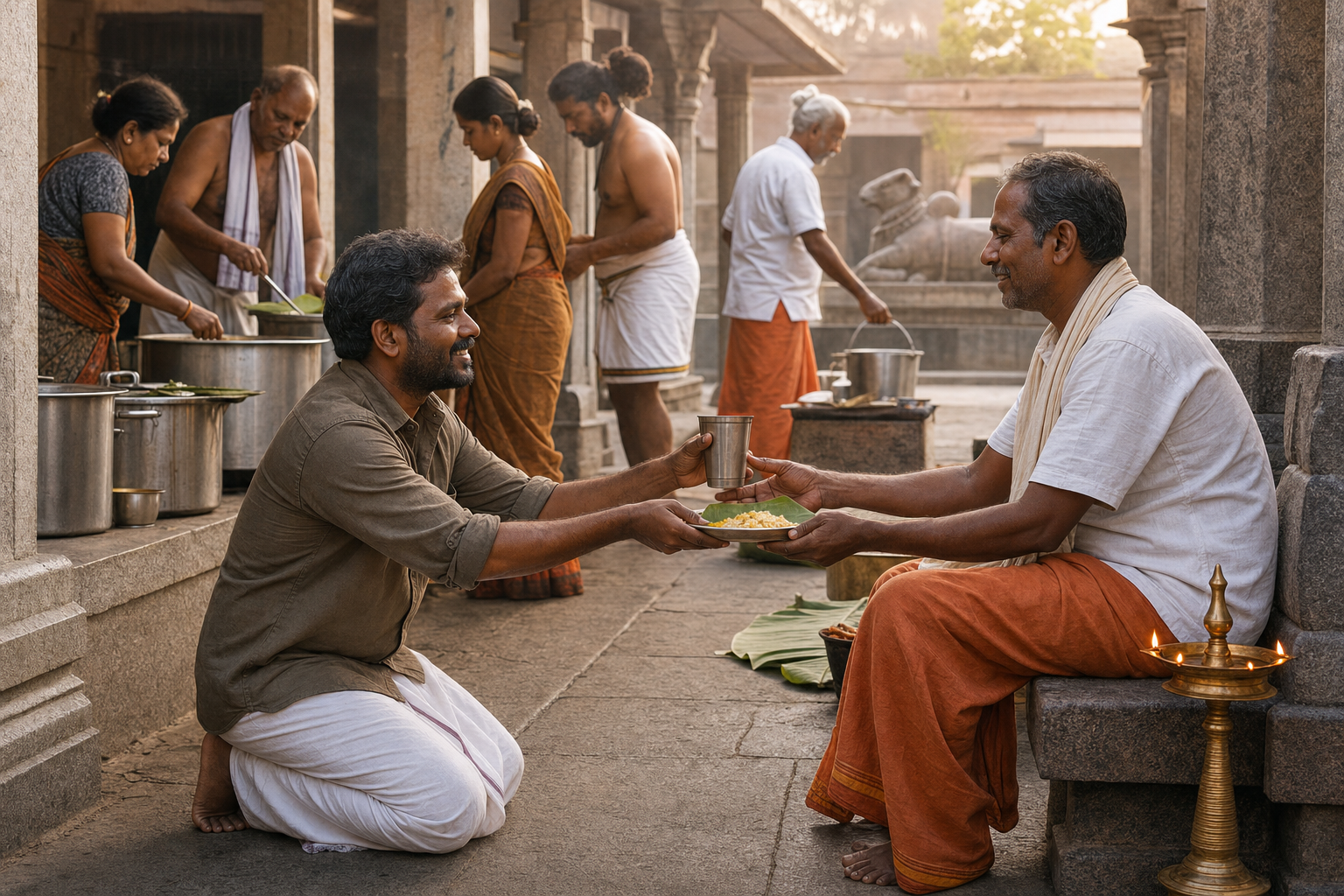
You want to serve, but the choices quickly multiply. Should you sponsor meals, collect clothing, fund medicine, teach, maintain a temple kitchen, or simply place water where people need it? The Nayanar answer begins with a harder question: what real need can you meet reliably without making the recipient pay for your generosity through delay, intrusion, or humiliation?
That question turns charity from an occasional transfer into seva, a disciplined offering of attention, labour, resources, and humility. You do not need great wealth to begin. You need a suitable gift, a sound method, and the willingness to return after the emotion of the first day has passed.
The Nayanar test for a gift worth giving
The Nayanars were Shaivite saints active largely in Tamil Nadu between the sixth and ninth centuries CE. Their lives, remembered through the Tevaram tradition and Sekkizhar’s twelfth-century Periyapuranam, place dana and everyday service within the same spiritual discipline. A gift meets a material need; seva also trains the person who gives by weakening possessiveness and ahankara.
This does not make good intentions sufficient. Before committing money, food, goods, or volunteer time, apply five tests drawn from classical Dharmic guidance:
- Patra, the recipient: Who actually needs this form of help? In modern service, treat this as a question of fit, not a licence to judge another person’s moral worth.
- Desha, the place: Is the help available where the need occurs? Water far from a transit point and food far from the people meant to receive it may be generous in intention but ineffective in practice.
- Kala, the time: Does it arrive when it can be used? A water station matters during heat; warm clothing matters before or during cold weather; a meal must reach people while it is safe and fresh.
- Dravya, the gift: Is the food nutritious, the clothing wearable, the medicine properly supervised, or the educational help relevant?
- Bhava and shraddha, disposition and sincerity: Can you give without demanding praise, obedience, photographs, or a performance of gratitude?
The final test is especially revealing. If a service project enlarges the donor’s public identity while reducing the recipient to scenery, its devotional language cannot repair the imbalance. Nayanar seva asks whether suffering was reduced, dignity was protected, and attachment loosened.
Choose the form of seva by the need in front of you
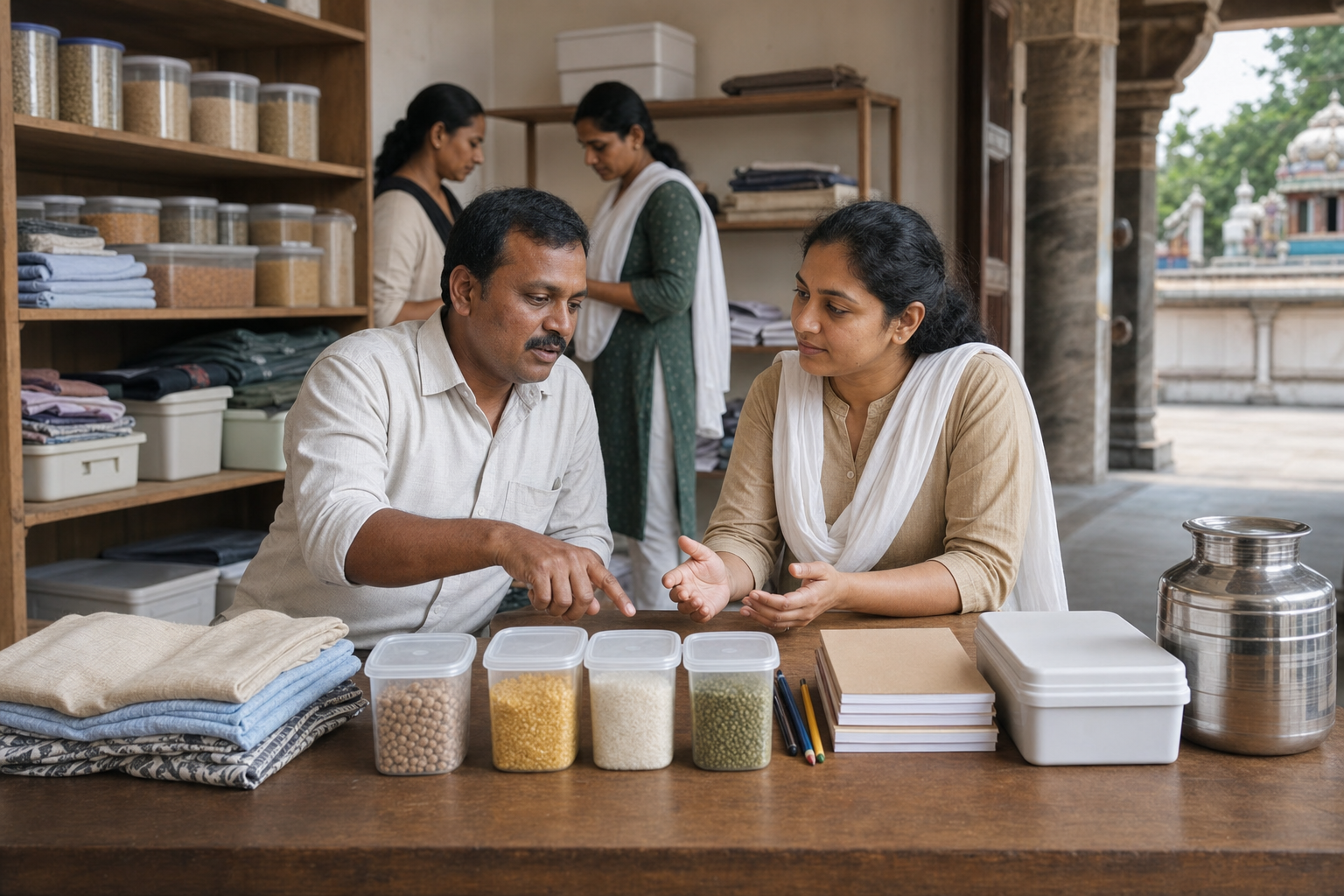
Nayanar charity was not confined to coins or ritual offerings. Its practical range included food, clothing, medicine, learning, protection, water, shelter, and institutions capable of serving beyond one donor’s lifetime. Use that range as a decision map rather than trying to support every cause at once.
| Form of dana | Need it addresses | A sound modern practice |
|---|---|---|
| Ahara-dana | Hunger and food insecurity | Serve a nutritious, culturally suitable meal on a dependable schedule, with food-safety and allergy procedures. |
| Vastra-dana | Lack of suitable clothing | Collect usable garments, sort them by type and size, and allow discreet selection rather than handing out random bundles. |
| Aushadha-dana | Illness and barriers to care | Work under licensed oversight, check expiry dates, and connect recipients with clinics when evaluation or continuing treatment is needed. |
| Jnana or shiksha-dana | Lack of access to learning | Offer regular teaching, tutoring, books, or instruction in sacred hymns, with a clear commitment to continuity. |
| Abhaya-dana | Fear, exposure, and preventable danger | Provide safe shelter, shade, drinking water, route lighting, or another practical form of protection. |
| Karya-dana | Weak community capacity | Support kitchens, granaries, water works, temples, mathams, or endowments with maintenance plans and transparent accounts. |
When hunger is immediate, annadana deserves priority because food preserves life and steadies the mind. Ilayankudi Maranar Nayanar embodies this commitment. He continued feeding guests after losing his prosperity, even obtaining grain and gathering greens during a storm to prepare food for an unexpected visitor. His example makes hospitality a duty that survives the loss of surplus.
You need not imitate the financial extremity of a hagiographical life. A household should not incur dangerous debt to stage generosity. Translate the principle into a commitment you can sustain: reserve part of the food budget, join an established kitchen, prepare an agreed quantity on a fixed day, or fund ingredients that a trained team can safely cook and distribute.
If another group already serves adequate meals in the same place, do not duplicate its work merely because feeding is visible and emotionally satisfying. Ask what remains unmet. The answer may be drinking water, properly sized clothing, transport to a clinic, first-aid supplies under qualified supervision, tutoring, kitchen repairs, or the unglamorous cost of maintaining a village tank.
Dignity is part of the gift, not an optional courtesy
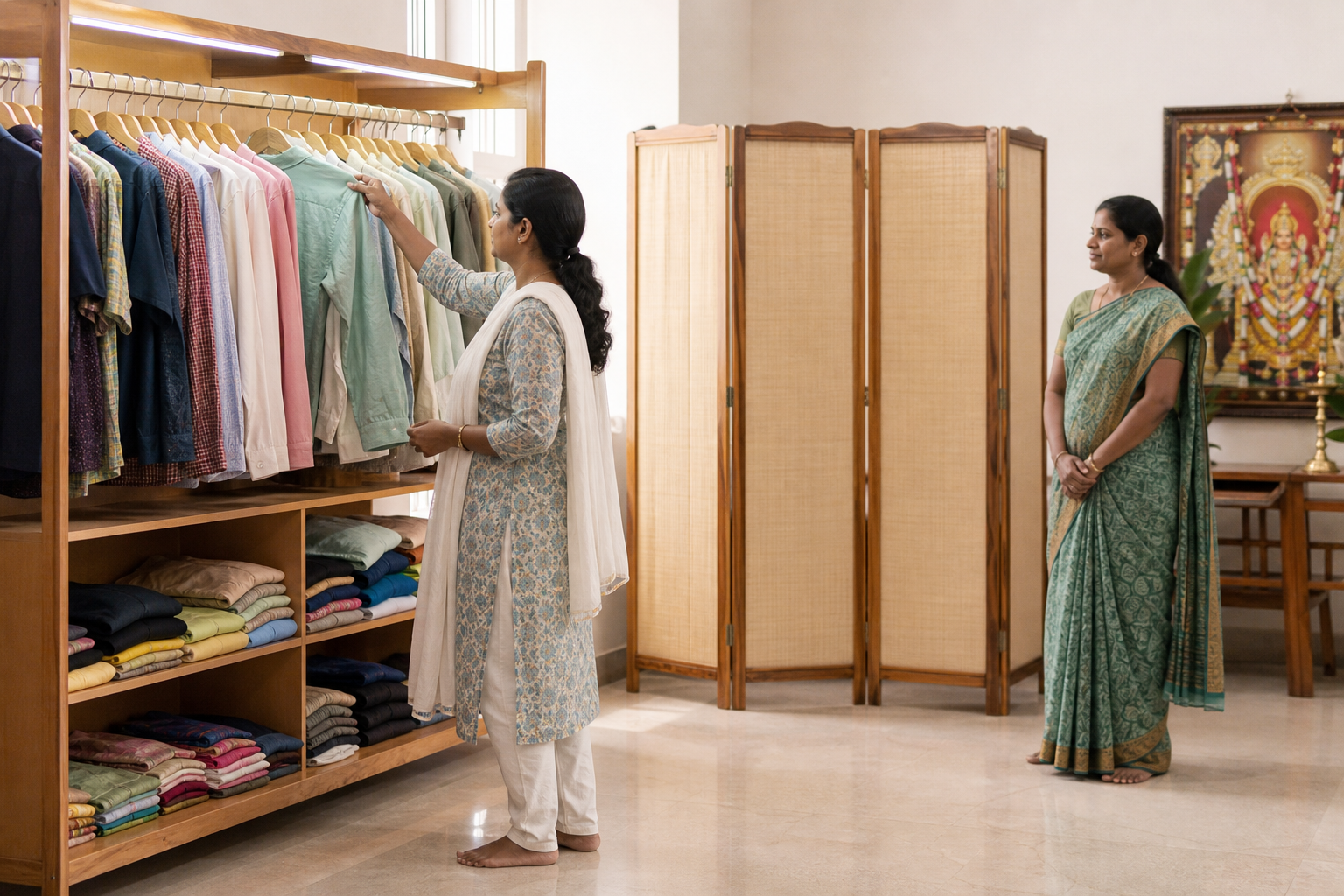
Amarneethi Nayanar is remembered for providing garments to ascetics and the poor, then surrendering all his cloth and finally himself when tested on a balance. The episode does not establish a financial target for charity. It dramatises freedom from possessiveness: the inner worth of a gift is not identical to its market price.
Siruthondar’s hospitality is expressed through an intentionally extreme sacred narrative in which Shiva arrives in disguise. It should be received as pedagogical allegory, not converted into a literal rule for conduct. Its usable demand is exacting enough: welcome the guest promptly, offer wholesome food, and place the guest’s dignity ahead of the host’s spectacle.
For a present-day seva team, that means building dignity into the operating method:
- Ask only for information required to deliver the service safely, such as a clothing size, dietary restriction, or health referral detail.
- Do not require photographs, testimonials, religious declarations, or public gratitude in exchange for help.
- Offer choice where possible. A person selecting a suitable garment or meal retains more agency than someone receiving an arbitrary parcel.
- Use predictable schedules or equitable tokens when crowds are likely. Confusion, pushing, and hours of waiting are not minor flaws in a service centred on dignity.
- Train volunteers to speak respectfully, protect personal information, recognise basic safety concerns, and direct complaints to someone able to act.
- Keep publicity focused on the need, schedule, accounts, and opportunities to volunteer. Do not turn identifiable recipients into promotional material.
This service posture also prevents a sectarian mistake. Nayanar devotion is distinctly Shaiva, yet its compassion reaches strangers and living beings without making identity an admission ticket. Its resonances with Buddhist dana paramita, the Jain fourfold emphasis on food, medicine, knowledge, and fearlessness, and Sikh seva and langar do not erase the differences among these traditions. They reveal a shared Dharmic conviction: care should reach the person before us.
Turn a generous impulse into a dependable institution
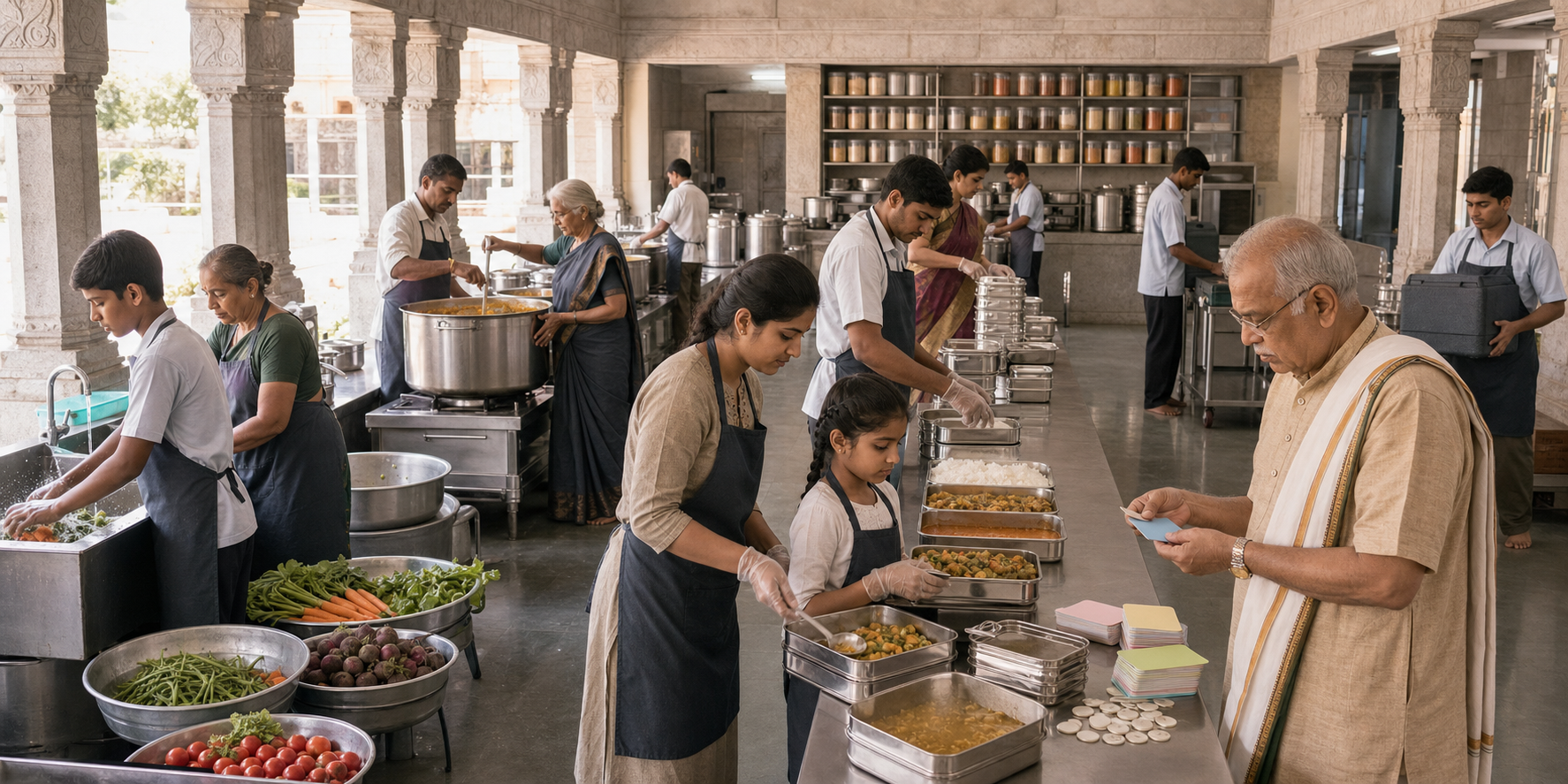
A dramatic donation can meet today’s need. A well-governed kitchen, water work, or educational programme can meet it repeatedly. Kochchenga Chola Nayanar is associated with elevated mada koil temples whose design supported orderly movement and stable provisioning. The broader lesson is that building and maintaining service infrastructure are themselves forms of dana.
If you are organising seva through a temple, family association, student group, or local Dharmic organisation, use this sequence:
- Verify the unmet need. Speak with the temple kitchen, matham, clinic, school, or community group already working nearby. Learn what is missing and when the gap occurs.
- Write a bounded promise. Name the service, place, schedule, intended recipients, and minimum quality standard. A modest promise that survives ordinary months is more useful than a grand announcement that disappears after a festival.
- Set the safety rules before distribution. For food, cover preparation, storage, allergens, cleanliness, and orderly service. For medicine, require licensed oversight, expiry checks, and referral pathways. Good intention does not neutralise food poisoning or unsafe medication.
- Design the dignity protocol. Decide what information will be collected, who may see it, whether photography is prohibited, how queues will work, and how a recipient can complain without losing access.
- Build a rota and a recurring budget. Assign purchasing, cooking or collection, distribution, cleaning, record-keeping, and volunteer safety. Small recurring gifts create a more predictable base than sporadic appeals.
- Publish clear accounts. Disclose money received, programme spending, and service totals. Larger endowments call for conservative stewardship and audited disclosure rather than reliance on personal trust alone.
- Measure what improves care. Track meals served, waiting time, menu adequacy, water-station use during heat, discreet clothing exchanges, and health referrals. Collect qualitative feedback on comfort, respect, and cultural suitability.
- Review and correct. If food is wasted, clothing does not fit, queues become unsafe, or another kitchen now covers the same need, change the programme. Persistence in seva means fidelity to the need, not attachment to the original format.
Technology can help without becoming surveillance. A QR code may display a menu or service schedule. Anonymised counts can support purchasing. Multilingual feedback forms can reveal problems that volunteers miss. None of these requires publishing faces, names, diagnoses, caste, income, or devotional identity.
Measurement remains secondary to bhava, but it is not opposed to devotion. Accounts protect trust. Waiting-time records expose avoidable hardship. Menu reviews show whether annadana is actually nourishing people. Feedback gives the recipient a voice in a relationship that otherwise risks being controlled entirely by the giver.
Key takeaways
- Begin with an unmet need, not with the donation that is easiest to display.
- Test every project through patra, desha, kala, dravya, and bhava: recipient, place, time, gift, and intention.
- Choose one suitable form of service: food, clothing, medicine, education, protection, or durable community infrastructure.
- Treat privacy, choice, safe queues, and respectful speech as parts of the gift itself.
- Never distribute medicine without qualified oversight, and never serve food without appropriate safety procedures.
- Prefer a dependable schedule, recurring support, transparent accounts, and useful feedback over a large but irregular public event.
- Measure enough to improve the service, but never collect personal data merely to magnify the donor.
Before your next festival, family observance, or community gathering, write one sentence: We will meet this need, in this place, on this schedule, to this standard, while protecting privacy in this way. Then take it to the temple, matham, or local organisation that knows the ground and ask where it needs correction.
Start small enough to return. Bring food that is safe, clothing that fits, help that arrives on time, or funds that can be accounted for. The Nayanar path does not ask you to wait until you can perform a heroic act. It asks you to make compassion dependable and let the discipline of serving reshape you.
References
