
-
Pournami Deepa Puja Explained: Sacred Science and Spiritual Power of Full-Moon Lamps

Pournami Deepa Puja (Deepa Pooja on the Full Moon) brings together ritual precision, contemplative focus, and communal warmth through the shared act of lighting lamps. Rooted in Vedic invocations to Agni and elaborated in Puranic-Agamic practice, the rite uses a living flame to link outer worship with inner steadiness. Aligning with the Full Moon’s clarity,…
-
Jharkhand Governor to Brief PM and CM on Alleged Corporate Bias, Safeguarding Social Cohesion

A delegation from Hindu Janajagruti Samiti (HJS) met the Governor of Jharkhand to flag concerns about alleged corporate bias, a claim described by the delegation as “corporate jihad.” The Governor reportedly assured that the matter would be conveyed to the Prime Minister and the Chief Minister through constitutional channels. This analysis situates the development within…
-
16 May as ‘Black Day’: Unflinching History of the Goa Inquisition and a Roadmap to Reconciliation

The Hindu Ekta Manch has asked Goa to mark 16 May as ‘Black Day’, linking it to a 1546 letter in which Francis Xavier is widely understood to have advocated an Inquisition in Portuguese India. This analysis situates the demand within the documented history of the Goa Inquisition, clarifies the tribunal’s jurisdiction and colonial-era restrictions,…
-
Student Suicides in India: Data-Driven Causes, Risks, and Dharmic, Evidence-Based Solutions

Student suicides have reached record highs in India, mirroring a global public-health crisis that disproportionately affects youth. This analysis explains the scale of the problem using WHO and NCRB trends and unpacks multi-layered risks spanning mental-health vulnerability, academic pressure, family dynamics, social media, and sleep loss. It translates leading psychological models into clear prevention targets…
-
Adi Granth as an Ecumenical Beacon: Guru Granth Sahib’s Universal Wisdom for Dharmic Harmony

This essay presents the Adi Granth, enshrined today as the Guru Granth Sahib, as a uniquely oecumenical scripture whose language, music, and ethics resonate across Hindu, Buddhist, Jain, and Sikh traditions. It traces the canon’s historical formation, its multivocal authorship, and its raga-based architecture to explain why the text travels so well across communities. Theological…
-
When a Republic Fell: Kamsa’s Coup, Mathura’s Sudharma, and the Price of Lost Dharma
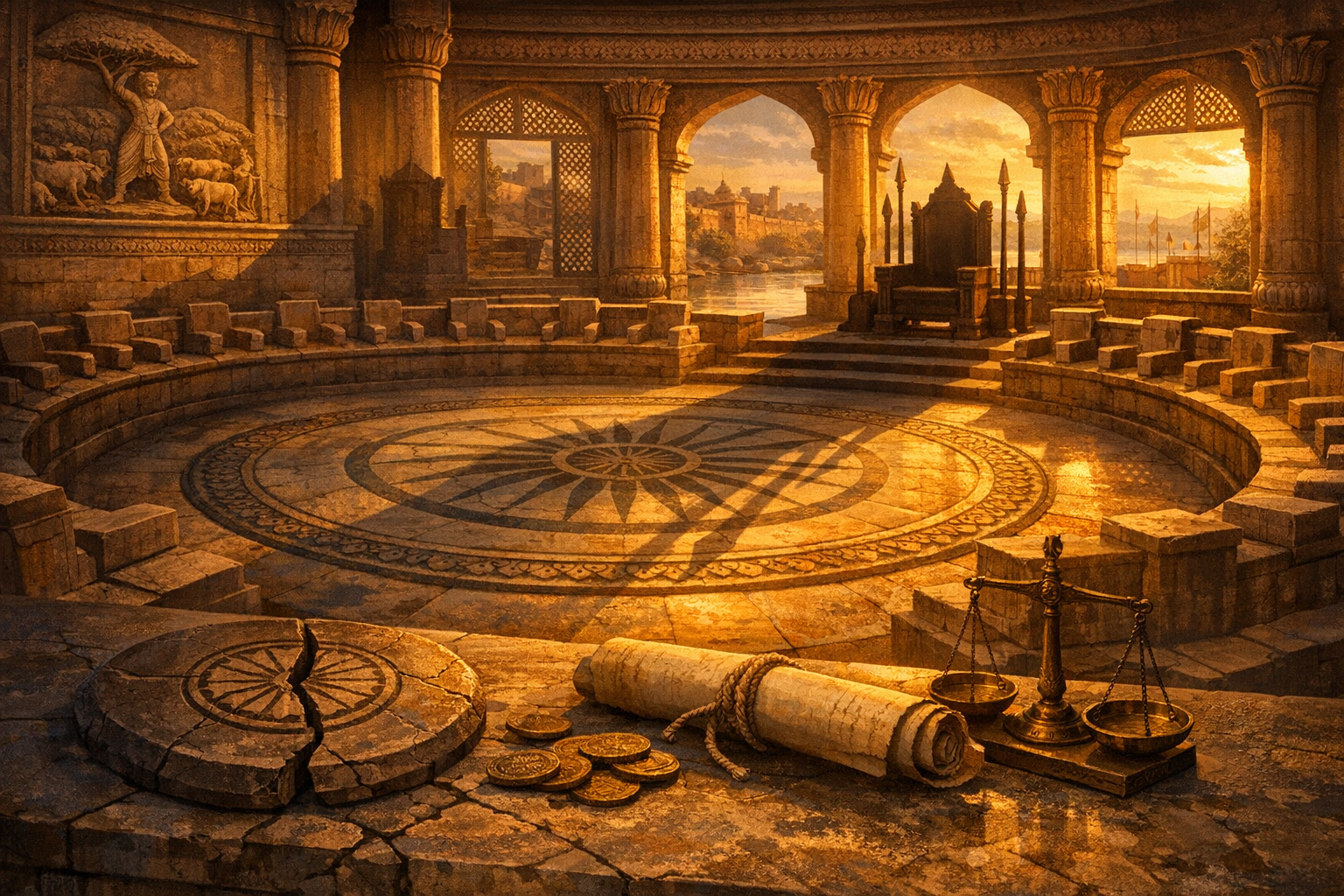
Mathura’s fall from republican equilibrium to Kamsa’s tyranny illustrates how coups dismantle not only rulers but also institutions such as the Sudharma council that once mediated power through counsel and custom. Drawing on the Bhagavata Purana, Vishnu Purana, Harivamsa, and the Arthasastra, the narrative analyzes the mechanics of usurpation, alliance with Magadha, and the militarization…
-
Kalika Tandava Decoded: Shiva’s Eight‑Armed Cosmic Dance of Renewal and Liberation
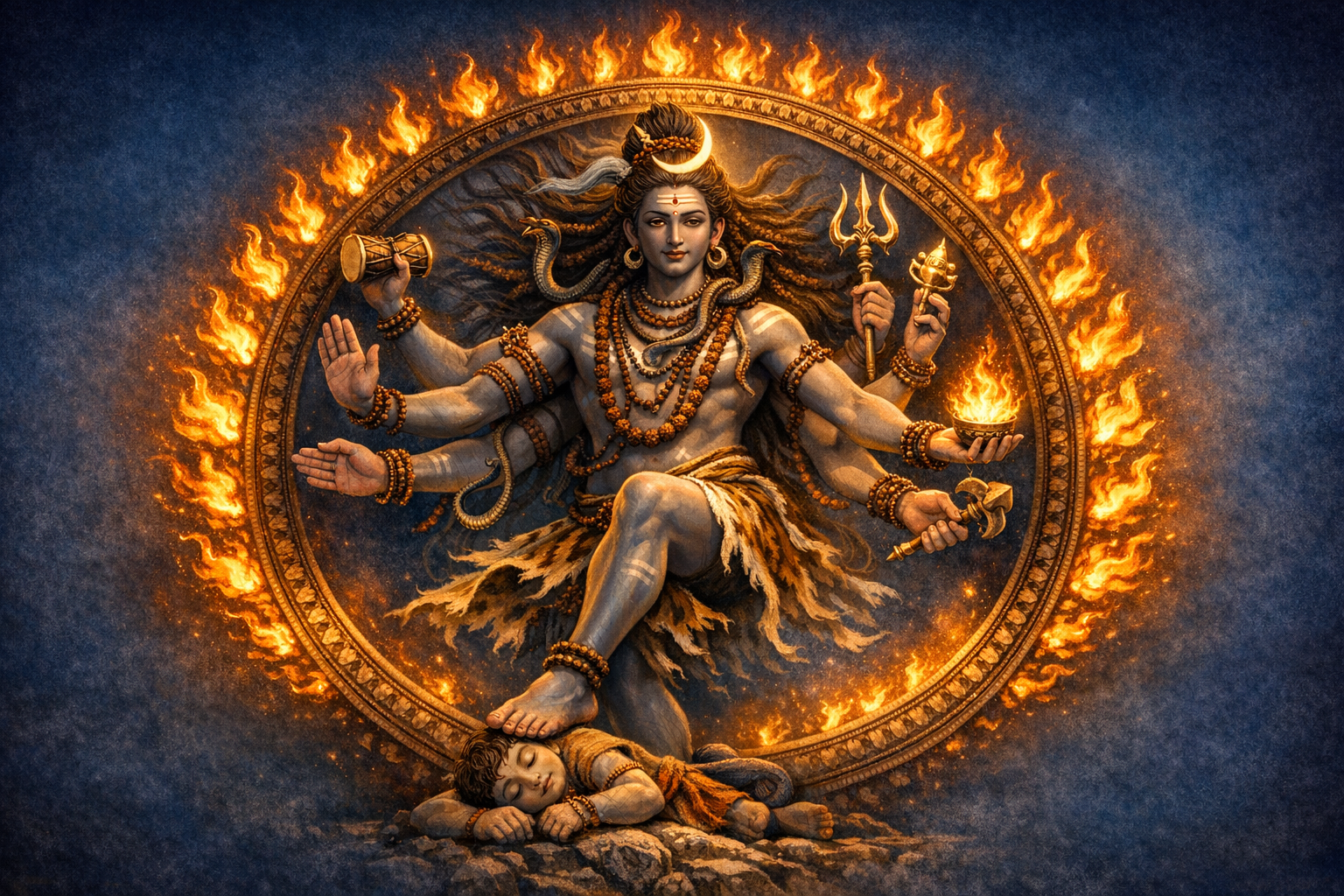
Kalika Tandava presents Shiva’s eight‑armed dance as a rigorous map of cosmic processes and inner transformation. The iconographyAbhaya and Varada mudras, damaru, agni, trishula, kapala, and moretranslates metaphysics into a readable visual grammar. Drawing on Shaiva Agamas, Shilpa‑Shastras, and the Natya Shastra, the form aligns creation and dissolution with a living rhythm practitioners can contemplate…
-
Kumbhakarna and Vikarna: Tragic Brothers of Conscience, Loyalty, and Dharma in the Epics

Kumbhakarna (Ramayana) and Vikarna (Mahabharata) embody the epic dilemma between loyalty to kin and loyalty to dharma. This rigorous, text-grounded comparison explains how each man speaks the truth, anticipates disaster, and yet dies fighting for causes he judged unjust. Readers gain a practical frameworkkṣātra-dharma, bandhu-dharma, rāṣṭra-dharma, and ātma-dharmato evaluate conflicts of duty. The analysis connects…
-
Bel Tala and Akal Bodhan: Durga’s Sacred Awakening That Empowered Lord Rama
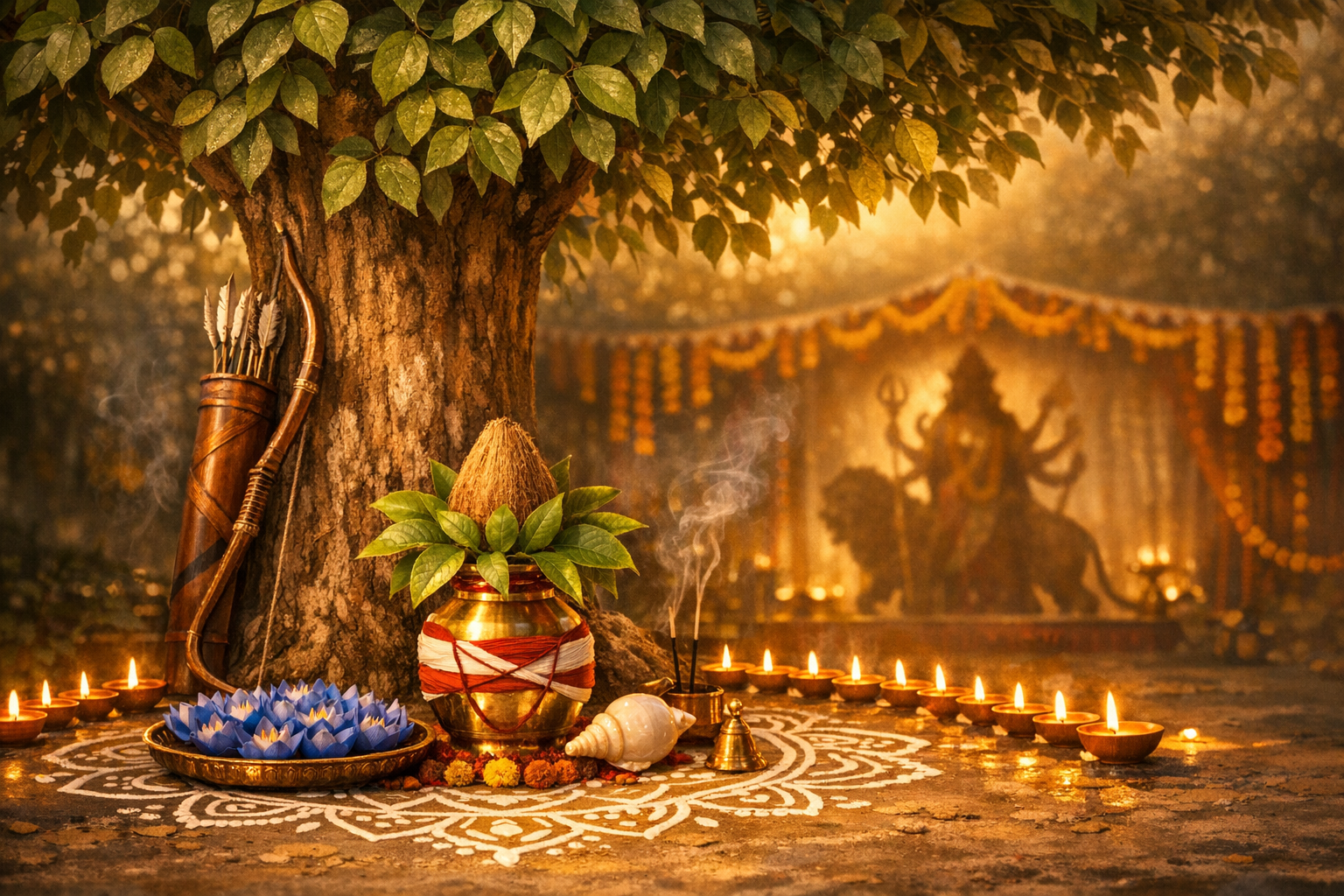
Bel Talathe sacred space beneath the bel (wood-apple) treeanchors the Bodhan, the ceremonial awakening of Goddess Durga that inaugurates Sharadiya worship. Rooted in Bengal’s “Akal Bodhan” narrative linking Lord Rama’s victory to Durga’s boon, this rite integrates Vaishnava and Shakta currents while honoring nature as a living altar. The bel tree (Aegle marmelos) contributes both…
-
Seismic Bhabanipur Verdict: Parsing Bengal’s Shift and Suvendu Adhikari’s ‘Hindutva Mandate’

The Bhabanipur verdict has been cast by Suvendu Adhikari as a “Hindutva mandate,” signaling a high-stakes shift in West Bengal politics. This analysis unpacks what such framing means under first-past-the-post dynamics, why Bhabanipur’s symbolism matters, and how identity narratives interact with everyday issues like safety, inflation, and welfare. It offers a data-aware lens for assessing…
-
Krishna’s Omnipotence Explained: Why Name, Mantra, and Scripture Offer Direct, Daily Companionship

This article explains, in clear Vedic and Bhakti terms, why Krishna’s omnipotence means His words, names, and teachings are non-different from Him, offering direct companionship at any moment. It shows how the concept of shabda as an efficacious, self-revealing medium makes scriptural hearing and mantra recitation a living encounter rather than mere symbolism. Drawing on…
-
Inside Patotsav: The Sacred Annual Re‑Consecration Powering Gujarati and Rajasthani Mandirs
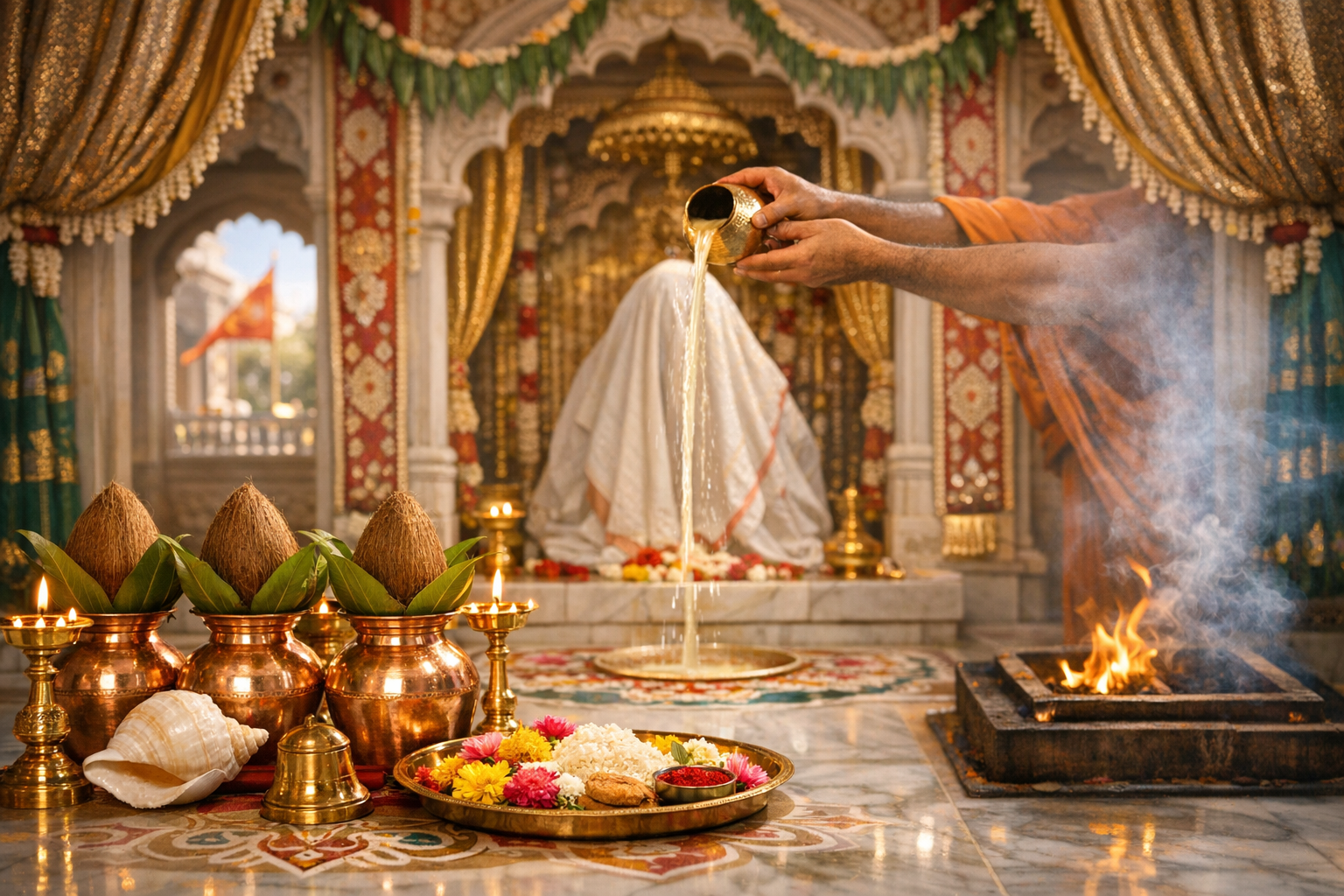
Patotsav is the annual re-consecration that refreshes the sanctity of Hindu mandirs, especially in Gujarat and Rajasthan, by commemorating the original Prana Pratishtha with precise Vedic and Agamic rites. This long-form guide explains the complete sequencefrom punyahavachana and kalasha-sthapana to Panchamrita abhisheka, homa, alankara, and maha-aratiso readers understand both practice and meaning. It clarifies how…
-
Shakhas of the Vedas: How Living Lineages Preserved Sacred Knowledge Across Millennia

The Vedas endured across millennia through shakhasliving lineages that safeguarded sound, meaning, and ritual with extraordinary precision. This article explains how each shakha integrates Samhita, Brahmana, Aranyaka, and Upanishad texts, supported by Vedangas, Pratisakhyas, and Sutras to ensure error-free oral transmission. It surveys the surviving recensions of the Rigveda, Samaveda, Yajurveda (Shukla and Krishna), and…
-
On Narasimha Jayanti: Lord Nrsimhadeva’s Fierce Compassion, Iconography, and Dharma’s Triumph
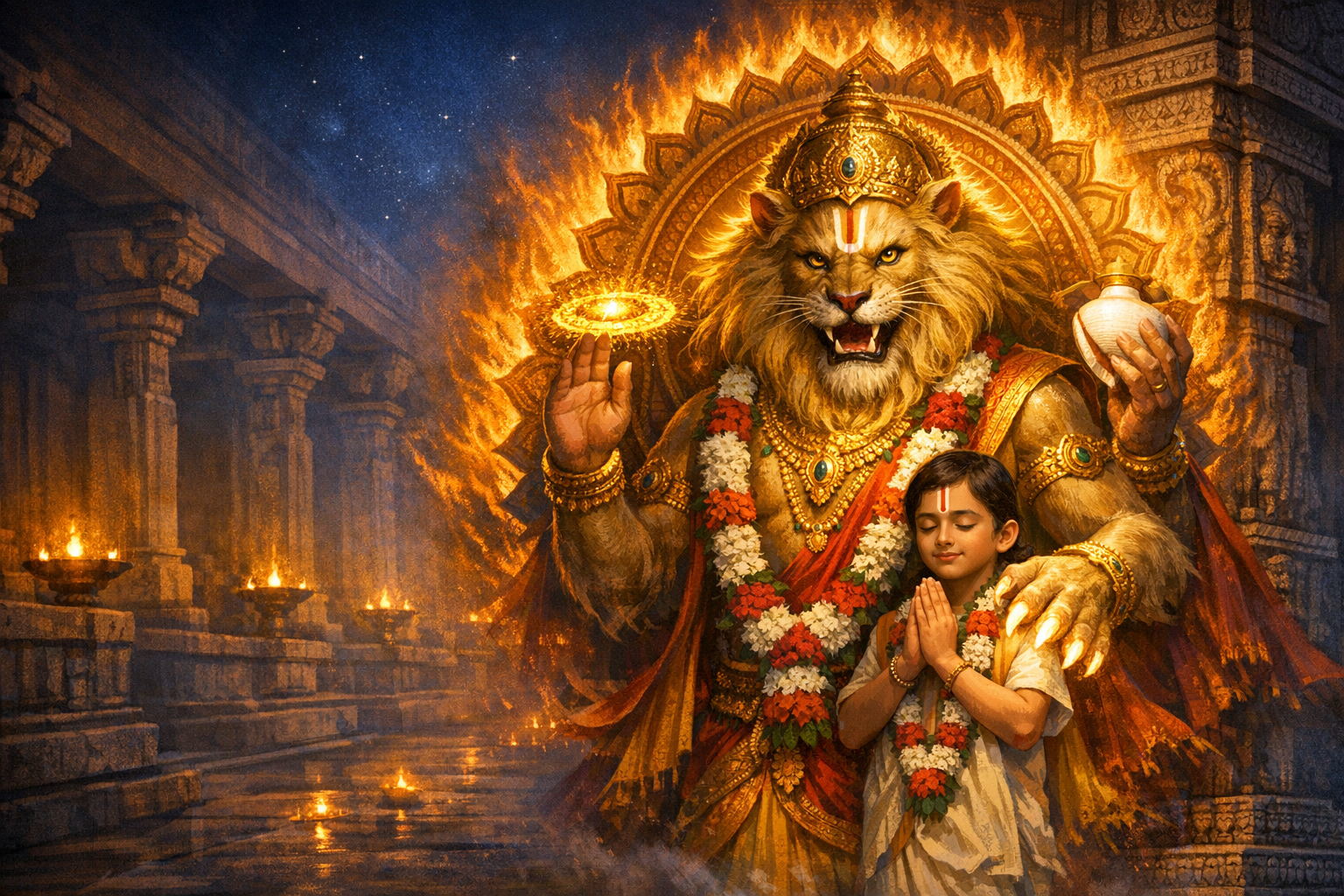
Narasimha Jayanti honors Lord Nrsimhadeva as fierce compassion in actionprotection deployed solely to restore Dharma. This article grounds the observance in the Bhagavata Purana (7.8.30–31), unpacks the lion–elephant imagery as a classical sign of moral restoration, and explains how the avatara’s liminal form answers absolutist violence without becoming absolutist. It surveys major iconographic forms (Ugra,…
-
After Hindu concerns, Cornwall’s Minack Theatre drops Lakméresetting cultural sensitivity in opera

Cornwall’s Minack Theatre has withdrawn a planned production of Léo Delibes’s Lakmé after Hindu community advocates warned that the work trivializes sacred traditions. The decision highlights a sector-wide shift in the UK toward cultural sensitivity, representational ethics, and meaningful consultation. This analysis explains why Lakmé attracts criticism for Orientalist framing, outlines how theatres can align…
-
Hudum Puja of Assam’s Koch Rajbongshi: Ancient Rain Rite, Sacred Ecology, Living Heritage
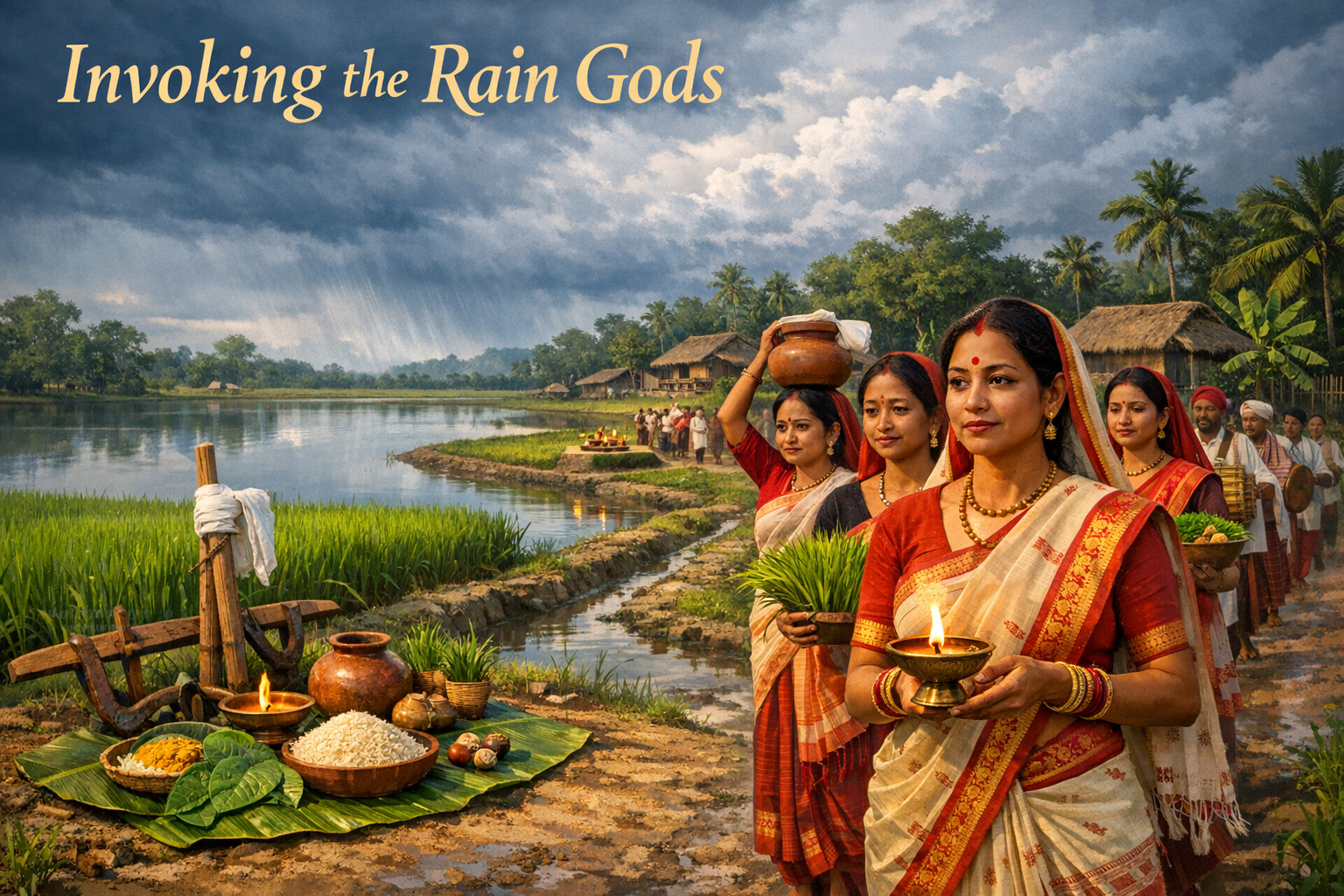
Hudum Puja is a rain-invoking folk ritual of the Koch Rajbongshi community in Assam, performed during acute drought to seek Hudum Deo’s blessing for timely monsoon showers. Anchored in agrarian time, the rite centers women’s ritual leadership, Hudum geet (satirical and supplicatory songs), and field-edge offerings that align social energy with ecological thresholds. Far from…
-
Decoding ‘Om krato smara kritam smara’: karma, memory, and the art of conscious dying

“Om krato smara kritam smara” from the Īśāvāsya Upaniṣad condenses the Upanishadic path into one imperative: let the sovereign will remember what has been done. The mantra sits at a pivotal moment in the text (Vājasaneyi Saṁhitā 40.17), pairing ethical clarity with the acknowledgement of impermanence. A brief philological reading clarifies ‘krato’ (will/intellect), ‘smara’ (remember),…
-
Punya and Paap Unveiled: The Moral Physics of Karma in Hindu Dharma and Dharmic Unity

Punya and Paap are presented here as the moral physics of Hindu Dharma, explaining how intention, means, and consequence shape character, community, and future conditions. Readers gain a clear, text-grounded understanding of karma, including sañcita, prārabdha, and āgāmi, with practical guidance on cultivating Punya and attenuating Paap through yamas, niyamas, dāna, prāyaścitta, and daily mindfulness.…
-
Choosing a Mahavidya for Navratri: Scholarly, Horoscope‑Aligned, Ethical, Transformative Guide

This research‑informed guide shows how to choose a Mahavidya for Navratri using three converging lenses: present life needs, Jyotisha (Vedic astrology) indications, and spiritual readiness. It summarizes the core strengths, indications, and household‑friendly practices for all ten Mahavidyas, with clear ethical safeguards. Readers learn how to align sadhana with dasha cycles and graha conditions, how…
-
Are the Puranas Just Fiction? A Rigorous, Heart-Centered Guide to Finding God and Trusting Truth

Are the Puranas fiction or a reservoir of living wisdom? This analysis explains how Puranic narratives operate beyond a literal-versus-fable dichotomy by integrating mythic memory, ethics, ritual rationale, and contemplative instruction. Drawing on Indian epistemology (pramāṇa), it clarifies how śabda (trustworthy testimony), anumāna (inference), and yogic pratyakṣa (direct insight) jointly ground a rational, testable faith.…